Animals That Look Like Raccoons: 9 Lookalikes and How to Tell Them Apart
Animals that look like raccoons are mostly close relatives: the white-nosed coati, the ringtail, and the kinkajou all sit in the raccoon family, Procyonidae. The rest of the confusion comes from unrelated animals that happen to share the same gear, a black facial mask or a banded tail, and that is enough in the dark or on a trail camera.
In the United States only two wild lookalikes exist, and both are limited to the Southwest. Everything else on this list is either a different shape entirely, an animal you can only meet in a zoo, or an exotic pet. The safety question comes first, because one of these animals is the main rabies carrier in the eastern states and another bites hard enough to need stitches.
The closest animals to a raccoon are the white-nosed coati and the ringtail, both North American members of the raccoon family. Opossums, American badgers, and striped skunks get mistaken for raccoons at night by size and markings, while raccoon dogs, red pandas, and masked palm civets live only in Asia or in zoos.
| Animal | Mask | Ringed tail | Where you can see it |
|---|---|---|---|
| Raccoon (Procyon lotor) | Yes, black | Yes, 5 to 7 rings | All 48 lower states |
| White-nosed coati | No, white snout | Faint rings, held upright | Arizona, New Mexico, west Texas |
| Ringtail | Pale eye rings only | Yes, 14 to 16 bands | Southwest and California |
| Kinkajou | No | No, prehensile | Latin America, exotic pet trade |
| Virginia opossum | White face, dark eyes | No, naked and pink | East, Midwest, West Coast |
| American badger | White head stripe | No, short | Great Plains and West |
| Raccoon dog | Yes, black | No rings | East Asia, invasive in Europe |
Which Animal Looks Similar to a Raccoon?
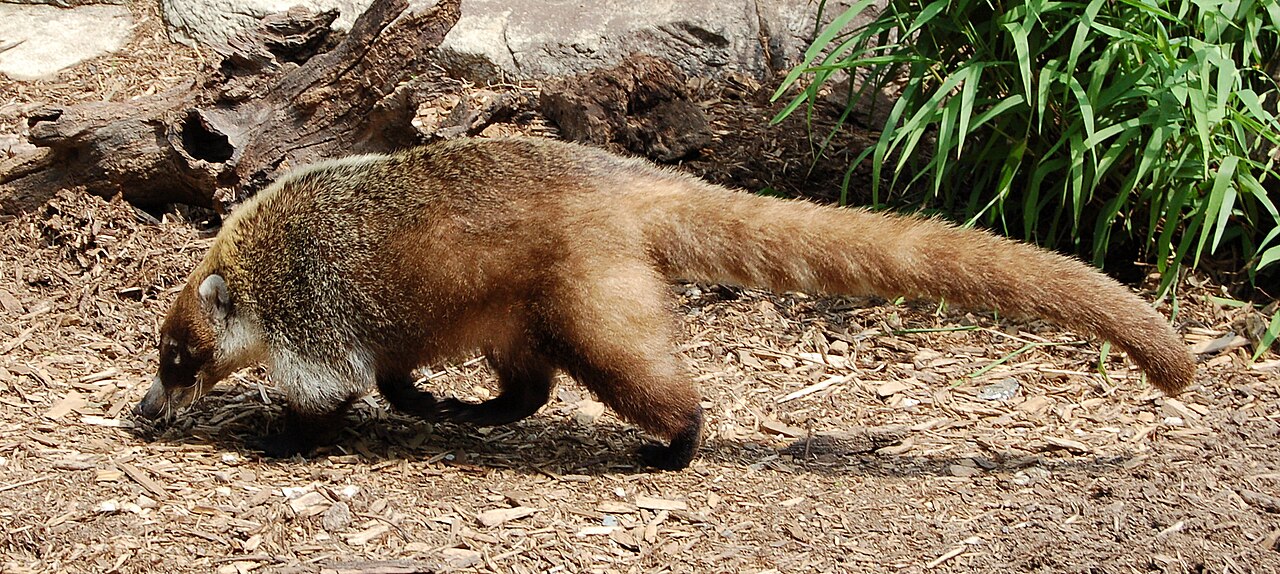
The white-nosed coati (Nasua narica) is the closest match that lives wild in the United States. It has the same size class, the same bandit coloring in reverse, and a long tail, and it walks the same flat-footed shuffle. The ringtail (Bassariscus astutus) comes second, with a tail more boldly banded than a raccoon’s.
Both belong to Procyonidae, the family that also holds kinkajous, olingos, and cacomistles. That shared ancestry explains the hands, the tails, and the habit of climbing head first down a tree trunk. Everything else on this list looks like a raccoon by accident rather than by family resemblance.
Dangerous or Not: Rabies, Bites, and What to Avoid
Raccoons are the leading rabies reservoir in the eastern United States, so any animal in this group behaving tamely in daylight deserves distance and a call to animal control. Coatis in the Southwest can also carry rabies, and habituated coatis at picnic areas bite more often than wild ones.
Opossums are the safe exception. Their lower body temperature makes rabies rare, and they mostly bluff. Kinkajous are the opposite case: as pets they bite seriously and carry parasites, and badgers will stand their ground and slash rather than flee. None of these animals should be hand fed under any circumstances.
White-Nosed Coati: The Closest Wild Match
A coati is built like a raccoon that was stretched: 3 to 4 ft (90 to 125 cm) nose to tail tip, with a long flexible snout and a tail it carries straight up like a flag while foraging. The face reverses the raccoon pattern, pale around the muzzle instead of dark around the eyes.
Behavior gives it away faster than color. Coatis are active by day and travel in bands of 10 to 30 females and young, rooting through leaf litter with constant chatter, while raccoons work alone at night. The National Park Service tracks them in several southwestern parks. For a closely related question, see our guide to bugs that look like fleas.
What US States Have Coatimundi?
Wild coatis occur in southeastern Arizona, southwestern New Mexico, and the Big Bend region of west Texas. Arizona holds the strongest population, mostly in oak and sycamore canyons from 4,000 to 7,500 ft elevation, and sightings thin out quickly north of the Gila River.
Reports from Florida and the Gulf Coast involve escaped pets rather than a native population, and the species is not established in the Southeast. If you are outside the three southwestern states and see a long-tailed, long-nosed raccoon relative, consider an escaped animal first.
Ringtail: Raccoon Eyes on a Cat-Sized Body
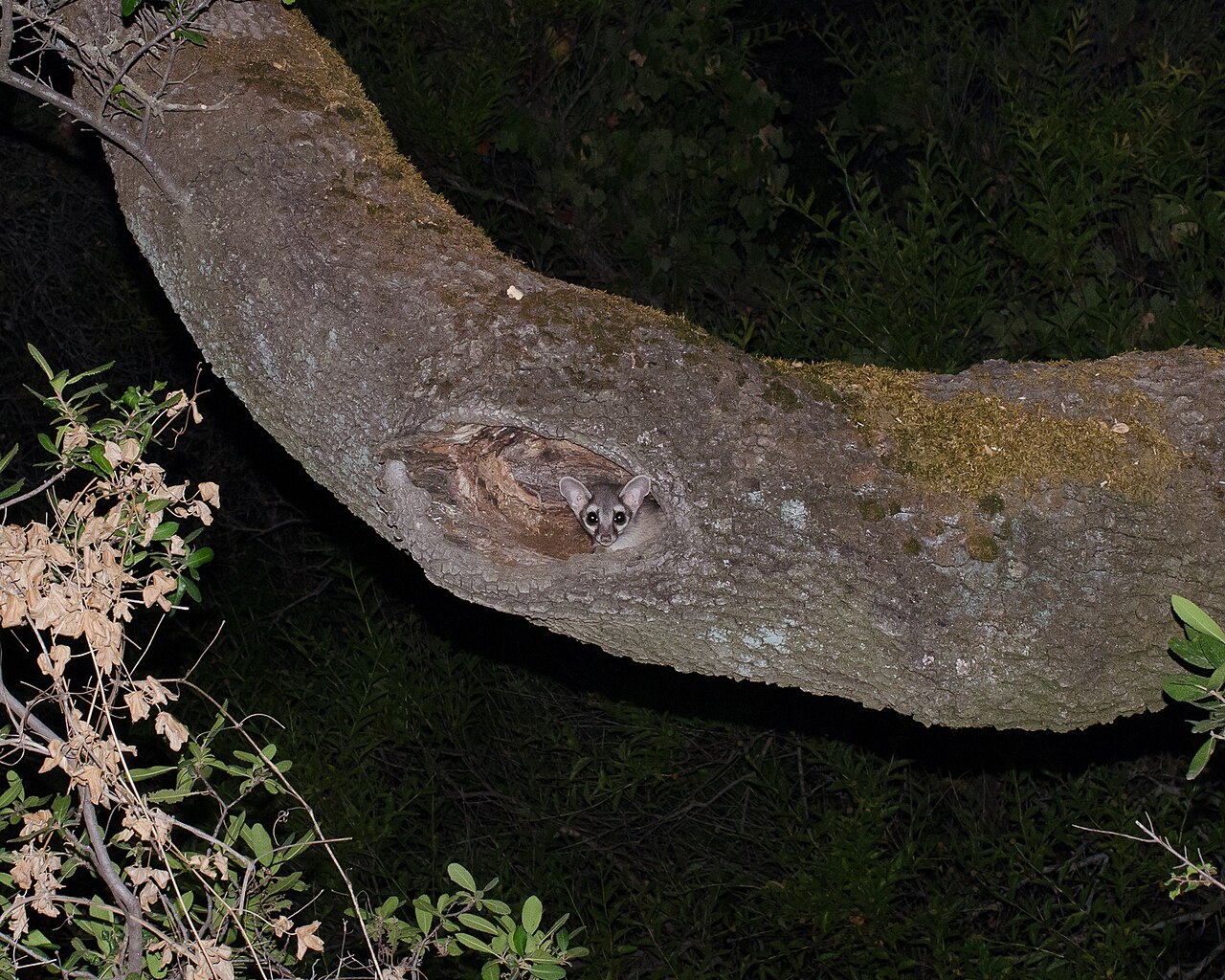
The ringtail weighs about 2 to 3 lb (0.9 to 1.4 kg) and carries a tail longer than its own body, marked with 14 to 16 crisp black and white bands. Miners once kept them for rodent control, which is where the nickname “miner’s cat” comes from. It is Arizona’s state mammal.
At night the big eyes and ringed tail read as a young raccoon, but the body is slim and fox-faced rather than stocky, and the mask is reduced to pale rings around the eyes. Ringtails are strictly nocturnal and almost never seen in daylight, often announced only by sound, like the owl calls that share the same canyons.
Kinkajou: The Raccoon Relative Without a Mask
The kinkajou (Potos flavus) is a procyonid that abandoned the raccoon look entirely: golden brown fur, a round face with no mask, and a prehensile tail it uses as a fifth limb in the canopy from Mexico to Brazil. It eats mostly fruit and nectar and spends its whole life in trees.
Most American sightings are pets. Kinkajous are legal in some states and sold as exotics, and they are poor pets, nocturnal, loud, and quick to bite when handled during the day. An animal that looks like a brown raccoon with a monkey tail is a kinkajou, not a raccoon.
Virginia Opossum: The Nighttime Mix-Up in the East
East of the Rockies, most “raccoon on the deck” reports that turn out wrong are opossums (Didelphis virginiana). Both are gray, cat-sized, nocturnal, and drawn to pet food and garbage, and both freeze in a flashlight beam with eyes shining back at you.
The differences are unmistakable up close. An opossum has a pointed white face, a naked pink tail, and 50 teeth in a long snout, while a raccoon has a short muzzle, black mask, and furry ringed tail. Opossums also eat ticks and carrion and cause far less structural damage.
American Badger and Striped Skunk: Right Markings, Wrong Build
Head-on in headlights, an American badger (Taxidea taxus) shows a white stripe running from the nose over the crown and dark cheek patches, which reads as a mask. The body settles it: 15 to 25 lb (7 to 11 kg), flat, low, and wide, with digging claws and almost no tail.
Striped skunks (Mephitis mephitis) create the same confusion at distance, since both animals are black and white and roughly raccoon-sized. A skunk moves in a slow waddle with the tail up, and the smell arrives before the identification does.
Raccoon Dog, Red Panda, and Masked Palm Civet
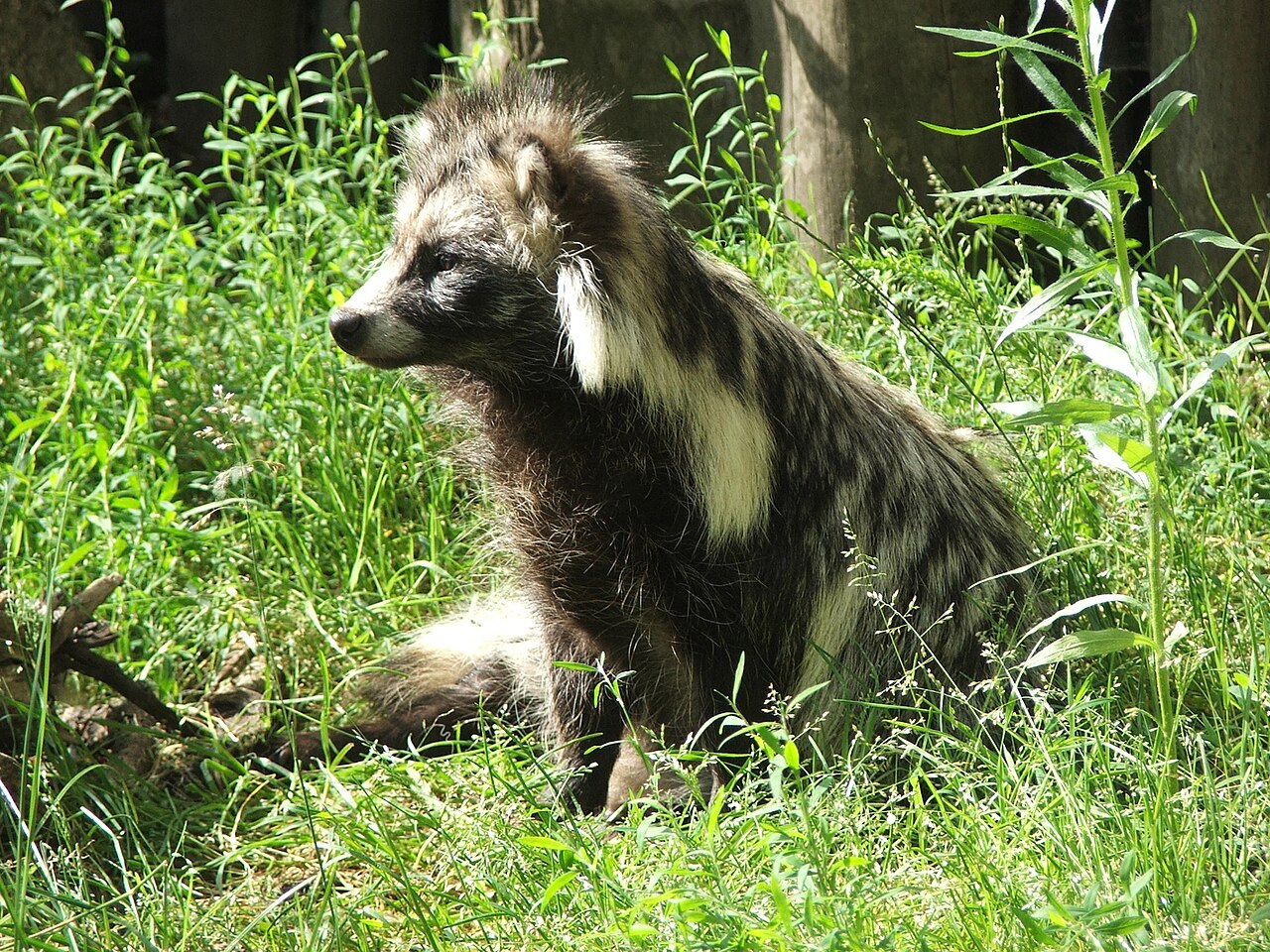
The raccoon dog (Nyctereutes procyonoides) is a true canid from East Asia with a convincing black mask and a bushy tail that carries no rings. It is invasive across Europe and barred from import into the United States, so a masked animal in your yard is not a raccoon dog.
Red pandas (Ailurus fulgens) have ringed tails and masked faces but are their own family and live in the Himalayas. The masked palm civet (Paguma larvata) carries the facial stripes without the tail bands. All three are zoo animals in the US, which is why they belong on this list only as photo matches.
Are There Bugs That Look Like Raccoons?
No insect resembles a raccoon in body shape, and nothing with six legs carries a ringed tail. What people call a raccoon bug is usually the masked hunter (Reduvius personatus), an assassin bug whose nymphs coat themselves in dust and lint for camouflage and whose bite is genuinely painful.
The lookalike series on this site works far better with insects that mimic other insects or small animals, from bugs mistaken for ferrets to bugs that look like ducks and bugs that look like spiders. For bandit-style markings on a larva, a banded blue caterpillar is a more realistic match than anything raccoon shaped.
Related reading: Bugs That Look Like Deer.
Related reading: Animals That Look Like Beavers.
Frequently Asked Questions
What animal is a cousin of the raccoon?
Coatis, ringtails, cacomistles, kinkajous, and olingos are all raccoon cousins in the family Procyonidae. The closest relatives outside that family are weasels, otters, and skunks. Red pandas were once grouped with raccoons but now sit in their own family, Ailuridae.
What animals are in the same family as a raccoon?
Procyonidae holds roughly 14 species across six genera, all in the Americas. Two live wild in the United States besides the raccoon itself: the white-nosed coati and the ringtail. The rest, including kinkajous and olingos, are tropical and arboreal.
What animal looks like a raccoon but bigger?
At a distance, a black bear cub is the usual answer, and an American badger looks bigger because it is wider and lower. A coati measures longer than a raccoon nose to tail but weighs less, around 8 to 15 lb (3.5 to 7 kg).
What animal looks like a raccoon but is brown?
Most likely a kinkajou if it has a long prehensile tail, or a coati if it has a long snout. Raccoons themselves vary from gray to reddish brown, and a cinnamon-phase raccoon with a faded mask accounts for many of these reports.
What animal looks like a raccoon with a long tail?
A ringtail, if the tail is banded black and white and longer than the body. A coati, if the tail is faintly ringed and carried straight up. A kinkajou, if the tail is uniformly brown and wraps around branches.
Is it bad to see a raccoon in your yard?
Not by itself. Raccoons pass through most suburban yards nightly looking for pet food, trash, and water. The warning signs are daytime activity, stumbling, or no fear of people, which point to distemper or rabies. Secure the trash and remove water bowls rather than trapping.