Groundhog Symbolism: What It Means to See One, by Tradition and Situation
Seeing a groundhog is most often read as a message about timing, patience and the need to rest before you act. In spiritual traditions that interpret animal encounters, the groundhog (Marmota monax, also called a woodchuck) stands for hibernation, dreaming, boundaries and the turning of the seasons. None of this is scientific fact, and the meanings below come from folklore, Native American stories and modern spirit animal writing.
The groundhog spiritual meaning changes with context: where you saw it, what time of day it was and what was happening in your life. This guide separates the traditions, then walks through the situations people search for most, from a groundhog in the garden to one found dead.
Seeing a groundhog symbolically means it is time to slow down, protect your boundaries and prepare before acting. Traditions link it to hibernation, dreams, weather prediction and renewal in spring. Meanings differ by culture and situation, and they are beliefs, not facts.
| Situation | Common symbolic reading |
|---|---|
| Seen in the garden | Grounding, protecting what you have grown |
| Seen at the window | A message to look inward and rest |
| Seen at night | Dreams, hidden matters, rare chances |
| Seen repeatedly | A lesson about timing you keep missing |
| Found dead | An ending, a cycle closing, a need for rest |
| Seen in a dream | Waiting, shelter, uncovering buried feelings |
| Seen on Feb 2 | Winter or spring prediction, hope |
What Does Seeing a Groundhog Mean Spiritually?
Seeing a groundhog spiritually means that a quiet period of preparation is more useful than rushing. The groundhog spends about four months in true hibernation, then comes out when conditions improve, so people read it as a symbol of patience and well-timed action.
The animal is also associated with boundaries, because it digs deep burrows with several entrances and defends them. Many modern writers add that the groundhog encourages you to listen to your own body and to avoid overcommitting. The idea that it offers a sign of “what to do next” is widely repeated, but it is an interpretation and not a documented tradition from one source.
The related meanings are persistence, home and renewal. As with other animals, the same sighting may carry a different message for different people, so the circumstances of your own life matter more than a fixed list.
Groundhog Symbolism in Native American Traditions

In Native American traditions the groundhog appears in some stories as a figure linked to the earth, hibernation and the seasons, though the details vary a great deal between nations. Native American groundhog mythology is not one belief. Different peoples told different stories, and some do not give the animal a special role at all.
Some Algonquian-speaking peoples used the woodchuck as a character in stories, and a few traditions treat it as a creature that teaches rest and humility. The word woodchuck itself is thought to come from an Algonquian word, wuchak, which English settlers adapted. If you want accurate material on a specific nation’s stories, a good starting point is the National Park Service and tribal cultural centers, not general spirit animal websites. Treat claims such as “all Native Americans believe” with caution.
For comparison, see how other North American animals appear in tradition in our guides on bear symbolism and bison symbolism.
Groundhog Spiritual Meaning in the Bible and Christianity
The Bible does not mention groundhogs, so there is no direct biblical meaning for them. The animal is native to North America, and its Old World cousins, the marmots, are not named in scripture either. Any claim of a specific groundhog Bible verse should be treated as modern interpretation.
Christian writers sometimes draw an indirect link through hibernation and emergence, which echo ideas of rest and renewal. The best-documented Christian connection is Candlemas, celebrated on February 2, forty days after Christmas. German-speaking settlers in Pennsylvania carried over a Candlemas weather lore in which a clear day meant six more weeks of winter. They originally watched a badger or a hedgehog and later switched to the groundhog, which is how Groundhog Day started. The roots of this belief overlap with older European seasonal customs and not with Christian doctrine.
Celtic and European Groundhog Symbolism

Celtic traditions do not feature the groundhog, since the animal does not live in Europe, but they do link February 2 to Imbolc, the start of spring, and to weather omens from hibernating animals. In Gaelic folklore the serpent or the badger was watched for emerging from its den on Imbolc, and the saying warns that a clear day means more winter.
Those European weather beliefs are the direct ancestors of Groundhog Day. When German settlers reached Pennsylvania in the 1700s and 1800s, the groundhog replaced the badger as the animal to watch. If you want to see how a similar den animal is treated in folklore, read our guide to badger symbolism, which is the closest European counterpart.
So the “Celtic groundhog” is really a Celtic seasonal custom that moved to a North American animal. Anyone offering you detailed Celtic groundhog myths is likely mixing sources.
Groundhog Symbolism in East Asian Cultures

There is no major groundhog tradition in China, Japan or Korea. Marmots, the groundhog’s close relatives, live in parts of Asia, but they do not have a prominent role in Chinese or Japanese symbolism as the dragon, crane or fox do.
What East Asian traditions do share with the groundhog is a respect for hibernation and seasonal timing. The Chinese solar term “Awakening of Insects” (Jingzhe), in early March, marks the time when hibernating animals are said to wake, and some modern writers compare this to the groundhog’s emergence. That comparison is a modern parallel and not an old teaching.
If an article tells you a specific East Asian god or spirit is a groundhog, check the source. It is more likely to be a loose modern interpretation than historical belief.
Groundhog Spirit Animal and Totem Meaning
A groundhog spirit animal is said to represent patience, groundedness, good boundaries and the ability to withdraw so you can recover. People who feel drawn to the groundhog as a totem are often described as careful, home-loving and cautious about new risks.
The totem idea is borrowed from Indigenous traditions, where totems and clan animals have specific meaning within particular communities. The “spirit animal” label in popular culture is far looser, and some Native people find the casual use of the term disrespectful. If you use it, treat it as personal reflection and not as a religion.
Positive traits in this reading include perseverance, resourcefulness and a good sense of timing. The shadow side is avoidance, hiding from problems or sleeping through a chance. Compare these ideas with the ones in our beaver symbolism guide, another burrowing and building animal.
Is Seeing a Groundhog Good Luck or an Omen?
Seeing a groundhog is usually read as good luck or a neutral omen, and not a warning. Most popular sources say it signals that change is near and that you should prepare, which is a hopeful message. Whether a groundhog is lucky depends mostly on the story you are told.
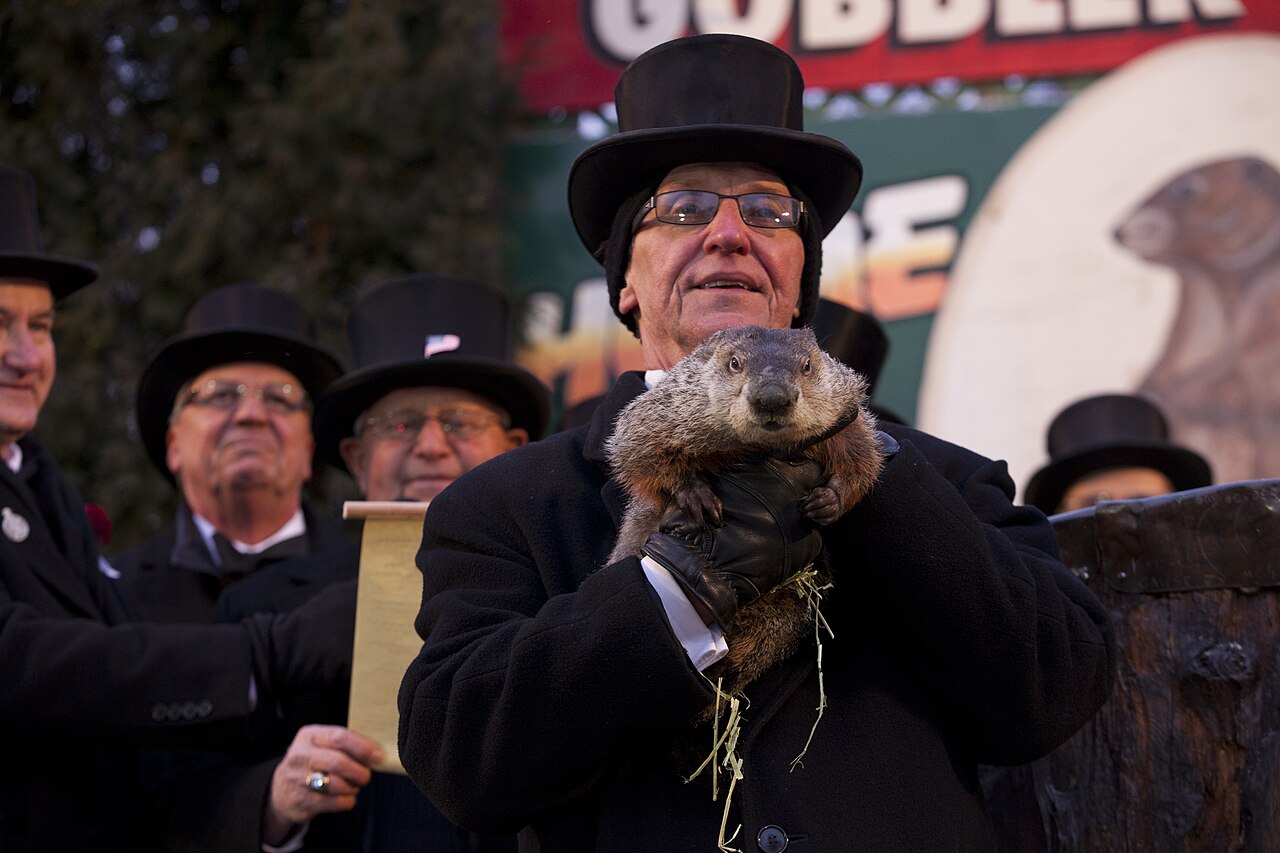
In weather lore, the omen is more specific. According to the Groundhog Day tradition, if the groundhog sees its shadow, winter lasts six more weeks, and if it does not, spring arrives early. Meteorologists have checked this and found it is right only about 40 percent of the time or less, so it works better as a custom than as a forecast.
A very pale or white groundhog is sometimes thought to be a stronger sign. It is actually a rare genetic variation (leucism or albinism), and not a supernatural message, though many people enjoy that reading.
Groundhog in the Garden
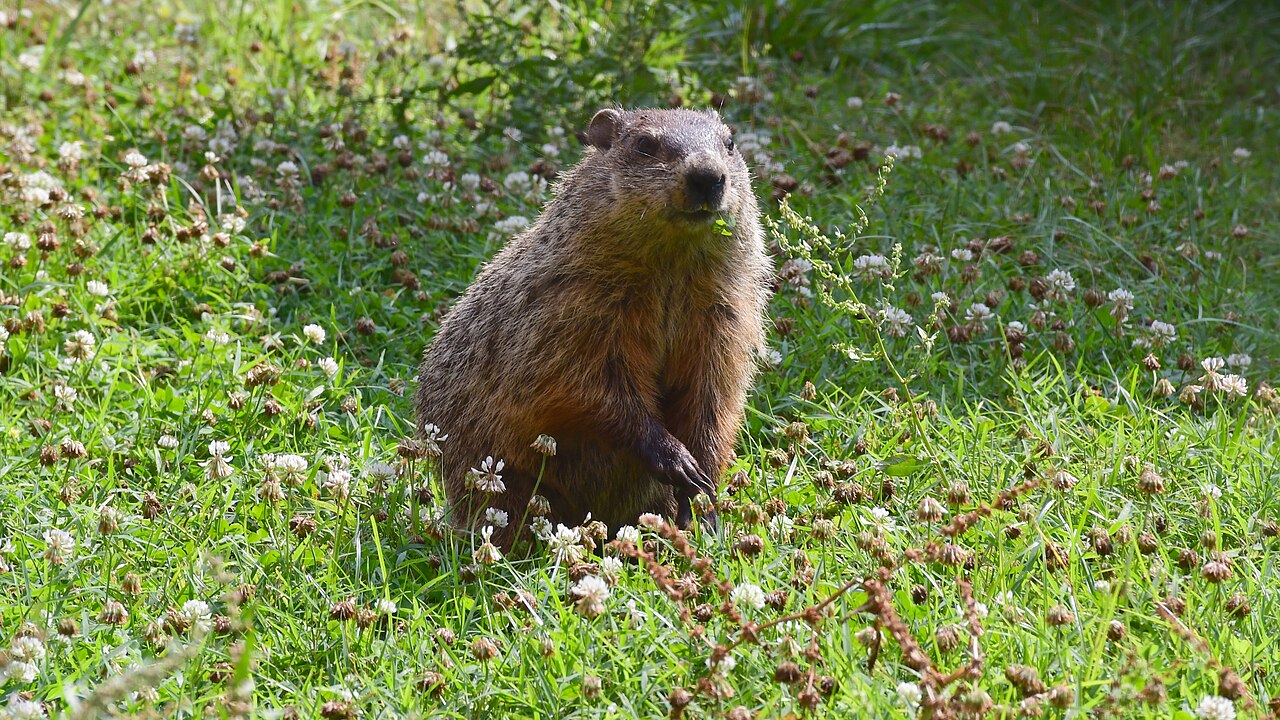
A groundhog in your garden is read as a prompt to protect what you have built and to check your boundaries. In practical terms it is also a real pest, since groundhogs eat vegetables and clover and dig burrows with 2 or more entrances.
Symbolically people take the visit as a sign that your efforts are noticed and that you should guard your resources. If you are wondering whether to let one stay, the honest answer is that a burrow under a shed, deck or foundation can damage the structure. A wildlife control professional can help you with humane removal. Do not use poison or move a mother in spring, because dependent young may be underground. For wildlife you do want in the yard, the bee symbolism guide covers a very different garden visitor.
Groundhog at Your Window, at Night or During the Day
A groundhog at your window is seen as a prompt to rest and pay attention to your inner life. A groundhog at night is unusual, because groundhogs are diurnal and active mostly in the early morning and late afternoon. Spiritual writers tend to read a night sighting as a link to dreams and hidden matters, while a biologist would think the animal was disturbed or sick.
A groundhog seen in the middle of the day in summer is ordinary behavior. It is probably feeding, which is not a sign of anything. In summer the meaning people give is often about enjoying plenty, and in fall about preparing for hibernation, since groundhogs gain weight quickly before they go underground in October.
If a groundhog acts bold, stumbles, drools or does not run away, keep your distance and call animal control, because that can be a sign of illness such as rabies, which is rare in groundhogs but possible.
Seeing a Groundhog Repeatedly
Seeing a groundhog repeatedly is generally read as a sign that a message about timing or rest is being repeated until you act on it. In practice, groundhogs are territorial and return to the same burrow and feeding spots every day, so repeated sightings usually mean you live near its den.
Spiritual interpretations suggest asking what you have been putting off or ignoring. If the groundhog appears whenever you are making a big decision, the usual advice is to slow down and gather more information before deciding. Keeping a short journal of when and where you see it can help you notice patterns, and it also shows whether the sightings have a simple explanation.
Finding a Dead Groundhog
Finding a dead groundhog is commonly read as a symbol of an ending, a cycle closing or a need to let something go. It is not widely treated as a curse or bad omen in any major tradition. The more cautious reading is that the death marks a time to rest and rebuild.
In practical terms, do not touch the body with bare hands. Groundhogs can carry fleas, ticks and, rarely, tularemia or rabies. Use thick gloves or a shovel, bag the animal and call local animal control or your state wildlife agency about disposal. Wash your hands afterward, and keep pets away.
Groundhog Dream Meaning
Dreaming about a groundhog is often interpreted as a sign that you are hiding from something, waiting for the right moment or protecting yourself. A groundhog coming out of its burrow in a dream is read as emerging from a difficult period. A groundhog going back in is read as a need for more time.
Dream interpretation is not science, and these readings come from popular dream guides and not research. A useful way to use them is to ask what the animal does in the dream and how you feel, since those details matter more than a fixed definition. Shadows in the dream tie back to the Groundhog Day idea of facing what you see before acting.
Frequently Asked Questions
What should you do if you see a groundhog?
Watch from a distance and do not feed or approach it. Groundhogs can bite if cornered. If one is in your yard, remove food sources and block burrows once you are sure the animal has left, and call a wildlife professional if damage continues.
Do groundhogs hibernate in the winter?
Yes. Groundhogs are true hibernators, going underground from about October to February or March. Their heart rate drops from roughly 80 beats a minute to about 5, and body temperature falls close to that of the burrow.
What time of day do groundhogs come out?
Groundhogs are active in the daytime, mostly early morning and late afternoon. They feed for several hours, rest in the burrow during the hottest part of the day and sometimes stand on their back legs to watch for predators.
What diseases do groundhogs carry?
Groundhogs can carry ticks, fleas and, less often, rabies, tularemia and the parasite Baylisascaris. Risk to people is low if you avoid contact. Never handle a sick or dead groundhog barehanded, and see a doctor after any bite.
What animal are groundhogs afraid of?
Coyotes, foxes, bobcats, dogs and hawks are the main predators. A groundhog whistles loudly to warn others and runs for its burrow, which is why it is also called a whistle pig.
What is the average lifespan of a groundhog in captivity?
Groundhogs in captivity can reach about 14 years, while wild ones usually live 2 to 3 years and rarely over 6. Punxsutawney Phil is said to be the same animal since 1886, which is part of the Groundhog Day legend and not biology.