Butterfly Looks Like Monarch? Viceroy, Queen and Others
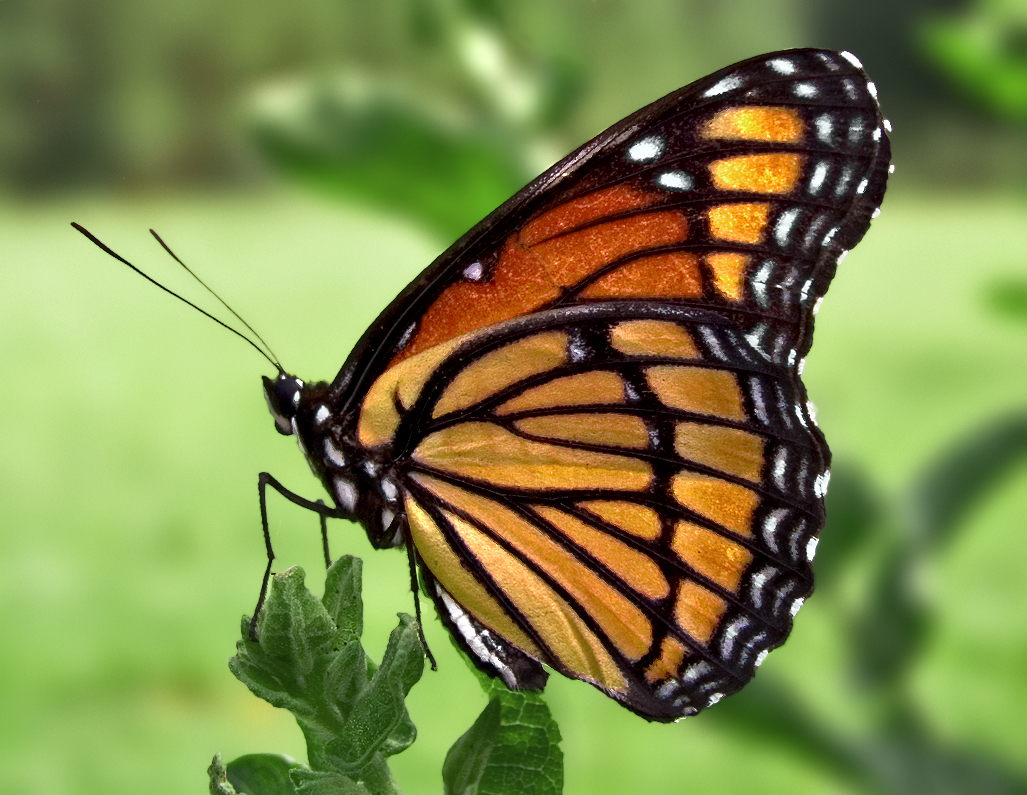
If a butterfly looks like a monarch, check its hindwings first. The usual look-alike is the viceroy, followed by the queen in the South. The monarch (Danaus plexippus) sets the baseline with bright orange wings, bold black veins and a black border dotted with two rows of white.
If it looks like a monarch but has a black line curving across each hindwing, it is a viceroy. A darker chestnut butterfly with thin veins and scattered white dots in Florida, along the Gulf Coast or in the Southwest is a queen. Orange without the stained-glass veins points to a fritillary or lady.
How the Hindwing Line Separates a Viceroy From a Monarch
Only the viceroy (Limenitis archippus) has a black line running across the veins of each hindwing. On a monarch the hindwing shows the veins alone, with nothing crossing them. The line shows from above and below.
The viceroy is noticeably smaller, with a wingspan of about 2.5 to 3 in against 3.5 to 4 in for a monarch. In flight the viceroy flaps quickly and glides on flat wings, while a monarch sails with wings held in a shallow V. The viceroy’s black border carries a single row of white dots, while the monarch’s border holds two rows.
Male monarchs show a small black scent spot on one vein of each hindwing. It never appears on a viceroy. Viceroys stay near willows and wet meadows, while the monarch butterfly ranges across open country and gardens wherever milkweed grows.
Queen and Soldier, the Monarch’s Southern Cousins
The queen (Danaus gilippus) is darker than a monarch, a chestnut brown rather than bright orange, with only faint black veins on the upper side. White dots scatter across the forewing, and the black borders carry small white dots as well.
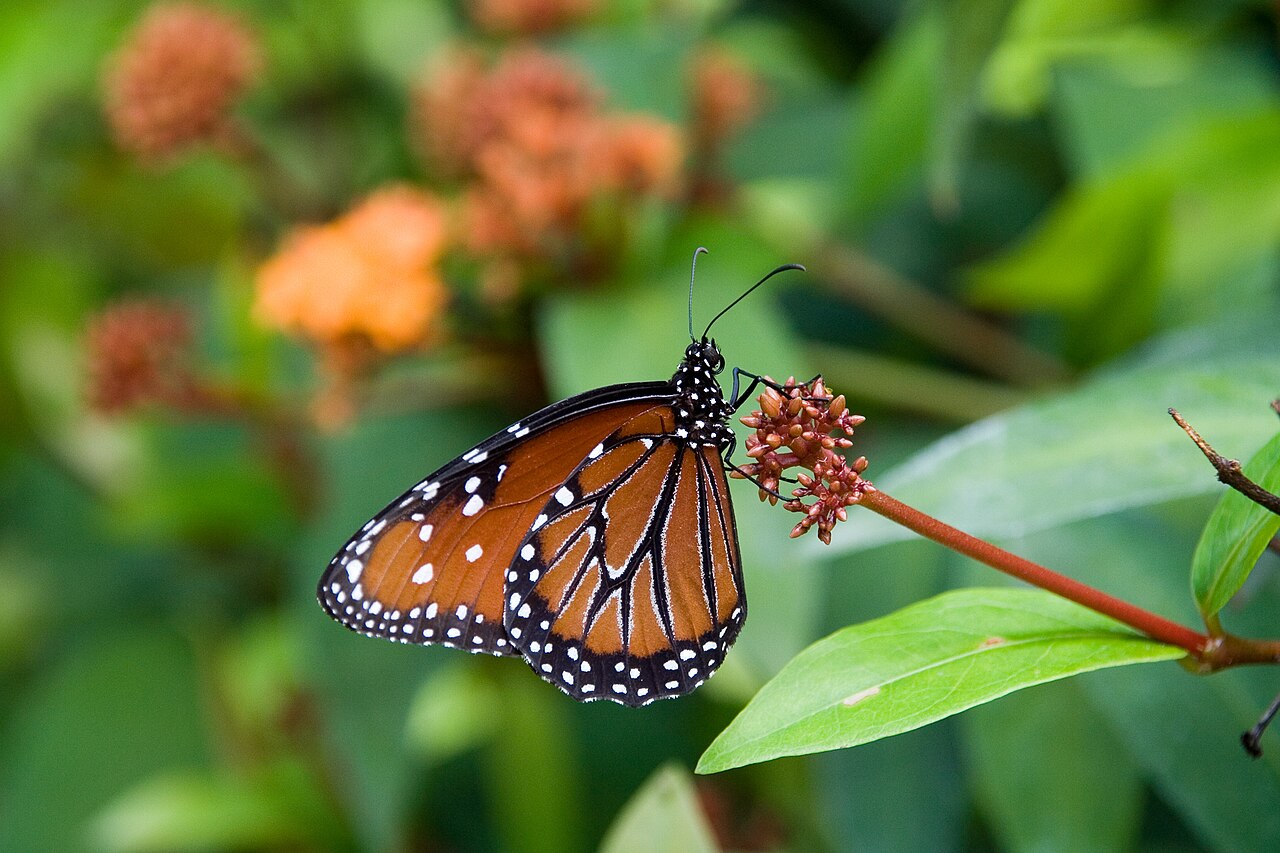
The soldier (Danaus eresimus) resembles the queen but shows more defined dark veins, lacks the queen’s larger white forewing spots and has a band of blotchy pale spots on the hindwing underside. It flies mainly in South Florida and South Texas. Both raise their caterpillars on milkweed and milkweed vines, which typically makes them distasteful to birds as well. Their caterpillars carry three pairs of black filaments where a monarch caterpillar has two.
A worn monarch fades toward brown as scales wear off and, near the end of its monarch life span, can pass for a queen.
| Feature | Monarch | Viceroy | Queen | Soldier |
|---|---|---|---|---|
| Ground color | Bright orange | Orange | Chestnut brown | Chestnut brown |
| Black line across hindwing | No | Yes | No | No |
| Vein contrast | Bold black | Bold black | Faint | Thin, more defined than queen |
| White dots on border | Two rows | One row | Small, plus scattered forewing dots | Small, fewer forewing spots |
| Relative size | Large | Smaller | Slightly smaller | Slightly smaller |
| Flight style | Flap, flap, glide, wings raised | Faster, erratic, glides flat | Similar to monarch | Similar to monarch |
| Main US range | Nationwide | East of the Cascades and Sierra Nevada, near wetlands | Florida, Gulf Coast, Southwest | South Florida, South Texas |
| Caterpillar host plant | Milkweed | Willow and poplar | Milkweed | Milkweed |
Backyard Butterflies Often Mistaken for Monarchs
People who describe a “yellow monarch” usually mean the eastern tiger swallowtail (Papilio glaucus), which is yellow with black stripes and carries tails on the hindwings that no monarch has.
The gulf fritillary (Agraulis vanillae) is bright orange with long, narrow wings and silver spots on the underside. The great spangled fritillary (Speyeria cybele) is orange with black checks and dots rather than black veins.
The painted lady (Vanessa cardui) and American lady (Vanessa virginiensis) are smaller and orange brown, with eyespots on the underside of the hindwing.
Moths and Bugs on Milkweed That Look Like Monarchs
No moth really copies the monarch. The adult milkweed tussock moth (Euchaetes egle) is plain gray brown, and only its caterpillar, with orange, black and white tufts, gets mistaken for the banded monarch caterpillar shown in the monarch life cycle. Neither bites, but the hairs can irritate bare skin, so move it with a leaf.
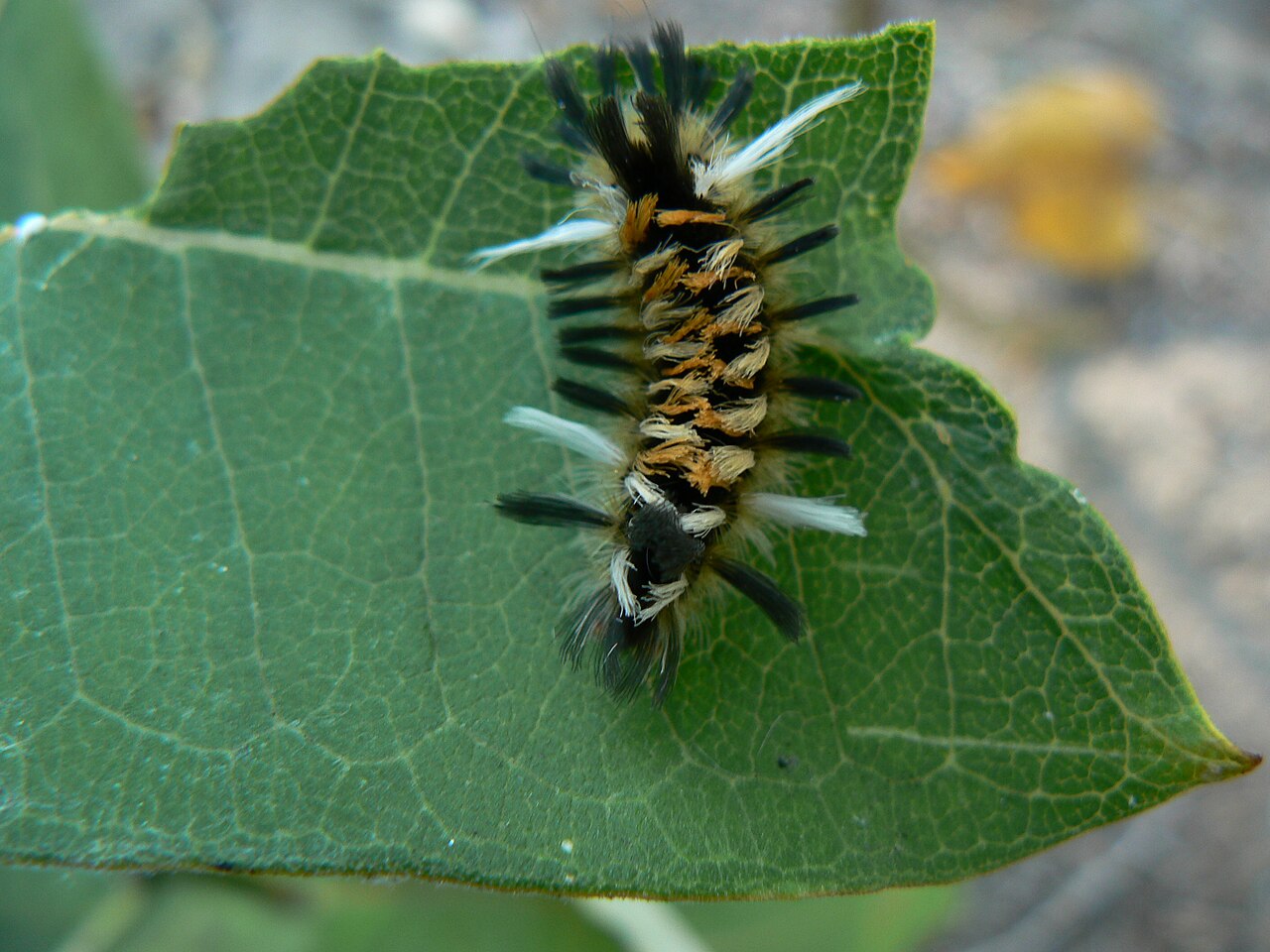
Tussock caterpillars feed in groups and can strip a whole milkweed plant. Tussock moths lay eggs in clusters, whereas monarch eggs sit singly, usually one per leaf. The large milkweed bug (Oncopeltus fasciatus) and small milkweed bug (Lygaeus kalmii) are orange and black seed feeders.
Why So Many Butterflies Look Like Monarchs
Monarch caterpillars store toxins from the milkweed they eat, and the adults keep those compounds in their bodies. A bird that swallows one learns to avoid the pattern, so orange and black protects any butterfly that wears it.
The viceroy was long described as a harmless copycat, but researchers now consider it distasteful in its own right. Its close relative, the red-spotted purple, copies the black and blue pipevine swallowtail instead.
Related reading: bugs that look like monarch butterflies.
Frequently Asked Questions
Is it rare to see a monarch butterfly?
No, not in summer, when monarchs appear across the lower 48 states, but numbers have fallen sharply over recent decades and the U.S. Fish and Wildlife Service has proposed listing the species as threatened. Sightings peak during fall migration toward central Mexico and the California coast.
Should you remove milkweed bugs?
No. Large and small milkweed bugs feed on milkweed seeds, not on the leaves monarch caterpillars need, so they need no removal unless they swarm a small patch.
What happens if I touch milkweed?
Usually nothing serious, but the milky sap can irritate skin, and in the eye it can cause corneal swelling and blurred vision hours later. Wear gloves, wash your hands before touching your face, and see an eye doctor if sap gets in your eyes.
Why shouldn’t you raise monarchs?
You can, but rearing many caterpillars in one container can spread the parasite Ophryocystis elektroscirrha (OE) between them. Planting milkweed and nectar flowers helps monarchs more than captive rearing does.
Sources
- U.S. Fish and Wildlife Service, Monarch (Danaus plexippus)
- Butterflies and Moths of North America, Viceroy (Limenitis archippus)
- Butterflies and Moths of North America, Soldier (Danaus eresimus)
- Journey North, Monarch or Viceroy? Easy Identification