Types of Ducks: A Complete Guide
There are many types of ducks in North America, but they fall into a few main groups: dabbling ducks that feed at the surface, diving ducks that plunge underwater, and specialized sea ducks and mergansers. From the familiar mallard to the striking wood duck, ducks come in a wonderful range of colors, shapes, and behaviors. This guide covers the main types of ducks, common species you can see, how to tell them apart, where they live, and the key difference between dabbling and diving ducks.
| Duck | Group and Key Features |
|---|---|
| Mallard | Dabbler, green-headed male |
| Wood Duck | Perching, ornate colorful male |
| Northern Pintail | Dabbler, long pointed tail |
| Blue-winged Teal | Dabbler, small, blue wing patch |
| American Wigeon | Dabbler, white crown stripe |
| Northern Shoveler | Dabbler, huge spoon-shaped bill |
| Canvasback | Diver, sloping head, rusty |
| Bufflehead | Diver, small, white head patch |
| Common Merganser | Fish-eater, thin serrated bill |
| Ruddy Duck | Diver, stiff tail, blue bill |
How Many Types of Ducks Are There?
There are more than one hundred species of ducks worldwide, with dozens found across North America, making ducks one of the most diverse and widespread groups of waterfowl. To make sense of this variety, birders usually sort ducks into a few broad categories based on how they feed and behave. The two largest groups are dabbling ducks, which feed at or near the water’s surface, and diving ducks, which dive underwater to find food. Beyond these are more specialized types, including sea ducks that live along coasts and mergansers that hunt fish with slender, serrated bills. Ducks range from tiny teal to large, heavy-bodied species, and males are often far more colorful than the more camouflaged females. Understanding these groups makes it much easier to identify the many types of ducks you might encounter, and to appreciate how varied these birds truly are, as seen in our guide to what ducks eat.
Common Types of Ducks
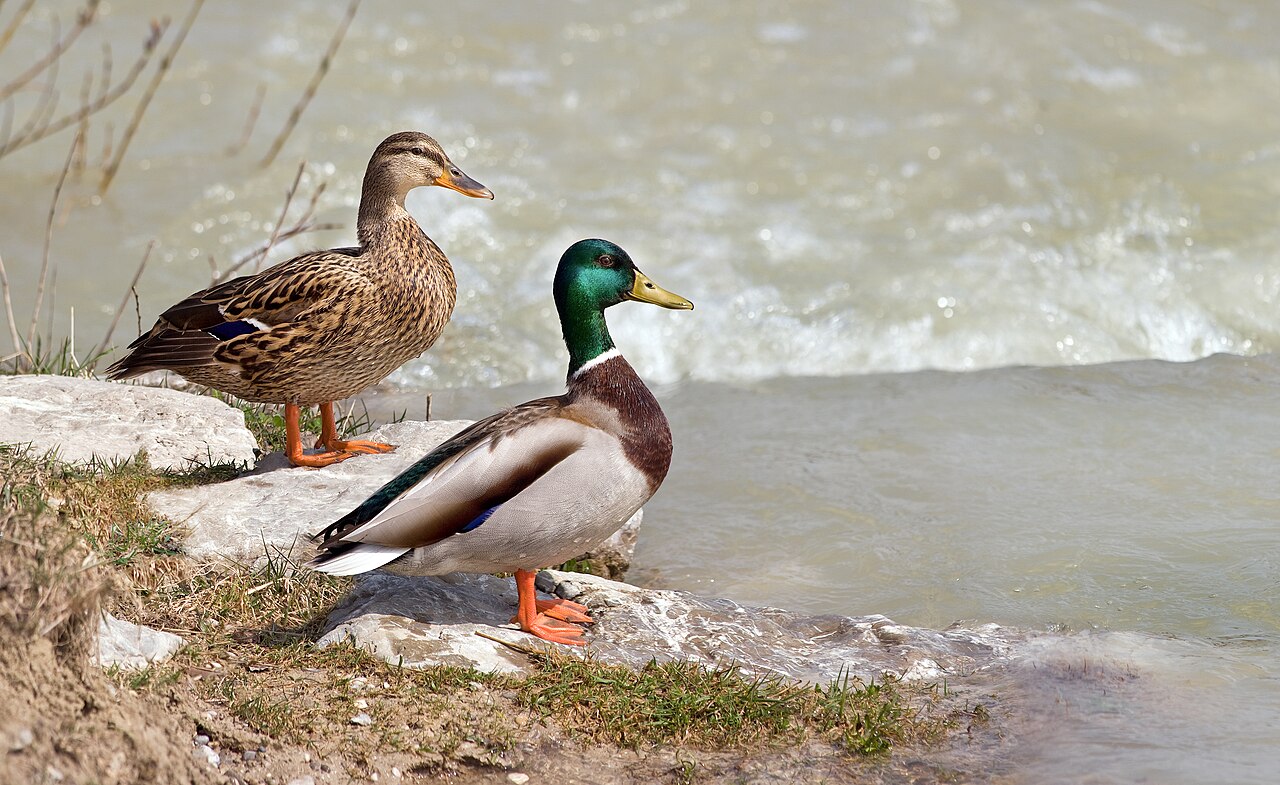
Several types of ducks are especially common and worth knowing. The mallard is the most familiar duck of all, with the male’s glossy green head, and it is the ancestor of most domestic ducks. The wood duck is often considered one of the most beautiful, with the male’s ornate, iridescent, multicolored plumage, and it nests in tree cavities. The northern pintail is an elegant dabbler with a slender neck and long, pointed tail, while the small blue-winged teal shows a pale blue patch on the wing. The American wigeon sports a white crown stripe, and the northern shoveler is unmistakable thanks to its huge, spoon-shaped bill. Among divers, the canvasback has a distinctive sloping head, the tiny bufflehead shows a bold white head patch, and the ruddy duck has a stiff, upturned tail and, in breeding males, a bright blue bill. Fish-eating mergansers round out the group with their thin, toothed bills.
How to Tell Ducks Apart
Telling ducks apart becomes much easier when you combine a few clues. Start with the male’s plumage, since drakes are usually colorful and distinctive, such as the mallard’s green head or the wood duck’s ornate pattern, though remember that females are typically brown and camouflaged and can be trickier. Pay attention to the head shape and bill, which are very useful: the shoveler’s spoon-shaped bill, the canvasback’s sloping profile, and the merganser’s thin bill are all giveaways. Note the bird’s size, from tiny teal and bufflehead to large mallards and mergansers, and watch its feeding behavior to place it as a dabbler or diver. Habitat and the season also help, since some ducks are only present in winter. By combining color, bill and head shape, size, behavior, and habitat, you can identify most of the ducks you see, a rewarding skill for anyone who enjoys waterfowl, much like recognizing the birds in our guide to geese.
Where Ducks Live
Ducks are found in a huge range of watery habitats across North America and beyond. Dabbling ducks favor shallow water, such as marshes, ponds, flooded fields, and the edges of lakes and rivers, where they can reach food at the surface. Diving ducks prefer deeper water, including large lakes, reservoirs, and coastal bays, where they dive to feed. Sea ducks live along coastlines and on the open ocean for much of the year, while some ducks, like the wood duck, are closely tied to wooded wetlands and swamps because they nest in tree cavities. Many ducks are migratory, breeding in the north and moving south for winter, so the species present in a given area often change with the seasons. Almost any wetland, pond, or lake can host ducks, making them one of the easiest and most enjoyable groups of birds to watch, especially near feeders and water as covered in our guide to attracting birds.
Dabbling Ducks vs Diving Ducks
The single most useful distinction among ducks is between dabbling ducks and diving ducks. Dabbling ducks, or dabblers, feed mainly at or just below the surface, often tipping forward, upending with their tails in the air, to reach aquatic plants and invertebrates, and they can usually spring straight up into flight from the water. Mallards, teal, wigeon, pintails, and shovelers are all dabblers. Diving ducks, by contrast, dive completely underwater to find food, propelling themselves with their feet, and they typically need a running start across the water to take off. Canvasbacks, scaup, buffleheads, goldeneyes, and ruddy ducks are divers. Diving ducks tend to have their legs set farther back on the body for underwater swimming, which makes them less agile on land. Recognizing whether a duck dabbles or dives instantly narrows down which species it could be, making it the perfect starting point for duck identification.
The Mallard and Its Relatives
The mallard holds a special place among ducks, both in the wild and in domestication. According to the Cornell Lab of Ornithology, the mallard is the most abundant and widespread duck in the Northern Hemisphere, and it is the ancestor of nearly all domestic duck breeds. This means the familiar farmyard and park ducks you see, in their many colors and shapes, trace back to wild mallards. In the wild, mallards are highly adaptable dabbling ducks, thriving in everything from remote marshes to city ponds, and they readily hybridize with other duck species. The male’s glossy green head and the female’s mottled brown plumage are familiar sights across the continent. Because the mallard is so common and so closely tied to other ducks, it makes an excellent reference point for learning to identify waterfowl, and it often shares habitat with the birds you can draw in using our guide to the best bird feeders.
Male and Female Ducks
One important thing to know when identifying ducks is that males and females usually look very different. In most duck species, the male, called a drake, wears bright, distinctive breeding plumage, such as the mallard’s green head or the wood duck’s ornate pattern, which helps him attract a mate. The female, by contrast, is typically mottled brown and well camouflaged, which helps her stay hidden while nesting and caring for ducklings. This means a single species can appear as two quite different-looking birds, which often confuses beginners. To add to the challenge, males molt into a drab eclipse plumage for part of the year, temporarily looking more like females. Recognizing that drakes are colorful and hens are camouflaged, and that plumage changes seasonally, is key to identifying ducks and appreciating their variety, much like the meaningful birds in our guide to bird symbolism.
Related reading: female mallard identification.
Related reading: types of geese.
Related reading: female wood duck identification.
Related reading: types of herons.
Related reading: types of swans, types of gulls.
Related reading: types of loons.
Frequently Asked Questions
How many types of ducks are there?
There are more than one hundred duck species worldwide, with dozens in North America. They are grouped into dabbling ducks, diving ducks, sea ducks, and mergansers.
What is the most common type of duck?
The mallard is the most common and familiar duck, recognized by the male’s glossy green head. It is also the ancestor of most domestic duck breeds.
What is the difference between dabbling and diving ducks?
Dabbling ducks feed at the surface, often tipping forward, and spring up to fly. Diving ducks dive underwater to feed and need a running start to take off.
What is the most colorful duck?
The wood duck is often considered the most beautiful and colorful duck, with the male’s ornate, iridescent, multicolored plumage. It nests in tree cavities.
How do you identify different ducks?
Look at the male’s plumage, the head and bill shape, the bird’s size, its feeding behavior as a dabbler or diver, and its habitat and season to identify ducks.
What ducks eat fish?
Mergansers are the main fish-eating ducks, using thin, serrated bills to catch fish. Most other ducks eat mainly aquatic plants, seeds, and invertebrates.
Where do ducks live?
Ducks live in marshes, ponds, lakes, rivers, coastal bays, and wooded wetlands. Dabblers prefer shallow water, divers prefer deeper water, and many ducks migrate.