Raccoon vs Opossum Tracks: 5 Clues to Tell Them Apart
Raccoon vs opossum tracks come down to hands versus stars. The raccoon (Procyon lotor) and the Virginia opossum (Didelphis virginiana) both roam yards at night on five-toed feet and cross the same mud by the trash cans.
Which one visited matters. Raccoons can carry roundworm and rabies, so the answer changes how you clean up and how you guard pets.
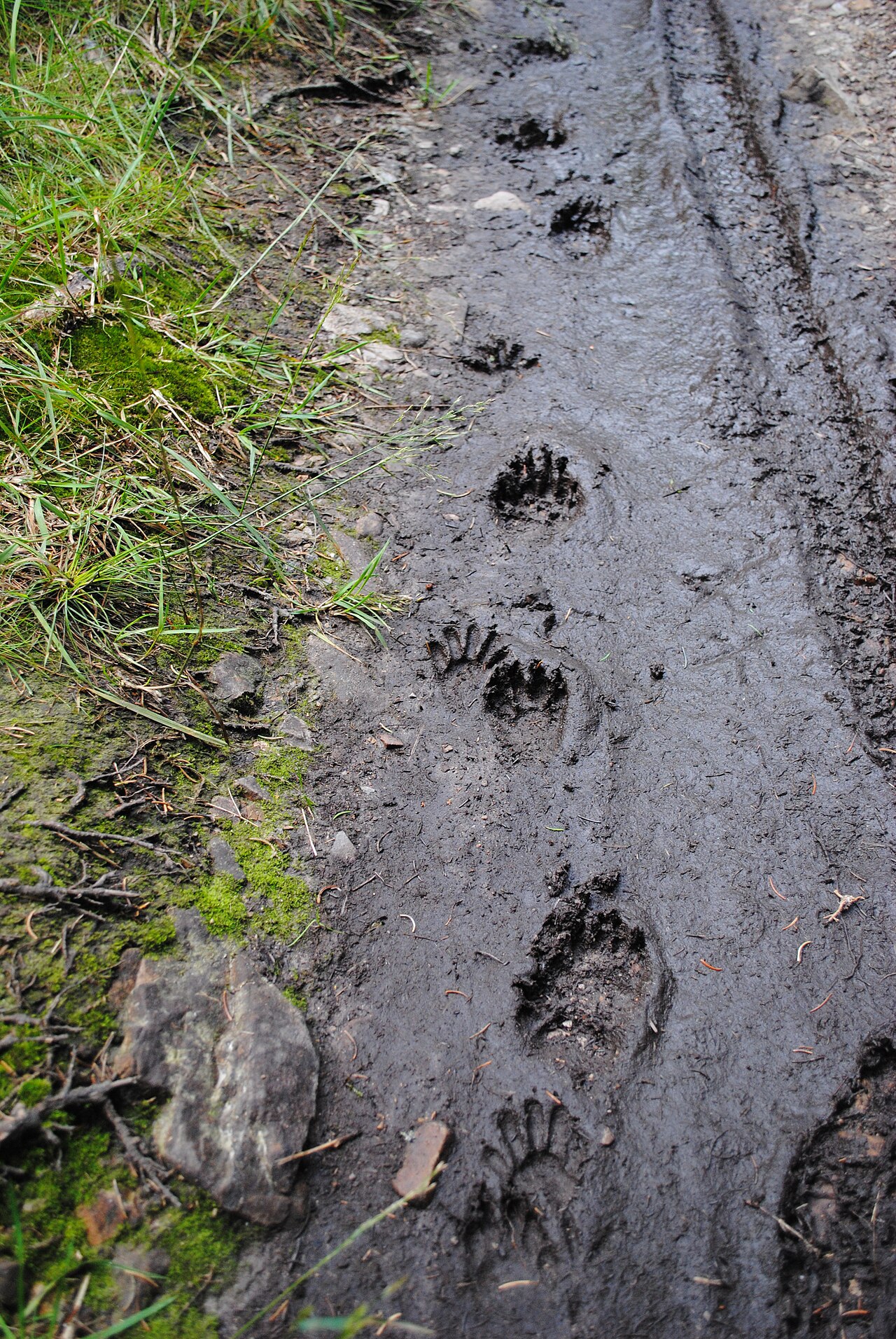
Raccoon vs opossum tracks split on one clue. Raccoon prints look like small human hands, with long, separate fingers and claw tips at the end. Opossum prints splay like a star, and the hind foot shows a clawless thumb pointing sideways. Find that thumb and you have your answer.
Opossum vs Raccoon, Five Clues in the Mud
Five clues separate the two prints. A print about 2 in long fits both animals, so size narrows the choice and the hind thumb decides it.
| Clue | Raccoon | Opossum |
|---|---|---|
| Size | Front about 2 to 3 in long, hind about 2.5 to 4 in | Front about 1.5 to 2.25 in, hind about 1.75 to 2.75 in |
| Toe shape | Five long, separate fingers like a small hand | Five toes spread wide like a star |
| Hind thumb | None, all five toes point forward | Thumb set apart and angled sideways |
| Claw marks | Claw tip at the end of each toe | Missing on many prints, especially on the hind foot, never on the thumb |
| Hind heel | Long, flat heel like a baby’s footprint | Short heel, print dominated by the thumb |
Raccoon Print Features, the Small Hand
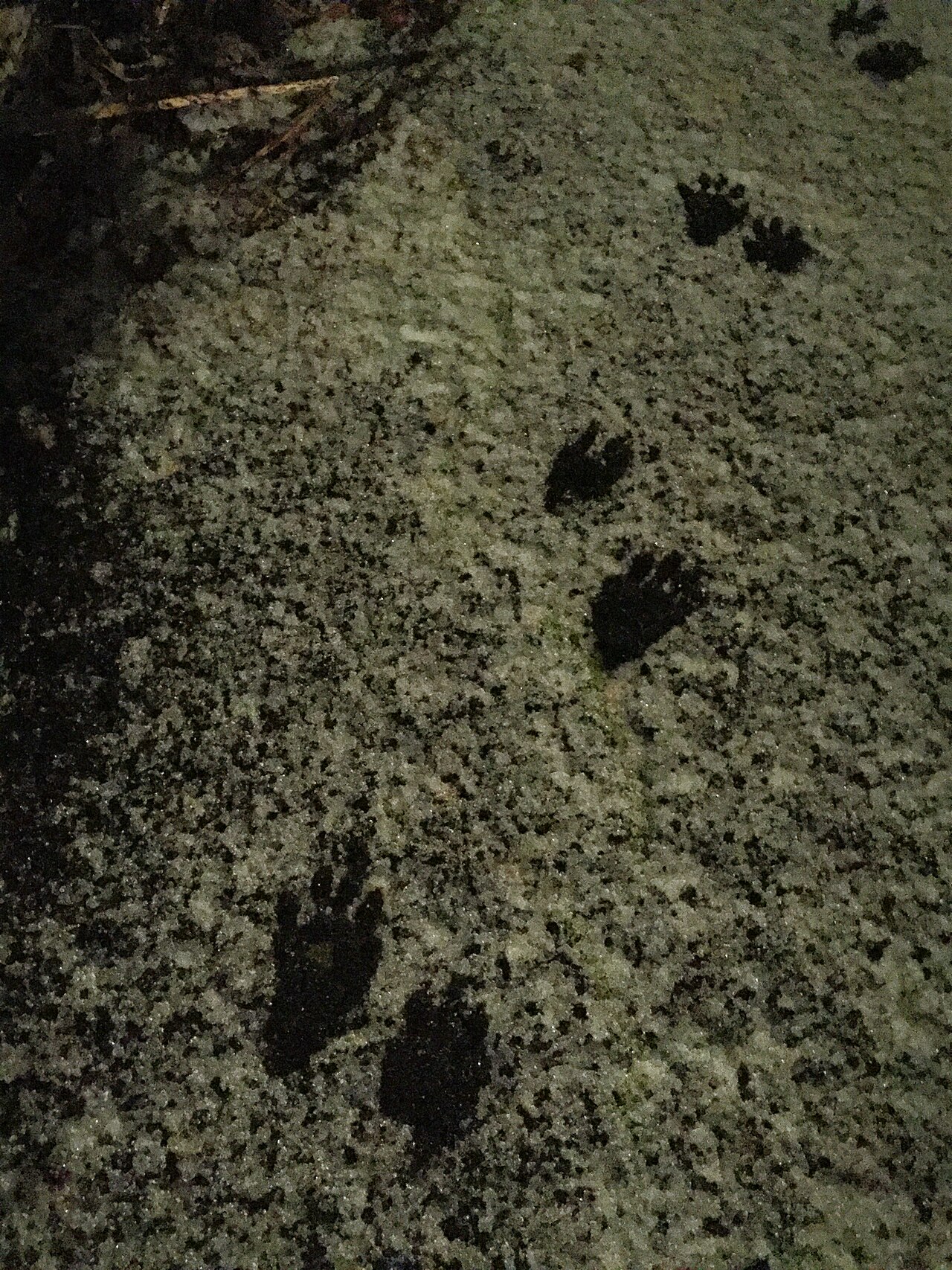
Raccoon tracks show five long, separate fingers with a claw tip on each, and all five toes point forward. The front print looks like a small hand with a broad palm pad. The hind print adds a long, flat heel.
Opossum Print Features, the Clawless Thumb
An opossum print looks like a star with a hitchhiker’s thumb. Each foot has five toes that fan out wide, and each toe ends in a round pad. The hind foot carries the giveaway, a thumb set apart from the other four toes and angled outward.
That thumb has no claw, so its tip prints as a smooth, round pad. Claws on the other toes sometimes register in the print, especially in soft mud, but they are less reliable than raccoon claws. The thumb exists for climbing. It lets an opossum grip branches the way your thumb grips a rail.
Trail Patterns in Mud and Snow
A walking raccoon sets each hind foot beside the opposite front foot, so the prints line up in pairs. A walking opossum often places its hind foot on or close to the front print, so the hind print can partly cover the front one.
Deep snow hides toes. Judge by the pairing pattern and the trail width instead. Melting snow enlarges prints and blurs the thumb, so read only fresh prints with crisp edges. A tail drag mark between the prints can point to an opossum, but many opossum trails show no tail mark at all, so do not rely on it alone.
Raccoons in winter stay active but den up during cold snaps. A week of fresh snow with no hand-shaped prints does not mean they have left.
Other Prints Mistaken for Either Animal
Skunks, cats, badgers and beavers leave prints that get confused with these two. A striped skunk (Mephitis mephitis) has five toes and long front claws, but its toes sit in a shorter arc than a raccoon’s. A domestic cat (Felis catus) shows four toes, no claw marks and a round overall print.
Badger tracks from the American badger (Taxidea taxus) show heavy front claws and toes set in a broad row, with long claw marks well ahead of the toes. A North American beaver (Castor canadensis) near water leaves hand-like front prints about 2 to 3 in long and much larger webbed hind prints.
Context Clues Around the Yard
Where prints are smudged, trash and droppings help identify the visitor. Raccoons pry lids off and tip trash cans over. Opossums pick at what spills. Muddy handprints on siding or on a pond rim point to a raccoon, because raccoons climb and handle things with their front paws.
Droppings can support the ID. Raccoons often return to shared latrine spots on decks, roofs or woodpiles, while opossums typically leave droppings scattered. Raccoon and possum poop differ in shape and placement, and a match between scat and print settles the question.
What Your Visitor Means for Family and Pets
Raccoons can carry the roundworm Baylisascaris procyonis, whose eggs in raccoon feces can cause rare but severe infections in people, the CDC reports. Not every raccoon is infected. Never touch droppings near the tracks.
Roundworm eggs in raccoon feces become infectious after 2 to 4 weeks and survive in the soil for several years. People get infected by swallowing eggs from soil or unwashed hands, so wear gloves and wash up after yard work near a latrine. Raccoons rank with bats, skunks and foxes among the animals most often reported with rabies in the U.S., mainly in the eastern and southeastern states, the CDC reports.
Never corner or feed the animal. Secure trash and pet food overnight, and bring pets inside after dark where fresh tracks show up. Getting rid of raccoons starts with those same steps.
Frequently Asked Questions
Do opossums have a thumb on their front feet?
No. Only the hind feet carry the clawless, opposable thumb. A front print alone shows five evenly spread toes, so find the hind print before you decide.
Does a tail line in the snow always mean an opossum?
No. Many opossum trails show no tail mark, and a raccoon tail can drag in deep snow. Rats drag their tails too, but their prints are much smaller and show four toes on the front foot.
Do opossum tracks show claw marks?
Yes, on the four outer toes in soft mud, though not on every print. The hind thumb never shows a claw, while a raccoon print shows a claw tip at the end of each finger.
Should I see a doctor after a raccoon scratch?
Yes, the same day, even for a small scratch. Post-exposure care is nearly 100% effective, the CDC reports, so do not wait to judge whether the raccoon looked sick.
Can raccoon urine near tracks make you sick?
Yes. Raccoon urine can carry Leptospira bacteria, which cause leptospirosis in people and pets. Illness starts 2 to 30 days after contact with contaminated water or soil. Wear gloves when you clean a spot where raccoons den, and keep dogs away from puddles near their trails.
Sources
- CDC, About Baylisascaris Infection
- CDC, About Rabies
- CDC, About Leptospirosis
- Maryland DNR, Key to Common Mammal Tracks