Baby Chameleon: Cost, Food and Care in the First Months
A baby chameleon is a fragile, fast-growing reptile with almost no reserves. Breeders sell them young, and the first months decide whether a small husbandry mistake stays small or turns into a lasting problem.
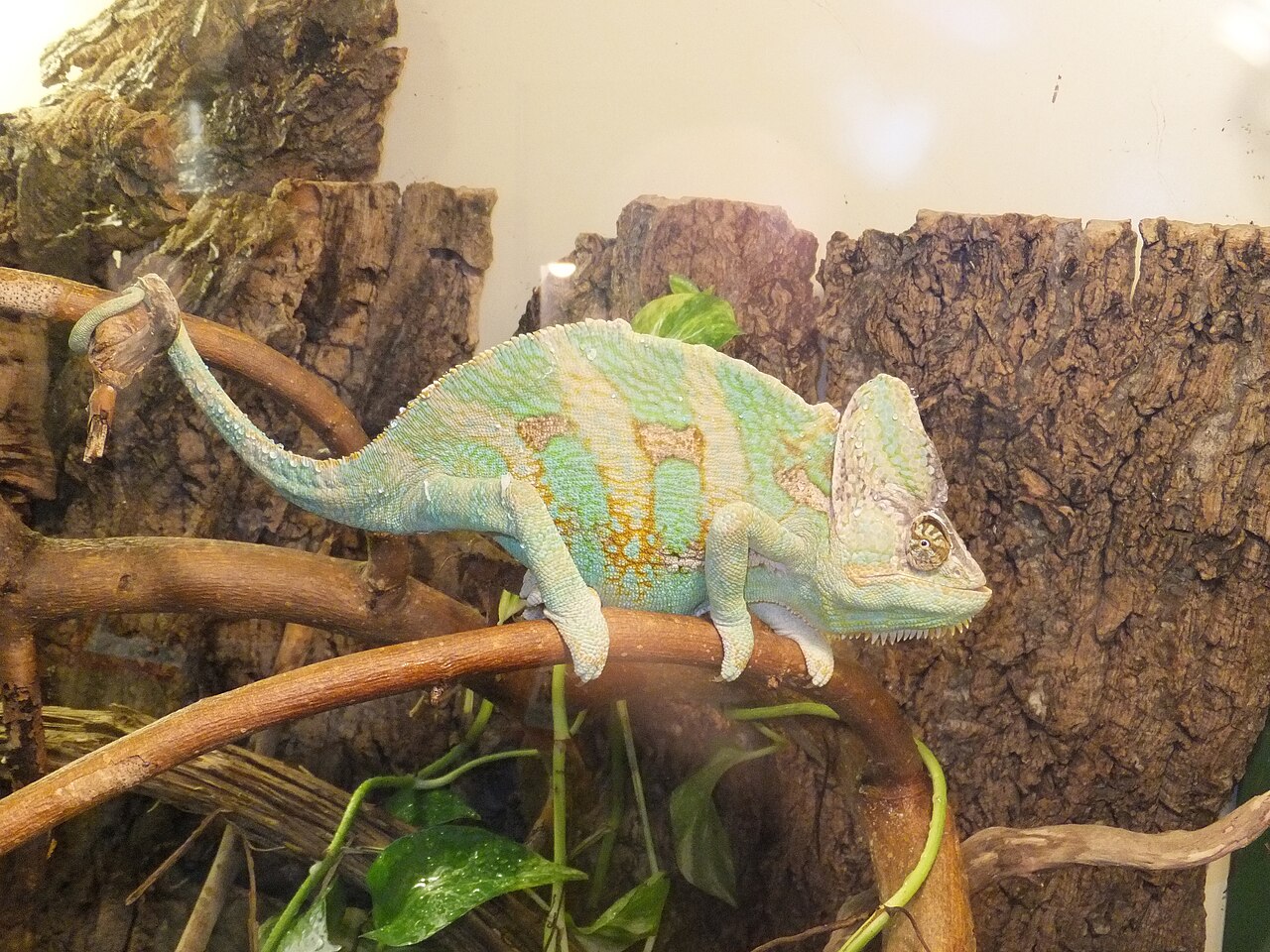
Veiled chameleons (Chamaeleo calyptratus) and panther chameleons (Furcifer pardalis) are among the species US buyers most often meet as babies, and both outgrow a starter setup within a year.
A veiled baby chameleon costs less and is easier to find than a panther baby. Pet stores and expos carry veiled babies, while panther babies sell by clutch from breeders. The enclosure, UVB and misting cost more than a veiled baby. Feed gut-loaded insects daily, mist leaves and add a UVB basking spot.
How Much Does a Baby Chameleon Cost, and Where Can You Buy One?
A veiled baby is the cheaper and easier buy, and a panther baby costs more because buyers pay for its parents. From cheapest to most expensive, the tiers run from a pet store veiled baby to a breeder veiled baby, then a panther baby of a common locality, then a panther baby from a documented, photographed line. Veiled chameleons breed readily in captivity, so pet stores, reptile expos and breeders all carry them. Panther babies come mainly from specialist breeders, and the locality and color line of the sire and dam set the price.
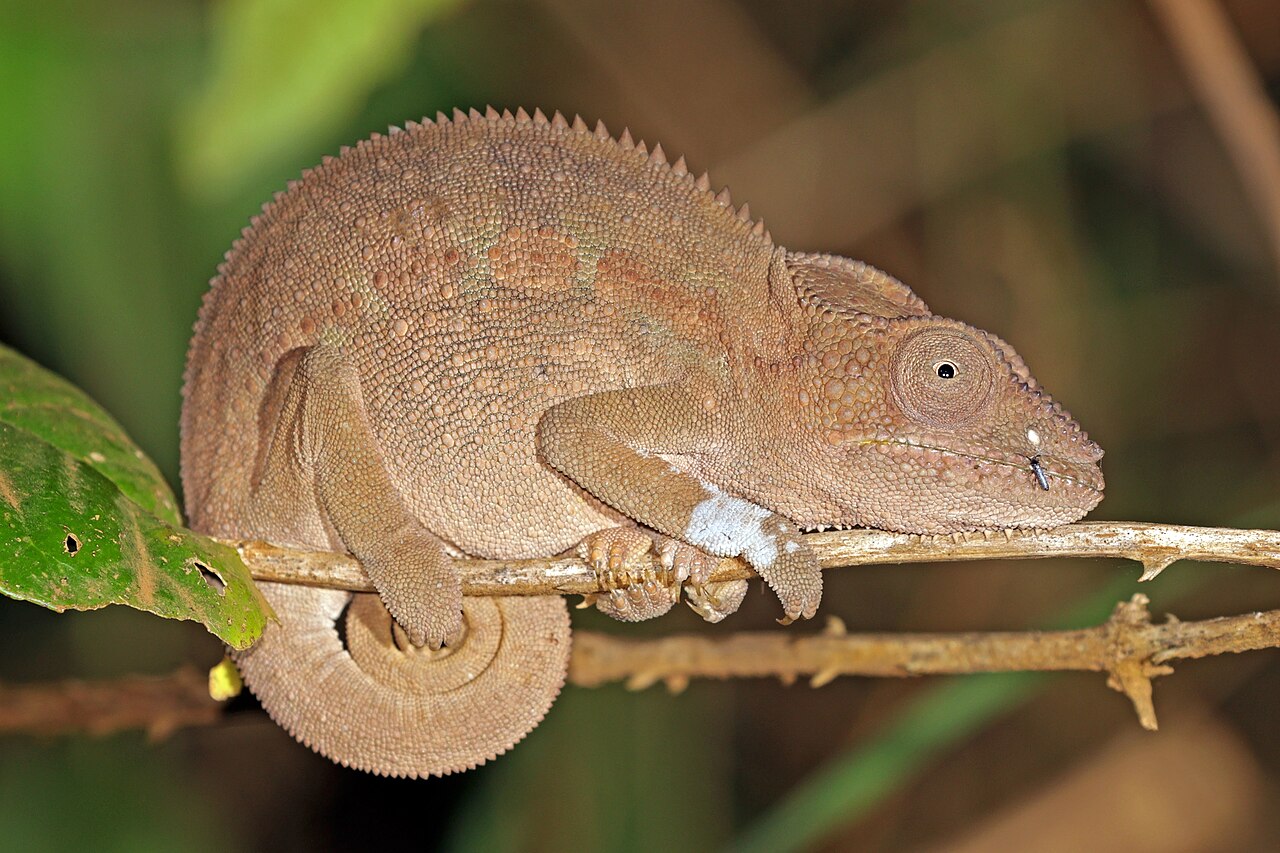
Captive-bred babies cost more than wild-caught animals and are worth the difference. A wild-caught chameleon arrives stressed and dehydrated, often carries parasites, and many never settle. A captive-bred baby has eaten feeder insects since its first day and knows the misting routine. Ask the seller for the hatch date and, for a panther baby, the parents’ locality, and walk away from anyone who cannot name them.
Panther chameleons are sold by clutch, so availability follows the breeding calendar. Breeders open preorders and waitlists when a clutch hatches and ship the babies once they eat well on their own, and overnight shipping adds to the price. The enclosure, UVB tube, lighting and misting system often cost more than the baby itself, especially with a veiled baby. Budget for the setup first and buy the animal second.
What Does a Baby Chameleon Look Like?
A baby chameleon looks like a miniature adult with duller colors. It hatches with the same grasping feet, the same turret eyes that move independently and the same curled tail. What it lacks is the color. Hatchlings show muted browns, grays and pale greens that hide them on bark and leaves.
Adult colors arrive gradually over months. Panther males show the change most, since their locality colors build up from a drab juvenile base. Veiled chameleons hatch with a low bump on the head that grows into the tall casque of the adult. Veiled males also carry a small heel spur on the back feet from hatching, so buyers sex them early.
Keepers split the first year into three stages. A hatchling is fresh from the egg, eats the smallest insects and stays drab. A juvenile has started to color and takes larger prey. A subadult looks like a slimmer adult that has not reached full size or full color.
Do Chameleons Lay Eggs or Give Birth?
Most pet chameleons lay eggs, and a few give birth to live young. Veiled and panther females dig a tunnel in damp soil, bury the clutch and leave. The eggs get no further attention from either parent.
A female lays eggs even without a male. The eggs are infertile, but she still needs to dig, so a pet female needs a laying bin of moist, packable soil deep enough to hold a tunnel. Without one she holds the eggs back, and that is a reason for a reptile vet visit.
Incubation lasts months, and the hatchlings dig themselves out with no help. Jackson’s chameleons are the live-bearing exception. Their babies arrive in a sticky membrane and wriggle free quickly. Babies are independent from the start and hunt on their own within the first days, and chameleon parents do not feed their young.
| Species | Egg-laying or live-bearing | Hatchling coloring |
|---|---|---|
| Veiled chameleon (Chamaeleo calyptratus) | Egg-laying | Pale green to tan, low casque bump |
| Panther chameleon (Furcifer pardalis) | Egg-laying | Brownish gray, locality colors come later |
| Jackson’s chameleon (Trioceros jacksonii) | Live-bearing | Dark brown to gray, males show tiny horn nubs |
| Carpet chameleon (Furcifer lateralis) | Egg-laying | Plain brown to gray |
| Pygmy leaf chameleon (Rieppeleon brevicaudatus) | Egg-laying | Brown and leaf-like, same as adults |
What Do Baby Chameleons Eat?
Baby chameleons eat small live insects and nothing else. Fruit flies feed the youngest hatchlings, and pinhead crickets and small roach nymphs follow as the baby grows. Keepers size prey with a simple rule. No insect should be longer than the space between the baby’s eyes. For a closely related question, see our guide to baby mosquito bites.
Gut-load every insect before it goes in. Crickets eat fresh greens and vegetables when fed them for a day, and they carry those nutrients into the chameleon. Never gut-load feeders with avocado or rhubarb, both toxic to reptiles. Dust the insects with calcium at most feedings and with a multivitamin at fewer feedings. Undusted insects leave a growing baby short of the calcium its bones need.
Chameleons go for moving prey. A cricket that crawls up a branch draws a strike, while a still insect in a dish gets ignored by many babies. Most chameleons strike hardest at moving crickets and roaches, and fatty larvae like waxworms are the food they grab most eagerly. Rotate several feeder types through the week instead of feeding one favorite. Waxworms, superworms and other fatty larvae are treats for an occasional day, not a staple.
How Long Can a Baby Chameleon Go Without Eating?
A baby chameleon should not go without food at all, because it has almost no reserves. An adult skips days without harm, but a baby needs to eat every day while it grows. No safe number of fasting days exists for a hatchling. Treat a single missed meal as a signal to check the setup that same evening.
Most refusals have a simple cause. A cold enclosure slows digestion, a shed takes the appetite for a day, and a baby fresh from shipping needs time to settle. Prey that is too large gets ignored even by a hungry baby.
Skipped meals combined with closed eyes during the day or a weak grip need a reptile vet, not more waiting. Remove uneaten crickets before lights out. A loose cricket bites a sleeping baby at night, and the wounds get infected.
Setting Up an Enclosure for a Baby Chameleon
A baby chameleon belongs in a screen or hybrid enclosure that moves air. Glass tanks trap stale, humid air, and chameleons need airflow to stay healthy. A hybrid with solid sides and a screen front and top holds humidity in a dry home without going stagnant.
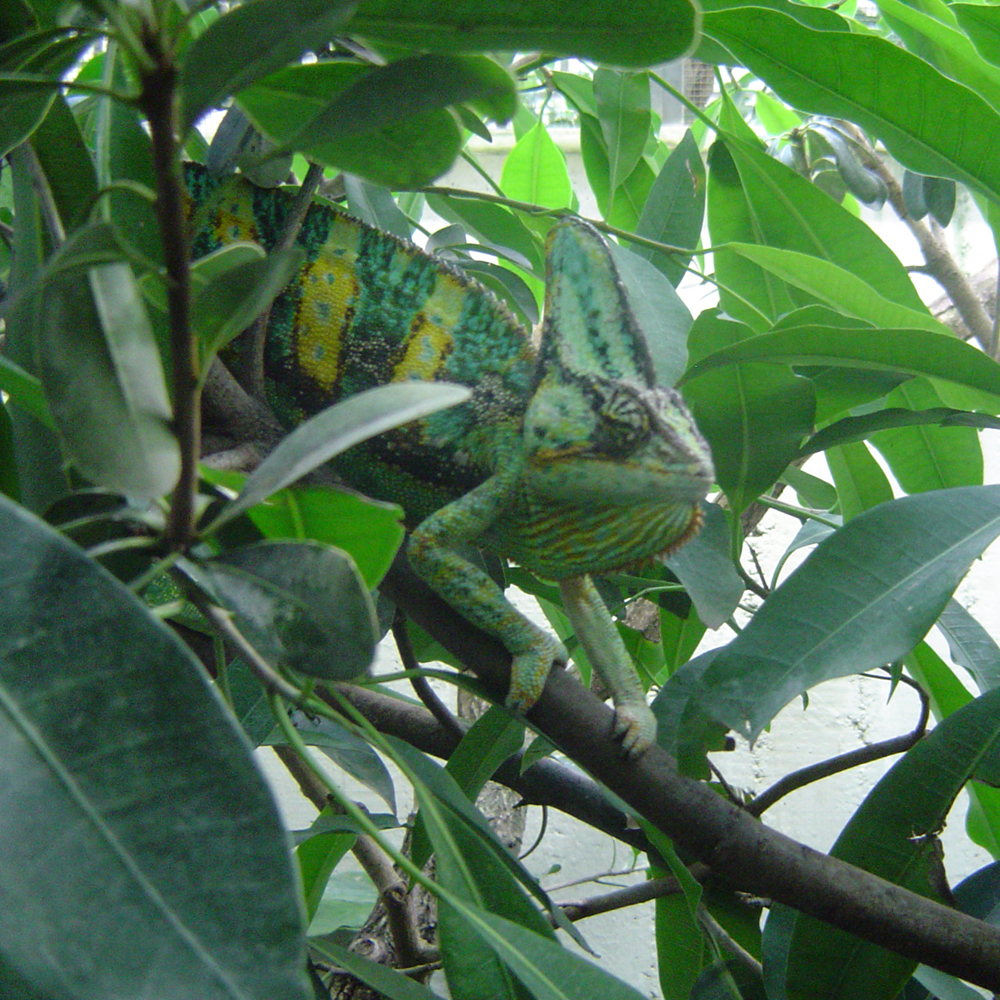
Start small and size up. A baby in a huge enclosure struggles to find its prey and its water, while a smaller starter enclosure keeps both within reach. Move to the adult enclosure once the chameleon hunts confidently and has grown into the space.
Fill the space with dense live plants for cover and for drinking droplets. Pothos is a common choice in chameleon enclosures because it tolerates misting and modest light, though it is mildly toxic to cats and dogs, so check it against a reptile-safe list first. Run a UVB tube across the top on a daily timer and replace it on the maker’s schedule, since tubes lose output long before they stop glowing. Add vertical branches in several thicknesses so tiny feet always find a grip.
Temperature, Basking and Night-Time Cold
A baby chameleon needs a warm basking spot at the top of the enclosure and cooler zones lower down. That gradient lets the baby regulate its own temperature by climbing up or down. A baby with nowhere cooler to go has no escape when the lamp runs hot.
Babies overheat faster than adults because their bodies are so small. Mount the basking lamp farther from the top branch than you would for an adult and check the spot with a thermometer at branch height. A baby that sits low with its mouth open is too hot.
Yes, chameleons cool down at night, and that drop is natural and healthy for them. Switch every light off at night, including colored bulbs sold as night lights. Add night heat only in a cold home, and use a ceramic heat emitter that gives heat without light. Never use a heat rock, because heat rocks burn reptiles that rest on them.
Daily Care: Water, Misting and Handling
A baby chameleon drinks only from droplets on leaves, so misting is its water bowl. Chameleons ignore standing water because they do not recognize it as something to drink. A bowl in the enclosure collects dirt and drowned crickets, and the baby still goes thirsty.
Mist several times a day and add a dripper that runs onto the leaves. Babies dehydrate faster than adults, and a missed misting shows on them sooner. Let the leaves dry between sessions. A constantly wet enclosure invites respiratory and skin infections.
Handle a baby as little as possible. Stressed babies stop eating, and a baby that stops eating loses ground fast. The daily routine is short and fixed. Lights on, mist, feed, spot-clean, mist again, lights off.
Signs of a Healthy, Happy Baby Chameleon
A happy chameleon is an undisturbed one, and it shows in calm colors, open eyes, a steady appetite and a firm grip. Chameleons do not seek company or play. Contentment for them means a stable routine, a safe perch and no threats in view.
Dark or flashing colors and hissing signal stress. Common triggers are a mirror or reflective surface, a dog or cat in view, and too much handling. Sunken eyes and a thin tail base point to dehydration. Soft, bent or swollen limbs suggest metabolic bone disease, the result of missing calcium or missing UVB.
Are Chameleons Hard to Care For?
Yes, for most first-time keepers. The care itself is not complicated, but it allows no missed days. Chameleons suit people who like to watch an animal and keep a strict routine, not people who want a pet to hold.
What Is Toxic to Chameleons?
Wild-caught insects are the most common hidden danger, because they carry pesticides and parasites. Feed only bred feeder insects from a supplier, never bugs from the yard or the porch light. Lizards must never eat fireflies, which are toxic to them, so never offer one to a chameleon.
Hibiscus, Ficus benjamina and Schefflera are common safe enclosure plants, while oleander, azalea and dieffenbachia never belong near a chameleon. Chameleons nibble leaves, and veiled chameleons do it on purpose. Rinse new plants well, because nursery plants arrive treated with sprays.
Household air is a second risk. Insecticide sprays, flea foggers and air fresheners harm small reptiles, so keep the enclosure out of rooms where they are used and never spray near it. Treated wood, glued decor and fertilized potting soil leach chemicals into a humid enclosure. Use untreated branches and plain unfertilized soil.
Salmonella and Hand Hygiene Around a Baby Chameleon
A baby chameleon can carry germs such as Salmonella that make people sick, even when it looks healthy. The CDC Salmonella page lists a multistate outbreak linked to pet veiled chameleons. People can pick up germs such as Campylobacter by touching animals or their food, water, poop, belongings or habitats such as cages and tanks.
Wash your hands with soap and water after you handle the chameleon or clean anything in its enclosure. CDC gives this advice for pets in general, and it matters most with a baby that gets fed and misted every day. Clean branches, plant pots and feeder cups outside the kitchen, never in a sink used for food or near food preparation.
Chameleon poop is the part of the enclosure to treat with the most care. Lift it out with a paper towel and wash your hands afterward.
Frequently Asked Questions
Can two baby chameleons live in the same enclosure?
No. Chameleons are solitary animals, and shared enclosures cause stress, nipping and competition at the feeding spot. The weaker baby eats less and falls behind in growth. Separate siblings early, give each its own enclosure, and keep them out of sight of each other so neither stays in a constant display.
How fast does a baby chameleon grow?
Within 12 months, veiled and panther babies approach adult size. Growth is fastest in the first months, and each shed marks a step up in size.
Can a baby chameleon eat fruit?
No, not as a real part of its diet. Veiled chameleons nibble leaves now and then, but babies need insects to grow, and fruit adds nothing they cannot get from well gut-loaded feeders. Put the fruit and vegetables into the feeder insects instead, and let the baby eat the insects.
Is a baby chameleon a good pet for young kids?
No, not as a pet the child handles. CDC advises that children younger than 5 should not handle or touch reptiles because of the risk of Salmonella. A chameleon stops eating when handled, so it suits an older child who watches and an adult who cleans.
Do baby chameleons need a vet check after purchase?
Yes. A fecal test for parasites within the first weeks catches problems before the baby loses weight.
Do baby chameleons shed their skin?
Yes. Babies shed more frequently than adults because they grow fast, and the old skin comes off in patches rather than in one piece. Raise the misting a little during a shed and never pull loose skin off.
Sources