Shrew Sounds: What Their Twitters, Squeaks and Clicks Mean
Shrew sounds are the thin, rapid twittering you hear under dead leaves or behind a baseboard, a noise so high that many people take it for an insect. Shrews are common across much of the US, yet most people only know them by ear.
Shrews make high-pitched twitters, sharp squeaks and chattering squeals, plus faint clicks used to sense their surroundings by echo. The clicks and many other calls are ultrasonic. Some twitters fall in the 5 to 8 kHz range and are audible but quiet, so you hear them up close, in leaf litter, woodpiles or walls.
What Do Shrews Sound Like?
A shrew sounds like a tiny bird or a cricket. Its main call is a thin, rapid twitter, a string of soft high notes that runs on while the animal moves. Up close it has a dry, buzzing edge. From a few feet away it fades into the background of a yard at night.
Other calls are sharper. A single squeak comes out when a shrew is startled or touched. When two shrews meet, the sound jumps to a loud, grating chatter. This squeal is the one people notice through a wall.
Pitch is the giveaway. Children and younger adults pick up shrew calls more easily, since hearing for high notes fades with age. Hedgehogs, which belong to the same insect-eating group, sound nothing alike. They huff, snuffle and snort at a far lower pitch.
| Shrew species | US range | Where you hear it |
|---|---|---|
| Northern short-tailed shrew (Blarina brevicauda) | Great Plains east to New England and the Great Lakes | Woodpiles, gardens, basements |
| Masked shrew (Sorex cinereus) | Northern US, Alaska, Appalachians | Damp leaf litter in moist woods |
| Least shrew (Cryptotis parva) | Eastern and central US | Grassy fields and lawn edges |
| American water shrew (Sorex palustris) | Northern states and western mountains | Stream banks |
| Southeastern shrew (Sorex longirostris) | Southeastern US | Old fields and wet thickets |
Shrew Echolocation and Clicks as a Navigation Tool
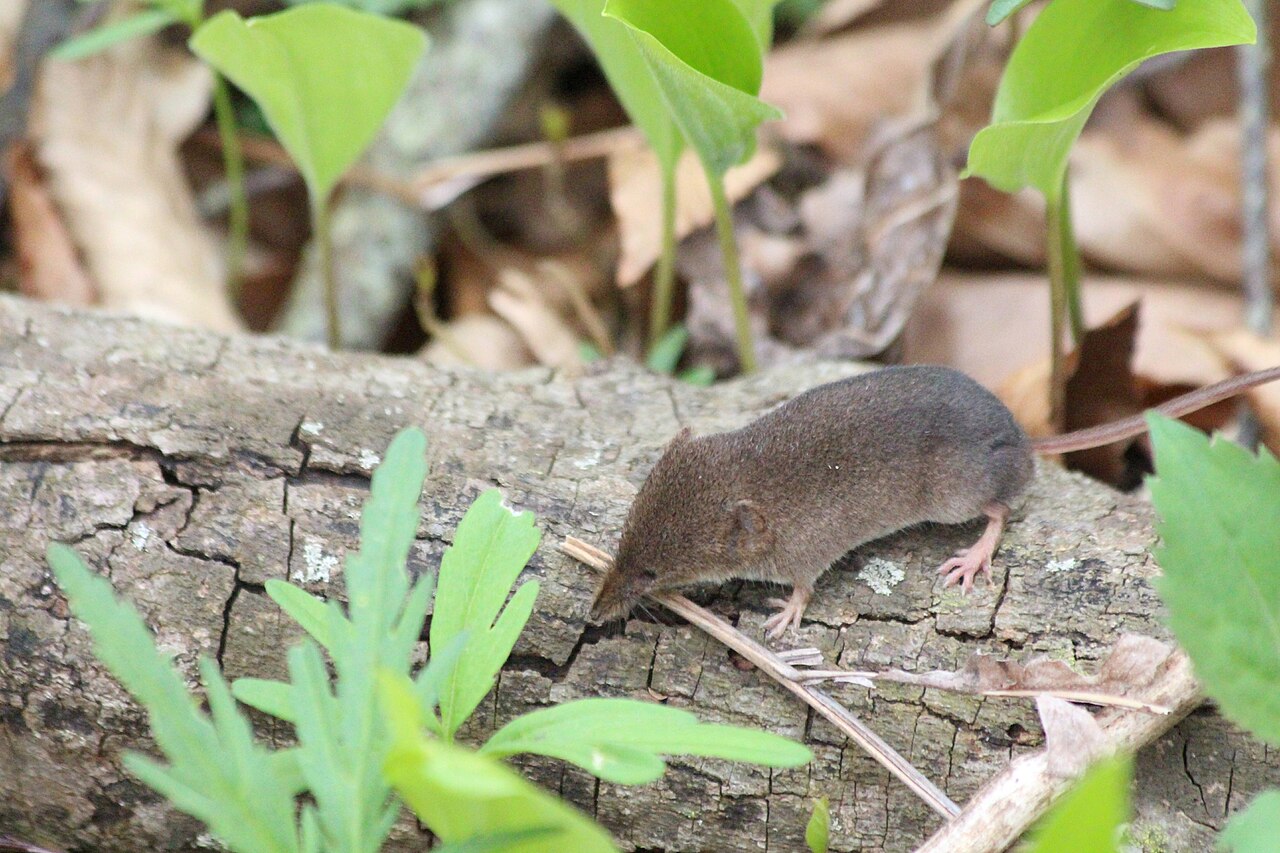
Some shrews appear to use clicks and twitters as a short-range navigation tool. Whether this is true echolocation is still debated. The northern short-tailed shrew (Blarina brevicauda) mainly gives short ultrasonic clicks in new surroundings. Other shrews of the genus Sorex give twitters, and researchers think they listen to the echoes. Their eyes are tiny and see little, so sound fills the gap.
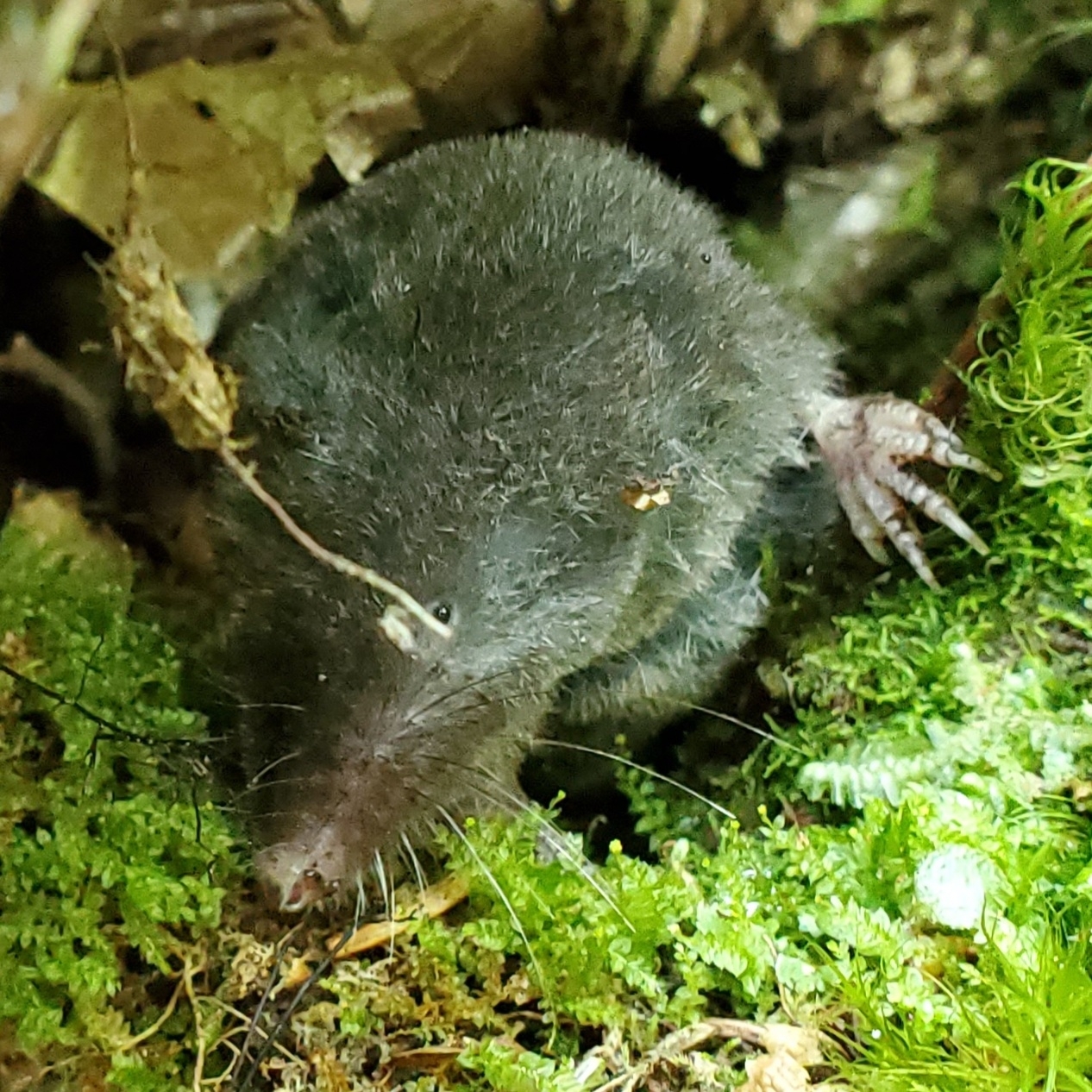
The echoes help a shrew sense nearby clutter and obstacles, though the evidence is not settled. The calls serve orientation, not the chase. Shrews find their prey by smell and touch once they are close.
This system is far simpler than real sonar. Bats run a much more powerful version, with loud calls that track flying insects in open air. Shrew echoes work over a short distance only.
What Each Shrew Call Means
Each shrew call matches a situation. A steady, soft twitter is the background sound of a foraging shrew and carries no alarm.
A chattering squeal means conflict. Shrews live alone and defend their space, so two animals that meet under the same log trade loud, rapid calls until one backs off. A piercing shriek signals distress. Most people hear it when a cat catches a shrew.
Quieter calls belong to family life. A mother and her nest young exchange soft calls that rarely reach human ears. Courtship calls join in during the breeding season.
When You Hear Shrews by Time of Day and Season
Shrews are active day and night, in short bursts between brief rests. Their metabolism runs so fast that they must feed again and again, so calls happen around the clock.
You notice them most at dusk and after dark. The yard is quieter then, and the faint twitter stands out against the silence. Daytime calls are just as common but get lost in traffic, birds and wind.
Loud thumps and squeaks in the attic at night point to a different animal. Flying squirrels or mice are more likely sources of that racket, since shrews stay low near the ground.
Spring and summer bring more shrew squeals overall, from breeding pairs and from young dispersing to find their own ground.
Where You Hear It in the House, Walls and Garden
In the House. A shrew in the house followed insects inside. It is hunting, not settling in, and it rarely stays once the insects run out.
In Walls or the Basement. A fast, bird-like twitter in a wall or basement points to a shrew. Mice squeak too, but they also gnaw and scratch inside walls. Check for droppings, gnaw marks and the animal itself.
In the Garden. Twittering under leaves, mulch, woodpiles and compost heaps is the classic outdoor find. These are the damp, insect-rich spots where shrews hunt.
When a Pet Brings One In. A dead shrew on the doormat is a common find. Cats catch shrews and leave them whole, so the body turns up intact.
Is It Good to Have Shrews in Your Yard?
Yes, shrews are good for most yards. Earthworms, beetle grubs, slugs, snails and insects make up most of their diet, and many of these chew garden vegetables and roots.
Unlike mice and rats, shrews do not gnaw wiring or raid stored food. Shrews carry their own hantaviruses, such as Camp Ripley virus in the northern short-tailed shrew, but these have not been shown to make people sick. Shrew poop still calls for a careful, gloves-on cleanup.
Handle a sick or dead shrew only with gloves, as the CDC advises for wild animals. If a shrew bites and breaks the skin, wash the wound right away with warm, soapy water. The northern short-tailed shrew has venomous saliva, so its bite can burn and swell, though it is rarely a medical problem. A live shrew outdoors needs no action at all.
Frequently Asked Questions
Is a shrew a mouse or a rat?
No. A shrew is neither. Shrews are insectivores related to moles and hedgehogs, with pointed snouts, tiny eyes and sharp teeth built for insects. Mice and rats are rodents, with blunter faces and gnawing front teeth that never stop growing.
Why don’t cats eat shrews?
Scent glands on a shrew’s flanks give off a strong, musky odor that most cats find unpleasant. Owls have a weak sense of smell and eat shrews readily, and shrew skulls are among the most common remains in barn owl pellets.
Is it rare to see a shrew?
No. Shrews are seldom seen, not scarce. They travel in runways under leaf litter, mulch and snow and reuse old mole tunnels, so they rarely cross open ground.
Do shrews make noise in winter?
Yes. Shrews do not hibernate and keep twittering in tunnels under the snow, where they hunt insects, larvae and spiders in the leaf layer. Snow muffles the calls, so you hear far fewer of them than in summer.
Can a bat detector pick up shrew sounds?
Yes. A bat detector registers the ultrasonic part of shrew twitters. Place it near a woodpile, compost heap or wall cavity at night. A shrew shows up as faint, rapid chirps that stay in one spot, while a bat passes in a single sweep.
Sources
- CDC, About Tularemia
- CDC, Emerging Infectious Diseases, Hantaviruses in Shrews
- Mammal Society, Northern Short-tailed Shrew
- PMC, Shrew Echo-based Orientation
- AIP Scilight, Shrews Use Echolocation to Navigate