Wild Turkey Spiritual Meaning: Good Omen, Symbolism and Signs
Spiritually, the wild turkey (Meleagris gallopavo) stands for abundance, gratitude and the strength of a close community. That is the core of the wild turkey spiritual meaning, and it makes a sighting a good omen rather than a warning. The bird lives on the ground, feeds in flocks and keeps watch for the group, so its message stays practical and close to home.
Each encounter adds its own shade. A feather leans toward protection, a dream toward what you are chasing or avoiding, and a bird on the road toward a pause before your next step. The bird itself never changes its message. It asks you to count what you have and share it.
As a sign, a wild turkey is a good omen. It points to a full table and the people who stand with you, and asks you to give thanks before you ask for more. Check the bird first. A dark bird soaring in tilting circles is likely a turkey vulture, which carries its own message.
What Does a Wild Turkey Symbolize Spiritually?
A wild turkey symbolizes abundance, gratitude and community. The bird feeds on acorns, seeds and insects across open woods and fields, and a flock that finds food shares the ground. That habit of plenty in company is the root of the symbol. The turkey does not stand for luck that falls from the sky. It stands for a table you fill together.
In the United States the bird is tied to Thanksgiving, and that link sharpens the gratitude theme. A turkey on a November roadside lands right when the country sits down to count its blessings. The timing turns an ordinary sighting into a reminder to say thank you out loud. Gratitude here is an action, not a mood.
Grounding is the third thread. A turkey spends its days on foot, scratching through leaf litter and walking between feeding spots, and it flies up into trees to roost or to escape. The bird keeps its weight on the earth and still knows how to lift off when it must. Turkey symbolism in each tradition covers how the domestic bird and its wild ancestor carry these themes in different places and stories.
Wild Turkey as Spirit Animal, Totem and Power Animal
The wild turkey as a spirit animal belongs to people who provide, host and hold a group together. They notice who has not eaten yet. They give without keeping score, and they feel most like themselves at a crowded table. The turkey also brings them a quieter lesson, which is to receive as readily as they give.
A totem is a lifelong emblem that you carry as part of your identity. A power animal is the one you call on for a specific stretch of life, when you need its strength for a while. With the turkey as a totem, generosity is your nature. With the turkey as a power animal, you borrow its patience and its sense of plenty during lean months, a move or a new job.
The turkey also teaches vigilance inside a community. A flock feeds with heads down, but one or two birds lift their heads to scan, and an alarm call sends the whole group moving. Turkey sounds range from soft clucks to sharp alarm putts, and each one keeps the flock informed. People with this spirit animal are the first to sense trouble and the first to speak up for others.
What Does It Mean When a Wild Turkey Crosses Your Path?
A wild turkey crossing your path means slow down and look at what you already have. The bird walks across a road at its own pace and rarely hurries for a car. That calm step is the message. Pause, give thanks for what is working, and reach out to someone in your circle before you push for the next thing.
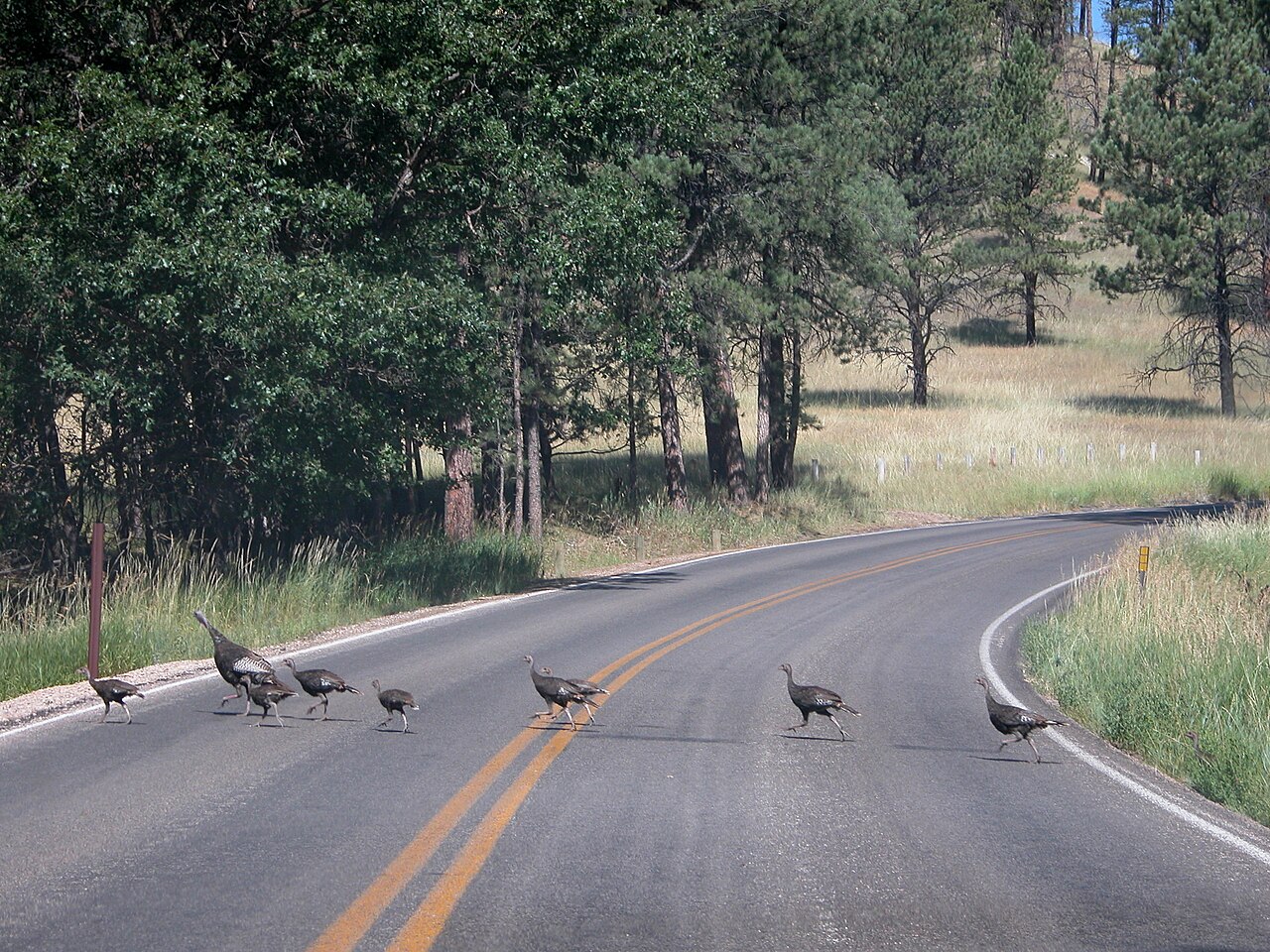
Repeated sightings in daily life point to a pattern you have been ignoring. A turkey in the yard on Monday and two at the trailhead on Friday ask the same question twice. Is there a relationship, a debt of thanks or a shared project that needs your attention? A group of turkeys, called a rafter, puts that question about community in front of you in plain view.
Make sure the bird is a turkey before you read the sign. A large dark bird soaring in slow circles with its wings in a shallow V is a turkey vulture (Cathartes aura), not a wild turkey. Turkey vulture spiritual meaning centers on cleanup, release and renewal, a different message from the turkey’s call to gratitude. A bird on foot that runs or flushes into a short, loud flight is the turkey.
Is Seeing a Wild Turkey a Good Omen?
Yes, seeing a wild turkey is a good omen. It signals a season of enough, with food, support and company within reach. The bird carries no death or misfortune theme of its own. A warning appears only in how the encounter unfolds, such as a turkey that blocks your way or a dream in which the flock scatters.
| Encounter | What it points to | What to do next |
|---|---|---|
| One turkey crossing your path | A pause before a decision | Slow down and list what is already working |
| A flock in your yard | Support from family or friends | Accept an invitation or host one |
| Repeated sightings in one week | A neglected relationship or debt of thanks | Call the person you keep thinking about |
| A turkey feather on a trail | Protection and steadiness | Keep your guard up without shutting people out |
| A turkey chasing you in a dream | An obligation you are avoiding | Name the duty and set a date for it |
| A turkey vulture circling overhead | Release and renewal, not plenty | Clear out what has run its course |
Prophecy enters only through timing. A turkey before a family gathering, a harvest, a move or a hard conversation points to an outcome you build with others, not one you meet alone. Treat it as a forecast of support. Then go and earn it.
What Does a Turkey Feather Symbolize?
A turkey feather symbolizes protection and grounding. It comes from a bird that survives by watching, blending into leaf litter and staying close to the earth. Finding one on a trail is a prompt to stay steady and keep your guard up without closing yourself off.
Wild turkeys are game birds managed by state wildlife agencies, and possession rules for their feathers differ by state. Feathers from a legally harvested bird can be kept in many states, but check with your state agency before you keep, sell or craft with a found feather. Do not mix it up with a hawk, eagle or owl feather, which falls under stricter federal rules.
Handle any found feather with clean habits. USDA APHIS reports that the H5N1 strain of avian influenza is present in wild birds worldwide. The CDC advises washing your hands after touching birds or their droppings, so wash up after you pick up a feather.
Wild Turkey Dream Meaning
A wild turkey in a dream points to your relationship with plenty and with the people around you. A calm turkey feeding near you mirrors a stretch of contentment. A thin or lone turkey points to a need you have not voiced, more for company than for money.
A turkey that chases you signals an obligation you keep avoiding, such as a family duty or a promise to host. A turkey that runs away from you reflects an opportunity slipping out of reach because you hesitated. Hunting a turkey in a dream points to effort, the work it takes to provide.
Context decides the reading, not a fixed rule. Note where the dream happened, who was with you and how you felt on waking. A turkey at a holiday table and a turkey in a dark forest carry different messages, even though the bird is the same.
What Does God Say About Turkeys?
The Bible says nothing about turkeys by name. Wild turkeys are native to North America, and the biblical texts were written long before Europeans met the bird. No verse mentions a turkey, and any quote that claims otherwise is invented.
The Bible does speak about birds in general. In Matthew 6:26, Jesus says, “Look at the birds of the air: they neither sow nor reap nor gather into barns, and yet your heavenly Father feeds them.” For a Christian reader, a turkey foraging in a field fits that verse well. It is a picture of provision and of trust that the next meal will come.
What Does a Wild Turkey See?
A wild turkey sees a very wide field of view in full color. Its eyes sit on the sides of its head, so it watches almost all the way around without turning, and a quick turn of the neck covers the rest. It spots movement fast, which is why hunters stay so still in camouflage.
The bird is active by day and roosts in trees at night, and its sharp daytime vision keeps it alive. That alertness is the real basis for the turkey’s lesson in mindfulness. Watch what is around you, notice small changes and act early. Turkey tracks in mud or snow show where a flock has fed even when the birds stay out of sight.
Wild turkey identification and behavior covers the bird’s plumage, habitat and range in detail. Knowing the living bird keeps the symbolism honest. The turkey’s message of plenty and watchfulness comes from how it actually lives.
Frequently Asked Questions
Are turkeys good omens?
Yes, turkeys are good omens of plenty and support. Benjamin Franklin praised the bird in a private 1784 letter to his daughter, calling the turkey “a much more respectable bird” than the bald eagle. He was not campaigning for a national bird, but his respect fits the turkey’s steady, grounded image.
Is it rare to see a wild turkey?
No, wild turkeys are a common sight in much of the United States today. The bird declined sharply by the early 1900s, then recovered through restoration and reintroduction programs run by state wildlife agencies. Flocks now feed in suburbs, farm fields and woodlots, so a sighting is ordinary but still worth noticing.
What is a wild turkey a symbol of?
A wild turkey is a symbol of abundance, gratitude, community and grounding. Each theme comes from its behavior, since flocks feed together, keep watch for one another and stay on the ground most of the day. In the United States, its place on the Thanksgiving table adds a strong link to giving thanks.
Can you keep a wild turkey feather?
Yes, in many states you can keep a feather from a legally harvested wild turkey. States, not the federal migratory bird rules, regulate possession of this game bird, and the details differ. Check your state wildlife agency before selling or crafting with feathers, and wash your hands after handling them.
What kind of spirit is wild turkey?
The wild turkey is a provider spirit, a guide for people who feed, host and protect a group. It rewards generosity and patience over quick wins. It also asks you to accept help, because a flock survives only when every bird both gives and receives.
Do wild turkeys fly?
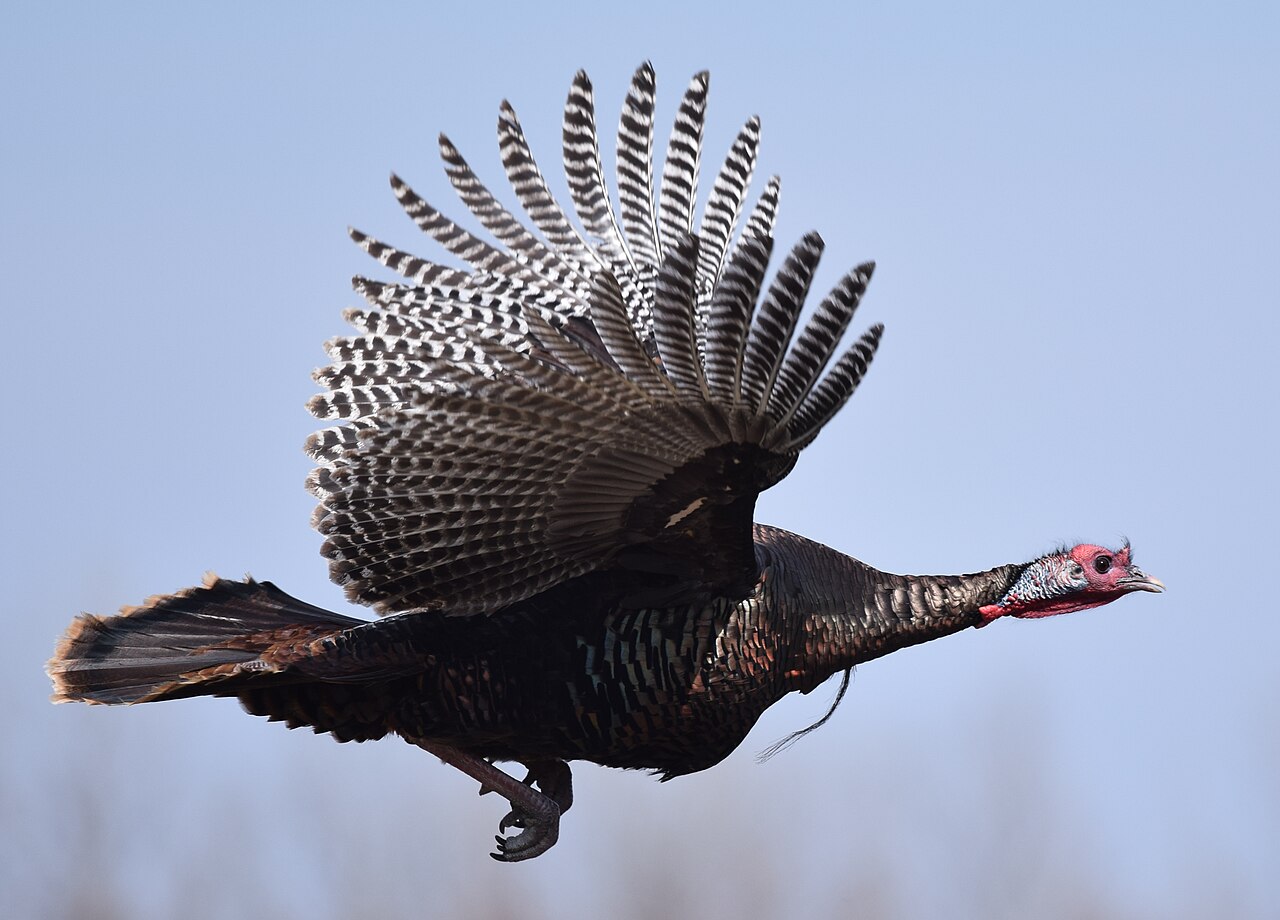
Yes, wild turkeys fly well over short distances despite their heavy bodies. They burst into flight to escape danger and fly up into trees to roost each night. That ability to rise from the ground when needed adds a second layer to the bird’s grounded symbolism, steady but never stuck.
Sources
- USDA APHIS, H5N1 Highly Pathogenic Avian Influenza
- CDC, Healthy Pets: Birds
- Cornell Lab of Ornithology, All About Birds: Wild Turkey Overview