Great Horned Owl: Identification, Sounds, and Facts
The Great Horned Owl is a large, powerful, and widespread owl of the Americas, easily recognized by its prominent feathered ear tufts, yellow eyes, and deep, resonant hooting. Standing up to two feet tall with a wingspan approaching five feet, it is North America’s most formidable owl, an apex nocturnal predator that hunts everything from mice to skunks and even other raptors. Found from Arctic forests to tropical rainforests and busy city parks, it is also one of the most adaptable birds on the continent. This guide covers how to identify a Great Horned Owl, where it lives, what it eats, the sounds it makes, how it nests, and the facts that make this “tiger of the sky” so remarkable.
| Feature | Detail |
|---|---|
| Scientific name | Bubo virginianus |
| Length | 18 to 25 in (46 to 63 cm) |
| Wingspan | 40 to 57 in (101 to 145 cm) |
| Weight | 2 to 5.5 lb (0.9 to 2.5 kg) |
| Range | Throughout North and South America |
| Diet | Mammals, birds, reptiles; a true generalist |
| Conservation | Least Concern (common) |
How to identify a Great Horned Owl
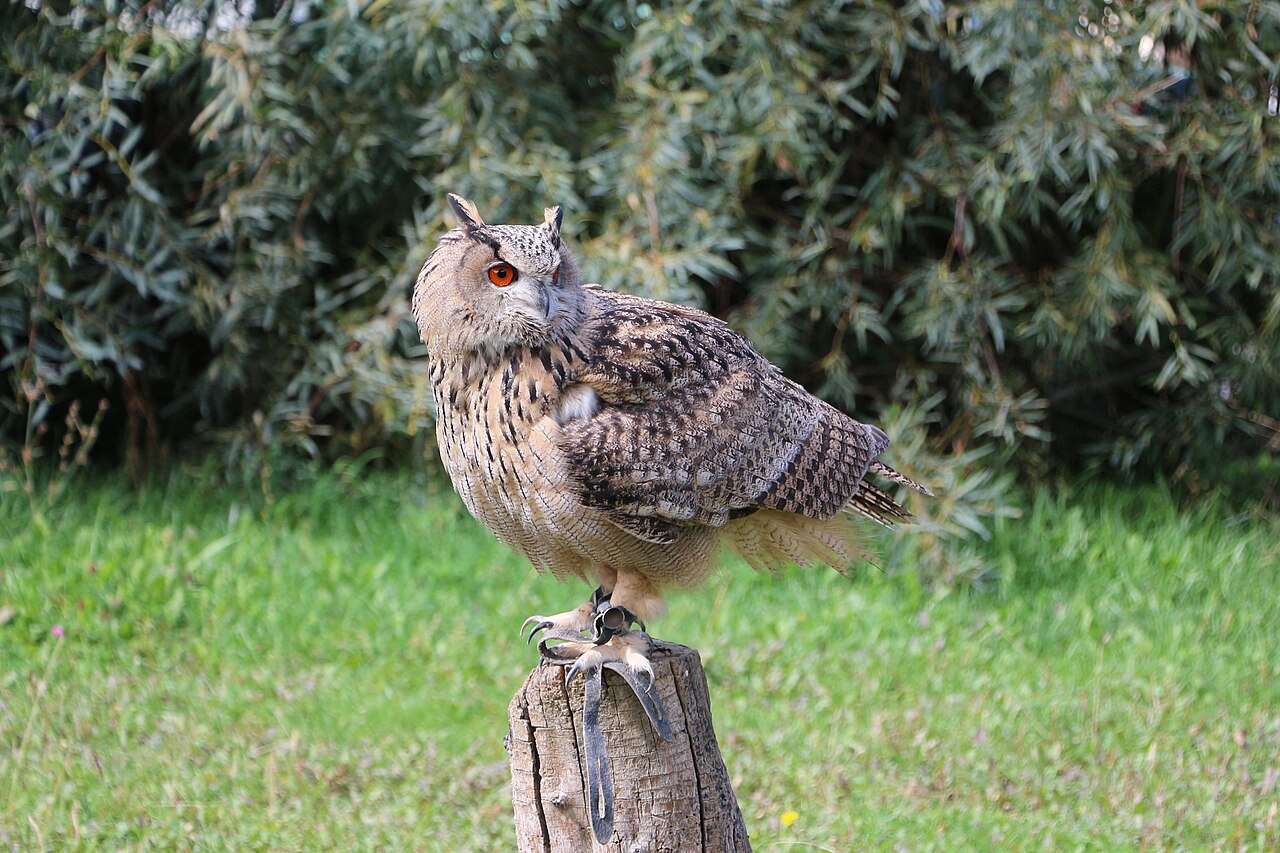
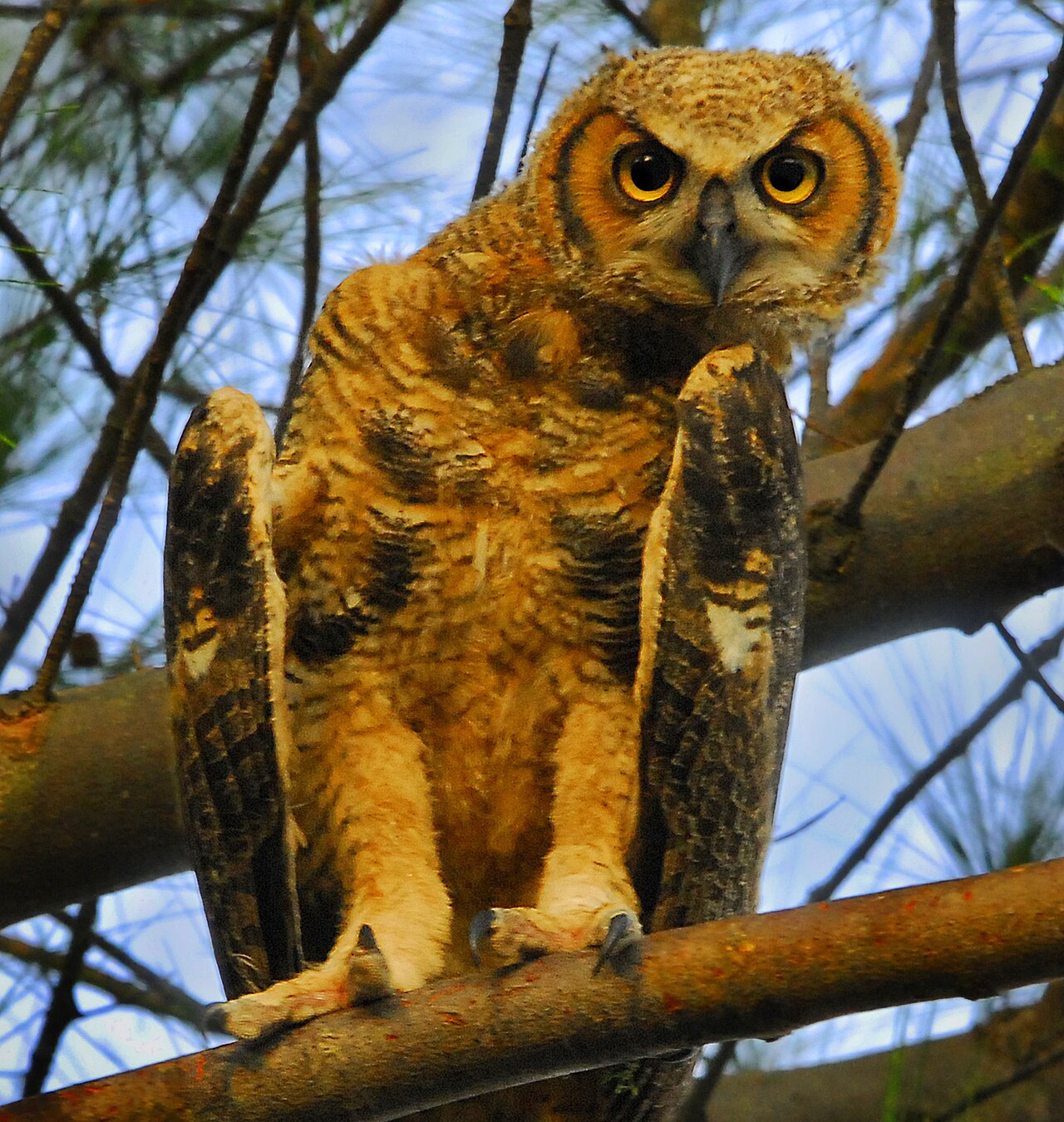
The Great Horned Owl is a big, bulky owl with two distinctive tufts of feathers on its head, the “horns” that give it its name, though these are neither ears nor horns, just display feathers. Its eyes are large and bright yellow, set in a rusty-orange facial disk bordered in black, and a crisp white patch marks its throat. The body is mottled gray-brown for camouflage, and the underparts are finely barred. Females are noticeably larger than males, as in most owls.
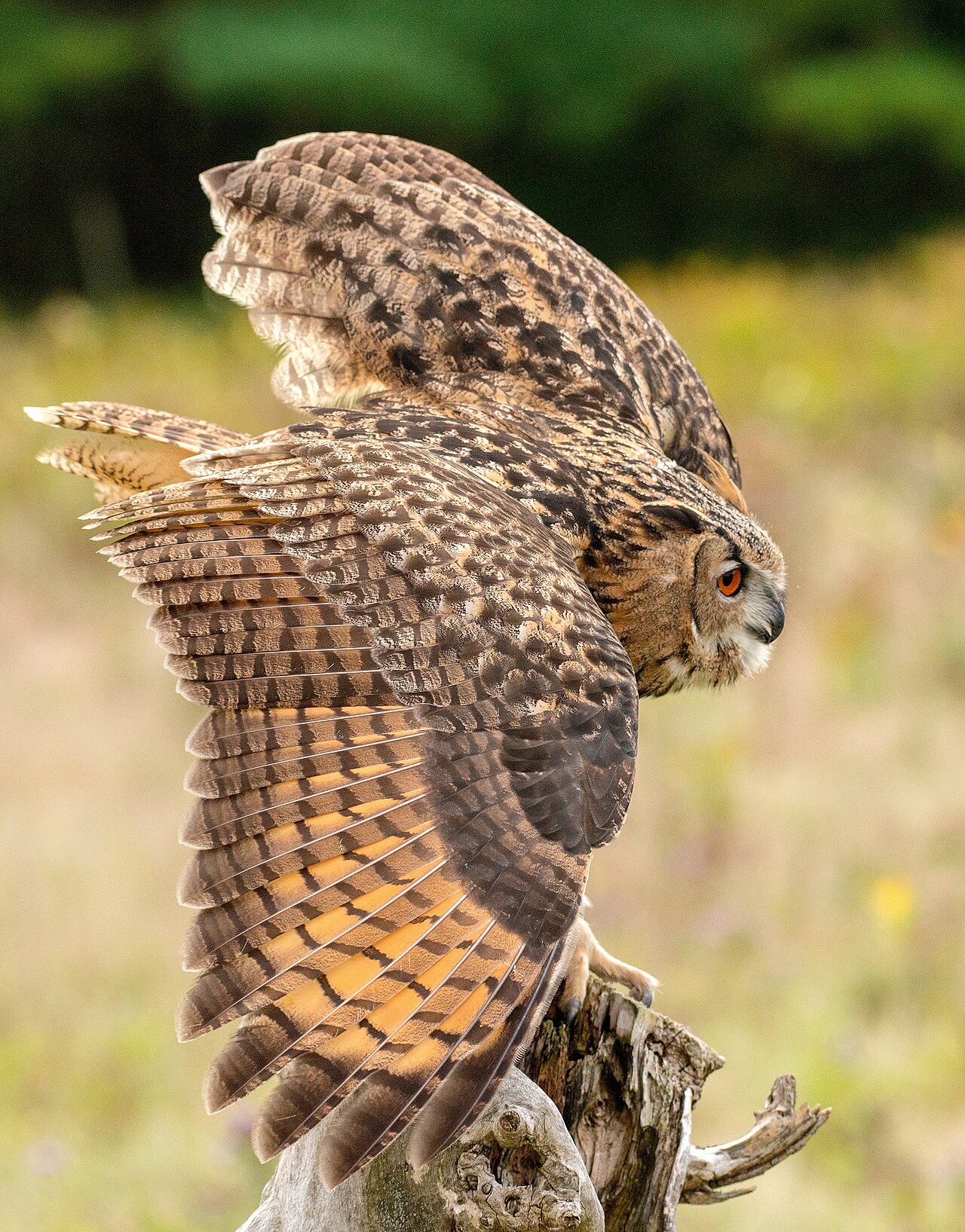
Size is the first clue: this is a heavy owl, far larger than a screech-owl and bulkier than a Barred Owl, with a wingspan that can reach nearly five feet. In flight it looks broad-winged and powerful, with slow, deep wingbeats and near-silent flight thanks to soft-fringed feathers. If you see a large owl with ear tufts and yellow eyes, especially at dusk, the Great Horned Owl is the likeliest candidate across most of the continent. Our guide to owl types helps place it among relatives.
Range and habitat
Few birds are as widespread as the Great Horned Owl. It lives from the treeline of northern Canada and Alaska south through every U.S. state, Mexico, and much of South America, one of the most broadly distributed owls in the Western Hemisphere. Its secret is flexibility: it thrives in deciduous and evergreen forests, deserts, wetlands, grasslands, farmland, and even suburban neighborhoods and city parks with enough trees.
This adaptability means a Great Horned Owl may be roosting closer than you think. They favor a mix of open hunting ground and wooded cover for roosting and nesting, and they are highly territorial, often staying in the same area year-round. Listen for their hoots on late-winter evenings, when pairs are most vocal near the edges of towns and woodlots. According to the Cornell Lab of Ornithology, the Great Horned Owl is among the most common owls in the Americas precisely because of this remarkable habitat range.
What Great Horned Owls eat
The Great Horned Owl is a fierce and versatile hunter with one of the broadest diets of any North American raptor. It takes mammals of all sizes, rabbits, hares, squirrels, mice, voles, and even skunks, which few predators will touch, along with birds up to the size of geese and other raptors, including hawks and smaller owls. It will also eat reptiles, amphibians, and large insects. This range is why it survives almost anywhere.
Its weapons are its talons: a Great Horned Owl’s grip is extraordinarily strong, capable of exerting enough force to sever the spine of large prey, and it hunts by dropping silently from a perch onto unsuspecting animals. Hunting mostly at night, it relies on exceptional hearing and low-light vision. For the wider picture of owl feeding, see our guide to what owls eat.
Great Horned Owl sounds and calls
The Great Horned Owl is the classic “hoot owl,” and its call is the deep, soft, resonant hooting most people picture when they imagine an owl. The typical song is a series of four to five muffled hoots, often written as hoo-h’HOO-hoo-hoo, carrying far through the night. Males and females duet, with the male’s voice deeper than the female’s despite his smaller size, a distinctive quirk. Pairs are most vocal in fall and winter as they establish territory and bond before their very early breeding season.
Beyond hooting, Great Horned Owls also bark, hiss, and scream, and nestlings give raspy begging calls. Learning the signature hoot is one of the easiest ways to detect this owl, since it calls readily after dusk and before dawn. If you hear deep, evenly spaced hoots on a winter night in North America, you are almost certainly listening to a Great Horned Owl.
Nesting and life cycle
Great Horned Owls do not build their own nests. Instead they take over the abandoned stick nests of hawks, crows, herons, or squirrels, or use cliff ledges, tree cavities, and even artificial platforms. They are among the earliest-nesting birds in North America, often laying eggs in January or February while snow is still on the ground, which gives their young a head start on the long process of growing up.
The female lays one to four eggs and incubates them for about a month while the male brings food. Owlets hatch helpless and grow quickly, clambering onto nearby branches (“branching”) before they can fly and remaining dependent on their parents for months. Great Horned Owls are famously fierce nest defenders, willing to strike intruders, including humans, that venture too close, so a nest is best admired from a respectful distance.
Conservation and fascinating facts
The Great Horned Owl is listed as Least Concern and remains common across its enormous range, though like all raptors it faces threats from vehicle collisions, poisoning through rodenticides, and habitat loss. Its abundance and adaptability, however, make it one of the great conservation success stories simply by persisting alongside people. It is a year-round resident almost everywhere it occurs.
A few facts capture its reputation: it is one of the only animals that regularly preys on skunks, it can rotate its head about 270 degrees to compensate for eyes that cannot move in their sockets, and its flight is nearly silent thanks to comb-like feather edges that muffle sound. Culturally, owls have long inspired owl symbolism and the beliefs behind what it means to see an owl. To find owls near you, our regional guides like types of owls in Texas are a good starting point.
Great Horned Owl versus other large owls
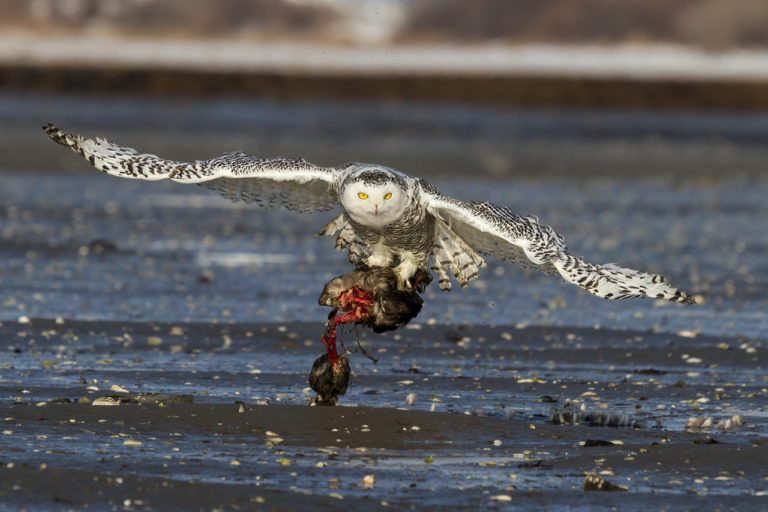
Because the Great Horned Owl is so widespread, it is the owl most others get compared to. The best way to separate it from the Barred Owl is the head and eyes: the Great Horned has prominent ear tufts and yellow eyes, while the Barred Owl has a smooth round head and dark eyes. The Barn Owl is easy, with its white heart-shaped face and dark eyes, and it screeches rather than hoots. The Snowy Owl is white and lacks ear tufts.
Size and shape help at a distance. The Great Horned Owl is bulkier than a Barred Owl and much larger than the little ear-tufted screech-owls, which are only the size of a soda can. If you see a big, broad owl with feathered “horns” and a barred chest at dusk, especially one giving deep hoots, the Great Horned Owl is almost always the answer across North America.
Ear tufts, feathers, and silent flight
The Great Horned Owl’s most famous features, its ear tufts, are widely misunderstood. They are not ears and not horns, just tufts of feathers called plumicorns that the owl raises for display and camouflage, helping it look like a broken branch. The real ears are hidden openings on the sides of the head, and they are slightly asymmetrical, which sharpens the owl’s ability to pinpoint prey by sound.
Its feathers are built for stealth. The leading edges of the flight feathers are fringed like a comb, breaking up the air that would otherwise rush noisily over the wing, so the owl flies almost silently. Found feathers are large and softly barred, though remember that possessing feathers of native owls is illegal under federal law, as covered in our feather identification guide. Admire and photograph them where they lie.
Related reading: Burrowing Owl.
Frequently Asked Questions
How big is a Great Horned Owl?
Great Horned Owls are large, measuring 18 to 25 inches long with a wingspan of 40 to 57 inches and weighing 2 to 5.5 pounds. Females are larger than males, and this is one of the biggest owls in North America.
What does a Great Horned Owl sound like?
Its signature call is a series of deep, soft, resonant hoots, often written as hoo-h’HOO-hoo-hoo. Pairs duet, and they are most vocal on fall and winter nights.
What do Great Horned Owls eat?
They are generalist predators eating mammals like rabbits, squirrels, mice, and even skunks, plus birds, reptiles, and large insects. They are one of few predators that regularly hunt skunks.
Are Great Horned Owls dangerous?
They are not a danger to people in daily life, but they are powerful predators and fierce nest defenders that may strike if you approach a nest with young. Admire them from a distance.
Do Great Horned Owls have ears on their heads?
No. The two tufts that look like ears or horns are just display feathers. The owl’s actual ear openings are hidden on the sides of its head within the facial disk.
Where do Great Horned Owls live?
Almost everywhere in the Americas, from Arctic forests to deserts, wetlands, farmland, and city parks. Their adaptability makes them one of the most widespread owls in the Western Hemisphere.
When do Great Horned Owls nest?
Very early, often laying eggs in January or February. They reuse the old stick nests of hawks, crows, or squirrels rather than building their own.
How strong is a Great Horned Owl’s grip?
Extremely strong. Their talons can exert enough force to sever the spine of large prey, which is how they subdue animals as big as rabbits and other raptors.