Great Gray Owl: Identification, Facts, and Habits
The Great Gray Owl is the tallest owl in North America, a majestic, silvery-gray phantom of northern and mountain forests with a huge round face, piercing yellow eyes, and an air of quiet mystery. Despite its towering size, much of its bulk is fluffy insulating feathers, so it actually weighs less than the stockier Great Horned Owl or Snowy Owl. Famous for hunting voles it can hear beneath deep snow, and for occasionally drifting south in dramatic winter irruptions, it is one of the most sought-after owls on the continent. This guide covers how to identify a Great Gray Owl, where it lives, its remarkable hunting, its deep calls, and how it nests.
| Feature | Detail |
|---|---|
| Scientific name | Strix nebulosa |
| Length | 24 to 33 in (61 to 84 cm) |
| Wingspan | 54 to 60 in (137 to 152 cm) |
| Weight | 1.5 to 4 lb (0.7 to 1.8 kg) |
| Range | Boreal and montane forests of the north and West |
| Diet | Voles and pocket gophers |
| Conservation | Least Concern (local and elusive) |
How to identify a Great Gray Owl
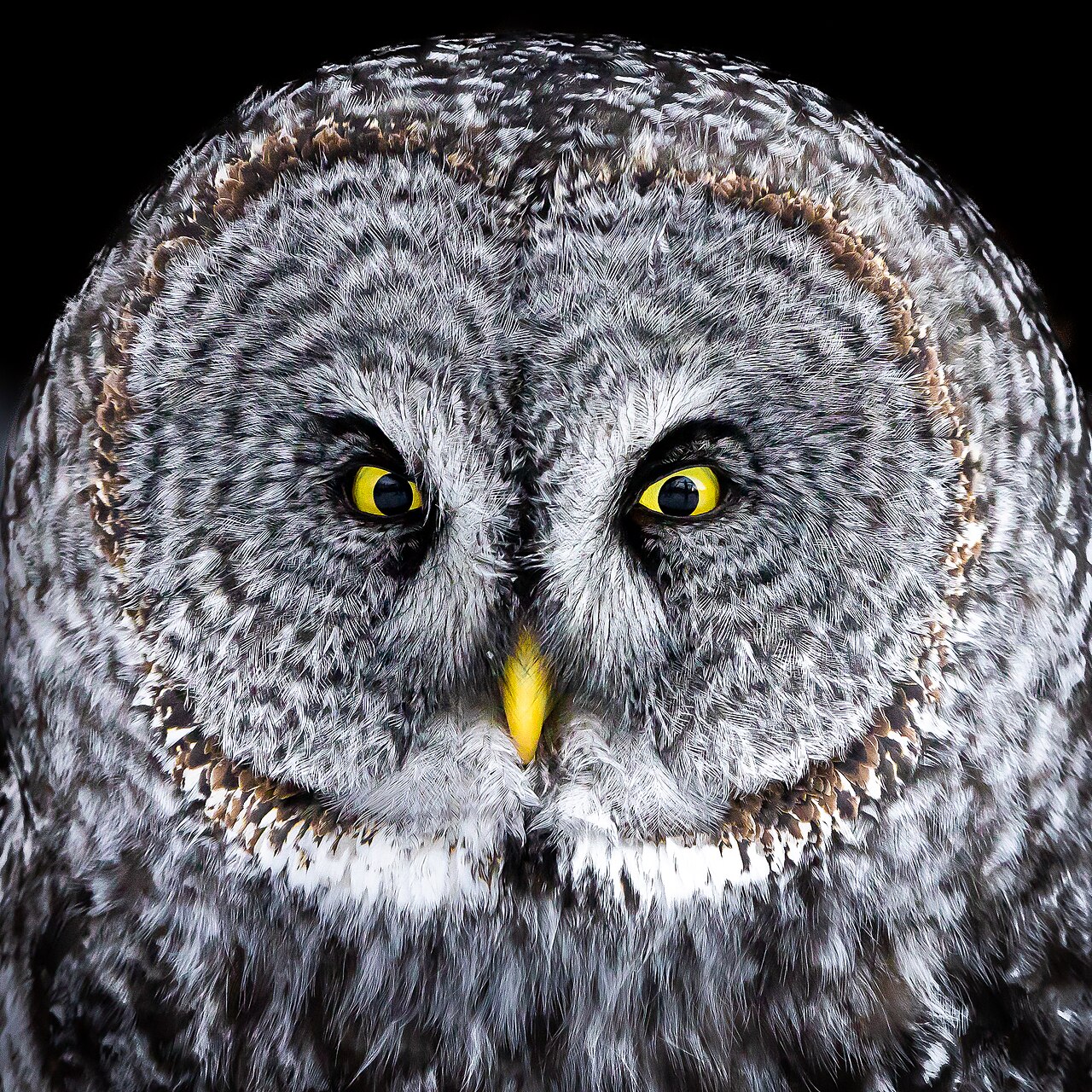
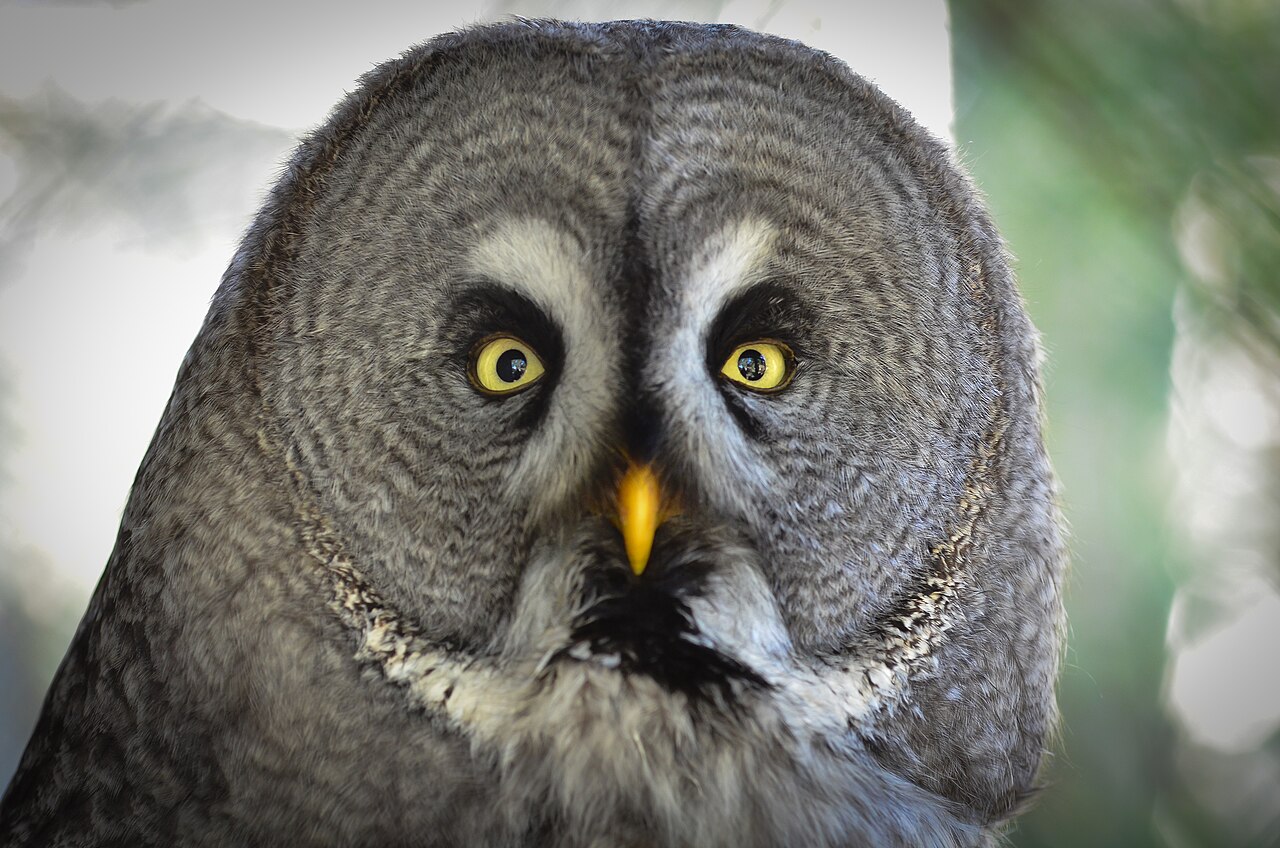
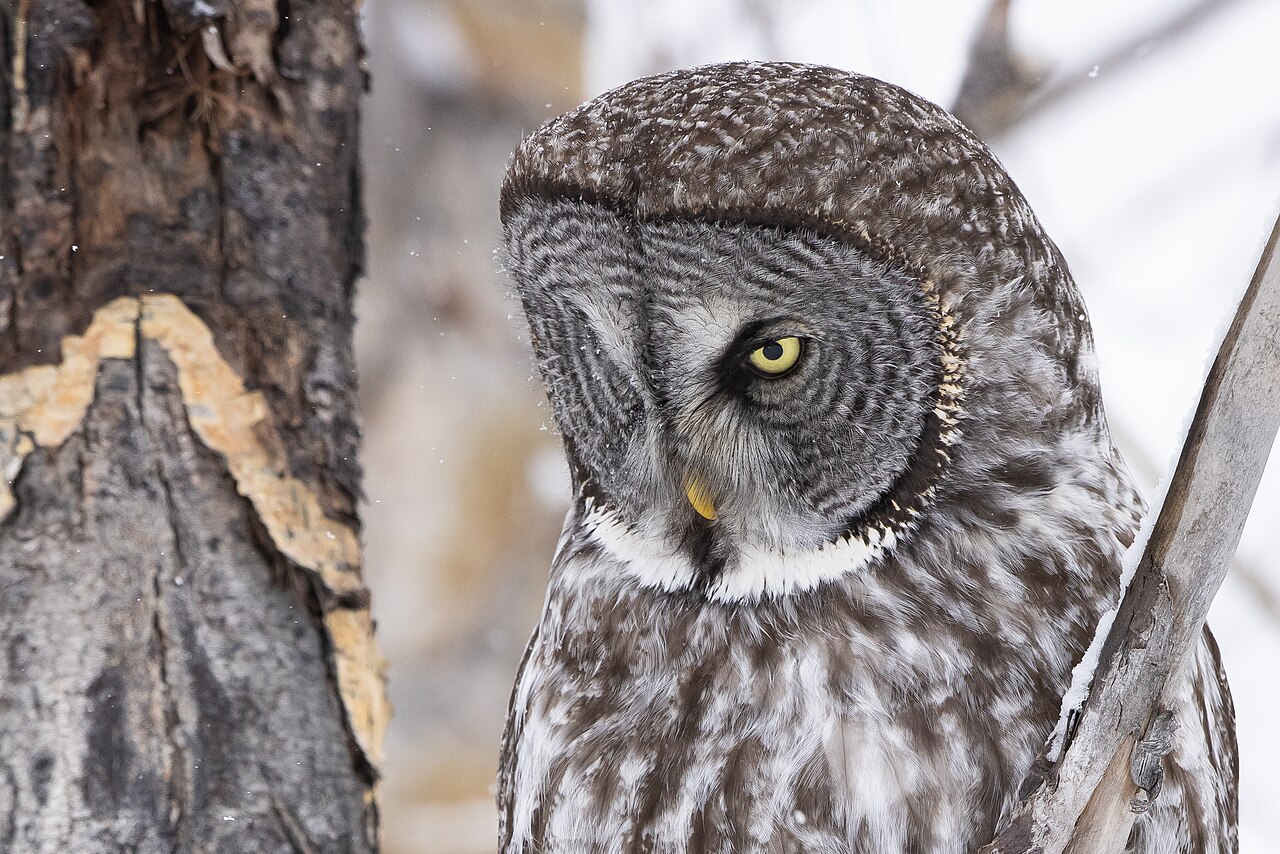
The Great Gray Owl is unmistakable once seen: a very large, long-bodied owl cloaked in silvery-gray plumage finely patterned with darker streaks, and topped by an enormous rounded facial disk marked with concentric gray rings. Its yellow eyes look surprisingly small against that huge face, and it has no ear tufts. A distinctive white “bow tie,” two white patches separated by a dark throat, sits beneath the chin, a helpful clinching mark.
Although it is the tallest North American owl, much of its size is fluffy feather, and it is lighter than it appears. Its giant grayish face and small yellow eyes separate it easily from the yellow-eyed, ear-tufted Great Horned Owl and from the dark-eyed Barred Owl. There is really no other owl it can be confused with across its range. See how it compares in our owl types guide.
Range and habitat
The Great Gray Owl inhabits the vast boreal forests that stretch across Canada and Alaska, as well as montane coniferous forests in the mountains of the western United States, including the Sierra Nevada and the Rockies. It favors dense evergreen forest interspersed with openings, meadows, bogs, and clearings where it can hunt, hunting from perches along these forest edges rather than in deep unbroken timber.
Within this range it is thinly spread, secretive, and often hard to find, which adds to its mystique. In some winters, when vole numbers crash in the north, Great Gray Owls stage irruptions and appear farther south than usual, occasionally in large numbers, as during the celebrated Minnesota irruption some winters. These events draw birdwatchers from far and wide for a chance to see the “Phantom of the North.”
Hunting: listening through the snow
The Great Gray Owl feeds almost entirely on small mammals, above all voles and pocket gophers, and its hunting technique is one of the wonders of the bird world. Perched at a forest edge, it listens with astonishing acuity, its huge facial disk funneling the faintest sounds to its ears. When it detects a vole moving beneath the snow, it launches, hovers briefly, then plunges talons-first straight through the snowpack, punching down to seize prey it cannot even see.
Remarkably, a Great Gray Owl can locate and capture prey buried under a foot or more of snow by sound alone, and it can break through a hard crust strong enough to support a person. It hunts most actively at dawn and dusk, and sometimes by day in winter. This reliance on voles means its numbers and breeding rise and fall with rodent cycles, echoing the specialist diets of other northern owls in our guide to what owls eat.
Great Gray Owl sounds
The Great Gray Owl’s territorial song is a series of very deep, soft, evenly spaced hoots that descend slightly and fade toward the end, among the lowest-pitched calls of any North American owl. The sound carries a long way through still forest but is so low and gentle that it is easy to overlook. The male sings mostly on late-winter and spring nights as the breeding season approaches.
Beyond this song, Great Gray Owls give softer calls between mates and at the nest, and females and young produce various notes when begging or interacting. Because the owl is so elusive by sight, its deep hooting is often the best way to detect its presence in remote forest, though its quietness means even the call can slip past an inattentive listener.
Nesting and conservation
Like several large owls, the Great Gray Owl does not build its own nest. It reuses the broken-off tops of large dead trees, the abandoned stick nests of hawks or ravens, and sometimes artificial nesting platforms placed for it. The female lays two to five eggs, with clutch size tracking vole abundance, and she incubates while the male provisions the family. In poor vole years, the owls may not breed at all.
Globally the Great Gray Owl is listed as Least Concern, but it is uncommon, local, and sensitive to forest management that removes the large trees and snags it needs for nesting and the open hunting areas it depends on. Maintaining a mosaic of mature forest and meadow is key to its future. The Cornell Lab of Ornithology and Audubon provide detailed accounts of its status. Its ghostly presence has long fed owl symbolism and the wonder behind seeing an owl. Regional guides such as types of owls in California show where owls occur near you.
How to find a Great Gray Owl
Finding a Great Gray Owl takes patience, timing, and a little luck. In its core range it is thinly spread and secretive, so the best strategy is to search the edges of meadows, bogs, and clearings within northern or montane conifer forest at dawn or dusk, scanning the tops of low perches, fence posts, and snags where the owl sits and listens for voles. In winters when northern vole numbers crash, the odds improve dramatically as birds irrupt south, sometimes gathering where prey is abundant.
These irruption years, publicized quickly among birders, offer the best chance for most people to see one, but they demand extra care. Irrupting owls are often stressed and hungry, so keep your distance, avoid using bait or calls, and never crowd a hunting bird. A Great Gray Owl is bulkier and grayer than a Great Horned Owl and lacks ear tufts, and its huge round face and small yellow eyes rule out the dark-eyed Barred Owl, so once you find one, identification is straightforward. Voice can help locate it, as covered in our guide to owl calls by species.
Fascinating Great Gray Owl facts
The Great Gray Owl is full of superlatives and surprises. It is the tallest owl in North America, yet up to two-thirds of its apparent bulk is fluffy insulating feather, so it weighs less than the stockier Snowy Owl and Great Horned Owl. Its enormous facial disk, the largest of any raptor relative to its head, acts like a pair of dish antennas, funneling the faintest rustle of a vole to its ears with astonishing precision.
That hearing lets it perform its signature feat: plunging through snow so firmly crusted it can support a person’s weight to seize prey it cannot see. Great Gray Owls can live well over a decade in the wild, wander widely in search of voles, and have earned evocative nicknames such as “Phantom of the North” and “Great Gray Ghost” for their silent, elusive presence in remote forests.
Frequently Asked Questions
Is the Great Gray Owl the biggest owl in North America?
It is the tallest and longest, up to 33 inches, but not the heaviest. Much of its size is fluffy insulating feather, so the Snowy Owl and Great Horned Owl actually outweigh it.
How does a Great Gray Owl hunt in the snow?
It listens from a perch with its huge facial disk funneling sound, then plunges talons-first through the snow to seize voles it hears but cannot see. It can capture prey under a foot or more of snow.
What do Great Gray Owls eat?
Almost entirely small mammals, especially voles and pocket gophers. Their numbers and breeding success rise and fall with rodent cycles, and they may not breed at all in poor vole years.
Where do Great Gray Owls live?
In the boreal forests of Canada and Alaska and in montane conifer forests of the western US, including the Sierra Nevada and Rockies. They hunt along the edges of meadows, bogs, and clearings.
What does a Great Gray Owl sound like?
Its song is a series of very deep, soft, evenly spaced hoots that descend and fade, among the lowest-pitched of any North American owl. It carries far but is easy to miss.
Why is the Great Gray Owl called the Phantom of the North?
Because it is large, silvery-gray, secretive, and thinly spread through remote northern forests, appearing and vanishing like a ghost. Its elusiveness makes it a prized sighting for birdwatchers.
Do Great Gray Owls migrate?
They are not regular migrants, but in winters when northern vole numbers crash, they stage irruptions and move south, sometimes in large numbers, appearing well beyond their usual range.
How big is a Great Gray Owl’s wingspan?
Its wingspan reaches 54 to 60 inches, among the largest of any North American owl, which helps it fly slowly and silently as it hunts along forest edges.