King Snake: Species, Venom Resistance, and Identification
King snakes are non-venomous constrictors of the genus Lampropeltis, found across almost the entire United States and into Mexico and southern Canada. The name comes from their diet: they eat other snakes, including rattlesnakes and copperheads, and they carry blood proteins that neutralize pit viper venom well enough to survive bites that would kill most animals their size.
That single ability makes them one of the most useful snakes a property can host, and it is also why killing one tends to backfire. This guide covers the genus as a whole, the species you are most likely to meet, the coral snake comparison that drives most of the questions, what they eat, whether they make good pets, and the three unrelated snakes that share the word king in their names.
| Quick Facts | King Snakes |
|---|---|
| Genus | Lampropeltis, roughly 45 species and subspecies |
| Adult size | 3 to 4 ft typically, up to 6 ft in some species |
| Venomous | No, kills by constriction |
| Signature trait | Eats other snakes, resistant to pit viper venom |
| Range | Most of the United States, Mexico, southern Canada |
| Lifespan | 10 to 15 years wild, over 20 in captivity |
What Is a King Snake?
Lampropeltis means shiny shield, from the Greek, and it describes the genus well. King snakes have smooth unkeeled scales that give them a distinctly glossy, almost polished appearance, particularly after a shed. The genus contains roughly 45 recognized species and subspecies, and taxonomists continue to revise the boundaries between them.
Body plan is consistent across the group. They are medium-sized snakes, usually 3 to 4 ft as adults with some species reaching 6 ft, moderately built rather than slender, with a head only slightly wider than the neck and round pupils. None is venomous and all kill prey by constriction.
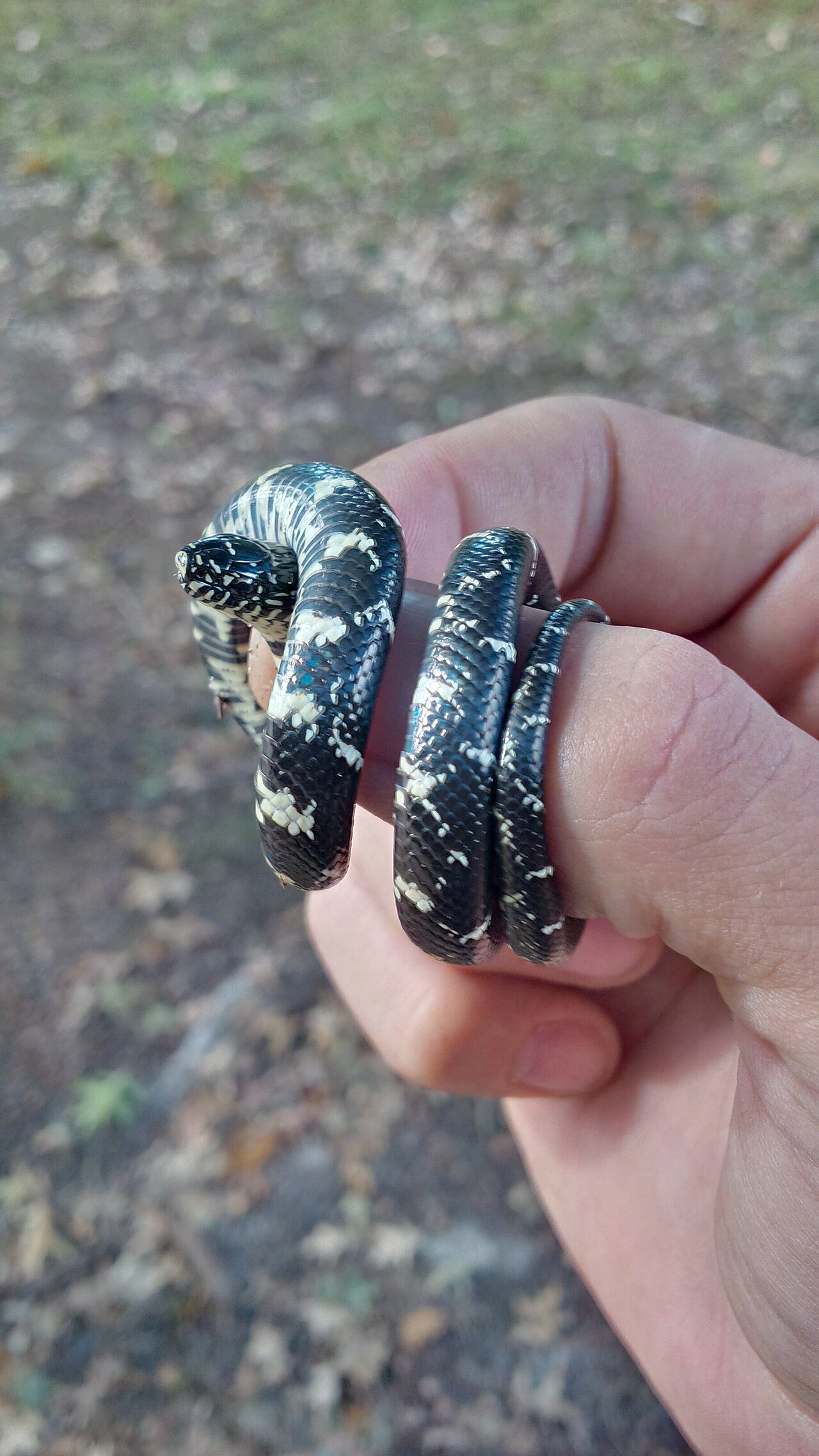
Where they differ enormously is in pattern. The genus includes boldly banded, chain-linked, speckled, striped, blotched, and nearly solid black forms, which is why colour alone is a poor way to identify one. Our guide to the black and white snake works through those patterns in detail, so this article concentrates on the biology, the species list, and the practical questions.
Why They Eat Other Snakes
The defining behaviour of the genus is ophiophagy, meaning snake eating, and king snakes pursue it more consistently than almost any other North American group. They hunt and consume rat snakes, garter snakes, racers, other king snakes, and, most notably, venomous pit vipers including rattlesnakes, copperheads, and cottonmouths.
They survive the encounter because of blood chemistry. King snake serum contains proteins that bind and neutralize components of pit viper venom, giving them substantial though not unlimited resistance. A king snake bitten during a struggle with a rattlesnake typically continues the fight and eats the animal afterward.
Muscle does the rest. Constriction studies have found that king snakes generate notably higher constriction pressure relative to body size than most colubrid snakes, which is what allows a 3 ft king snake to subdue a rattlesnake of similar length. The resistance is specific to pit viper venom and does not extend to coral snake neurotoxins, which is worth knowing given how often the two get discussed together.
King Snake vs Coral Snake
This comparison generates more search interest than anything else about the genus, and it matters because one of the two is dangerous. The scarlet king snake and the various milk snake subspecies wear red, black, and yellow or white bands that closely resemble the venomous eastern coral snake.
Within the United States, band order separates them reliably. On a coral snake the red bands touch the yellow bands. On the harmless mimics the red bands touch the black bands. The familiar rhyme encodes this, and it holds across the American range of both animals. It does not hold in Central and South America, where coral snake species carry different arrangements, so it should never be applied abroad.
Two structural features back up the band rule. Coral snakes have a blunt black snout, while scarlet king snakes and milk snakes have red or pale snouts. Coral snakes are also elapids with small fixed fangs and secretive burrowing habits, so encounters are uncommon in the first place. Any suspected coral snake bite is a medical emergency regardless of how minor it appears, because symptoms can be delayed for hours. Our guide to the milk snake covers the mimicry in more depth.
Common King Snake Species
The California king snake (Lampropeltis californiae) is the most familiar, with bold black and white or brown and cream banding across the western states, plus a naturally occurring striped form. It reaches 3 to 4 ft and is the species that dominates the pet trade.
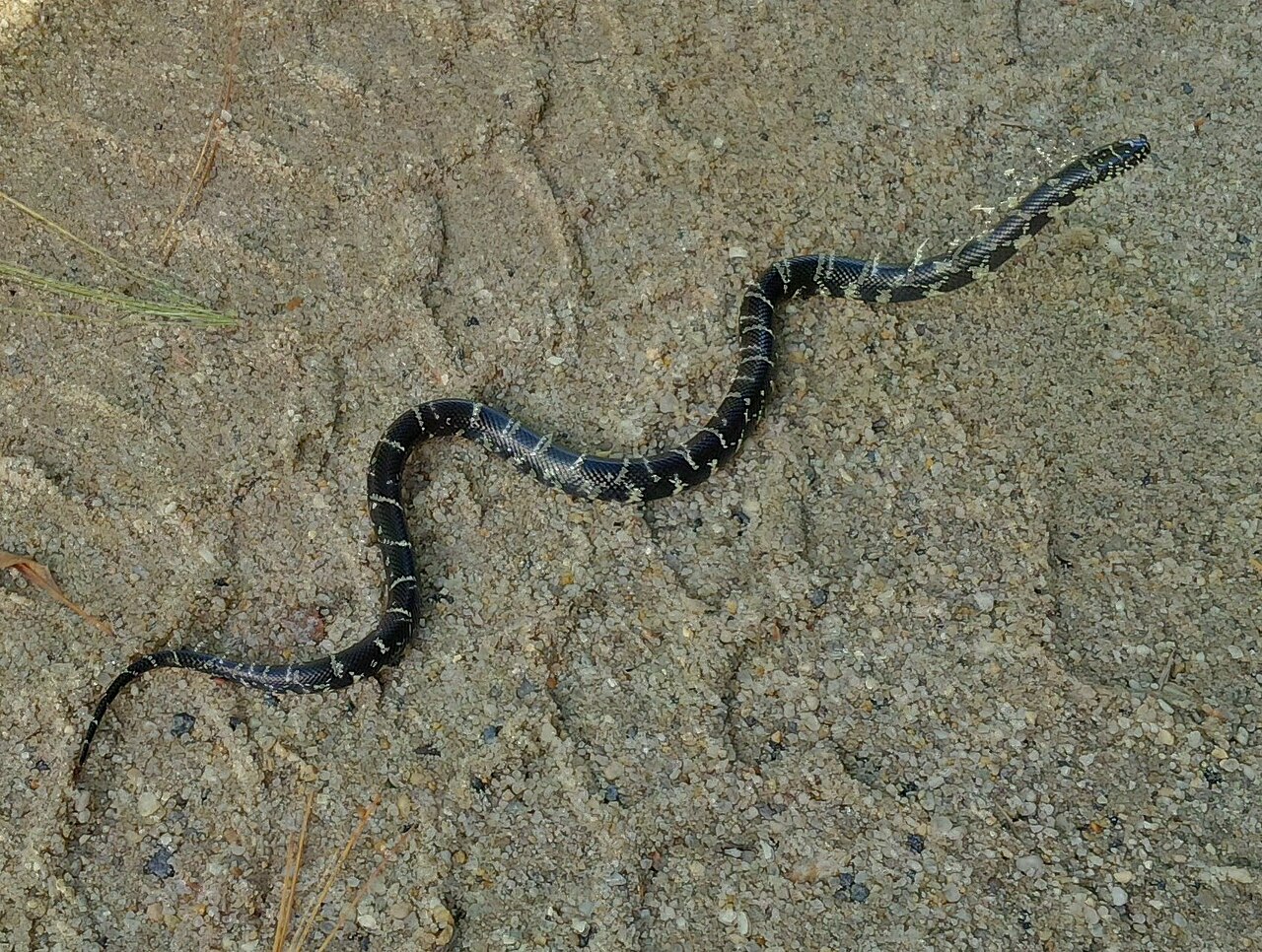
The eastern king snake (Lampropeltis getula) of the southeast is glossy black with thin white or yellow crossbars connecting along the sides, producing the chain-link look that gives it the name chain king snake. The speckled king snake of the central states carries a single white or yellow dot on each black scale, reading as a salt-and-pepper wash from a distance.
Several others are worth knowing. The Mexican black king snake is uniformly glossy black and popular in captivity, the desert king snake of Texas and Oklahoma shows yellow speckling in a chain pattern, the grey-banded king snake of the Chihuahuan Desert is prized for its orange and grey banding, and the scarlet king snake is the small red, black, and yellow coral snake mimic of the southeast. Milk snakes belong to the same genus and are king snakes in the technical sense.
Where King Snakes Live and What They Eat
The genus occupies nearly every habitat type in North America, from deserts and grasslands to pine forest, hardwood forest, swamp margins, farmland, and suburban yards. Individual species have narrower ranges, but collectively they cover most of the continental United States and much of Mexico.
They are secretive and spend much of their time under cover, meaning rocks, logs, boards, brush piles, and abandoned burrows. Most are active in daylight during spring and autumn and shift to dawn, dusk, and nighttime activity through hot summer weather. In the northern part of the range they brumate through winter.
Diet extends well beyond snakes. Rodents make up a substantial share, along with lizards, birds and their eggs, frogs, and turtle eggs, and juveniles start on smaller prey including insects and small lizards. That rodent consumption is the second reason to value them on a property, and it is the same ecological role filled by the species in our guide to the rat snake.
Are King Snakes Dangerous?
No. King snakes have no venom, no fangs, and no venom glands. They pose no danger to people, pets, or livestock, and there is no medical scenario in which a king snake bite requires anything beyond washing the wound.
They do defend themselves when cornered, and the display can be convincing. A threatened king snake may hiss, vibrate its tail rapidly against leaf litter to produce a rattling buzz, flatten its body, strike repeatedly, and release musk from glands near the vent. The tail vibration is the part that gets them killed, since it sounds enough like a rattlesnake to trigger a reflexive reaction.
Given an exit, they take it. Every documented bite involves someone attempting to catch, handle, or kill the animal, which is true of North American snakes generally. Standing back and letting it move on resolves essentially every encounter. Another harmless species with an alarming defensive display is covered in our guide to the hognose snake.
King Snakes as Pets
California king snakes are among the most commonly kept pet snakes, alongside corn snakes and ball pythons, and the reasons are practical. They stay a manageable 3 to 4 ft, feed reliably on frozen-thawed rodents, tolerate handling, and need a straightforward setup.
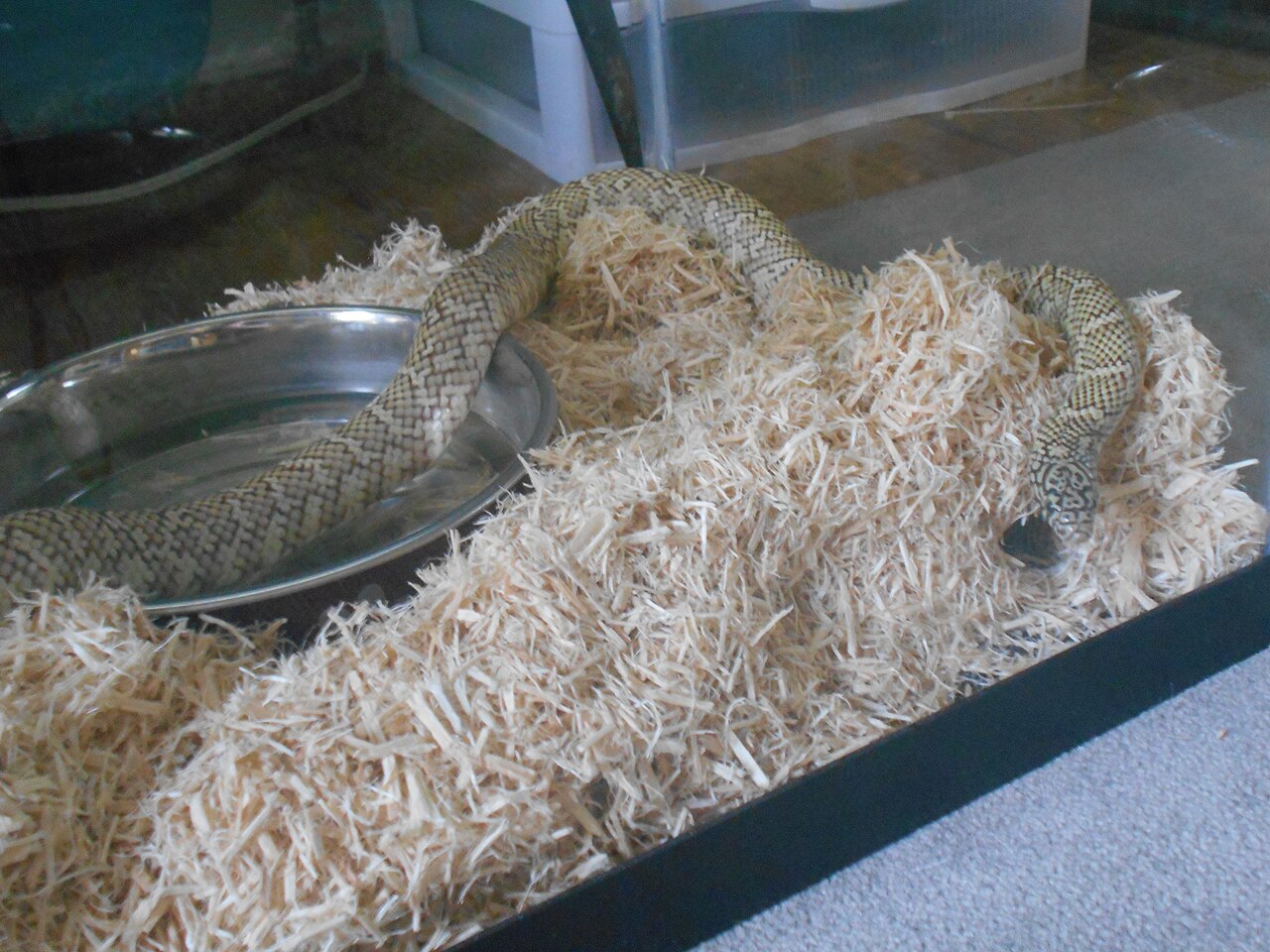
An adult needs a 40 gallon enclosure or larger with a secure locking lid, since king snakes are persistent escape artists. Provide a thermal gradient from about 75 F on the cool side to 85 F on the warm side with a basking area up to 88 F, always regulated by a thermostat, plus two hides, aspen or cypress substrate, and a water bowl large enough to soak in.
The one non-negotiable rule is housing them individually. King snakes eat other snakes, including their own species, and keepers who house two together reliably end up with one. Feeding is straightforward at every 7 to 14 days depending on age, and lifespan runs past 20 years in captivity, which makes this a long commitment. Anyone comparing beginner options will find the parallel in our guide to the Texas rat snake.
King Snake, King Cobra, and King Brown
Three unrelated snakes carry the word king, and confusing them has real consequences. The king cobra (Ophiophagus hannah) of South and Southeast Asia is an elapid reaching 18 ft, highly venomous, and capable of delivering enough venom to kill an elephant. It shares only one trait with king snakes, which is that it also eats other snakes, and that shared habit is where both names come from.
The king brown snake, also called the mulga snake, is an Australian elapid and one of the most venomous snakes in the world by yield per bite. It has no relationship to North American king snakes beyond the word.
North American king snakes are harmless colubrids, and none of the dangerous species occurs anywhere in the Americas. If you are in the United States, Mexico, or Canada and someone identifies a snake as a king snake, they mean Lampropeltis, and it cannot hurt you. The distinction matters for travelers, since identification rules that work in Georgia have no validity in Queensland.
Finding a King Snake on Your Property
Leave it alone and consider it good news. A king snake in a yard is eating rodents and suppressing venomous snakes, and it will move through a territory of several acres rather than settling permanently near a house. Most encounters are a single sighting that never repeats.
If one is indoors, contain it with a box and stiff cardboard rather than grabbing it, then release it outside away from the house. Snakes come indoors following rodents or seeking moisture, so the durable fix is sealing gaps at door sweeps, foundation cracks, and utility entries, and addressing whatever rodent population drew it in.
Do not use glue traps, which cause prolonged suffering and catch birds and other non-target animals, and skip commercial snake repellents, which have repeatedly failed independent testing. Habitat management is what works: keep grass mown, stack firewood off the ground and away from the house, and remove debris lying on soil. That said, the brush and rock cover that shelters king snakes also shelters the rodents and venomous snakes they hunt, so complete removal is rarely the goal. Identifying juveniles correctly prevents most needless killings, which our guide to the baby snake addresses.
Related reading: Coral Snake vs King Snake.
Frequently Asked Questions
Are king snakes venomous?
No. King snakes have no venom, fangs, or venom glands, and they kill prey by constriction. A defensive bite needs only washing. They may hiss, vibrate their tails, strike, and release musk when cornered, but none of it is dangerous.
Do king snakes really eat rattlesnakes?
Yes. King snakes eat other snakes including rattlesnakes, copperheads, and cottonmouths, and their blood contains proteins that neutralize pit viper venom. They also generate unusually high constriction pressure for their size, which lets a 3 ft king snake subdue a rattlesnake of similar length.
How do you tell a king snake from a coral snake?
In the United States, red bands touching yellow means a venomous coral snake, red touching black means a harmless scarlet king snake or milk snake. Coral snakes also have a blunt black snout while the mimics have red or pale snouts. The rhyme does not work in Central or South America.
How big do king snakes get?
Most species reach 3 to 4 ft as adults, with some eastern king snakes exceeding 6 ft. They are moderately built rather than slender, with smooth glossy scales and a head only slightly wider than the neck.
Are king snakes good pets?
California king snakes are among the most popular pet snakes because they stay manageable, feed reliably on frozen-thawed rodents, and tolerate handling. They must be housed individually, since king snakes eat other snakes including their own species, and they live over 20 years in captivity.
Is a king snake the same as a king cobra?
No, and they are not related. King cobras are Asian elapids reaching 18 ft with highly potent venom, while North American king snakes are harmless constrictors. Both names come from the shared habit of eating other snakes. The Australian king brown snake is a third unrelated species.
Should I remove a king snake from my yard?
No. A king snake eats rodents and suppresses venomous snakes on the property, so removing one usually makes the yard less safe. If one gets indoors, contain it with a box and release it outside, then seal entry gaps and address the rodent population that attracted it.