Carpet Beetle Rash: Why It Is Not a Bite
A carpet beetle rash is not a bite. Carpet beetles have no biting mouthparts capable of breaking human skin and no interest in blood, and the itchy red welts people attribute to them are an allergic contact reaction to the larvae, specifically to their barbed bristles and to proteins in their shed skins.
That distinction matters because it changes both the treatment and the search. Anti-itch care handles the skin, but the rash keeps returning until the larvae and their shed skins are removed from the bedding, carpet, and upholstery where they live. This guide covers what the rash looks like, why it happens, how it differs from bed bug bites and scabies, how to treat it, and how to end the source.
| Quick Facts | Carpet Beetle Rash |
|---|---|
| Cause | Allergic reaction to larval bristles and shed skins |
| Is it a bite? | No, carpet beetles cannot bite people |
| Appearance | Itchy red raised welts, sometimes small blisters |
| Common locations | Areas in contact with bedding, carpet, or clothing |
| Duration | Days to weeks while exposure continues |
| Contagious | No |
Why Carpet Beetles Cause a Rash Without Biting
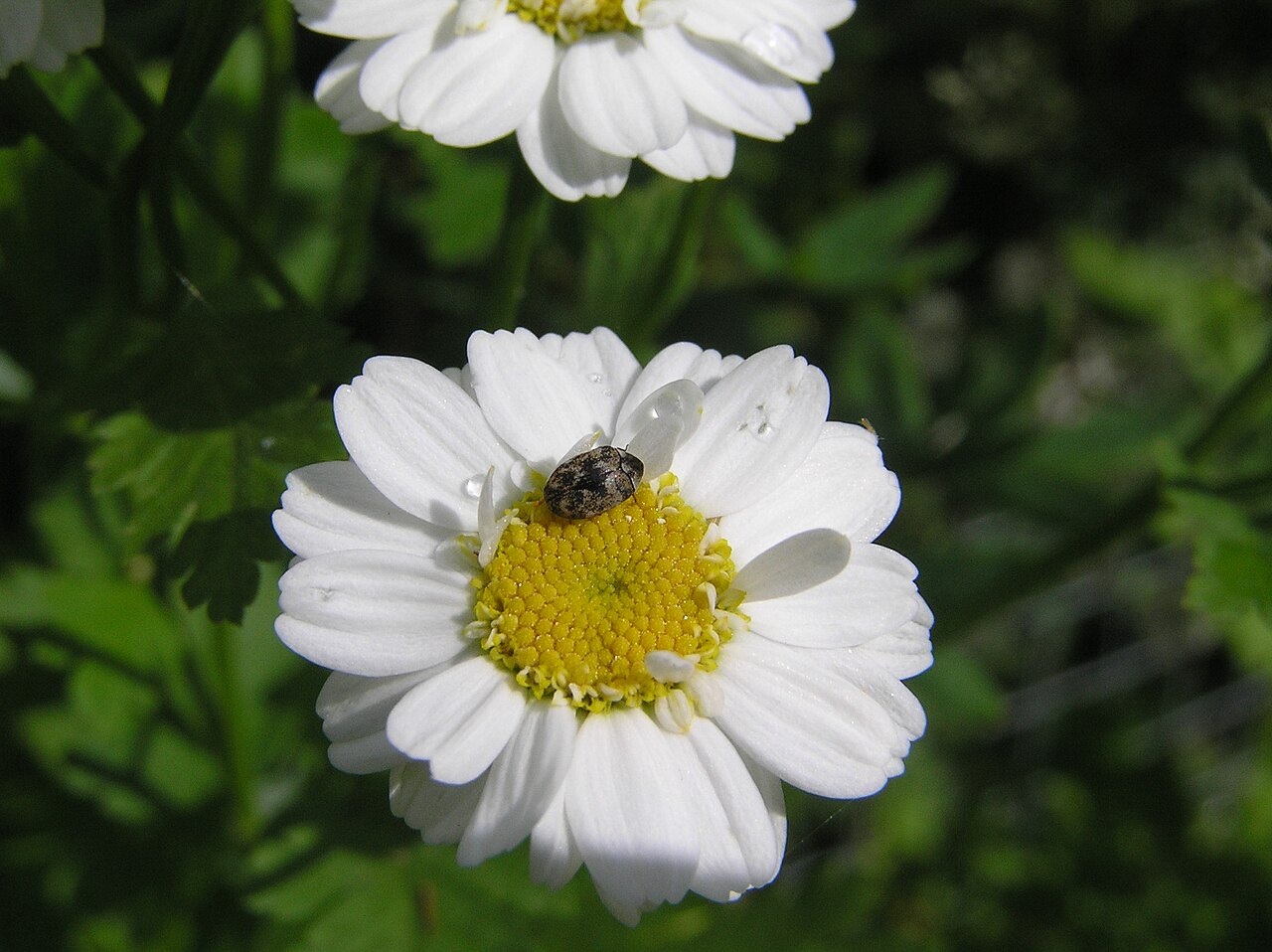
Adult carpet beetles feed on pollen and nectar outdoors and are essentially harmless indoors. The larvae are the problem, and they eat keratin, meaning wool, silk, feathers, fur, leather, and animal-based fibers, along with dried food products. Neither stage feeds on people.
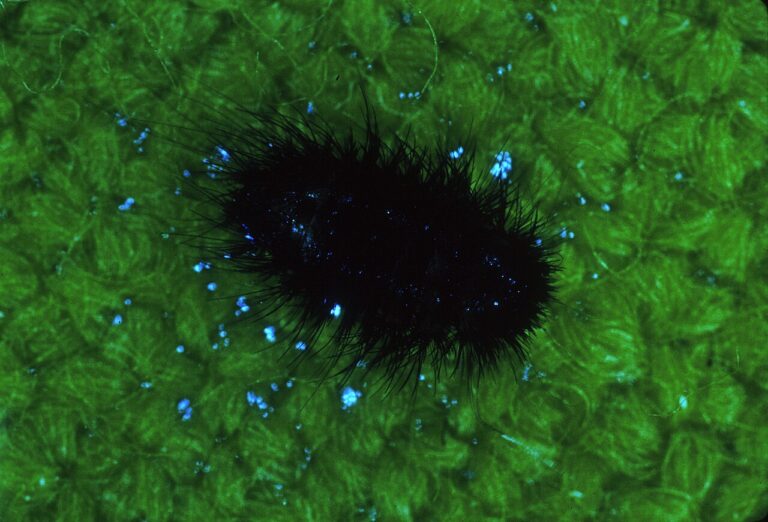
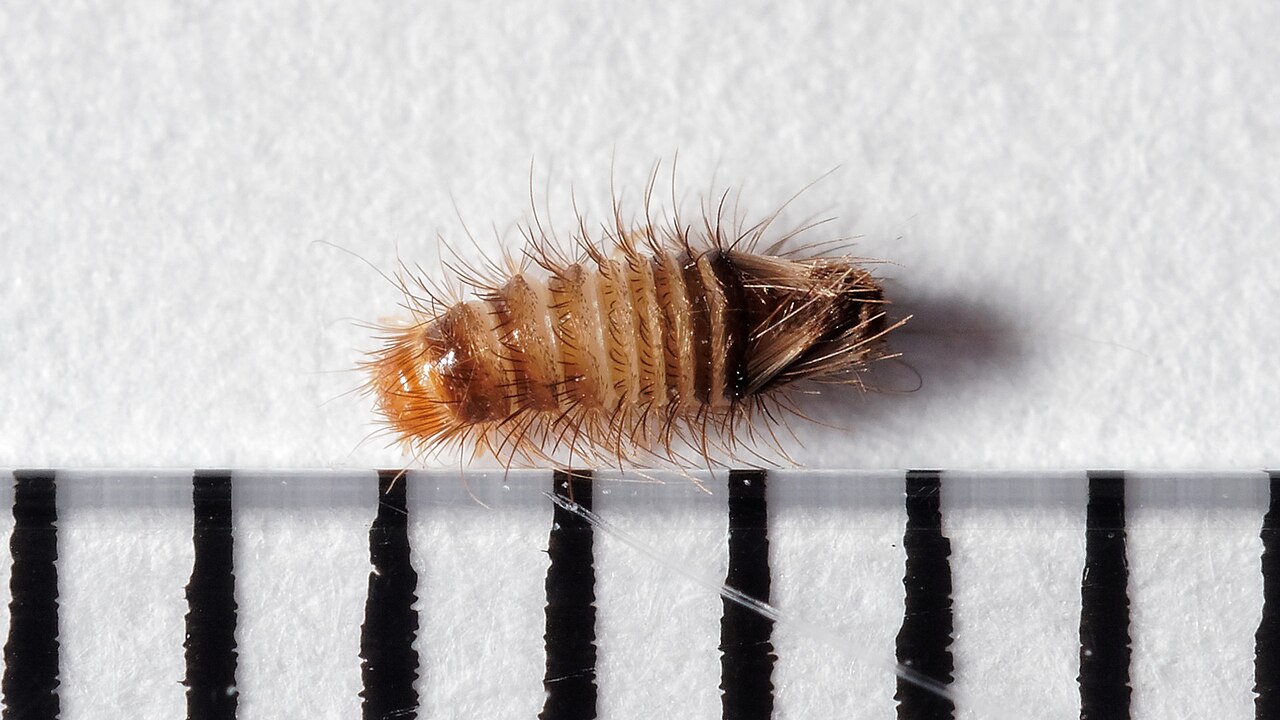
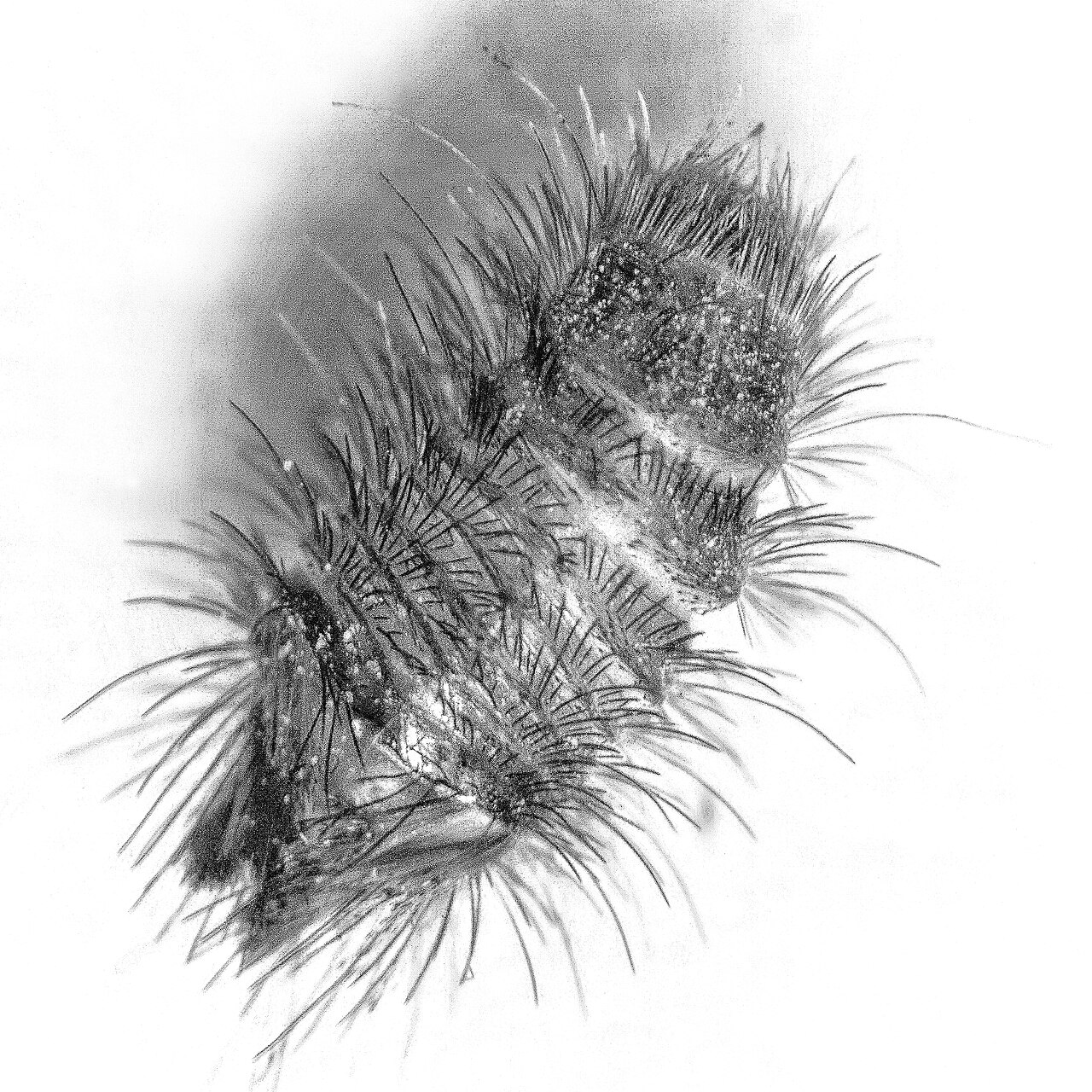
The larvae are covered in dense bristles called setae, and in some species specialized barbed bristles known as hastisetae detach easily. These fragments work into skin and fabric, and they carry proteins that a substantial minority of people react to. The reaction is allergic contact dermatitis, the same mechanism behind reactions to certain caterpillar hairs.
Shed skins compound it. Larvae molt repeatedly as they grow, leaving translucent bristly casings in carpet, mattress seams, and closet corners, and those skins break down into airborne fragments that settle on bedding and skin. In heavy infestations the fragments also act as a respiratory allergen, which is why some people report eye irritation and asthma symptoms alongside the rash. Our guide to carpet beetle bites covers the wider misconception that these marks are bites at all.
What the Rash Looks Like
The typical presentation is small raised red welts, often 0.1 to 0.4 in across, sometimes with a tiny blister at the center, accompanied by intense itching. They can appear singly or in irregular clusters, and the pattern is generally scattered rather than the neat lines people associate with bed bugs.
Location follows contact rather than any feeding pattern. The rash appears where skin has been against infested material, so it favors the back, shoulders, thighs, and arms after a night in bed, or wherever a wool sweater or carpeted floor made contact. Areas covered by clothing are affected as often as exposed skin, which is the opposite of the mosquito pattern.
Timing tends to be delayed. Contact dermatitis usually develops hours after exposure rather than immediately, and the rash builds over a day or two rather than appearing at once. Because the reaction is allergic, sensitivity varies enormously, and two people sleeping in the same bed can have entirely different experiences, with one covered in welts and the other unaffected.
Carpet Beetle Rash vs Bed Bug Bites
This is the comparison that sends most people searching, because the treatments are entirely different. Bed bug bites are actual punctures with a central feeding point, and they classically appear in lines or tight groups of three on skin exposed while sleeping, meaning arms, shoulders, neck, and face.
Carpet beetle rash is scattered and follows fabric contact rather than exposed skin, and it lacks the central puncture. Bed bug bites also tend to be firmer bumps, while contact dermatitis can be more diffuse with less defined edges.
The room settles it. Bed bugs leave dark spots that smear reddish-brown on mattress seams, pale shed skins in bed frame crevices, and occasionally live insects, and heavy infestations carry a sweet musty odor. Carpet beetles leave bristly translucent larval skins, tiny hairy larvae in carpet edges and closet corners, and small adult beetles on windowsills, since adults fly toward light to get outdoors. Our guides to bed bug bites and to distinguishing a bed bug from a baby cockroach cover the insect side in detail.
Other Conditions It Gets Confused With
Scabies is the diagnosis that matters most to rule out. Scabies mites burrow into skin and cause intense itching that is characteristically worse at night, concentrated in finger webs, wrists, elbows, armpits, waistline, and groin, and thin wavy burrow lines are sometimes visible. Scabies is contagious and requires prescription treatment, and it does not resolve with cleaning.
Flea bites are small red dots with a pale halo concentrated on the ankles and lower legs, since fleas jump from floor level. Chigger bites cluster in bands where clothing presses against skin, at the sock line and waistband, and our guide to chigger bites versus flea bites works through that pair.
Non-insect causes account for a large share of unexplained rashes. Contact dermatitis from laundry detergent, fabric softener, or a new fabric, eczema flares, hives from an unrelated allergen, and dry winter skin all produce itchy welts. If no insects or larval skins turn up after a careful search, an insect cause becomes unlikely and a doctor is the better next step than another round of cleaning.
How to Treat the Rash
Wash the affected skin with soap and cool water first, which removes bristle fragments still on the surface, and use adhesive tape pressed onto the skin and lifted away to remove embedded hairs, the same technique used for caterpillar setae.
For symptom control, over-the-counter 1 percent hydrocortisone cream and calamine lotion both reduce itching, and an oral antihistamine helps particularly at night when itching interferes with sleep. Cool compresses provide immediate relief for 10 to 15 minutes at a time.
Avoid scratching, since broken skin invites secondary bacterial infection, which is the most common complication by a wide margin. Seek medical care if you see spreading redness, warmth, pus, or fever, if the rash is extensive or persists beyond a couple of weeks despite removing exposure, or if you have breathing difficulty or facial swelling. A dermatologist can distinguish contact dermatitis from scabies and other conditions when the picture is unclear.
Finding the Source
The rash will not stop while the larvae remain, so the search matters more than the cream. Larvae are 0.1 to 0.2 in, elongated, densely bristly, and brown to tan, and they move slowly and avoid light, so they hide rather than crawl into view.
Search the places keratin accumulates. Under and behind furniture, along carpet edges and beneath the perimeter of wall-to-wall carpet, in closets among wool and silk garments, in stored blankets and quilts, under baseboards, in air vents and ducts where lint gathers, in upholstered furniture seams, and inside mattress and box spring seams.
Two overlooked sources cause many persistent cases. Dead insects and rodents in wall voids, attics, and light fixtures provide an ideal larval food supply that no amount of vacuuming reaches, and abandoned bird or wasp nests in eaves, chimneys, and vents feed large populations that then disperse indoors. Taxidermy mounts, wool rugs in storage, and old feather pillows are the other classic reservoirs.
Getting Rid of Carpet Beetles
Thorough vacuuming does most of the work and needs to be repeated. Vacuum carpets, rugs, upholstery, mattress seams, closet floors, and along baseboards, paying particular attention to edges and under furniture, and dispose of the bag or empty the canister outside immediately so collected larvae and eggs do not simply return.
Heat and cold both kill. Wash infested textiles in hot water above 120 F and dry on high heat, and for items that cannot be washed, sealing them in bags and freezing at 0 F for several days works. Dry cleaning also kills all life stages, which is the practical route for wool coats and suits.
Then remove the reservoirs and close the door behind them. Clear dead insects from light fixtures and window sills, remove abandoned nests from eaves and vents, store wool and silk in sealed containers rather than open closets, and fit screens on windows and vents, since adults fly in from outdoors in spring. Insecticide is rarely necessary for a household infestation and does nothing about the shed skins that cause the rash, so cleaning is both the safer and the more effective route. The same source-first logic runs through our guide to getting rid of gnats.
Preventing It From Coming Back
Regular vacuuming is the single most effective ongoing measure, particularly along carpet edges, under furniture, and in closets, which is exactly where routine cleaning tends not to reach.
Storage habits matter for anyone who owns wool or silk. Clean garments before storing them, since larvae are attracted to soiled fabric carrying sweat and food residue, and use sealed containers rather than garment bags or open shelving. Cedar and lavender have limited repellent effect and should not be relied on as the primary defense.
Keep the outdoor population outdoors. Adults are attracted to light and to flowers, so screening windows and vents, checking cut flowers before bringing them inside, and clearing bird and wasp nests from eaves each season all reduce how many get in. A house that is vacuumed regularly, stores wool properly, and has no dead insect reservoirs rarely develops a problem large enough to cause a rash.
Related reading: Carpet Beetle Poop.
Frequently Asked Questions
Do carpet beetles bite and cause a rash?
No, they cannot bite people. The rash is an allergic contact reaction to the barbed bristles of the larvae and to proteins in their shed skins. Carpet beetle larvae eat keratin such as wool, silk, feathers, and fur, not blood.
What does a carpet beetle rash look like?
Small itchy red raised welts, sometimes with a tiny blister at the center, scattered rather than in lines, and appearing where skin contacted infested bedding, carpet, or clothing. It typically develops hours after exposure rather than immediately.
How is it different from bed bug bites?
Bed bug bites are actual punctures in lines or groups of three on skin exposed while sleeping, with a central feeding point. Carpet beetle rash is scattered, follows fabric contact including under clothing, and lacks the puncture. Check windowsills, where carpet beetle adults collect and bed bugs never appear.
How do I treat a carpet beetle rash?
Wash with soap and cool water, lift embedded bristles with adhesive tape, then use 1 percent hydrocortisone cream or calamine lotion and an oral antihistamine for itching. Avoid scratching, since secondary bacterial infection is the most common complication.
Why does the rash keep coming back?
Because the larvae and their shed skins are still present. Treating the skin without removing the source only manages symptoms. Search carpet edges, closets, upholstery, mattress seams, and especially overlooked reservoirs such as dead insects in light fixtures and old bird nests in eaves.
Could it be scabies instead?
Possibly, and it is worth ruling out. Scabies itches intensely at night and concentrates in finger webs, wrists, elbows, armpits, waistline, and groin, sometimes with visible burrow lines. It is contagious and needs prescription treatment, so see a doctor if the pattern fits.
How do I get rid of carpet beetles for good?
Vacuum thoroughly and repeatedly along carpet edges, under furniture, and in closets, disposing of the contents outside. Wash textiles above 120 F or freeze them at 0 F for several days. Remove dead insects from fixtures, clear nests from eaves, and store wool in sealed containers.