Polish Chicken: Crest Care, Varieties, and Real Drawbacks
The Polish chicken is the breed with the enormous feathered crest that flops over its eyes, and despite the name it almost certainly did not come from Poland. The most widely accepted account places its development in the Netherlands, with the name likely deriving from the Dutch word pol, meaning head, rather than from any country.
That crest is not just decoration. It grows from a bony dome on top of the skull, a protrusion that leaves the brain less protected than in other breeds, and it obscures vision enough to make these birds nervous and easily startled. This guide covers the varieties, the care the crest demands, laying performance, the specific health risks, and whether a Polish is a sensible choice for a backyard flock.
| Quick Facts | Polish Chicken |
|---|---|
| Origin | Netherlands, despite the name |
| Weight | Roughly 4.5 lb hens, 6 lb roosters |
| Eggs | About 150 to 200 white eggs per year |
| Broodiness | Rarely goes broody |
| Temperament | Gentle but easily startled |
| Key trait | Large crest growing from a bony skull dome |
Where Polish Chickens Actually Come From
The name is misleading and the true origin is genuinely uncertain. The breed was refined and standardized in the Netherlands, and Dutch paintings from the sixteenth and seventeenth centuries show crested birds closely resembling modern Polish, which is the strongest documentary evidence available.
The most common explanation for the name points to the Dutch word pol, meaning head, describing the domed skull. Another suggests the birds resembled the feathered caps worn by Polish soldiers. What is reasonably clear is that the breed was not developed in Poland.
They reached North America in the early 1800s and were admitted to the American Poultry Association standard in 1874, among the earliest breeds recognized. Today they are kept almost entirely for appearance and exhibition rather than production, which shapes everything about how they should be managed.
The Crest and the Skull Beneath It
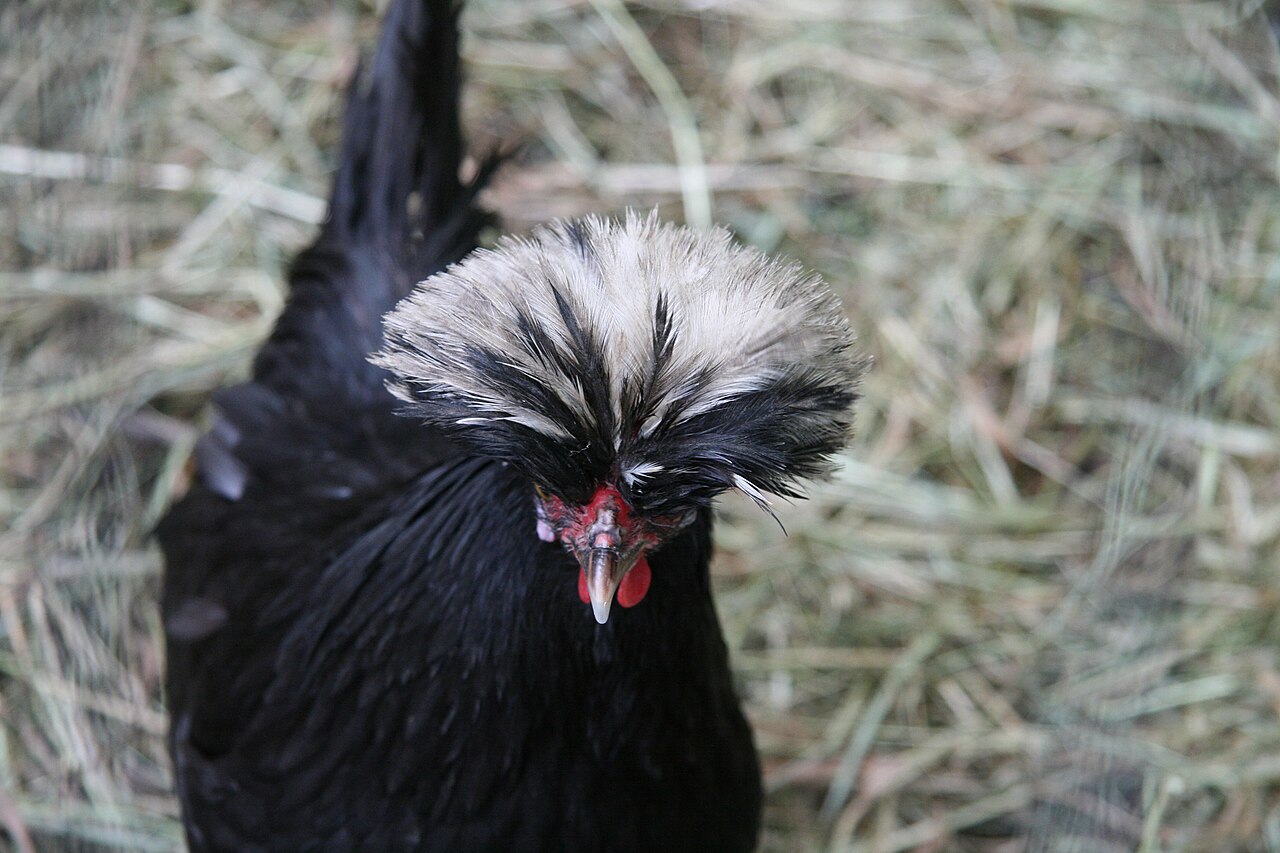
The crest grows from a protuberance on the top of the skull, a bony dome that houses part of the brain in a position where other breeds have flat solid bone. That anatomy is the single most important fact for anyone keeping the breed.
The dome is not fully covered by hard bone in many individuals, leaving the brain more vulnerable to trauma. A blow to the head that another chicken would shrug off can cause serious neurological injury or death in a Polish, which matters in a mixed flock where pecking order disputes involve head pecking.
Vision is the second consequence. A full crest hangs over the eyes and substantially restricts sight, which is why Polish chickens startle easily, miss approaching hazards, and can be difficult to herd or catch. They are not less intelligent than other breeds, they simply cannot see what is coming, and much of what reads as flightiness is a direct result.
Polish Chicken Varieties
The recognized varieties are distinguished by color and by whether the birds are bearded. White crested black is the classic, with a black body and a striking white crest, and it remains the most recognizable version of the breed.
Laced varieties are the showpieces. Silver laced, golden laced, and buff laced birds carry a defined dark edge to each feather, producing an intricate pattern across the whole body, and buff laced in particular is prized for its soft chamois and white contrast. White crested blue offers a slate-blue body with a white crest.
Two further variations cut across the colors. Tolbunt is a mottled pattern of brown, black, and white that varies between individuals and is popular though not universally recognized in standards. Frizzle Polish carry the frizzle gene, which curls the feathers outward, and bantam versions exist across most color varieties at roughly a quarter the weight. Bearded varieties add a muff and beard beneath the beak, which further restricts vision and adds another area to keep clean.
Temperament and Flock Dynamics
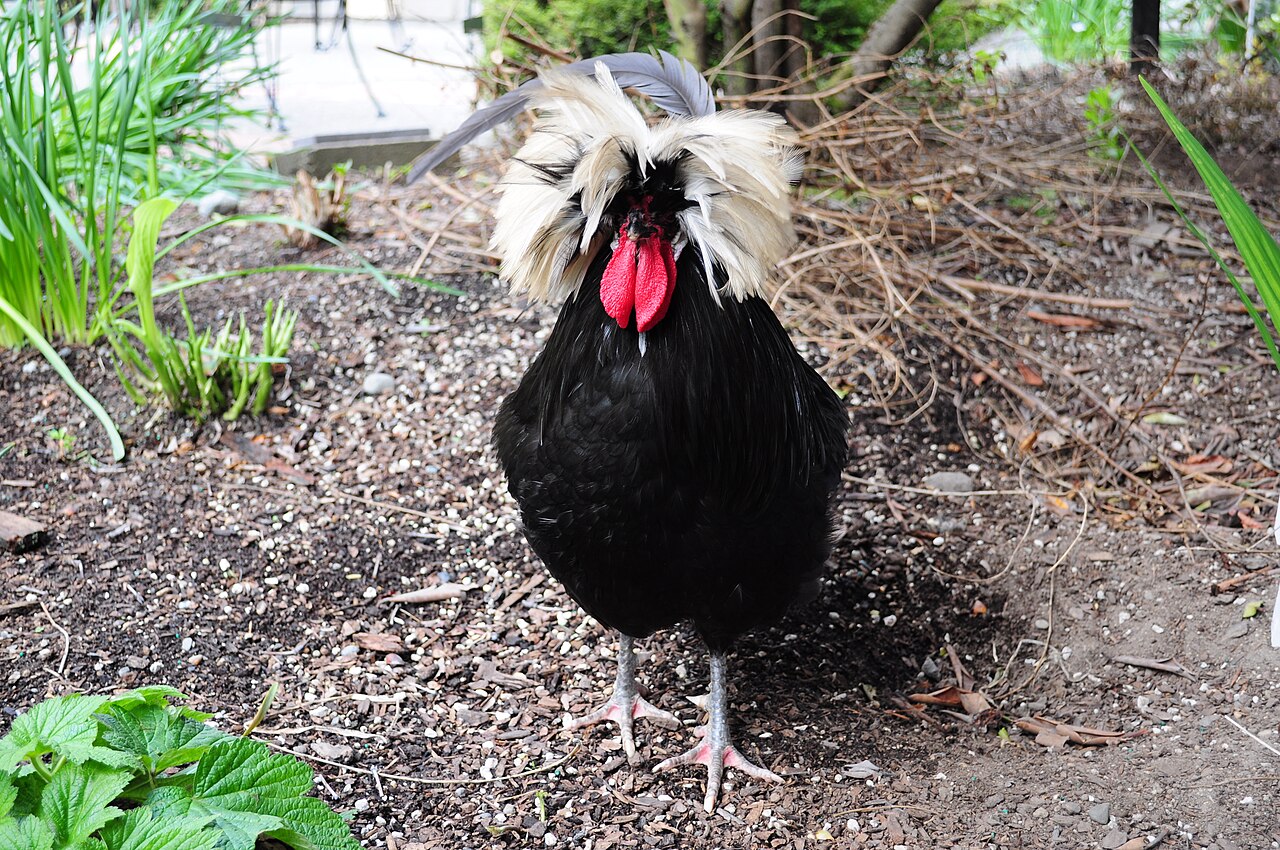
Polish chickens are gentle, curious, and generally friendly with people once they know you are there, and they tolerate handling better than most ornamental breeds. Roosters are usually calm and are less aggressive than many production breeds.
The problem is other chickens. Because a Polish cannot see approaching birds, it fails to respond to threat displays and ends up at the bottom of the pecking order almost regardless of size. The crest itself becomes a target, and feather pulling from the crest is common and can escalate to serious head injury.
Mixed flocks therefore need management. House Polish with calm docile breeds such as Orpingtons, Cochins, or Silkies rather than with assertive ones like Rhode Island Reds or Leghorns, provide extra feeders and waterers so a bird that cannot see cannot be blocked from food, and give plenty of space. Many keepers find a flock of Polish alone works better than any mixed arrangement. Our guides to coturnix quail and button quail cover species that also need protection from more assertive poultry.
Egg Laying and Broodiness
Polish hens lay roughly 150 to 200 white eggs per year, which is respectable for an ornamental breed though well below production layers. Eggs are medium sized and the shells are consistently white.
They start laying around five to six months and continue reasonably well through the first two or three years. Laying drops off sharply in winter without supplemental light, more so than in cold-hardy production breeds, since Polish are not especially winter tolerant.
Broodiness is rare, which cuts both ways. They almost never sit on eggs, so a Polish flock produces eggs steadily rather than pausing to brood, but anyone wanting to hatch chicks needs an incubator or a broody hen of another breed. Feeding follows standard layer practice, with a complete ration supplying the calcium for daily shell formation and treats kept to about ten percent of intake, as our guide to whether chickens can eat bread explains.
Crest Care
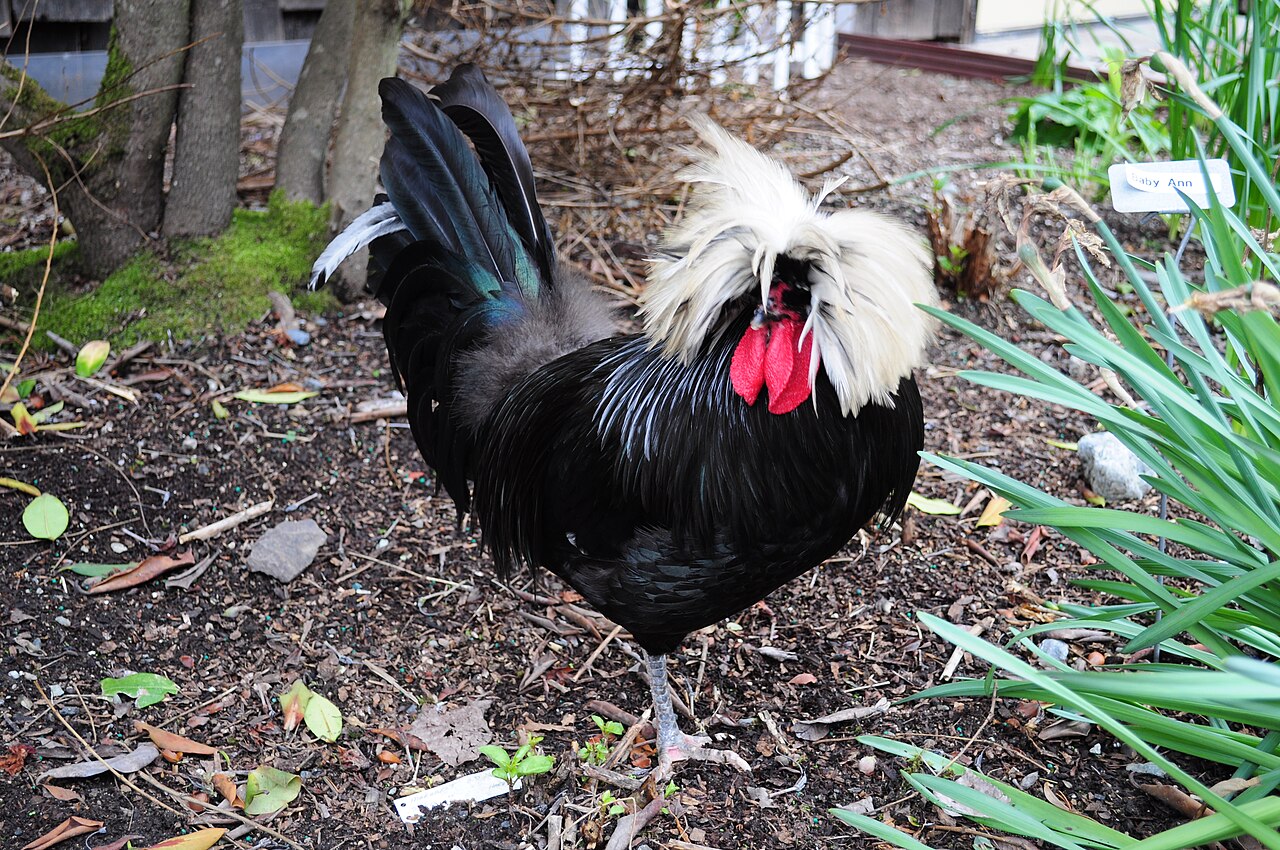
The crest needs active maintenance that other breeds do not. Wet weather is the main enemy, because a soaked crest stays wet for hours, chills the bird, and in freezing conditions can freeze solid, so a covered run and a dry coop matter more for this breed than for most.
Parasites concentrate there. The dense feathering around the head is ideal habitat for mites and lice, which are harder to spot and harder to treat than on an open-feathered bird, so check under the crest regularly by parting the feathers and look for movement at the base and around the eyes.
Feeder design matters more than expected. A deep water container soaks the crest every time the bird drinks, so nipple waterers or narrow-lipped drinkers keep it dry, and the same applies to mash or wet feed. Trimming above the eyes reduces both the wetting and the vision problem at once, and it is the single most useful intervention for a non-show bird.
Health Issues to Watch
Head trauma is the risk unique to this breed. Because the skull dome may be incompletely ossified, a peck, a fall, or a knock against a low perch can cause neurological damage, and signs include head tilting, circling, loss of balance, and seizures. Any Polish showing these needs veterinary attention rather than observation.
Eye problems follow from the crest. Trapped moisture and debris around the eyes cause irritation and infection, and a bird constantly shaking its head or with matted feathers around one eye needs the area cleaned and inspected.
Cold weather requires more care than in most breeds. Polish are not particularly cold hardy, the large crest offers no insulation while wet, and frostbite on wattles and comb occurs readily. A dry draft-free coop with good ventilation, dry bedding, and shelter from rain and snow handles most of it. Beyond these, Polish are subject to the same general health considerations as any chicken, including the mycotoxin risks covered in our guide to whether chickens can eat apples.
Are Polish Chickens Good for Beginners?
They are a reasonable first breed for someone who wants ornamental birds and is willing to manage their limitations, and a poor choice for someone who mainly wants eggs. The friendliness and manageable size count in their favor, and the laying is adequate rather than impressive.
The honest caveats are the vision problem, the vulnerability in mixed flocks, the crest maintenance, and the head trauma risk. None is difficult individually, but together they mean a Polish flock takes more attention than an equivalent number of Orpingtons.
Sourcing matters more than with most breeds. Crest quality, skull structure, and temperament vary considerably between hatchery stock and birds from breeders who select for them, and extension poultry programs generally advise buying from a source that can describe its breeding goals rather than from the cheapest available chicks. They also make excellent birds for people who enjoy handling chickens, since they are docile and distinctive and tend to become the flock members visitors remember. If the goal is maximum eggs per unit of effort, a production breed is the better answer, and if the goal is a flock that is interesting to keep and pleasant to be around, Polish earn their place. Anyone weighing up which poultry suits their setup will find the comparison useful alongside our guide to what peacocks eat, since ornamental birds generally trade production for presence.
Related reading: Brahma Chicken.
Related reading: Bantam Chicken.
Related reading: Black and White Chicken Breeds.
Related reading: Small Chicken Breeds.
Frequently Asked Questions
Are Polish chickens from Poland?
Almost certainly not. The breed was developed and standardized in the Netherlands, and the name likely derives from the Dutch word pol, meaning head, describing the domed skull. Dutch paintings from the sixteenth and seventeenth centuries show closely similar crested birds.
Why does the crest cause problems?
It grows from a bony dome on the skull that is often incompletely ossified, leaving the brain more vulnerable to trauma, and it hangs over the eyes and restricts vision. That vision loss makes the birds startle easily and leaves them at the bottom of the pecking order.
How many eggs do Polish chickens lay?
Roughly 150 to 200 medium white eggs per year, starting at five to six months. They rarely go broody, which keeps laying steady but means you need an incubator or another breed to hatch chicks.
Should I trim a Polish chicken’s crest?
For a non-show bird, yes. Trimming the feathers directly above the eyes restores enough vision to reduce startling substantially and keeps the crest drier. Show birds are the exception, since trimmed crests are penalized in competition.
Can Polish chickens live with other breeds?
Yes, but choose calm breeds such as Orpingtons, Cochins, or Silkies rather than assertive ones. Because a Polish cannot see approaching birds, it fails to respond to threat displays and gets bullied, and the crest itself becomes a target for feather pulling.
Are Polish chickens cold hardy?
Not especially. The crest offers no insulation while wet, and a soaked crest chills the bird or freezes in hard weather. They need a dry draft-free coop with good ventilation, dry bedding, and shelter from rain and snow, plus drinkers that keep the crest dry.
What varieties of Polish chicken are there?
White crested black is the classic, alongside silver laced, golden laced, buff laced, and white crested blue. Tolbunt is a popular mottled pattern, frizzle Polish carry curled feathers, bantam versions exist across most colors, and bearded varieties add a muff beneath the beak.