Ladybug Larvae: ID, What They Eat, and Why Not to Kill Them
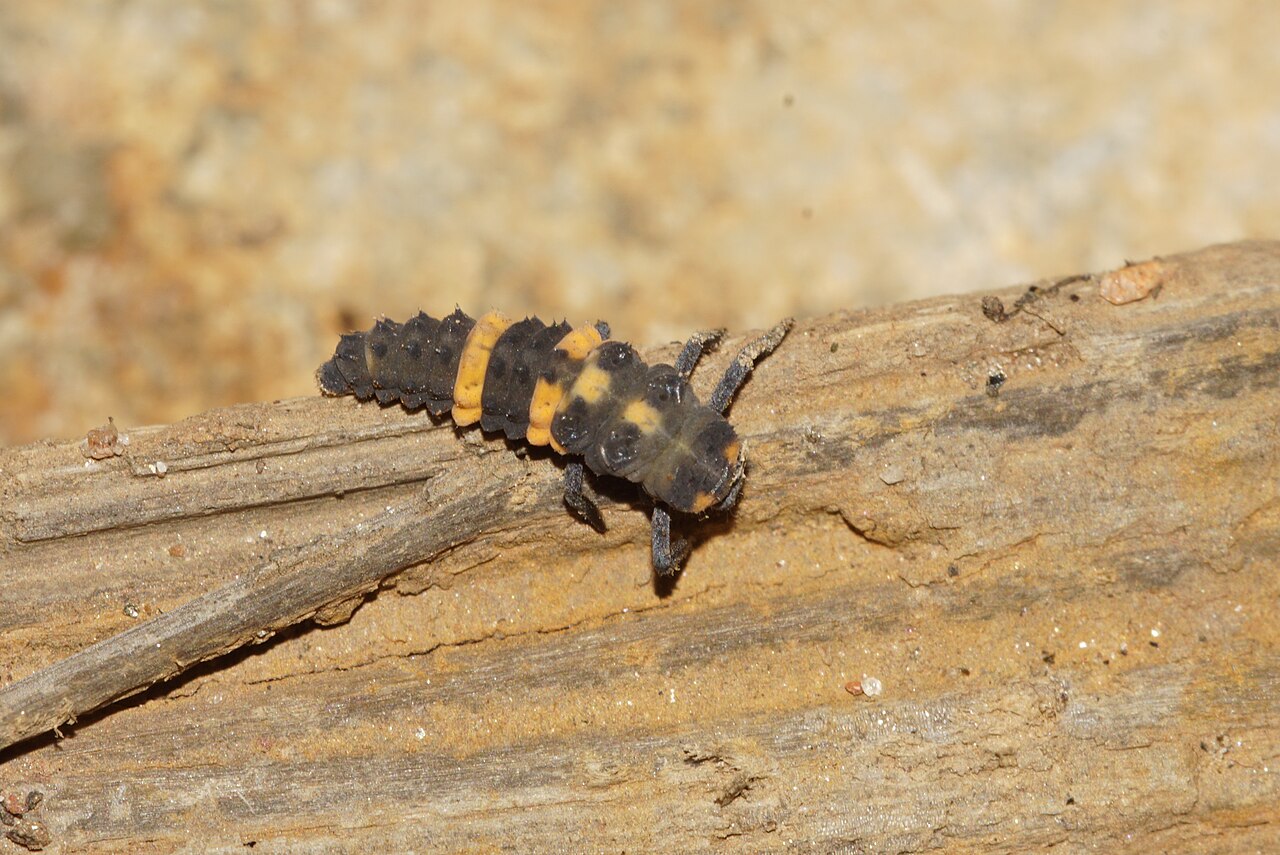
Ladybug larvae look nothing like the adults, and that is why so many gardeners kill them. A ladybug larva is an elongated, spiny, dark grey or black creature with orange or yellow markings, roughly 0.4 in long when fully grown, often described as a tiny alligator. It is the single most useful predator most gardens have.
A larva eats far more aphids than the adult beetle it becomes, consuming hundreds over the two to three weeks it spends feeding, and it does nothing else with its time. This guide covers what larvae look like at each stage, how to distinguish them from pest larvae, the pupa people also destroy by mistake, what they eat, and how to keep them in a garden.
| Quick Facts | Ladybug Larvae |
|---|---|
| Appearance | Elongated, spiny, dark with orange or yellow marks |
| Size | Up to about 0.4 in when fully grown |
| Duration | 2 to 3 weeks through four instars |
| Aphids eaten | Hundreds per larva, more than the adult eats |
| Pupa | Orange and black, attached to a leaf, immobile |
| Danger to people | None, they cannot bite meaningfully |
What Ladybug Larvae Look Like
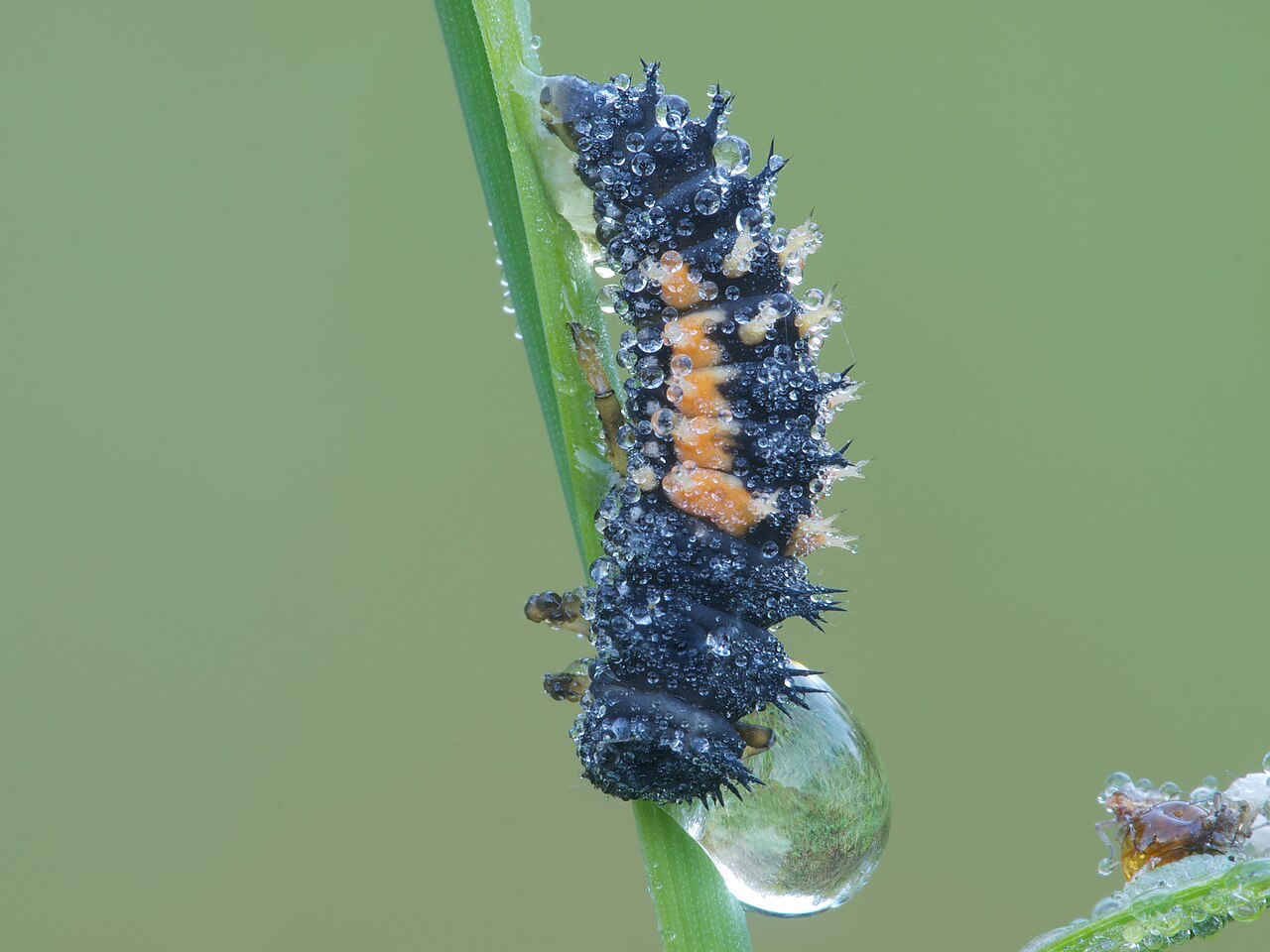
The body is elongated and tapered rather than domed, segmented, and covered in small spines or bristles that give it a rough texture. Coloration is typically slate grey to black with patches of orange, yellow, or white arranged along the sides and back, and the pattern varies between species.
Size changes dramatically across the larval period. A newly hatched larva is barely 0.04 in and dark, while a fully grown fourth instar reaches around 0.4 in and is conspicuous enough to notice from a few feet away on a plant stem.
Movement is the other giveaway. Ladybug larvae move quickly and purposefully across leaves and stems, quartering the surface in search of prey rather than resting or feeding in one spot. Anything that looks like a tiny black and orange alligator hunting on a plant with aphids is almost certainly one. Our guide to ladybug eggs covers the stage that comes before.
The Four Instars
Larvae pass through four stages separated by molts, and the appearance shifts noticeably across them. First instars are small, uniformly dark, and often stay near the hatching site, feeding on unhatched eggs and the smallest aphids.
Second and third instars develop the recognizable coloration and spread out to hunt across the plant. Appetite increases sharply with each molt, and by the third instar a larva is taking full-sized aphids rather than nymphs.
The fourth instar does most of the eating. It is the largest, most conspicuous stage and consumes the majority of the aphids a larva will take in its life, feeding almost continuously for several days before it stops, attaches itself to a surface, and prepares to pupate. Total larval development runs roughly two to three weeks in warm weather and longer when cool.
How Many Aphids They Eat
The numbers are the reason to care about identifying them correctly. A single ladybug larva consumes several hundred aphids across its development, and estimates published by university extension entomology programs run from around 350 to over 500 depending on species, temperature, and prey availability.
That is more than the adult beetle eats over a comparable period, which inverts most people’s assumption. Adults are longer lived and eat aphids throughout, but the concentrated feeding of the larval stage is what clears an infestation, and a plant hosting several larvae will be visibly cleaner within days.
They eat more than aphids too. Scale insects, mealybugs, mites, whitefly nymphs, thrips, and the eggs and small larvae of other insects all feature, and larvae readily eat each other and any ladybug eggs they encounter. Our guide to what ladybugs eat covers the full range across life stages.
Larvae People Confuse Them With
Several unrelated larvae look superficially similar and the distinction matters because some are pests. Colorado potato beetle larvae are the most consequential confusion: they are plump, soft, humpbacked, and bright orange-red with black side spots, and they feed on potato, tomato, and eggplant foliage rather than hunting.
Behavior separates them instantly. A ladybug larva moves fast and hunts, while a potato beetle larva sits and chews leaves, so watching for thirty seconds resolves it. Body shape helps too, since ladybug larvae are elongated and spiny while potato beetle larvae are rounded and smooth.
Two other groups cause confusion. Lacewing larvae are also predatory and beneficial, distinguished by prominent curved jaws projecting forward and a habit in some species of carrying debris on their backs as camouflage. Hoverfly larvae are legless, sluglike, and translucent, and they are equally beneficial aphid predators despite looking like maggots. Anything with obvious legs, spines, and speed on an aphid-infested plant is worth leaving alone.
The Pupa Nobody Recognizes
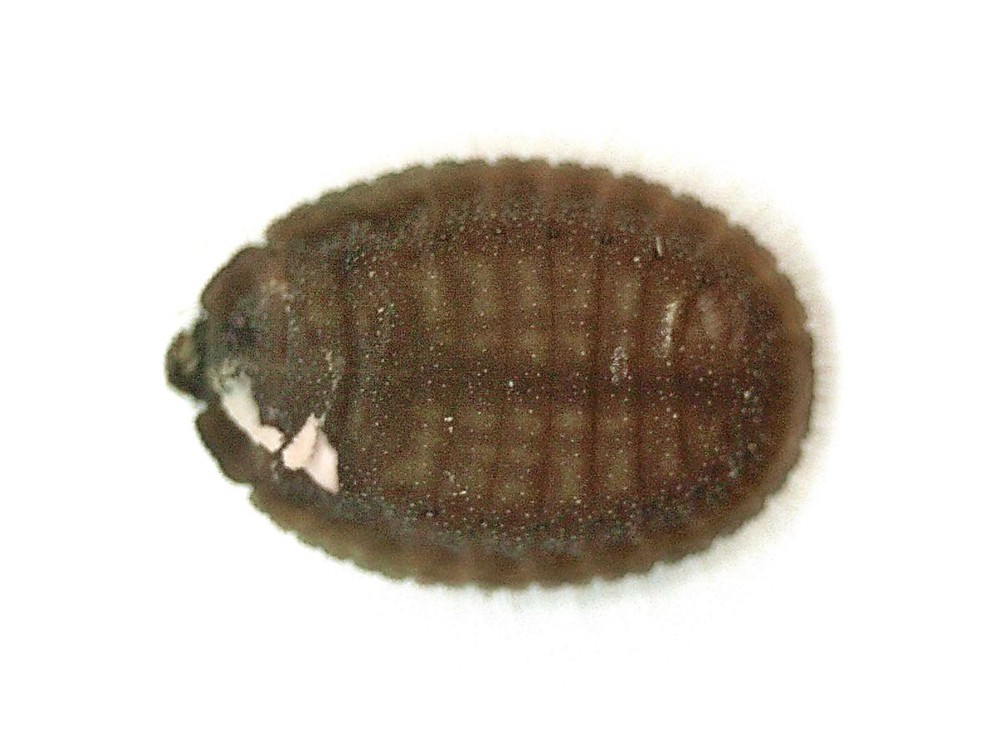
When feeding ends, the fourth instar attaches its rear end to a leaf, stem, or wall and pupates in the open. The pupa is roughly 0.2 to 0.3 in, rounded, and typically orange with black markings, and it sits motionless and exposed for about a week.
This is the stage destroyed most often by gardeners, because it looks like a diseased growth, an insect egg mass, or a scale insect infestation rather than a beneficial insect. It does not move, it does not respond, and it is frequently scraped off leaves or sprayed.
It does move slightly if disturbed. A ladybug pupa can flex upward at the attachment point, a behavior thought to deter parasitic wasps and small predators, so a suspicious orange lump that twitches when touched is a ladybug about to emerge. The adult that emerges is pale yellow and unspotted at first, darkening and developing its markings over the following hours, which is why teneral beetles get reported as unfamiliar species, as our guide to the yellow ladybug explains.
Do They Bite?
Not meaningfully. Ladybug larvae have chewing mouthparts built for aphids, and while a large larva placed on skin may attempt to test it, they cannot break human skin in any meaningful way and there is no venom involved.
They are safe to handle and safe around children and pets. The spines are soft rather than sharp and cause no irritation, and unlike some caterpillar bristles they carry no allergenic compounds.
Adult ladybugs are a slightly different matter, since Asian lady beetles do deliver a defensive nip that feels like a pinprick, particularly in autumn when large numbers gather indoors. That behavior belongs to the adult stage rather than the larva, and our guide to whether ladybugs bite covers it in detail.
Where and When You Find Them
Larvae appear wherever aphids are, because females lay next to the food supply and larvae cannot travel far. Roses, milkweed, beans, fruit trees, brassicas, and any plant carrying an aphid colony are the places to look.
Timing follows aphid populations. In temperate regions the first larvae appear in late spring after overwintering adults have fed and mated, with several overlapping generations through summer where the season is long enough.
Look on the undersides of leaves and along stems near aphid clusters, and check the growing tips where aphids concentrate. A single plant may host eggs, larvae at several instars, pupae, and adults simultaneously in midsummer, which is a good sign that the local population is established rather than passing through.
Should You Move or Buy Them?
Moving larvae between plants usually fails. A larva placed on a plant with no aphids starves rather than searching successfully, since it cannot travel far and has no way to locate prey at distance, so relocating one from a plant you are treating to a plant you want cleared rarely works.
Buying larvae is a better proposition than buying adults, and this is worth knowing. Purchased adult ladybugs disperse within days, with studies finding the large majority leave within 48 hours regardless of how many aphids are present, because commercially collected beetles are frequently in a dispersal state when sold.
Larvae cannot fly, so they stay where they are placed and feed until pupation, which makes purchased larvae genuinely useful in a greenhouse or on a specific infested plant. They cost more and are harder to source, and the caveat about commercially collected insects spreading parasites applies to both. Encouraging local populations remains the better long-term approach.
Keeping Larvae in Your Garden
Tolerate some aphids, which is the requirement most gardeners resist and the one that matters most. Larvae exist only where prey exists, so a garden sprayed clean of aphids has no ladybug larvae, and the early-season aphid population is what produces the predators that suppress the later one.
Stop spraying, including the products marketed as organic and safe. Insecticidal soap kills soft-bodied ladybug larvae on contact just as efficiently as it kills aphids, neem affects them, and neonicotinoids persist in plant tissue and reach anything feeding on the plant. Broad-spectrum insecticide is the single most reliable way to remove larvae from a garden.
Then support the adults that produce them. Flat open flowers including dill, fennel, yarrow, cosmos, calendula, and alyssum provide the pollen and nectar adults supplement their diet with, and leaving leaf litter, hollow stems, and undisturbed corners through winter gives adults somewhere to overwinter locally rather than arriving from elsewhere each spring. Our guides to the orange ladybug and the Asian lady beetle cover which species you are likely to be supporting.
Frequently Asked Questions
What do ladybug larvae look like?
Elongated, segmented, spiny creatures up to about 0.4 in, usually slate grey to black with orange, yellow, or white markings, often described as tiny alligators. They move fast and purposefully across plants hunting aphids rather than sitting and chewing leaves.
How many aphids does a ladybug larva eat?
Several hundred across its two to three week development, with published estimates from around 350 to over 500 depending on species and conditions. That is more than the adult beetle eats over a comparable period, and the fourth instar does most of the eating.
How do I tell them from Colorado potato beetle larvae?
Watch the behavior. Ladybug larvae move fast and hunt, while potato beetle larvae sit and chew foliage. Potato beetle larvae are also plump, smooth, and humpbacked in bright orange-red, while ladybug larvae are elongated and spiny, and they feed on nightshade crops.
Do ladybug larvae bite?
Not meaningfully. Their mouthparts are built for aphids and cannot break human skin, and there is no venom. The spines are soft and cause no irritation. Adult Asian lady beetles do deliver a harmless defensive nip, but larvae do not.
What is the orange lump on my leaf?
Probably a ladybug pupa, roughly 0.2 to 0.3 in, orange with black markings, attached at one end and motionless for about a week. It flexes upward if touched. Gardeners destroy this stage constantly, mistaking it for a disease growth or scale insect.
Should I buy ladybug larvae?
They work better than buying adults, since larvae cannot fly and stay where placed, while purchased adults mostly disperse within 48 hours. Larvae are more expensive and harder to source, and encouraging local populations remains the better long-term approach.
How do I get more ladybug larvae in my garden?
Tolerate some aphids, since larvae exist only where prey does, and stop spraying, including insecticidal soap and neem which kill larvae on contact. Plant flat open flowers such as dill, fennel, yarrow, and alyssum for the adults, and leave leaf litter for overwintering.