What Do Grasshoppers Eat? Plants, Crops, and Prey
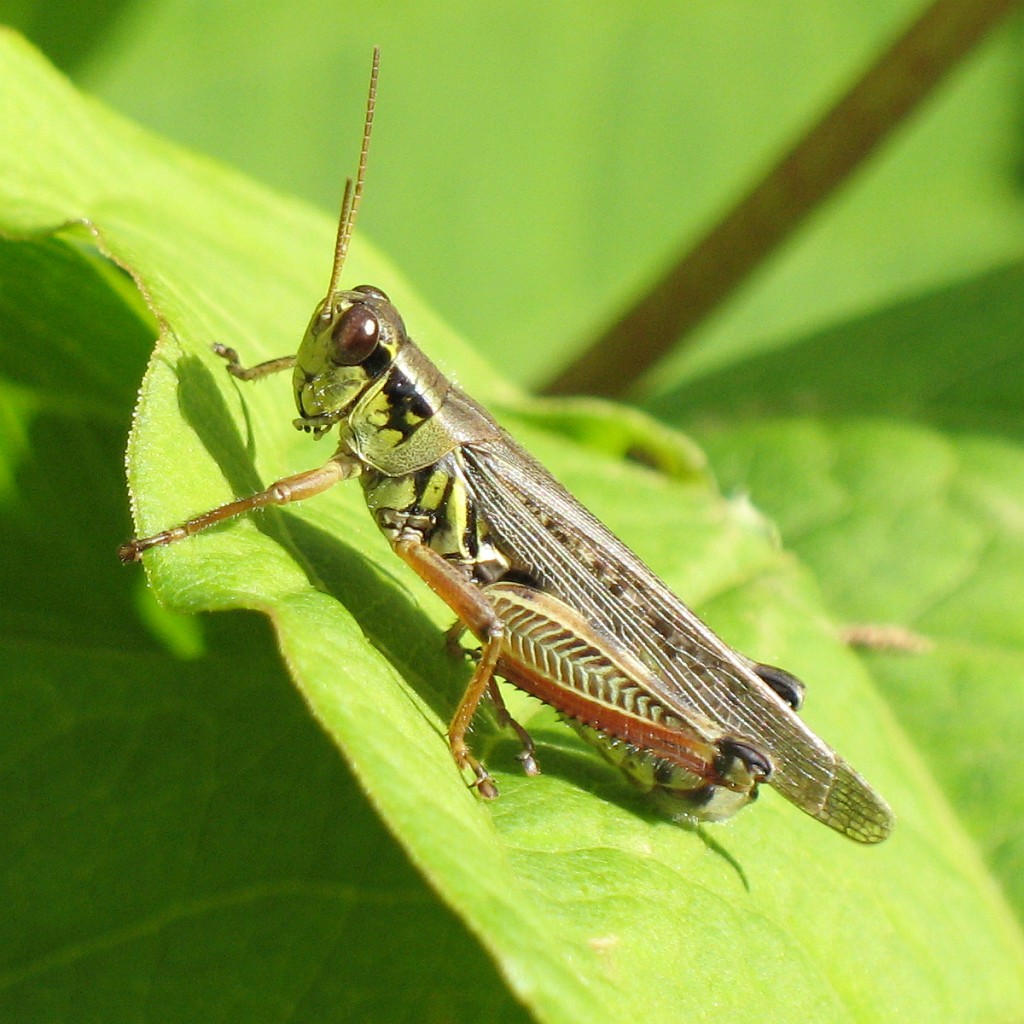
What do grasshoppers eat? Almost entirely plants. Grasshoppers are chewing herbivores that feed on grasses, broadleaf weeds, garden vegetables, cereal crops, tree leaves, and occasionally flowers and seeds. A single adult eats roughly half its body weight in plant material every day, and dense populations can strip a pasture or a vegetable bed within a season. Most species prefer tender young growth, which is why lettuce, beans, corn silk, and fresh grass shoots vanish first.
They are not strict vegetarians in every situation. Grasshoppers will scavenge dead insects, chew on animal droppings, and in crowded conditions attack weaker members of their own species. That opportunistic streak matters, because it is the trigger that turns some grasshopper species into swarming locusts. Understanding both sides of the diet explains their behavior in a garden and their reputation in agriculture.
| Question | Quick Answer |
|---|---|
| Diet type | Primarily herbivore, opportunistically omnivore |
| Preferred foods | Grasses, tender leaves, forbs, crop foliage |
| Daily intake | Roughly half of body weight in plant matter |
| Do they drink? | Mostly moisture from plants, plus dew and puddles |
| Mouthparts | Chewing mandibles that cut ragged holes |
| Nymph diet | Same plants as adults, softer tissue only |
The Grasshopper Diet at a Glance
Grasshoppers belong to the order Orthoptera and carry strong chewing mandibles built for shearing plant tissue. Unlike aphids or stink bugs, which pierce and suck fluids, a grasshopper physically bites out pieces of leaf and swallows them. That mechanical difference shapes the entire diet: anything soft enough to cut is potential food, and anything woody or heavily defended usually is not.
Entomologists divide grasshoppers loosely into three feeding groups. Grass feeders, which include most rangeland species, specialize in grasses and sedges. Forb feeders prefer broadleaf plants such as clover, alfalfa, sunflower, and many garden vegetables. Mixed feeders take both, and these are the species that cause the most trouble in home gardens because nothing in the bed is off limits.
Appetite scales sharply with temperature and life stage. Feeding is highest in warm sunny weather, drops during cool spells, and stops entirely below roughly 50 degrees Fahrenheit. Research from University of Nebraska Lincoln Extension notes that outbreak years typically follow hot dry summers, because drought stresses plants, speeds nymph development, and reduces the fungal pathogens that normally keep populations in check. A dry August is often the best predictor of a heavy grasshopper year to come.
What Plants Do Grasshoppers Eat?
Given a choice, grasshoppers go for tender, high nitrogen growth. In lawns and pastures that means young grass blades and the leaves of clover, alfalfa, and dandelion. In gardens the top targets are lettuce, beans, peas, carrots and their tops, corn leaves and silk, squash foliage, and the tender growth of nearly any leafy green. Grasshoppers also chew the leaves of young trees and shrubs, and in outbreak years they will strip bark from thin twigs once the foliage is gone.
The damage pattern is distinctive. Grasshoppers leave ragged, irregular holes chewed inward from leaf margins, not the neat round cuts of leafcutter bees or the skeletonized lace of beetle feeding. Heavy feeding removes so much leaf area that the plant cannot photosynthesize properly, and repeated defoliation kills seedlings outright.
Some plants get skipped. Grasshoppers generally avoid strongly aromatic herbs such as sage, cilantro, lavender, and mint, along with many plants carrying heavy latex or bitter alkaloids. Gardeners sometimes use this to their advantage by planting aromatic borders. It is a partial defense at best, since a hungry population in a drought year will eventually eat almost anything green, including plants they normally reject. If you are choosing what to grow, the native species in our guide to plants that attract birds also bring in the insect eating birds that suppress grasshopper numbers naturally.
Do Grasshoppers Eat Insects, Ants, or Meat?
Grasshoppers are not predators, but they are opportunists. Given the chance, many species will feed on dead insects, carrion, and animal droppings for the protein and salts those materials contain. This behavior is most common when plant quality is poor, when the population is crowded, or when a female needs extra protein for egg production. It does not make them carnivores in any meaningful sense, since plant matter still makes up the overwhelming majority of the diet.
The question of whether grasshoppers eat ants comes up constantly, and the honest answer is rarely and only opportunistically. A grasshopper will not stalk an ant colony, but a large lubber or a hungry adult may chew a dead or injured ant it encounters. The relationship usually runs the other way: ants scavenge dead grasshoppers readily, as covered in our guide to what ants eat.
Cannibalism is the more significant exception. In dense populations, grasshoppers attack individuals that are molting, injured, or slow, and this pressure is part of what drives marching behavior in locust species. Individuals move forward partly to avoid being eaten from behind, which is one mechanism behind the coordinated swarms that damage crops across whole regions. The distinction between a grasshopper and a locust is behavioral rather than taxonomic, a point explored further in our comparison of crickets and grasshoppers.
How Do Grasshoppers Eat?
A grasshopper’s mouth works like a pair of shears backed by a conveyor. Two heavy mandibles move sideways rather than up and down, shearing off fragments of leaf. Smaller maxillae and a labium hold the material in place and push it inward, while sensory palps taste the plant first. Anyone who has watched a grasshopper feed closely can see it grip a leaf edge with its front legs and work steadily along it.
Digestion happens fast. Plant material passes into the crop, where enzymes begin breaking down cellulose and starch, then into the midgut for absorption. The efficiency is low, which is exactly why intake is so high: a grasshopper must process a large volume of low quality plant tissue to extract enough nutrition. Most of what goes in comes back out as dry fecal pellets, and heavy infestations leave these pellets visibly scattered across leaves and patios.
The brown liquid a grasshopper releases when handled is often called tobacco juice. It is regurgitated gut contents mixed with digestive fluids, released as a defense to make the insect unpleasant to a predator. It stains skin temporarily but is harmless. Grasshoppers can bite in self defense, and a large species can pinch hard enough to be felt, but they have no venom and no interest in biting people.
What Do Grasshoppers Drink?
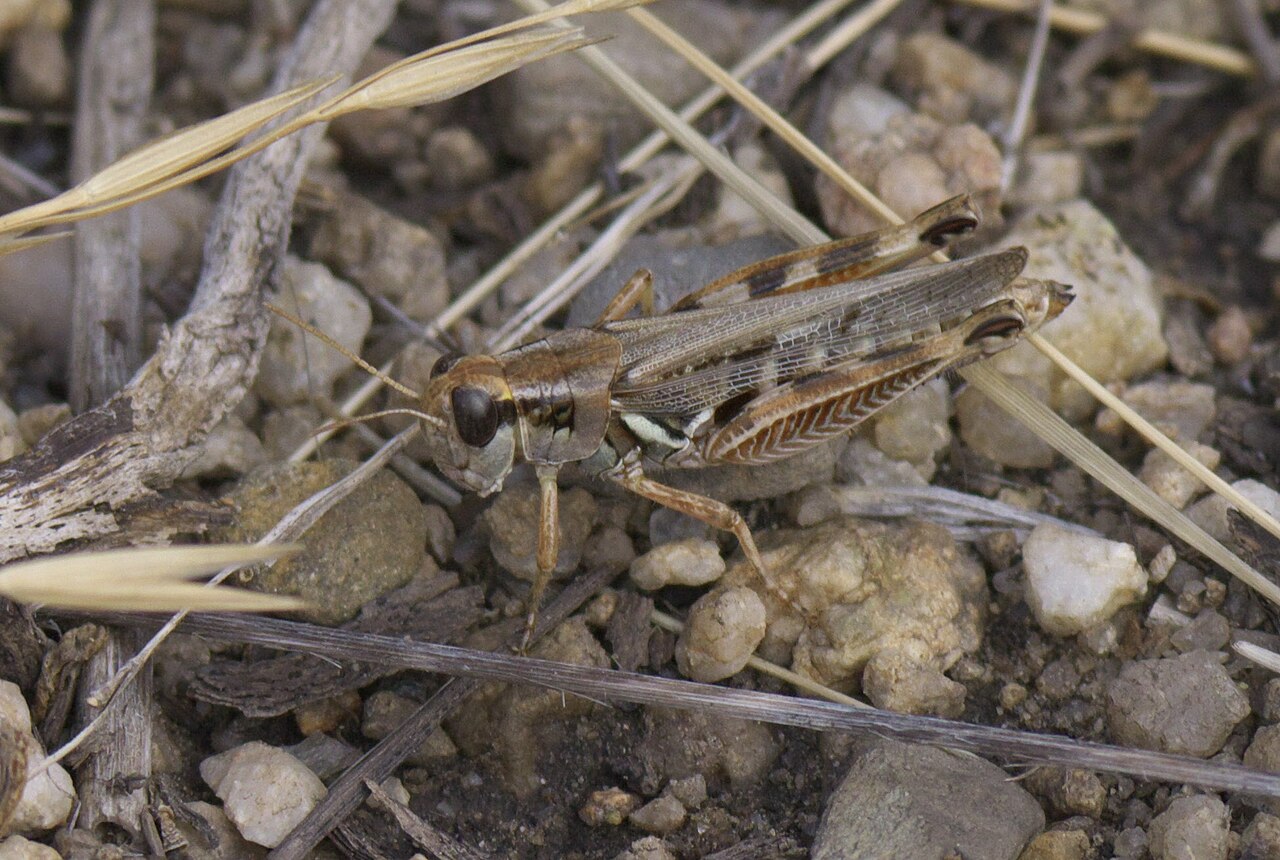
Grasshoppers get most of their water from the plants they eat. Fresh foliage can be over 80 percent water by weight, so an insect eating half its body weight in leaves daily rarely needs a separate drink. This is one reason grasshopper populations explode in dry years while other insects struggle: their food and their water arrive in the same bite.
They will still drink free water when it is available. Grasshoppers sip dew from leaves in the early morning, take moisture from the edges of puddles and irrigation lines, and cluster near damp soil during heat waves. Species in arid habitats push this further, restricting activity to cooler hours and relying almost entirely on plant moisture and metabolic water produced during digestion.
In captivity, water management is where most beginners fail. An open dish drowns grasshoppers easily, so the safer approach is to mist the enclosure lightly once a day and provide fresh, moisture rich greens. A shallow dish packed with damp cotton or a water gel gives them somewhere to drink without the drowning risk. Wilted or dried out greens should be replaced daily, since dehydration kills captive grasshoppers faster than hunger does.
What Do Baby Grasshoppers Eat?
Baby grasshoppers, properly called nymphs, eat the same plants as adults. They hatch from egg pods buried in the soil, emerge looking like miniature wingless adults, and begin feeding within hours. Because their mandibles are smaller and weaker, nymphs concentrate on the softest available tissue: new seedlings, tender shoots, and young leaves. This is why a spring hatch is so damaging in a vegetable garden, where everything is at the seedling stage at exactly the wrong moment.
Nymphs pass through roughly five instars over five to eight weeks, molting between each stage and adding wing pads as they go. Feeding intensity rises with each molt, since the insect must accumulate enough resources to build flight muscles and, in females, to produce eggs. A nymph that cannot find adequate food develops slowly, stays small, and produces fewer eggs as an adult.
This developmental window is also the best control opportunity. Young nymphs cannot fly, stay close to their hatching ground, and are far more susceptible to physical barriers, row covers, and biological controls than adults. Once they reach full size and disperse across a property, hand control becomes impractical and the population simply moves in from surrounding fields.
What Do Lubber, Desert, and Green Grasshoppers Eat?
Eastern lubber grasshoppers are the heavyweights of the group, reaching three inches long across the southeastern United States. They are broad mixed feeders with a strong appetite for amaryllis, crinum, lilies, and other ornamentals, and they will also take citrus foliage, vegetables, and weeds. Lubbers sequester toxic compounds from the plants they eat, which makes them unpalatable to most birds and explains their slow, conspicuous, almost fearless behavior.
Desert grasshoppers face a harder problem: sparse, tough, low moisture vegetation. They feed on drought adapted grasses, creosote, saltbush, and desert forbs, and they time their activity to avoid the hottest hours. Some desert species can survive on remarkably dry plant material by extracting metabolic water during digestion, and they concentrate feeding around the brief flush of green growth that follows seasonal rain.
Green grasshoppers, a description covering many differential and meadow species rather than one taxon, are typically grass and forb feeders whose color camouflages them against living foliage. Brown and gray individuals of the same species are often better matched to dry grass and bare soil, and in some species the color a nymph develops depends partly on the background it grows up against. Color tells you a lot about habitat and very little about diet.
What Eats Grasshoppers?
Grasshoppers sit near the base of the terrestrial food web and support an enormous range of predators. Birds are the biggest consumers by volume. Kestrels, shrikes, meadowlarks, bluebirds, flycatchers, and especially wild turkeys hunt them heavily through late summer, and grasshoppers can dominate the summer diet of many grassland species. Our guide to what turkeys eat covers just how central they are to that particular bird.
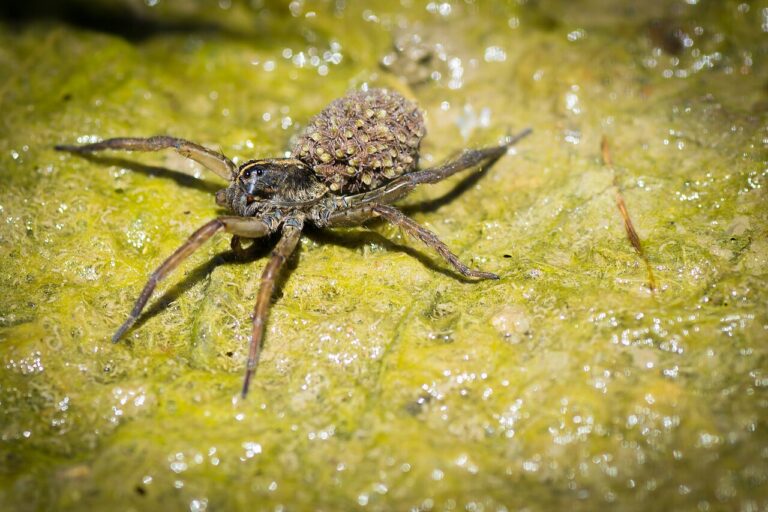
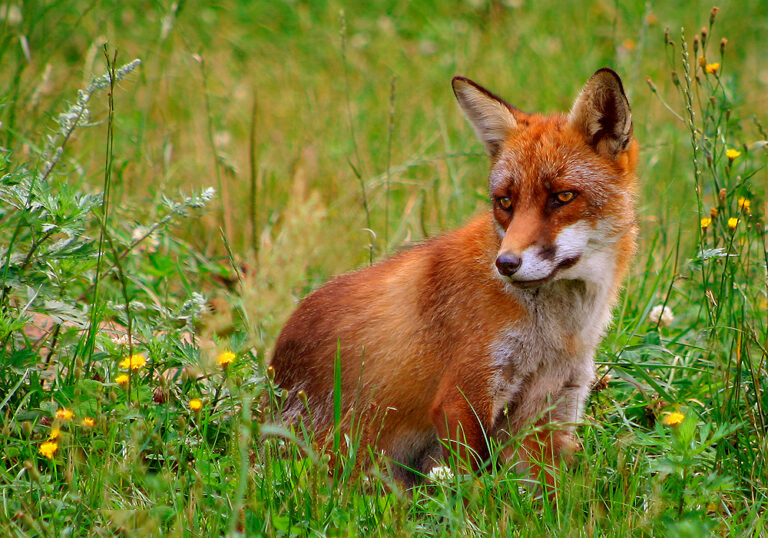
Reptiles, amphibians, and mammals take the rest. Lizards are efficient grasshopper hunters in warm open habitat, as detailed in our overview of what lizards eat. Toads, snakes, skunks, foxes, coyotes, and rodents all take grasshoppers when they are abundant, and spiders and robber flies catch them in flight.
Parasites and pathogens do quiet but heavy work too. Blister beetle larvae destroy grasshopper egg pods in the soil, parasitic flies lay eggs directly on adults, and hair worms and fungal pathogens can crash a population in a wet season. The naturally occurring fungus Entomophaga grylli is a major regulator, which is one more reason outbreaks correlate with dry weather that suppresses fungal spread. Encouraging birds, tolerating snakes, and avoiding broad spectrum insecticides preserves most of this control network at no cost.
Feeding Grasshoppers in Captivity
Grasshoppers are common classroom and terrarium subjects, and they are straightforward to feed if you match their natural diet. Fresh untreated grass is the foundation. Add romaine or leaf lettuce, clover, dandelion greens, carrot tops, and small amounts of apple or squash for variety and moisture. Everything must be free of pesticide residue, so roadside or lawn cut material from treated areas is unsafe.
Replace food daily. Wilted greens lose moisture value quickly and encourage mold in a warm enclosure, and mold is a common cause of sudden captive die offs. A shallow layer of oat bran or wheat bran on the floor gives supplementary carbohydrate and helps keep the enclosure dry between feedings.
Housing matters as much as diet. Grasshoppers need vertical space to climb and molt, warmth of roughly 80 to 90 degrees Fahrenheit during the day, and good ventilation. A molting grasshopper that cannot hang freely will deform its wings or die. If you are keeping crickets alongside them, note that the two have overlapping but distinct requirements, which our guide to what crickets eat covers in detail.
Frequently Asked Questions
Do grasshoppers bite?
Grasshoppers can bite in self defense if handled roughly, and large species such as lubbers can pinch hard enough to be felt. They have no venom, do not seek out people, and cause no lasting harm. The brown fluid they release when grabbed is regurgitated gut contents, not venom, and it washes off with soap and water.
Do grasshoppers eat ants?
Only rarely and opportunistically. A grasshopper may chew a dead or injured ant it encounters, particularly when it needs extra protein, but it does not hunt ants. The reverse is far more common, since ants readily scavenge dead grasshoppers and will attack injured ones in groups.
Are grasshoppers herbivores, carnivores, or omnivores?
Grasshoppers are best described as herbivores with omnivorous tendencies. Plants make up the overwhelming majority of the diet, but most species will scavenge dead insects, droppings, and even weakened members of their own species when protein is scarce or populations are crowded.
What do grasshoppers eat in the desert?
Desert species feed on drought adapted grasses, saltbush, creosote, and desert forbs, concentrating on the flush of green growth after seasonal rain. They extract most of their water from that plant material and from metabolic water produced during digestion, and they restrict feeding to cooler morning and evening hours.
Do grasshoppers eat tomatoes?
Yes. Grasshoppers chew tomato foliage readily and will also damage green and ripening fruit, leaving shallow ragged gouges in the skin. Damaged fruit then rots quickly. Floating row covers over young plants and a healthy population of insect eating birds are the most practical defenses in a home garden.
What do grasshoppers and crickets eat?
Grasshoppers are primarily plant feeders, while crickets are true omnivores that take plant matter, fungi, seeds, dead insects, and organic debris. Crickets are also far more likely to scavenge indoors. In captivity crickets need protein supplementation, while grasshoppers thrive on fresh greens and bran alone.
How long can a grasshopper survive without food?
An adult grasshopper can typically survive a few days without food but far less without moisture, especially in warm conditions. Since fresh foliage supplies both, a grasshopper deprived of green plant material dehydrates and weakens quickly, usually within two to three days at summer temperatures.