Moose Footprints: How Big They Are and How to Identify Them
Moose tracks are the largest cloven hoof prints in North America, and that size alone identifies them nine times out of ten. A walking adult leaves a two part, teardrop shaped print 4.5 to 7 in long (11 to 18 cm) with sharply pointed tips, and a stride so long that most people have to lunge to match it. Moose footprints in fresh snow usually show two extra dots behind the hoof, the dewclaws, which no deer of that size leaves so regularly.
The surface decides how much detail you get. Snow records dewclaws and the drag marks between prints, mud holds the crisp outline of each half, and dry sand slumps until only a rough oval is left. What follows is how to read each of those three surfaces, which measurements separate moose from elk, deer, cattle and horses, and what the trail pattern says about the animal that made it.
A moose track is a cloven, heart shaped hoof print 4.5 to 7 in long (11 to 18 cm) and 3.5 to 5 in wide, with two pointed halves that splay apart in soft ground. Dewclaw marks often register behind the hoof in snow or mud. Walking stride runs 30 to 45 in.
| Feature | Moose | Elk | White-tailed deer |
|---|---|---|---|
| Hoof length | 4.5 to 7 in (11 to 18 cm) | 3.5 to 4.5 in (9 to 11 cm) | 2 to 3.5 in (5 to 9 cm) |
| Hoof width | 3.5 to 5 in (9 to 13 cm) | 3 to 3.75 in (8 to 9.5 cm) | 1.5 to 2.5 in (4 to 6 cm) |
| Tip shape | Sharply pointed, often splayed | Rounded, blunt | Narrow and pointed |
| Dewclaws | Register often, even in shallow mud | Only in deep snow or mud | Rarely, mostly when running |
| Walking stride | 30 to 45 in (76 to 114 cm) | 25 to 34 in (64 to 86 cm) | 14 to 20 in (36 to 51 cm) |
| Straddle (trail width) | 8 to 12 in (20 to 30 cm) | 6 to 9 in (15 to 23 cm) | 4 to 6 in (10 to 15 cm) |
| Usual habitat clue | Willow flats, bogs, pond edges | Open meadow and forest edge | Field edges, suburbs, brush |
What Do Moose Footprints Look Like?
A moose footprint looks like a giant deer print: two halves of a split hoof, each one a long teardrop, meeting at a point that faces the direction of travel. The outer wall of each half is hard keratin and prints as a sharp rim, while the softer sole between the rims often leaves a shallower impression. In firm ground the two halves sit tight together and the print reads as one narrow heart.
In soft ground the halves spread. A moose carries 800 to 1,200 lb (360 to 540 kg) on four hooves, and in mud or snow that weight pushes the toes apart until the print is nearly as wide as it is long. Behind and above the hoof sit the dewclaws, two small vestigial toes that punch in as a pair of blunt dots when the foot sinks more than about 2 in.
How Big Is a Moose Footprint?
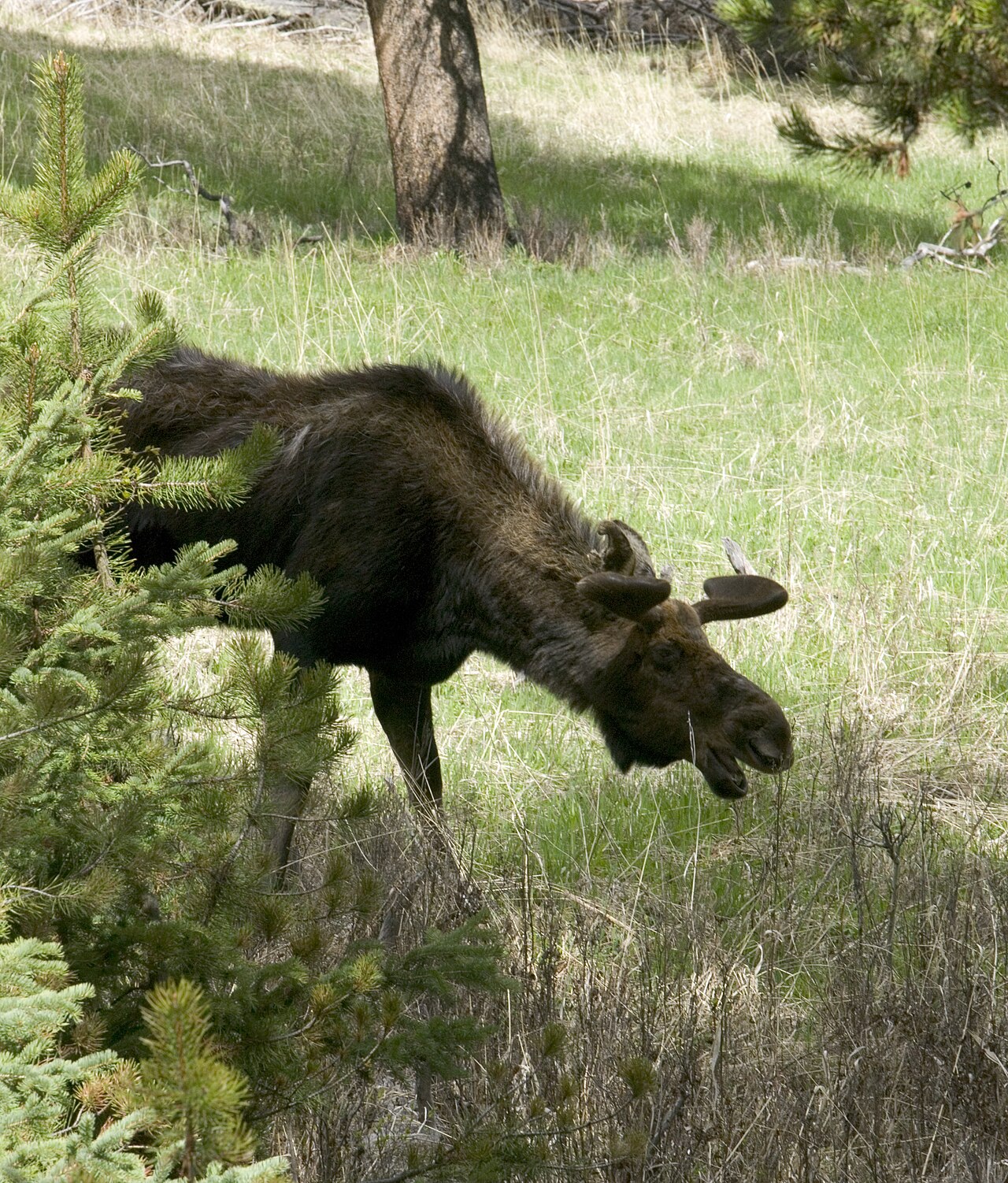
An adult moose (Alces alces) leaves a hoof print 4.5 to 7 in long (11 to 18 cm), not counting dewclaws. Bulls sit at the top of that range, cows in the middle, and yearlings down near 4 in. With dewclaws included in deep snow, the whole registration can measure 9 to 10 in from the toe tips to the back dots, which is what makes people overestimate the animal.
Calves born in late May print at 2.5 to 3.5 in through their first summer, close to adult white-tailed deer size. The giveaway is company: a calf track almost always runs beside a cow track, and the pair walk the same line. A lone deer sized print with no large print within a few feet is a deer, not a moose calf.
Moose Tracks in Snow
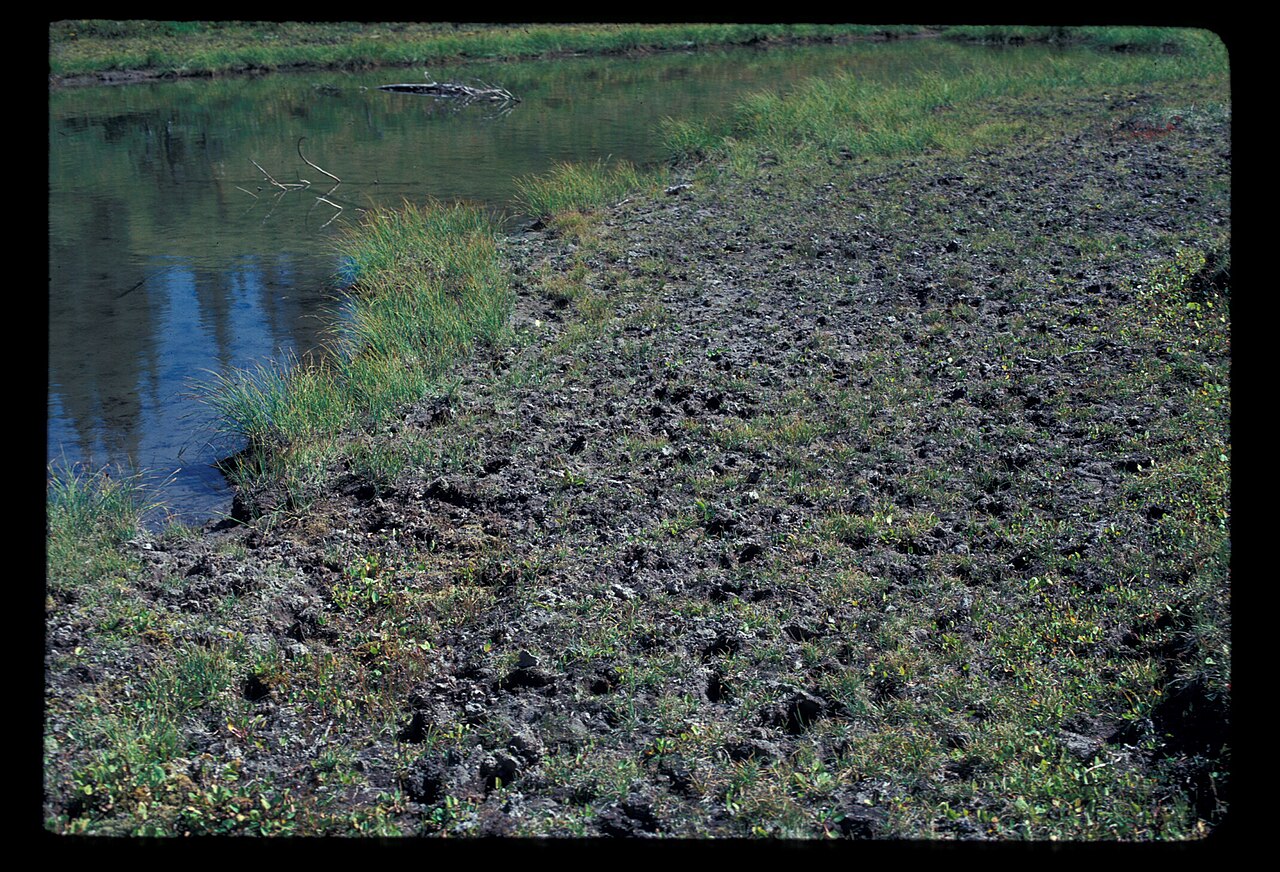
Snow is the best surface for moose and the reason winter is tracking season. In 4 to 8 in of powder you get the hoof outline, both dewclaws and usually a drag mark where the animal pulled its foot forward through the crust. Moose lift their legs high, so the drag is short compared with the long furrows that deer leave in the same depth.
Deeper snow erases the hoof shape and leaves post holes, and there you track by pattern instead. Measure the straddle, the width of the whole trail: 8 to 12 in for moose, well under 7 in for deer. Melt widens a print by rounding its rim, so a soft edged, oversized track on a sunny slope may be a day old deer print, not a fresh moose.
Next question: Moose Poop: What It Looks Like and How to Identify It
Moose Tracks in Mud
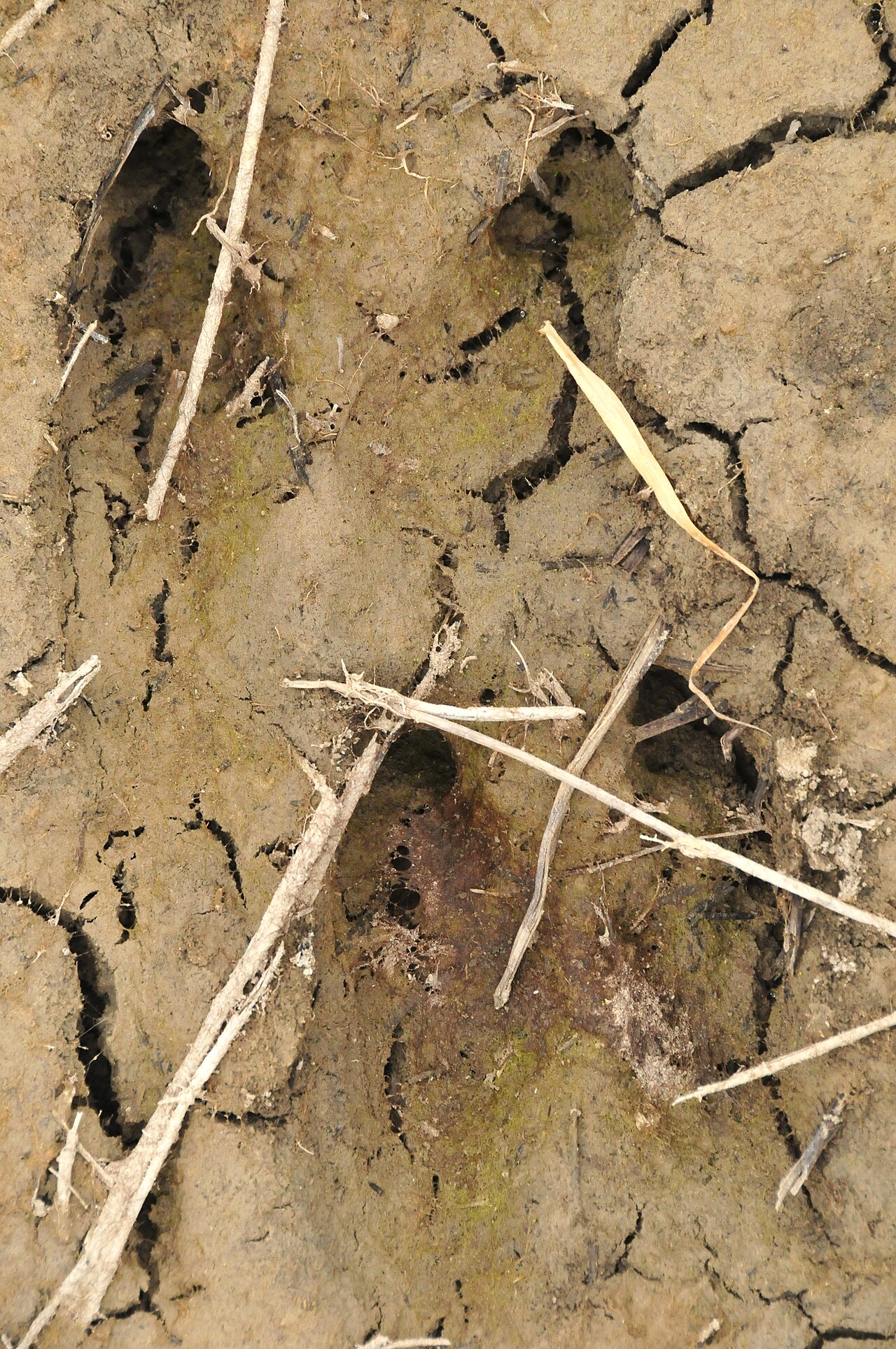
Mud at a pond edge or willow bog gives the sharpest detail you will ever get. Look for the clean split between the halves, the slight inward curve of each inner wall, and the small ridge of mud pushed up at the toe where the foot levered off. That push ridge points in the direction of travel and settles arguments about which way the animal went.
Moose feed on aquatic plants, so pond margins are a reliable place to start. Tracks that walk into water and stop are feeding tracks, often beside clipped pondweed and the browse they favor. Mud also preserves depth: a print pressed 3 in or more into soft ground belongs to a heavy adult, while a shallow print of the same length means a lighter animal crossing a wet spot quickly.
Moose Tracks in Sand
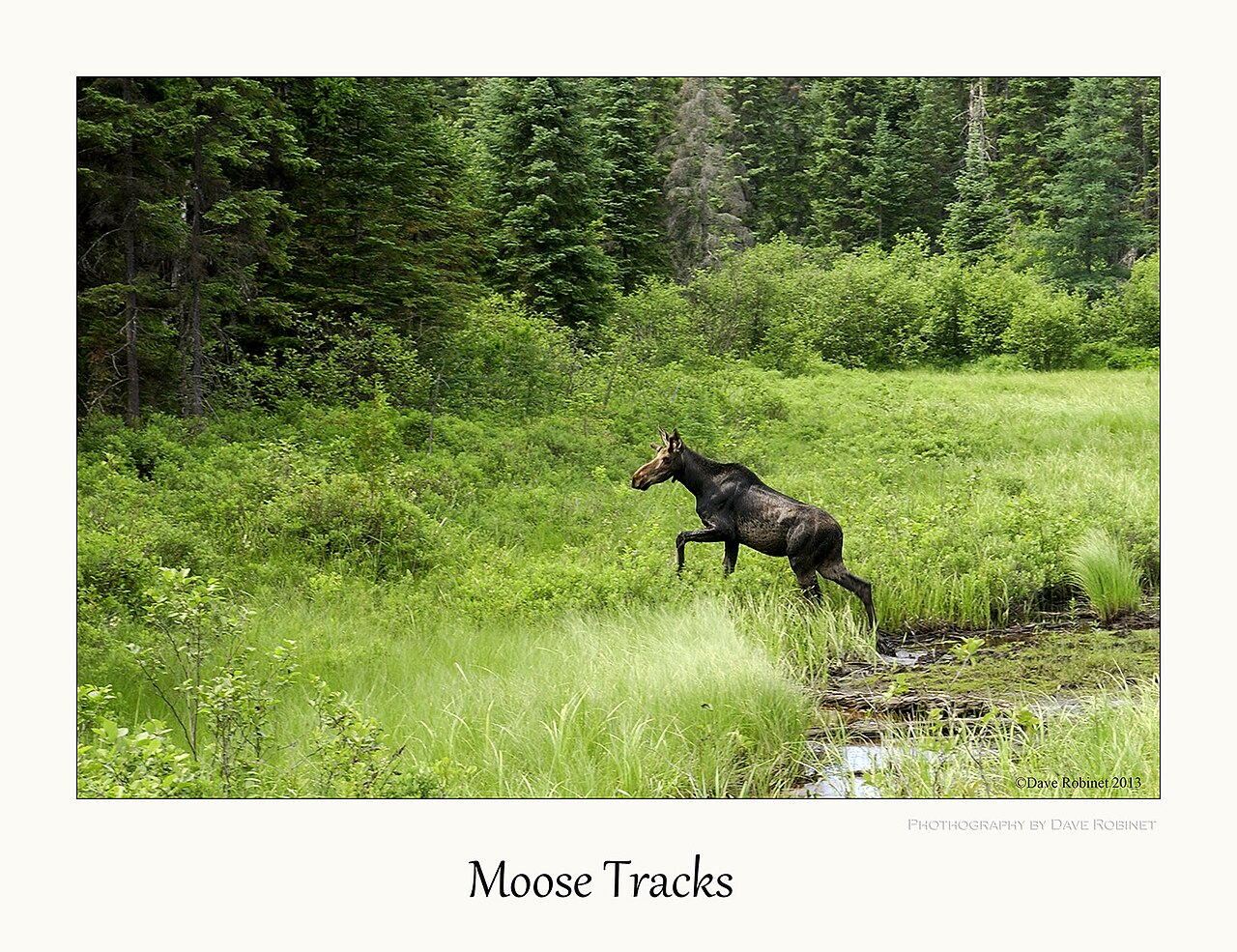
Dry sand is the hardest surface of the three. Loose grains collapse into the print before you reach it, so you lose the toe points and the split, and what remains is an oval depression with a crumbling rim. Size and spacing carry the identification here, not shape. Measure several prints and use the longest, because a slumped print always reads shorter than the hoof that made it.
Damp sand at a lakeshore behaves like mud and holds the outline for hours. In wind, prints age fast: a rim still sharp enough to cast a shadow is usually less than a day old. Sandy river bars also collect other species, so expect moose prints alongside black bear prints and bobcat prints on the same strip.
Moose Stride, Straddle and Gait Patterns
Moose walk most of the time, placing each hind foot almost exactly where the front foot on the same side landed. That direct register leaves what looks like a single line of prints with a stride of 30 to 45 in. When the hind foot lands slightly behind or beside the front, you see a double print, which is normal on uneven ground and no cause to invent a second animal.
At a trot the stride stretches to 5 or 6 ft and the dewclaws print harder. A running moose splays its hooves wide and throws debris backward, and the prints come in groups with gaps of 8 ft or more between them. Running tracks mean something moved the animal, so check for predator prints along the same line before you follow it.
Moose Tracks vs Elk Tracks
Elk are the only animal regularly confused with moose, and the difference is shape before size. Elk hooves are rounder and blunter, with tips that look worn flat rather than drawn to a point, and the two halves stay closer together even in mud. An elk print rarely passes 4.5 in, so any clean print over 5 in with pointed tips is a moose.
Range helps in much of the country. Elk fill the Rockies and scattered eastern reintroductions, while moose hold the northern tier, New England, the upper Midwest, Alaska and the high Rockies. Where the two overlap in Wyoming, Montana and Idaho, rely on the measurements and on habitat: moose stay in willow and water, elk use open meadow.
Moose Tracks vs Deer Tracks
White-tailed and mule deer prints are half the length of a moose print and a third of the area, so the two only get confused when snow has rounded a deer track out of shape or when someone finds a moose calf print alone. Deer stride runs 14 to 20 in, barely half the moose figure, and the trail width stays under 6 in.
The quickest check is the stride, not the print. Walk the trail for 20 ft and measure from one print to the next on the same side. If you can match the spacing with a comfortable walking step, it is deer. If matching it feels like a jump, you are following a moose. Deer also wander in tight loops while browsing; moose cover ground in long straight lines.
Moose Tracks vs Horse, Cow and Dog Prints
A horse hoof is a single unsplit oval 4 to 6 in across, often with the straight line of a shoe, so the split alone rules it out. Cattle leave a cloven print 3.5 to 5 in long that overlaps moose in size, but cow halves are rounded and bulge outward, giving a print wider than it is long.
Dog and coyote prints are not cloven at all: four toes, claw marks and a single triangular heel pad. People mix them with hoofed tracks only in bad snow, where a melted dog print can look split. For the carnivore side of the puzzle, compare coyote track shape and the coyote and fox comparison rather than guessing.
Reading the Rest of the Trail
Tracks are one line of evidence, and moose leave several others in the same place. Droppings are oval pellets 0.75 to 1.5 in long, massed into clumps on green summer feed. Browse lines show as willow and aspen stems bitten off square at 6 to 8 ft, far above what deer can reach.
Beds appear as oval melt holes in snow 5 to 7 ft long, usually in conifer cover. Bulls add rubs on saplings from September antler polishing and shallow pits called wallows. In the northern plains the same mud can hold bison prints that dwarf everything else.
Staying Safe When You Find Fresh Moose Tracks
Fresh tracks mean the animal is close, and moose injure more people in Alaska than bears do. Cows with calves in late spring and bulls in the September and October rut are the dangerous cases. Warning signs are laid back ears, raised hackles and a lowered head, and the answer is to put a tree or a vehicle between you and the animal.
Keep dogs leashed, since a loose dog that chases a moose almost always brings it back to you. The Alaska Department of Fish and Game advises giving moose at least 50 ft and more during the rut. If a moose charges, run and keep running; unlike a bear, it will not pursue once you are away from what it was defending.
Frequently Asked Questions
How big is a moose footprint?
An adult moose footprint measures 4.5 to 7 in long (11 to 18 cm) and 3.5 to 5 in wide, hoof only. In deep snow or mud the dewclaws print behind the hoof and the full registration can reach 9 to 10 in. Bulls fall at the upper end, cows in the middle, calves near 3 in.
What do moose footprints look like?
They look like oversized deer prints: two teardrop halves of a split hoof meeting at a sharp point, with the point facing the direction of travel. In soft ground the halves splay apart and two round dewclaw dots appear behind them. On hard ground the print narrows into a single clean heart shape.
What are female mooses called?
A female moose is a cow, a male is a bull and a youngster is a calf. The plural of moose is moose, so a group is several moose, never mooses. Cow tracks run slightly smaller than bull tracks, and in late spring a cow trail usually has a calf trail running right beside it.
What is a moose’s worst enemy?
Gray wolves are the main predator of adult moose across most of the range, hunting in packs and targeting old or weakened animals. Brown bears and black bears take a high share of calves in their first weeks. Winter ticks now kill more young moose in parts of New England than any predator does.
What is the top speed a moose can reach?
A moose can run about 35 mph (56 km/h) in short bursts and trot at 20 mph for long distances. That is faster than any person, which is why distance and cover matter more than speed if one charges. Running tracks show splayed hooves, deep dewclaw marks and gaps of 8 ft or more between print groups.
Which is bigger, a clydesdale horse or a moose?
A Clydesdale stands taller, typically 16 to 18 hands or 64 to 72 in at the shoulder, against 60 to 84 in for a bull moose. Weight is closer, 1,800 to 2,000 lb for the horse and 800 to 1,600 lb for the moose. Their prints never match, since the horse hoof is a single unsplit oval.