Viceroy Butterfly: The Monarch Mimic and How to Tell Them Apart
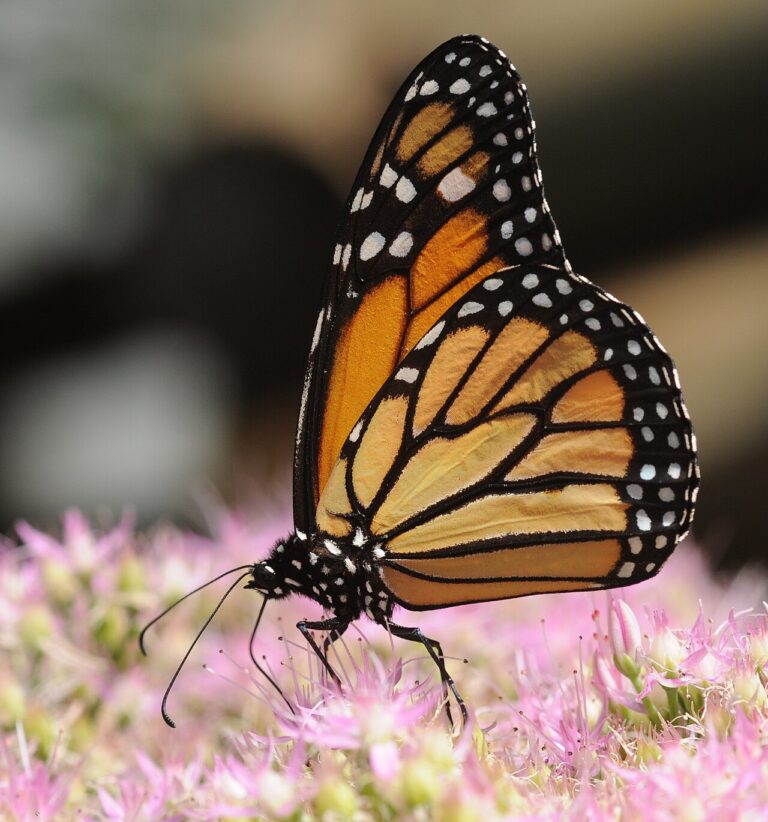
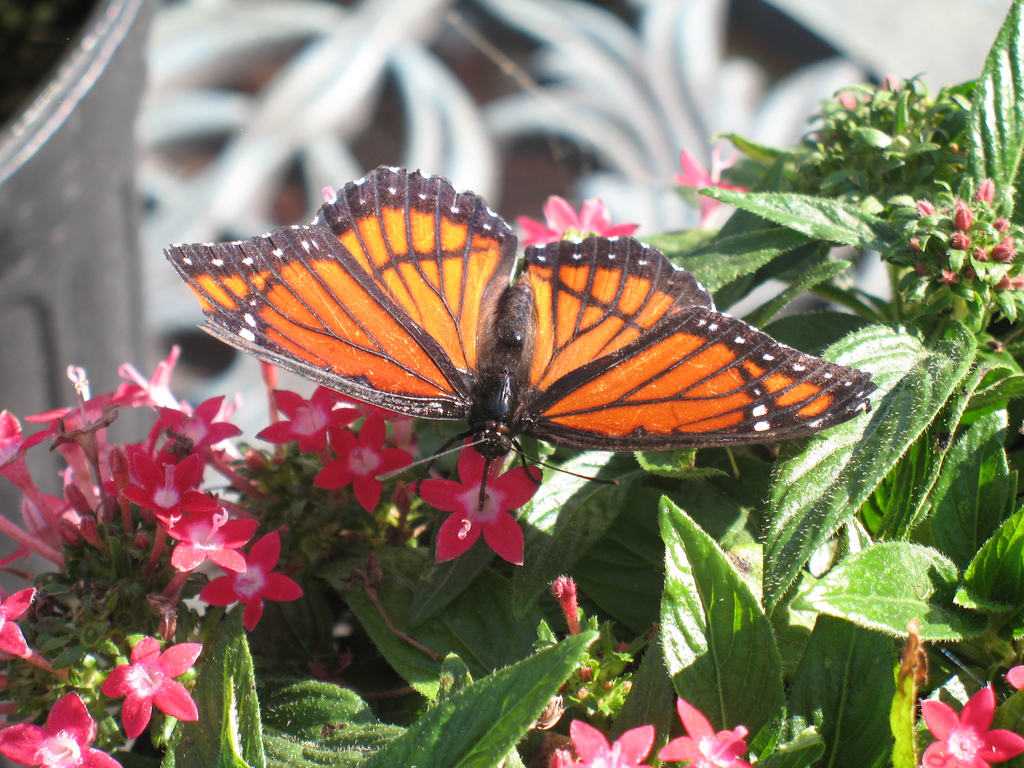
The viceroy butterfly (Limenitis archippus) is North America’s great impostor, an orange-and-black butterfly so similar to the monarch that most people never realize they are looking at a different species. The giveaway is a single mark: a black line curving across the hindwing, parallel to the wing edge, that monarchs never have. Viceroys are also noticeably smaller, at 2.5 to 3.4 inches across, and fly with a quick flap-flap-glide rhythm on flat wings instead of the monarch’s lazy sail.
For a century the viceroy was the textbook example of a harmless mimic borrowing the monarch’s warning colors. Modern research rewrote that story: viceroys are chemically defended themselves, loaded with bitter compounds from the willows their caterpillars eat, making the two species co-advertisers rather than model and cheat. This guide covers the identification line, the mimicry science, the bird-dropping caterpillar, host plants, range, and the viceroy’s clever overwintering trick.
| Scientific name | Limenitis archippus |
| Wingspan | 2.5 to 3.4 in (monarch: 3.5 to 4) |
| Key field mark | Black postmedian line across the hindwing |
| Flight style | Fast flap-flap-glide on flat wings |
| Host plants | Willows, poplars, cottonwoods |
| Defense | Salicylic acid from willow diet, genuinely distasteful |
How to Identify a Viceroy Butterfly
A viceroy reads as a compact, slightly darker monarch. The upper side is rich orange sectioned by black veins, with a black border dotted white around every wing edge and a band of white spots crossing the black forewing tip. The orange often carries a burnished, mahogany tone compared to the monarch’s brighter tangerine, and the black veining looks a touch heavier for the wing size. At 2.5 to 3.4 inches, a viceroy next to a true monarch looks obviously undersized, though solo butterflies make size a shaky field mark.
Habitat is a strong supporting clue. Viceroys are tied to their host trees, so they concentrate near willows, poplars, and cottonwoods, which means wet places: stream corridors, pond edges, marsh margins, wet meadows, lake shores. A “monarch” patrolling a willow-lined creek far from any milkweed patch deserves a second look. Viceroys also perch differently, resting on shrubs and low trees with wings flat or half open, and males aggressively patrol short beats along waterways, looping the same stretch for hours.
Distribution covers most of the continent east of the Sierra Nevada, from southern Canada through the Gulf states, and the species wears regional costumes. Where monarchs are common, viceroys are orange. In Florida and parts of the Southwest, where the dominant local royal is the mahogany-brown queen butterfly, viceroys shift chestnut-dark to match her instead, one mimic tracking two different models across the map. Our orange and black butterfly guide lines up the viceroy against every other orange lookalike in one place.
Viceroy vs Monarch: The One Line That Settles It
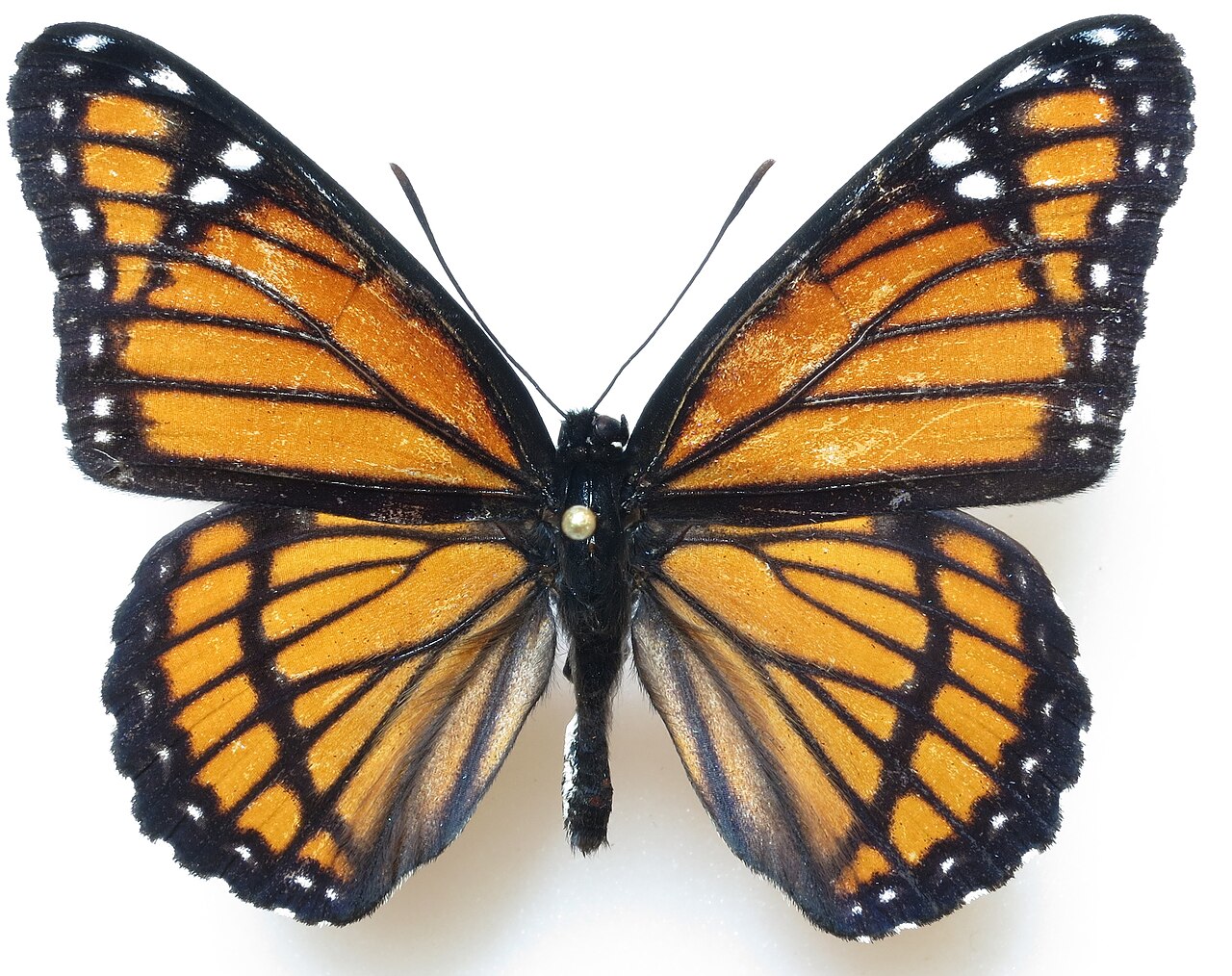
Forget size and shade; one mark decides every viceroy-versus-monarch question in seconds. Look at the hindwing. A viceroy has a bold black line, called the postmedian line, sweeping across the middle of the hindwing in a smooth arc parallel to the outer edge. It crosses the veins like a bridge crossing streets. Monarchs have nothing there, just clean orange panes between veins. The line shows on both the upper and undersides, on males and females, at rest and often even in gliding flight.
Flight style backs the line up at distance. Monarchs are floaters: deep, slow wingbeats, long glides with wings held in a shallow V, an unhurried sail that covers ground deceptively fast. Viceroys are sprinters: quick stiff bursts of flapping broken by flat-winged glides, usually low, usually along a treeline or waterway, rarely towering into the sky the way migrating monarchs do. Once you have watched both, the rhythm alone sorts most sightings before pattern is even visible.
Behavior and calendar close the case. A big orange butterfly nectaring in a September goldenrod field could be either, but one hovering around willow foliage, or one you flush repeatedly from the same 100 ft of creek bank, is a viceroy on territory. Monarchs wander toward milkweed and, in fall, stream steadily south; viceroys stay home their whole lives. If the insect in question is a striped caterpillar rather than an adult, the split is even easier, as our monarch caterpillar guide shows: monarch larvae are smooth and banded, while viceroy larvae look like nothing you would ever call a monarch.
Why the Viceroy Mimics the Monarch
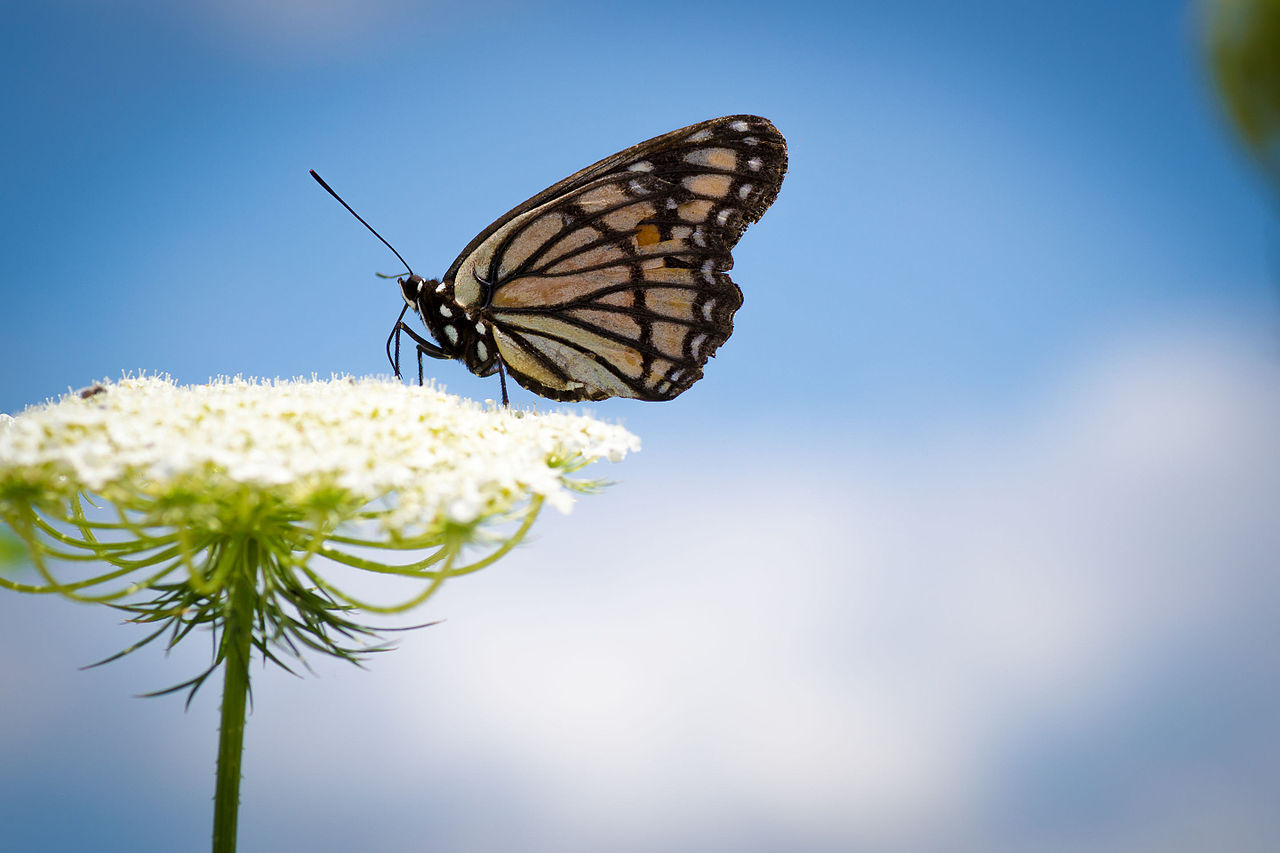
The viceroy spent a century in textbooks as the classic Batesian mimic: a supposedly tasty butterfly wearing the colors of the toxic monarch so birds would leave it alone. The monarch’s defense is real, cardiac glycosides sequestered from milkweed that make birds vomit, and one bad monarch teaches a jay to avoid everything orange. The viceroy, the story went, was a freeloader on that lesson, protected by costume alone.
The story collapsed in 1991, when researchers at the University of Florida ran the obvious experiment nobody had done properly: they fed wingless butterfly bodies to wild birds, removing the visual costume entirely. Red-winged blackbirds rejected viceroy bodies about as often as monarch bodies, gagging and wiping their bills, while devouring plain control species. The viceroy was never a bluffer. Its willow diet loads it with salicylic-acid compounds, aspirin-family chemistry, that make it genuinely bitter and mildly toxic in its own right.
That result reclassified the pair as Mullerian co-mimics: two defended species converging on one shared billboard, each paying part of the advertising cost in birds’ education. The arrangement benefits both, and it explains the viceroy’s regional wardrobe changes, matching the monarch where monarchs dominate and the darker queen where queens do. Mimicry rings like this run through the insect world, from this butterfly partnership to the hummingbird moth‘s impersonation of a bird, and the viceroy is the case that taught scientists to test assumptions instead of trusting a good story.
Is the Viceroy Butterfly Poisonous?
Poisonous to predators, harmless to you. Viceroy caterpillars feed on willows, poplars, and cottonwoods, all of which defend their leaves with salicin and related phenolic compounds. Instead of detoxifying them completely, the caterpillars retain the chemistry through metamorphosis, so adult viceroys carry a bitter, aspirin-like load in their tissues. Birds that grab one usually release it fast, often with dramatic bill-wiping, and remember the orange pattern that came with the experience.
The defense is honest but dose-dependent. Viceroys raised on willow species richest in salicin are the most repellent, while those from low-salicin hosts are closer to edible, which means protection varies individual to individual and region to region. This sliding scale is part of why the mimicry debate took a century to settle: early testers sometimes sampled palatable viceroys and declared the whole species a bluff. The 1991 taste tests, using wild-caught butterflies and wild birds, finally measured the average, and the average is nasty.
For humans, the viceroy poses zero risk. It has no venom, cannot bite, and its chemical defense matters only if you plan to eat one, which even then would amount to a bitter mouthful rather than a medical event. Handling adults or caterpillars is safe, though like all butterflies they are delicate; wing scales rub off with a touch, so photograph rather than grab. The same look-but-don’t-taste rule applies to the monarch, and to every orange butterfly wearing this particular uniform, including the painted lady butterfly, which borrows nothing chemically but benefits from the general suspicion of orange.
The Viceroy Caterpillar: A Bird-Dropping Disguise
If the adult viceroy is a master of dressing up, the caterpillar is a master of dressing down. A viceroy larva looks convincingly like a fresh bird dropping: mottled olive-brown or greenish body, a shiny white saddle across the middle, a humped knobbly profile, and two bristly horns behind the head that read as debris. The disguise is so effective that gardeners find them mainly by accident, and it could not be further from the monarch’s cheerful yellow-black-white stripes.
The caterpillar’s other trademark is architecture. Young larvae perch on the exposed midrib of a partly eaten willow leaf and extend it with a rod of silk and dung pellets, resting at the tip of a structure no sensible predator inspects. Between meals they park conspicuous packets of leaf debris nearby, apparent decoys that further confuse visual hunters. Everything about the larva’s life is a shell game played against birds, the same audience the adult later warns off with color.
Development runs through five instars over several weeks, with two to three broods per year across most of the range. The chrysalis continues the theme, a brown-and-cream pupa with a projecting disk on its back that keeps the bird-dropping look through metamorphosis. Anyone hunting caterpillars for a rearing project should search young willow saplings at pond and stream edges, checking chewed leaves with extended midribs, and our black caterpillar guide helps rule out the darker lookalikes found on the same shrubs.
Host Plants: Willows, Poplars, and Cottonwoods
The viceroy’s entire life strategy is built on the willow family, Salicaceae. Females lay pale green-yellow eggs singly at the very tips of leaves, usually choosing young, vigorous plants: sandbar willow, black willow, pussy willow, weeping willow, plus poplars, aspens, and cottonwoods. The tip placement matters, since fresh leaf tips carry the highest concentrations of the salicin the caterpillar needs for both nutrition and its chemical armor.
This host list explains viceroy geography completely. Willows and cottonwoods are water-edge trees, so viceroys are water-edge butterflies, and a map of viceroy sightings is effectively a map of wet shrubby habitat. It also explains their absence from dry uplands and dense forest interiors that otherwise look like fine butterfly country. Where monarchs track milkweed across open fields, viceroys shadow the drainage lines, and the two species’ paths cross mainly at nectar flowers in between.
For gardeners with damp ground, the viceroy is one of the easiest specialty butterflies to recruit. A single pussy willow or a clump of native sandbar willow at a pond edge or rain-garden margin provides everything: egg sites, larval food, and male perch territory. Keep the shrubs young with occasional cutting, since females strongly prefer fresh growth over old wood. Adults will take nectar from asters, joe-pye weed, and goldenrod nearby, and early-season adults readily visit rotting fruit, dung, and sap when flowers are scarce, a taste the fastidious monarch does not share. Pair the willows with the flower list from our orange butterfly guide and the pond corner becomes a full royal court.
Range, Habitat, and When to See Them
Viceroys occur across most of the continental United States and southern Canada, from the Atlantic to the eastern face of the Sierra Nevada and Cascades, and south into central Mexico. They are absent from the Pacific coastal strip and thin in the driest Great Basin country, again tracking willow rather than climate. Within that range they are habitat loyalists: wet meadows, marsh edges, streamsides, lake margins, willow thickets, and the scruffy wet corners of farmland and suburbia.
Flight season runs roughly May through September in the North, with two broods, and February through November in the Deep South, with three or more. Males are most visible mid-morning through afternoon, patrolling low circuits along waterways and returning to favored perches, where they investigate passing butterflies, dragonflies, and occasionally birds with fearless little sorties. Females stay closer to the willows, fluttering slowly through foliage as they place eggs one leaf tip at a time.
Unlike the monarch it resembles, the viceroy is a homebody that never migrates. Populations are generally secure continent-wide, though the species has declined locally where streamside willow has been cleared or wetlands drained, and several states list it as a species of conservation interest for that reason. The flip side is responsiveness: restore shrubby willow to a creek line and viceroys typically recolonize within a few seasons, one of the fastest paybacks in butterfly habitat work.
Life Cycle and the Overwintering Trick
The viceroy’s answer to winter is one of the most elegant in the butterfly world. While monarchs flee the continent and painted ladies simply die back to southern refuges, the viceroy stays put as a caterpillar. Third-instar larvae of the year’s last brood stop feeding in fall, chew a willow leaf down to a strip, silk its petiole firmly to the twig so it cannot fall, and roll the remainder into a snug tube called a hibernaculum. Inside that rolled leaf, the caterpillar rides out the entire winter in place.
The engineering details are exact. The larva lines the tube with silk, seals itself in facing outward, and enters diapause, a physiological standby mode with antifreeze compounds protecting its tissues through months of hard frost. Come spring, the same caterpillar emerges onto the season’s first willow buds, finishes its remaining instars in a few weeks, and pupates, producing the first orange adults right as the landscape greens up. A viceroy seen in May spent the winter as a quarter-inch larva in a leaf tube ten feet from where it now flies.
Frequently Asked Questions
How do you tell a viceroy from a monarch?
Look for the black postmedian line curving across the viceroy’s hindwing, parallel to the edge; monarchs lack it entirely. Viceroys are also smaller (2.5 to 3.4 inches) and fly in quick flap-flap-glide bursts on flat wings.
Is the viceroy butterfly poisonous?
To predators, yes. Viceroys retain bitter salicylic-acid compounds from their willow diet, and taste tests with wild birds showed they are rejected about as often as monarchs. To humans they are completely harmless.
Is the viceroy a Batesian or Mullerian mimic?
Mullerian. It was taught as a Batesian (harmless) mimic for a century, but 1991 experiments proved viceroys are genuinely distasteful, making viceroy and monarch co-mimics that share one warning pattern.
What does a viceroy caterpillar look like?
Like a bird dropping: mottled olive-brown with a shiny white saddle, a humped body, and two bristly horns. It feeds on willows, poplars, and cottonwoods, often perched on a silk-extended leaf midrib.
Do viceroy butterflies migrate?
No. Viceroys are year-round residents that overwinter as young caterpillars sealed inside rolled willow leaves (hibernacula), emerging in spring to finish development where they hatched.
Why do Florida viceroys look darker?
In the Deep South the locally common toxic model is the mahogany-brown queen butterfly rather than the monarch, and viceroy populations there have evolved a matching chestnut color, one mimic tracking two models.
Where is the best place to find viceroys?
Along willows near water: stream corridors, pond edges, marshes, and wet meadows. Males patrol the same low beats repeatedly on sunny days from late spring through early fall.