Lizard Poop: Identification and What It Tells You
Lizard poop is a small, dark, pellet-shaped dropping, usually 1/4 to 1/2 inch long, with one feature that gives it away almost every time: a chalky white tip or white cap on one end. That white portion is dried uric acid, the lizard equivalent of urine, and because lizards pass solid waste and urate through the same opening in a single deposit, the two-tone pellet is the single most reliable field mark for telling a lizard dropping apart from rat, mouse, snake, frog, and cockroach droppings that show up in the same corners of a home.
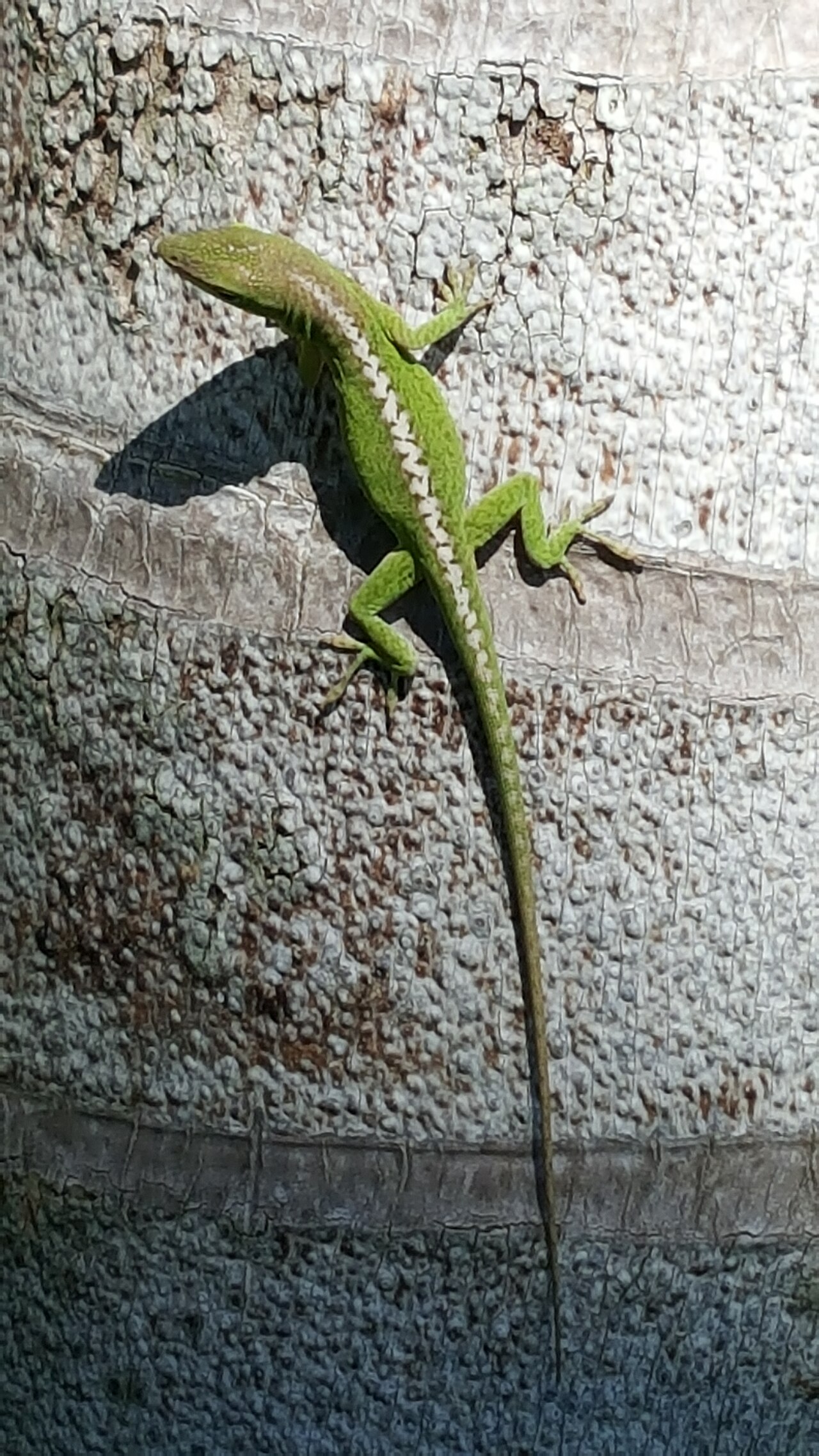
The dark portion is typically black or very dark brown, firm when fresh, and slightly tapered at the end opposite the white cap. Size scales with the lizard. A green anole or house gecko leaves pellets the size of a grain of rice, while a larger skink, alligator lizard, or a monitor kept as a pet produces droppings several times that length. This guide covers how to identify lizard droppings, how they differ from every common look-alike, what the white tip actually is, the real disease risk, and how to clean up and keep lizards from using your walls and windowsills as a restroom.
| Feature | Lizard Poop |
|---|---|
| Length | 1/4 to 1/2 inch (small species); up to 1 inch or more (large species) |
| Shape | Elongated pellet, slightly tapered, sometimes with a bend |
| Color | Black to dark brown body with a white or off-white tip |
| Key feature | White urate cap on one end (dried uric acid) |
| Texture | Firm and smooth when fresh, dries hard and slightly chalky |
| Typical location | Windowsills, walls, patios, garages, near porch lights |
| Health risk | Low to moderate; Salmonella is the main concern |
Lizard poop is a small dark pellet, a quarter to half an inch long, with a chalky white cap on one end. That white tip is uric acid, the reptile equivalent of urine, and it is the single feature that separates lizard droppings from rodent droppings.
What Lizard Poop Looks Like
A typical lizard dropping is a single elongated pellet with a dark, well-formed body and a white or cream-colored end. In small backyard and house lizards such as anoles, geckos, and fence lizards, the pellet is about 1/4 inch long and roughly the thickness of a pencil lead. Larger lizards such as skinks, alligator lizards, and whiptails produce pellets closer to 1/2 inch, and big pet species such as bearded dragons and monitors leave droppings that can exceed an inch and often break into two or three segments.
The dark portion is the digested remains of insects, spiders, and, in some species, fruit and plant matter. Under close inspection you can often see glossy fragments of insect exoskeleton, tiny legs, or wing casings embedded in the pellet, which is a strong clue that you are looking at an insect-eating lizard rather than a seed-eating rodent. Fresh droppings appear almost black with a faint sheen; within a day or two they dry to a matte dark brown and become brittle enough to crumble when pressed.
The white tip is not always attached at the end. Sometimes the urate sits alongside the pellet as a separate white blob, sometimes it forms a cap that looks like a bit of dried paint, and occasionally it is missing entirely if the lizard passed urate separately. When the white tip is present, identification is nearly certain. When it is absent, you need to rely on size, tapering, insect fragments, and location, which is where the comparisons below become useful.
Why Lizard Poop Has a White Tip
Lizards, like birds and snakes, do not produce liquid urine the way mammals do. Instead of dissolving nitrogen waste in water and excreting it as urea, reptiles convert it to uric acid, a nearly insoluble compound that comes out as a white, chalky paste. This is a water-saving adaptation that allows lizards to thrive in dry environments and to go long stretches without drinking. Because the digestive and urinary systems both empty through a single opening called the cloaca, the solid feces and the white urate exit together and often stick to one another.
The color and consistency of the urate can tell you something about the lizard. Bright white, slightly moist urate indicates a well-hydrated animal that ate recently. Yellowish, gritty, or very hard urate points to dehydration, which is common in lizards that live indoors in air-conditioned homes with no water source. Reptile keepers use this signal routinely to check on the health of pet bearded dragons and geckos, and it works just as well for judging whether the anoles on your porch have access to water.
This white tip is the main reason lizard poop is so often confused with bird droppings, since bird poop works on the same uric acid system. The difference is proportion. Bird droppings are mostly white with a small dark center, splattered rather than pelleted, and land in a splash pattern. Lizard droppings are mostly dark with a small white end and keep a tidy pellet shape even after falling from a wall.
Lizard Poop vs Rat Poop and Mouse Poop
This is the comparison that worries most homeowners, because rat droppings and lizard droppings can be the same size and color. Rat droppings are 1/2 to 3/4 inch long, thick, blunt or rounded at the ends, and uniformly dark with no white tip. Rats defecate in large quantities, often 40 or more pellets a night, and they concentrate them in runways along walls, behind appliances, and inside cabinets. A single lizard dropping on a windowsill is a completely different picture from a scattered trail of a dozen rounded pellets behind the refrigerator.
Mouse droppings are smaller, about 1/8 to 1/4 inch, and pointed at both ends like a grain of dark rice. Because the size overlaps with small lizard poop, the white tip becomes the deciding factor. Rodent droppings are never two-toned. If you can see a distinct white or cream cap, it is not a mouse. If the pellet is uniformly dark, look for other rodent signs: gnaw marks on food packaging, greasy rub marks along baseboards, shredded nesting material, and a musky ammonia smell. A full breakdown of the rodent side of this comparison is in the guide to mouse droppings.
Texture helps as well. Rodent droppings are made of chewed grain and fiber and remain slightly soft for a day before drying to a dull, crumbly pellet. Lizard droppings are insect-based, dry faster, and often show a shiny fragment of beetle shell or cricket leg on the surface. Rodent droppings also come with urine stains that fluoresce under a blacklight, while lizard droppings leave only the white urate and no wet stain around them.
Lizard Poop vs Snake, Frog, and Cockroach Droppings
Snake droppings share the white urate cap, which makes them the closest true look-alike. The difference is form. Snake feces are usually larger, softer, and less pelleted, often appearing as an irregular smear or a rope-like mass with bone fragments, fur, or feather bits from the prey animal. Snake droppings tend to appear in a single deposit that is much bigger than anything a house lizard could produce, and they show up on the ground rather than on vertical surfaces such as walls and window frames where lizards perch.
Frog droppings are the surprise on this list, because frogs produce droppings that are far larger than their body size suggests. A tree frog no bigger than your thumb can leave a dark, moist dropping over half an inch long, cylindrical, dark brown to black, and almost always without any white tip. Frog poop is also softer and wetter than lizard poop because frogs absorb water through their skin and do not need to conserve it in the same way. If you find a large, dark, glossy dropping near a porch light or a pool deck with no white cap, a frog is the more likely culprit.
Cockroach droppings are the smallest of the group. Large roaches such as American cockroaches leave dark cylindrical pellets about 1/8 inch long with ridges running lengthwise and blunt ends. Small roaches such as German cockroaches leave only specks that look like coffee grounds or black pepper. Neither has a white tip, and roach droppings cluster heavily in kitchens, under sinks, and inside cabinet corners rather than on sunny windowsills. If the droppings appear alongside a sweet, oily odor and shed skins or egg cases, roaches are your answer.
Where You Find Lizard Poop in and Around the House
Lizards leave droppings where they spend their time, which means the locations tell you almost as much as the pellets themselves. Outdoor lizards such as anoles, fence lizards, and skinks bask on sun-warmed surfaces, so droppings appear on patio railings, pool decks, stone walls, the tops of fences, garden pots, and window ledges that catch morning sun. House geckos hunt insects drawn to lights at night, so their droppings accumulate below porch lights, on window screens, along the tops of door frames, and on the walls of garages and covered porches.
Indoors, lizard droppings most often show up on windowsills, behind curtains, on the tops of picture frames, along the baseboards of rooms with exterior doors, and in garages and laundry rooms where the door to the outside is frequently open. A single dropping usually means a lizard wandered in and either left or is still hunting the spiders and moths in the room. A steady accumulation in the same spot means a lizard has taken up residence and returns to the same perch every day, a habit that makes it easy to locate and relocate the animal.
In Florida, Texas, southern California, Hawaii, and the Gulf Coast states, lizard droppings on exterior walls are simply part of home ownership because brown anoles, green anoles, and Mediterranean house geckos live in enormous numbers around buildings. Homeowners in these regions often report white-tipped droppings stuck to stucco walls several feet above the ground, which is exactly where a gecko clinging to the wall would leave them. A lizard dropping on a wall is not a sign of an infestation in the pest control sense; it is a sign that the local lizards are doing their job eating your insects.
Is Lizard Poop Dangerous?
The main health risk from lizard droppings is Salmonella. Reptiles commonly carry Salmonella bacteria in their digestive tracts without showing any illness, and the bacteria pass in their feces. According to the Centers for Disease Control and Prevention (cdc.gov), reptiles and amphibians are a well-documented source of Salmonella infections in people, with children under 5, adults over 65, and people with weakened immune systems at the highest risk of serious illness. Symptoms of salmonellosis include diarrhea, fever, and stomach cramps that begin 6 hours to 6 days after exposure and typically last 4 to 7 days.
The realistic risk from a dropping on a windowsill is low as long as you do not touch it with bare hands and then handle food or touch your face. The risk rises in kitchens and in homes with pet reptiles, where droppings and contaminated surfaces are handled more often. The CDC specifically recommends that households with children under 5 avoid keeping reptiles as pets for this reason, and it advises washing hands thoroughly after any contact with reptiles, their enclosures, or their waste.
Lizard droppings do not carry hantavirus or leptospirosis, which are rodent diseases, and they do not attract further pests the way rodent droppings attract insects. Unlike skunk or coyote droppings, which can contain roundworm eggs and other parasites dangerous to dogs, lizard feces pose little risk to pets that sniff them. The parasites in lizard droppings, mostly pinworms and coccidia, are reptile-specific and do not infect mammals. Dogs and cats that eat lizards themselves face a separate risk from liver flukes in some regions, but the droppings alone are not the concern.
How to Clean Up Lizard Droppings Safely
Cleaning lizard poop is simple, but the Salmonella risk means you should treat it like any animal waste rather than flicking it off with a fingernail. Wear disposable gloves or use a paper towel folded several layers thick. If the dropping is dry and stuck to a wall or sill, spray it lightly with water or an all-purpose cleaner first so it lifts off without crumbling into dust. Wipe it into the paper towel, seal it in a small bag, and discard it in the trash.
Disinfect the surface afterward with a household disinfectant labeled for bacteria, a diluted bleach solution of about 1 tablespoon of bleach per quart of water, or a 70 percent alcohol wipe. Let the disinfectant sit for the contact time on the label, usually 1 to 10 minutes, before wiping dry. This step matters most on kitchen counters, dining tables, and children’s play areas, and matters less on an exterior stucco wall where sun and rain will do the work for you. Wash your hands with soap and warm water for at least 20 seconds when you are done, even if you wore gloves.
Old, dried droppings on outdoor surfaces can be scrubbed with a stiff brush and soapy water or hit with a garden hose. The white urate portion can leave a faint chalky stain on porous surfaces such as unsealed concrete and natural stone; a paste of baking soda and water or a diluted vinegar solution will lift most of it. Avoid using a dry broom or a leaf blower on large accumulations, because that aerosolizes the dust, the same reason experts advise against dry-sweeping rodent droppings.
How to Keep Lizards From Pooping on Your House
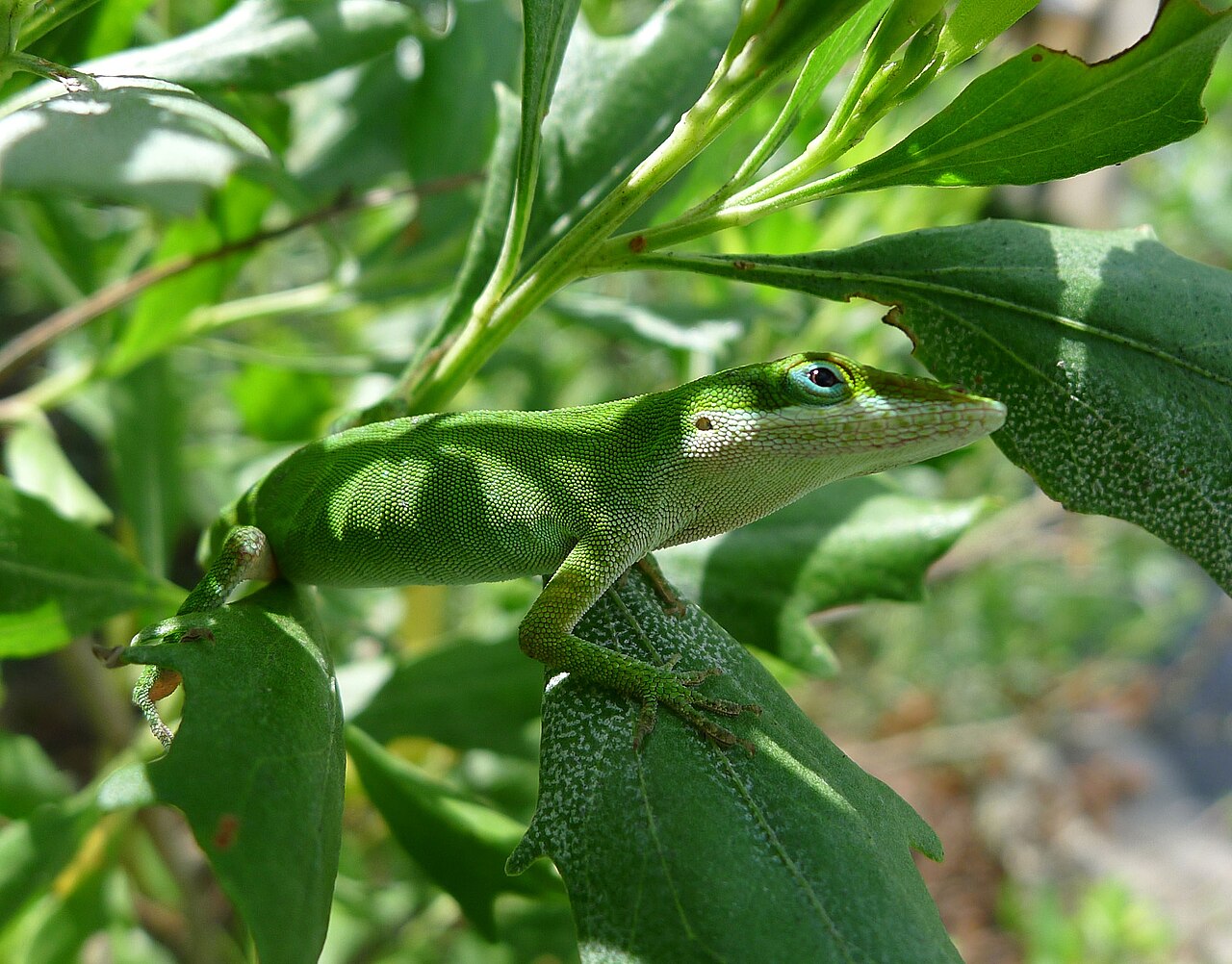
You do not need to get rid of lizards to get rid of lizard droppings, and in most cases you should not want to. A single anole or gecko eats dozens of mosquitoes, moths, roaches, and spiders every week, and lizards are among the most effective free pest control a backyard can have. The goal is to move their perching and hunting spots away from the surfaces you care about, which means changing what attracts them to those spots in the first place: insects and warmth.
Lighting is the biggest lever. Porch lights and floodlights draw the moths and flies that geckos feed on, so the walls under those lights become gecko dining rooms. Switching to warm-colored LED bulbs or yellow bug lights sharply reduces the number of insects attracted, which in turn moves the lizards elsewhere. Keeping window screens tight, sealing gaps around doors and utility lines, and running a dehumidifier in damp garages all reduce the insect populations that bring lizards indoors. Details on what these animals hunt are in the guide to what lizards eat.
Physical exclusion works for entry points. Weatherstripping under exterior doors, mesh over dryer vents and weep holes, and caulk around pipe penetrations block the routes lizards use to get inside. Outdoors, trimming shrubs and vines back a foot or two from the house removes the cover lizards use to approach walls. Commercial lizard repellents based on garlic, pepper, or naphthalene have weak evidence behind them and wear off within days in rain; the lighting and exclusion approach is cheaper and lasts. If a lizard is already inside, a small container placed over it while it rests on a wall at night, followed by a slide of cardboard underneath, will let you carry it out unharmed.
Related reading: Armadillo Poop.
Do Lizards Leave Droppings Like Mice?
They look similar at a glance, which is why the question comes up constantly, but three features separate them reliably. The white tip is the first and best: lizard droppings carry a distinct chalky white cap, mouse droppings are uniformly dark brown to black with no white anywhere.
Shape is second. Mouse droppings are small, roughly 3 to 6 mm, with pointed ends at both tips, and they are scattered in large numbers along runways, in drawers and behind appliances. Lizard droppings are usually larger, blunter at the ends, and appear in far smaller numbers, often just a few in one spot because lizards tend to defecate from a favoured perch.
Location is third. Mouse droppings are found indoors along walls and inside cupboards. Lizard droppings are typically on exterior walls, window sills, patios, porch ceilings and screens, directly below where the animal basks or hunts insects near a light. If droppings accumulate on a vertical surface rather than a horizontal run, that points to a lizard. Either way, the practical advice is the same: wear gloves, wet the area rather than sweeping dry, and wash your hands, since reptiles commonly carry Salmonella, as Texas A&M’s veterinary school explains in its overview of reptiles and Salmonella.
Frequently Asked Questions
What does lizard poop look like?
Lizard poop is a dark brown or black elongated pellet, usually 1/4 to 1/2 inch long for common backyard species, with a distinctive white or cream-colored tip on one end. The white portion is dried uric acid. Fresh droppings look glossy and firm, and older ones dry to a dull, brittle pellet that often shows fragments of insect shells.
Why does lizard poop have a white tip?
The white tip is urate, the solid form of uric acid that reptiles produce instead of liquid urine. It conserves water and exits through the same opening as the feces, so the two stick together. A bright white tip indicates a hydrated lizard, while a yellow, gritty tip suggests dehydration.
How can I tell lizard poop from rat or mouse poop?
Rodent droppings are uniformly dark with no white tip, are blunt or pointed at both ends, and appear in large scattered quantities along walls and inside cabinets. Lizard droppings are two-toned, appear singly or in small groups on sunny windowsills or walls, and often contain visible insect fragments.
Is lizard poop dangerous to humans?
The main risk is Salmonella, which reptiles carry in their digestive tracts and shed in their feces. The CDC identifies reptiles as a known source of Salmonella infection, especially for young children and people with weakened immune systems. Wear gloves, disinfect the surface, and wash your hands after cleanup, and the risk is minimal.
Is lizard poop dangerous to dogs and cats?
The droppings themselves pose little risk to pets because the parasites in lizard feces are reptile-specific. The greater concern is pets eating the lizards themselves, which in some southern states can transmit liver flukes to cats. Discourage pets from sniffing or eating droppings anyway as a general hygiene practice.
Why is there lizard poop on my wall?
Geckos and anoles cling to vertical surfaces to hunt insects and to rest, and they defecate where they perch. Droppings stuck to a wall several feet up almost always come from a gecko hunting near a light at night. Changing to yellow or warm LED bulbs reduces the insects and moves the lizards to other spots.
How do I clean lizard poop off walls and windowsills?
Spray the dropping with water or all-purpose cleaner so it softens, wipe it up with a gloved hand or thick paper towel, then disinfect the surface with a bleach solution of about 1 tablespoon per quart of water or a labeled disinfectant. Chalky urate stains on stone or concrete lift with a baking soda paste or diluted vinegar.