Groundhog Sounds: The Whistle and Every Other Call Explained
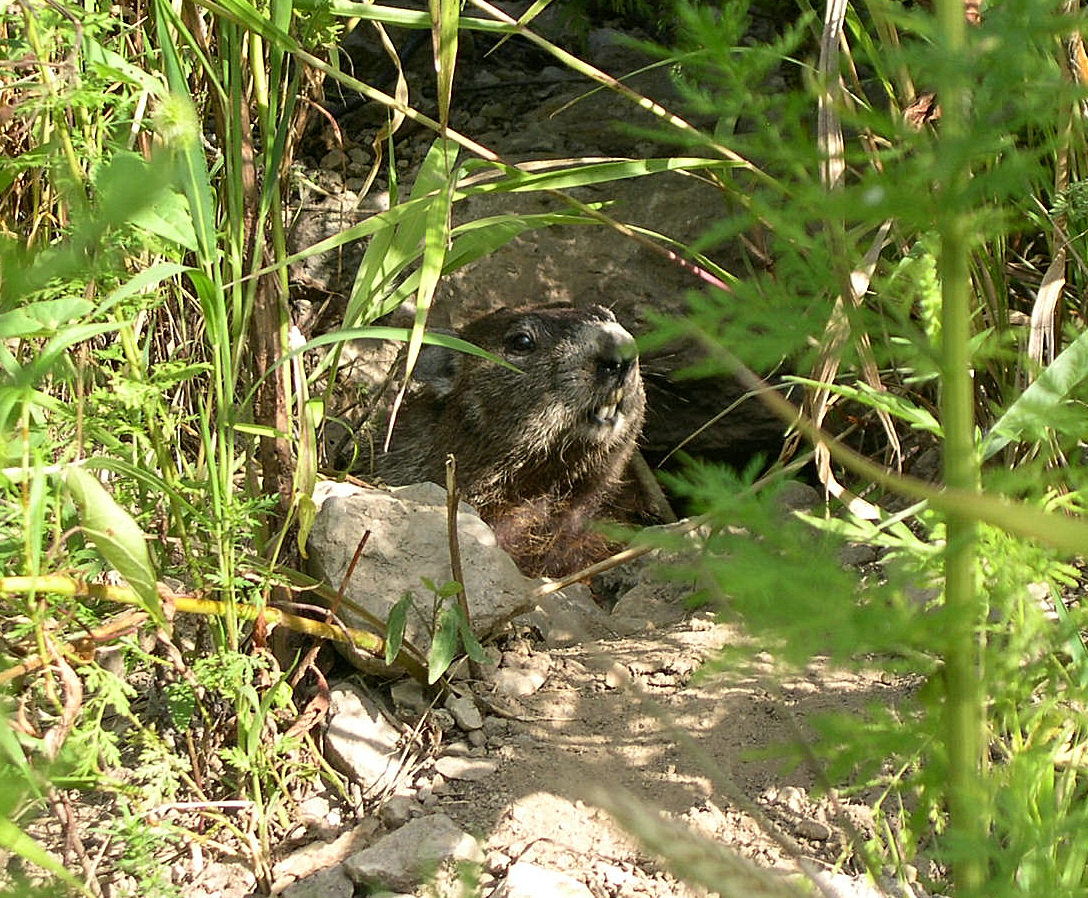
Groundhog sounds fall into five recognizable categories: a sharp alarm whistle, rapid teeth chattering, a low bark, a harsh squeal, and a hiss or growl at close range. The whistle is the signature call and the reason groundhogs earned the nickname whistle pig. It is a single piercing note, delivered when the animal spots a threat, and it carries several hundred metres across open ground. Most people who hear a groundhog have heard exactly this one sound and nothing else.
The other four calls are far less familiar because they occur during close-range encounters that people rarely witness: territorial disputes at burrow entrances, mating season confrontations, and moments of genuine distress when an animal is cornered or seized. Learning to tell them apart matters practically, because the animal you assume is a groundhog screaming in the yard at 2 a.m. is almost certainly something else entirely.
| Sound | What It Means |
|---|---|
| Sharp whistle | Alarm, predator spotted |
| Teeth chattering | Threat display, warning before a fight |
| Low bark | Short-range alarm near the burrow |
| Harsh squeal or scream | Fighting or genuine distress |
| Hiss and growl | Cornered, defensive at close range |
| Most vocal period | March to May (mating and dispersal) |
| Active hours | Daytime, especially dawn and late afternoon |
Every Sound a Groundhog Makes
Groundhogs, also called woodchucks and known scientifically as Marmota monax, are marmots, and like other marmots they rely heavily on vocal alarm signalling. Their sound repertoire is narrower than that of many songbirds but each call carries a fairly specific meaning tied to distance and threat level. The whistle handles long-range danger, the bark handles short-range danger, and everything else is reserved for physical confrontation.
The full set is a single high whistle, a series of rapid teeth chatters produced by grinding the incisors together, a short low bark, a drawn-out squeal or scream, and a hiss that can shade into a growl. Groundhogs also produce non-vocal sounds that people frequently misread, including the scrabbling of claws on wood and a heavy thumping when an animal drops into a burrow entrance at speed.
Unlike some ground squirrels, groundhogs are not especially social and do not maintain the elaborate colony-wide alarm systems that prairie dogs use. Adults are largely solitary outside the breeding season and defend individual burrow systems, so most vocal exchanges are between two animals rather than across a group. That solitary habit is why extended vocal sequences are rare.
The Whistle: Why Groundhogs Are Called Whistle Pigs
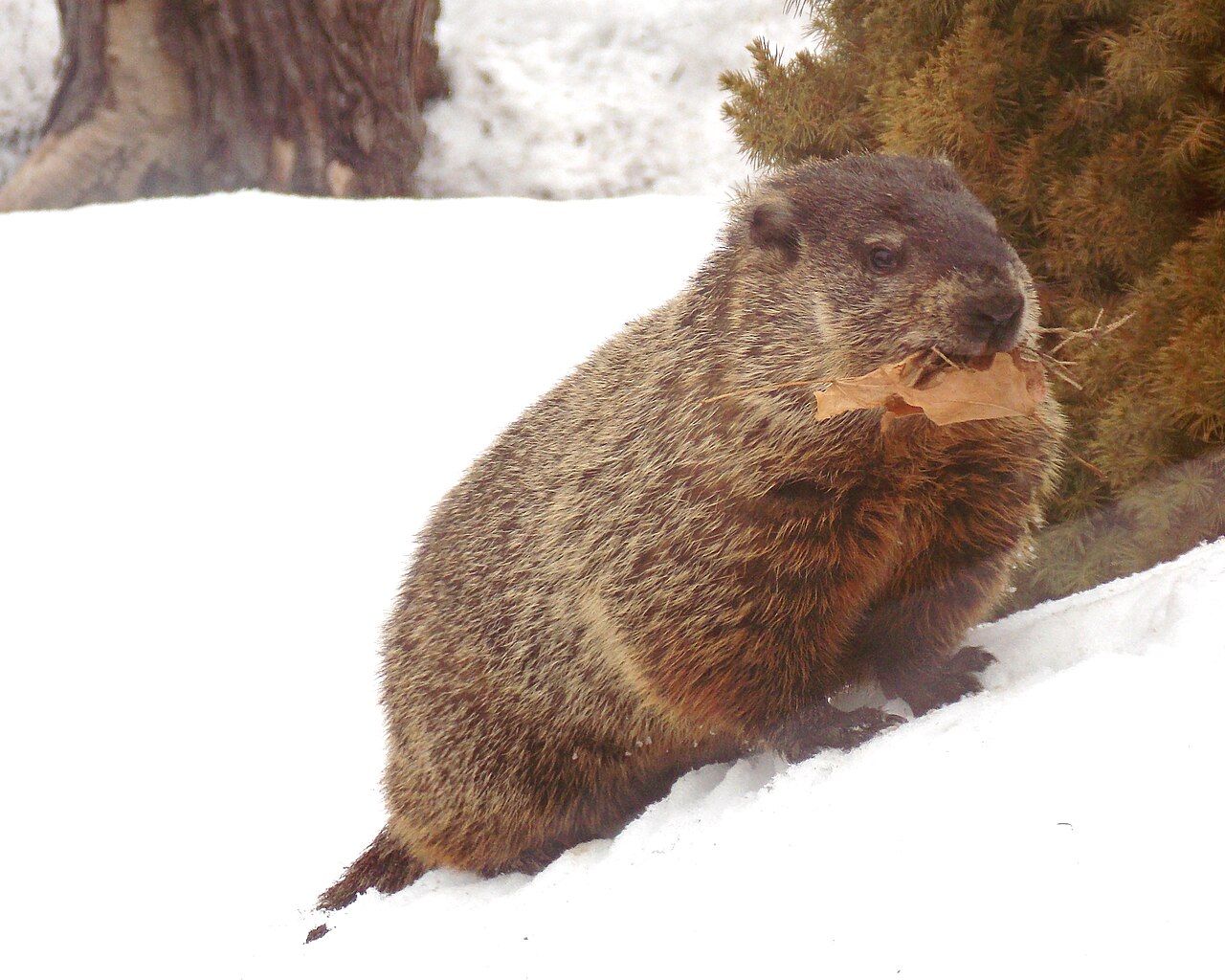
The alarm whistle is produced through the larynx rather than the mouth and comes out as a single sharp note lasting well under a second, often described as sounding closer to a bird or a referee’s whistle than to any mammal. A groundhog that spots a hawk, fox, coyote, or approaching person typically rises onto its hind legs, whistles once, and then bolts for the nearest burrow entrance.
Repetition carries information. A single whistle followed by immediate retreat generally signals a serious, close threat. A series of spaced whistles from an animal that stays upright at the burrow mouth is closer to sustained monitoring, and it often continues as long as the intruder remains visible. Groundhogs will also whistle from just inside a burrow entrance, which produces a muffled, slightly lower version of the same note.
The nickname whistle pig comes from Appalachian usage and predates the Groundhog Day tradition by a long way. The Smithsonian’s National Zoo notes that this alarm call is the species’ most frequently heard vocalization, which matches the practical experience of anyone who has walked a field edge and heard a single sharp note ahead of them before seeing anything at all.
Teeth Chattering and Grinding
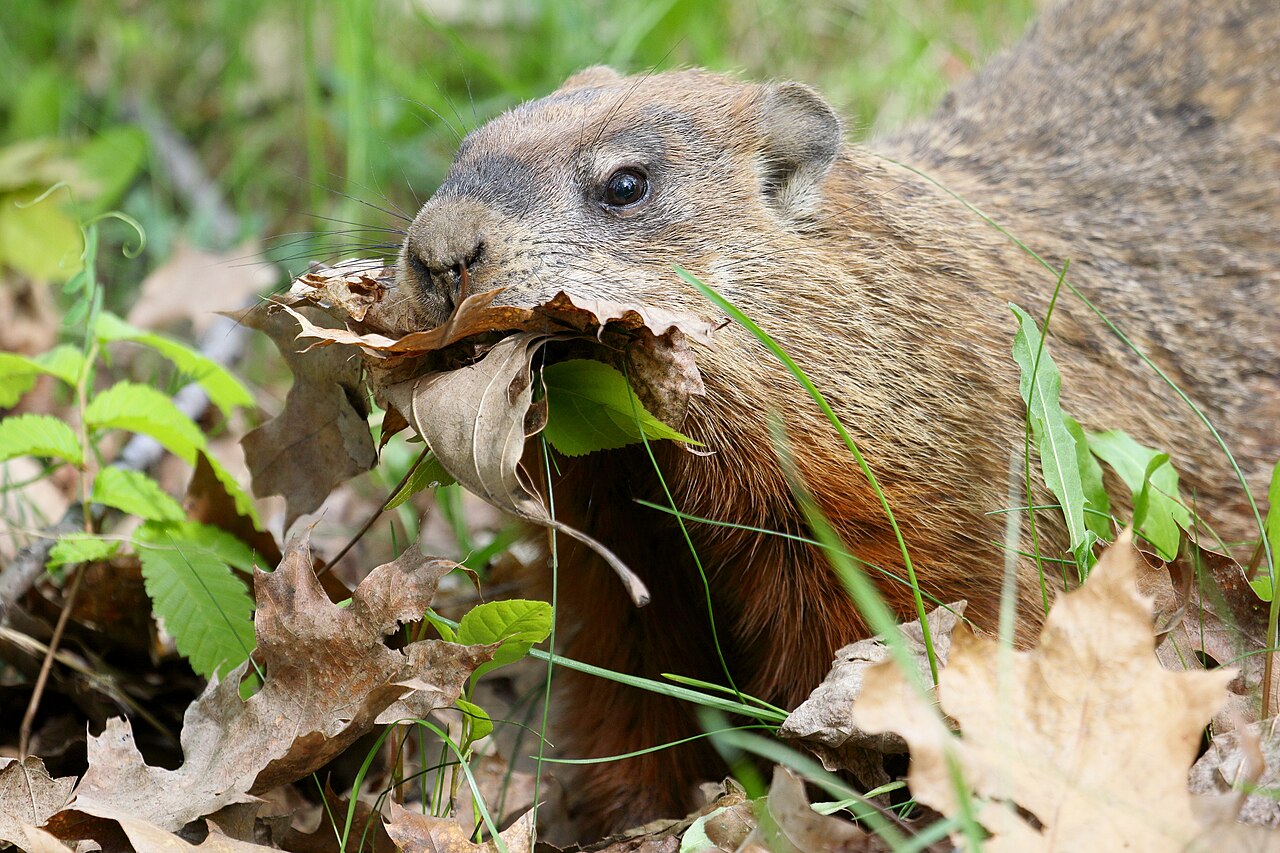
Groundhog teeth chattering is one of the most misunderstood sounds in the backyard. It is not a cold or fear response and it is not incidental. The animal grinds its large incisors rapidly against each other to produce a dry clicking or rattling burst, and it functions as an explicit threat display directed at another groundhog or at a person who has come too close to a burrow.
Chattering usually escalates. A groundhog that feels crowded will typically chatter first, then raise its tail, then advance a short distance while continuing to chatter. If the intruder holds ground, the encounter can move to a physical fight, which groundhogs conduct with genuine commitment and which frequently leaves both animals with visible scarring on the face and shoulders.
Because chattering carries only a short distance, hearing it means you are close enough to be perceived as a direct threat. The appropriate response is simply to back away. Groundhogs bite hard when cornered and their incisors grow continuously, giving them substantial cutting force relative to their size. This same escalation pattern shows up in other burrowing mammals, and our guide to chipmunk sounds covers the smaller-scale version.
Groundhog Distress and Fighting Sounds
The squeal is the sound most people find genuinely alarming. It is a harsh, drawn-out, almost mechanical scream produced when a groundhog is fighting, seized by a predator, or caught in a trap. It bears no resemblance to the tidy whistle and is loud enough to be heard clearly from 100 m or more. Anyone who hears one at close range tends to remember it.
Fighting squeals differ from distress squeals mainly in duration and pattern. A territorial fight produces short bursts interleaved with chattering and physical scuffling, often lasting under a minute before one animal disengages. A genuine distress call is longer, more continuous, and typically ends abruptly. During spring dispersal, when yearling males are pushing into occupied territory, fight sequences are relatively common near burrow clusters.
Hissing and growling sit below the squeal on the same scale. A cornered groundhog will hiss with the mouth open and body flattened, adding a low guttural growl if the threat closes further. These are last-resort signals from an animal that cannot retreat, and they should be read as a clear instruction to increase distance rather than as an invitation to look closer.
Groundhog Sounds at Night: What You Are Actually Hearing
Groundhogs are strictly diurnal. They emerge shortly after sunrise, forage most heavily in the morning and again in the late afternoon, and return underground well before dark. Nocturnal activity does occur but is rare and usually tied to disturbance, unusually hot weather pushing foraging into the cooler edges of the day, or an animal displaced from its burrow.
That means an animal screaming, screeching, or chattering in the yard after dark is very unlikely to be a groundhog. The most frequent culprits are raccoons, which produce a wide range of chitters, growls, and screams during territorial disputes, and red foxes, whose vocalizations during winter breeding season are regularly mistaken for something in serious distress. Our guides to raccoon sounds and fox sounds cover both in detail.
Scratching, thumping, and scrabbling under a deck or shed at night is a different question, and here a groundhog is genuinely plausible. Groundhogs frequently den beneath structures, and an animal shifting position or enlarging a chamber produces digging and scraping noises without any vocalization at all. If the sound is mechanical rather than vocal, the resident groundhog is a reasonable first suspect, and the droppings covered in our groundhog poop guide will confirm it.
Groundhog Sounds That Get Mistaken for Birds
The alarm whistle is genuinely bird-like, and confusion with birds is one of the most common search queries about groundhog vocalizations. The note is clean, high, and lacks the rasp people expect from a mammal, so a whistle heard from a hedgerow or field edge is often filed mentally as a bird call and forgotten.
Two groups account for most of the confusion. Raptors, particularly red-tailed hawks and broad-winged hawks, produce sharp descending screams that overlap in pitch with a groundhog whistle, though the raptor call is longer and usually delivered in flight. Killdeer and various shorebirds produce single piercing notes at similar frequencies from open ground, which is exactly the habitat groundhogs occupy.
The reliable tell is position and follow-through. A groundhog whistles from ground level and then disappears, often with visible movement toward a burrow entrance within a second or two. A bird call comes from above or from cover and typically repeats in a recognizable rhythm. If you hear a single note from ground level followed by silence and a fleeing brown shape, it was a groundhog.
When Groundhogs Are Most Vocal
Vocal activity peaks in early spring. Groundhogs are true hibernators, entering dormancy in October or November in most of their range and emerging in February or March with body mass reduced by a third or more. Mating follows almost immediately after emergence, and the combination of males searching for females and yearlings dispersing to establish new territories produces the year’s densest concentration of chattering, squealing, and fighting.
Activity remains high through May and June while females raise litters of typically 2 to 6 young. Alarm whistling is especially frequent during this period because a female with dependent young responds to threats at greater distance and with more persistence than a solitary adult would. Our guide to the baby groundhog covers what those young look like as they begin appearing above ground in early summer.
By late summer vocalizations drop off sharply. Groundhogs shift into heavy feeding to build fat reserves for hibernation, become less territorial as yearlings have already dispersed, and spend more time head-down in vegetation. Penn State Extension notes that this late-season feeding phase is also when crop and garden damage peaks, which is when most homeowners first notice they have a resident groundhog at all.
How Groundhog Sounds Compare to Other Backyard Animals
Against squirrels, the difference is structural. Grey squirrels produce a rapid, scolding chatter combined with a nasal kuk-kuk and tail flicking, and the sequence often continues for a minute or more from a tree branch. A groundhog whistle is one clean note from ground level with no follow-up. Our guide to squirrel sounds lays out the full squirrel repertoire.
Against chipmunks, pitch and repetition separate them. A chipmunk’s chip call is higher, thinner, and repeated steadily, sometimes for many minutes at a rate of roughly one per second. Groundhogs do not produce sustained repeated calls at that tempo. Rats, by contrast, vocalize mostly outside human hearing range, so audible rodent noise in a wall is nearly always movement rather than voice.
Against coyotes and foxes, volume and context resolve it. Both canids call in extended sequences, mostly after dark, and both carry much further than any groundhog sound. If you are hearing a repeated, patterned call at night that travels across an entire neighbourhood, it is a canid, and our guide to coyote sounds covers the full sequence. If you are hearing one sharp daytime note from a field edge, it is a groundhog.
Frequently Asked Questions
Do groundhogs make any sounds?
Yes. Groundhogs produce a sharp alarm whistle, rapid teeth chattering, a short bark, a harsh squeal when fighting or distressed, and a hiss or growl when cornered. The whistle is by far the most commonly heard and is the origin of the nickname whistle pig.
What does a groundhog sound like when it screams?
A screaming groundhog produces a harsh, drawn-out, almost mechanical squeal that is unmistakably a distress or fighting sound rather than an alarm. It is loud enough to carry 100 m or more and typically means the animal is in a physical fight, trapped, or held by a predator.
What sounds do groundhogs make when they are in distress?
Distress produces the squeal first, often preceded by teeth chattering and hissing as the animal tries to warn the threat off. A continuous squeal that ends abruptly usually indicates the animal has been seized. Distress calls are much longer and rougher than the clean single alarm whistle.
Are groundhogs active at night?
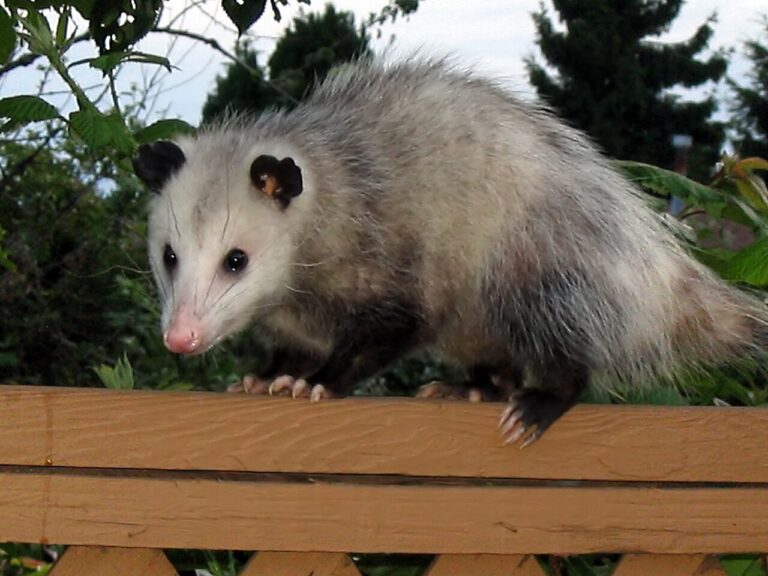
Rarely. Groundhogs are diurnal, emerging after sunrise and returning underground before dark, with peak foraging in the morning and late afternoon. Vocal animal noise in a yard after dark is far more likely to be a raccoon, fox, or opossum than a groundhog.
What month are groundhogs most active?
March through May, following emergence from hibernation. Mating occurs immediately after emergence and yearlings disperse during the same window, producing the year’s highest levels of movement, territorial conflict, and vocalization. Feeding activity peaks again in late summer before hibernation.
Why does a groundhog sound like a bird?
The alarm whistle is produced at a high frequency with a clean tone and no rasp, which is why it reads as bird-like to most listeners. The distinguishing feature is that it comes from ground level, occurs as a single note, and is followed by the animal running for a burrow rather than by a repeated rhythm.
Do groundhogs whistle when they are happy?
No. The whistle is an alarm signal tied to a perceived threat, not a contentment call. A groundhog whistling in your yard has seen you, a pet, or a predator, and it is warning itself and any nearby animals rather than expressing anything positive.