Elk Symbolism: Spiritual Meaning, Omens and What It Means to See One
The elk spiritual meaning that almost every tradition agrees on is stamina: seeing one is read as a sign that you have more endurance and standing than you have been giving yourself credit for. Across Native American, Celtic, Norse and East Asian traditions the elk and its close relative the stag stand for dignified strength and the confidence to be seen, and people who encounter one often describe it as a nudge to stop shrinking.
The elk (Cervus canadensis), also called wapiti, carries that weight for a reason. A bull stands five feet at the shoulder, grows antlers four feet long every single year, and announces himself with a bugle that carries for miles. What follows separates the traditions, so you can see which belief system a given meaning actually comes from, and then works through the specific situations people ask about.
Elk symbolism centers on stamina, strength and self-assurance. In many Native American traditions the elk is linked to male power, courtship and perseverance; Christian readings treat the stag as the soul seeking God; Celtic and Norse lore make it a guide between worlds; East Asian tradition ties deer to longevity and prosperity. Seeing one is usually read as encouragement to endure.
| Situation | Common traditional reading |
|---|---|
| Elk near your home or yard | Protection of the household, a boundary being tested |
| Hearing a bugle at night | A call to speak up or claim your place |
| Seeing the same elk repeatedly | A lesson you have not finished learning |
| Finding a dead elk | The end of a role, strength spent on the wrong thing |
| An elk in a dream | Pacing yourself, stamina over speed |
| A bull with full antlers | Visible authority, a season of being noticed |
| A cow with a calf | Protective responsibility, keeping the group together |
What Does It Mean to See an Elk?
The most widespread reading is endurance. Elk migrate long distances, survive hard winters on poor forage, and in the case of bulls spend the rut fighting and bugling until they are exhausted. That biology sits under almost every symbolic layer people have put on the animal, which is why the elk tends to be read as a message about pacing rather than about speed or cunning.
The second layer is presence. An elk does not hide, and a bugling bull is deliberately advertising himself to everything within earshot. People who report an encounter at a turning point in their lives usually describe the same feeling afterward, that they had been keeping quiet about something. Whether you take that as a message or a coincidence, it is the meaning the traditions converge on.
Is an Elk a Symbol of Protection?

Yes, in several traditions, though protection of the group rather than of an individual. Elk live in herds and post sentries while the rest feed, and cows will put themselves between a calf and a threat without hesitation. Where the elk appears as a protective figure, it is usually about guarding a family, a community or a boundary.
In parts of Plains tradition the elk’s protective aspect is tied to its antlers, which are shed and regrown each year and were worked into tools and ceremonial objects. The same protective framing attaches to other large herd animals in the region, which is why bison symbolism overlaps with elk symbolism so heavily in the literature.
Elk Symbolism in Native American Traditions
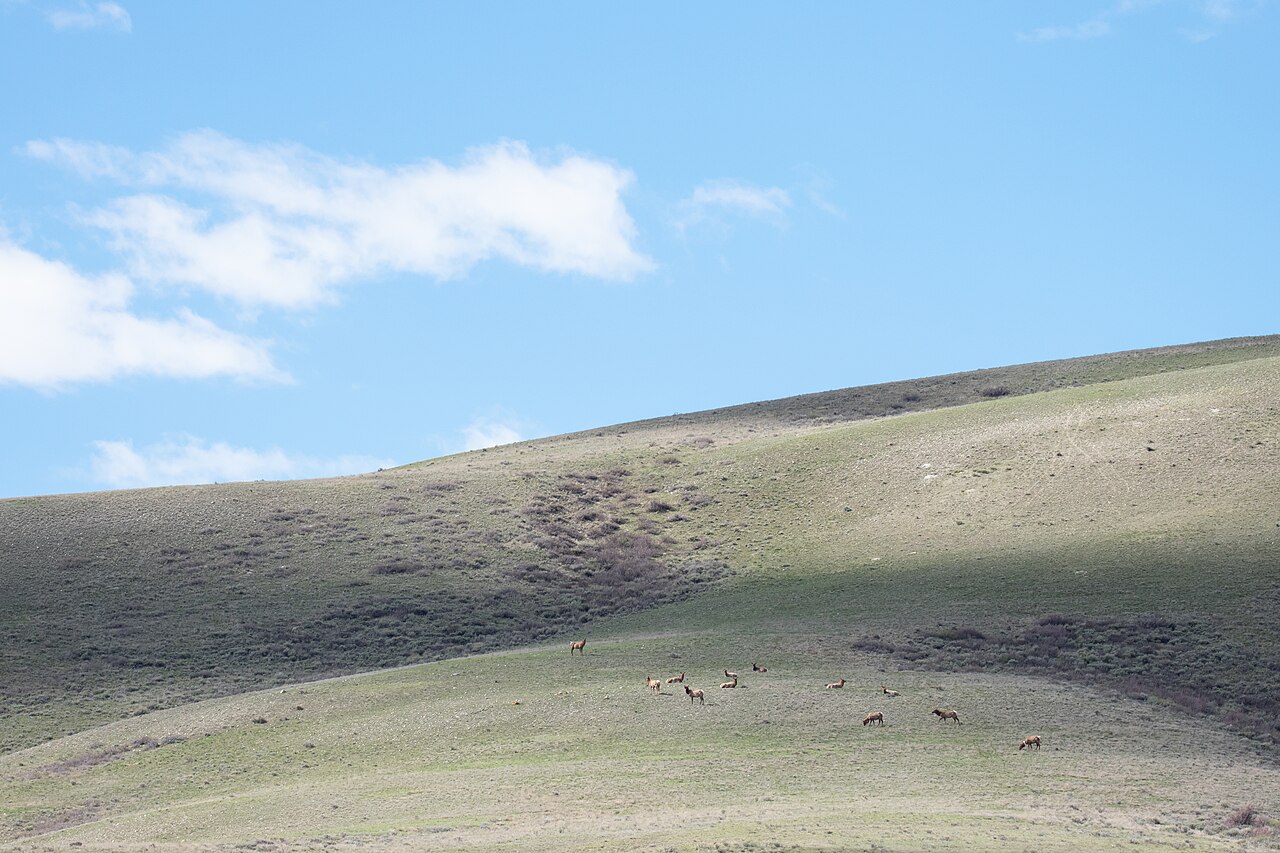
Elk symbolism is strongest and best documented among Plains and Woodlands peoples, and it is specific rather than generic. In Lakota tradition the elk, hehaka, is associated with male power, courtship and what was called love medicine, and Elk Dreamer societies were formed by men who received elk visions. The bugle of the bull was understood as the sound of that power being used.
Among other nations the emphasis shifts. Several Northeastern traditions treat the elk as a figure of patience and stamina on long journeys, and Cherokee storytelling tends to pair the elk with grace rather than dominance. The word wapiti itself comes from Shawnee and Cree, meaning white rump. These are distinct belief systems, and flattening them into one pan-Indian meaning, which a great deal of online material does, loses the part that matters.
Christian and Biblical Meaning of the Elk
Scripture does not name the elk, which is a North American animal, but it does name the hart and the hind, and Christian tradition reads those as the soul in search of God. Psalm 42 opens with the deer that pants for streams of water, and that single image carries most of the symbolism in Christian art, where the stag at a spring stands for baptism and for longing.
The stag also appears in the conversion legends of Saint Eustace and Saint Hubert, both of whom are said to have seen a crucifix between a stag’s antlers while hunting. In the 20th century the Oglala Lakota holy man Black Elk, baptized as a Catholic catechist, became the figure through which many readers encounter both traditions at once. In Christian terms, then, an elk sighting would be read as a call rather than as a power.
Celtic and Norse Elk Symbolism

In Celtic lore the stag is a creature of the Otherworld and a guide across its boundary. The antlered figure usually named Cernunnos is depicted with stag horns, and in Irish and Welsh tales a white or unusual stag that appears during a hunt leads the hunter out of the ordinary world and into another one. The stag there is a threshold, not a prize.
Norse tradition gives the animal a cosmic role instead. Four stags, Dainn, Dvalinn, Duneyrr and Durathror, browse the branches of the world tree Yggdrasil, and the stag Eikthyrnir stands on the roof of Valhalla with water streaming from its antlers. Both traditions read the antlers as a link between earth and sky, which is roughly where the modern idea of elk energy as spiritual reach comes from.
Elk and Deer Symbolism in East Asian Traditions
East Asia has no native elk in the North American sense, so the symbolism attaches to deer, and it is about prosperity and long life. In Chinese the word for deer, lu, is a homophone for the word for official salary and good fortune, which is why deer appear constantly in painting and ornament alongside cranes and pines, all symbols of longevity. The deer is a companion of the god of longevity, Shouxing.
In Japan the sika deer of Nara are treated as messengers of the kami of Kasuga Shrine and have been protected for centuries. The emphasis in both cases is gentleness and auspicious timing rather than the muscular strength Western traditions assign the elk. If you came here from a dream about a smaller deer, that is the tradition it most often maps onto.
The Elk as a Spirit Animal
As a spirit animal in contemporary practice, the elk is read as the pacer. The lesson attached to it is almost always about long effort rather than a sprint, about not burning your reserves in the first mile, and about being willing to be conspicuous while you do it. People drawn to the elk often describe themselves as having overcommitted to something.
Modern spirit animal frameworks are a 20th century synthesis rather than an inherited tradition, and it is worth saying so plainly. The elk’s place in them borrows heavily from Plains imagery. For comparison, the hibernating, patient symbolism of bear symbolism and the building, methodical symbolism of beaver symbolism sit at either side of the elk in the same frameworks.
Elk Totem and Power Animal Meaning
Totem and power animal are used loosely online, but they are not the same idea. A totem in the anthropological sense is inherited and belongs to a clan or lineage, not to an individual who feels an affinity. A power animal in neoshamanic practice is personal and is understood to be met in a trance journey. Elk appears in both vocabularies.
Where the elk is named as a power animal, the stated gift is stamina plus dignity: the capacity to keep going without losing composure. Practitioners tend to call on it for long projects, recovery and situations that require holding a position publicly. That is the belief as it is actually taught, and it has no bearing on how a wild elk behaves.
Seeing an Elk in Your Yard or Near the House
Traditionally this is read as protection arriving, or as a boundary being tested, because the animal has crossed from wild ground into the space you keep. People in the mountain West, where elk routinely come down to irrigated yards in winter, naturally read it less dramatically than someone seeing one for the first time.
Practically, an elk in the yard means the forage is better there than on the hill, and that is worth taking seriously. Bulls in September and October and cows with calves in spring are both genuinely dangerous at close range. Keep the house between you and the animal, and give it a clear exit route.
Hearing an Elk Bugle at Night
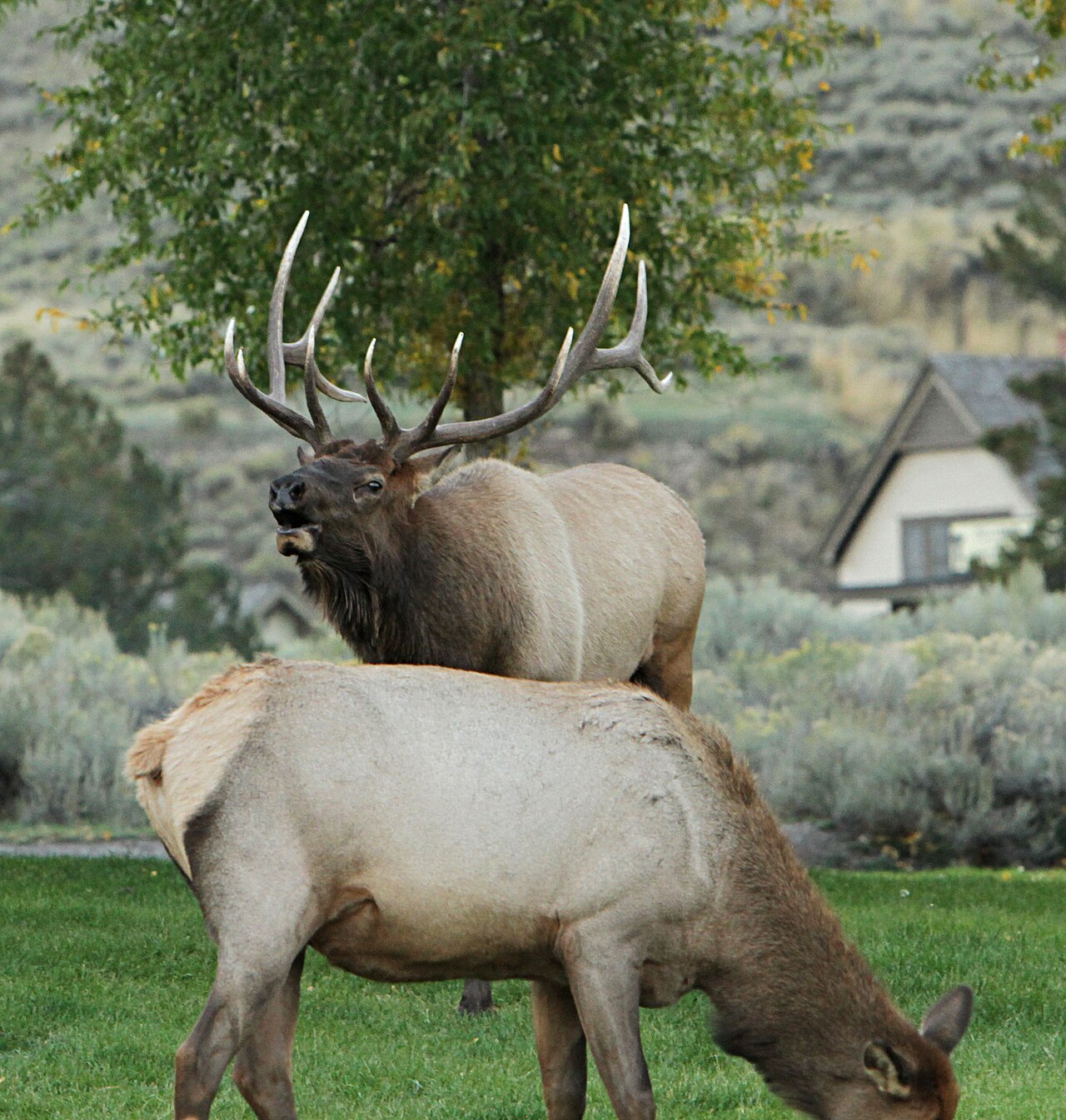
The bugle is the sound most people attach meaning to, a rising whistle that breaks into grunts and carries well over a mile. Traditional readings treat it as a call to speak for yourself, to claim ground, or to answer something you have been avoiding. In Lakota Elk Dreamer tradition the sound was tied directly to the power the dreamer had received.
What is actually happening is a bull advertising his condition to cows and to rival bulls during the rut, which runs from roughly early September through mid October. Hearing it at night is normal, since bugling peaks around dawn and dusk and continues after dark. The National Park Service keeps a good plain description of the behavior at Yellowstone’s elk page.
Seeing an Elk Repeatedly, or Finding One Dead
Repetition is the one pattern nearly every tradition treats as significant. The standard reading is that a lesson has not landed yet, and the usual advice is to look at what was unresolved on each occasion rather than at the animal. Among herd animals, repeated sightings also simply mean you live near a travel corridor.
A dead elk is read as strength spent, a role ending, or energy that went into the wrong contest, and in several traditions antlers found on the ground are treated differently from a carcass, since shedding is renewal rather than loss. The darker readings people fear here are not universal; bat symbolism shows how often an animal treated as an omen of death in one culture means fertility or luck in another.
Dreaming About an Elk
Dream readings follow the waking symbolism closely. An elk walking steadily is usually interpreted as reassurance about a long effort, a bull bugling as a prompt to be heard, and a charging elk as a conflict you are being drawn into against your judgment. A herd moving together is read as family or community obligation.
Being chased by one is the common anxiety version and is generally interpreted as avoidance rather than threat. None of this is testable, and dream symbolism varies more between traditions than any other category here. If birds rather than mammals dominate your dreams, the framework shifts considerably, and bird symbolism is the better starting point.
Frequently Asked Questions
What do different animals represent spiritually?
Broadly, large herd animals stand for endurance and community, predators for decisiveness, and birds for messages and perspective. The specifics differ sharply between traditions, so the honest answer is that there is no single table. Elk means stamina and dignified strength in most frameworks that include it, including the ones in this guide.
Are elks friendly to humans?
No. Elk tolerate people at a distance, especially in parks where they are used to traffic, but they are not friendly and they do not seek contact. Habituated elk are actually more dangerous than wary ones, because they let you get close enough to be hurt before they react.
What to do if an elk approaches you?
Back away without turning your back, keep something solid like a tree or vehicle between you, and give it an obvious escape route. Do not run in the open and do not try to haze it. Park guidance is to stay at least 25 yards away, and further during the fall rut or calving season.
Are elk more aggressive than deer?
Yes, mainly because of size and the rut. A bull elk weighs 700 to 1,100 lbs and carries antlers up to four feet long, so even a warning charge does real damage. White-tailed deer injure people too, but elk incidents in places like Yellowstone and Estes Park are both more frequent and more serious.
What are girl elks called?
Female elk are cows, males are bulls, and young are calves. A group is a herd, and for most of the year cows and calves live separately from the bulls. The species name wapiti is sometimes used for either sex to avoid confusion with the European moose, which is also called elk.
How far away can an elk smell you?
Hunters generally reckon on half a mile or more with a steady wind, and elk routinely detect people well before they are seen. Their hearing is comparably good, which is why a bugling bull falls silent long before you reach him. Wind direction matters far more than distance.