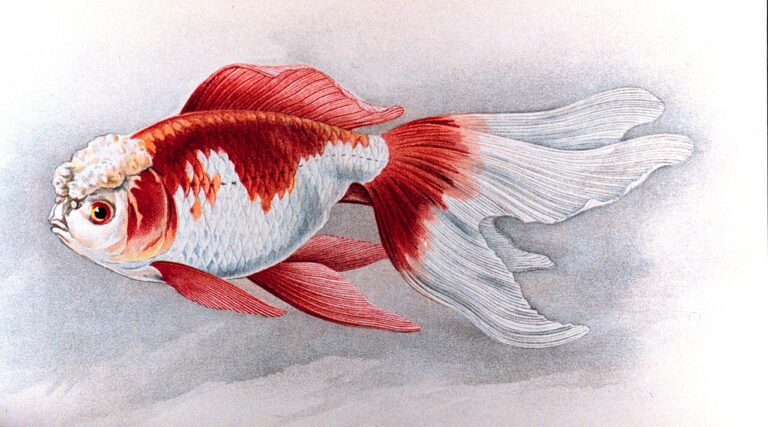
Koi Fish Tattoo Meaning: Colors, Direction, and Symbolism
A koi fish tattoo means perseverance, strength through adversity, and transformation, drawn from a Chinese legend in which a koi that swims up a waterfall on the Yellow River is turned into a dragon. Beyond that core koi fish tattoo meaning, the design carries a second layer of symbolism through color and a third through the direction the fish is swimming. A black koi represents overcoming a major hardship, a red koi represents love and intense passion, and a gold koi represents wealth and prosperity. A koi swimming upstream means you are still in the struggle; a koi swimming downstream means the battle is won.
The koi is one of the most requested designs in Japanese-style tattooing, and it is also one of the most misunderstood. Many of the “rules” circulating online, particularly about upstream versus downstream, are modern Western inventions rather than traditional Japanese doctrine. This guide separates the legend from the marketing, explains what each color and pairing traditionally signifies, covers the yin yang and two-koi versions, and addresses the questions people ask before committing to a large piece: which direction, which color, and how the design fits into Japanese irezumi tradition.
A koi fish tattoo means perseverance, courage, and transformation, based on the legend of a koi that climbs a waterfall and becomes a dragon. Color adds meaning: black for overcoming hardship, red for love and passion, gold for wealth, blue for calm and masculinity. A koi swimming upstream signals an ongoing struggle, downstream a goal already achieved.
| Element | Traditional Meaning |
|---|---|
| Koi in general | Perseverance, courage, transformation |
| Black koi | Overcoming a major life obstacle |
| Red koi | Love, intense passion, strength |
| Gold or yellow koi | Wealth, fortune, prosperity |
| Blue koi | Calm, masculinity, fatherhood |
| Swimming upstream | Still fighting toward a goal |
| Swimming downstream | Goal achieved, obstacle passed |
What Does a Koi Fish Tattoo Mean?
A koi fish tattoo means perseverance in the face of adversity, and every other meaning attached to the design branches from that root. The source is a Chinese legend about the Dragon Gate, a waterfall on the Yellow River. According to the story, schools of carp swim upriver each year and attempt to leap the falls. Almost all fail, but any carp that succeeds is transformed by the gods into a dragon. The legend is recorded in Chinese texts dating back roughly two thousand years and spread to Japan, where the carp, koi in Japanese, became a symbol of determination rewarded.
The transformation element gives the koi a second meaning that matters to many people choosing the design: becoming something greater than you started as. The koi does not simply survive the climb, it is fundamentally changed by it. That is why koi tattoos are common choices to mark recovery from addiction, the end of a serious illness, escape from a difficult situation, or a career built from nothing. The fish represents both the effort and the outcome.
In Japan the koi carries additional cultural weight. Koinobori, the carp-shaped windsocks flown for Children’s Day on May 5, express the wish that children grow up strong and resilient. The koi is associated with masculine strength and samurai virtue, and it appears constantly in Japanese art, from woodblock prints to temple carvings, much as the crane and the crow carry fixed meanings in the same tradition. When the koi entered tattooing through irezumi, it arrived carrying all of that meaning already intact, which is why it works as a standalone design without needing supporting elements.
What Do Koi Fish Tattoo Colors Mean?
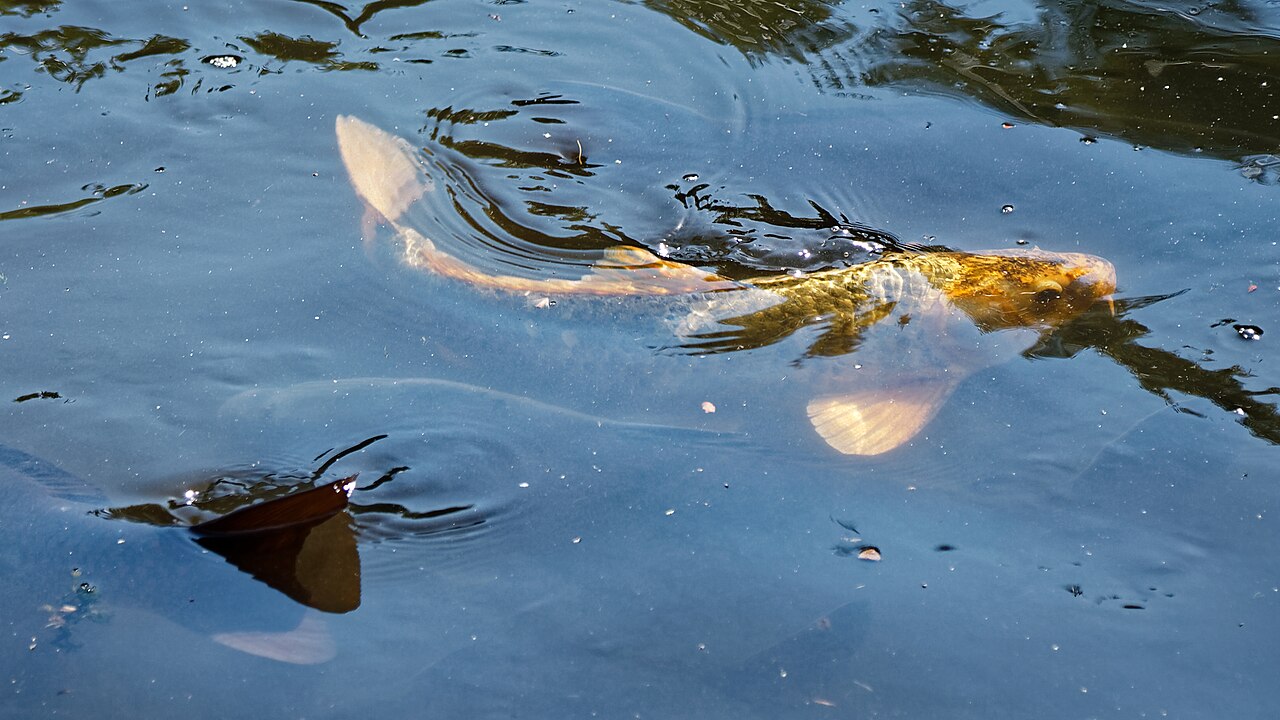
Koi fish tattoo colors carry distinct meanings, and choosing the color is the single most consequential decision after choosing the fish itself. Black koi, often based on the Karasu or Magoi varieties, traditionally represent overcoming a serious obstacle and are frequently chosen to mark surviving something difficult. Red or orange koi, based on the common Kohaku variety, represent love, intense passion, and physical strength, and are among the most popular choices for that reason. Gold or yellow koi, from the Yamabuki variety, represent wealth, fortune, and prosperity.
The remaining colors round out the vocabulary. Blue koi are associated with calm, tranquility, and masculinity, and a blue koi is often used to represent a son or a father figure. White koi, particularly the Platinum Ogon, suggest success in career and a fresh start. A blue and white koi together is sometimes read as a family, and the Kohaku, white with red markings, is the classic and most highly prized variety in koi keeping itself, symbolizing achievement and success.
It is worth knowing that this color code is more strongly codified in Western tattoo culture than in traditional Japanese practice. Japanese irezumi has always cared enormously about which koi variety is depicted, because koi breeding is a serious art with its own hierarchy of prized bloodlines, but the neat one-color-one-meaning table is largely a modern Western system. That does not make it invalid; it means the meaning is yours to define, and a good artist will happily work to whichever tradition you prefer. The butterfly koi guide covers the real-world varieties and their appearance, which is useful reference for a realistic piece.
Which Direction Should a Koi Fish Tattoo Face?

A koi swimming upward or upstream traditionally means you are still fighting toward a goal, while a koi swimming downward or downstream means the struggle is over and the goal has been reached. This is the most debated aspect of koi tattoo symbolism, and it deserves an honest answer: the upstream and downstream distinction is a modern Western reading, not a rule from Japanese tattoo tradition. Japanese artists have depicted koi in both orientations for centuries without assigning them opposed meanings.
That said, the interpretation has become widespread enough that it now functions as real symbolism among people getting the tattoo, and many artists will discuss it with you. If it matters to you, upward-facing koi are the more common choice, signaling ambition and ongoing effort, and they suit vertical placements such as the outer arm, the ribs, or a leg sleeve where the fish can appear to be climbing. A downward-facing koi reads as a marker of something completed and is often chosen alongside a fully formed dragon element to show the transformation finished.
Placement usually matters more than symbolism in practice. Koi are long, curved, dynamic subjects that need space to look right, and the design should follow the natural lines of the body. A koi on a forearm typically swims along the arm rather than across it. Back pieces and full sleeves allow the water, waves, and lotus or maple leaf elements that make the design read as traditional Japanese work. Cramming a koi into a small flat space is the most common way to end up with a piece that ages badly.
What Does a Two Koi Fish Tattoo Mean?
Two koi fish together most commonly represent balance, harmony, and the union of opposites, especially when arranged in a circular yin yang composition. The two-fish arrangement predates tattooing and appears throughout East Asian art as a symbol of duality: male and female, light and dark, struggle and peace. In a relationship context, a pair of koi can represent two partners moving through life together, and the design is a popular choice for couples who want matching or complementary work.
The yin yang koi tattoo takes this further by placing the fish head to tail in a circle, usually one dark and one light, each containing a spot of the other’s color. This composition draws from Taoist philosophy rather than Japanese tradition, and it emphasizes that opposites contain and depend on each other. It is a clean, self-contained design that works well in medium sizes where a full Japanese-style koi would not, which is part of why it has become so common.
Two koi swimming in the same direction carry a different sense: partnership in a shared struggle rather than balance between opposites. Some people use a pair to represent a parent and child, often with a blue koi for a father or son and a red koi for a mother or daughter. As with color, none of this is fixed doctrine, and the strongest version of any koi tattoo is one where the wearer can explain what the pairing means to them rather than reciting a chart.
Koi and Dragon Tattoos: The Transformation Design
A koi and dragon tattoo, often called a koi dragon or dragon koi, depicts the moment of transformation from the Dragon Gate legend and is one of the most ambitious pieces in Japanese-style tattooing. The design usually shows a single creature caught mid-change: the head and forequarters already dragon, with horns, whiskers, and clawed limbs, while the tail and body remain unmistakably carp. Waterfalls, waves, and clouds fill the surrounding space, placing the fish at the falls itself.
The meaning is the legend’s full arc rather than just its beginning. A plain koi says perseverance; a koi dragon says the perseverance paid off and produced a fundamental change. Because it needs room for both creatures and the setting, this design belongs on a back piece, a full sleeve, or a thigh, and it is not a small-tattoo subject. In Japanese tradition the dragon itself represents wisdom, strength, and benevolent power, so the combined image stacks two of the most significant symbols in the vocabulary.
Some compositions separate the two, showing a koi at the bottom of a waterfall and a dragon at the top, with the water connecting them. This version reads more clearly as a narrative and works well on vertical placements such as a spine or a full leg. Whichever approach you choose, look at an artist’s healed Japanese work before committing. Traditional irezumi has rules about flow, background, and negative space that take years to learn, and a koi dragon executed by someone unfamiliar with them will look like two separate animals sharing a space.
Is a Koi Fish Tattoo Lucky?
Yes, the koi is widely regarded as a lucky symbol, particularly in Chinese tradition where the carp is linked to abundance, prosperity, and academic or career success. The Chinese word for fish, yu, is a homophone for surplus or abundance, which is why fish appear constantly in Lunar New Year decorations and why a gold koi in particular is read as a wealth symbol. The Dragon Gate legend was historically applied to students passing the imperial civil service examinations, making the koi a symbol of advancement earned through effort.
In Japan the emphasis falls more on courage and resilience than on luck as such. The koi is admired for its strength and for a lifespan that outstrips most aquarium fish, far beyond what the betta fish lifespan guide describes for smaller species, with well-kept koi commonly living 25 to 35 years and the famous scarlet koi named Hanako reportedly reaching over 200 years, a claim based on scale ring analysis. Longevity and endurance are the qualities the Japanese tradition highlights, and the koi is a symbol of a life lived with persistence rather than a charm that brings fortune.
If luck is the specific goal, the gold or yellow koi and the red koi are the conventional choices, and pairing the koi with a lotus flower adds a layer of purity and rebirth from Buddhist symbolism. Cherry blossoms are another common companion, representing the beauty and brevity of life, and maple leaves signal autumn and the passage of time. These elements are standard in Japanese tattooing and give an artist the material to build a full composition rather than a floating fish.
Koi Tattoos and Japanese Irezumi Tradition
Koi tattoos sit inside a specific artistic tradition called irezumi, and understanding a little of it will make your piece better. Japanese tattooing has established conventions: a main subject, a background of water, wind bars, or clouds, and seasonal companion elements such as cherry blossoms for spring or maple leaves for autumn. The background is not decoration, it carries the composition and defines the flow across the body. A koi without water in this tradition looks unfinished to anyone familiar with the style.
Traditional irezumi is applied by hand using tebori, a technique in which the artist pushes ink with a hand-held rod of needles rather than a machine. Tebori produces distinctive shading and is slower and often more expensive than machine work, and relatively few artists outside Japan practice it. Machine-applied Japanese-style work is entirely legitimate and far more common; the choice is aesthetic and practical rather than a question of authenticity.
Tattoos still carry social stigma in parts of Japan because of historical association with organized crime, and many onsen, gyms, and pools there restrict entry to people with visible tattoos, though this has been easing. As for whether people outside Japan should get Japanese-style work, most Japanese tattoo artists actively welcome it, and the style has been shared internationally for over a century. The reasonable standard is to learn what the elements mean and to work with an artist who knows the tradition rather than treating it as generic decoration. If you are drawn to the animal itself as much as the symbolism, the guide to what fish eat and the goldfish guide cover the real biology of the carp family the koi belongs to.
Choosing Placement and Size for a Koi Tattoo
Koi tattoos need length and curve, and the best placements give the fish room to move. The outer forearm, upper arm, calf, ribs, and thigh all provide a natural vertical or diagonal run that suits the shape of the body of the fish. Back pieces and full sleeves are where the design reaches its full expression, because they allow the water, waves, and companion elements that define the Japanese style. A koi that fills a whole back is the classic form and remains one of the most impressive pieces in tattooing.
Small koi tattoos are possible but demand restraint. A koi under about four inches will lose the fine scale detail and fin structure that make the subject recognizable, and heavy shading in a small area tends to blur as it ages. If you want something compact, a simplified line-work koi or a yin yang pair reads far better at small size than a detailed realistic fish. Discuss aging directly with your artist; a design that looks sharp at three inches on day one may be a dark smudge at ten years.
Budget and time should be planned realistically. A full Japanese-style koi sleeve or back piece typically requires multiple sessions over months and represents a serious investment, often several thousand dollars. Color koi work needs more sessions than black and gray. Reputable artists will scope the work honestly in a consultation, and a large piece is worth waiting for the right artist rather than starting with whoever is available. The koi is a design people keep for life, and it rewards patience, which is fitting for a symbol that means exactly that.
Related reading: Koi Fish Meaning.
Frequently Asked Questions
What does a koi fish tattoo mean?
A koi fish tattoo means perseverance, courage, and transformation. The meaning comes from a legend in which a carp that swims up a waterfall on the Yellow River is turned into a dragon, making the koi a symbol of determination that is ultimately rewarded.
Which direction should a koi fish tattoo face?
A koi swimming upstream traditionally means you are still fighting toward a goal, while downstream means the goal is achieved. This distinction is a modern Western reading rather than a Japanese rule, so either direction is acceptable and placement flow usually matters more.
What color koi is lucky?
Gold or yellow koi are the conventional wealth and fortune symbols, and red koi represent love and strength. In Chinese tradition the fish generally signifies abundance, which is why gold koi are the most common choice when luck is the goal.
What does a black koi fish tattoo mean?
A black koi traditionally represents overcoming a major life obstacle. It is a frequent choice to mark recovery from addiction or illness, the end of a difficult period, or any struggle the wearer has come through.
What do two koi fish tattoos mean?
Two koi usually represent balance, harmony, and the union of opposites, especially in a yin yang arrangement. Two koi swimming the same direction can instead represent partnership, or a parent and child, depending on how the wearer defines it.
What does a koi and dragon tattoo mean?
It depicts the completed transformation from the Dragon Gate legend, showing a koi becoming a dragon. The meaning is that perseverance produced fundamental change, and the design usually needs a back piece or full sleeve to work.
Do colors matter for koi fish tattoos?
Yes, in modern practice. Black means overcoming hardship, red means love and passion, gold means prosperity, blue means calm and masculinity, and white suggests a fresh start. This color code is more codified in Western tattooing than in traditional Japanese work.