What Is a Group of Frogs Called? Army, Chorus, and Knot
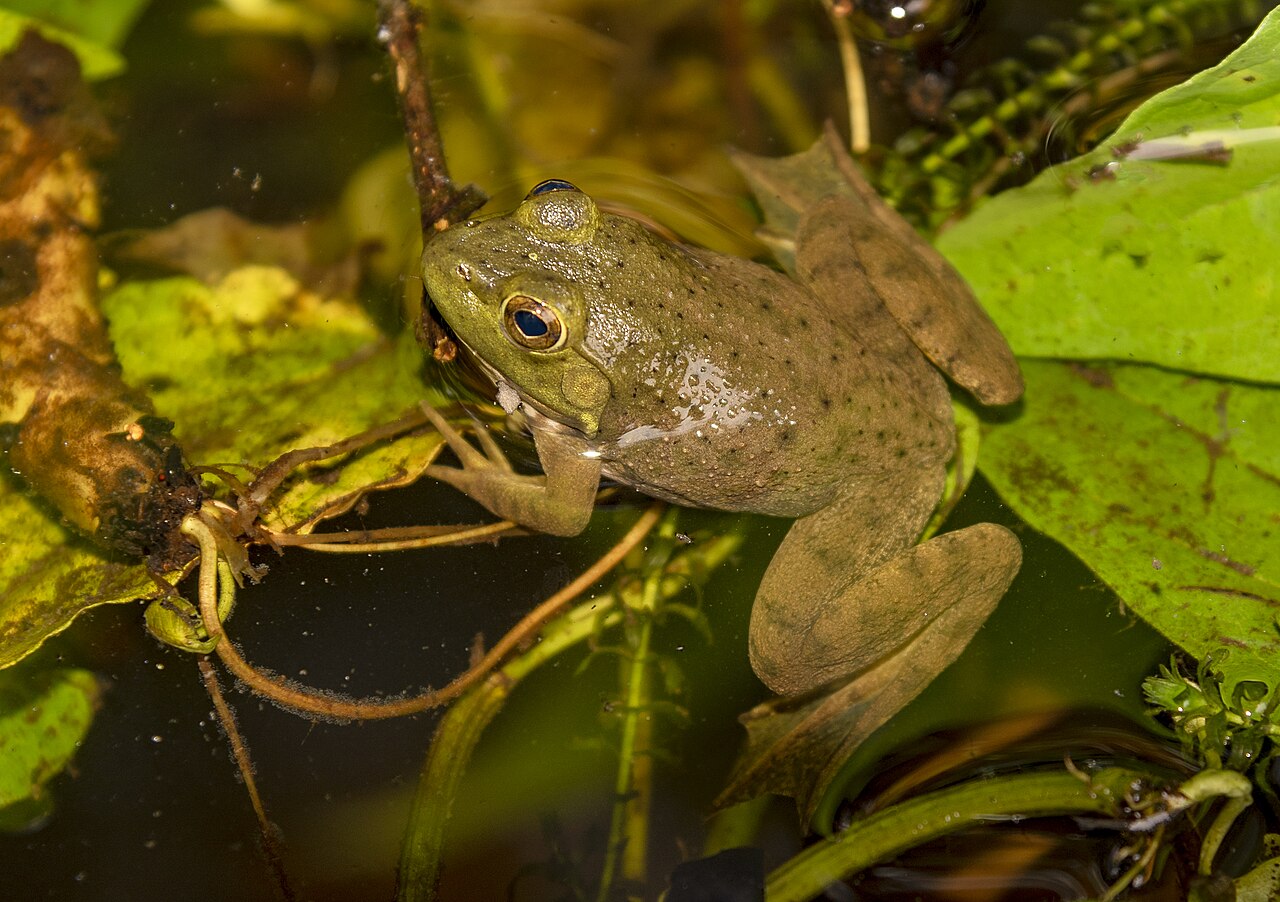
A group of frogs is called an army, and that is the traditional collective noun found in most dictionaries. A group of frogs is also called a colony, a knot, and, when they are in water, a chorus, which describes the mass calling of breeding males. A group of toads gets its own term, a knot of toads, and a group of tadpoles is a cloud or a swarm. What is a group of frogs called therefore has one main answer, army, and several useful alternatives depending on what the frogs are doing.
The army term is one of the older collective nouns and probably reflects the sight of hundreds or thousands of small frogs emerging from a pond at once and moving across the ground in the same direction. That mass emergence is a real event, occurring in late summer when a season’s worth of metamorphosed froglets leave the water together, and it has been mistaken for a plague or an omen throughout history. This guide covers every term for a group of frogs, explains where army came from, and describes how frogs actually gather.
A group of frogs is called an army, the traditional collective noun. Other terms are a colony, a knot, and a chorus when males are calling together during breeding. A group of toads is a knot, and a group of tadpoles is a cloud or a swarm. Frogs are not social animals, but they gather in large numbers to breed and during mass emergences of young.
| Question | Answer |
|---|---|
| Main collective noun | Army of frogs |
| Other terms | Colony, knot |
| Calling males | Chorus |
| Group of toads | Knot of toads |
| Group of tadpoles | Cloud or swarm |
| Baby frog | Tadpole, then froglet |
| Are frogs social? | No; they gather to breed, not to live together |
Why Is a Group of Frogs Called an Army?
A group of frogs is called an army most likely because of the mass movements frogs make, which genuinely resemble a marching force. In late summer, when the tadpoles of a single pond complete metamorphosis, thousands of tiny froglets leave the water within days of each other and move outward across the surrounding land in the same direction. To an observer, a lawn or a road covered in hundreds of moving frogs looks like an advancing army, and the impression is strong enough to have generated the term.
Spring migrations produce the same effect in reverse. On the first warm, wet nights of the year, adult frogs and salamanders move en masse from their overwintering sites back to breeding ponds, often crossing roads in such numbers that some communities close streets or organize volunteers to carry animals across. These big nights are a well-known phenomenon in the northeastern United States and in Britain, and they concentrate hundreds of amphibians in a few hours.
The term is old, appearing in collective noun lists alongside the medieval terms of venery, though frogs were not hunted game and the entry may be a later addition. Biblical resonance may also have played a part: the second plague of Egypt was a plague of frogs, and the image of frogs arriving in overwhelming numbers is deeply embedded in Western culture. Either way, army is unusual among collective nouns for describing something real.
What Is a Chorus of Frogs?
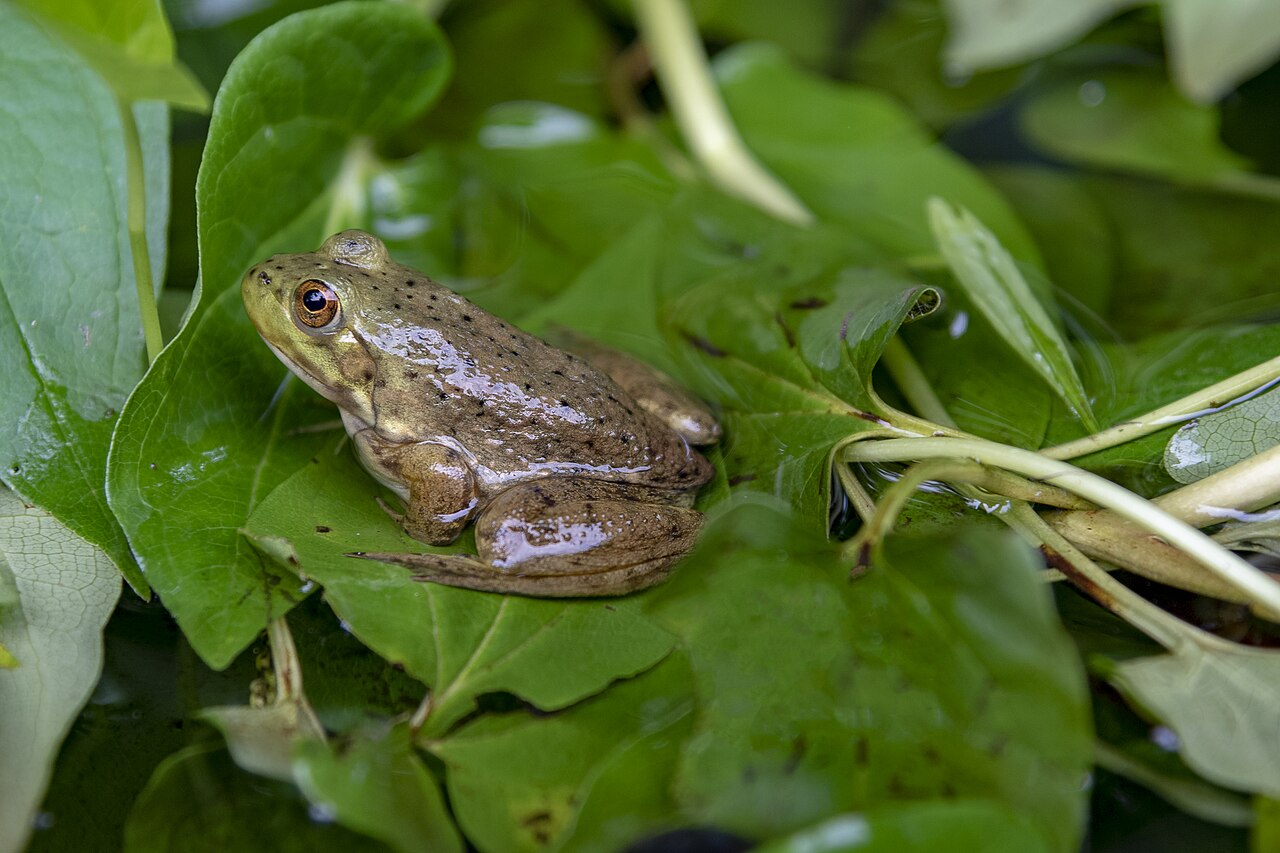
A chorus of frogs is a group of male frogs calling together at a breeding site, and this is the term most likely to be genuinely useful. Chorus is not just a collective noun; it is standard terminology in herpetology. Researchers speak of chorus intensity, chorus timing, and calling surveys, and the North American Amphibian Monitoring Program has used volunteer chorus surveys for decades to track amphibian populations by ear rather than by capture.
The chorus itself is a competitive display. Only males call, using a vocal sac that inflates and acts as a resonator, and the call advertises the male’s location and quality to females while warning off rival males. Calls are species-specific, which lets a trained listener identify every frog species at a pond in the dark, and they are loud out of all proportion to the animal: a spring peeper is about an inch long and a full chorus of them can reach 90 decibels at close range, comparable to a lawnmower.
Choruses are also highly synchronized. Frogs adjust their timing to avoid overlapping with neighbors, producing alternating or wave-like patterns rather than random noise, because a call masked by another male’s is wasted effort. In some species the whole chorus falls abruptly silent when a predator or a person approaches and then resumes minutes later, usually starting with one bold individual. The baby frog guide covers the life cycle that the chorus initiates.
What Is a Group of Toads Called?
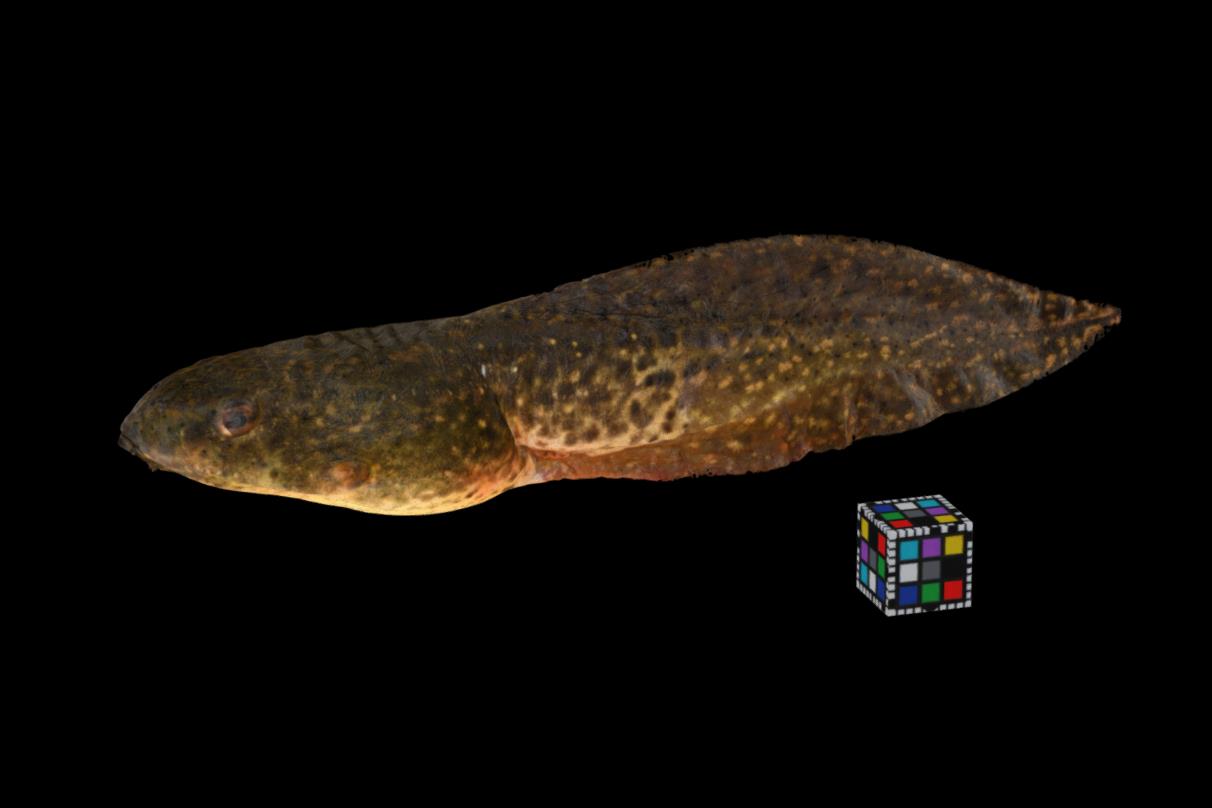
A group of toads is called a knot, and knot is also listed as an alternative term for frogs. The word suggests a tangled cluster, which describes what happens at a toad breeding pond precisely: males gather in the shallows and grapple with each other and with females, sometimes forming a writhing ball of several males clinging to a single female in a scramble known as a mating ball.
Toad breeding is explosive and brief. Where frogs of many species call over weeks, common toads and American toads often complete an entire breeding season in a few days, with hundreds of animals arriving at a pond almost simultaneously after the first warm rains. Males clasp females in a grip called amplexus, holding on behind the front legs sometimes for days, and the female then lays long strings of eggs, up to 20,000 in a single season for an American toad, while the male fertilizes them externally.
Outside the breeding season toads are entirely solitary and terrestrial, which is why the collective noun applies to such a narrow window. A toad in a garden is a lone animal working a territory for slugs, beetles, and ants, and it may use the same shelter under a step or a log for an entire season. The old superstition that handling toads causes warts is false; warts come from human papillomavirus, though toads do secrete a mild irritant from the parotoid glands behind their eyes.
What Is a Group of Tadpoles Called?
A group of tadpoles is called a cloud or a swarm, and both terms describe what a mass of tadpoles looks like in shallow water: a shifting dark patch that moves as a unit. Some toad species, particularly American and cane toads, produce tadpoles that genuinely school, aggregating in dense groups that can number in the thousands and move together along the warm shallows of a pond edge.
Schooling in tadpoles serves the same functions it serves in fish. A tadpole in the middle of a dense aggregation is less likely to be taken by a dragonfly nymph, a fish, or a wading bird than one alone, and the group’s collective movement makes it harder for a predator to fix on any individual. Toad tadpoles are also distasteful to many predators, and the dark schooling mass may function partly as a warning display.
Not all tadpoles school. The tadpoles of many frog species, including wood frogs and most tree frogs, are more dispersed and solitary, feeding on algae and detritus across the pond bottom rather than aggregating. Tadpole survival is low across the board, with most ponds producing a small fraction of the metamorphosed froglets that the original egg mass would suggest. The guide to what tadpoles eat covers the herbivorous larval diet that gives way to the strictly carnivorous adult diet.
Do Frogs Live in Groups?
No, frogs are not social animals and do not live in groups in any meaningful sense. Adult frogs are solitary predators that sit and wait for insects to come within tongue range, and two frogs occupying the same square yard are competitors rather than companions. There is no group defense, no cooperative feeding, no shared shelter, and no lasting bond between individuals in the great majority of species.
What looks like group living is almost always aggregation around a resource. Frogs gather at breeding ponds, at good hunting spots such as the pool of light under a porch fixture, at reliable water sources in dry conditions, and at overwintering sites. Each animal is there for its own reasons, and if the resource disappears the aggregation dissolves. This is the same distinction that separates a genuine herd of deer from several rabbits sharing a lawn.
There are a handful of exceptions worth knowing. Some poison dart frogs of Central and South America show real parental care, with a parent carrying tadpoles individually to water-filled bromeliads and, in some species, returning to feed them unfertilized eggs, and a few show territorial pair behavior. These are among the most socially complex amphibians known, and they are a long way from the temperate frogs in a backyard pond.
How Large Do Frog Gatherings Get?
Frog gatherings at breeding sites can be enormous. A single vernal pool may hold several hundred wood frogs during the few days of their explosive breeding, and a large marsh chorus of spring peepers or chorus frogs can involve many thousands of calling males spread across the wetland. Mass emergences of froglets in late summer regularly produce hundreds of animals per square yard along a pond margin.
The largest amphibian aggregations documented involve introduced species out of control. Cane toads in Australia, introduced in 1935 and now numbering in the hundreds of millions, produce breeding congregations and tadpole schools on a scale that has no parallel in native systems. American bullfrogs introduced to the western United States and elsewhere reach similar densities in favorable habitat, outcompeting and eating native amphibians.
Aggregation also happens at the other end of the year. Some species overwinter communally, with large numbers of frogs settling into the mud at the bottom of a pond or into a shared crevice or burrow. Wood frogs take a different route entirely and overwinter on land under leaf litter, freezing solid with up to 65 percent of their body water turned to ice, protected by glucose acting as a cryoprotectant, and thawing intact in spring. The African bullfrog guide covers a species that survives dry seasons by an equally extreme route, encasing itself underground in a mucus cocoon.
Why Do Frogs Gather to Breed?
Frogs gather to breed because external fertilization requires both sexes in the same place at the same time, and because most species need standing water for eggs and tadpoles. A frog cannot mate on the move; the female must lay eggs in water and the male must fertilize them as they emerge. Suitable water is patchy and often seasonal, so the entire local population converges on the few sites that work.
Timing is driven by temperature and rainfall. Wood frogs and spring peepers begin calling as soon as ice leaves the ponds, sometimes in February in the mid-Atlantic, because their tadpoles must complete development before temporary vernal pools dry out. Later-breeding species such as green frogs and bullfrogs use permanent water and can afford to breed into summer, and their tadpoles may overwinter as larvae and metamorphose the following year.
Site fidelity is strong. Frogs frequently return to the pond where they hatched, navigating by a combination of smell, sound, magnetic sense, and celestial cues, and this is why road mortality during spring migration is so damaging: the animals will not simply choose a different pond. It is also why draining or filling a single vernal pool can eliminate an entire local breeding population even when other water exists nearby.
What Do Mass Frog Emergences Mean?
A mass emergence of tiny frogs is a normal and encouraging event rather than a sign of anything wrong. It happens in mid to late summer when the tadpoles from a spring breeding event complete metamorphosis together, and the resulting froglets, often less than half an inch long, leave the water simultaneously and disperse across the surrounding land. Lawns, roads, and patios near a pond can be covered with them for a day or two.
The numbers are startling but the survival rate is brutal. Of the thousands of eggs a female frog lays, only a tiny fraction reach metamorphosis, and of those froglets only a small percentage survive their first year. Birds, snakes, fish, larger frogs, mammals, and simple desiccation take the overwhelming majority. The mass emergence is a reproductive strategy of overwhelming predators with sheer numbers, and it means the pond had a successful season.
These events are also a genuine indicator of habitat quality. Amphibians absorb water and gases through permeable skin and are highly sensitive to pesticides, fertilizer runoff, road salt, and pollutants, which is why they are used as environmental indicator species. A yard producing a mass emergence of froglets is one where the water and soil chemistry are working. Amphibian populations globally are in serious decline, with the chytrid fungus Batrachochytrium dendrobatidis implicated in the collapse or extinction of well over a hundred species, so a healthy local pond is worth protecting.
Collective Nouns for Frogs and Other Amphibians
Frogs and toads share the amphibian collective nouns with salamanders, which get a congress or a maelstrom, both later inventions with no traditional basis. Newts are given a knot as well. None of these terms sees any real use, and herpetologists write group, aggregation, chorus, or breeding congregation depending on what they are describing.
The frog terms fit an interesting pattern among collective nouns generally. Army describes real mass movement, chorus describes a real behavior and is genuine scientific terminology, and knot describes the tangled mating balls that toads actually form. That gives frogs a better hit rate for descriptive accuracy than most animals, where terms like a parliament of owls or a skulk of foxes name groups that do not exist. The group of owls guide covers the clearest case of a collective noun invented for an animal that lives alone.
For anyone who wants to hear an army or a chorus for themselves, the season starts earlier than most people expect. Wood frogs and spring peepers call as soon as nights rise above freezing and the ice goes off the ponds, often while snow remains on the ground, and the sound carries half a mile on a still evening. Finding the pond is the hard part; the frogs will announce themselves. Evidence of frogs living around a house is easy to spot year-round, and the frog poop guide covers the droppings that appear on patios and railings beneath their hunting perches.
Frequently Asked Questions
What is a group of frogs called?
A group of frogs is called an army, the traditional collective noun. Other accepted terms are a colony and a knot, and a group of males calling together at a breeding site is called a chorus.
Why is a group of frogs called an army?
Most likely because of the mass movements frogs make. Thousands of newly metamorphosed froglets leave a pond together in late summer and move across the land in the same direction, which looks like an advancing army.
What is a group of toads called?
A knot. The term suits toad breeding, when many males gather in shallow water and grapple with each other and with females, sometimes forming a writhing mating ball around a single female.
What is a group of tadpoles called?
A cloud or a swarm. Some toad tadpoles genuinely school in dense aggregations of thousands, which reduces predation, while the tadpoles of many frog species are dispersed and do not group.
Do frogs live in groups?
No. Frogs are solitary sit-and-wait predators. What looks like a group is almost always an aggregation around a resource such as a breeding pond, a good hunting spot near a light, or an overwintering site.
What is a chorus of frogs?
A group of male frogs calling together at a breeding site. Only males call, using an inflatable vocal sac, and calls are species-specific. Chorus is genuine scientific terminology used in amphibian monitoring surveys.
Why do hundreds of tiny frogs appear at once?
Because the tadpoles from a spring breeding event complete metamorphosis together and leave the water simultaneously. It is a normal, healthy event indicating a successful breeding season, and most of those froglets will not survive their first year.