What Is a Group of Hawks Called? Kettle, Cast, and Boil
A group of hawks is called a kettle when the birds are circling on a thermal, a cast when two are released together in falconry, and a boil in some collective noun lists. A group of hawks in a nest is called a brood, and the general term ornithologists use is simply a group or a flock. Kettle is the one term in genuine daily use, and it is the answer worth knowing because you will hear it at any hawk watch site in North America.
Hawks are territorial and do not flock in the ordinary sense, but migration produces spectacular exceptions. Broad-winged hawks form the largest raptor kettles on earth, with single kettles occasionally holding thousands of birds and season counts at Central American bottlenecks running into the millions. This guide covers each term, explains the thermal soaring behind the kettle, and describes when hawks genuinely gather.
A group of hawks is called a kettle when circling on a thermal, a cast when two are flown together in falconry, and a boil in some lists. Hawks are territorial and do not flock normally, but migrating broad-winged hawks form kettles of thousands, and season counts at Veracruz, Mexico exceed a million birds.
| Term | Meaning |
|---|---|
| Kettle | Hawks circling on a thermal (used by birders) |
| Cast | Two hawks flown together (falconry) |
| Boil | Alternative in some collective noun lists |
| Brood | Young hawks in one nest |
| Aerie or eyrie | The nest itself |
| Do hawks flock? | Only during migration |
| Largest kettles | Broad-winged hawks, thousands per kettle |
Why Is a Group of Hawks Called a Kettle?
A group of circling hawks is called a kettle because the birds spiraling upward inside a column of rising air resemble something boiling and churning in a pot. Individual birds rise, drift, and circle within a loosely defined column, and the whole mass roils in a way that makes the comparison obvious the moment you see one from below.
Kettle is real working vocabulary rather than trivia. It is used at every hawk watch site in North America, applied to any raptor species riding a thermal, and it appears in count protocols and daily reports from Hawk Mountain in Pennsylvania, Cape May in New Jersey, Corpus Christi in Texas, and dozens of other stations. Saying you saw a kettle of forty communicates something precise to another birder.
The alternative term boil appears in some collective noun lists and works on the same image, though it is far less used. A cast of hawks comes from falconry and means two birds flown together at the same quarry, which is a genuine technical term with a specific meaning rather than a general collective noun. None of the fanciful terms invented for other raptors, such as a convocation of eagles or a parliament of owls, attached itself to hawks.
What Is a Thermal and Why Do Hawks Use Them?
A thermal is a column of warm air rising from ground heated by the sun, and hawks use them as free elevators. Bare ground, plowed fields, rock faces, and parking lots heat faster than surrounding vegetation and water, producing rising columns that a soaring bird can circle within to gain hundreds or thousands of feet without flapping.
The technique is efficient enough to transform migration. A broad-winged hawk climbs to the top of one thermal, glides forward on a long shallow descent, catches the next, and repeats, covering enormous distances on almost no muscular effort. Broad-wings migrate from eastern North America to South America, some traveling over 4,000 miles, and they do it almost entirely by soaring rather than powered flight.
This is why hawk migration follows such predictable geography. Thermals do not form over large water bodies, so migrating raptors avoid crossing the Great Lakes and the Gulf of Mexico and funnel around them, concentrating along shorelines, ridgelines, and narrow land bridges. It is also why hawk watching starts mid-morning: the ground has to warm before thermals develop, and a hawk watch at dawn sees very little.
How Big Do Hawk Kettles Get?
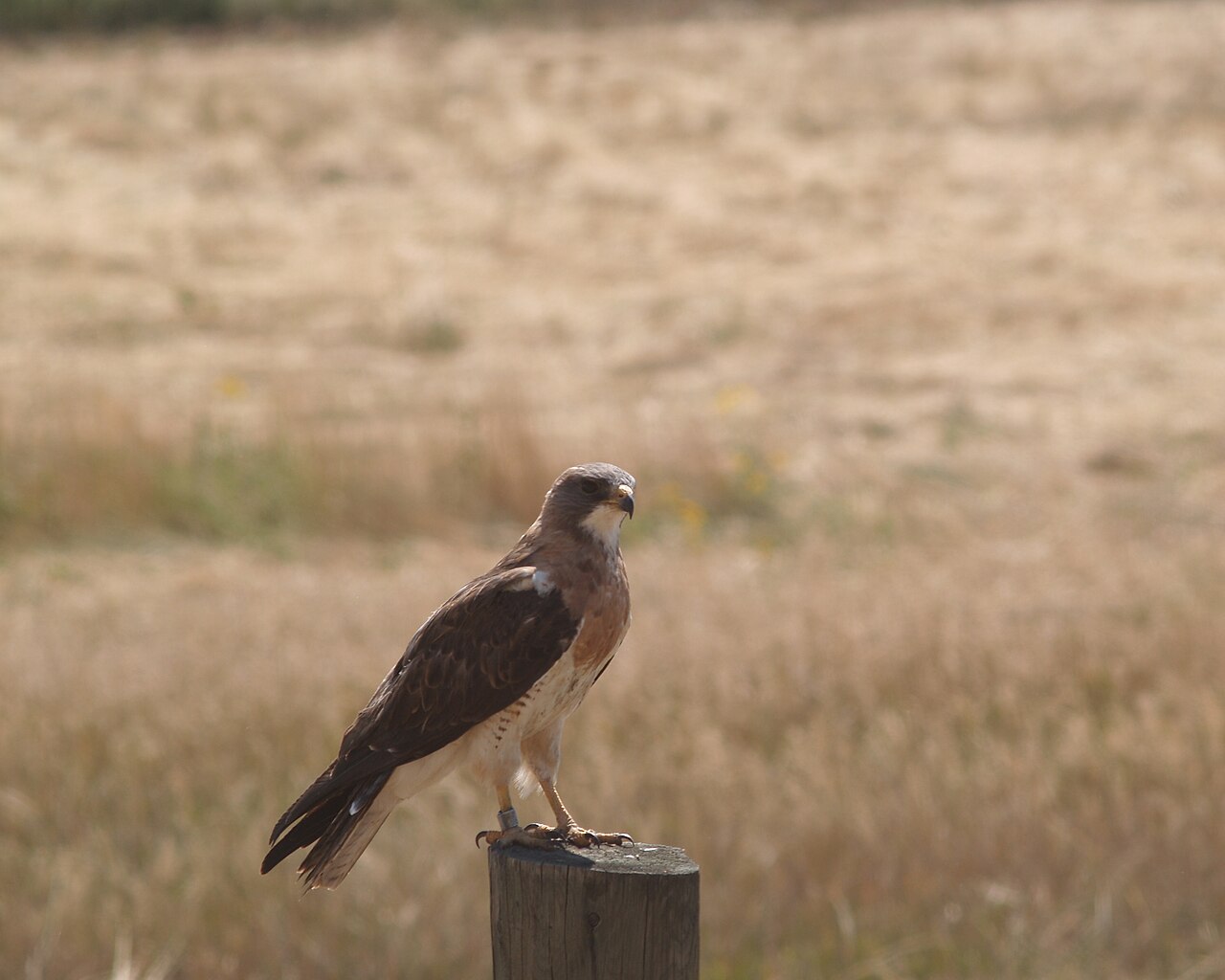
Broad-winged hawks form the largest kettles, and single kettles of several thousand birds are recorded most autumns at major watch sites. The concentration effect at geographic bottlenecks is extraordinary: the count at Veracruz, Mexico, known as the River of Raptors, regularly exceeds two million broad-winged hawks in a season, along with millions of Swainson’s hawks and turkey vultures, as the birds funnel along the narrow coastal plain between the mountains and the Gulf.
North American sites see smaller but still remarkable numbers. Hawk Mountain Sanctuary in Pennsylvania, the first refuge for birds of prey in the world, founded in 1934, counts around 18,000 raptors in a typical season. Corpus Christi in Texas records hundreds of thousands of broad-wings. Peak broad-winged movement in the eastern United States falls in a tight window in mid to late September, and a good day can produce tens of thousands of birds.
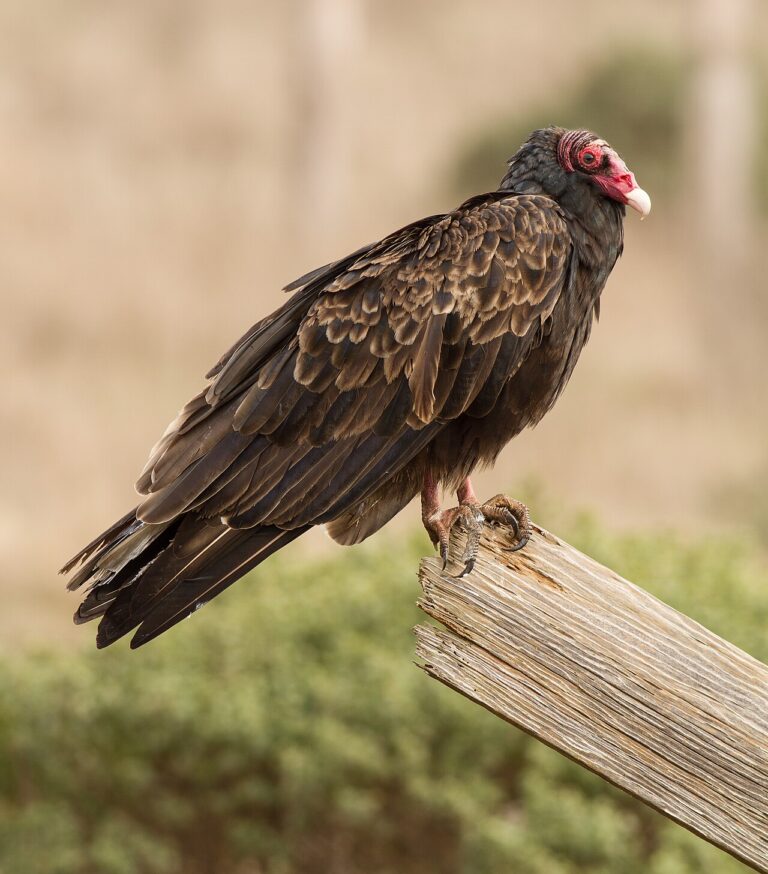
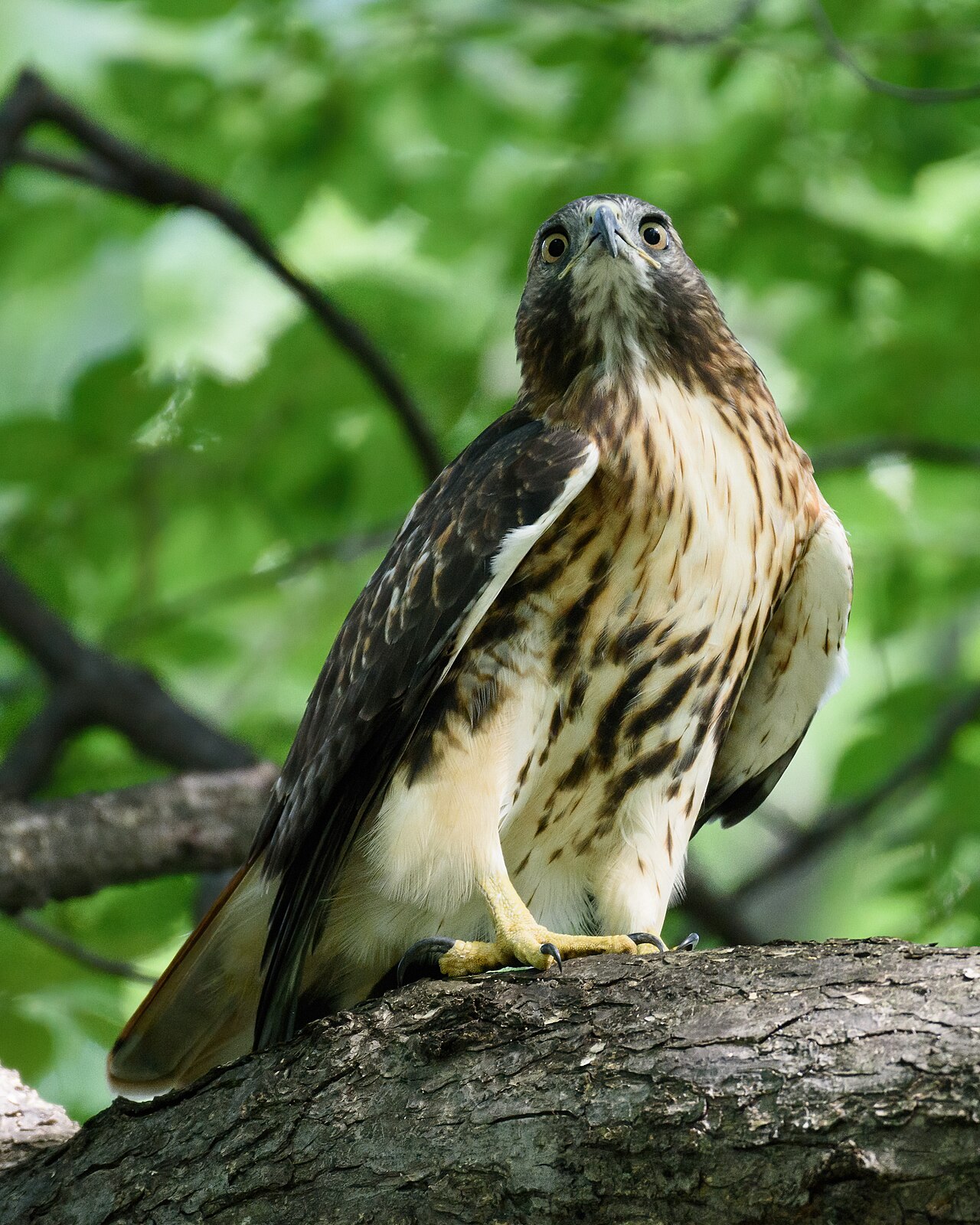
Other species kettle in smaller groups. Swainson’s hawks form large kettles in the West during migration, and turkey vultures kettle year-round. Red-tailed hawks, the most familiar North American hawk, are largely resident in much of their range and kettle only in modest numbers, so the birds most people see on roadside poles are rarely the ones forming spectacular gatherings. The broad-winged hawk guide covers the species behind the biggest kettles, and the red-tailed hawk guide covers the resident bird.
Do Hawks Live in Groups?
No, hawks are territorial and live as mated pairs, defending a nesting territory against other hawks of the same species. A red-tailed hawk pair may hold a territory of one to two square miles and use it for years, often reusing the same nest, and neighboring pairs contest boundaries with soaring displays and occasional physical conflict.
The exception is genuinely interesting. Harris’s hawks of the American Southwest and Latin America hunt cooperatively in family groups of two to seven birds, using coordinated tactics: some birds flush prey from cover while others wait in ambush, and the group shares the kill. They also perch in stacks, standing on one another’s backs where perches are scarce. This is the only North American raptor with true social hunting, and it is thought to be an adaptation to desert prey that is hard to catch alone.
Outside Harris’s hawks, hawk sociality is limited to migration and to winter concentrations at abundant food. Rough-legged hawks and northern harriers sometimes roost communally on winter grounds, and multiple hawks will gather at a vole irruption or a field being mowed. These are aggregations rather than groups. The hawk calls guide covers the territorial screaming that keeps neighbors apart.
What Is a Group of Baby Hawks Called?
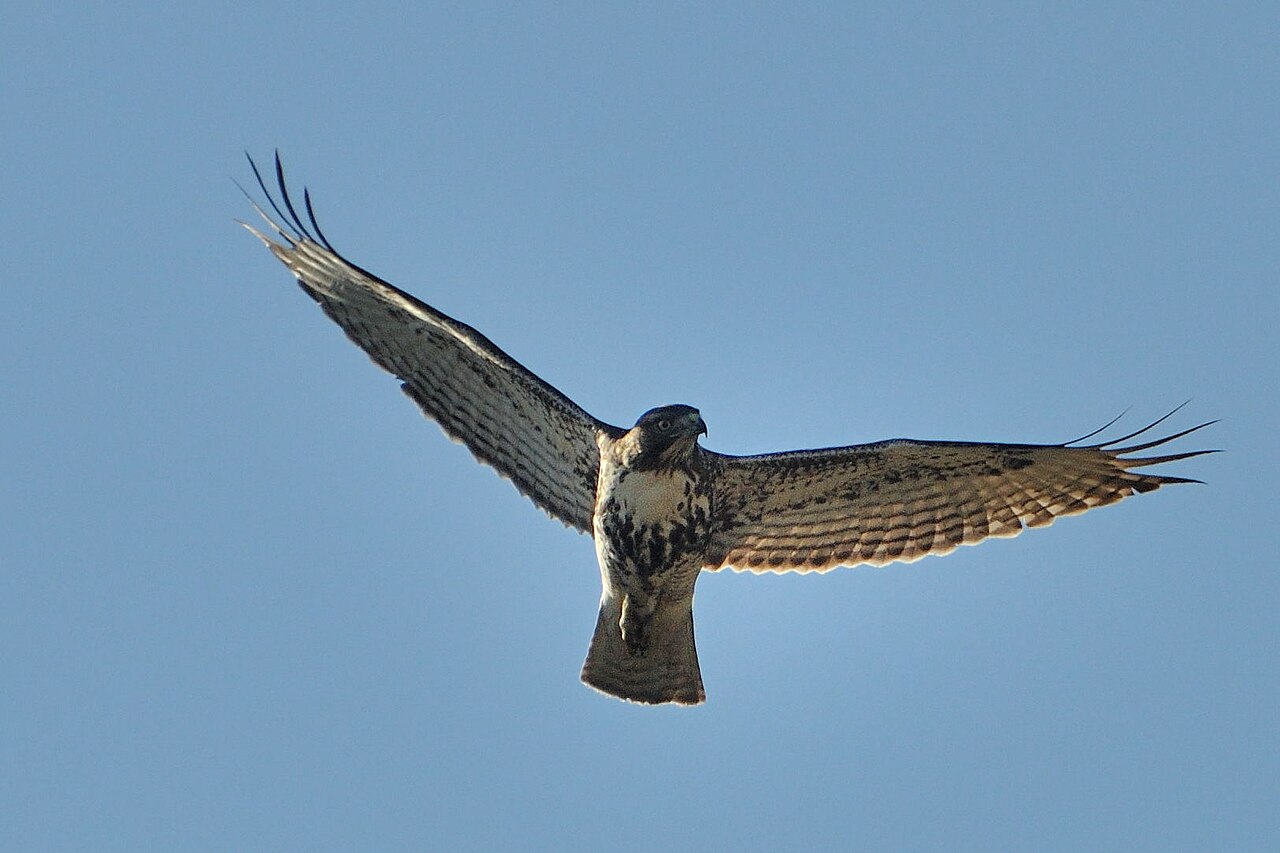
A group of baby hawks is called a brood, and individual young are eyasses, nestlings, or simply chicks. Eyas is the falconry term, from the Old French niais meaning a nestling, and it is still used by falconers to distinguish a bird taken from the nest from a passage bird caught in its first migration or a haggard taken as an adult.
Clutch sizes vary by species and by food supply. Red-tailed hawks typically lay two or three eggs, Cooper’s hawks three to five, and sharp-shinned hawks four or five. Incubation runs about 28 to 35 days, and the young fledge at four to six weeks in smaller species and around six to seven weeks in red-tails, remaining dependent on the parents for several weeks after their first flight.
Asynchronous hatching means broods contain young of noticeably different sizes, and in lean years the smallest may not survive. In accipiters such as Cooper’s and sharp-shinned hawks, females are substantially larger than males, a reversed size dimorphism common in bird-hunting raptors, and this shows in the nest as well. The nest itself is called an aerie or eyrie, the same term used for eagles. The Cooper’s hawk guide covers the species most likely to nest in a suburban yard.
Why Is Hawk Watching Organized Around Kettles?
Hawk watching exists as a discipline because migration concentrates raptors into countable streams, and kettles are how that concentration becomes visible. A watch site positioned on a ridge, a shoreline, or a peninsula intercepts birds using the same geography, and counters record every raptor passing, producing datasets that now run for decades.
Those datasets have real scientific weight. The Hawk Mountain count began in 1934 after the site had been a shooting ground where thousands of migrating hawks were killed annually, and Rosalie Edge bought the mountain to stop it. The resulting long-term record documented the DDT-era collapse of peregrine falcon, bald eagle, and osprey populations and their subsequent recovery, and it remains one of the longest continuous wildlife monitoring efforts in North America.
The Hawk Migration Association of North America coordinates hundreds of watch sites, and the data feed into population trend analyses that no other method could produce for wide-ranging birds. It is one of the clearest cases where amateur observation, organized around a single behavior, has generated professional-quality science. The hawk vs eagle comparison covers the identification skills a watch site demands.
Collective Nouns for Hawks and Other Raptors
Raptor collective nouns split cleanly into terms that describe real behavior and terms that do not. Kettle, cast, and wake all see genuine use: kettle for thermalling birds of any species, cast for paired falconry birds, wake for vultures at a carcass. These survived because they name something specific and useful.
The ornamental terms are the rest. Eagles get a convocation, a jubilee, and a tower. Owls get a parliament. Falcons get a bazaar. Buzzards, in the American sense meaning vultures, get a committee when perched. None of these appears in research literature, and with the exception of the vulture terms, none describes gatherings that actually occur, because raptors are territorial.
Hawks came out of this well, largely because their vocabulary was shaped by falconry and by hawk watching rather than by list-makers. Falconry has been practiced in English-speaking countries for over a thousand years and contributed a large technical vocabulary, from eyas and haggard to mews, jesses, and hoodwink, and several of those words have passed into general English. The group of eagles guide and the group of vultures guide cover the neighboring raptor terms.
Frequently Asked Questions
What is a group of hawks called?
A group of hawks is called a kettle when the birds are circling on a thermal, a cast when two are flown together in falconry, and a boil in some collective noun lists. Kettle is the term birders actually use.
Why is a group of hawks called a kettle?
Because hawks spiraling upward inside a thermal resemble something boiling and churning in a pot. The term applies to any raptor riding a thermal and is standard vocabulary at hawk watch sites.
What is the collective noun for hawks?
Kettle is the main one, with cast and boil as alternatives. Unlike eagles and owls, hawks were never given a fanciful term such as convocation or parliament; their vocabulary came from falconry and hawk watching instead.
Do hawks fly in groups?
Only during migration. Hawks are territorial and live as mated pairs, but migrating broad-winged hawks form kettles of thousands, and season counts at Veracruz, Mexico exceed two million birds.
What is a group of baby hawks called?
A brood. Individual young are eyasses, nestlings, or chicks, with eyas being the falconry term. Red-tailed hawks typically lay two or three eggs, and the young fledge at six to seven weeks.
Do hawks ever hunt together?
Harris’s hawks do, and they are the only North American raptor that hunts cooperatively, working in family groups of two to seven with some birds flushing prey and others waiting in ambush. No other hawk species does this.
How many hawks are in a kettle?
Anywhere from a handful to several thousand. Broad-winged hawks form the largest kettles, and a good September day at an eastern hawk watch can produce tens of thousands of birds passing in successive kettles.