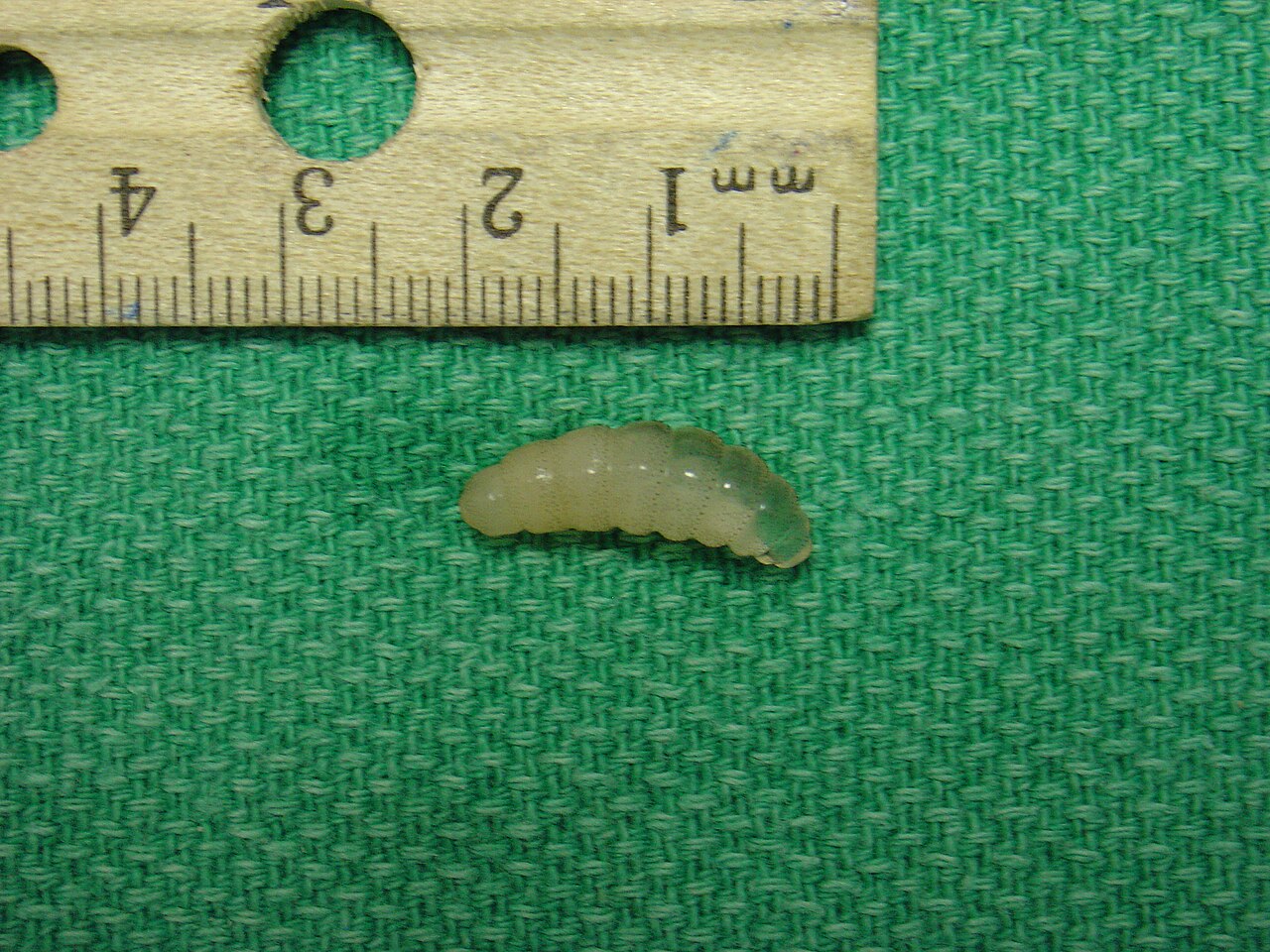
Bot Fly Bite: Why It Is Not Actually a Bite
Bot flies do not bite. Adult bot flies have no functional mouthparts and cannot feed at all, and what people call a bot fly bite is a larva developing under the skin, which produces a firm raised lump with a small central opening. The larva gets there indirectly, usually carried in by a mosquito the bot fly has captured and used as a courier.
In the United States the human bot fly does not occur, and nearly all US cases are in travellers returning from Central or South America. Native Cuterebra bot flies do occur across North America but parasitise rodents, rabbits, cats, and dogs rather than people. This guide covers what the lump looks like, what to do, why squeezing it is a bad idea, and the animal side.
Bot flies do not bite; adults have no working mouthparts. What looks like a bite is a larva under the skin, producing a firm lump one to three centimetres across with a small central pore that weeps fluid. Removal should be done by a doctor. The human bot fly is not present in the US; travel-acquired cases and pet infestations are what occur.
| Sign | What It Means |
|---|---|
| Firm raised lump | Larva developing in the skin |
| Small central pore | Breathing hole; often weeps clear fluid |
| Intermittent sharp pain | Larval movement; often worse at night |
| Sensation of movement | Commonly reported by patients |
| Not improving with antibiotics | Key clue it is not a boil or abscess |
| Where acquired | Central and South America, not the US |
| Correct action | See a doctor; do not squeeze |
Do Bot Flies Actually Bite?
No. Adult bot flies have vestigial mouthparts and cannot eat, drink, or bite anything. They live only a few days on energy stored during the larval stage, mate, and die, and the entire adult phase exists for reproduction rather than feeding.
The human bot fly gets its larvae onto a host by a method called phoresis, which is genuinely unusual. The female captures a mosquito or another biting fly, glues eggs to its body, and releases it, and when that insect later feeds on a person or animal, body heat triggers the eggs to hatch and the larvae enter through the bite wound or a hair follicle.
So the bite people remember was a mosquito bite. The lump that develops over the following days is not an infected bite but a larva that entered through it, which is why the timeline confuses patients and occasionally doctors. The crane fly guide covers another insect with a reputation it does not deserve.
What Does the Lump Look Like?
A firm raised nodule, typically one to three centimetres across, red and often warm, with a small central opening. It looks much like a boil, a cyst, or an infected insect bite, which is why it is so often treated as one first. The chigger vs flea bites guide covers the more everyday causes of an unexplained itchy lump.
The central pore is the distinguishing feature. It is the larva’s breathing hole, it frequently weeps clear or serous fluid, and in some cases the tip of the larva’s posterior spiracles can be seen moving at the opening, particularly if the area is covered and the larva is forced to surface for air.
Pain comes in episodes rather than constantly. Patients describe intermittent sharp or lancinating pain, often worse at night, and a distinct sensation of movement under the skin, which is unusual enough to be diagnostically useful. A lesion that does not improve with antibiotics and has a central pore that weeps is the classic presentation.
What Should You Do About It?
See a doctor. Removal is straightforward for a clinician and is the appropriate route, particularly for lesions on the face, near the eye, on the scalp, or in a child, and a physician can also confirm the diagnosis and treat any secondary infection.
The standard clinical approaches are occlusion followed by extraction, in which the breathing pore is covered with petroleum jelly or similar so the larva surfaces for air and can be grasped, or a small local anaesthetic incision and removal with forceps. Both are quick.
What matters is removing the larva intact. Fragments left behind cause a foreign-body inflammatory reaction and secondary bacterial infection, which turns a manageable problem into a considerably worse one. That is the entire argument against improvised removal at home.
Why Should You Not Squeeze It?
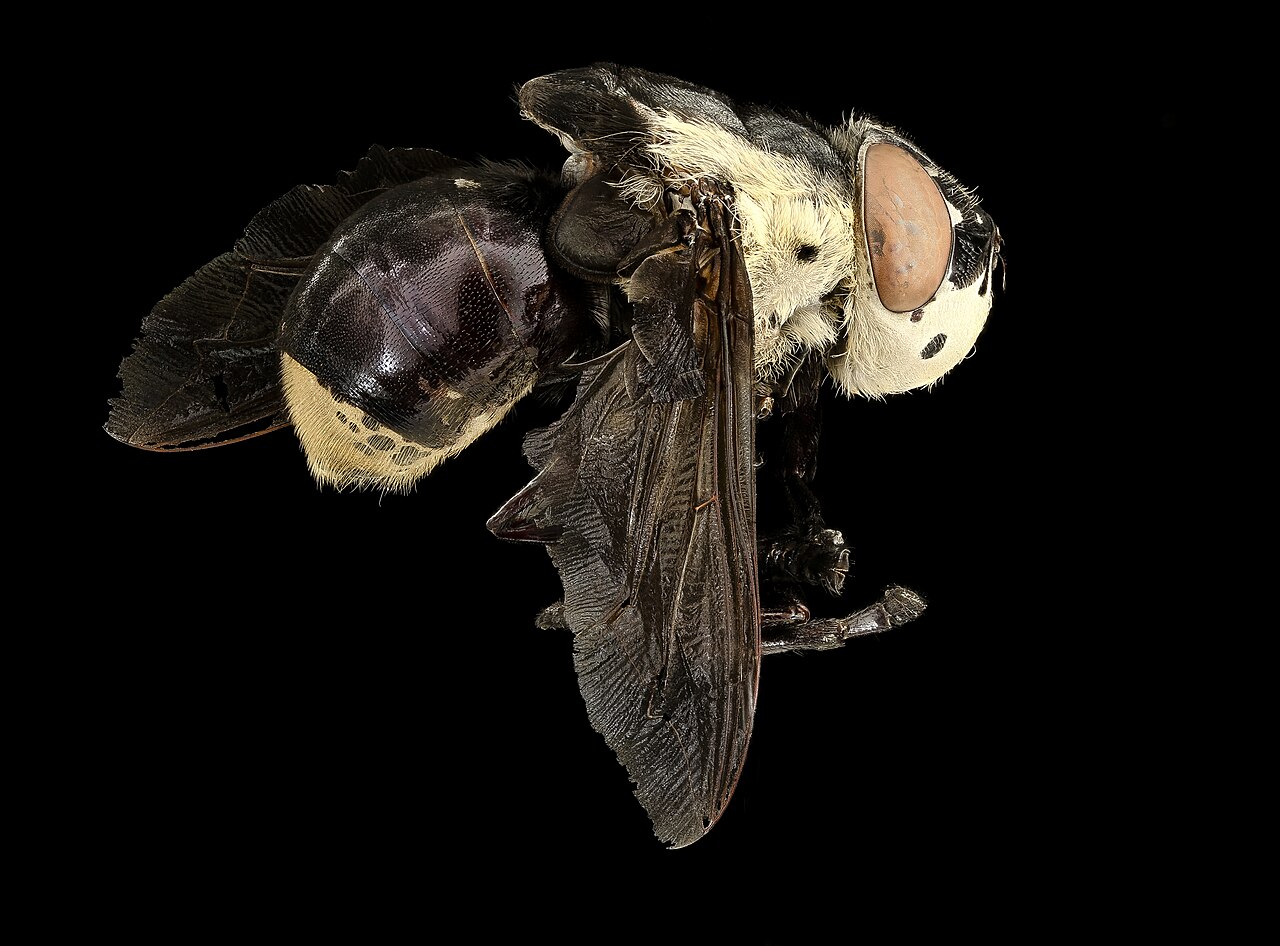
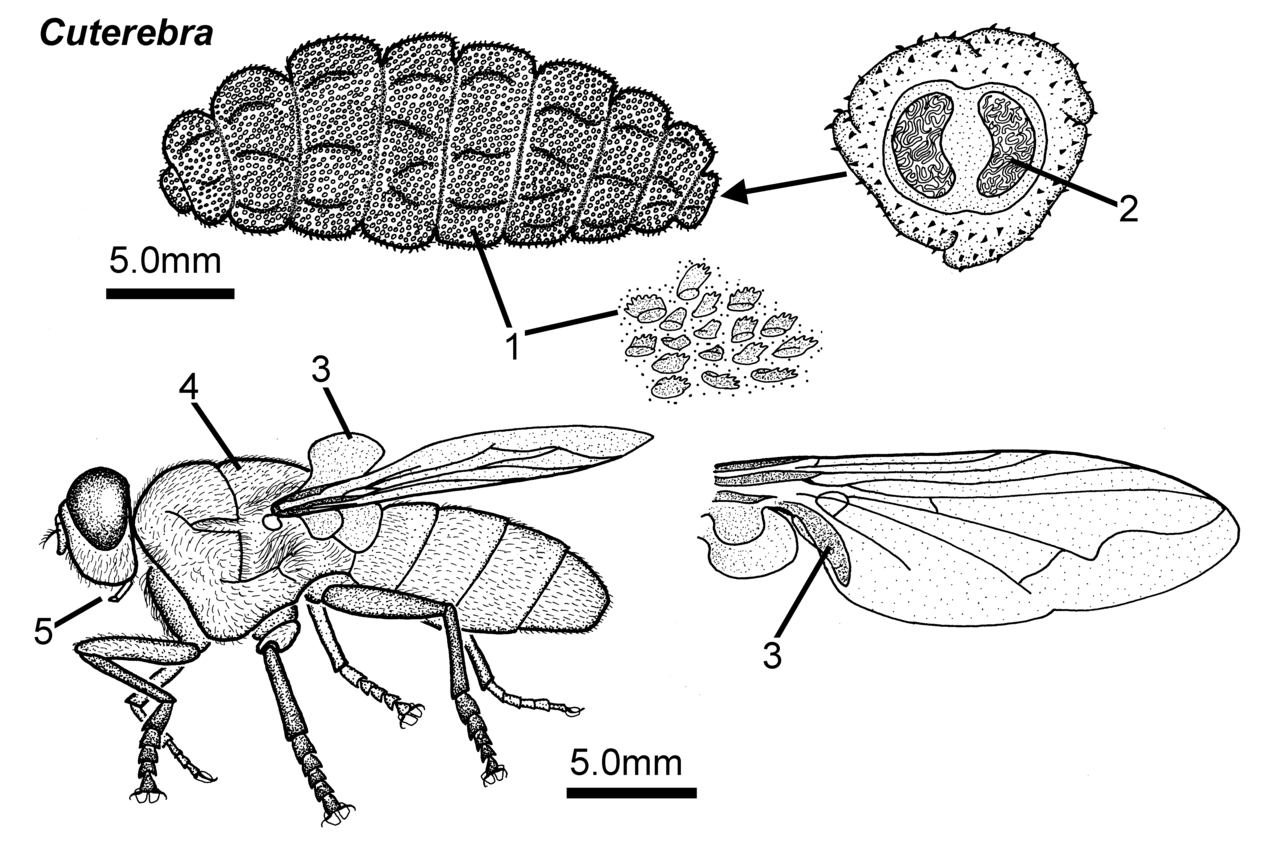
Because the larva is anchored. Bot fly larvae have rows of backward-pointing spines along the body that grip the surrounding tissue, and squeezing does not push it out so much as tear it, leaving parts behind and driving debris deeper.
Rupturing the larva is the specific risk. A burst larva releases fluid into the tissue that provokes a strong inflammatory response, and reports include severe local reactions and, rarely, systemic allergic responses. Bacterial infection of the resulting wound is common.
The same reasoning applies to most home remedies. Nail polish, tape, raw bacon, and glue all work on the same occlusion principle and can succeed, but they work slowly, provoke the larva to struggle, and offer no way to extract it cleanly if it does not emerge whole. They are what people do when medical care is genuinely unavailable, not the first choice.
Does the US Have Bot Flies?
Yes, but not the human one. Dermatobia hominis, the human bot fly, occurs from southern Mexico through Central America into South America, and essentially all US cases are acquired abroad and diagnosed after the traveller returns.
Native North American bot flies are in the genus Cuterebra, and there are around thirty species. They parasitise rodents and rabbits primarily, and each species is fairly specific about its host. Cats and dogs get infested by accident when they investigate rodent burrows where the eggs are deposited near the entrance.
Accidental human infestation by Cuterebra is documented but rare, with only a small number of cases reported in the medical literature. Horse and sheep bot flies exist too and are veterinary problems rather than human ones. The U.S. Centers for Disease Control (cdc.gov) maintains guidance on travel-acquired myiasis.
What About Cats and Dogs?
This is where most Americans actually encounter bot flies. Cuterebra larvae in pets appear as a lump usually on the head, neck, or trunk, with the same central breathing pore, most often in late summer and autumn when larvae are developing.
It needs a vet rather than home removal, for the same reason as in people: rupturing the larva can cause severe inflammatory or anaphylactic reactions in cats especially, and incomplete removal leads to abscess formation. Vets typically enlarge the pore and extract the larva whole.
The serious cases are aberrant migration. Cuterebra larvae occasionally migrate to the nasal passages, eyes, or brain in cats, producing neurological signs, and feline cerebrospinal cuterebriasis is a recognised if uncommon condition. Any pet with a suspicious lump plus neurological or respiratory signs needs prompt veterinary attention. The bed bug bites guide covers another lesion routinely misattributed to the wrong insect.
Will It Go Away on Its Own?
Eventually, yes. A bot fly larva completes its development in the skin over roughly five to ten weeks depending on species, then emerges on its own, drops to the ground, and pupates in soil. The lesion then heals.
Waiting is not the recommended course. Weeks of pain, the ongoing risk of secondary infection, the possibility of the larva being damaged accidentally, and the simple unpleasantness of the situation all argue for removal, and removal is a minor procedure.
The one genuine reason to wait is inaccessibility. In remote settings without medical care, occlusion methods followed by careful extraction are a reasonable improvisation, and letting the larva complete its cycle is safer than a botched attempt at removal. In any setting with a clinic, that calculation does not apply.
What Else Causes a Lump Like That?
Bacterial abscesses and boils are the commonest alternative and account for most lesions that look like this. They are painful, warm, and often come to a head, and unlike a bot fly lesion they respond to antibiotics and drainage.
Cutaneous larva migrans is the other travel-related possibility and looks quite different once you know it: a raised winding red track that advances a few millimetres a day, caused by hookworm larvae from dog or cat faeces on beaches. There is no central pore and no discrete lump.
Tumbu fly infestation in sub-Saharan Africa produces very similar lesions to bot fly, often multiple and on areas covered by clothing rather than exposed skin, because the eggs are laid on damp laundry rather than delivered by mosquito. Spider bites are the diagnosis most often given wrongly; medical literature consistently finds that lesions attributed to spiders are usually infections. The carpet beetle rash guide covers another commonly misattributed skin reaction.
How Do You Avoid Them?
Prevent mosquito bites, since that is the delivery route. In endemic areas that means insect repellent containing DEET or picaridin, long sleeves and trousers, permethrin-treated clothing, and sleeping under a treated net, all of which are standard travel advice for other reasons too. The guide to birds that eat mosquitoes covers the limits of biological mosquito control.
Drying laundry matters in some regions. In parts of Africa the tumbu fly lays eggs on damp clothing left outdoors and the larvae enter the skin on contact, which is why the standard advice there is to iron clothing and bedding or to dry it indoors. That is a different fly from the American bot fly but the same category of problem.
For pets, limiting access to rodent burrows during late summer is the practical measure, along with checking cats and dogs for lumps after outdoor activity. There is no vaccine or preventive treatment for bot fly infestation in pets, and the routine flea and worm treatments do not cover it.
Related reading: Yellow Fly Bite.
Frequently Asked Questions
Do bot flies bite?
No. Adults have no functional mouthparts and cannot feed. The female glues eggs to a captured mosquito, and the larvae enter through that insect’s bite when it feeds on a host.
What does a bot fly bump look like?
A firm raised lump one to three centimetres across with a small central pore that weeps clear fluid, resembling a boil. Pain comes in episodes, often worse at night, with a sensation of movement.
How do you know if you have one?
A lesion that does not respond to antibiotics, has a weeping central pore, causes intermittent sharp pain, and follows travel to Central or South America. The travel history is the key detail.
What happens if you squeeze a botfly?
The larva is anchored by backward-pointing spines, so squeezing tears it rather than expelling it. Ruptured larvae provoke strong inflammatory reactions and secondary bacterial infection.
Does the USA have botflies?
Native Cuterebra species do occur and parasitise rodents, rabbits, cats, and dogs. The human bot fly does not, and US human cases are almost always acquired while travelling abroad.
Will a botfly go away on its own?
Yes, after five to ten weeks when the larva emerges and drops to the ground. Waiting is not advised where medical care is available, since removal is minor and infection risk is ongoing.
What should you do if a pet has one?
See a vet rather than removing it yourself. Rupturing the larva can cause severe reactions in cats, and larvae occasionally migrate to the nose, eyes, or brain, producing neurological signs.

Similar Posts
White Tree Frog: Care, Setup, and the Obesity Trap
White tree frogs live 15 to 20 years and tolerate handling, but they beg constantly and obesity is the main killer. Here is the full care guide.
Earwig Bite
What’s called an ‘earwig bite’ is really a mild pinch from its pincers, not a bite at all. Here’s what it actually feels like and the ear myth debunked.
Jaguar vs Leopard: How to Tell Them Apart
Never found in the same place, jaguars in the Americas, leopards in Africa and Asia. The rosette pattern, size, and bite force differences that actually separate them.
Black Butterfly Spiritual Meaning: Omen or Blessing?
Ominous in parts of Europe, auspicious in Japan and China. Why the readings contradict each other, what the black witch moth has to do with it, and which butterfly you saw.
Pipevine Swallowtail Butterfly: The Toxic Original
A genuinely poisonous black swallowtail with an iridescent blue sheen, and the model five other butterflies copy. ID, the toxicity, and why the right pipevine matters.