Red-Tailed Hawk Poop: How to Tell It From Other Birds
Red-tailed hawk poop is the long white streak below a tall perch, not the neat pile a pigeon leaves. The red-tailed hawk (Buteo jamaicensis) hunts open ground from poles and snags, and it returns to the same lookout day after day. Its droppings collect in one place as a result, and that pattern is your first clue.
One splash proves little; a streak that returns to the same spot every morning points to a resident hunter.
Red-tailed hawk poop is a runny white splash with a dark center, streaked away from tall poles and dead trees. Gray pellets of mostly fur below the perch point to a raptor, though gulls and crows also cast pellets. Owls leave similar whitewash near trunks and barns, while pigeons and gulls drop small rounded blobs.
What Red-Tailed Hawk Poop Looks Like
Red-tailed hawk poop is a liquid white splash, not a firm dropping like a pigeon’s. The white surrounds a small dark or grayish center. That center is the fecal part, and the white around it is the bird’s version of urine.
Old splashes on wood or stone build up in layers, and birders call this crust whitewash.
A hawk splash is far larger than anything a sparrow or finch leaves, in line with a bird that outweighs a songbird many times over. Expect a broad smear or a long streak rather than a dot.
Color, Smell and Texture of Hawk Poop

Hawk poop ranges from chalk white to cream, with a brown, black or greenish center. The white part stays the same from day to day. The center shifts with the last meal and with how long it sat in the gut.
The white part is uric acid, the paste birds use to clear nitrogen instead of liquid urine. A meat diet leaves a lot of nitrogen, so the white share is large.
Red-tailed hawks swallow voles and mice whole, turn the meat into the dark center and cough up fur as pellets. They digest most of the bone they swallow, so their pellets hold little bone, and some bone can pass through the gut.
Fresh droppings smell sharp up close. Dried whitewash barely smells at all. A strong odor points to a fresh splash or to a perch the bird used within the last day.
A watery splash turns into a chalky crust within hours in dry weather. Rain then smears the crust into gray streaks that run down poles and bark, and at that stage the source is hard to read.
How Red-Tailed Hawks Poop: Streaks Away From the Perch

Hawks lift the tail and squirt their droppings backward, clear of the perch. The jet carries the waste away from the feet and feathers. Falconers call this slicing, and the force keeps the perch itself fairly clean.
The result is a long, narrow streak that starts some distance from the base of the pole or tree, not a neat pile under it. On a lawn or patio, look for a line of white pointing away from the perch.
Hawks typically empty out just before takeoff. Cooper’s hawks (Accipiter cooperii) squirt the same way, and their streaks turn up near bird feeders, where they hunt songbirds.
How to Identify Red-Tailed Hawk Droppings
Identify red-tailed hawk droppings by looking up first. The bird picks tall poles and dead snags above open fields and roadsides. A splash under a perch with a wide view fits a red-tail. A splash under dense cover does not.
Next, check the ground for pellets. Gray or dark oval pellets made mostly of fur, with few bones, point to a hawk or owl. Hawks digest more bone than owls do, so bone-studded pellets point to an owl. Several birds cast pellets, so a pellet alone does not confirm a species.
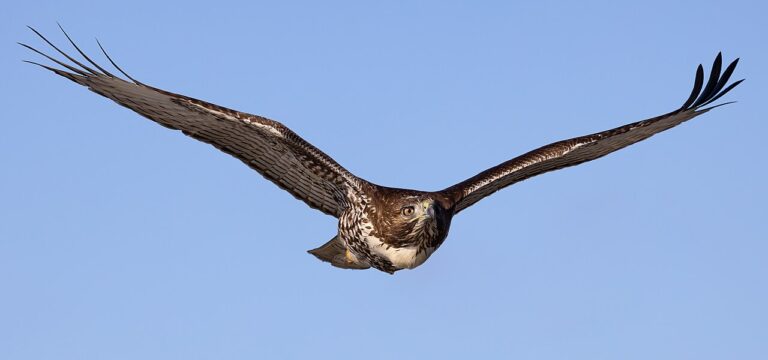
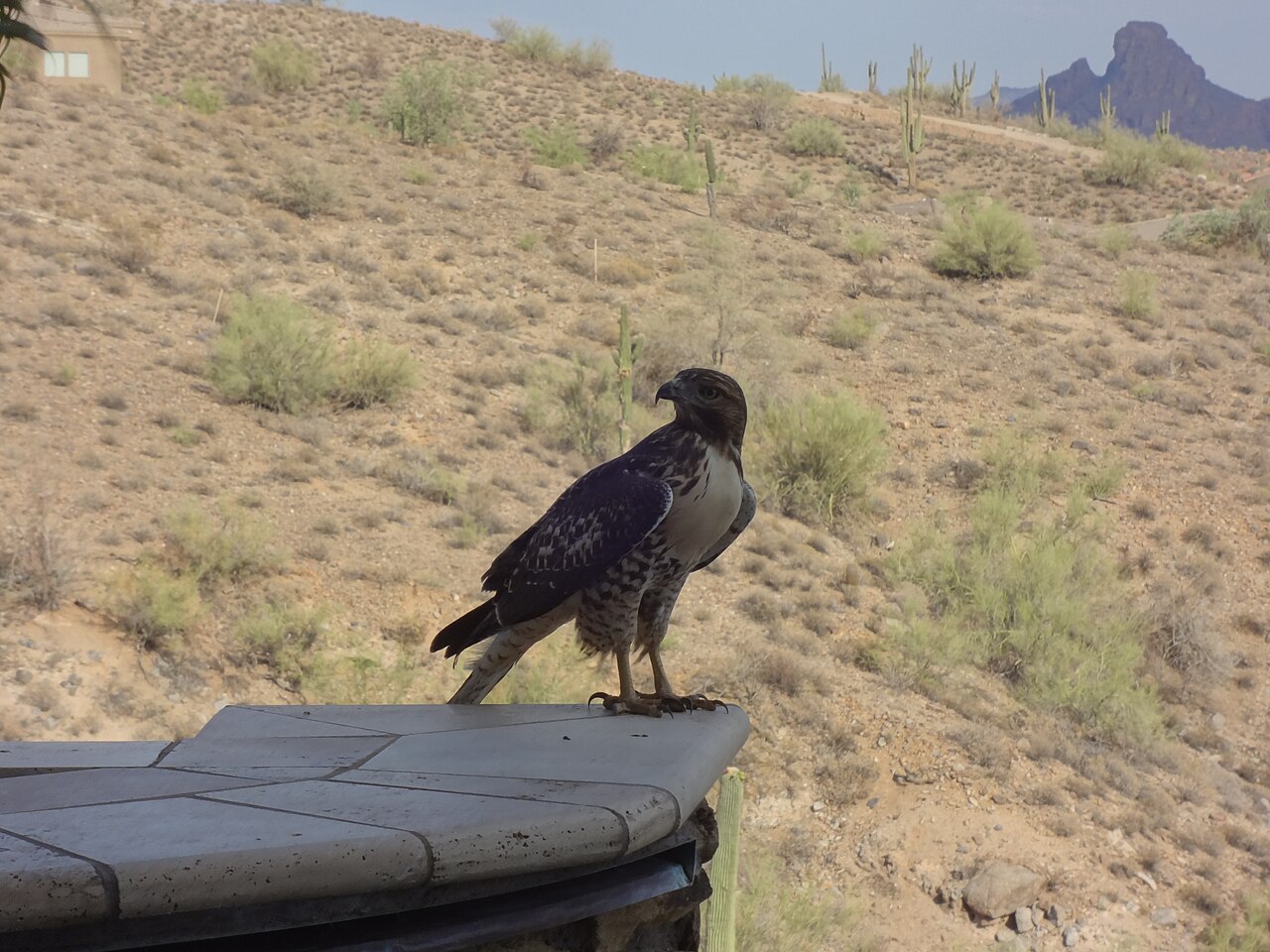
Then confirm the bird itself. Watch the perch for a hawk with a pale chest and a dark band across the belly. Adults have a brick-red tail, while young birds have a brown, finely banded tail. Red-tailed and red-shouldered hawks share many yards, and the tail color and belly band separate them.
Is It Really Red-Tailed Hawk Poop? Ruling Out Look-Alikes
It is red-tailed hawk poop when the splash sits under an open, high perch and a red-tail uses that perch by day. Owls leave the same streaks and pellets. The great horned owl (Bubo virginianus) roosts in yards across the US, but its whitewash collects under dense conifers, inside barns and close to trunks. If the perch is hidden and you never see a bird there in daylight, think owl.
Pigeons and gulls drop small, rounded blobs instead of streaks. These piles build up on ledges and roofs where flocks gather. Hawk poop usually follows the streak pattern, so a heap of small blobs points more to a flock than to a raptor.
| Bird | Typical dropping and color | Where it collects |
|---|---|---|
| Red-tailed hawk (Buteo jamaicensis) | Runny white splash with a small dark center, long streaks | Below tall poles, snags and fence posts over open ground |
| Turkey vulture (Cathartes aura) | Thick white whitewash, also streaked down its own legs | Communal roosts in tall trees, towers and roofs |
| Great horned owl (Bubo virginianus) | Runny white splash with a dark center, same as a hawk, plus gray pellets | Under daytime roosts in dense conifers, barns and close to trunks |
| Ring-billed gull (Larus delawarensis) | Loose white and gray splats with a fishy smell | Parking lots, flat roofs, docks and beaches |
| American robin (Turdus migratorius) | Small white and dark splash, purple or red after berries | Under fruiting shrubs, on cars and patio furniture |
| Rock pigeon (Columba livia) | Small rounded blobs, white with a dark coil | Ledges, roofs and bridges, piling up in heaps |
What Hawk Droppings in Your Yard Mean
Hawk droppings in your yard mean a hawk has found prey there. Voles and mice draw red-tails to lawns and field edges. The bird stays as long as the hunting pays off.
Fresh splashes every day under one tree mean a routine hunting perch. Bird feeders add to the pull. Spilled seed brings songbirds and rodents, and those in turn bring hawks. Clean up dropped seed if you want fewer visits.
Red-tailed hawk symbolism reads a hawk that keeps returning to the same place as a messenger.
How to Keep Hawk Droppings Off Your Car and Patio
Red-tailed hawks are protected under the Migratory Bird Treaty Act, so trapping, harming or disturbing an active nest is illegal without a federal permit. To keep splashes off a car or patio, park or set furniture away from the favorite perch rather than trying to drive the bird off. A resident red-tail is free rodent control for your yard.
Can Hawk Droppings Make You Sick?
Yes, hawk droppings can carry germs like other wild bird droppings, but the risk from a single splash is low. The risk rises with the thick crust under a perch used for months, because the main danger is dust from large, dried accumulations. Histoplasma, a fungus found in soil and in bird and bat droppings in some areas of the US, causes lung infections. People get histoplasmosis by inhaling its spores from the environment, per the CDC.
Psittacosis spreads mainly when people breathe in dust that contains dried bird secretions or droppings. A bird that looks healthy offers no guarantee. Both sick birds and infected birds without signs of illness shed the bacteria in their droppings and respiratory secretions, as the CDC explains.
Touching animal poop can spread Campylobacter bacteria, so bare hands and droppings never mix.
How to Clean Up Hawk Droppings Safely
Clean up hawk droppings by wetting them first, then scraping. Water keeps dried whitewash from turning into dust, and the CDC advises avoiding work that stirs dust into the air to cut exposure to Histoplasma. Dry sweeping does the opposite.
Wear gloves and never pick up droppings or pellets with bare hands. For a small splash, wet it and scrape. For a thick crust or a large pile built up over months, wear a well-fitted N95 or better respirator or have a professional clean it. Wash your hands with soap afterward, even if you wore gloves. Hose patios and decks after scraping, then let them dry in the sun.
Droppings on a car need quick attention. Dried urates can mark the paint, so remove a splash the same day, before the sun bakes it on. Lift it off instead of rubbing it across the finish.
Frequently Asked Questions
Will a red-tailed hawk eat a small dog?
No, a dog is not normal prey. Rodents make up the bulk of what red-tailed hawks catch. Very small pets left alone outdoors can still draw a hawk’s interest, so stay nearby when a toy breed or a puppy is out in a yard with a resident hawk.
Can hawk poop be clear?
Yes, the liquid urine part of a fresh splash is clear. It forms a wet ring around the white urates and dark center and dries invisible, which is why an old splash looks smaller than a fresh one.
Can hawk droppings carry bird flu?
Yes, bird flu passes through the feces of infected birds, and wild birds carry the virus. People can become infected after exposure to respiratory droplets, saliva, mucus or feces from infected birds. Never handle a sick or dead hawk, and report one to your state wildlife agency instead.
Is psittacosis from bird droppings deadly?
No, not in most cases. With appropriate antibiotic treatment, psittacosis results in death in fewer than 1 in 100 cases. Treatment keeps that number low, so mention any contact with bird droppings or dust from a roost when you see a doctor about a new illness.
Do enzyme cleaners remove bird poop from car paint?
Yes, enzyme cleaners break down the uric acid in bird poop. Lay a cloth soaked in the cleaner over the spot for 5 minutes, then lift the residue off and rinse.
Do red-tailed hawk nests have lots of droppings?
Yes, the area around a red-tailed hawk nest with chicks gets heavy whitewash. Nestlings back up to the rim and squirt their droppings over the edge, so the branches and ground below turn white while the nest stays fairly clean. A white-splashed tree in spring points to an active nest overhead.
Sources
- CDC, Histoplasmosis
- CDC, About Psittacosis
- CDC, How Bird Flu Spreads
- CDC, About Campylobacter Infection
- Audubon, Owl Pellets Explained
- All About Birds, Red-tailed Hawk Life History
Explore more: Animal Poop Identification: A Field Guide by Species