Seeing a Blue Dragonfly Meaning: Good Sign? How Rare Is It?
You probably spotted it hovering near water or over the garden, bright blue against the green, and stopped to watch. In most modern readings that moment is a good sign, and the blue itself is far more common than it looks.
Seeing a blue dragonfly is a calm, lucky sign of change, clear thinking and honest words. Blue is one of the most common dragonfly colors in US summers, and much of it comes from a waxy coat on mature males or from the fine structure of the body surface.
What Seeing a Blue Dragonfly Means Spiritually
A blue dragonfly means change that arrives gently. The dragonfly spends the first part of its life underwater as a nymph, then climbs a stem, splits its skin and flies. That shift is the core of every dragonfly reading. The insect does not fight the move from water to air. It grows into it, and the change comes as a natural next step, not as upheaval.
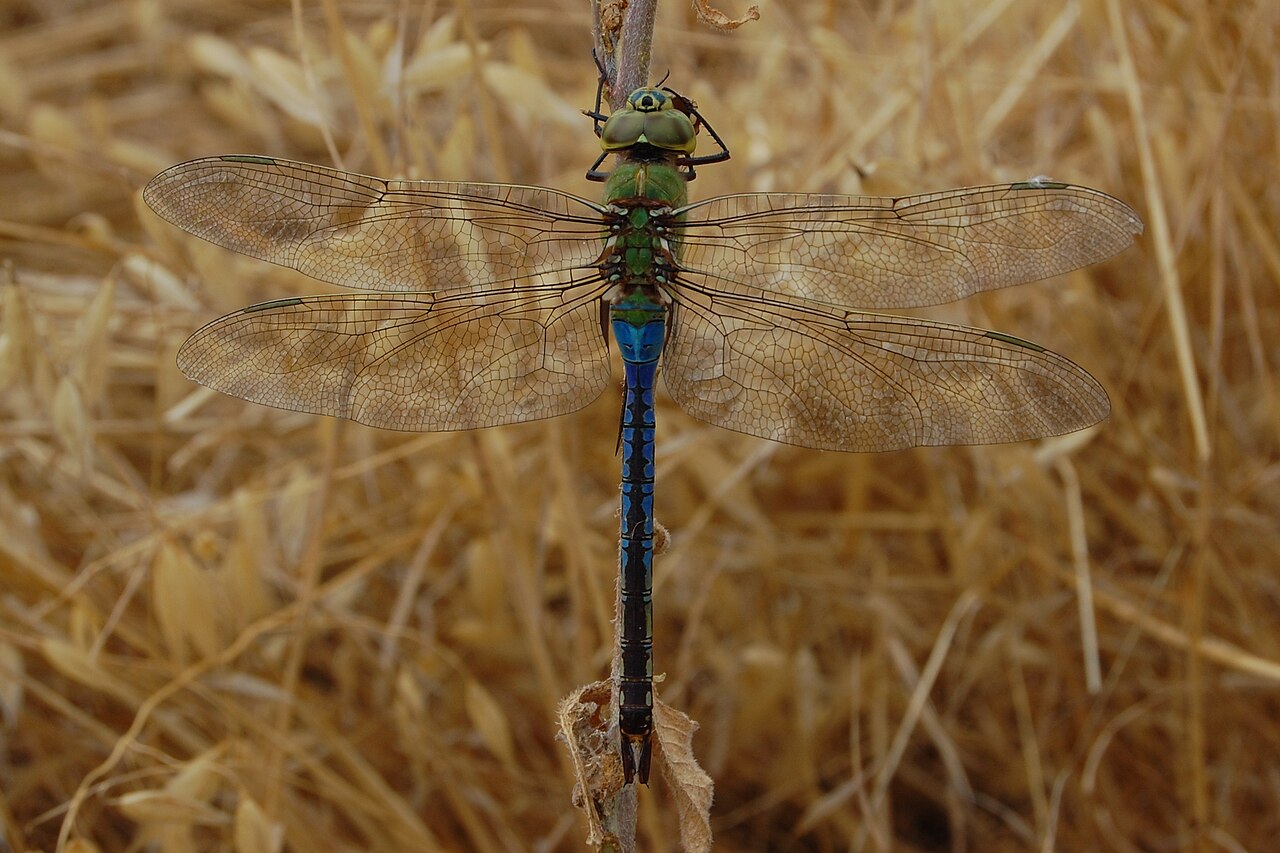
Blue adds its own layer. The color stands for calm and truthful speech, so the change in front of you comes with a cool head. Blue dragonfly symbolism in New Age practice ties the color to the throat chakra, the energy center linked to self-expression. In that frame, a blue dragonfly asks you to say what you mean. Honest words spoken calmly are its signature.
The sighting asks a simple question. What in your life is shifting right now? It can be a job, a home or the way you talk to someone close.
Is a Blue Dragonfly a Good Omen?
Yes, a blue dragonfly is a good omen in nearly every modern reading. Any dragonfly sighting counts as positive, and blue makes it a gentle kind of luck. Nothing about the visit predicts harm.
Dragonfly symbolism rests on adaptability, from a life in water and air, on lightness, and on seeing past illusion, since the wings shimmer as the light changes. Blue shifts that luck toward peace and emotional balance, so the good fortune here is a settled mind more than a windfall.
Negative readings exist, but they live mainly in old European and early American folklore. Folk names such as devil’s darning needle cast the dragonfly as a menace. Those stories say more about fear of a fast, buzzing insect than about luck. They faded long ago, and the blue dragonfly stands today as a welcome visitor.
How Rare Is It to See a Blue Dragonfly?
Seeing a blue dragonfly is not rare at all. Several of the most widespread dragonflies in the United States have blue males, and a single pond in July can hold several blue species at once, depending on region. Blue is one of the colors you meet first when you start watching dragonflies.
Rarity was never the point of the meaning. A common sight can still arrive at the exact moment you needed it.
What Makes a Dragonfly Blue?
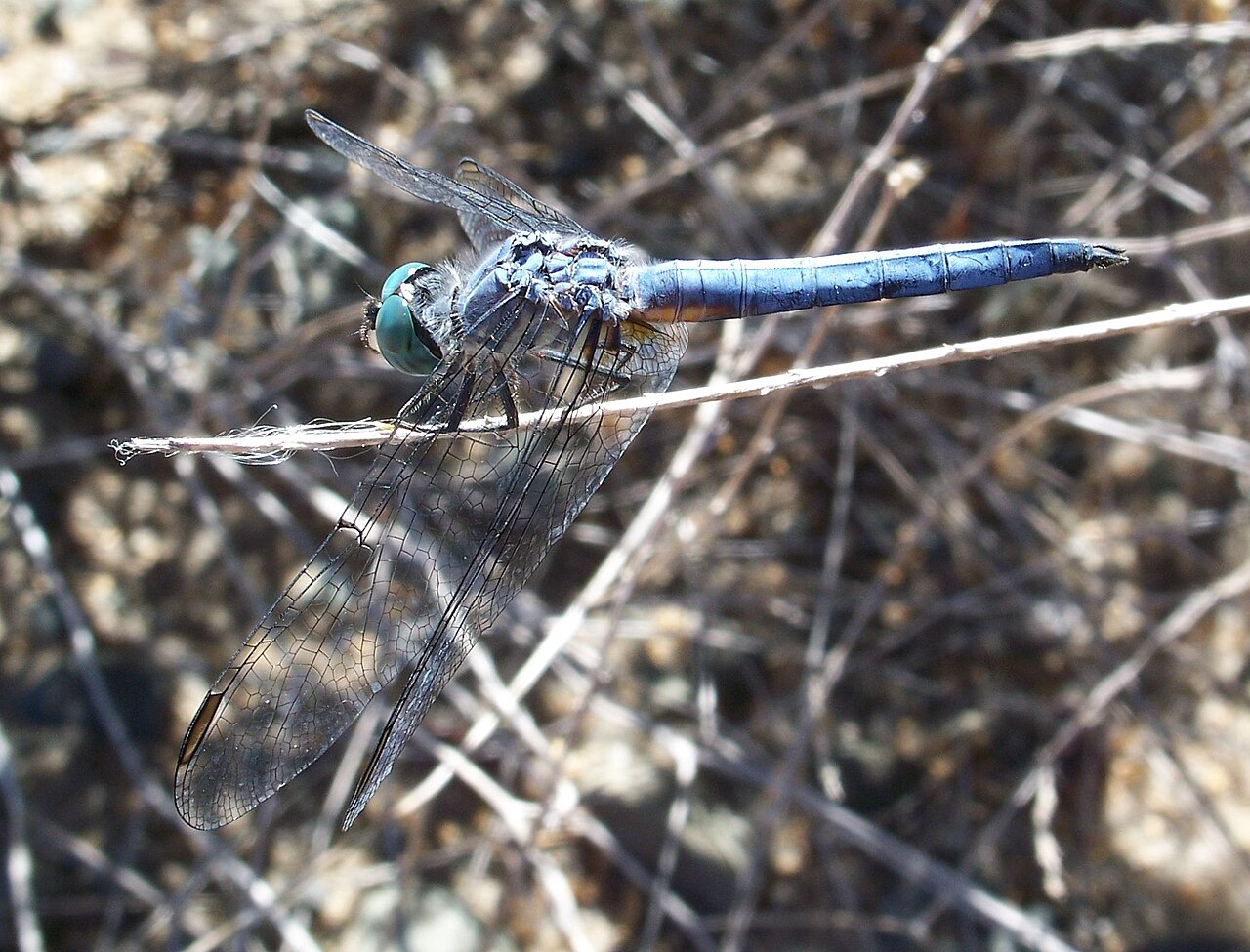
Much of that blue is not pigment. Mature males of many species develop pruinescence, a waxy powder on the abdomen, and in others, such as the green darner and the bluets, the blue comes from the fine structure of the body surface. Females and young males of the same species stay green, brown or yellow, so a pond full of one species shows several colors. A blue dragonfly is, in most sightings, an adult male.
Light plays tricks too. Bright sun on a dark or green body can flash blue for a moment, and the color fades once the insect lands in shade.
What Is a Blue Dragonfly Called?
A blue dragonfly has no single name. “Blue dragonfly” covers several species, and they differ in where they live and which sex carries the color. Matching the place and the face to the right species takes only a quick look.
| Blue species (US) | Who is blue | Where you see it | Look-alike clue |
|---|---|---|---|
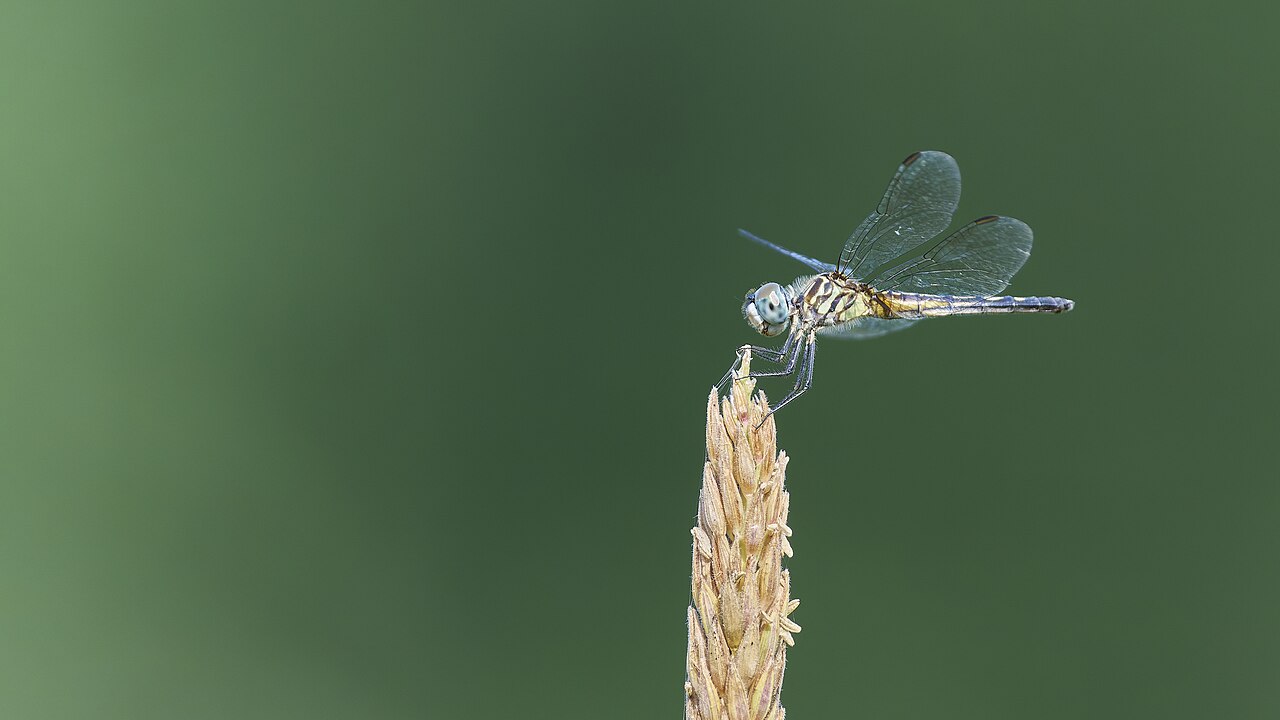
| Blue Dasher (Pachydiplax longipennis) | Mature males, females striped brown and yellow | Backyard ponds, gardens, city parks | White face, green eyes, dark tip on the abdomen |
| Common Green Darner (Anax junius) | Males have a blue abdomen, both sexes a green thorax | Open fields, ponds, migrating overhead | Large size, green thorax, flies for long stretches without landing |
| Eastern Pondhawk (Erythemis simplicicollis) | Mature males, females bright green | Pond edges, lawns, low on the ground | Blue body with a green face |
| Great Blue Skimmer (Libellula vibrans) | Mature males | Ponds, swamps and slow streams in the East | White face, blue-gray body, large size |
| Slaty Skimmer (Libellula incesta) | Mature males, dark slate blue | Ponds and lakes in the East | Black-blue body, dark face and eyes |
| Bluets (Enallagma) | Males, blue banded with black | Plants along pond and lake shores | Thin body, wings folded over the back, a damselfly |
The Blue Dasher is the first species to check in a backyard or city park. It perches on twigs and garden stakes. The Common Green Darner is the big blue and green one patrolling open ground.
Abroad, Europe’s Black-tailed Skimmer (Orthetrum cancellatum) is the classic blue skimmer of lakes and gravel pits. Thin blue insects that fold their wings over the back at rest are damselflies, not dragonflies. Bluets are the most familiar of them in North America.
Why Dragonflies Show Up Around You During the Day
Dragonflies circle you in daylight because you stir up their dinner. Walking through grass flushes gnats, midges and mosquitoes, and a dragonfly catches them in flight. You are a moving buffet, not a target. The insect stays close as long as the food keeps rising.
Sun matters as well. Dragonflies need warm flight muscles before they fly well, so they are busiest on bright, warm days and quiet on cool mornings. Males also patrol a territory along edges, paths and shorelines. If your walk follows that line, the same male passes you again and again.
A dragonfly crossing your path is a nudge to slow down, and a repeat pass makes that nudge stronger.
Blue Dragonfly Meaning in Love
In love, a blue dragonfly means honest, calm talk with your partner. Blue is the color of truthful speech, so the sighting points to a conversation you have been putting off. Say it plainly and without heat.
For singles, the message is lightness. A fresh start without old patterns is the dragonfly’s version of romance. Drop the script from the last relationship and meet the next person as they are. Patience fits here too, since a dragonfly waits on its perch for the right moment before it moves.
Dragonflies supply their own love image. Mating pairs lock together in a loop called the mating wheel, and seen from above or the side, the pair forms a heart-like ring. The shape shows up in dragonfly jewelry and cards.
A Blue Dragonfly After Losing Someone
Many grieving people take a blue dragonfly as a sign from a loved one who has died. When the visit comes at a quiet moment, near water or in a garden the person loved, it lands in the heart before the head can argue. That comfort is real, whatever its source.
The dragonfly’s life story fits grief closely. It begins underwater, unseen, then leaves the water and takes to the air. The reading owes much to Doris Stickney’s 1982 book Waterbugs and Dragonflies, which explains death to children through a water bug that becomes a dragonfly and cannot return to its friends below. A loved one has moved into a world the rest of us cannot follow yet.
Blue deepens the picture. The color links to sky and peace, so a blue visitor says your loved one is at rest. Many families choose the dragonfly for memorial stones and keepsakes for exactly this reason.
When God Sends You a Dragonfly: Christian Readings
For Christians, a dragonfly sent by God is a reminder of new life and resurrection. No Bible verse names the dragonfly in most English translations, so this reading comes from tradition and devotion, not from scripture. It grew from what believers see in the insect’s life.
The image is the change from water to air. A creature that lives hidden below the surface rises and flies, and believers see in it the promise of rising to new life. Blue adds heaven and trust to that picture. The color of the sky becomes the color of hope.
The fitting response is a prayer or a moment of gratitude, not a prediction. Thank God for the person or season on your mind. Then watch where the dragonfly goes, and let the calm it brings stay with you through the day.
Dragonflies in Japanese and Zuni Tradition
In Japan, the dragonfly is a symbol of victory and strength. Samurai called it kachimushi, the victory insect, because it darts forward and does not retreat. They put it on helmets, armor and sword fittings as a wish for courage in battle.
The connection runs deeper than war. An old poetic name for Japan is Akitsushima, the islands of the dragonfly. The Nihon Shoki, a chronicle completed in 720, tells how the legendary Emperor Jimmu looked over the land and compared its shape to a pair of mating dragonflies. Dragonflies also fill Japanese poetry and woodblock prints as a sign of late summer.
Among the Zuni of New Mexico, the dragonfly appears as a motif on painted pottery, often beside frogs and tadpoles and linked to water. In a dry land, an insect that lives near water carries the promise of water itself.
Blue Dragonfly as Spirit Animal and Totem
As a spirit animal, the blue dragonfly belongs to adaptable people who change course without drama. They read a room fast and adjust.
Dragonflies see all around them at once, thanks to huge compound eyes that wrap around the head. That all-around vision is the spirit animal’s gift. It is the ability to see a situation whole before acting.
A totem is different. The dragonfly is your totem if it keeps appearing in your life across years, in gardens, art and odd moments. The blue variant marks the communicator, the person who keeps a calm voice when everyone else raises theirs.
Where You See It: Garden, Water, Home and Repeated Visits
Where you see a blue dragonfly sharpens what it means.
A blue dragonfly in the garden or yard points to growth. Something you planted, a project or a plan, is ready to bloom. Give it the last push.
By a pond, lake or stream, the message turns to emotion. Feelings are rising to the surface. Look at them instead of skimming past, the way the dragonfly skims the water.
A dragonfly in the house signals change inside the home, and blue points to a calm, honest talk with family.
A dragonfly that lands on you marks the message as yours personally, a call to trust your own voice.
Repeat visits add emphasis. One sighting is a nudge. Five in a week is a message to act on what you already know.
Blue vs Red Dragonflies and Other Blue Messengers
A blue dragonfly means calm and truth, while a red one means passion and energy. Both share the dragonfly’s core theme of change. The color decides the tone.
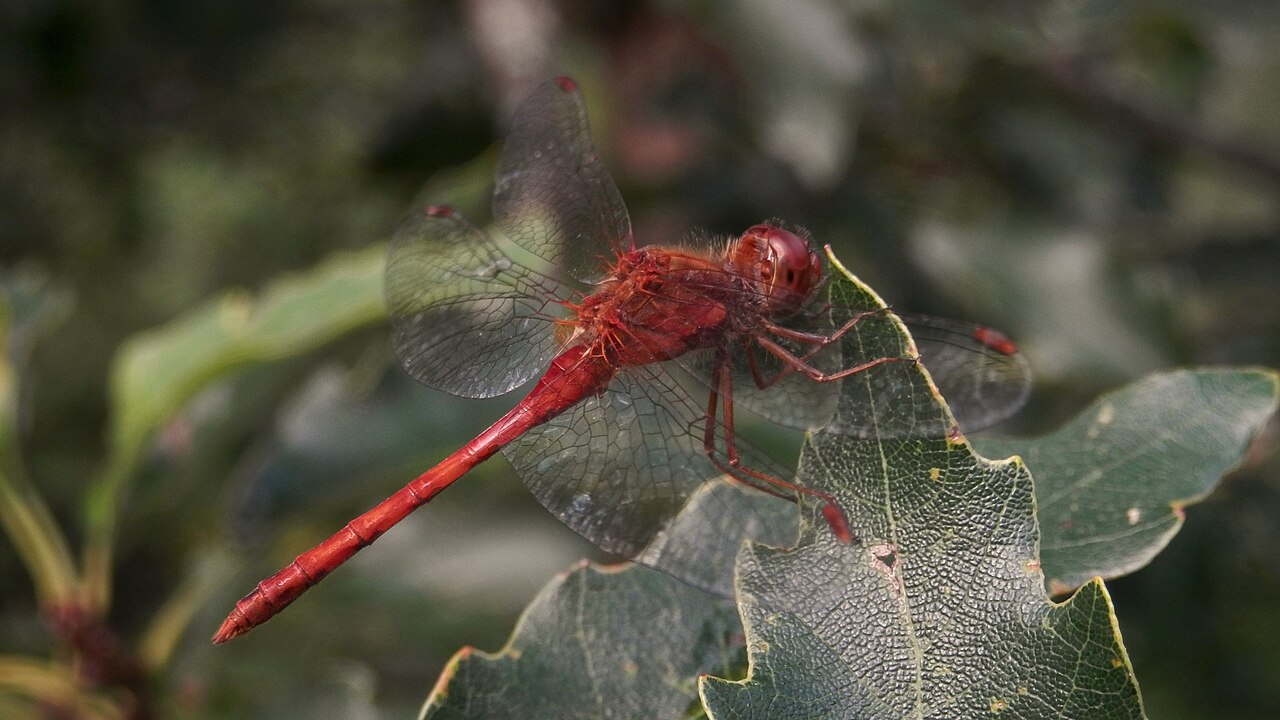
Red dragonfly symbolism leans toward courage and drive. Red meadowhawks glow along American ponds in late summer and fall, and their message is to move. Blue says speak and settle. Red says act now.
Other blue messengers overlap without matching. A blue butterfly shares the joy theme but stresses wishes and luck. In American song and story, the bluebird is the bird of happiness. The color narrows the message, and the dragonfly itself carries the change.
Frequently Asked Questions
What is the Old Wives’ tale about dragonflies?
The best-known tale calls the dragonfly the devil’s darning needle and claims it sews shut the lips of liars, scolds and children who talk back. The story frightened generations of kids. The same folklore of the American South also calls the dragonfly the snake doctor, a helper believed to tend injured snakes.
What is the rarest color of dragonfly?
Pink and violet are the rarest dragonfly colors in most of the US. The Roseate Skimmer (Orthemis ferruginea) of the southern and western states is the main pink to violet species, while blue, green, red and brown fly at nearly every pond. White is not rare: white-dusted males such as the Common Whitetail are common over US ponds. In Europe, the violet find is the Violet Dropwing (Trithemis annulata) of the south.
Do blue dragonflies bite?
Yes, but only if you hold one in your hand. A captured dragonfly may nip at your skin with its jaws, and a large darner can pinch hard enough to surprise you. The bite carries no venom. At most it pinches or, rarely, scratches the skin. Blue dragonflies have no stinger and never chase people.
What time of year do you see blue dragonflies?
Blue dragonflies fly from late spring to early fall in most US states, with the most sightings in midsummer. Warm southern states see them over a longer season. In the north, the season starts later and ends with the first cold nights of autumn, when most adults die off and many Common Green Darners migrate south.
How rare is it to see a dragonfly?
More than 450 species of dragonflies and damselflies live in the US and Canada, so a sighting is not rare at all. Almost every pond, creek or wet meadow holds several species from late spring to early fall. Sightings drop on cool, cloudy days and far from fresh water, so a dragonfly over a dry city street is the unusual case.
What does a blue dragonfly at night mean?
Most dragonflies fly by day, but darners such as the Common Green Darner also hunt at dawn and dusk, and some fly after dark near lights or on moonlit evenings. A sighting at dusk is normal. A blue one well after dark most likely came to a light. Spiritually, the late hour adds weight to the message and points to what keeps you awake.
Sources
- University of Minnesota Entomology, Common Green Darner
- Animal Diversity Web (University of Michigan Museum of Zoology), Anax junius
- Penn Museum, Zuni Polychrome Bowl
- Web Japan (Außenministerium Japan), NIPPONIA No.29, Japanese Animals and Culture
Explore more: Insect Spiritual Meanings: 15 Bugs and What They Signal