Hedgehog Symbolism: What It Means to See One, by Situation
Seeing a hedgehog is traditionally read as a sign to protect your own boundaries and trust your defenses, because hedgehog symbolism across Europe, the Near East and modern spiritual practice circles around one image: a small, gentle animal that survives by curling inward rather than fighting back. Folk traditions treat the visit as a nudge toward self protection, resourcefulness and quiet persistence rather than a dramatic warning.
That reading is remarkably stable across cultures, but the details shift. Slavic villagers saw a clever trickster who outwitted the fox, Egyptian craftsmen carved hedgehogs onto perfume jars as emblems of rebirth, and the King James Bible places the animal in the rubble of fallen cities. Below is what each tradition actually says, what the common sightings are believed to mean, and where the folklore quietly contradicts itself.
Hedgehogs symbolize protection, healthy boundaries, self reliance and gentle resilience. Seeing one is widely taken as a good omen and a reminder to defend your energy without becoming hostile. In European folklore the hedgehog also carries meanings of cleverness, fertility and rebirth, while biblical references use it as an image of desolation.
| Situation | Traditional meaning | Omen reading |
|---|---|---|
| Hedgehog in your garden | Household protection, a healthy home | Positive |
| Hedgehog at night or in headlights | Something hidden is asking for attention | Neutral, a prompt |
| Seeing one repeatedly | A boundary issue you keep postponing | Urgent but not negative |
| Finding a dead hedgehog | End of a defensive phase, release | Somber, not unlucky |
| Hedgehog curled into a ball | Withdrawal is the right answer for now | Protective |
| Hedgehog in a dream | Self protection, guarded feelings | Depends on the mood of the dream |
| Hedgehog crossing your path | Slow down, a decision needs caution | Mildly positive |
What Are Hedgehogs a Symbol Of?
Hedgehogs are a symbol of protection, boundaries, self reliance and gentle strength. The symbolism comes directly from the animal’s behavior: a European hedgehog (Erinaceus europaeus) carries roughly 5,000 to 7,000 spines and meets almost every threat by rolling into a ball instead of biting or fleeing. That is a defensive posture that costs nobody anything, and folk symbolism picked it up almost everywhere the animal lives.
A second cluster of meanings grew out of the hedgehog’s foraging habits. It works at night, covers a surprising amount of ground, eats beetles, slugs and caterpillars, and survives winters that kill larger animals. Traditions from Britain to the Balkans read that as resourcefulness and quiet persistence, the virtue of the small creature that simply keeps going.
The third layer is cleverness. In Slavic and Baltic folktales the hedgehog outsmarts the fox, the wolf and sometimes the devil himself, usually through patience rather than force. If you are tracing how this pattern repeats across species, the same contrast between brute strength and cunning shows up in bear symbolism, where the power is physical rather than strategic.
What Is the Spiritual Significance of Seeing a Hedgehog?
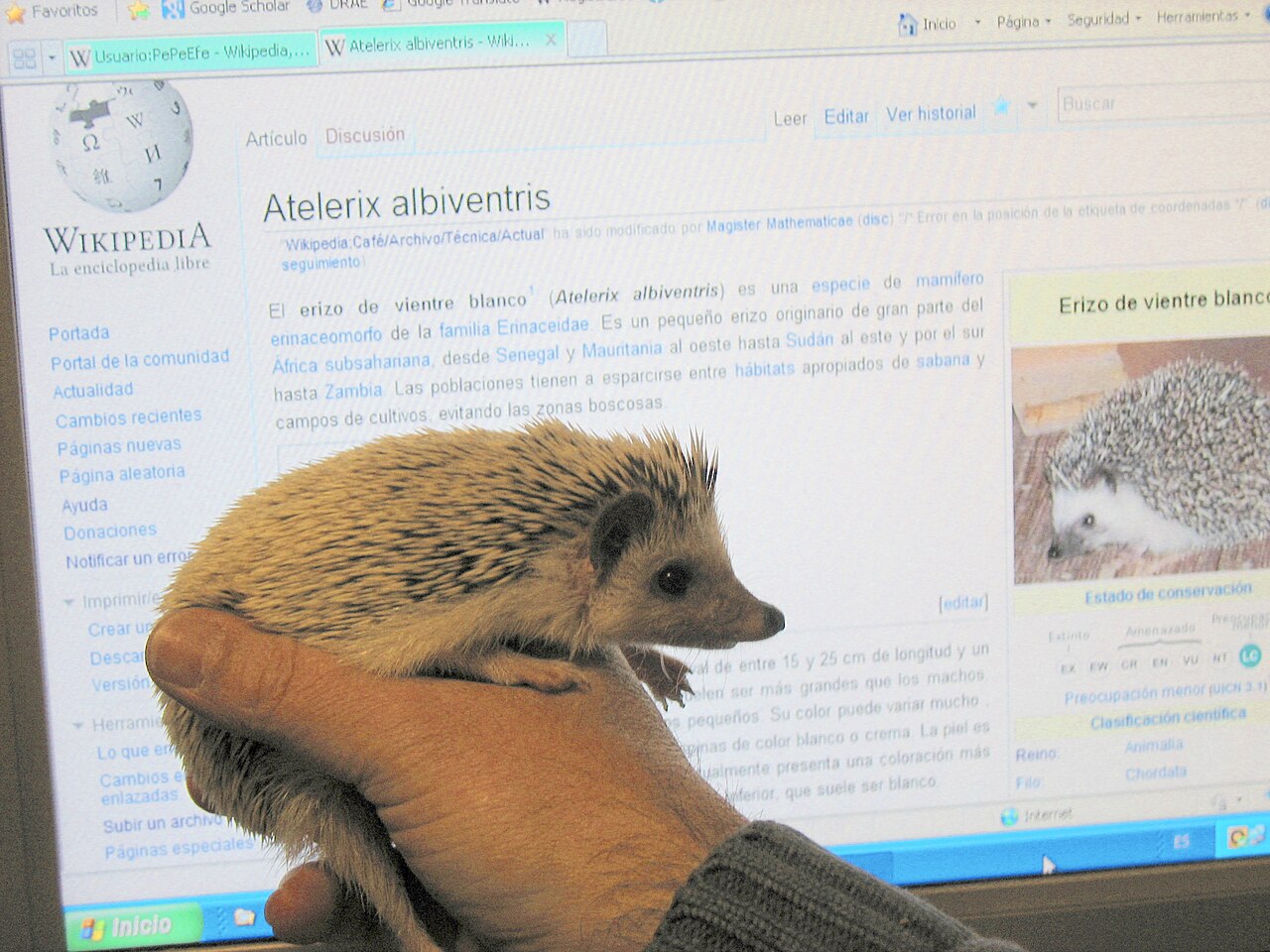
In modern spiritual practice, seeing a hedgehog is most often interpreted as a message about your own defenses: either that you are right to keep them up, or that you have forgotten how to put them down. Practitioners who work with animal signs tend to frame the encounter as a question rather than a prediction, which is why the same sighting can be read two ways by two readers.
The timing usually carries as much weight as the animal. A hedgehog that appears during a conflict at work is read differently from one that appears during a quiet week. Many traditions hold that an unexpected encounter with a shy nocturnal animal counts more than a sighting in a place where the animal is common, because the surprise is treated as the message.
It is worth saying plainly that these are beliefs, not measurable effects. Hedgehogs appear in gardens because gardens hold slugs, leaf litter and water, and sightings in the UK rise sharply in May and June when males travel to find mates. The spiritual reading sits on top of ordinary ecology; it does not replace it.
Hedgehog Meaning in Your Garden

A hedgehog in the garden is the most favorable sighting in European folk belief, read as a sign that the household is sound and under protection. The practical root is obvious: a garden with hedgehogs has insects, cover and no poison, so the animal’s presence genuinely signals a healthy small ecosystem. Folk belief turned that correlation into a blessing.
In parts of Germany, Austria and the Czech lands, a resident hedgehog was treated as a luck bringer that should never be driven off, and in some villages feeding it was thought to secure the household’s fortune for the year. The animal’s appetite for garden pests gave the superstition a very visible payoff, which is probably why it survived so long.
Gardeners who want to keep the visitor should skip bread and milk, which hedgehogs cannot digest properly, and leave a shallow dish of water instead. The same logic that makes a garden welcoming to hedgehogs also draws in pollinators, and the protective symbolism attached to those visitors is covered in bee symbolism.
Seeing a Hedgehog at Night

A hedgehog seen at night is traditionally read as a sign that something you have been avoiding is surfacing, because the animal belongs to the dark and only becomes visible when it crosses into your light. The symbolism is tied less to danger than to revelation, which is why night sightings are usually interpreted as prompts rather than warnings.
Hedgehogs are strictly nocturnal in most of their range, emerging after dusk and covering 1 to 2 miles (1.6 to 3.2 km) in a single night. A daytime sighting, by contrast, is the one that folklore treats as unusual, and modern wildlife rescues read it as a health warning: a hedgehog out in daylight is often sick, injured or a nursing female in trouble.
That gives the night and day readings an interesting split. Night is the normal, benign encounter. Day is the one that actually asks something of you, and in this case the practical response is the same as the spiritual one: pay attention and act. Nocturnal animals collect this kind of meaning consistently, as the parallel traditions in bat symbolism show.
Seeing a Hedgehog Repeatedly
Repeated hedgehog sightings are interpreted as an unresolved boundary problem, the same message arriving again because it was not acted on the first time. Practitioners generally treat three encounters in a short span as the threshold, though the number varies by tradition and no source agrees with another on it.
The reading is usually specific. Where a single sighting suggests general self protection, a repeating one points to a particular relationship or commitment where you have been absorbing more than you should. The hedgehog’s defense works only when it is used, and that is the pointed part of the symbolism: spines held flat protect nothing.
There is also a dull explanation worth holding alongside the mystical one. Hedgehogs are territorial in a loose sense and will patrol the same route for weeks, so repeated sightings in one garden usually mean one animal with a habit, not three messages.
Finding a Dead Hedgehog
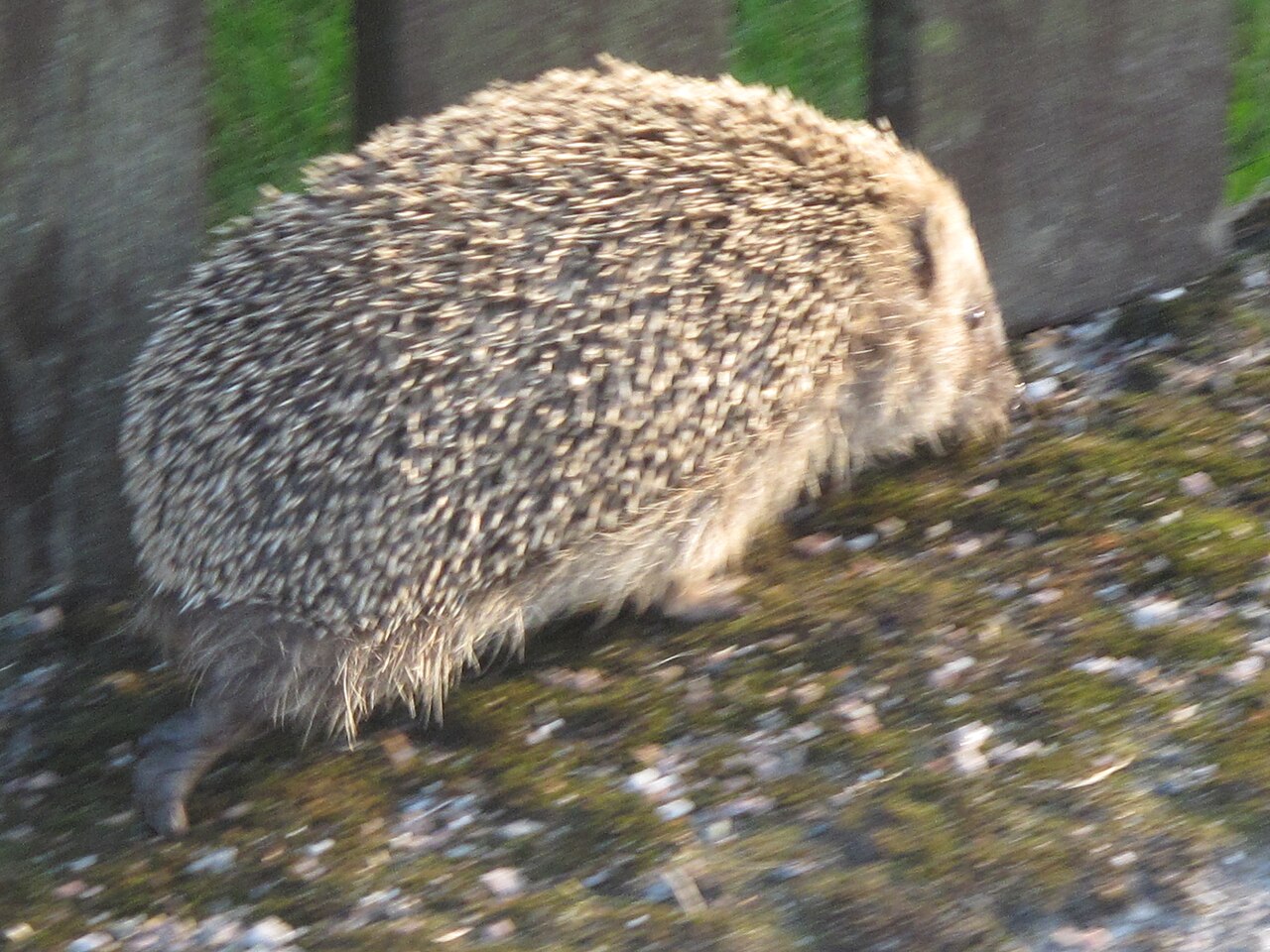
Finding a dead hedgehog is read as the close of a defensive chapter rather than as bad luck, a sign that a protection you needed is no longer required. Most modern interpreters frame it as release, and almost none treat it as an omen of death, which separates hedgehog folklore from the darker readings attached to crows or owls.
Older European sources are blunter. In several regions the dead hedgehog was simply a working resource: the spined skin was used for carding wool and for a rough brush, and in Roman agricultural writing Pliny describes hedgehog skins traded for exactly that purpose. The animal’s symbolic value and its practical value sat side by side without conflict.
If you find one on a road, the honest reading is ecological. Hedgehog populations in the UK have fallen steeply in rural areas since 2000, with traffic and habitat loss among the main drivers, and a roadside carcass is more a measure of road density than of fate.
Hedgehog Dreams and What They Point To
A hedgehog in a dream is usually interpreted as your own guardedness made visible, with the mood of the dream deciding whether that guardedness is helping or hurting. A calm hedgehog is generally read as healthy self protection; one curled tightly and refusing to open suggests defenses that have outlived their purpose.
Dream interpreters pay attention to contact. Picking the animal up without being hurt is read as learning to handle a difficult situation gently, while being pricked is commonly taken as a warning that you are reaching for something, or someone, that is not ready to be reached for.
A hedgehog seen in a dream alongside its young carries a different weight again, shifting the theme from self protection to protecting others. That overlap between vulnerability and defense is also why the life stage matters so much in practice, and why baby hedgehogs carry their own distinct set of folk associations.
What It Means When a Hedgehog Crosses Your Path
A hedgehog crossing your path is read as a signal to slow down before a decision, because the animal itself never hurries and never swerves. Unlike the black cat traditions, no European source treats a hedgehog crossing as unlucky, and the dominant reading is cautionary rather than ominous.
Several folk versions add the direction. A hedgehog moving from left to right is generally read as a matter resolving itself, while right to left suggests something returning that you thought was finished. These directional rules are inconsistent between regions and no two sources agree, which is a good reason to hold them loosely.
The practical reading is simpler and probably more useful. Hedgehogs cross roads and paths at dusk during the breeding season, and the message most worth taking from the encounter is to brake. Roads are the single largest cause of hedgehog deaths across their European range.
The Hedgehog as Spirit Animal, Totem and Power Animal
As a spirit animal, the hedgehog is associated with people who are gentle by default and formidable only when pushed, and it is invoked for protection without aggression. Contemporary practitioners distinguish the three terms loosely: a spirit animal arrives with a message, a totem is a lifelong companion, and a power animal is called on for a specific task.
People who identify the hedgehog as a totem are generally described as observant, slow to trust and quick to withdraw, with a strong need for solitude between periods of contact. The shadow side named in most readings is isolation, the habit of curling up so often that nothing gets through in either direction.
It is worth noting that the spirit animal framework in this form is largely a modern synthesis, drawn loosely from Indigenous concepts but shaped in twentieth century Western esoteric writing. Treating it as ancient tradition overstates its age, and most careful sources say so.
Hedgehogs in Native American Traditions
Hedgehogs do not appear in Native American tradition, because hedgehogs are not native to the Americas, and claims that attribute hedgehog symbolism to specific tribes are almost always a confusion with the porcupine. The two animals are not related: hedgehogs belong to the family Erinaceidae, while the North American porcupine (Erethizon dorsatum) is a rodent.
The confusion is old and understandable, since both animals carry quills and both defend rather than attack. In Lakota and Anishinaabe traditions, porcupine quills were central to quillwork and the animal carries its own meanings around humility, trust and creative skill. Those meanings belong to the porcupine, and borrowing them for hedgehog articles misrepresents the source culture.
Any site claiming a Cherokee or Lakota hedgehog teaching is repeating an error, and the honest answer is that this tradition has no hedgehog lore to give. The genuine Native American bird and mammal traditions are documented elsewhere, and a comparison of how they are handled responsibly appears in blackbird symbolism.
What Is the Biblical Meaning of a Hedgehog?
In the King James Bible the hedgehog appears three times, always as an image of ruin: Isaiah 14:23, Isaiah 34:11 and Zephaniah 2:14 place it among the creatures inheriting the rubble of fallen cities. The animal is not a moral symbol there but a marker of emptiness, the thing that lives where people no longer do.
Translation complicates this considerably. The Hebrew word qippod is rendered as hedgehog, bittern, porcupine or owl depending on the version, and scholars have argued over it for centuries without settling it. Readers who build a spiritual meaning on the hedgehog specifically are building on a contested translation.
Later Christian commentary, particularly in medieval bestiaries, took a different line. There the hedgehog that rolls on fallen grapes to carry them away on its spines was read as an image of the devil stealing spiritual fruit from the careless soul, a reading that says more about medieval moral teaching than about the animal.
What Is the Folklore Associated With Hedgehogs?
Hedgehog folklore clusters around three ideas: the clever survivor, the weather prophet and the milk thief. The milk thief accusation was the most damaging, since English and Scottish farmers believed hedgehogs suckled from cows at night, and bounties paid for hedgehog heads ran in some parishes from the sixteenth century onward.
The weather prophet tradition survives in a form most Americans know without the hedgehog. European immigrants brought the custom of watching a hibernating animal emerge in early February, and because North America has no hedgehogs, the groundhog took the role. Groundhog Day is hedgehog folklore with a substitute actor.
The grape carrying hedgehog shows up repeatedly in classical and medieval writing, from Pliny to the bestiaries, and it is almost certainly false; hedgehogs are insectivores and do not impale fruit. The story survived because it was useful, not because anyone checked. For broader context on how animal folklore is recorded and compared, the Smithsonian’s National Zoo maintains reliable species accounts at nationalzoo.si.edu.
Hedgehogs in Celtic, Slavic and Ancient Traditions
Across Celtic, Slavic, Egyptian and Mesopotamian sources the hedgehog is consistently positive, which is unusual for a nocturnal animal. In Celtic tradition it was associated with the earth’s cycles and with practical wisdom, a creature close to the soil and the turning year rather than to prophecy.
Slavic folklore gives the hedgehog the largest role. In several creation tales the hedgehog advises God on how to shape the earth, suggesting that mountains and valleys be folded in so the land would fit, and across the Balkans it appears as the animal whose counsel the powerful ignore at their cost. In these stories the hedgehog is never the hero and always the one who was right.
In ancient Egypt hedgehog amulets and hedgehog shaped vessels were buried with the dead, connected to rebirth through the animal’s reappearance after dormancy, and Mesopotamian seals show hedgehogs in ritual contexts whose meaning is still debated. Builders and makers were often linked to animals read as industrious, a pattern the folklore of beaver symbolism follows closely.
Frequently Asked Questions
Are hedgehogs a good omen?
Yes, in almost every tradition that mentions them. European folk belief treats a hedgehog in the garden as a sign of household luck and protection, and modern spiritual readings follow the same line. The main exception is biblical usage, where the hedgehog marks desolation rather than fortune, and even there it is a setting, not a curse.
What does hedgehog mean, and what is the synonym of hedgehog?
The word comes from Middle English, combining hedge, where the animal nests, with hog, for its pig like snout and snuffling. Older and regional synonyms include urchin, hedgepig and furze pig. Urchin is the oldest of these, which is why the spiny sea creature is called a sea urchin.
What does it mean when someone sends you a hedgehog emoji?
The hedgehog emoji is usually affectionate, marking someone as cute but prickly, shy, or endearingly defensive. It is also used for anything small and sharp tempered, and among gardeners it simply means wildlife. Unlike the fox or snake emoji, it carries no common negative or flirtatious code.
What is the spiritual significance of seeing a hedgehog in daylight?
Spiritually it is read as an urgent message, something hidden forced into the open. Practically it is a warning sign about the animal: hedgehogs are nocturnal, and one wandering in daylight is often sick, injured or a mother separated from her young. Wildlife rescues ask that you call them rather than wait.
What are the four animals of God?
The phrase refers to the four living creatures of Ezekiel 1 and Revelation 4, described as having the faces of a man, a lion, an ox and an eagle. These became the traditional symbols of the four evangelists. The hedgehog is not among them and has no comparable role in Christian symbolism.
Can hedgehog symbolism mean something negative?
It can, and the negative reading is always about excess rather than evil. Interpreters point to isolation, defensiveness that pushes away help, and the habit of treating every approach as a threat. The symbol turns critical when protection becomes a permanent posture rather than a temporary one.