Jaguar Symbolism: Spiritual Meaning and the Maya Jaguar God
Jaguar symbolism is about power that waits, a hunter that owns the night and moves between land, water and the unseen world. Few animals carried as much sacred weight in the Americas as the jaguar (Panthera onca), and its meaning today still grows from Maya and Olmec roots.
The jaguar symbolizes quiet power, mastery of the night and passage between worlds. The Classic Maya tied it to the underworld and the night sun, made it the emblem of their kings, and saw it as the animal shamans became to travel between realms. As a spirit animal it stands for self-trust and firm boundaries.
What Does the Jaguar Symbolize Spiritually?
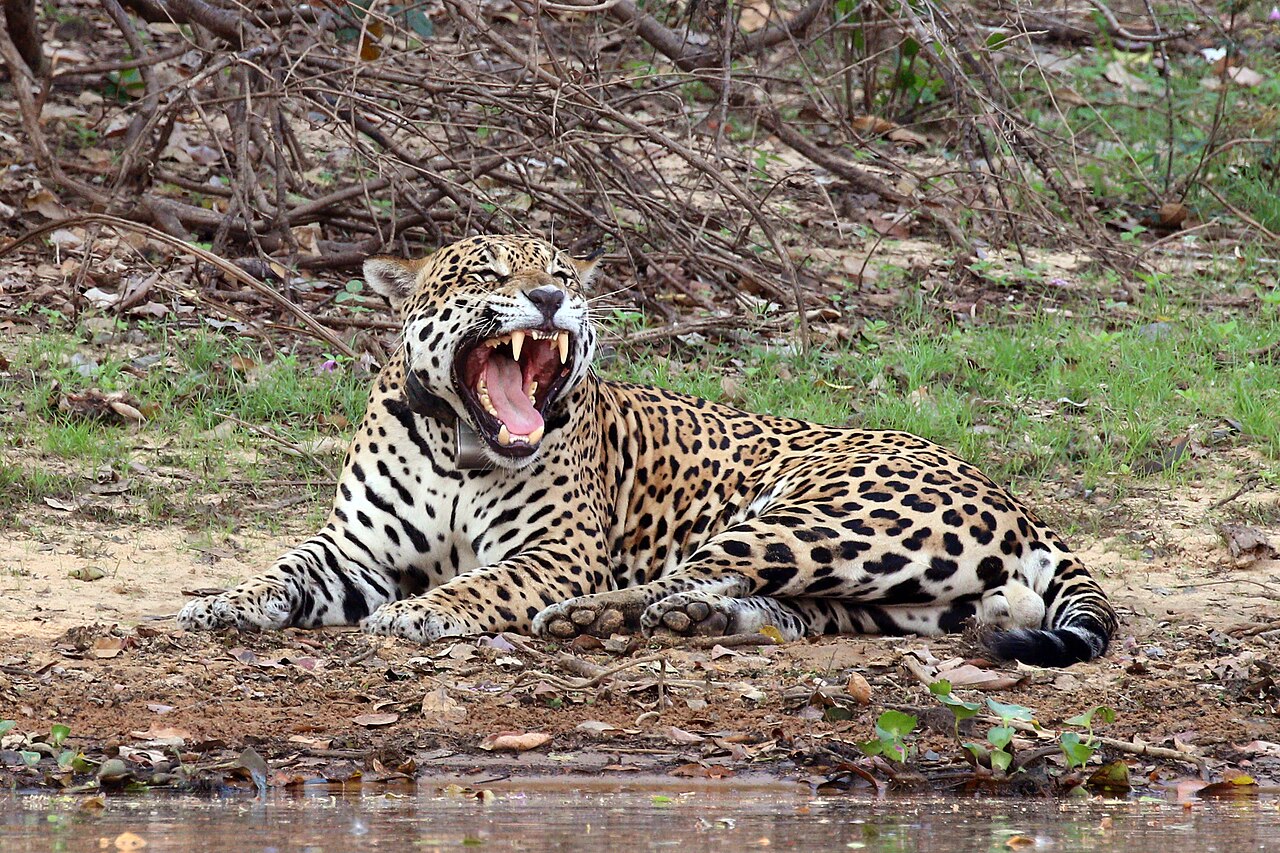
The jaguar symbolizes power held in reserve. It is the largest cat in the Americas, yet it rarely shows that strength until the moment it strikes. It waits unseen in cover, then acts once. Tiger symbolism carries the same raw force in Asia, but the jaguar’s version is quieter.
Lion symbolism centers on open rule over a pride, while the jaguar keeps its power out of sight.
The jaguar hunts mostly at night and around dawn and dusk, and it swims well, entering water that many other cats avoid. Both habits make it a symbol of mastery over fear, of moving calmly through the dark and the deep. As a spirit animal or totem it asks for self-trust, firm boundaries and quiet confidence. Its solitary life stands for independence, not loneliness.
Cat symbolism as a whole leans toward independence and mystery, and the jaguar is its most forceful form. The Jaguar car logo, called the Leaper, is a leaping jaguar that the British carmaker uses for speed and grace.
| Trait | What the jaguar does | Symbolic meaning |
|---|---|---|
| Night hunting | Hunts mostly at night, dawn and dusk | Mastery of fear and the unknown |
| Swimming | Enters rivers to hunt | Ease in deep, unclear places |
| Ambush | Waits in cover, strikes once | Power held in reserve |
| Solitude | Lives and hunts alone | Independence and self-trust |
| Rosette coat | Breaks up its outline in shade | Presence without display |
The Jaguar God and Maya Mythology
Mayanists call him the Jaguar God of the Underworld, and in Classic Maya art he is the form the sun god takes while crossing the underworld at night. In Maya belief the sun sank in the west at dusk and passed through Xibalba, the underworld, in jaguar form. At dawn it rose again in the east. The jaguar became the sign of death followed by renewal, a cycle that repeats every day.
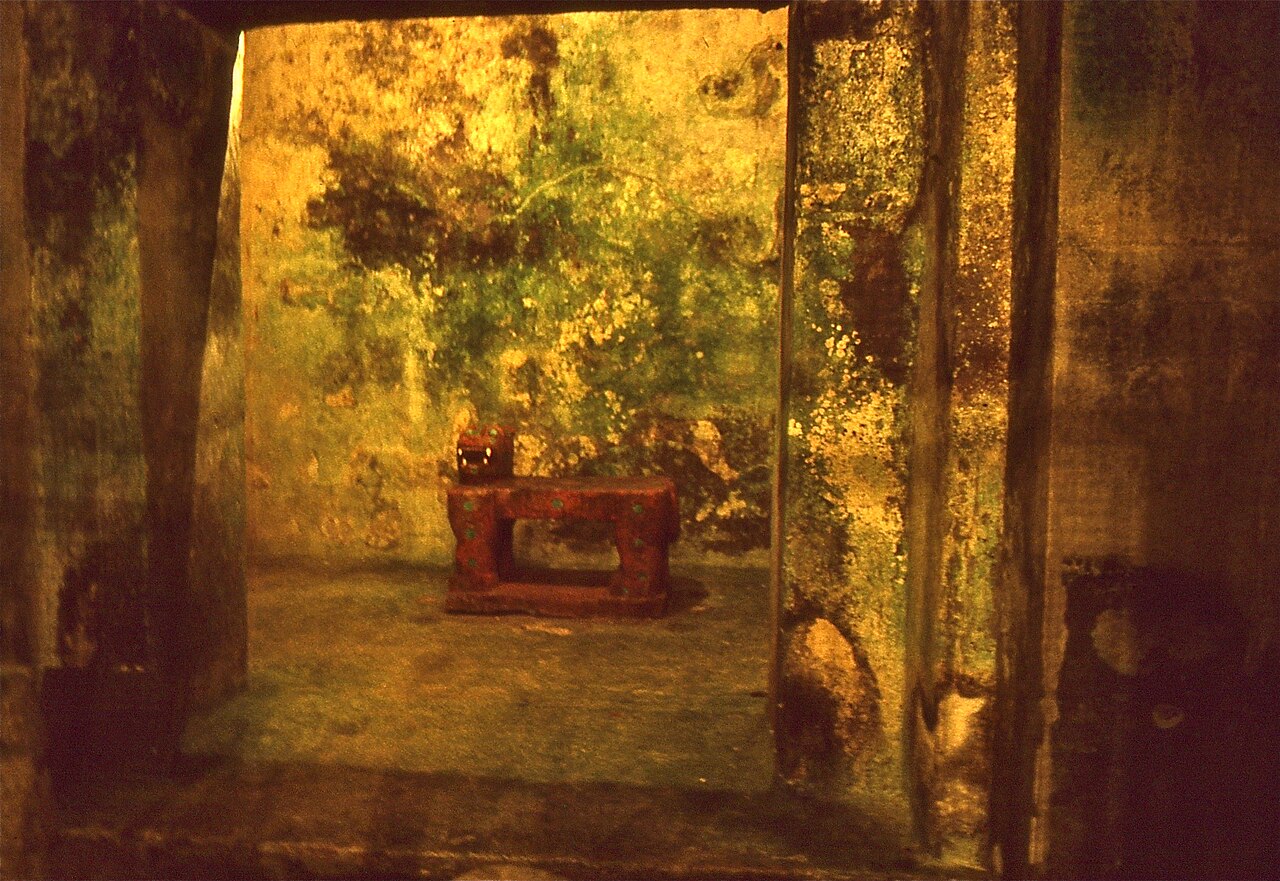
Maya kings claimed that same power. Rulers wore jaguar pelts and sat on jaguar thrones. At Chichen Itza in Yucatan, Mexico, a red jaguar throne with jade spots was found in the 1930s inside the inner temple of El Castillo. At Yaxchilan in Chiapas, rulers took the Maya word for jaguar, bahlam, into their names, as Itzamnaaj Bahlam (Shield Jaguar) and Yaxun Bahlam (Bird Jaguar). A ruler dressed as a jaguar stood as the bridge between the living city and the forces of the night.
Jaguars and leopards share spotted coats, but only the jaguar lives in the Americas, and the jaguar holds an especially prominent place in Maya religion and kingship.
Jaguar Shamanism and Crossing Between Worlds
Jaguar shamanism rests on the belief that a shaman can take jaguar form to travel between worlds. Among the Desana of the Colombian Amazon, anthropologist Gerardo Reichel-Dolmatoff recorded that one word, ye’e, names both the jaguar and the shaman. In jaguar form the shaman crosses into the realm of spirits and the dead, then returns. The jaguar is the vehicle because it already moves where people cannot, through dark forest, deep water and night.
The Olmec of Mexico’s Gulf Coast carved figures that scholars identify as were-jaguars, blending a human body with a snarling jaguar face. The Las Limas figure, found in Veracruz in 1965, shows a seated youth holding a were-jaguar infant, and such carvings date from about 1200 to 400 BCE. In Mesoamerican belief the jaguar was often linked to the cave, the night and the entrance to the underworld.
Animal symbolism across many cultures assigns a guide to the passage between worlds, and in the Americas that guide is the jaguar. As a spirit animal today, the jaguar stands for the strength to face change and hidden fears.
Frequently Asked Questions
What does it mean when you dream of a jaguar?
A jaguar dream is usually read as power and fear meeting in your life. Being chased is commonly read as a fear you keep avoiding, while a calm jaguar walking beside you points to strength you are ready to reclaim. An attack calls for facing an open conflict.
What does a black jaguar tattoo symbolize?
A black jaguar tattoo is commonly read as hidden strength and protection. Black jaguars are melanistic, caused by a dominant gene, and their rosettes still show faintly in bright light. That hidden pattern fits the meaning. The wearer carries power that others do not see at first, and the dark cat stands guard over it.