Pink Caterpillar ID: What It Is and Why It Turned Pink
A pink caterpillar in an American yard can be an oak-feeding prominent moth larva such as the White-blotched Heterocampa, found while it wanders in search of a place to pupate. Most people find one by surprise on a walkway, a deck or the ground under oak trees.
A pink caterpillar in a US yard can be an oak-feeding prominent moth larva. White blotches on the back point to the White-blotched Heterocampa (Heterocampa umbrata), a pink and white side stripe to the Angulose Prominent (Peridea angulosa). On California citrus fruit it could be the Pink Scavenger Caterpillar.
Pink Caterpillar Identification by Markings and Host Plant
Match a pink caterpillar by its markings first and its host plant second. White blotches or a side stripe and an oak nearby point to a prominent moth larva, family Notodontidae. These larvae are mostly green and blend into oak leaves. Pink forms show up late in larval life, often in fall.
The White-blotched Heterocampa (Heterocampa umbrata) is highly variable. It can be green, tan, brown, purple or a vivid fuchsia pink, usually with white blotches on the back. The Angulose Prominent (Peridea angulosa) also feeds on oaks. It is lime green with a pink and white stripe along the side, and it can turn pinkish red in fall.
The Pink-striped Oakworm (Anisota virginiensis) is pink all through larval life, not just at the end. It has rosy stripes along a dark greenish body, short spines and two black horns behind the head, and it feeds on oaks in late summer. The spines look alarming but do not sting.
A pink caterpillar on citrus in California is a different animal. The Pink Scavenger Caterpillar (Anatrachyntis rileyi) is small, with a dark brown shield behind the head and a dark pinkish abdomen. It scavenges dry or decaying fruit, dead flower parts and sooty mold on citrus, as the UC IPM citrus guide describes. UC IPM reports it only sporadically in coastal San Diego, Orange and Ventura counties. Brown caterpillars such as many cutworms carry a dull pinkish cast, so a stripeless pinkish brown larva belongs in that group.
| Caterpillar | Host plant | Markings | Adult |
|---|---|---|---|
| White-blotched Heterocampa | Oak | Green, tan, purple or pink, white blotches on the back | Gray prominent moth |
| Angulose Prominent | Oak | Lime green with a pink and white side stripe, pinkish red in fall | Brownish gray prominent moth |
| Pink-striped Oakworm | Oak | Dark body with pink stripes, short spines, two horns | Pinkish brown oakworm moth |
| Pink Scavenger Caterpillar | Citrus in coastal California | Small, dark pinkish abdomen, dark brown shield behind the head | Small narrow-winged moth |
| Greenstriped mapleworm | Maple, also oak | Green with pale stripes, reddish head, two black horns, not pink | Pink and yellow Rosy Maple Moth |
| Hairy or spiny larva with pink tint | Any plant | Tufts, spines or bristly knobs | Varies, do not touch the larva |
Why a Green Caterpillar Turns Pink
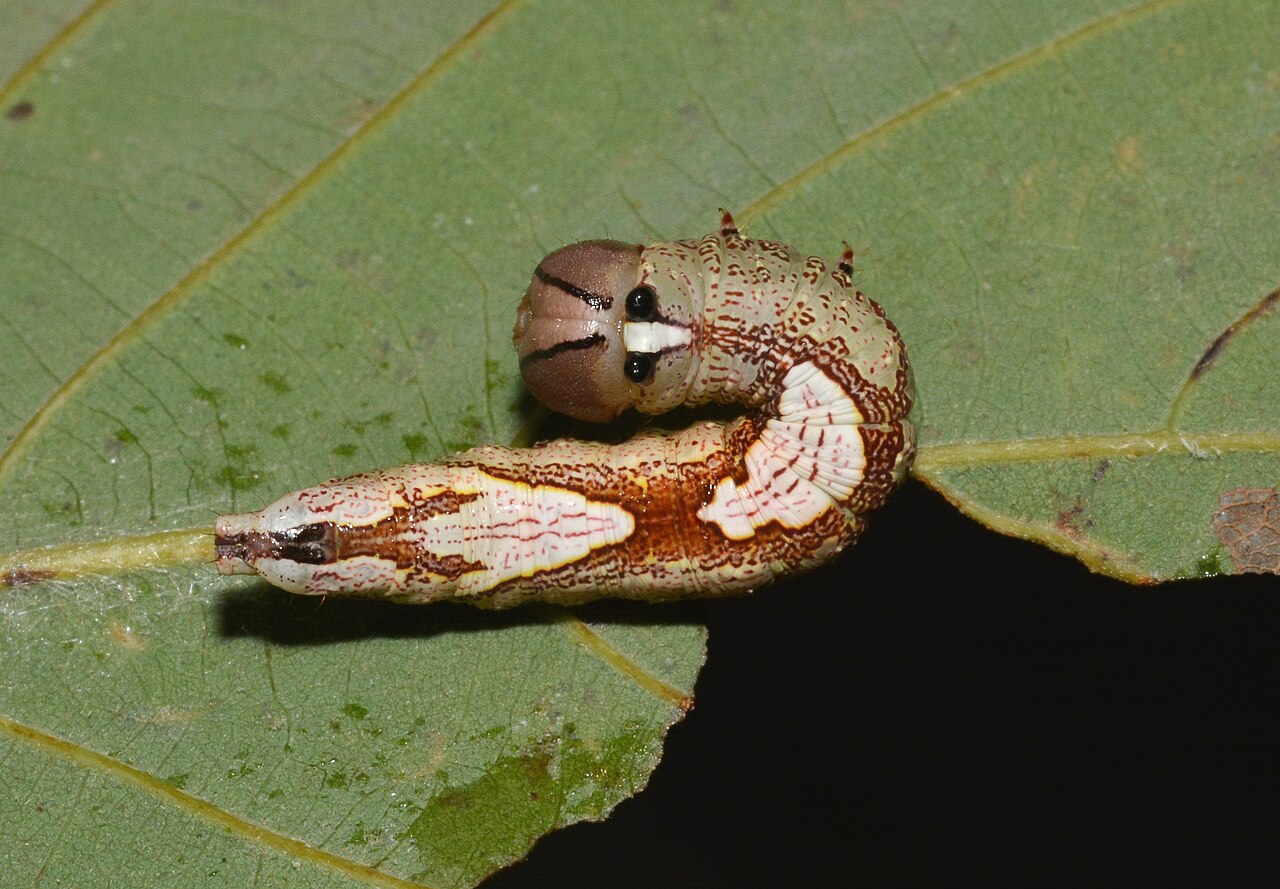
Some green caterpillars turn pink or reddish late in life, in some species as they prepare to pupate. In prominents, pink forms are often seen in fall. A larva that is ready to pupate leaves the host tree and wanders in search of soil or leaf litter, and that walk brings it onto patios, sidewalks and lawns.
The wandering phase is risky. Birds that eat caterpillars, such as robins and blue jays, pick off wandering larvae on open pavement and lawns. A caterpillar that survives the trip hides under debris or digs in, then sheds its skin into a pupa.
A pink caterpillar turns into a drab moth, not a pink butterfly. Adult prominents are gray or brown and blend into bark. The pink Rosy Maple Moth (Dryocampa rubicunda) has the opposite story. It comes from the Greenstriped Mapleworm, a green caterpillar with pale stripes on maples.
Is a Pink Caterpillar Poisonous? How to Tell Before You Touch
No, the pink species above are harmless as long as you do not squeeze them. The White-blotched Heterocampa and the Angulose Prominent are smooth-bodied and have no stinging hairs, and the spines of the Pink-striped Oakworm do not sting. A pink scavenger larva is too small to cause trouble. Black caterpillars need the same texture check, because smooth and stinging species share that color.
Texture is the reliable first check, because color alone proves nothing. Stiff spines, hair tufts and bristly fleshy knobs are warning signs on a caterpillar of any color. Fuzzy caterpillars include several species with stinging hairs that cause a painful rash on bare skin.
Treat any spiny or hairy larva as hands-off, even when its spines turn out to be harmless. Black spiky caterpillars fall under the same rule. To move one away from children or pets, slide a leaf under it and carry it to a shrub. Never pick up a hairy or spiny caterpillar by hand.
Frequently Asked Questions
My pink caterpillar stopped moving. Is it dead?
It is most likely a prepupa, not dead. It stops eating, shrinks and can lie still for a while before it sheds into a pupa. Leave it where it is, or place it on damp soil in a sheltered spot, and give it time to finish.
Can I raise a pink caterpillar to see the moth?
Yes. Put it in a ventilated jar with a layer of damp soil or leaf litter and leaves from the plant where you found it. Prominents pupate in that layer, and many spend the winter there as pupae. Keep the jar outdoors in a shaded spot so the moth emerges on a natural schedule.
Sources
- UC IPM, Pink Scavenger Caterpillar in Citrus
- Caterpillar Identification, White-blotched Heterocampa Moth Caterpillar
- BugGuide, Angulose Prominent (Peridea angulosa)