Snakes That Look Like Copperheads: How to Tell Them Apart
Snakes that look like copperheads include the northern and banded watersnakes, the juvenile eastern rat snake, the corn snake, the eastern milk snake and the eastern hognose, and all six are harmless to people. A banded brown snake near a yard, woodpile or creek sets off alarm in copperhead country, yet many of those sightings turn out to be one of these species sharing the same habitat.
Copperhead lookalikes are harmless northern and banded watersnakes, juvenile rat snakes, corn snakes, milk snakes and eastern hognoses. Among them, only a copperhead has hourglass bands narrow over the spine, a plain copper head and cat-eye pupils. The venomous cottonmouth shares its pupils but has jagged, speckled bands and a dark eye stripe.
How to Tell a Copperhead From a Lookalike
Look at the band shape first. A copperhead’s (Agkistrodon contortrix) dark crossbands are narrow over the spine and wide on the sides, so from above each one looks like an hourglass and from the side it looks like a Hershey’s Kiss. The bands sit on a tan to pinkish body and break up its outline in leaf litter.
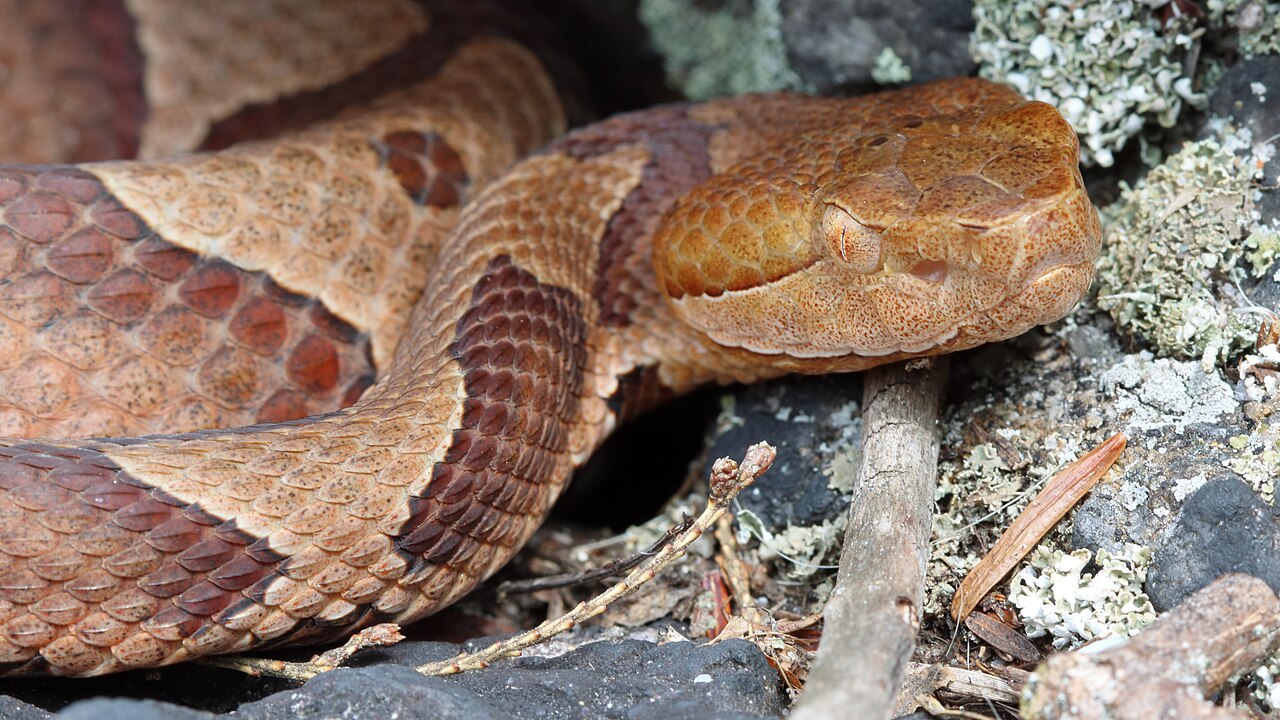
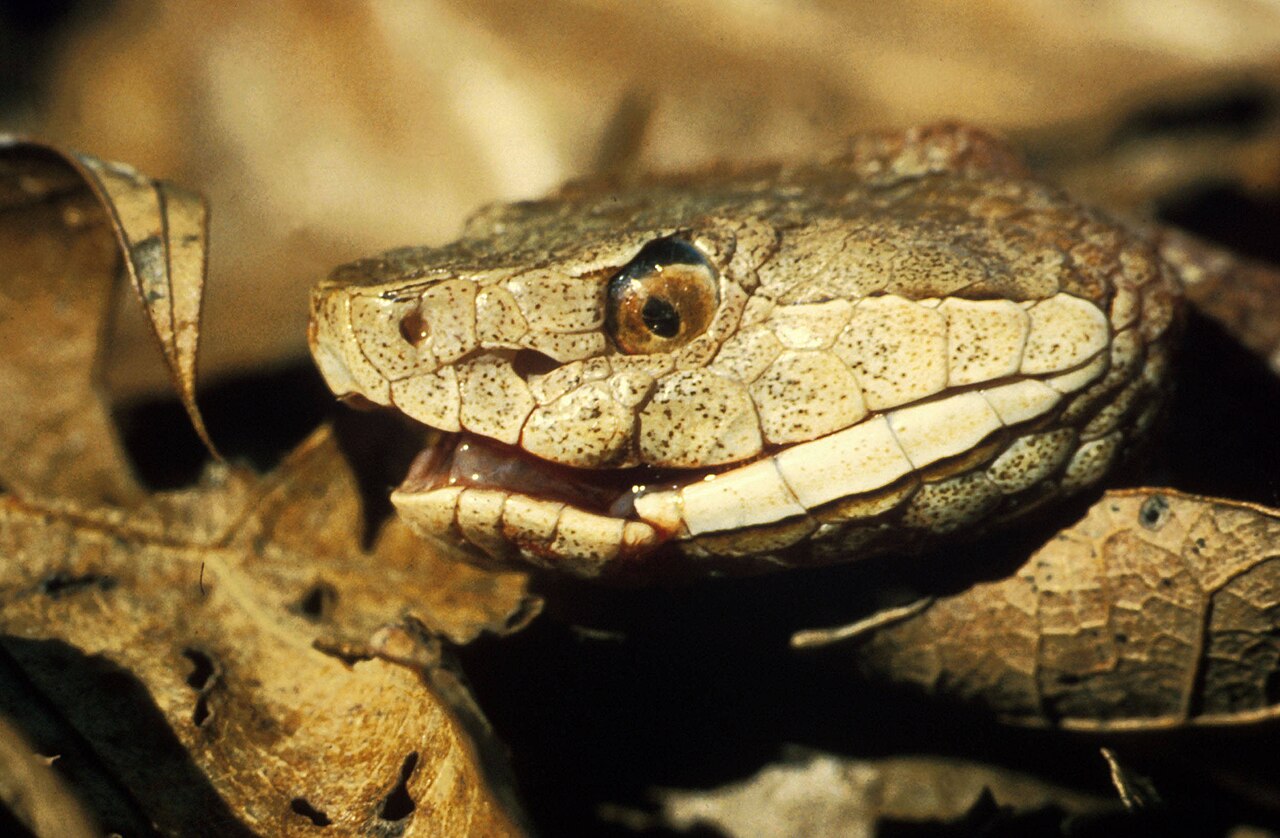
The head comes next. A copperhead’s head is plain copper to tan on top, with no spots or bands. Up close, the pupils are vertical slits like a cat’s, and a heat-sensing pit sits between each eye and nostril. The harmless lookalikes have round pupils and no pits.
Head shape alone misleads. Watersnakes and hognoses flatten their heads when threatened, and a flattened head looks triangular. Baby copperheads carry the same hourglass bands as adults, so the band test works at every age against the harmless lookalikes. Young cottonmouths are banded too, but their bands are more jagged and speckled with dark spots, and a dark stripe runs through the eye.
Harmless Land Snakes That Look Like Copperheads
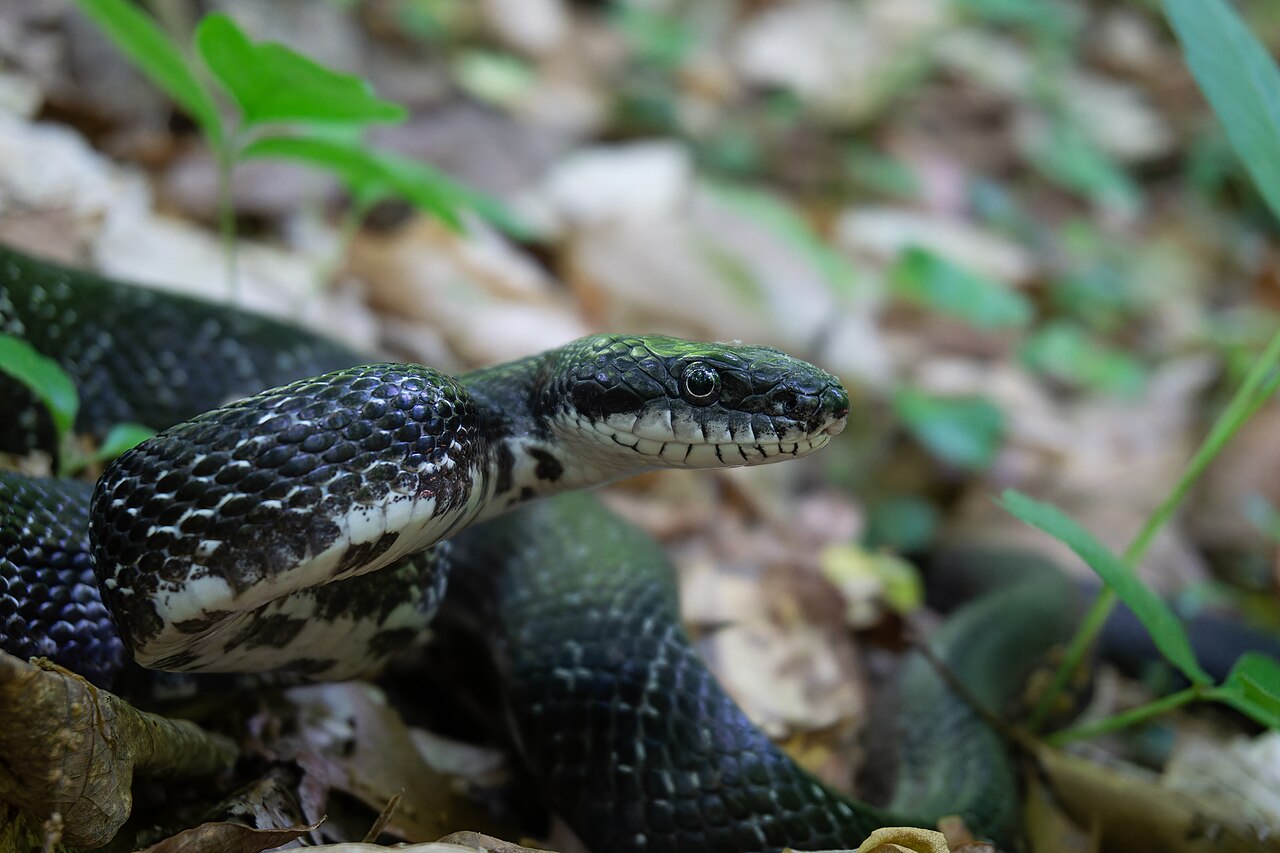
Four land snakes cause most mix-ups, and none of them has hourglass bands. The juvenile eastern rat snake (Pantherophis alleghaniensis) is gray to tan with dark blotches along the back. Those blotches are squarish saddles, and in the North and the Appalachians the snake darkens to solid black as it grows.
The corn snake (Pantherophis guttatus) wears orange to red saddles edged in black on a lighter body. The eastern milk snake (Lampropeltis triangulum) has red-brown blotches outlined in black on a pale gray or tan body. Both patterns are blotches on a plain background, not bands that wrap down the sides.
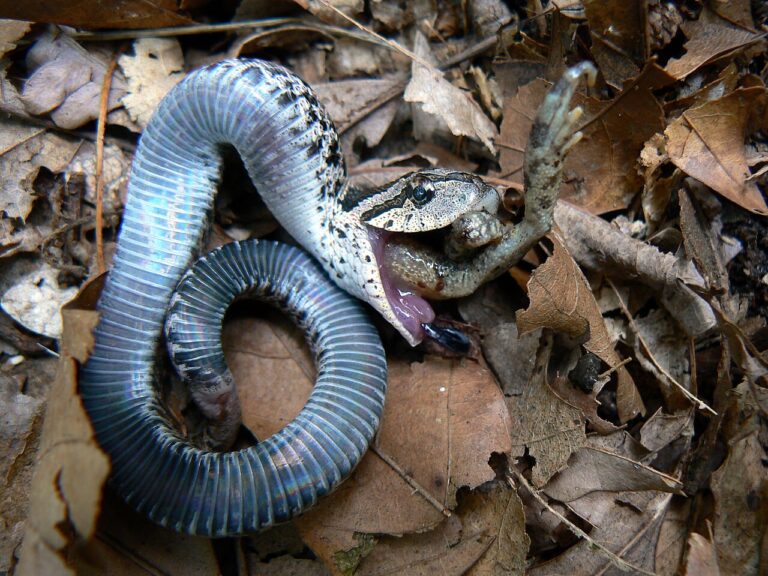
The eastern hognose (Heterodon platirhinos) has an upturned snout and a thick body, and its dark blotches get mistaken for bands. Albino corn snakes lack the black edges entirely and show up mostly as pet trade morphs.
Water Snakes and the Cottonmouth
Near water, the northern watersnake (Nerodia sipedon) is one of the snakes people most often mistake for a copperhead. Its bands run the opposite way. They are wide across the back and narrow on the sides, the reverse of a copperhead’s hourglass.
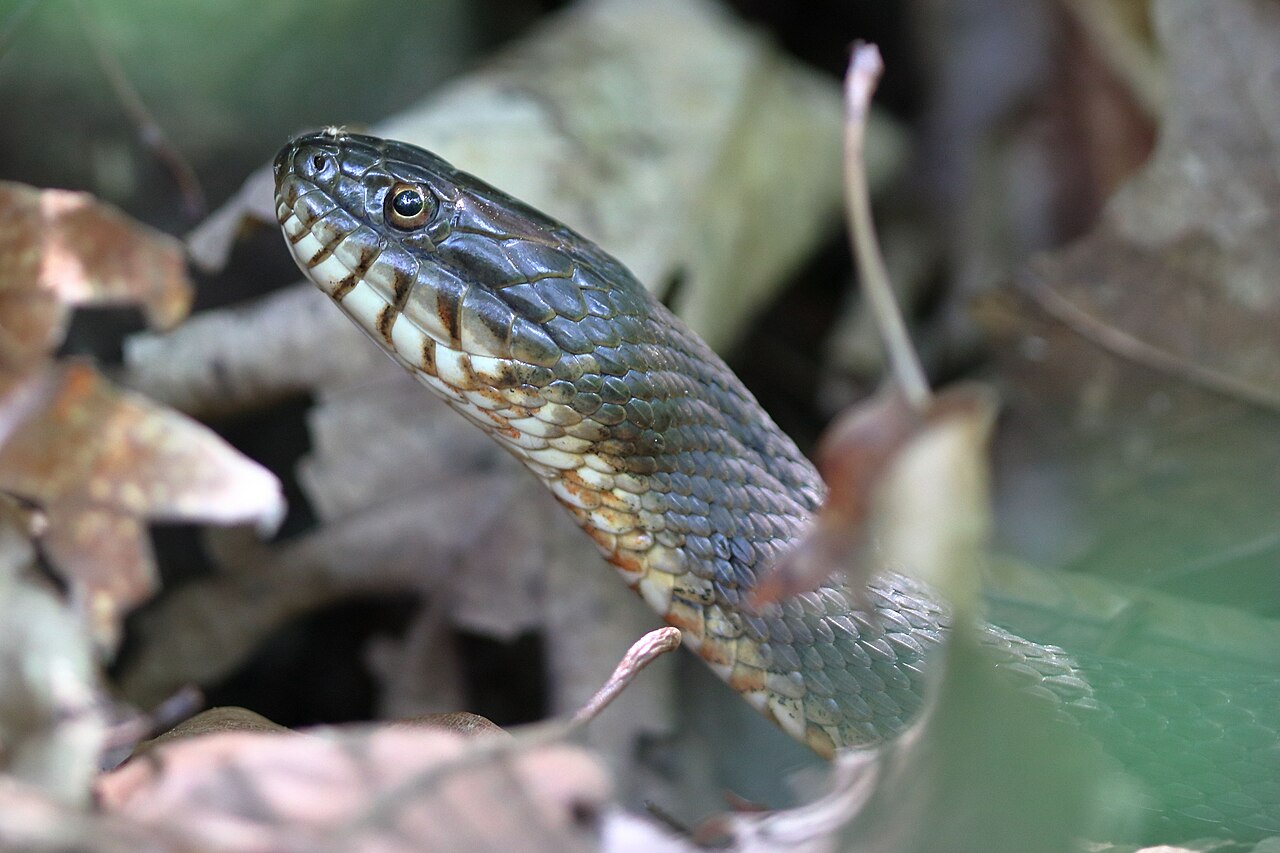
Banded watersnakes (Nerodia fasciata) show dark crossbands plus a dark stripe from the eye to the jaw. They bite readily when grabbed, but they carry no venom.
The real venomous lookalike near water is the cottonmouth (Agkistrodon piscivorus). It is bulkier and darker than a copperhead, with a dark stripe across the cheek. A threatened cottonmouth gapes to show the white lining of its mouth. Copperheads and cottonmouths both swim, so habitat alone does not settle the ID.
| Snake | Pattern | Pupils | Venomous | Young |
|---|---|---|---|---|
| Copperhead | Hourglass bands narrow over the spine, plain copper head | Vertical | Yes | Live birth |
| Cottonmouth | Dark bands that fade with age, dark cheek stripe | Vertical | Yes | Live birth |
| Northern watersnake | Bands wide on the back, narrow on the sides | Round | No | Live birth |
| Banded watersnake | Dark crossbands, dark stripe from eye to jaw | Round | No | Live birth |
| Juvenile eastern rat snake | Gray squarish blotches | Round | No | Eggs |
| Corn snake | Orange to red saddles edged in black | Round | No | Eggs |
| Eastern milk snake | Red-brown blotches outlined in black | Round | No | Eggs |
| Eastern hognose | Dark blotches, upturned snout | Round | Mild venom, harmless to people | Eggs |
Where Copperheads Live and What They Eat
Copperheads live across the eastern and central United States, mostly in wooded areas. Leaf litter, rock piles, woodpiles and woodland edges hide their pattern. A still copperhead on dead leaves is hard to see until you are close.
Rat snakes, milk snakes and hognoses use the same yards and woodlots as copperheads. Rat snakes and milk snakes follow rodents into barns and sheds. Hognoses favor sandy soil, where they dig out toads.
Copperheads ambush rodents, frogs and insects such as cicadas. They strike from cover, release the prey and track it by scent until the venom works. Juvenile copperheads wiggle a yellow tail tip to lure prey within striking range. A young banded snake with a bright yellow tail deserves extra distance.
Copperhead Life Cycle and Conservation Status
Copperheads mate in spring or fall and give birth to 3 to 10 live young from August to October. Newborns are about 7 to 10 inches long and already carry the hourglass bands. They mature at about 3 to 4 years and live up to 18 years in captivity. Copperheads often overwinter in rock dens shared with eastern rat snakes and timber rattlesnakes.
The IUCN lists the copperhead as Least Concern, and it has no federal protection. Massachusetts and Iowa protect it as a state endangered species.
Found a Snake That Might Be a Copperhead? What to Do
Step back and leave it alone. Copperhead bites happen when people step on, grab or try to kill a snake. A snake given room moves off on its own.
Do not kill it. Many harmless snakes, such as rat snakes, milk snakes and watersnakes, are killed by mistake as copperheads, and some of them eat the rodents around your house. If a snake is inside a house or garage, call local wildlife control instead of handling it.
Treat any bite as venomous and go straight to an emergency room. Baby cottonmouths have bold bands and yellow tail tips like young copperheads, and their bites need the same urgent care.
Frequently Asked Questions
What smell do copperheads hate?
None. No scent has been shown to reliably repel copperheads, and products sold as snake repellents do not replace habitat work. Clearing leaf litter, woodpiles and tall grass near the house removes the cover copperheads use. Controlling mice and rats removes the food that draws them in.
Is a copperhead bite deadly?
No, almost never. A bite causes pain and swelling that spread from the wound within minutes, and many patients receive antivenom, but deaths in the US are extremely rare.
Is cottonmouth venom worse than copperhead venom?
Yes. Cottonmouth venom is more potent and a cottonmouth injects more of it, so its bites cause more tissue damage, although deaths from either snake are rare.
Are copperheads active at night?
Yes. In summer heat copperheads hunt mostly after dark, so evening walks across yards and woodpiles call for a flashlight, while in spring and fall they are active by day.
Sources