Small Spider Looks Like Scorpion? Likely a Pseudoscorpion
A small spider that looks like a scorpion is almost always a pseudoscorpion, not a spider at all. If you just spotted a reddish-brown speck with two crab claws on the bathroom wall, you found one of the least harmful arachnids in American homes.
A tiny spider-like bug with crab-like pincers is almost certainly a pseudoscorpion, a harmless arachnid that is neither a true spider nor a scorpion. It has no tail, no stinger and pincers too small to pierce skin. It hunts booklice and mites, so it turns up near damp paper and bathroom corners.
How to Tell a Pseudoscorpion From a Spider
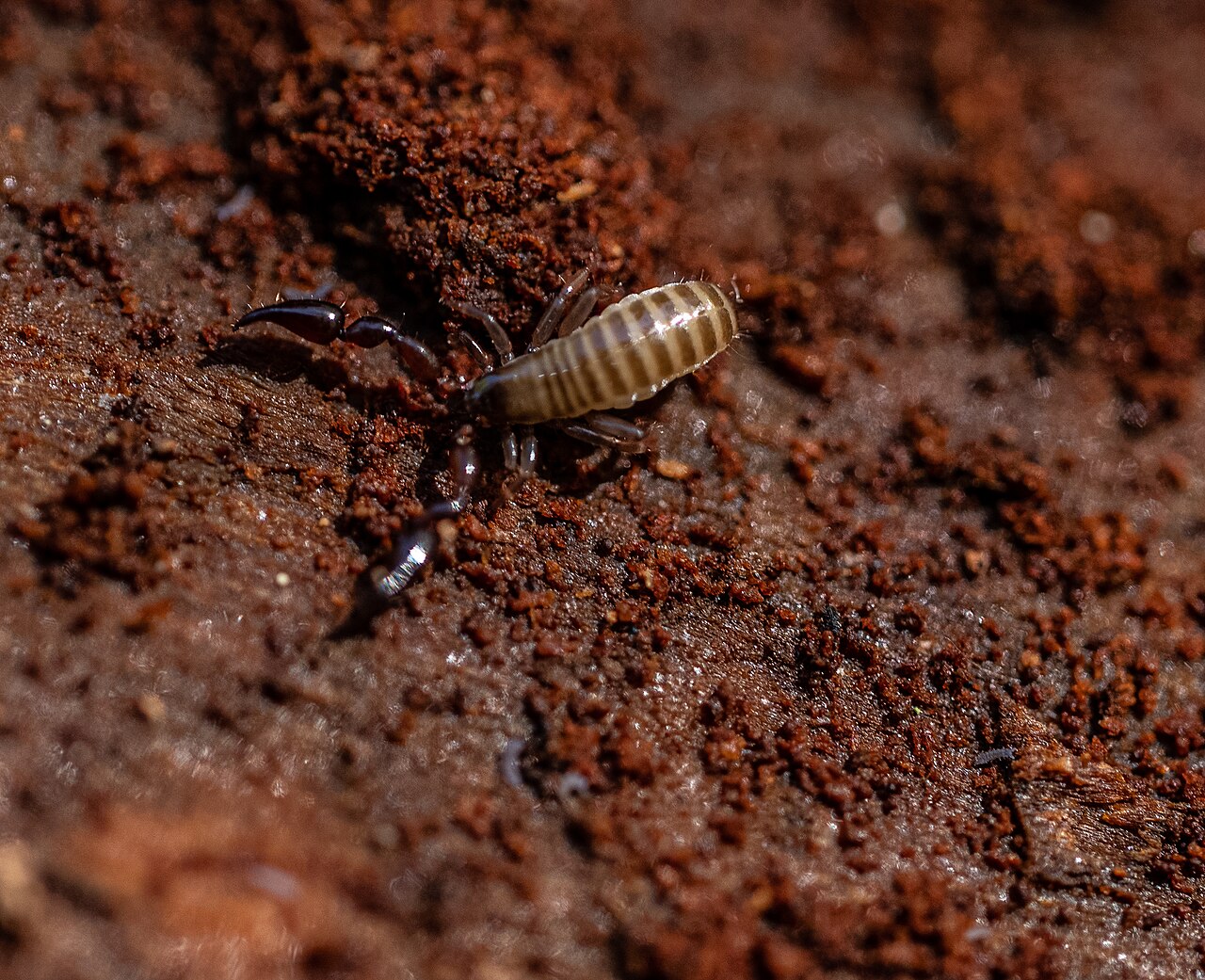
A pseudoscorpion holds two long pincers forward like a crab, and those claws are longer than the body. A spider, even a giant house spider, carries short leg-like palps up front and never claws.
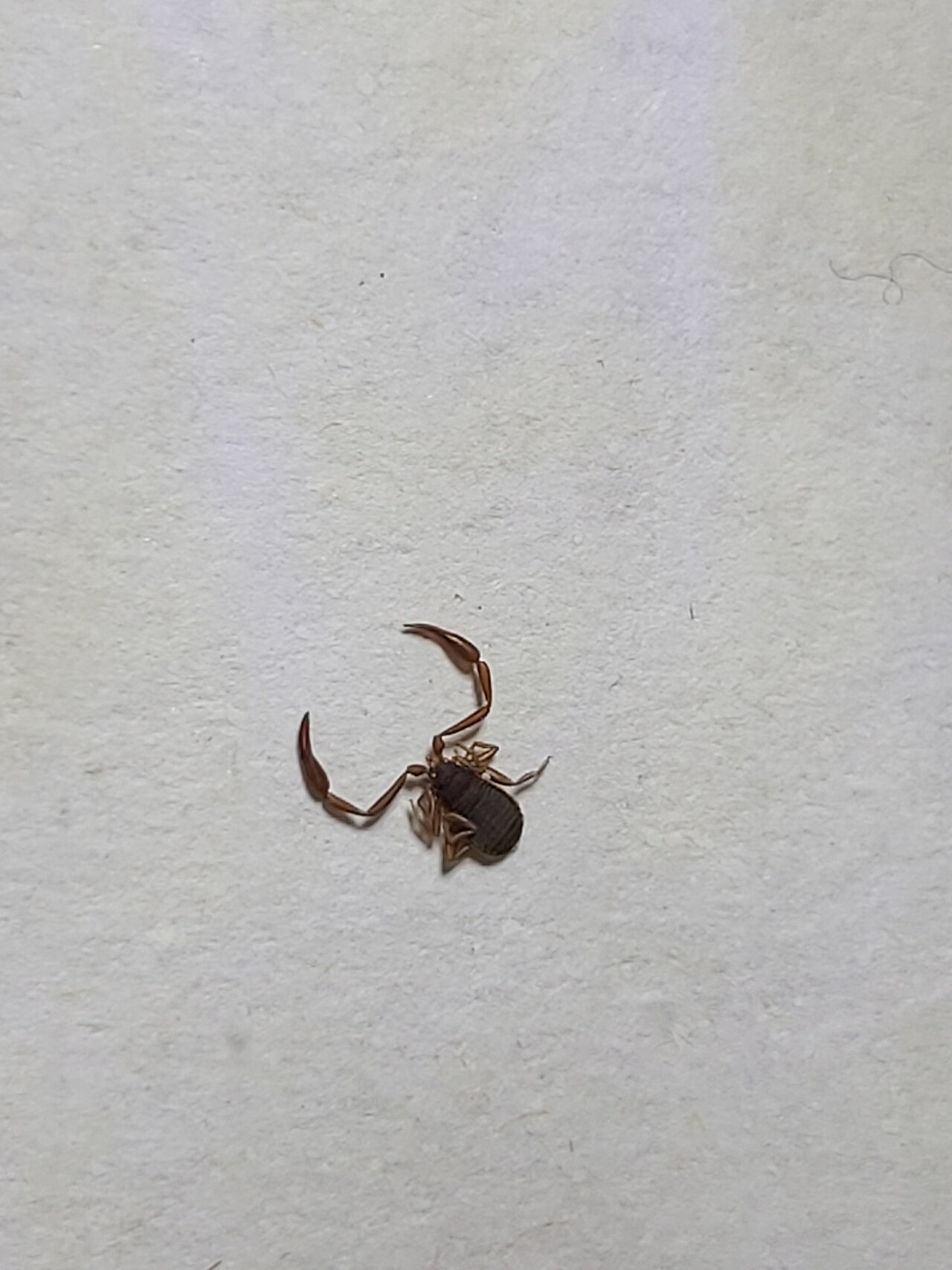
A true scorpion has a segmented tail that curls over the body and ends in a stinger. A pseudoscorpion has nothing behind the body, just a broad teardrop-shaped abdomen without the narrow spider waist. The tail is the fastest check from arm’s length.
The house pseudoscorpion (Chelifer cancroides) is smaller than a grain of rice and walks backward or sideways with its claws raised. Among other bugs that look like spiders, tiny size plus raised claws and no tail point to a pseudoscorpion.
Are Pseudoscorpions Dangerous to People?
No. A pseudoscorpion carries venom, but it is stored inside the pincers and works only on prey the size of a mite. Even when one grips a finger, most people feel nothing.
Pseudoscorpions do not breed in numbers indoors and do not damage wood, food or fabric. If the animal has eight legs, no claws and a violin mark, check brown recluse vs. house spider; in North America only widow and recluse spiders are dangerous to people.
Why You Find Pseudoscorpions in Your House
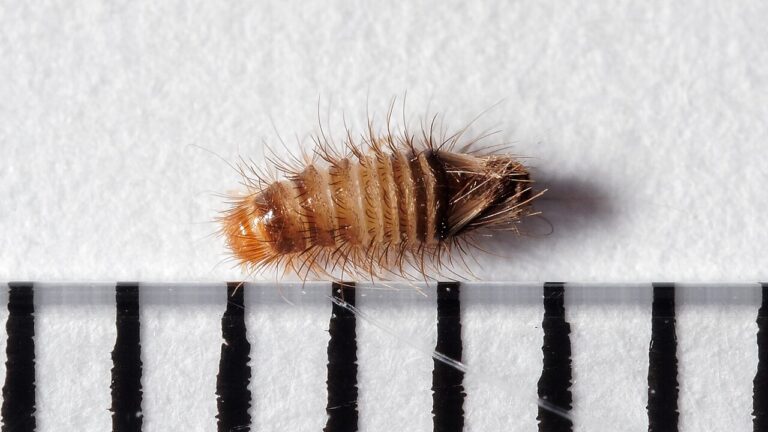
A pseudoscorpion in your house means it found food there. It hunts booklice, dust mites and carpet beetle larvae, so a sighting points to damp paper, a humid bathroom, a basement wall or old books. A single sighting is normal, and several in one spot point to damp material worth drying out.
Some hitch a ride indoors by clipping onto the legs of house flies and letting go when the fly lands. By day they hide under bark, in leaf litter, in wall cracks and in stacked paper.
Removal takes seconds. Slide a sheet of paper under a cup, carry the animal outside to leaf litter or a woodpile and let it go. No spray is needed.
Other Scorpion-Like Arachnids People Mistake for Spiders
Tailless whip scorpions (order Amblypygi) are harmless despite their looks. The body is flat, the front legs are drawn out into long whip-like feelers, and spiny grasping arms fold up in front of the face. They have no venom glands and no stinger.
Vinegaroons (order Thelyphonida) add a thin whip tail behind the body but no stinger. They spray a vinegar-smelling defensive fluid from the base of the tail. Vinegaroons burrow under rocks and logs in desert, grassland and Florida pine scrub, and both groups live in the southern United States and seldom come indoors.
A bold jumping spider or other jumping spider that feels threatened raises its front legs and spreads them wide, and from above that pose reads as a pair of claws. The giveaway is the face, with two huge forward-facing eyes that a pseudoscorpion lacks.
| Animal | Size | Pincers | Tail or stinger | Harm to people |
|---|---|---|---|---|
| Pseudoscorpion | 2 to 8 mm | Yes, longer than body | None | Harmless |
| House spider | 3 to 10 mm body | No, short palps | None | Bites rarely, mild |
| True scorpion | 1 to 3 in | Yes | Segmented tail with stinger | Painful sting, bark scorpion medically relevant |
| Tailless whip scorpion | 0.5 to 1.5 in body | Spiny grasping arms | None | Harmless |
| Vinegaroon | 1 to 3 in | Yes, heavy | Thin whip, no stinger | Harmless, spray irritates |
| Jumping spider | 4 to 15 mm | No, raised front legs | None | Harmless |
Frequently Asked Questions
Is a scorpion an insect or a spider?
No, it is neither. Scorpions are arachnids in their own order, Scorpiones, separate from spiders in the order Araneae. Pseudoscorpions form a third order, Pseudoscorpiones, with about 4,000 species.
Can scorpions get in your bed?
Yes, climbing species can. Bedding that touches the floor and a bed frame against the wall give a scorpion a path up. Keep blankets off the floor and the bed a few inches from the wall.
How big is a pseudoscorpion?
2 to 8 mm long including the pincers, and most indoor species stay under 4 mm. Many people first see one only as a moving speck on a white sink.
Do pseudoscorpions spin webs?
No. They make silk from glands in their jaws, the chelicerae, but use it only to spin small chambers for molting, brooding and overwintering, not to catch prey.
Sources