Western Hognose Snake Care: Size, Setup, Feeding and Real Costs
The western hognose snake is a small, stocky, shovel nosed colubrid of the Great Plains, and it is the closest thing in the reptile hobby to a beginner snake that also happens to be a character. Adult females top out around 24 in (60 cm) and males rarely pass 18 in (46 cm), so a single adult lives comfortably in a 20 gallon long enclosure for its entire 15 to 20 year life.
What sells the species is behavior. A western hognose bluffs instead of biting: it flattens its neck, hisses hard, strikes with the mouth shut, and if that fails it digs. Owners spend more time watching one plow through substrate with that upturned snout than they do watching most snakes do anything at all.
The western hognose snake (Heterodon nasicus) is a small, docile, nonvenomous colubrid from the central United States. Females reach 16 to 24 in, males 14 to 18 in, and both live 15 to 20 years in captivity. They need a 20 gallon long enclosure, deep loose substrate for burrowing, a 90 F basking surface, and one thawed mouse every 7 to 10 days.
| Care factor | Requirement |
|---|---|
| Adult size | Females 16 to 24 in, males 14 to 18 in |
| Lifespan | 15 to 20 years in captivity |
| Enclosure | 20 gallon long or 36 by 18 in for an adult female |
| Temperatures | Basking surface 88 to 92 F (31 to 33 C), cool end 75 F (24 C) |
| Humidity | 30 to 50 percent, dry with a water bowl |
| Substrate | 3 to 4 in of aspen shavings or a soil and sand mix for digging |
| Feeding | One appropriately sized thawed mouse every 7 to 10 days |
| Price | 100 to 250 USD normal, 300 to 3,000 USD for morphs |
Are western hognose snakes good pets?
Yes, and for a specific set of reasons. They stay small, which means a full grown adult needs less floor space than a rabbit. They are slow moving and reluctant to bite, so handling mistakes rarely end in blood. They tolerate dry, simple setups without misting systems or high humidity gradients, and they take frozen thawed rodents readily once established.
The honest drawbacks are two. Hatchlings can be stubborn feeders, sometimes needing scenting with tuna or frog to start on mice, so a captive bred juvenile that is already eating well is worth paying extra for. And this is a burrower: expect the snake to be out of sight for days at a stretch, which disappoints anyone who wanted a display animal. For the genus as a whole, including its wild relatives, see our overview of the hognose snake.
How to identify a western hognose snake
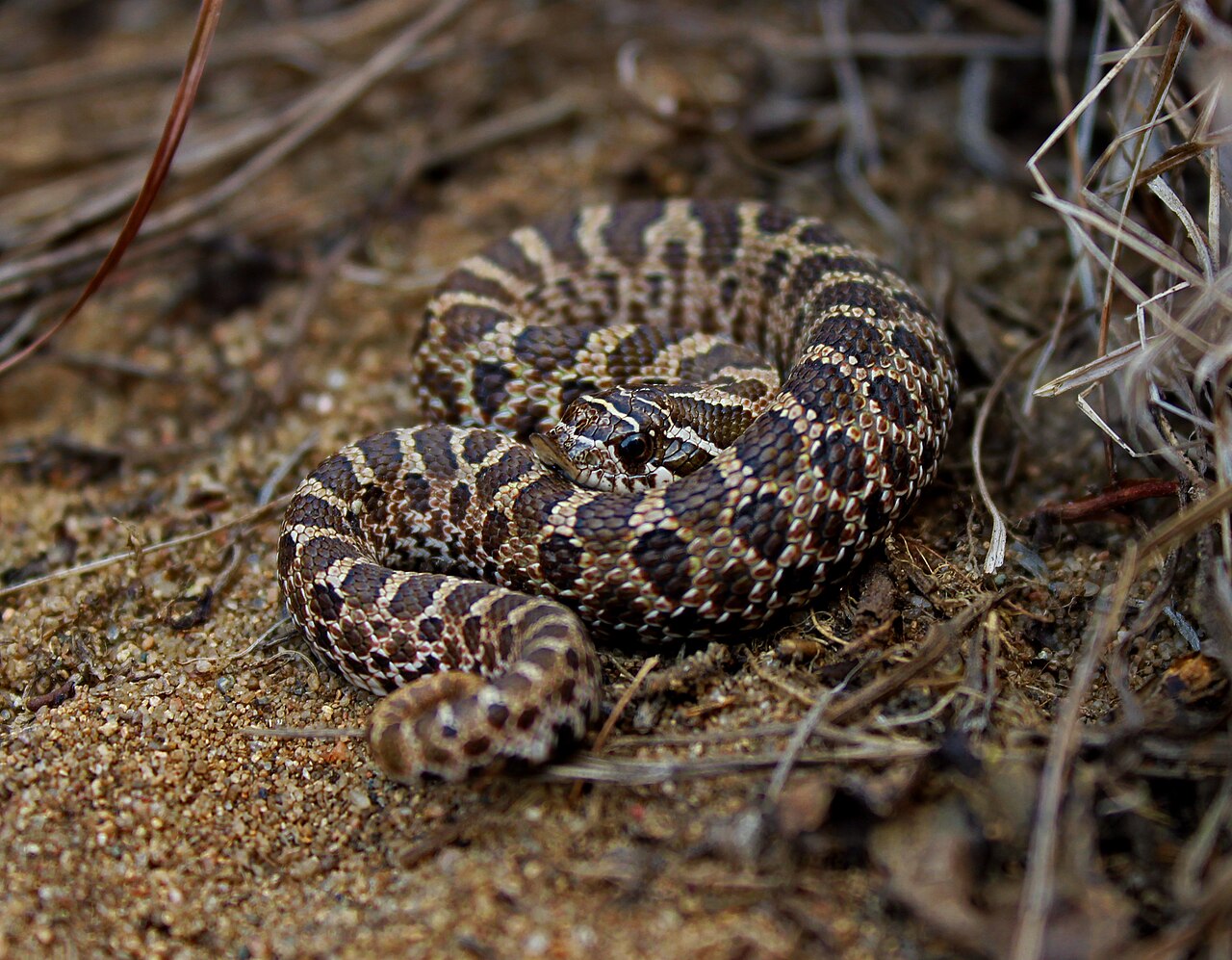
Look at the snout. The rostral scale is sharply upturned into a keeled wedge, a purpose built spade for pushing through sandy soil, and no other small snake in its range carries one that pronounced. The body is thick for its length, the tail is short, and the whole animal looks slightly oversized in the middle, the reason keepers call them footballs.
Color is tan, buff, or olive gray above with a double row of dark brown blotches down the back and smaller blotches on the sides. A dark mask runs across the eyes and down onto the jaw. The belly is the giveaway against its eastern cousin: black with irregular yellow or cream patches. Juveniles look like miniature adults with sharper contrast, covered in our guide to the baby hognose snake.
Where western hognose snakes live in the wild
The natural range runs up the center of the continent, from southern Alberta, Saskatchewan, and Manitoba through the Dakotas, Nebraska, Kansas, Oklahoma, and Texas into northern Mexico, with scattered populations east into Iowa, Missouri, and Illinois. Everything about the species tracks loose soil: sandhills, shortgrass and mixed prairie, sandy river bottoms, and the edges of farmland.
Wild hognose snakes spend most of their day underground or under cover, surfacing in the morning and late afternoon to hunt. Their natural diet leans heavily on toads, along with lizards, small rodents, and reptile eggs, and they have enlarged rear teeth plus a mild salivary secretion that helps subdue struggling amphibians. Winter is spent in burrows below the frost line, sometimes dug by other animals.
Are hognose snakes aggressive?
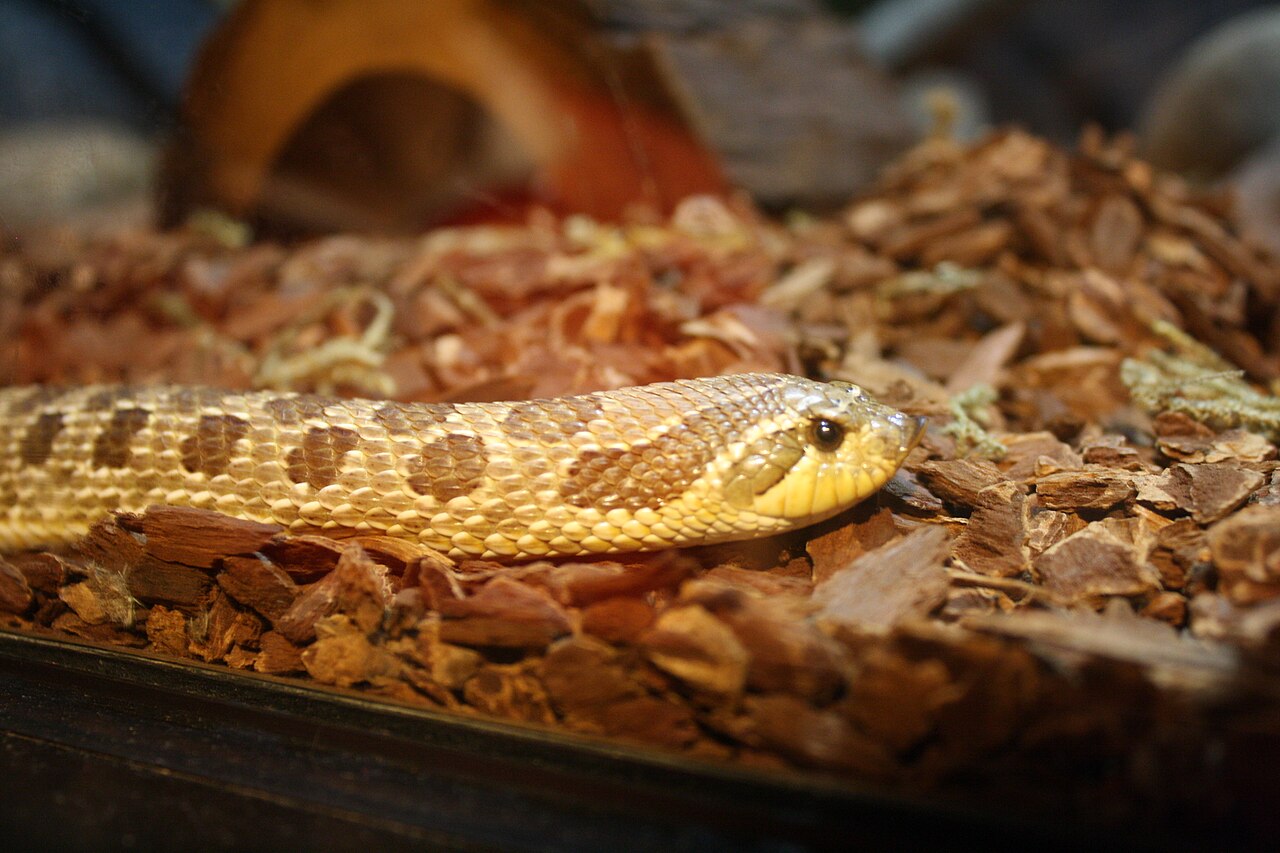
No. Across the hobby, western hognose snakes have a reputation for being among the calmest small colubrids, and adults commonly sit still in the hand without coiling, thrashing, or musking. Food response can be enthusiastic to the point of comedy, but that is appetite pointed at a tong, not aggression directed at you.
Defensive displays look far worse than they are. A stressed hognose spreads its neck flat like a tiny cobra, puffs up, hisses loudly, and lunges with a closed mouth, all of it theater aimed at convincing a predator to leave. If the bluff fails, the animal may roll onto its back, gape, and go limp, a performance the eastern species has made famous and which we cover in detail under hognose snake playing dead.
Will a hognose snake bite a human?
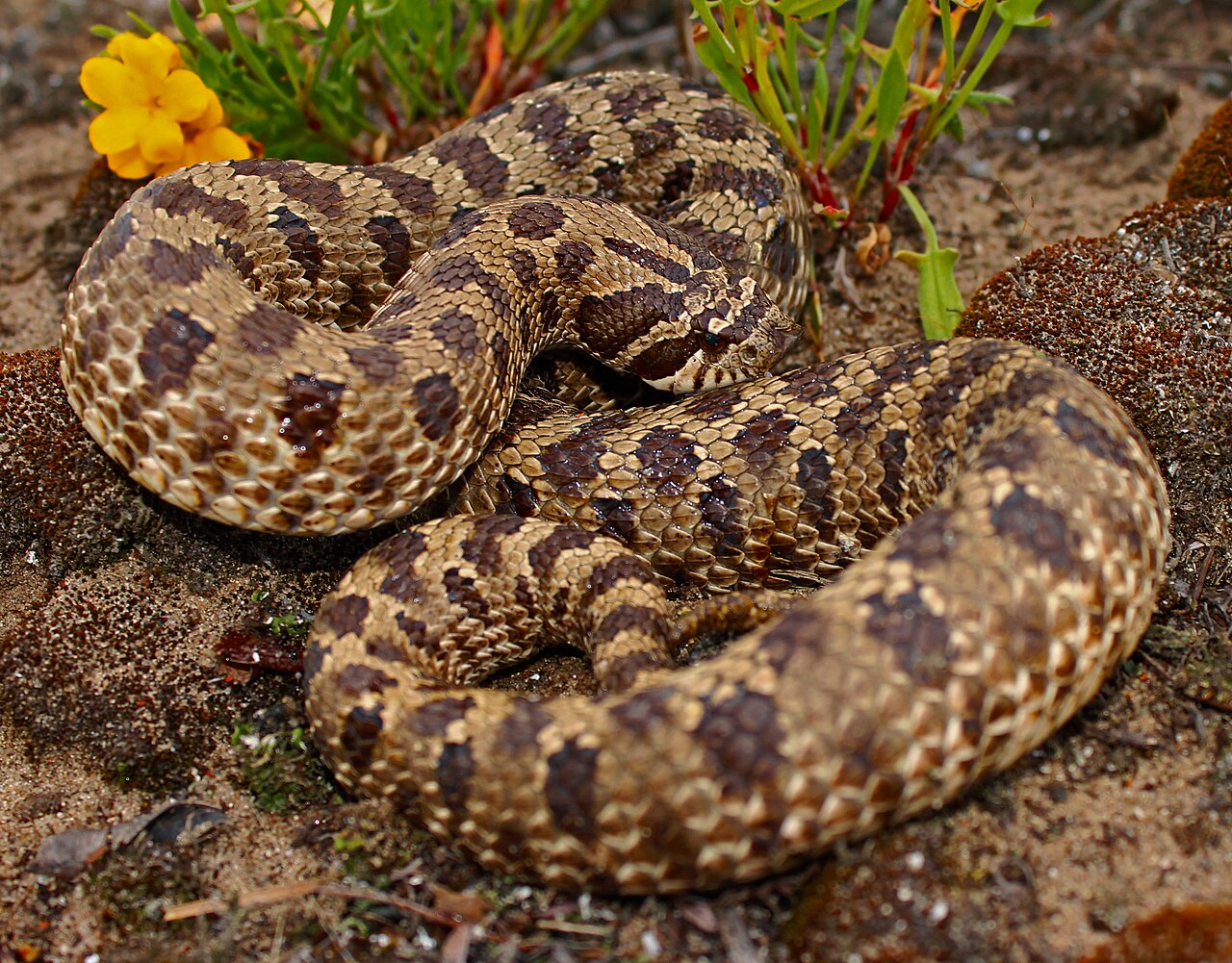
Rarely, and the result is minor. Most owners go years without a defensive bite, because the species would rather bluff strike with the mouth shut. The bites that do happen usually come during feeding, when a snake in hunting mode grabs a finger near the tongs, or when someone reaches into the substrate without warning a sleeping animal.
Western hognose snakes are not venomous in the medical sense. They do have enlarged rear teeth and a Duvernoy’s gland that produces a mild secretion, and a small number of people who were chewed on for an extended period have reported local swelling, itching, and bruising that resolves within a few days. No antivenom exists because none is needed. Wash the bite, apply pressure, and watch it, and if swelling spreads, call a doctor.
Enclosure setup for a western hognose snake
A single adult female is well housed in a 20 gallon long tank or a 36 by 18 in enclosure, and males do fine in something a third smaller. Floor space matters far more than height, since this is a ground animal that has no interest in climbing. Front opening enclosures reduce stress because the approach does not come from overhead.
Furnish it with two hides, one on the warm end and one on the cool end, a sturdy water bowl, and clutter in the form of cork bark, leaf litter, or hardscape. Hognose snakes are strong escape artists relative to their size, so the lid has to lock and every gap needs checking: a snake with a shovel for a nose finds any weak seam. Keep the setup dry and well ventilated.
Temperature, humidity and substrate
Give a basking surface of 88 to 92 F (31 to 33 C) at one end, measured with a probe or an infrared thermometer on the ground rather than in the air, and let the cool end sit near 75 F (24 C). An under tank heat mat on a thermostat is the standard solution; overhead heat works as long as the ambient side stays cool enough to offer a real gradient. No night drop below 70 F (21 C) is needed, and no special lighting is required, though a low output UVB tube is a reasonable extra.
Humidity stays low, 30 to 50 percent, which suits a prairie animal. Use 3 to 4 in of aspen shavings, a soil and play sand blend, or a paper based bedding, and skip pure sand and cedar entirely. Deep loose bedding is not decoration: digging is the behavior this species performs most, and an enclosure without it produces a bored, surface bound snake.
What western hognose snakes eat in captivity
Frozen thawed mice, sized so the prey is no wider than the thickest part of the snake. Hatchlings start on pinky mice, juveniles move up to fuzzies and hoppers, and adult females finish on adult mice. Thaw in the refrigerator and warm to body temperature in a sealed bag in warm water, never in a microwave, and offer with tongs.
Adults eat once every 7 to 10 days, juveniles every 5 to 7 days. Overfeeding is the most common husbandry error in this species: a hognose that is fed weekly on oversized prey becomes visibly obese, with fat rolls and a rounded rather than slightly triangular body profile, and obesity shortens a life this long. Reluctant hatchlings often respond to a pinky scented with tuna juice or a frog leg. Detailed lifespan data appears in our breakdown of hognose snake lifespan.
Do western hognose snakes like to be held?
They tolerate it well, which is the accurate way to say it. Reptiles do not seek affection, but western hognose snakes habituate to handling faster than most, and a regularly handled adult will sit on a warm hand and explore rather than bolt. Two or three sessions a week of 10 to 15 minutes are plenty.
Support the body from underneath, keep the animal low over a lap or a table, and avoid gripping behind the head. Skip handling for 48 hours after a meal, during a shed when the eyes turn cloudy blue, and for the first week after the snake comes home. If your hands smell of rodent, wash them before reaching in.
How much does a hognose snake cost?
A normal, captive bred, well started western hognose runs 100 to 250 USD from a breeder or a reptile show in the United States, with juveniles at the low end and proven adult females at the high end. Common morphs like albino, anaconda, or toffee sit in the 250 to 600 USD band. Combination morphs such as superconda albino or lavender designs reach 1,000 to 3,000 USD and beyond.
The enclosure costs more than the animal. A complete dry setup with a locking tank, thermostat, heat mat, two hides, bedding, and a digital thermometer and hygrometer runs 150 to 300 USD, plus roughly 50 to 100 USD a year for frozen rodents and bedding. Budget for an exotics vet visit as well, since a small reptile with a two decade lifespan will need one eventually.
Common health problems
The three complaints that fill veterinary notes for this species are obesity, respiratory infection, and retained shed. Obesity comes from overfeeding and is fixed by stretching the interval and reducing prey size. Respiratory infections, signaled by open mouth breathing, bubbling at the nostrils, and wheezing, follow enclosures that are too cool or too damp, and they need a vet rather than a heat increase alone.
Retained shed, especially eye caps and tail tips, points to humidity that is too low during the shed cycle; a damp moss hide during that week solves it. Regurgitation after a meal usually means the prey was too large, the snake was handled too soon, or the temperature is off. Watch also for mites, which show as tiny dark specks in the water bowl.
Western hognose vs eastern hognose
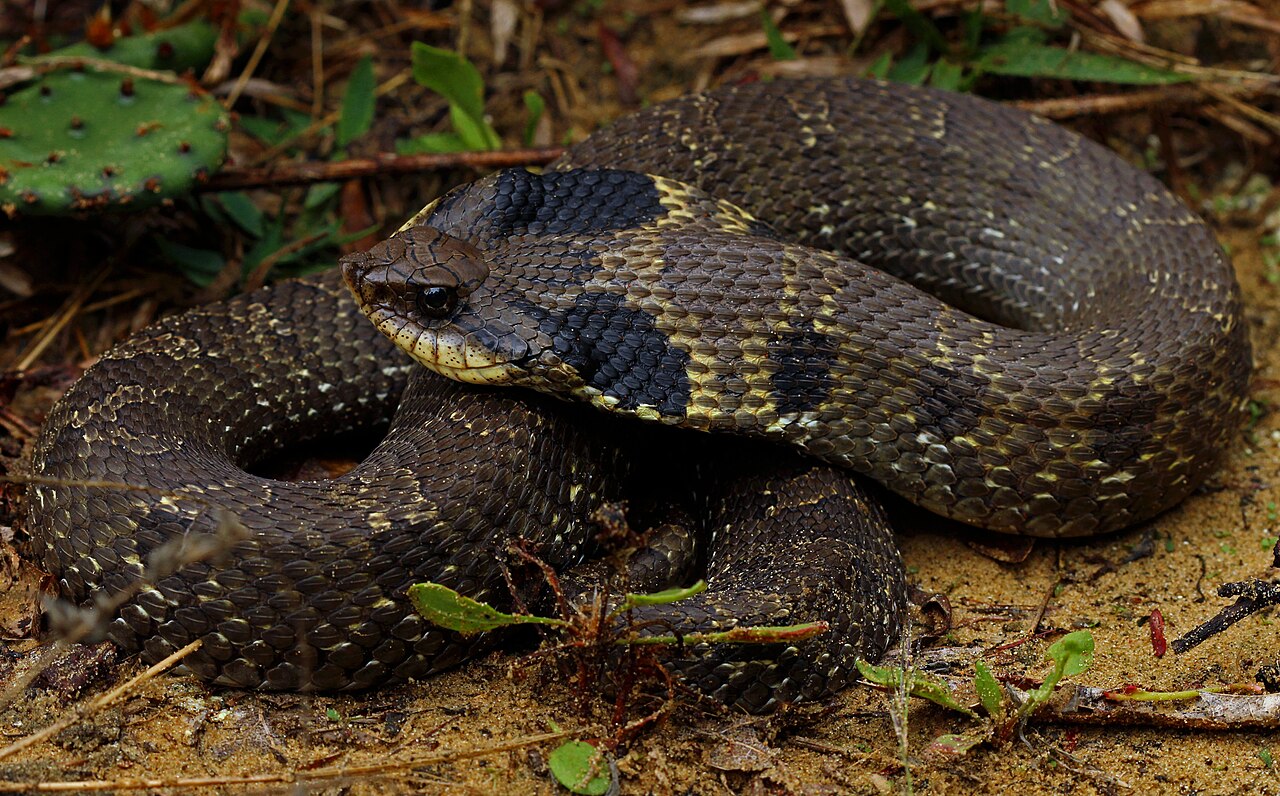
They are separate species with different needs. Heterodon nasicus is the smaller, drier, plains dwelling animal that thrives in captivity on mice. The eastern hognose snake, Heterodon platirhinos, is larger at 20 to 33 in, more variable in color from black to orange to patterned, and a toad specialist that often refuses rodents outright, which makes it a poor pet and a protected species in several states.
Belly color separates them in hand: the western has a black belly with pale blotches, while the eastern has a lighter, mottled underside and a distinctly more upturned, sharper snout. The death feigning routine is stronger in the eastern species, though both bluff. Anyone comparing a hognose with a first snake alternative should also look at the corn snake, which is larger but even easier to feed. Range maps and natural history for both species are maintained by the Smithsonian’s National Zoo and Conservation Biology Institute at nationalzoo.si.edu.
Frequently Asked Questions
Are western hognose snakes venomous?
Not in any way that matters to people. They have enlarged rear teeth and a mild salivary secretion used on toads and lizards, so a prolonged chewing bite has caused local swelling and itching in a few cases. There are no fangs, no dangerous venom, and no antivenom is needed.
What is the most cuddly pet snake?
No snake is cuddly, but the calmest and most handleable species are the western hognose, corn snake, ball python, and rosy boa. Among them the hognose wins on size and personality: an adult fits in one hand, moves slowly, and habituates to regular sessions without ever wanting affection in return.
What is the prettiest pet snake?
That depends on taste, though morph work has made the western hognose a serious contender. Lavender, toffee, and superconda lines produce clean pastel animals with reduced patterning, while albino forms turn the blotches orange on cream. Other common answers are the emerald tree boa, the Brazilian rainbow boa, and high color corn snake morphs.
What is the hardest snake to care for?
Wild caught specialists are the hard cases: green tree pythons for their exacting humidity and temperature windows, reticulated pythons and other giants for sheer size and strength, and egg eating or amphibian eating species for diet. Eastern hognose snakes belong on the list too, since many refuse anything but toads.
What snake is worth $100,000?
Prices that high belong to first of their kind morphs, not to species. The lavender albino ball python sold for about 40,000 USD when it appeared, and early specimens of new genetic lines in ball pythons and reticulated pythons have been quoted near or above 100,000 USD. Hognose morphs peak far lower, in the low thousands.
Do western hognose snakes need a heat lamp?
Not necessarily. A thermostat controlled under tank heat mat gives the warm belly contact a burrowing snake uses, and it is the most common setup. A low wattage overhead lamp or a radiant heat panel works too, as long as the basking surface reads 88 to 92 F and the cool end stays near 75 F.