Hobo Spider: How to Identify One and Why the Bite Myth Died
The hobo spider (Eratigena agrestis) is a medium sized brown funnel weaver that builds sheet webs in basements, crawl spaces and woodpiles across the Pacific Northwest, and it is far less dangerous than its reputation suggests. For two decades it was blamed for flesh destroying bites, then the evidence fell apart. The CDC dropped it from its list of venomous spiders of concern in 2017, and no verified bite has produced those wounds.
That leaves the practical questions: what it looks like, which states have it, and what works when one keeps turning up in the laundry room every September.
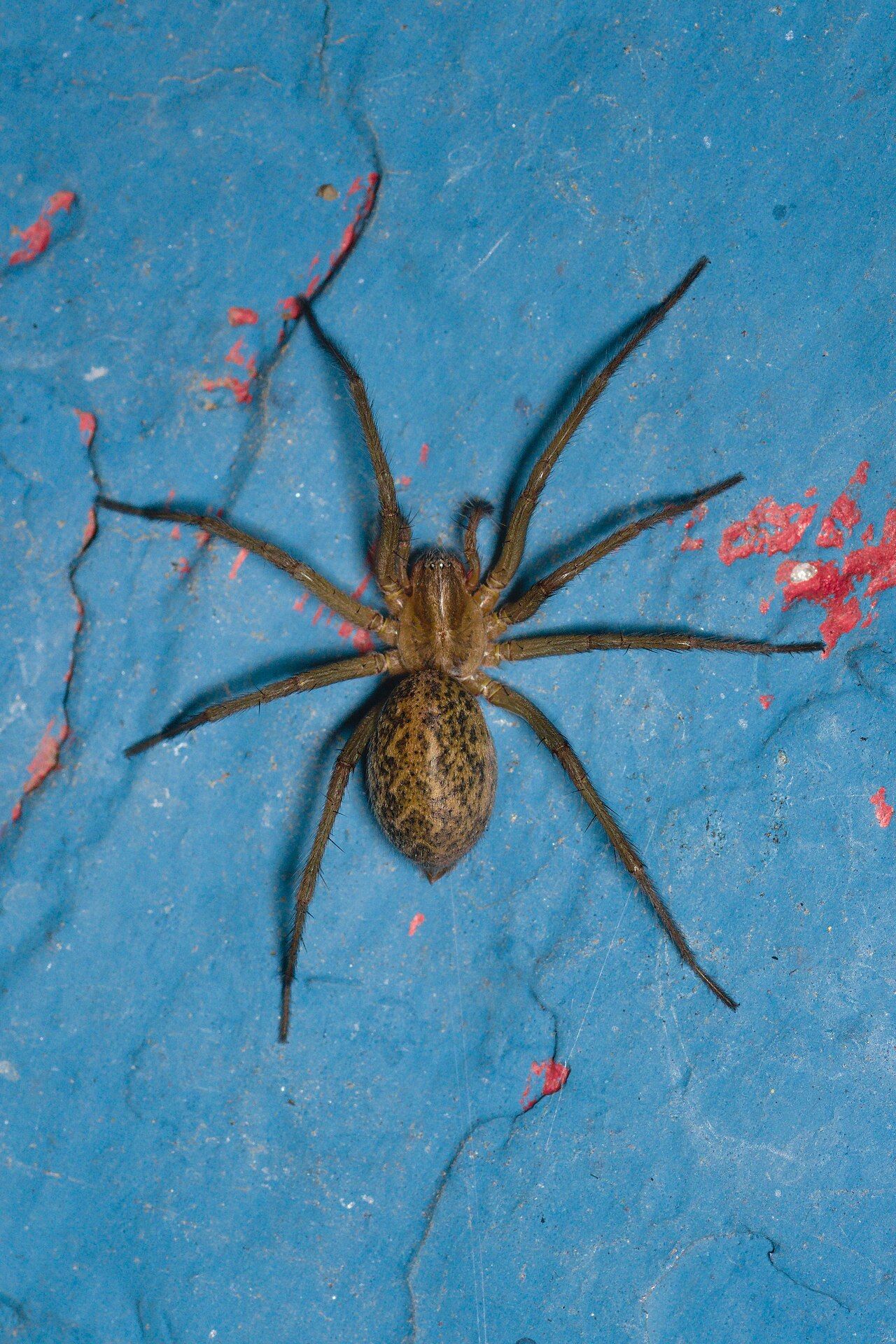
Hobo spiders are brown funnel weavers about 0.3 to 0.6 in (7 to 15 mm) long with a herringbone pattern on the abdomen and solid, unbanded legs. They live in the Pacific Northwest and northern Rockies. Their bite causes mild redness at worst, and researchers have found no evidence that it destroys tissue.
| Feature | Hobo spider |
|---|---|
| Scientific name | Eratigena agrestis |
| Body length | 0.3 to 0.6 in (7 to 15 mm), legs span up to 1.6 in (4 cm) |
| Key marks | Herringbone chevrons on abdomen, no rings or stripes on legs |
| Web | Flat funnel sheet near the ground, not sticky |
| Range | Pacific Northwest, northern Rockies, southwestern Canada |
| Risk to people | Low. Not on the CDC list of medically significant spiders |
| Peak indoor season | August to October, when males wander |
How venomous is the hobo spider?
Barely. Hobo spider venom is built for insects, and the clinical record in humans shows short lived redness, mild pain and occasional itching. The necrotic wounds attributed to this species in the 1990s came from a small set of studies that later work could not reproduce, and reviews of verified bites, where the spider was caught and identified by an arachnologist, found no tissue death at all.
The reversal is unusually clean for spider science. Researchers re-examined the original data, could not replicate the rabbit lesion results, and traced most reported “hobo spider bites” to infections and skin conditions that were never spider related. Guidance from Utah State University Extension now treats the species as a nuisance, not a hazard.
A bite still deserves soap, water and a cold pack. What it does not deserve is an emergency room visit on the assumption that the skin is about to open up.
What states do hobo spiders live in?
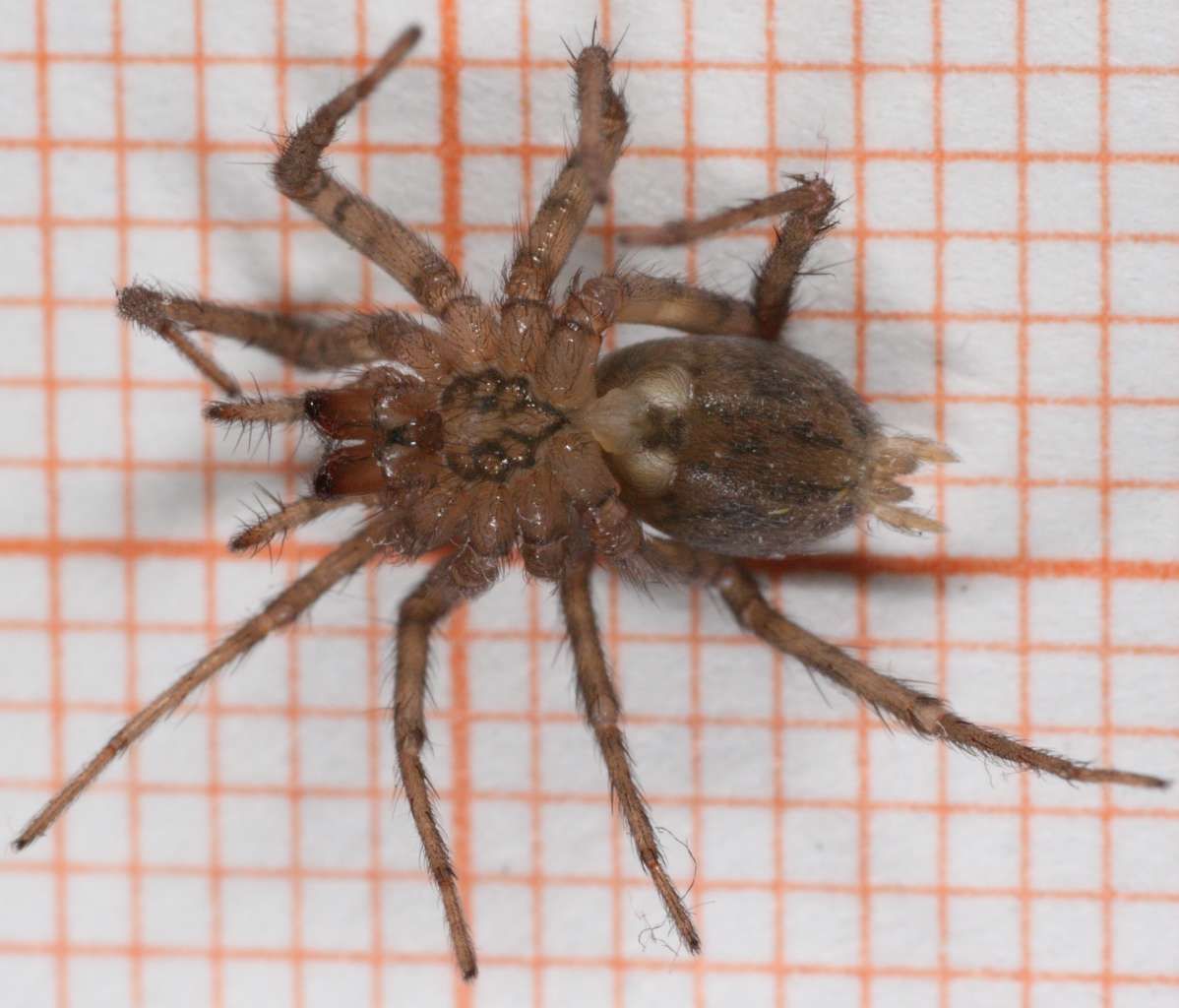
Hobo spiders are established in Washington, Oregon, Idaho, Montana, Wyoming, Utah, northern Nevada, western Colorado and the northern edge of California, plus British Columbia and Alberta. The species arrived from Europe and was first recorded around Seattle in the 1930s, then spread inland along valleys and human corridors.
They are not in the Southeast, the Gulf states or the Northeast, which matters because most online bite stories come from places the spider has never reached. If you live in Georgia or New Jersey and find a brown funnel weaver in the garage, it is a grass spider or a barn funnel weaver, not this species.
Indoors they stay low, in basements, window wells, crawl spaces and garage corners. They climb poorly compared with the black house spider, so a spider crossing a ceiling is something else.
Is a hobo spider worse than a brown recluse?
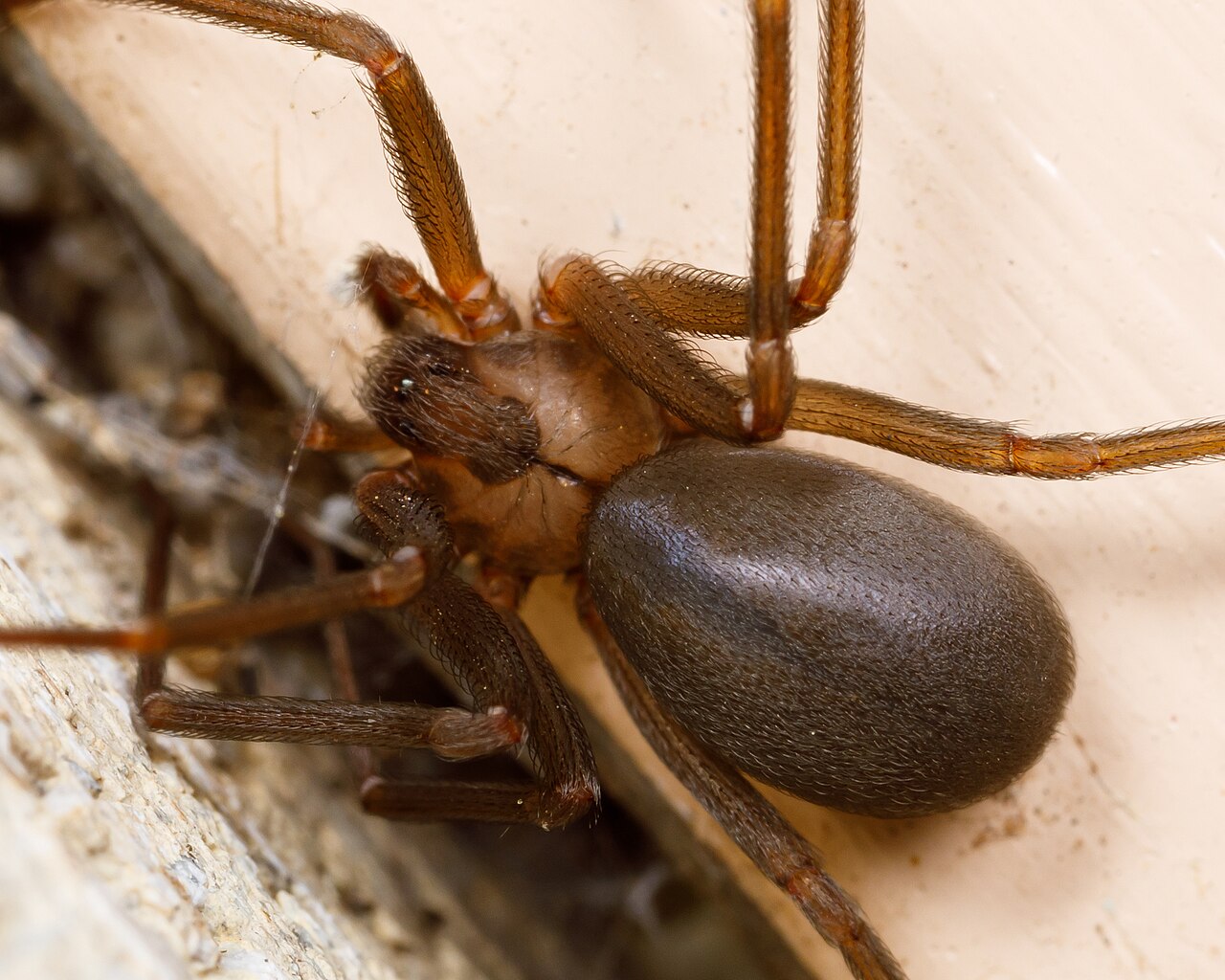
No. The brown recluse (Loxosceles reclusa) has documented necrotic bites and a completely separate range across the central and southern United States, where the hobo spider does not occur. The two species almost never overlap, so a spider cannot plausibly be both.
Telling them apart takes one look at the front of the body. A recluse has six eyes in three pairs and a dark violin shape on its cephalothorax. A hobo spider has eight eyes in two rows, no violin, and stouter, hairier legs.
Neither spider hunts people. Both bite only when trapped against skin, inside a sleeve, a shoe or bedding.
How to identify a hobo spider
The reliable field mark is the abdomen. A row of pale chevrons, often described as a herringbone stripe, runs down the top, and the legs are a plain brown with no rings, bands or stripes. Banded legs rule the spider out immediately, which is how the near identical barn funnel weaver (Tegenaria domestica) gives itself away.
Size helps too. A mature body runs 0.3 to 0.6 in (7 to 15 mm), and males are smaller bodied with longer legs and swollen pedipalps that look like boxing gloves. Those wandering males are what people meet in late summer.
Honest caveat: certainty needs a microscope. Arachnologists identify this species by genital structure, not pattern, so pattern plus range plus a ground level funnel web is as close as a homeowner gets. The same problem mislabels southern house spiders and red house spiders online every week.
What kills hobo spiders?
Physical control beats chemicals here. A vacuum takes the spider, the web and the egg sacs in one pass, and sticky traps laid flat along basement baseboards catch wandering males through the fall. Sealing foundation vents, door sweeps and utility gaps cuts the supply from outside.
Residual pyrethroid sprays work on contact but poorly as a barrier, because a funnel weaver sits on its own sheet rather than walking treated surfaces. Clearing woodpiles, ivy and leaf litter off the foundation does more.
What smells do hobo spiders hate?
Peppermint, vinegar, cedar and citrus get recommended constantly and the evidence is thin. Lab work shows brief repellency from peppermint oil, nothing that holds a basement for more than a day. The boring measure that works is cutting insect prey, the same logic behind what spiders eat driving where they settle.
Frequently Asked Questions
Why do they call it a hobo spider?
The name comes from early collectors who found the spider along railroad lines around Seattle and assumed it was hitching rides on freight trains into new towns. The species did spread along human transport routes, though highways and moving trucks probably did more of the work than boxcars ever did.
What to do if you see a hobo spider?
Trap it under a cup, slide a card underneath and put it outside, or vacuum it if you would rather not get close. Then look for the funnel web nearby, since removing the web and any egg sacs matters more than removing the one spider you happened to see.
Why should you never squish a spider?
Crushing a female with an egg sac can scatter viable eggs, and a flattened spider leaves a stain plus no way to identify what you actually killed. Catch and release also keeps a working predator in the yard, where it eats the flies, ants and smaller wandering spiders you like even less.
How long do hobo spiders live?
Females live about one to two years and can produce several egg sacs, each holding roughly 50 to 100 eggs. Males mature in late summer, wander to find mates and die within weeks, which is why the spiders found indoors in fall are mostly short lived males.
What does a hobo spider web look like?
A flat, slightly funnel shaped sheet in a corner at floor level, with a tube at the back where the spider waits. The silk is not sticky. Prey stumbles onto the sheet and the spider runs out, so the web looks messy and dusty rather than like a classic orb.
What is the #1 deadliest spider?
By confirmed human deaths, the Brazilian wandering spider (Phoneutria) and the Australian funnel web (Atrax robustus) lead the list, and neither lives in North America. The hobo spider is not remotely in that category, and in the United States only widow and recluse bites carry real medical weight.