Strawberry Pacman Frog: Price, Size and Care of the Red Albino Morph
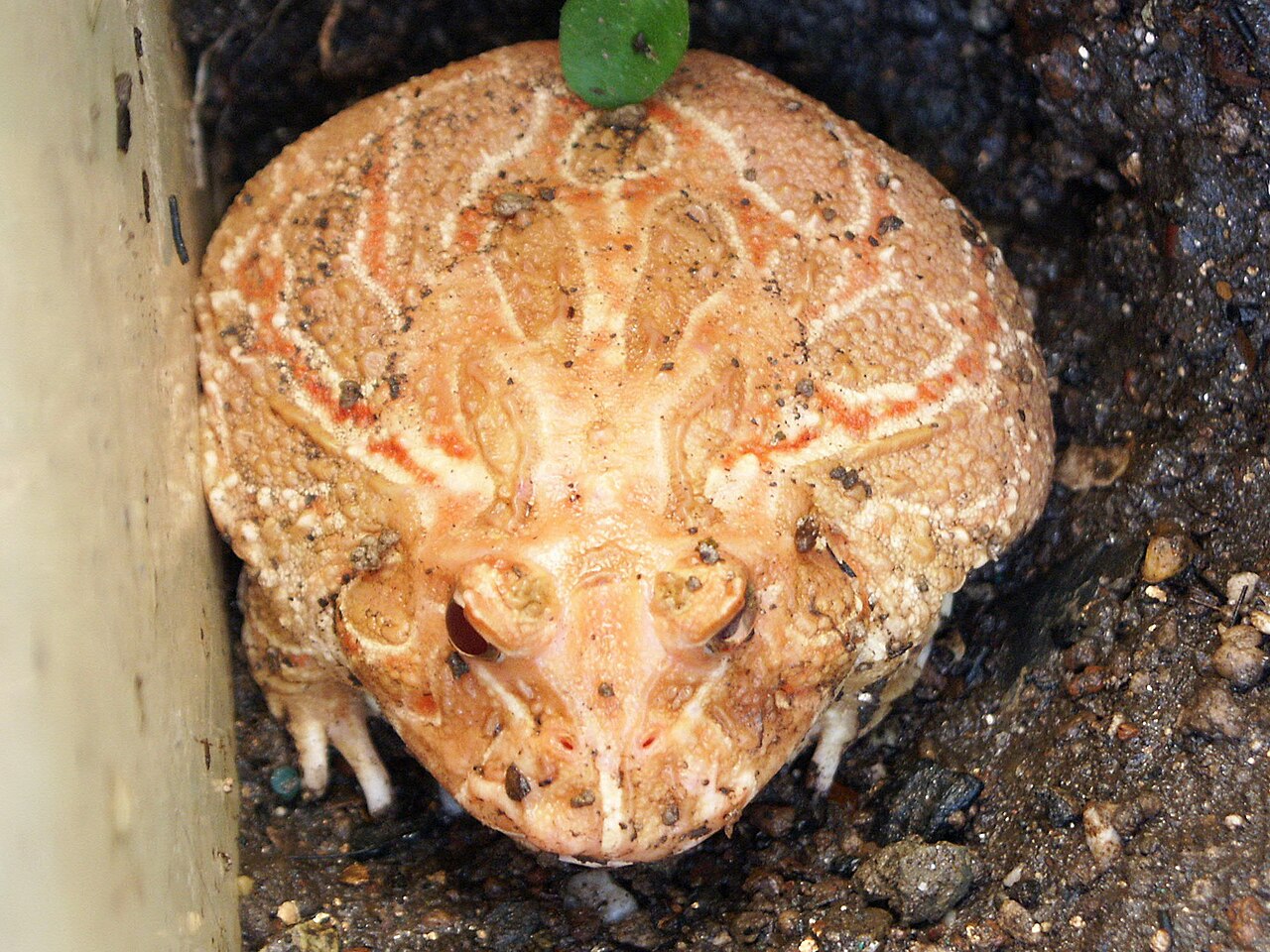
A strawberry pacman frog is a selectively bred color morph of Cranwell’s horned frog (Ceratophrys cranwelli), built on an albino base and marked with pink to deep red patches over a cream or pale yellow body. It is not a separate species, it is not wild caught, and it needs the same care as any other pacman frog. What it does have is a price tag three to five times higher than a standard green one.
Strawberry pacman frogs are also one of the most misunderstood amphibians in the pet trade, sold to buyers who expect a handleable animal and get a sedentary ambush predator with real teeth. This guide covers what the morph actually is, what it costs, how big it gets, and the specific setup numbers that keep one healthy for its full 7 to 10 years.
The strawberry pacman frog is a red and cream albino color morph of Ceratophrys cranwelli, sold for $60 to $150 in the United States. Females reach 4 to 7 in (10 to 18 cm), live 7 to 10 years, need a humid terrarium at 75 to 85 F (24 to 29 C), and must be housed alone because the species is cannibalistic.
| Quick fact | Strawberry pacman frog |
|---|---|
| Species | Ceratophrys cranwelli, Gran Chaco of South America |
| Morph type | Albino base with red and pink patterning |
| Adult size | Females 4 to 7 in (10 to 18 cm), males 2.5 to 4 in (6 to 10 cm) |
| Lifespan | 7 to 10 years, occasionally past 12 |
| Price | $60 to $150, high-color animals above $200 |
| Housing | One frog per enclosure, always |
| Handling | Minimal, wet hands only, will bite |
What Is a Strawberry Pacman Frog?
A strawberry pacman frog is an albino Ceratophrys cranwelli selected over generations for red pigment. The albino base removes the dark melanin that gives a normal pacman frog its green and brown camouflage, leaving the underlying red and yellow pigment cells to show through unopposed.
The trade name gets messy fast. Pineapple usually means a plain albino with yellow tones, strawberry pineapple means the same base with red patterning, and strawberry alone is used for both by different sellers. There is no registry and no standard, so the same animal can be listed under three names at the same expo.
Underneath the color it is an ordinary horned frog: a wide mouth, a squat body, and a lifestyle that consists of sitting buried in substrate waiting for something to walk past. The genus and its general husbandry are covered on the main pacman frog page, and nothing about the strawberry morph changes it.
Are Strawberry Pacman Frogs Rare?
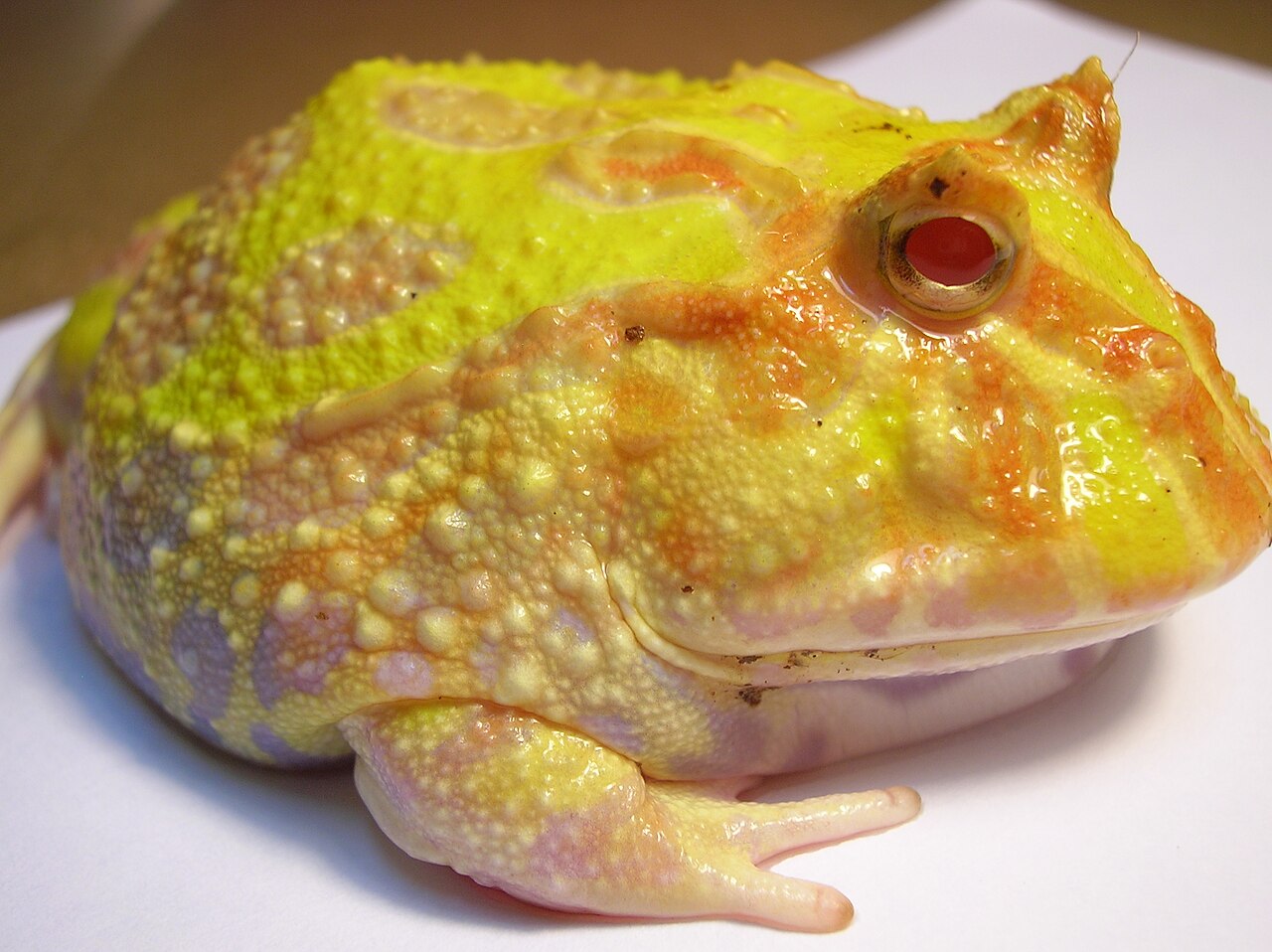
Strawberry pacman frogs are uncommon rather than rare. They are produced consistently by specialist breeders in the United States and Southeast Asia and turn up at most large reptile expos, but they are never stocked in the numbers that standard green and albino animals are.
Color intensity is the real scarcity. Many frogs sold as strawberry are pale, with pink blotches that read as washed out next to the photos used to sell them, and the deep saturated animals command a large premium within the same clutch.
Color also changes with age and mood. A juvenile can brighten considerably over its first year, and any frog darkens or pales in response to temperature, humidity, and stress. Buying on a single photo is how people end up disappointed; ask for a recent image taken in daylight.
How Much Do Strawberry Pacman Frogs Cost?

Expect $60 to $150 for a captive-bred juvenile from a reputable breeder, with exceptionally red animals and adult females reaching $200 to $300. A standard green or albino pacman frog costs $25 to $50, so the morph carries most of the price by itself.
The enclosure is cheap by reptile standards. A 10 gallon terrarium, an under-tank heater with a thermostat, coconut fiber substrate, a shallow water dish, a hygrometer, and a thermometer total $80 to $150, and feeder insects run $100 to $200 a year depending on how you source them.
Shipping is the line people forget. Overnight live animal shipping costs $40 to $60 and is weather dependent, with most breeders refusing to ship during extreme heat or cold. Buying in person at an expo avoids that and lets you see the frog move before you pay.
Size, Growth, and Lifespan
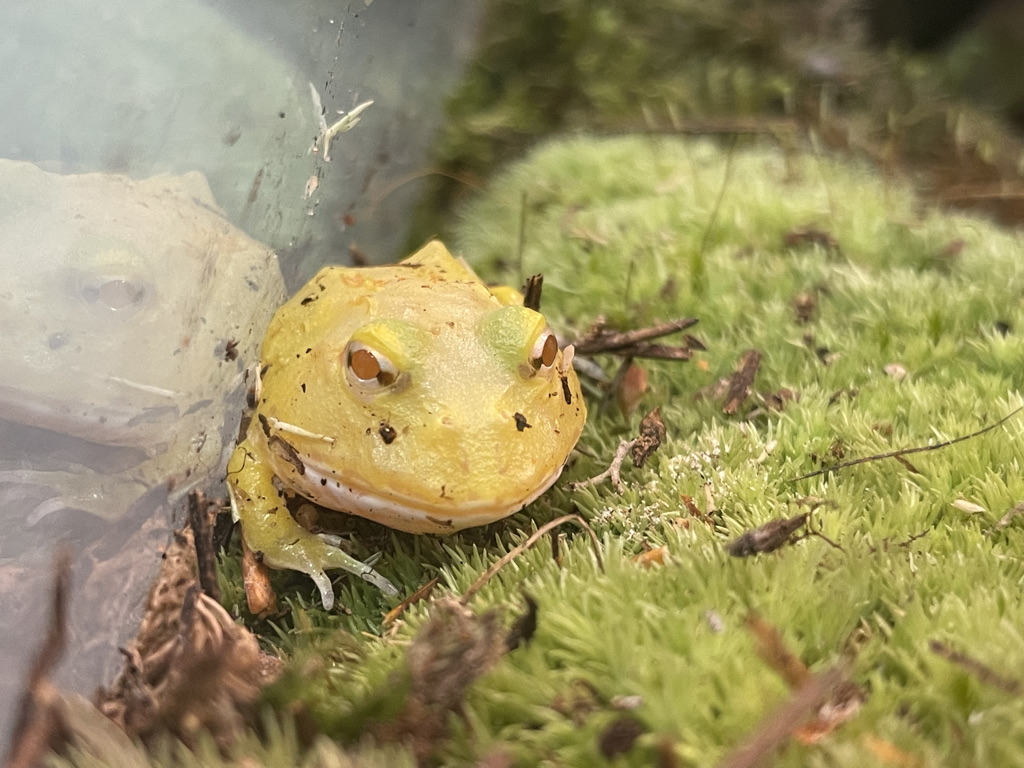
Females reach 4 to 7 in (10 to 18 cm) across, males stay at 2.5 to 4 in (6 to 10 cm), and a well kept adult female can weigh over 480 g. Growth is fast in the first year, with a frog going from a dime-sized froglet to near adult width in roughly 12 months.
Lifespan is 7 to 10 years with correct care, and the main things that cut it short are obesity, chronic low humidity, and impaction from loose substrate. Overfeeding is the most common of the three, because a pacman frog will eat whatever is offered whether or not it needs the food.
Sexing becomes reliable around 8 to 12 months. Males develop dark nuptial pads on the inner fingers and call, a low grumble audible across a room, while females stay silent and grow visibly wider. Juveniles cannot be sexed, and any seller claiming otherwise is guessing. Froglet development follows the same pattern described under baby frog growth stages.
Are Strawberry Pacman Frogs Good Pets?
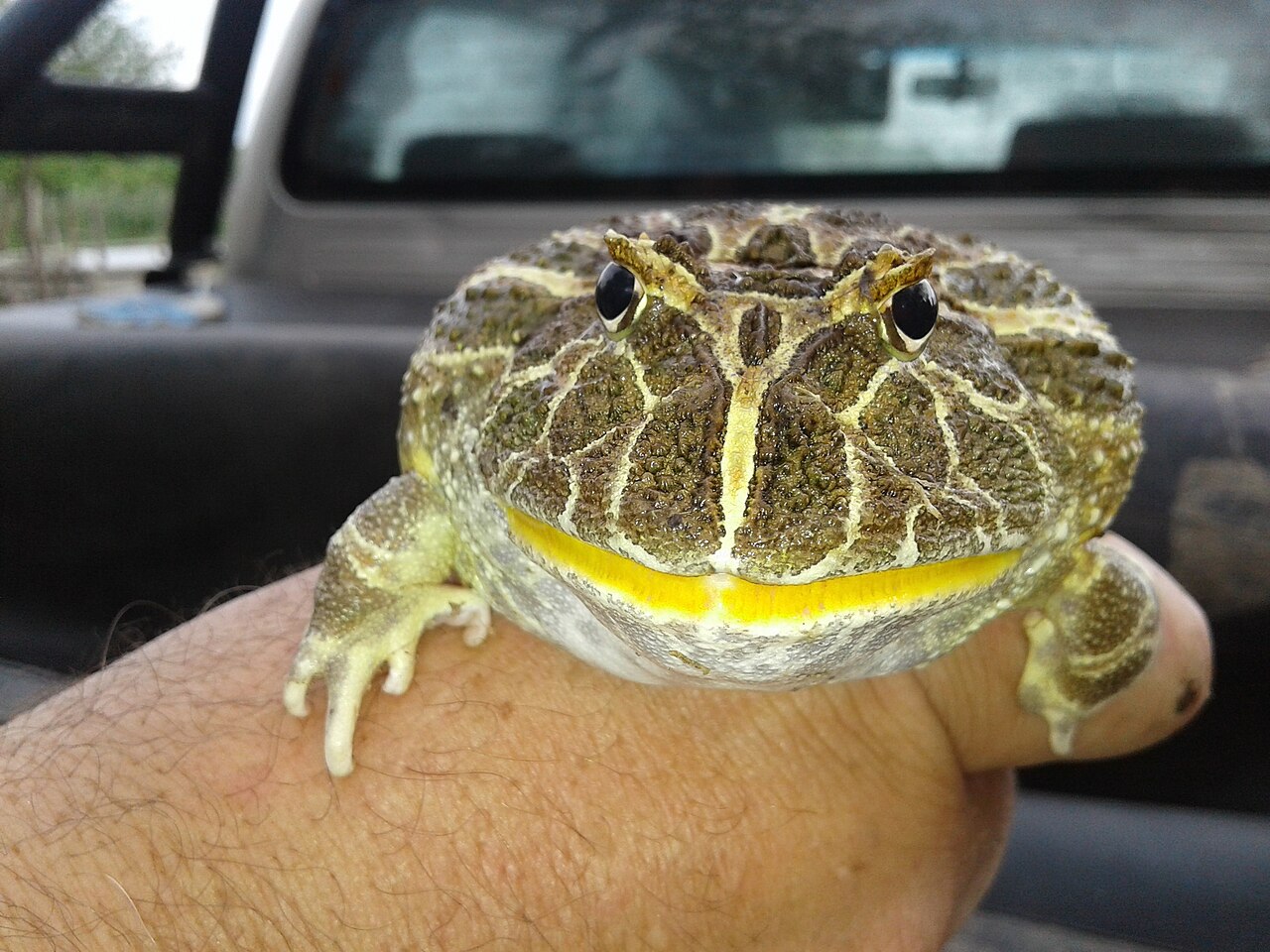
They are good pets for people who want a striking display animal with low daily demands and accept that it will not be handled. They are poor pets for children, for anyone expecting interaction, and for anyone who cannot maintain humidity through a dry winter.
The appeal is genuine. A pacman frog occupies a small footprint, eats a few times a week, tolerates a range of conditions, and looks like nothing else in the room. Feeding is the entire entertainment value, and it is considerable.
The honest downside is that the animal does almost nothing else. It sits buried with only its eyes showing for most of the day and moves rarely. Anyone wanting an amphibian that climbs and stays visible would do better with a white tree frog, which is active in the evening and far more forgiving about handling.
Terrarium Setup and Substrate
An adult needs a 10 gallon terrarium with more floor space than height, since the frog never climbs. A 12 by 12 in footprint is the practical minimum, and larger tanks are harder rather than easier because they make humidity uneven.
Substrate is the one thing worth getting right. Use 3 to 4 in (8 to 10 cm) of coconut fiber, sphagnum moss, or a soil mix that holds moisture and lets the frog burrow completely. Avoid gravel, bark chips, sand, and anything small enough to swallow, because impaction from ingested substrate is a leading cause of death in this species.
Keep decor minimal and stable. A cork bark hide, a broad-leafed artificial plant, and a shallow water dish are enough, and heavy ornaments can crush a frog that burrows underneath them. Spot clean waste daily, since horned frogs produce large droppings and foul a small enclosure quickly, a subject covered in detail under frog poop.
Temperature and Humidity
Hold 75 to 85 F (24 to 29 C) during the day with a slight drop at night, and keep humidity between 60 and 80 percent. Use an under-tank heater on a thermostat placed on one side, never a heat rock, and never let the substrate surface exceed 88 F (31 C).
Amphibian skin is permeable, which makes water quality part of the environment rather than a detail. Dechlorinate everything that goes into the enclosure, including misting water, because chlorine and chloramine pass straight through the skin.
Mist daily and check a digital hygrometer rather than judging by eye. Substrate that looks damp on top can be dry two inches down, where the frog actually sits. Dry conditions trigger the animal to form a protective skin cocoon and shut down, which is a survival response rather than a healthy state.
Do Pacman Frogs Need to Soak in Water?
Yes. Pacman frogs absorb all their water through a patch of skin on the underside rather than by drinking, so a shallow dish of dechlorinated water is essential and not optional. The frog sits in it when it needs to rehydrate.
Depth is a safety issue. The dish should be shallow enough that the frog can rest with its head clearly above the surface, roughly half its body height, because horned frogs are heavy bodied and poor swimmers that can drown in water they cannot climb out of.
Change the water daily. Frogs defecate in their dish routinely, and the same permeable skin that absorbs water absorbs whatever is dissolved in it. A frog that soaks constantly and refuses food is usually signaling dehydration, overheating, or a substrate problem, and the enclosure is where you should look first.
Feeding a Strawberry Pacman Frog
Feed juveniles every 1 to 2 days and adults every 4 to 7 days, using gut-loaded crickets, dubia roaches, and nightcrawlers dusted with calcium and vitamin D3. Prey should be no wider than the space between the frog’s eyes, which for an adult still means fairly large insects.
Avoid making mice a routine item. Pinkies are sold as pacman frog food and are far too fat for regular use, contributing to obesity and fatty liver disease. Occasional use as an adult treat is the common recommendation, and some keepers skip them entirely.
Supplement on a schedule: calcium with D3 at most feedings for juveniles, a multivitamin every second or third feeding, tapering for adults. A frog refusing food for more than two weeks usually has an environmental cause, most often cold temperatures, though prolonged dryness produces the same result. Larger appetites follow the same rules in the African bullfrog, which is kept almost identically.
Can You Hold a Strawberry Pacman Frog?
You can touch a pacman frog with your hands, but only with clean, wet hands and only briefly, because amphibian skin absorbs oils, soap residue, lotion, and salt directly into the bloodstream. Powder-free disposable gloves rinsed in dechlorinated water are the safer option.
They do not like being held. Handling causes a stress response, and pacman frogs are among the more likely amphibians to bite when picked up, with a strike that can draw blood from an adult female. There is no taming curve; a frog handled often is simply a frog stressed often.
Limit contact to necessary moves, such as enclosure cleaning or a health check, and wash your hands thoroughly afterward, since amphibians can carry Salmonella. None of the horned frogs are toxic, unlike a poison dart frog, but their skin secretions can irritate eyes and broken skin.
Health Problems and Estivation
The four problems that account for most veterinary cases are impaction, metabolic bone disease, bacterial skin infection, and obesity. All four are husbandry-driven, which means all four are preventable with substrate choice, supplementation, clean water, and a feeding schedule.
Estivation is different and often mistaken for illness. When conditions turn dry, the frog forms a cocoon of shed skin, buries itself, and shuts down its metabolism. In captivity this is a signal that humidity has dropped too far, and the fix is a gradual return to correct moisture rather than pulling the cocoon off.
Red flags warranting a reptile vet are a frog that stays sitting in water for days, cloudy or reddened skin on the belly, visible jaw softness, or twitching limbs. The Smithsonian’s amphibian conservation work at nationalzoo.si.edu covers the wider health picture for captive amphibians, including the chytrid fungus that drives global declines.
Related reading: Pacman Frog Enclosure.
Frequently Asked Questions
What is the rarest pacman frog?
Blue lines, sometimes marketed as samurai blue, and heavily saturated strawberry animals are the hardest to find and the most expensive. There is no official morph registry for Ceratophrys, so rarity claims come from individual breeders rather than a standard, and names vary widely between sellers.
How many pacman frogs can you keep together?
One. Horned frogs are cannibalistic and will attempt to swallow tank mates of similar or even equal size, which regularly ends with two dead frogs rather than one. Even a pair kept for breeding is introduced briefly under supervision and then separated.
Do pacman frogs like to be held?
No. Handling is a stress event for them, and they show it by inflating, screaming, or biting. They tolerate brief necessary contact but gain nothing from it, and frequent handling suppresses feeding and weakens the immune response over time.
Are strawberry pacman frogs good for beginners?
Yes, with one condition: the keeper has to commit to daily misting and a thermostat-controlled heat source. The species is forgiving about most things and unforgiving about humidity and substrate, so a beginner who handles those two correctly will do fine.
Do strawberry pacman frogs make noise?
Males call with a low repeating grumble, usually at night and often after a rise in humidity, and both sexes scream when startled or handled roughly. It is a loud, distress-driven sound rather than a communication call. Amphibian vocal ranges are compared under frog sounds.
Why is my strawberry pacman frog turning pale?
Color shifts with temperature, humidity, and stress in all horned frogs, and a paler frog is usually responding to its environment rather than getting sick. Persistent pallor combined with sitting in the water dish, refusing food, or a cloudy belly points to dehydration or infection and needs a vet.