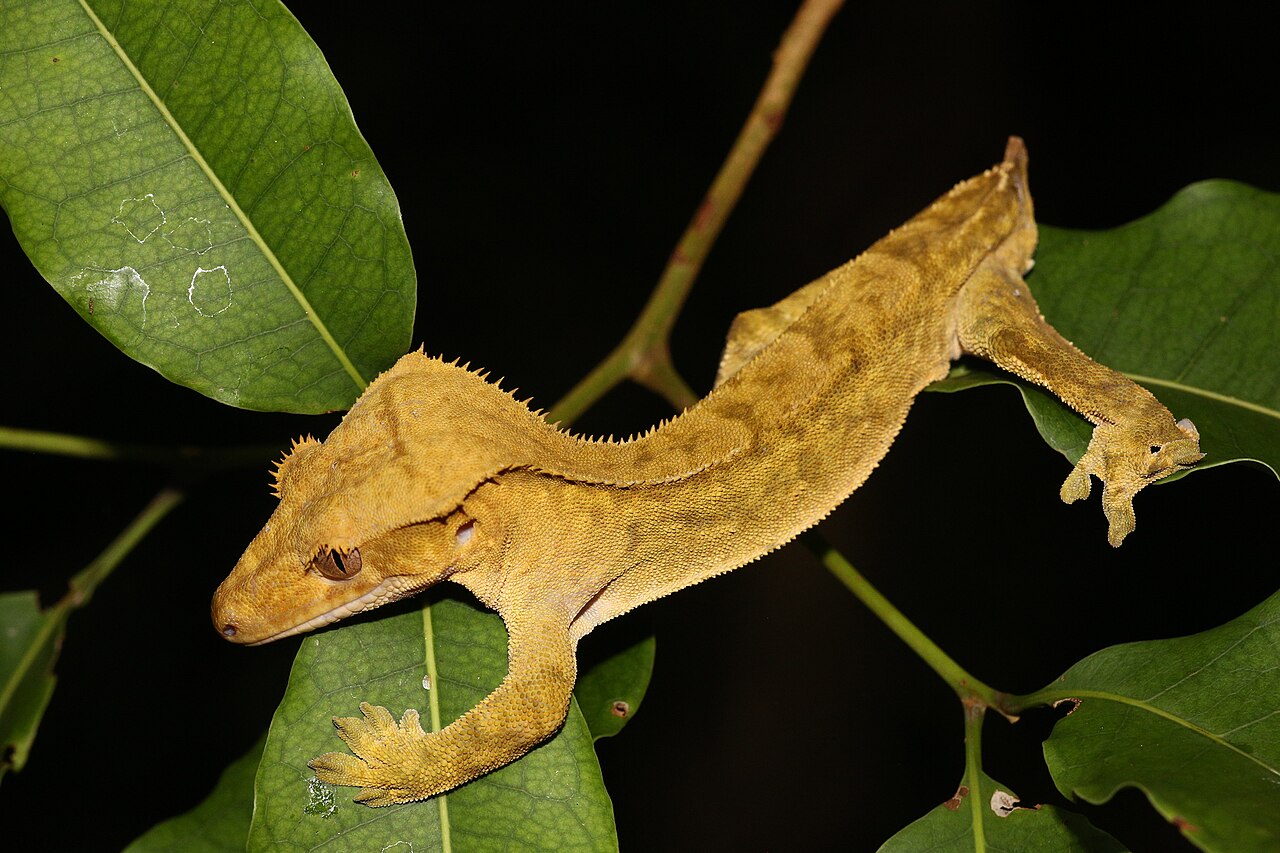
Crested Gecko Diet: What to Feed, How Often, and What to Skip
A complete crested gecko diet starts with one thing: a powdered meal replacement mixed with water and offered fresh three nights a week. Insects, fruit, and treats sit on top of that base, they never replace it.
Crested geckos (Correlophus ciliatus) are omnivores from New Caledonia that feed on soft fruit, nectar, and small invertebrates in the wild. Captive keepers have a shortcut the wild never offered: commercial complete diets that already balance calcium, phosphorus, and vitamin D3 in the right ratio. That is why a modern crested gecko setup needs no fruit bowl and no supplement schedule to keep an animal in good condition.
Feed adult crested geckos a complete crested gecko diet powder, mixed roughly 1 part powder to 2 parts water, offered fresh on three nights per week. Add gut loaded, calcium dusted insects once a week for protein and enrichment. Skip avocado, citrus, rhubarb, and any insect caught outdoors.
| Stage | Complete diet | Insects | Portion |
|---|---|---|---|
| Hatchling (0 to 4 months) | Fresh every night | Optional, weekly | 1/4 tsp mixed |
| Juvenile (4 to 12 months) | 4 to 5 nights weekly | Weekly, 3 to 5 insects | 1/2 tsp mixed |
| Adult (12 months plus) | 3 nights weekly | Weekly, 4 to 6 insects | 1 tsp mixed |
| Gravid or breeding female | Every night | Twice weekly | 1 tsp plus calcium dish |
| Underweight or recovering | Every night | Twice weekly | Thin mix, easier to lap |
| All ages | Fresh water daily | Never wild caught | Shallow dish plus misting |
What Is a Crested Gecko’s Favorite Food?
Ask ten keepers and nine will say the same thing: a fruit heavy complete diet mix, usually one with fig or banana in it. That preference is useful rather than trivial, because a gecko that laps its meal replacement enthusiastically is a gecko that gets its full calcium load. Compare labels rather than brands when you shop, and see our breakdown of crested gecko food options for the differences that actually matter. Like most omnivorous lizards, crested geckos eat by smell and texture, so a mix that is too thick often goes untouched.
How Often Should I Feed Crested Geckos?
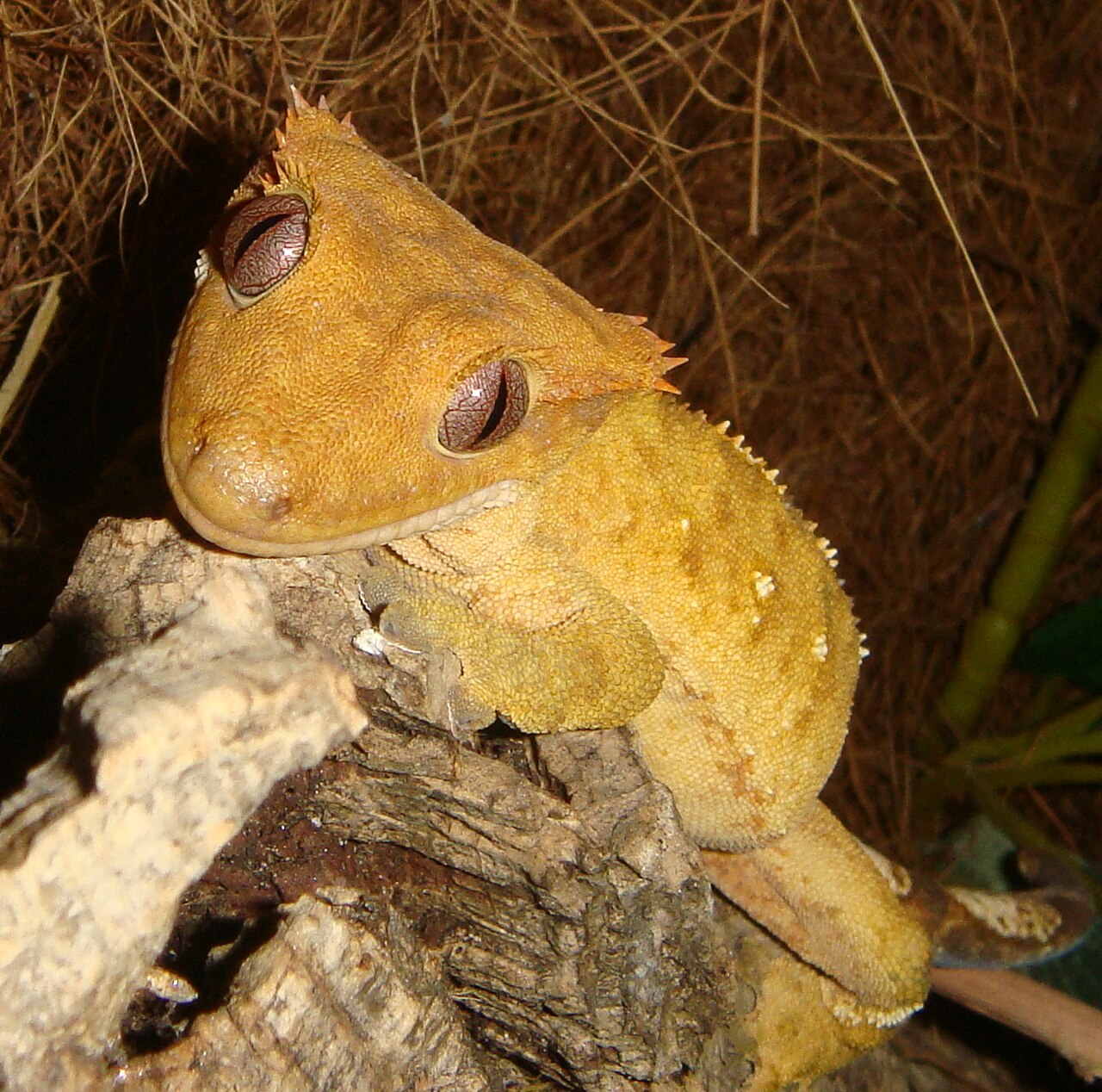
Adults need the complete diet three nights a week, hatchlings need it nightly, and juveniles land between the two. Put the food out in the evening, since these geckos are nocturnal and will not touch a dish in daylight. Discard whatever is left after 24 to 36 hours, because the mix ferments and grows mold fast in a humid enclosure. Feeding more often does not speed up growth; it mostly produces obesity and a heavy tail base.
What Not to Feed Crested Geckos
Avocado, rhubarb, citrus, and anything from the onion family are off the list outright, and so is the classic pet store mistake of a plain fruit diet with no calcium source. Insects collected from the yard are the other real hazard: they carry pesticide residue and parasites. Wild caught prey is also the usual explanation when a keeper finds odd looking gecko droppings a few days later.
Can You Feed Crested Geckos Fruit and Insects?
Yes to both, in small amounts and on top of the base diet. Captive bred crickets, dubia roaches, and the occasional black soldier fly larva should be dusted with calcium and offered once a week, sized no longer than the width of the gecko’s head. Soft fruit like mango, papaya, or fig works as an occasional treat, while grapes and apple are too low in calcium to be worth the trouble. The Smithsonian’s National Zoo animal profiles are a good reference point for how varied a wild reptile diet really is.
Frequently Asked Questions
Can a crested gecko go 3 days without food?
A healthy adult can, and often does when a keeper travels for a long weekend. Adults are fed only three nights a week anyway, so a 72 hour gap is within the normal routine. Hatchlings and underweight geckos are a different case and should not go more than 48 hours without a fresh dish.
How to tell if a crested gecko is starving?
Look at the tail base and the hip bones. A gecko in trouble has a thin, ridged tail base, visible hip and spine outlines, sunken eyes, and a flat belly. Lethargy during the night hours is the other warning sign. Weigh the animal weekly on a kitchen scale; a steady drop matters more than any single number.
Can you feed crested geckos fruit every day?
No. Fresh fruit is unbalanced in calcium and phosphorus, and daily fruit is one of the fastest routes to metabolic bone disease. Treat fruit as a once weekly extra of about a teaspoon, and let the complete diet carry the nutrition. The same logic applies to the sugary nectar mixes sold as feeding treats.
Does diet affect how long a crested gecko lives?
Heavily. Calcium deficiency and obesity are the two diet driven problems that shorten captive lives, and both are avoidable with a complete diet and measured portions. Well fed animals commonly reach 15 to 20 years, as covered in our guide to crested gecko lifespan.