How to Get Rid of Raccoons: 7 Steps That Actually Work
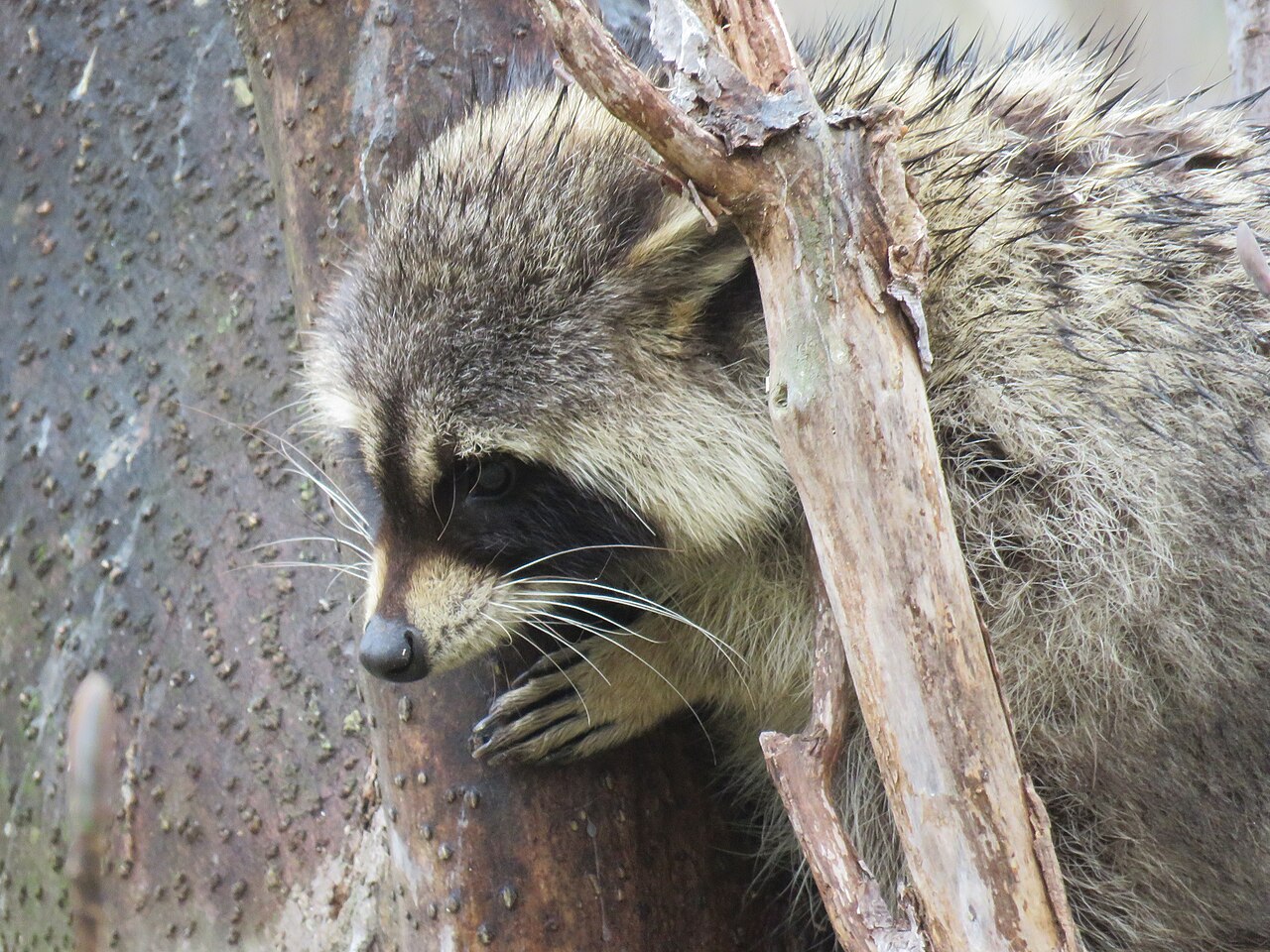
To get rid of raccoons, remove the food and shelter that hold them on the property, then make the site uncomfortable enough that they move on within a few nights. Raccoons (Procyon lotor) are opportunists, not residents, and almost every yard that keeps them has a garbage can, a pet bowl, or an open crawlspace doing the inviting.
Trapping is the step most people reach for first, and it is usually the least effective one. A trapped raccoon is replaced by the next raccoon in the neighborhood within days if the attractant is still there, and relocation is illegal in many states. The sequence that actually works runs in the other order: take away the reward, close the entry, then apply pressure.
The fastest reliable way to get rid of raccoons is to secure trash in latched metal cans, bring pet food indoors, and seal attic, chimney, and deck openings after confirming no young are inside. Add bright light and a radio at the den site for three nights. Most raccoons leave within a week once food and shelter disappear.
What Is the Fastest Way to Get Rid of Raccoons?
The fastest approach that holds is a three night pressure campaign combined with removing the attractant. Raccoons choose the easiest site available each night, so making one yard slightly harder than the yard next door is enough to move them. That is why sanitation beats every repellent product on the shelf.
Start by identifying what draws them. Walk the property at dusk and look for knocked over cans, torn bags, spilled birdseed, fallen fruit, uncovered compost, a pet door, or an outdoor food bowl. Raccoons also raid water gardens for fish and lawn grubs in fall, which shows up as patches of sod flipped over like a rug.
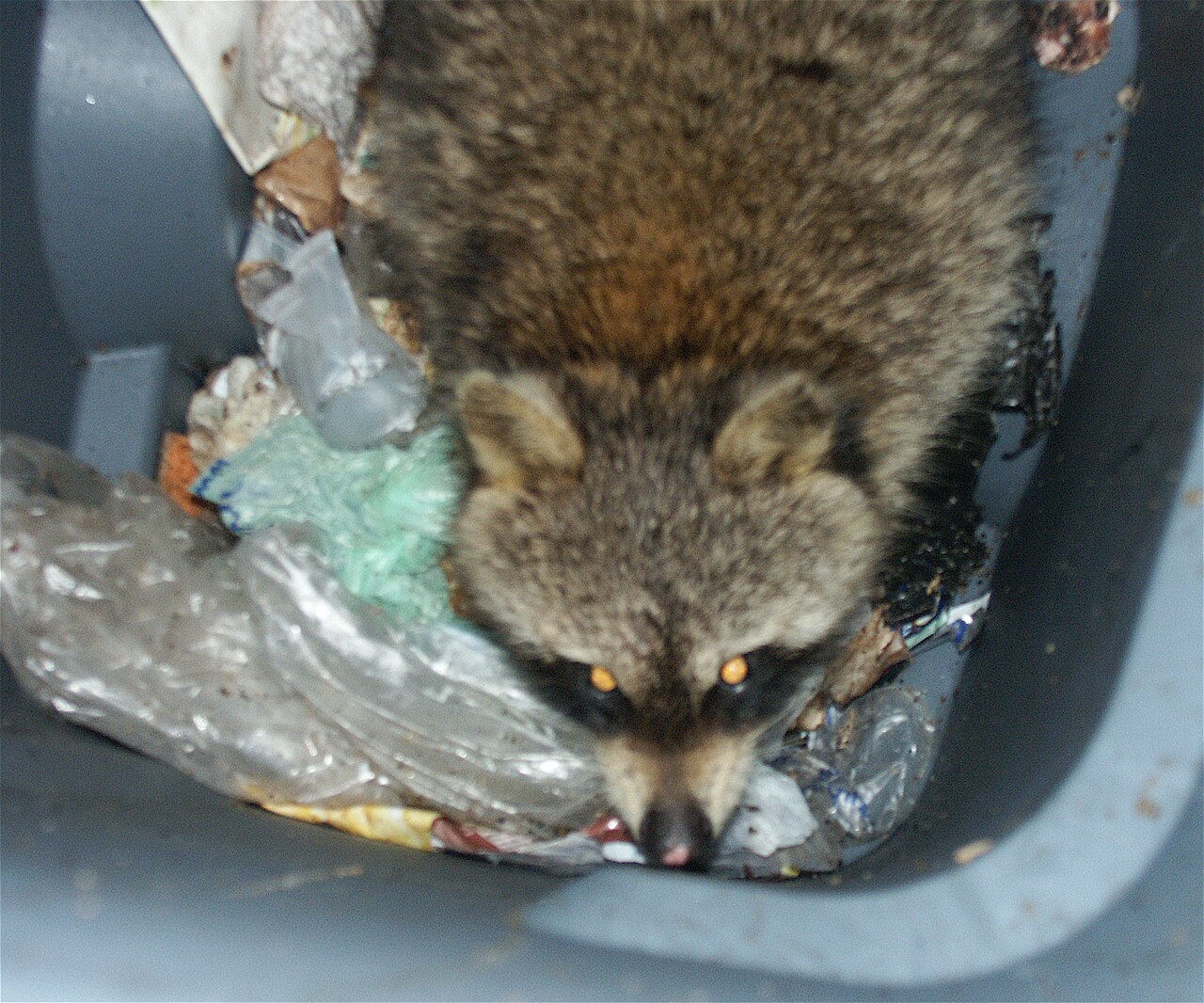
Then remove the reward completely, not partially. A can with a bungee cord is still a target if the raccoon has learned it can be worked open. Latching lids, a bolted can corral, or storing cans in a garage until collection morning are the versions that hold.
Remove the Three Attractants First
| Attractant | Fix | Time to Effect |
|---|---|---|
| Garbage cans | Metal can with latching lid, stored indoors overnight | 2 to 5 nights |
| Pet food and water bowls | Bring in before dark, feed indoors | 1 to 3 nights |
| Birdseed and suet | Take feeders down at night, sweep spillage | 3 to 7 nights |
| Fallen fruit and compost | Daily pickup, closed tumbler bin | 3 to 7 nights |
| Open crawlspace or attic gap | Seal with hardware cloth after young are out | Immediate once closed |
| Grub rich lawn | Treat grubs, water less in late summer | 2 to 4 weeks |
Work the list top to bottom. Yards that fix only one item usually keep the raccoon, because the animal simply shifts from the trash to the bird feeder. The full set removes the reason to visit at all.
What Do Raccoons Hate the Most?
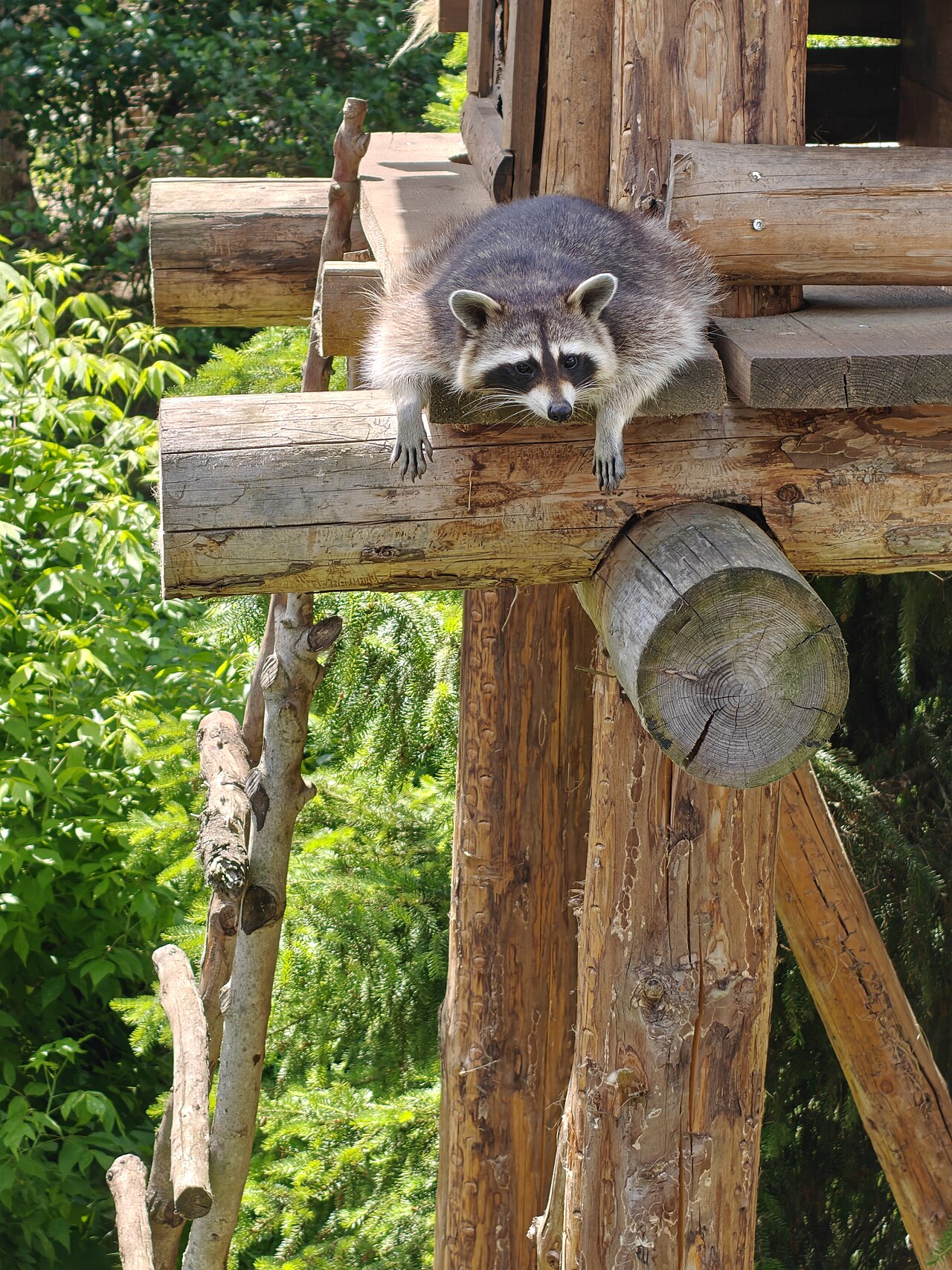
What raccoons hate the most is exposure. They are nocturnal and avoid open, bright, noisy places, so a motion activated floodlight paired with a motion sprinkler changes their behavior faster than any scent. The sprinkler works particularly well on deck approaches and garden beds because it combines surprise with water.
They also dislike unstable footing and confined approaches. Chimney caps, sheet metal bands around downspouts and tree trunks, and a simple hardware cloth skirt under a deck remove the routes they trust. A raccoon that cannot climb to a site quietly usually stops trying after a night or two.
Habituation is the catch. A light that never changes becomes background within about a week, so rotate the deterrents: move the sprinkler, switch a radio on and off at different times, and change the position of the light. Pressure works while it stays unpredictable, as the behavior described in our raccoon sounds guide illustrates when a family is disturbed at a den.
Next question: Do Raccoons Hibernate? No, Here Is What They Do Instead
How to Get a Raccoon to Leave Your Property
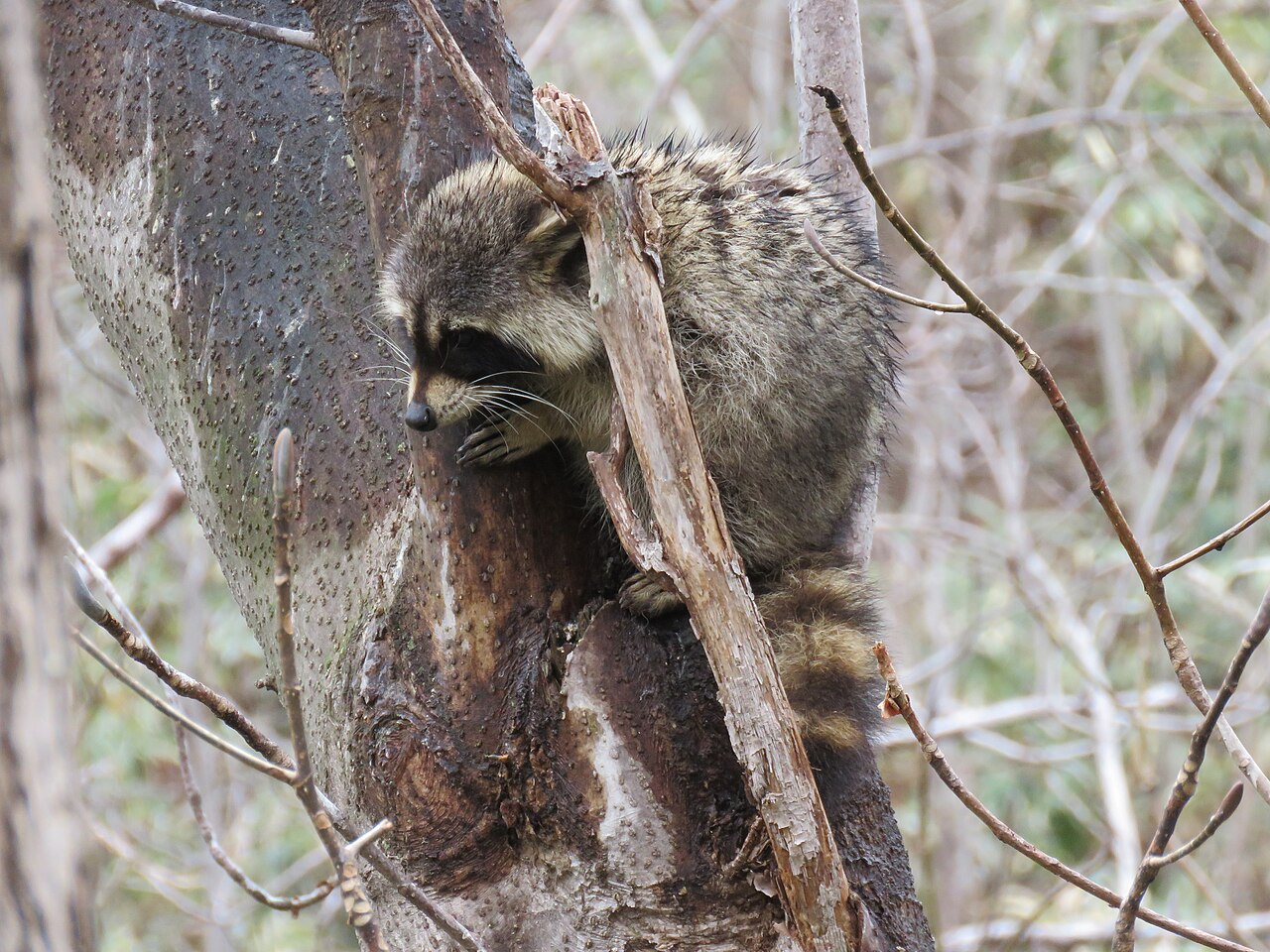
To get a raccoon to leave your property, make the den site unpleasant rather than trying to remove the animal by hand. Raccoons will not abandon a site while it stays dark, quiet, and warm, and a mother with kits will resist strongly. The standard eviction combination is light, sound, and smell applied at the den entrance.
Place a bright work light inside or at the opening of the attic or crawlspace, set a radio to a talk station at conversational volume, and add a rag with ammonia in an open container set well away from any bedding material. Run all three for three consecutive nights. Most females move their kits to an alternate den within 48 to 72 hours, since every mother keeps backup sites.
Watch before you seal. Sprinkle flour at the entrance and check for outbound tracks with no return prints, or listen for chittering after dark, which signals kits still inside. Sealing a mother out from her young means dead animals in a wall and a much larger problem, and the baby raccoon guide explains how to tell their age and mobility.
Raccoons in the Attic, Chimney, or Under a Deck
Attic entries usually happen at a roof edge, a soffit return, or a rotted fascia board, and the damage shows up as torn insulation, chewed wiring, and a latrine site in one corner. Raccoon droppings can carry the roundworm Baylisascaris procyonis, so cleanup needs gloves, an N95 respirator, and no dry sweeping. Our raccoon poop guide covers identification and safe handling.
Chimneys draw females looking for a hollow tree substitute. Never light a fire to drive them out, since kits cannot climb until roughly eight weeks old. Evict with light and sound from below, then cap the flue with a stainless steel chimney cap once the animals are confirmed gone.
Decks and sheds are the easiest to fix permanently. Dig a trench 12 inches (30 cm) deep along the skirt, install galvanized hardware cloth with the bottom bent outward into an L, and backfill. The same excluder approach applies to other attic dwellers, as our guide on getting rid of bats describes for one way doors.
What Not to Do: Poison, Relocation, and Feeding
Poisoning raccoons is illegal in most states and dangerous everywhere else. There is no registered raccoon poison for homeowner use in the United States, and bait put out for a raccoon is equally available to dogs, cats, and children. An animal that dies inside a wall creates weeks of odor and a fly problem on top of the original issue.
Relocation sounds humane and generally is not. Many states prohibit moving raccoons because of rabies and distemper spread, survival rates for relocated adults are low, and a relocated mother leaves kits behind to starve. Check the rules in your state wildlife agency before any trap is set. Guidance from University of Minnesota Extension and comparable state extension programs favors exclusion over removal for this reason.
Feeding, even indirectly, undoes everything else. A raccoon fed by one household on a street visits every house on that street, and habituated animals lose their wariness of people and dogs. The same holds for other urban wildlife, as covered in our look at whether possums are dangerous.
Keeping Raccoons Out for Good
Permanent results come from hardware, not habits. Every attic vent gets 16 gauge galvanized hardware cloth with quarter inch mesh, every chimney gets a cap, every deck gets a buried skirt, and every trash can gets a latch. Screws and metal hold; foam, mesh screen, and plastic lattice do not survive a determined raccoon.
Trim tree limbs back 8 feet (2.4 m) from the roofline and wrap smooth trunks with a 24 inch (60 cm) sheet metal band 4 feet up. Raccoons are excellent climbers but need grip, and a smooth band stops the usual route to a roof.
Then check the yard twice a year, in early spring before denning and in fall when young disperse. Five minutes with a flashlight along the foundation and roofline catches new gaps before they become dens. Animals that live 2 to 3 years in the wild, a figure covered in our raccoon lifespan guide, are replaced constantly, so the defense matters more than the individual animal.
Frequently Asked Questions
What smell keeps raccoons away?
Ammonia, peppermint oil, and predator urine all show short term effect at a den entrance, with ammonia the most consistent. None of them protect an open yard, and rain removes them quickly. Treat scent as one part of a three night eviction alongside light and noise, not as a standalone solution.
Will leaving a porch light on keep raccoons away?
A steady porch light does little. Urban raccoons feed under streetlights nightly and habituate to constant illumination within days. A motion activated floodlight that switches on suddenly works far better, because the change is what startles them, especially when paired with a motion sprinkler.
Do raccoons return to the same place every night?
Not usually. A raccoon rotates among several den sites within a home range of roughly 1 to 3 miles (1.6 to 5 km) in suburbs, and it returns to a food source as long as it pays off. Reliable garbage or pet food can make one yard a nightly stop for weeks.
What month are raccoons most active?
Activity peaks twice. Late winter, February and March in most of the country, is mating season, when males roam widely and noise in attics increases. The second peak is late summer into fall, when this year’s young disperse and adults feed heavily before winter.
What is a raccoon’s biggest enemy?
In most of North America the leading causes of death are vehicles and disease, especially canine distemper, which sweeps through local populations every few years. Natural predators include coyotes, bobcats, and great horned owls that take young, but no predator controls suburban raccoon numbers the way food availability does.
What food is poisonous to raccoons?
Chocolate, macadamia nuts, raisins, onions, and garlic are toxic to raccoons, as they are to dogs. Using any of them as bait is both inhumane and illegal in most states, and it puts pets and children at the same risk. Removing food sources is the legal and effective route.