Do Frogs Hibernate? Some Freeze Solid and Thaw in Spring
Frogs do hibernate, and a few North American species take it to an extreme that no other vertebrate can match: they let up to 65 percent of their body water turn to ice and stop their own heartbeat for weeks. When the thaw comes, they restart. Every frog in the United States has some version of this winter survival plan, because a frog cannot generate its own body heat.
What that plan looks like depends on whether the species is a land frog, a water frog, or a true toad. Some sink to the bottom of a pond and breathe through their skin. Others wedge into a rotting log and freeze. Knowing which one lives in your yard tells you exactly where it went in November and when it will come back.
Frogs hibernate through winter in a state biologists call brumation. Aquatic frogs rest on pond bottoms and absorb oxygen through their skin, while terrestrial frogs and toads burrow below the frost line or hide in leaf litter. Wood frogs freeze solid, stop breathing, and thaw alive in spring.
| Frog Type | Winter Shelter | Freeze Tolerant | Typical Dormancy |
|---|---|---|---|
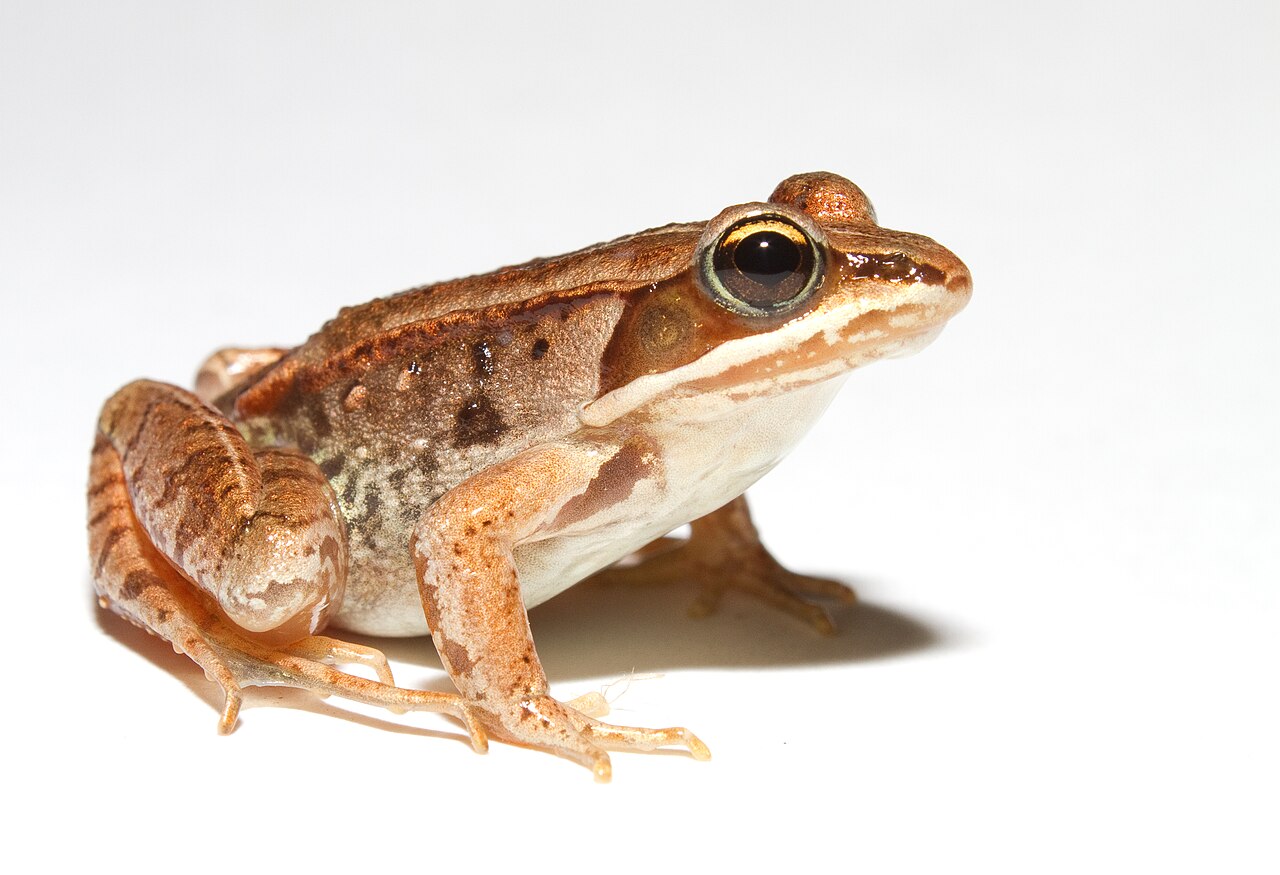
| Wood frog (Lithobates sylvaticus) | Leaf litter on the forest floor | Yes, freezes solid | 4 to 7 months |
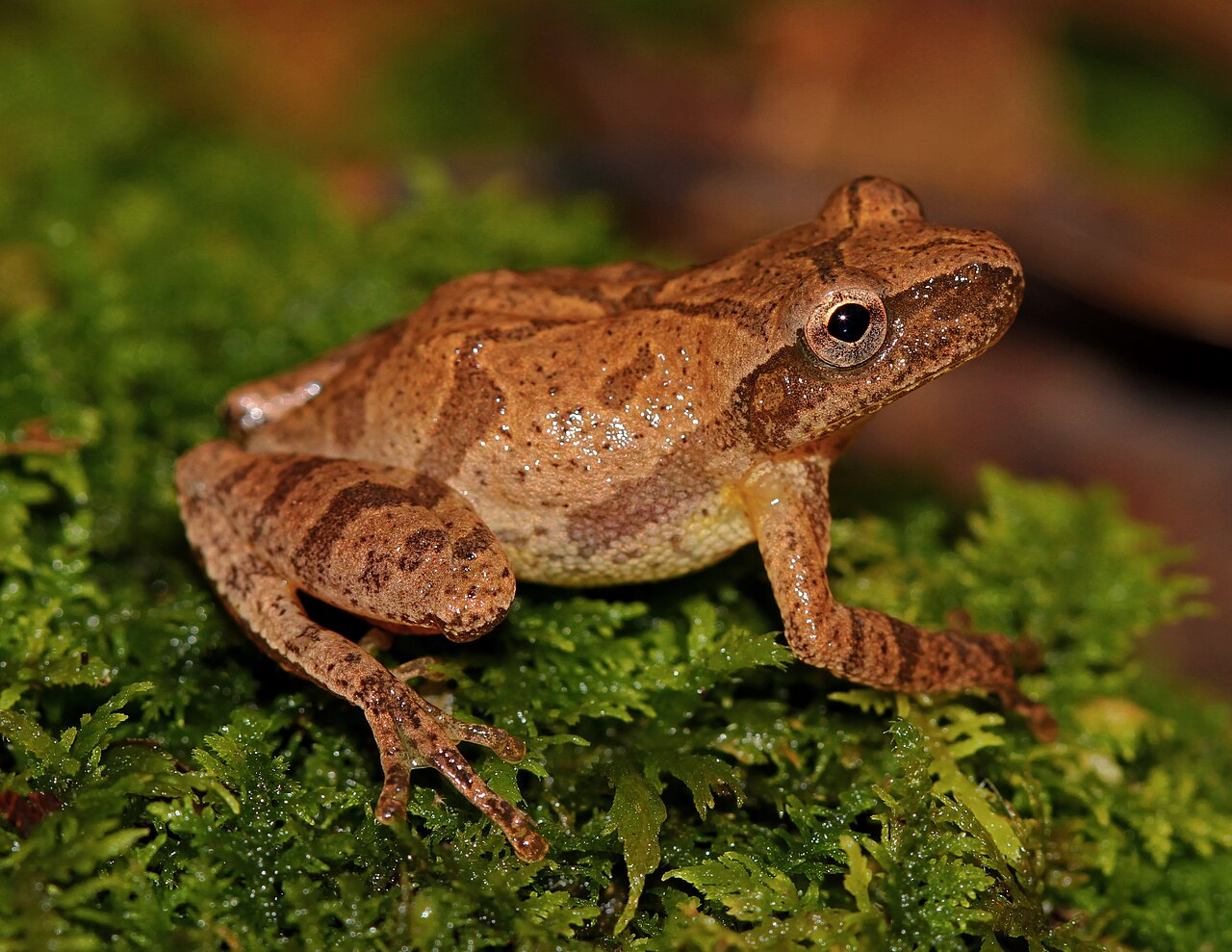
| Spring peeper (Pseudacris crucifer) | Under logs and loose bark | Yes, partial | 3 to 5 months |
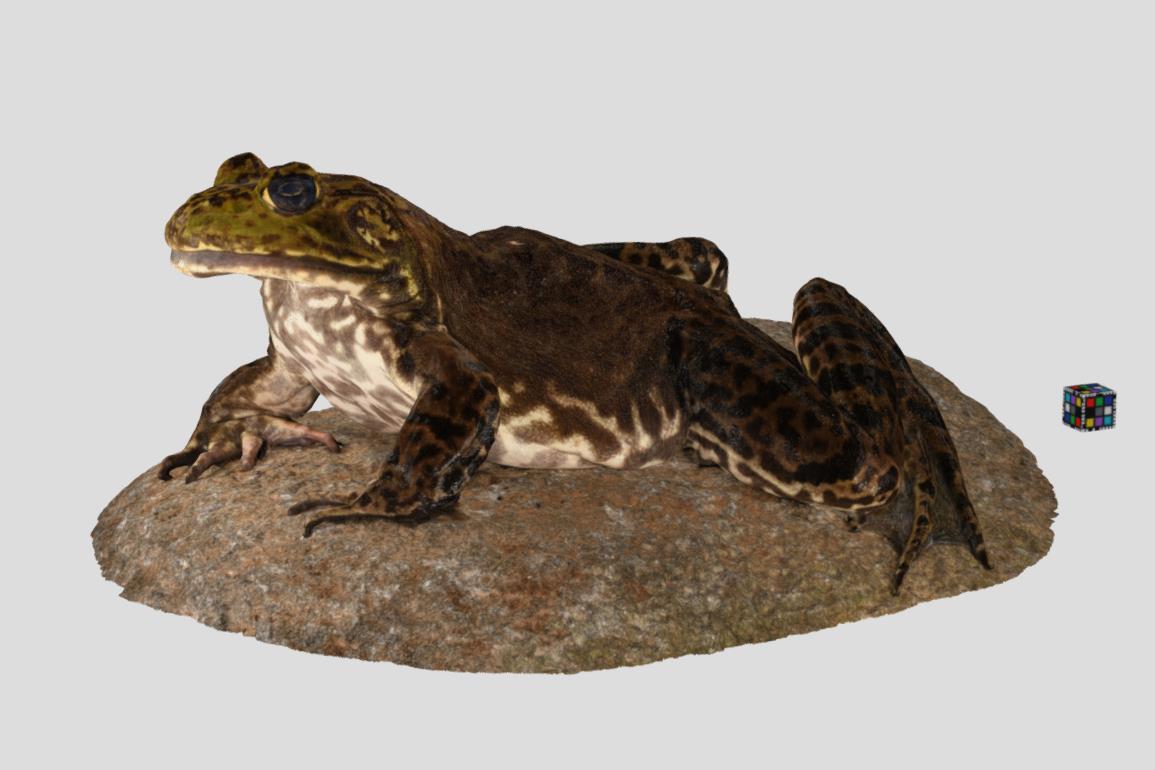
| American bullfrog (Lithobates catesbeianus) | Pond bottom, on or near mud | No | 3 to 6 months |
| Green frog (Lithobates clamitans) | Submerged in oxygen rich water | No | 3 to 5 months |
| American toad (Anaxyrus americanus) | Self dug burrow below frost line | No | 4 to 6 months |
| Gray treefrog (Dryophytes versicolor) | Tree cavities, leaf litter | Yes, partial | 4 to 6 months |
Do Frogs Hibernate or Brumate?
Technically frogs brumate, and the difference matters if you are trying to understand what is happening inside the animal. Hibernation is the term used for mammals, which lower a body temperature they control themselves and burn stored fat on a schedule set by the brain. Frogs are ectotherms, so their body temperature simply tracks the ground or water around them. Their metabolism slows because the environment cooled, not because a hormone told them to slow down.
In everyday use, including in most state wildlife publications, brumation and hibernation are used interchangeably for frogs. The practical result looks the same: the animal stops feeding, stops moving, and lives off fat and glycogen reserves until temperatures rise. The one real difference is responsiveness. A brumating frog in a mild spell can partially rouse, shift position, and even take in water, which a deeply hibernating groundhog will not do.
Where Do Frogs Go in the Winter?
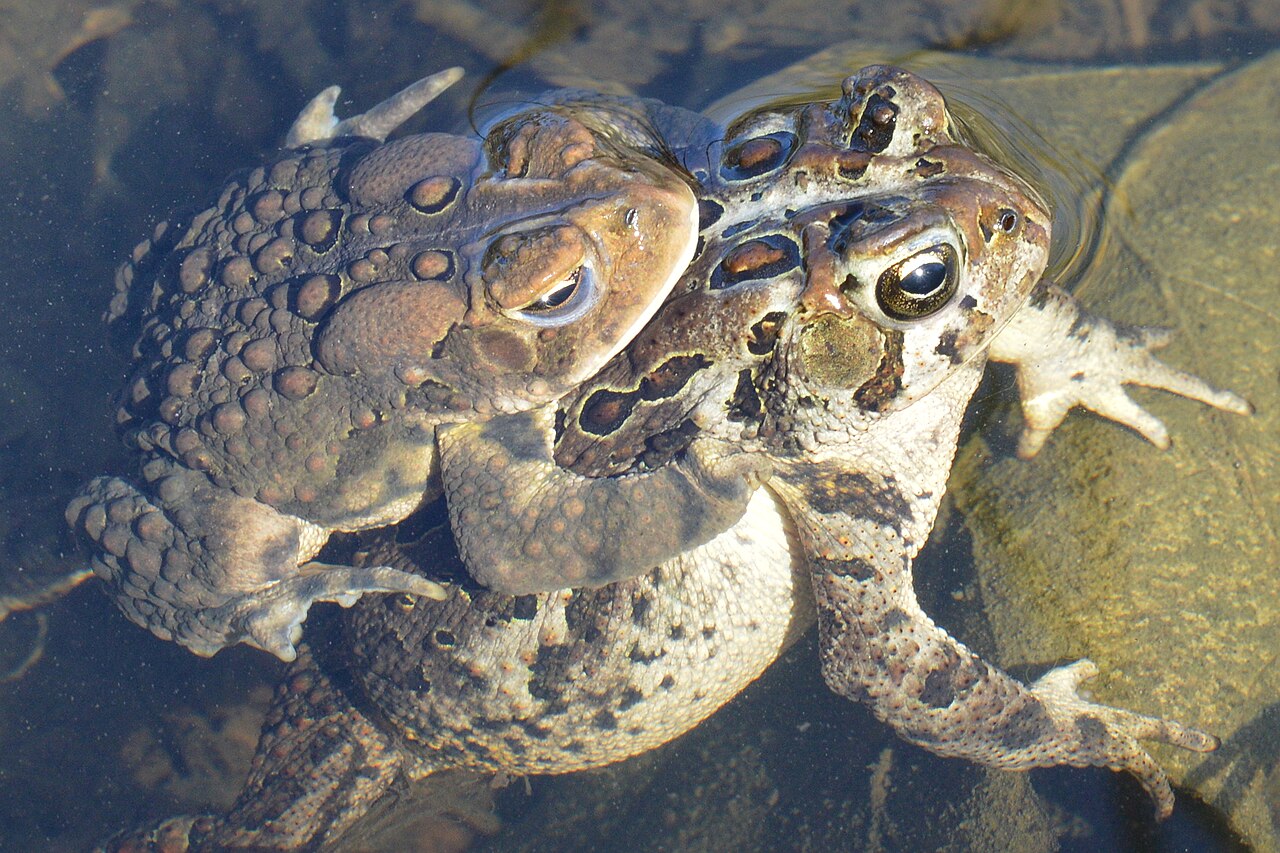
Aquatic frogs go to the bottom of ponds and slow streams, where water under the ice stays just above freezing. They do not bury themselves in mud, which is a myth that persists in a lot of older nature writing. Mud is nearly oxygen free, and a frog sealed in it would suffocate. Instead they rest on top of the sediment, sometimes tucked under a rock or a mat of dead leaves, where dissolved oxygen still reaches their skin.
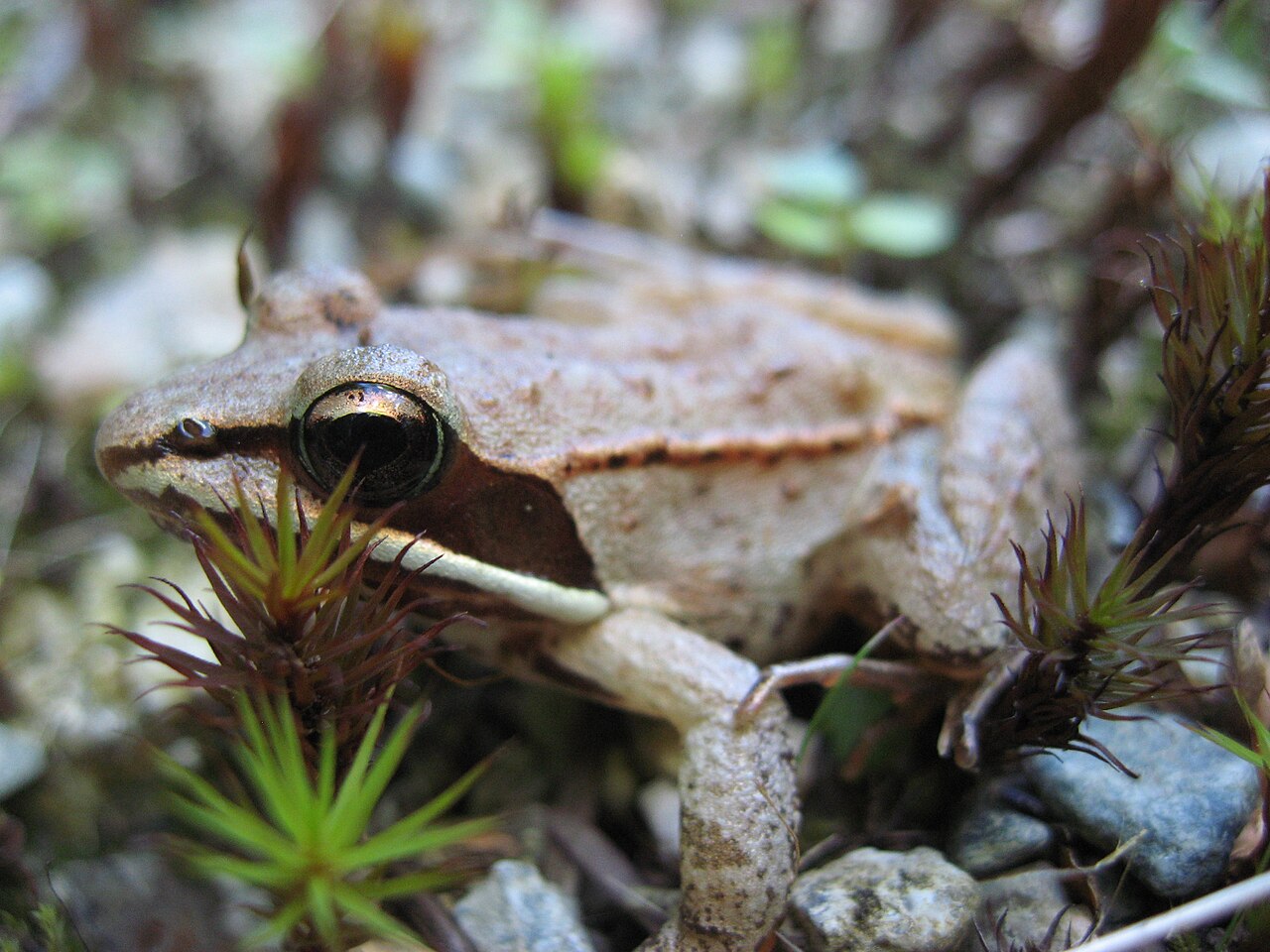
Terrestrial frogs and toads go underground or under cover. Toads are strong diggers and back themselves into soil below the frost line, often more than 12 inches (30 cm) down. Wood frogs and spring peepers cannot dig, so they crawl into leaf litter, under bark, or into rodent burrows and accept that they will freeze. If you rake a woodlot in March, you are walking over hibernating frogs you will never see.
At What Temperature Do Frogs Hibernate?
Most North American frogs shut down when ground or water temperature falls into the range of 40 to 50 F (4 to 10 C). Feeding stops first, because the digestive enzymes a frog needs no longer work efficiently in the cold. Movement follows within days. By the time surface water reaches roughly 39 F (4 C), the point at which water is densest and sinks, aquatic species are already settled on the bottom.
Freeze tolerant species have a second threshold. Once ice begins to form in their tissues, usually a little below 32 F (0 C), the liver dumps huge amounts of glucose into the blood and the frog effectively antifreezes its own cells. Wood frogs survive body temperatures down to about 21 F (minus 6 C) this way, and populations in Alaska have been recorded surviving far colder.
What Month Do Frogs Hibernate?
Across the northern United States, frogs go dormant in October and November, with the first hard frost as the practical trigger. In the upper Midwest and New England, most species are settled by late October. In the mid Atlantic, activity can continue into early December in a warm autumn, and spring peepers have been heard calling on mild November evenings.
In the Deep South and the desert Southwest, there may be no true dormancy at all. Frogs in Florida and south Texas stay active through most of the winter and only shelter during brief cold snaps. Southwestern spadefoots invert the calendar entirely and spend the dry summer months underground instead. Latitude, not the date, sets the schedule.
How Long Do Frogs Hibernate?
Dormancy runs three to seven months depending on region and species. A wood frog in interior Alaska can spend seven months frozen. The same species in Pennsylvania might be out and calling by the second week of March, after four months under the leaves. Aquatic species generally emerge later than the wood frogs and peepers, because pond water warms more slowly than a sunlit forest floor.
Emergence is not gradual. Wood frogs and spring peepers are explosive breeders that pour into vernal pools within days of the thaw, often while snow still sits on the banks. That sudden late winter chorus, described in more detail in our guide to frog calls and what they mean, is the clearest signal that hibernation has ended for the year.
Do Frogs Hibernate Underwater?
Aquatic frogs do spend the entire winter underwater, and they never come up for air. A dormant frog needs so little oxygen that cutaneous respiration, the exchange of gases directly across moist skin, covers the whole demand. Blood vessels near the skin surface widen to increase the exchange area, and the heart beats a few times per minute instead of dozens.
This is also the main way frogs die in winter. A shallow pond that freezes to the bottom kills everything in it, and a pond sealed under thick ice and snow for months can run out of dissolved oxygen as decaying plants consume it. Winterkill of this kind takes out frogs, turtles, and fish together. Deeper ponds with some moving water or open spring inflow are far safer.
How Wood Frogs Freeze Solid and Survive
The wood frog is the most freeze tolerant vertebrate in North America and the reason this question gets asked at all. As ice crystals begin forming in the skin and body cavity, the frog’s liver converts stored glycogen into glucose and floods the bloodstream with it at concentrations that would put a human into a diabetic crisis. That glucose enters the cells and keeps them from dehydrating and collapsing while the water around them turns to ice.
During a deep freeze the frog has no heartbeat, no breathing, no measurable brain activity, and up to two thirds of its body water is ice. It is, by every ordinary clinical definition, dead. Thawing runs from the inside out, the heart restarts within hours, and the animal hops away within a day or two. Cryobiology researchers study the species for exactly this reason, and the very different winter strategy raccoons use shows how much easier it is when you can make your own heat.
Do Frogs Wake Up to Eat During Hibernation?
No. Frogs do not eat at all during dormancy, and they cannot. Digestion requires body temperatures they will not reach again until spring, and food sitting in a cold gut rots rather than breaks down. Everything they need comes from fat bodies, finger shaped yellow structures near the kidneys that they spent late summer filling.
Frogs can rouse partially, though. In a mild winter spell, aquatic frogs shift position and terrestrial species may move a few inches to a better spot. This costs energy with no way to replace it, which is why a warm and erratic winter is harder on frogs than a steadily cold one. A frog that burns its fat bodies before spring will not survive the breeding season, even if it survives the thaw.
Do Frogs Hibernate in Summer?
Some do, and the summer version is called estivation. When heat and drought threaten to dry a frog out, it burrows and enters a dormant state built around conserving water rather than surviving cold. Couch’s spadefoot (Scaphiopus couchii) in the Southwest spends up to ten months a year underground, sealed in a cocoon of shed skin, and surfaces only when summer monsoon rain soaks the soil.
Estivation also shows up in the Southeast, where eastern spadefoots and some treefrogs go quiet during long dry spells and resume calling within hours of a heavy rain. The physiology overlaps with winter dormancy, including the slowed metabolism and the reliance on stored reserves, but the trigger is moisture rather than temperature.
What to Do If You Disturb a Hibernating Toad
Put it back, cover it, and leave. If you turn up a torpid toad while digging a bed or moving a woodpile, the right move is to return it to the same hole or to loose soil and leaf litter within a few feet, then mound several inches of the material you removed back over it. Do not rinse it off, do not put it in a container, and do not bring it inside to warm up.
Warming a dormant amphibian indoors is the common mistake and it is usually fatal. The animal wakes with no food available, burns reserves it needs for spring, and cannot be safely returned to freezing ground afterward. If the original spot is genuinely destroyed, a compost pile, a mulch bed, or the base of a shrub all work. The toad will finish digging itself in once it is out of the light.
Do Frogs Hibernate in Captivity?
Pet frogs kept at steady room temperature generally do not hibernate, and for most species that is fine. Tropical species such as the White’s treefrog and poison dart frogs come from climates with no cold season and have no dormancy behavior to suppress. Keep them warm and fed year round and nothing is missing.
Temperate species are different. A Pacman frog or a native treefrog kept indoors may become sluggish and stop eating in fall even under artificial lighting, because internal rhythms and barometric cues still register. Some breeders deliberately cool temperate species for six to eight weeks to trigger breeding condition. Doing that without experience is risky, since a frog cooled while carrying undigested food or an untreated infection often does not come back.
Is It Good to Have Frogs in Your Yard?
Yes. A single adult American toad eats thousands of insects, slugs, and cutworms over a summer, which is free pest control in a vegetable garden. Frogs also sit in the middle of the food web, feeding herons, snakes, and raccoons while keeping invertebrate populations down, and their permeable skin makes them an early warning system for contaminated water and soil.
Supporting them costs almost nothing. Skip broad spectrum insecticides, keep a shallow water feature with sloped sides, leave leaf litter and brush piles standing through winter, and cover window wells so frogs do not fall in and starve. If you want to know whether the ones you have are breeding successfully, the small dark specks in your water feature covered in our guide to frog droppings and what they indicate are one of the easier signs to read. The United States Fish and Wildlife Service publishes regional amphibian conservation guidance at fws.gov for anyone managing larger property.
Related reading: do polar bears hibernate.
Related reading: do turtles hibernate.
Related reading: do snakes hibernate.
Frequently Asked Questions
What is the lifespan of a frog?
Most wild frogs live 3 to 6 years, though survival past the tadpole stage is the hard part and fewer than 5 percent of eggs produce an adult. American toads regularly reach 10 years, and bullfrogs can pass 8 in good habitat. In captivity, with no predators and steady food, treefrogs and Pacman frogs often exceed 10 to 15 years.
What is a frog’s worst enemy?
Habitat loss kills more frogs than any predator, followed by the chytrid fungus Batrachochytrium dendrobatidis, which has driven declines worldwide. Among animals, snakes are the most consistent threat to adults, while herons, raccoons, and large fish take frogs at every life stage. Roads are a major source of mortality during spring breeding migrations.
Do frogs wake up during a warm spell in January?
Partially. A stretch of mild weather can rouse frogs enough to shift position or, in southern populations, to move and even call briefly. They do not resume feeding, so the energy spent is never recovered. Repeated false springs are one reason erratic winters reduce survival more than consistently cold ones do.
What is a frog’s favorite food?
Adult frogs eat live moving prey almost exclusively: insects, spiders, worms, slugs, and snails. Larger species such as bullfrogs take mice, small birds, and other frogs. Tadpoles are mostly herbivores that graze algae and plant matter. A frog that will not chase movement is generally too cold or too sick to feed.
Do all frogs hibernate?
No. Frogs in consistently warm regions, including much of Florida, south Texas, and the tropics, stay active year round and only shelter during brief cold snaps. Dormancy is a response to conditions rather than a fixed trait, and the same species may hibernate for five months in Minnesota and not at all in Louisiana.
What makes frogs happy in a backyard habitat?
Moisture, cover, and insects with no pesticides. Shallow water with gently sloping sides for entry and exit, dense low plantings, leaf litter, and a log or stone pile cover nearly every need a native frog has. Groups of them, which our piece on collective nouns for frogs covers, will find good habitat on their own within a season or two.