Jackrabbit: 5 Species, 40 MPH, and Not a Rabbit at All
A jackrabbit is not a rabbit at all. It is a hare, and the difference is not a technicality: jackrabbits are born fully furred with open eyes, ready to run within an hour, while true rabbits are born blind and helpless in a fur lined nest. The jackrabbit takes its name from those ears, which early settlers said made it look like a jackass rabbit.
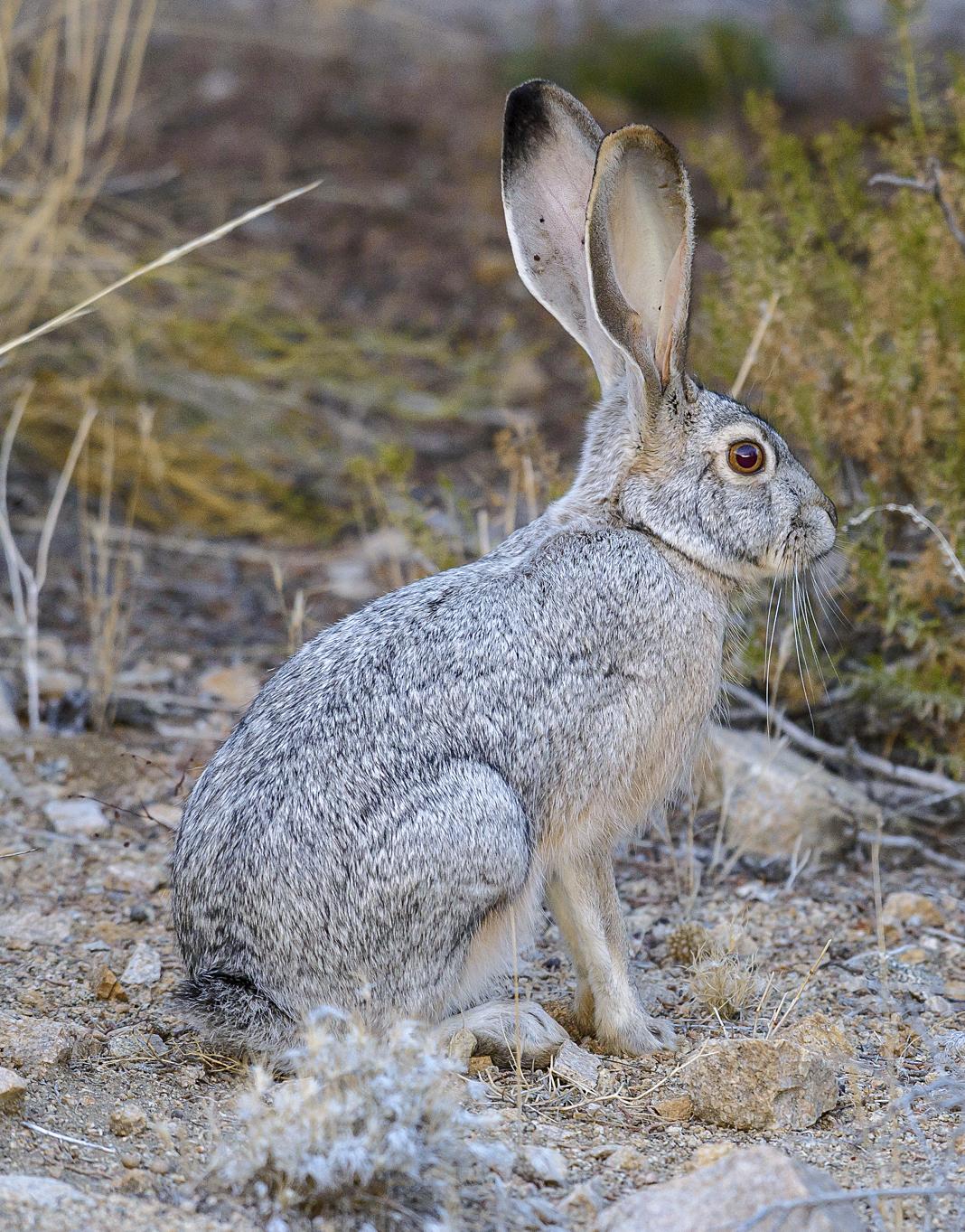
Five hare species carry the jackrabbit name in North America, all in the genus Lepus, and all built around one strategy: see the predator first, then outrun it in the open. A black-tailed jackrabbit (Lepus californicus) can hit 40 mph (64 km/h) and clear 10 feet (3 m) in a single bound.
Jackrabbits are large hares of the genus Lepus native to western North America, named for their oversized ears. They are not rabbits: young are born fully furred and mobile, adults live above ground rather than in burrows, and they escape predators by running at up to 40 mph instead of hiding.
| Species | Range | Weight | Ear Length |
|---|---|---|---|
| Black-tailed jackrabbit (Lepus californicus) | Southwest to Great Plains | 3 to 6 lb (1.4 to 2.7 kg) | 5 to 7 in (13 to 18 cm) |
| White-tailed jackrabbit (Lepus townsendii) | Northern plains, Rockies | 5 to 10 lb (2.3 to 4.5 kg) | 4 to 6 in (10 to 15 cm) |
| Antelope jackrabbit (Lepus alleni) | Southern Arizona, Mexico | 6 to 9 lb (2.7 to 4.1 kg) | 7 to 8 in (18 to 20 cm) |
| White-sided jackrabbit (Lepus callotis) | Southwest New Mexico | 4 to 7 lb (1.8 to 3.2 kg) | 5 to 6 in (13 to 15 cm) |
| Tehuantepec jackrabbit (Lepus flavigularis) | Southern Mexico only | 7 to 9 lb (3.2 to 4.1 kg) | 5 to 6 in (13 to 15 cm) |
Why Are Jackrabbits Not Rabbits?
Both belong to the order Lagomorpha, but jackrabbits are hares in the genus Lepus and cottontails are rabbits in the genus Sylvilagus. The split shows up first at birth. Hares are precocial, meaning leverets arrive with a full coat, open eyes, and working legs, and they are left in a shallow scrape called a form rather than a nest. Rabbit kits are altricial, born naked and blind in a fur lined burrow, and depend on the doe for weeks.
Adults differ just as clearly. Jackrabbits do not dig burrows and spend their whole lives above ground, relying on speed and camouflage. They are larger, longer legged, and have far bigger ears than any cottontail. Neither group is a rodent, which is the most common mix up: unlike the guinea pig and other rodents, lagomorphs carry a second small pair of peg teeth directly behind the upper incisors.
Where Jackrabbits Live
Jackrabbits are animals of open country: desert scrub, grassland, sagebrush flats, prairie, and agricultural edges from Mexico north into the Canadian prairies and west to the Pacific. Black-tailed jackrabbits are the ones most people see, ranging from Baja California through Texas and north into Washington and Idaho. They tolerate heat, thin cover, and human altered land better than any other species in the genus.
White-tailed jackrabbits take the colder ground, holding the northern plains and mountain meadows up to 14,000 feet (4,270 m), and they turn white or pale gray in winter across the northern part of that range. Antelope jackrabbits are restricted to the Sonoran Desert in southern Arizona. None of them hibernate; unlike the chipmunks that spend winter torpid underground, a jackrabbit is active every day of the year.
How Jackrabbit Ears Work
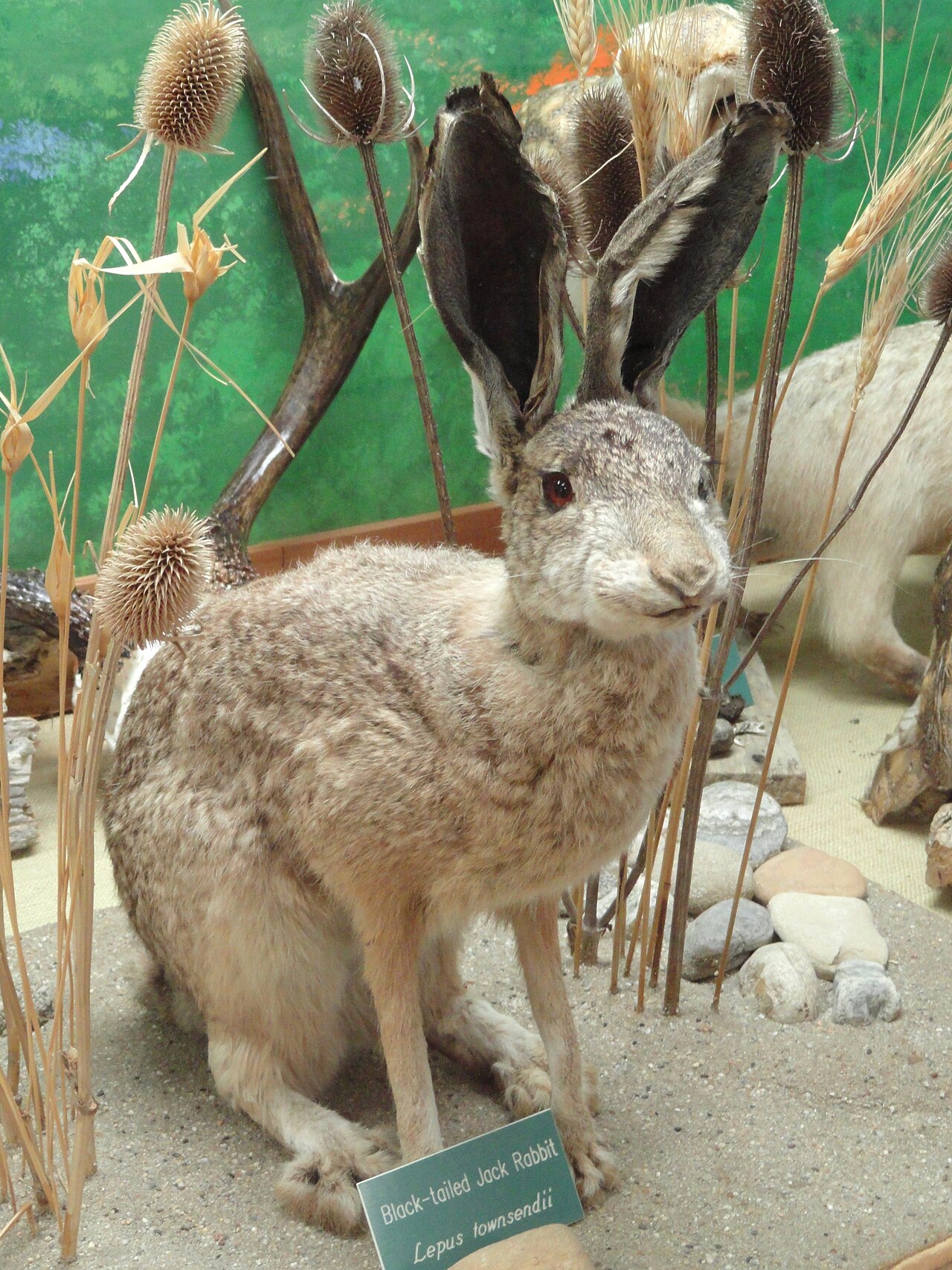
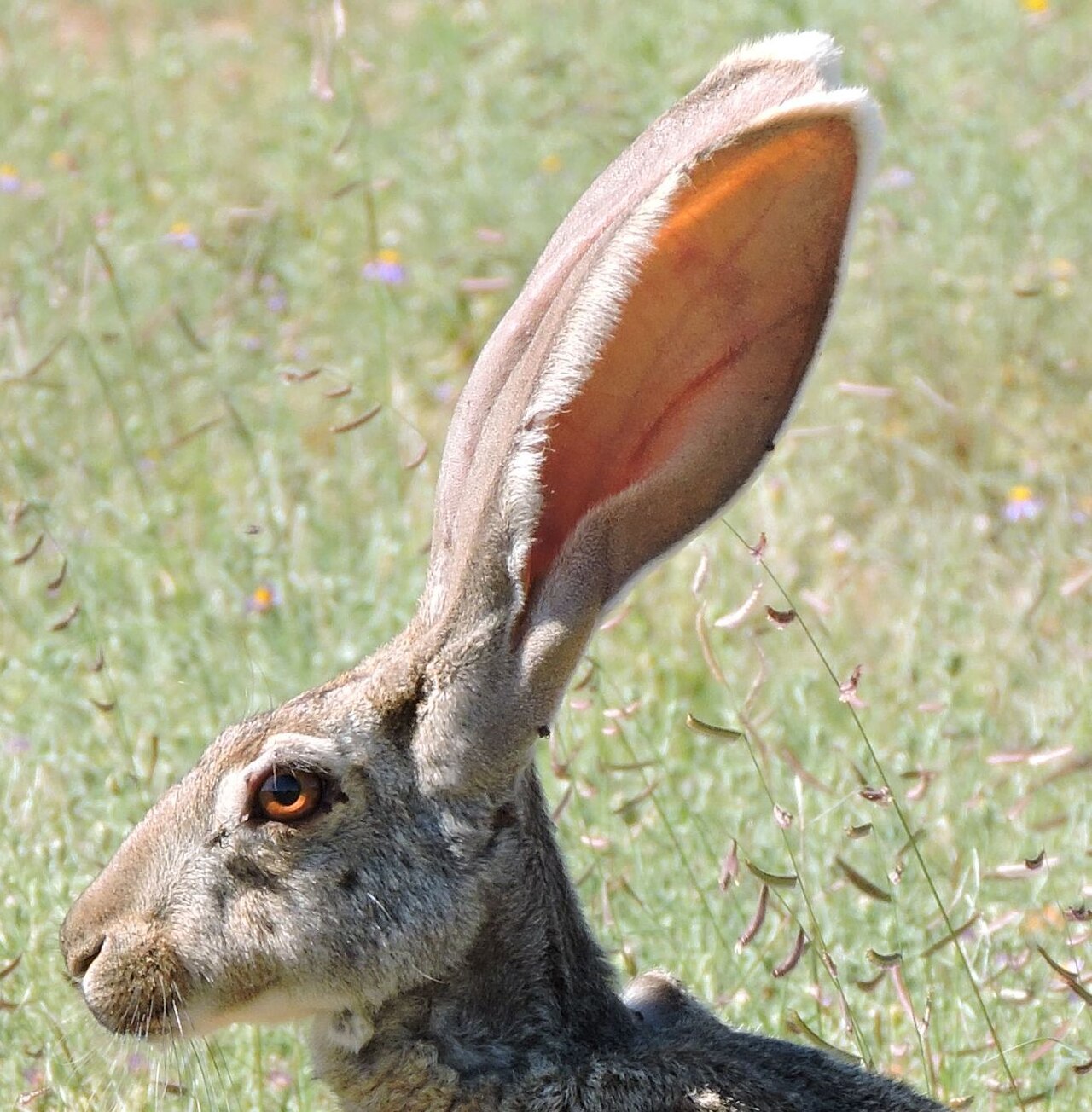
Those ears are a cooling system as much as a listening device. They carry a dense network of blood vessels close to the skin surface, and by dilating them the animal dumps body heat straight into the air, which lets it stay active in desert conditions without panting or sweating away water it cannot replace. In cooler weather the vessels constrict and the ears conserve heat instead.
The hearing is genuinely exceptional too. Each ear rotates independently, letting a feeding jackrabbit track a coyote approaching from behind without moving its head or giving away that it has noticed. Combined with eyes set high and far apart for nearly 360 degree vision, the animal detects most threats long before they are close. The open country it shares with raptors such as the American kestrel offers no cover to hide in, so early detection is the whole defense.
Are Jackrabbits Aggressive?
No. Jackrabbits are prey animals that flee almost every encounter, and a healthy one will be gone before you get within 30 feet (9 m). They do not attack people, pets, or livestock, and they have no interest in defending territory against anything larger than another jackrabbit.
Cornered or handled, they will kick and scratch hard with the hind legs and can break skin, which is a reason never to pick one up. Males do fight each other during the spring breeding season, boxing on their hind legs and leaping over one another, and those bouts draw blood. That behavior is directed at rivals, not at you.
What Do Jackrabbits Eat?
Jackrabbits are strict herbivores. In summer they take grasses, forbs, clover, and any green growth available; in winter they switch to woody browse, bark, twigs, mesquite, and cactus, which also supplies most of their water. An adult eats roughly a pound (450 g) of vegetation a day, and in desert range they often go their entire lives without drinking free water.
Like other lagomorphs they practice cecotrophy, reingesting soft nighttime droppings to extract nutrients on a second pass through the gut. It is an efficient way to live on low quality forage, and it is why a jackrabbit can hold condition on plants most grazers refuse. In the desert this lets them stay above ground all year while amphibians in the same country, covered in our guide to dormancy in frogs and toads, have to bury themselves and wait out the heat.
Why Farmers Object to Jackrabbits
Populations swing hard, and in a peak year jackrabbits reach densities that strip alfalfa, wheat, and young orchard stock across whole fields. Historical accounts from the western states describe organized drives during outbreak years, and modern growers still lose measurable yield to them in the Central Valley and the Great Basin. Eight jackrabbits are commonly estimated to eat as much forage as one sheep.
They are also a buffer species holding up predator populations: coyotes, bobcats, golden eagles, and great horned owls all track jackrabbit numbers closely, which is why a crash affects far more than the hares themselves. Where they are hunted, wildlife agencies note that tularemia can be present in the population, so field dressing calls for gloves and thorough cooking. The United States Geological Survey publishes range and population data at usgs.gov, and the winter strategies of other North American mammals make an instructive contrast with the jackrabbit’s year round activity.
Frequently Asked Questions
Do jackrabbits have venom?
No. No jackrabbit, hare, or rabbit anywhere in the world is venomous, and no mammal in North America delivers venom except the short tailed shrew and the platypus abroad. The question circulates because of jackalope folklore and because infected hares sometimes grow horn like keratin tumors from Shope papillomavirus, which looks alarming but is not dangerous to people.
What does jackrabbit mean in slang?
It means a sudden burst of motion, usually a vehicle launching hard from a stop, as in a jackrabbit start. The term is also used for anything quick and skittish. It comes directly from the animal’s habit of exploding from a standstill into full speed with no build up at all.
Do jackrabbits eat animals?
No. They are obligate herbivores and their digestive system cannot process meat. Reports of hares eating carrion are rare, documented mainly in Arctic species under extreme winter conditions, and they are not part of normal jackrabbit behavior anywhere in their North American range.
Will a jackrabbit bite a cow?
No. Jackrabbits avoid livestock entirely and have no reason to approach one. The question appears to come from confusion with rabid animals or with folklore, and there are no credible records of a hare biting cattle. Competition for forage is the only real interaction between the two.
How fast can a jackrabbit run?
Black-tailed jackrabbits sustain 30 to 35 mph (48 to 56 km/h) and hit around 40 mph (64 km/h) in short bursts, with leaps up to 10 feet (3 m). They run in a zigzag with a high bounding leap every few strides, which lets them scan for the pursuing predator without slowing down.