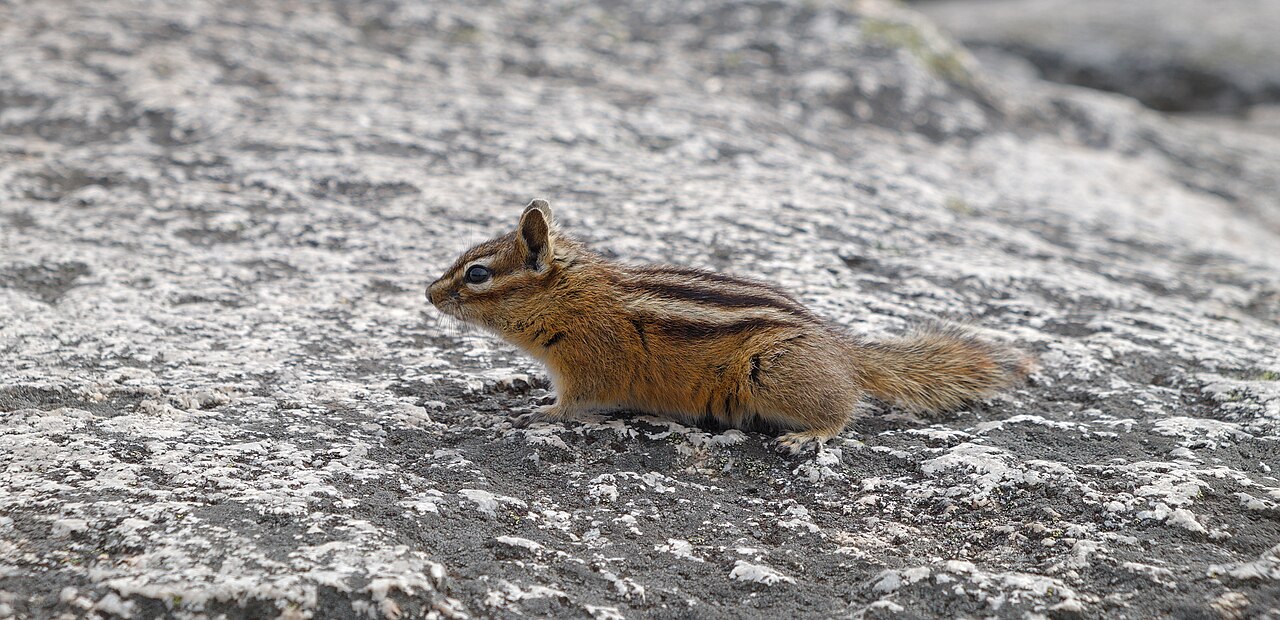
Chipmunk Lifespan: How Long Chipmunks Live in the Wild
The average chipmunk lifespan in the wild is 2 to 3 years, even though the species is physically capable of living much longer. Eastern chipmunks (Tamias striatus) that survive their first winter often reach 3 years, a few reach 6 to 8, and the record for a wild marked animal sits at about 8 years. In captivity, with no hawks and a reliable food supply, chipmunks regularly live 9 to 10 years.
That gap between what a chipmunk can live and what it usually lives is the whole story. Nearly everything that shortens a chipmunk’s life happens in its first twelve months, and the animals that clear that hurdle tend to keep going for years. Understanding where the losses occur explains why a yard can look full of chipmunks one summer and empty the next.
Chipmunks live about 2 to 3 years in the wild and 9 to 10 years in captivity. Most deaths happen in the first year, from predators such as hawks, foxes, snakes and domestic cats. Chipmunks that survive to their second autumn commonly reach 3 to 5 years, and the wild record is roughly 8 years.
| Stage or Setting | Typical Lifespan |
|---|---|
| First year survival | Roughly 30 to 50 percent of young reach 12 months |
| Wild average, all individuals | 2 to 3 years |
| Wild average, past first winter | 3 to 5 years |
| Wild maximum recorded | About 8 years |
| Captivity, typical | 9 to 10 years |
| Captivity, exceptional | Up to 12 years reported |
| Weaning to independence | 6 to 8 weeks |
How Long Do Chipmunks Live in the Wild?
A wild chipmunk lives 2 to 3 years on average, and that figure is dragged down hard by juvenile mortality. Field studies of eastern chipmunks in the northeastern US find that only about a third to half of young born in spring are still alive the following spring. Once an animal has held a burrow through one winter, its odds improve sharply.
Adults that reach their second year commonly live to 3 or 5. Long term trapping work has recovered individually marked chipmunks at 6, 7 and in rare cases 8 years old, usually females holding a good burrow in mature hardwood forest. Those animals are unusual enough that researchers note them individually.
Population density matters as much as age. In a year with a heavy acorn or beech crop, chipmunks enter winter fat and emerge in numbers. After a poor mast year the same woodlot can lose most of its population, which is why the pattern resembles the boom and bust seen in squirrel lifespans rather than a steady curve.
Chipmunk Lifespan in Captivity

In captivity chipmunks routinely reach 9 to 10 years, and reports of 11 or 12 exist. Remove predation, guarantee food through winter, and treat parasites, and the animal’s biological ceiling becomes visible. That ceiling is high for a rodent of this size, roughly three times what a similarly sized wild mouse manages.
Captive longevity depends on conditions that are harder to supply than most people expect. Chipmunks need a deep substrate for burrowing, a cool dormancy period, a varied diet rather than seed alone, and enough cage volume to move. Obesity and the liver disease that follows a seed only diet are the common causes of early captive death.
Siberian chipmunks (Eutamias sibiricus) dominate the European pet trade and show the same 8 to 10 year pattern. In the US, keeping a native chipmunk is regulated or banned in many states, which is a practical argument for reading about them rather than housing one. For comparison, a well kept pet mouse lifespan tops out near 3 years.
What Kills Most Chipmunks
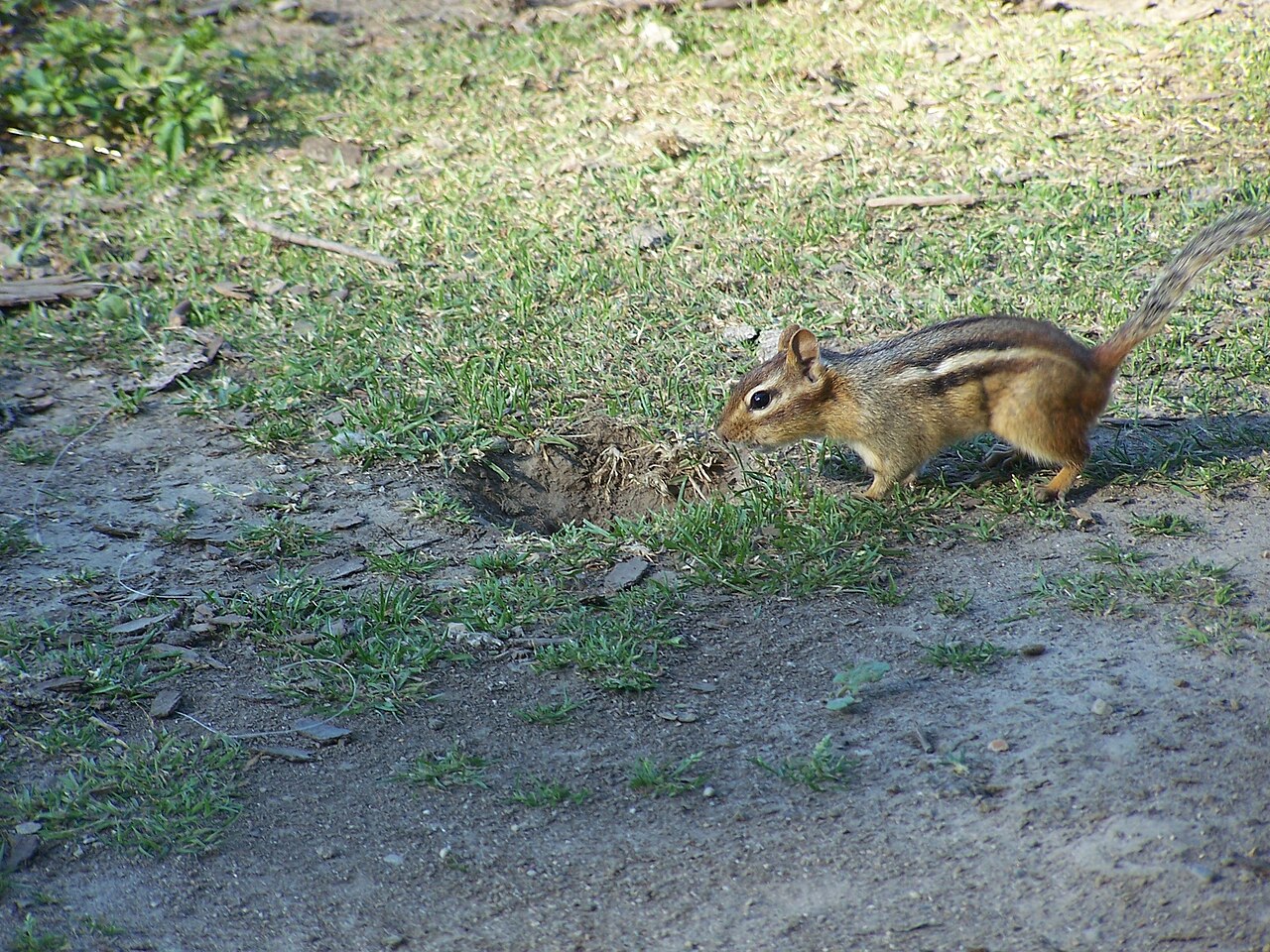
Predation is the leading cause of death at every age. Hawks, especially red tailed and Cooper’s hawks, take chipmunks in daylight, when the animals are foraging in the open. Foxes, weasels, bobcats, rat snakes and domestic cats account for most of the rest, and cats near suburban woodlots can suppress a local population on their own.
Vehicles, lawn equipment and rodenticide take a further share near homes. Secondary poisoning matters more than people realize: a chipmunk that eats bait dies slowly, and the predator that eats the chipmunk is poisoned in turn, which is how the loss spreads up to species like the red fox.
Disease is a smaller factor but not zero. Botfly larvae, fleas carrying plague in western populations, and heavy tick loads all reduce survival, though none of these approaches predation as a cause of mortality in the studies that have followed marked animals.
From Baby Chipmunk to Adult
Chipmunks have babies in April and May, and in the southern part of the range a second litter arrives in August. Gestation runs about 31 days, and litters average 4 to 5 young, born blind, hairless and roughly the size of a jellybean. They stay underground for six weeks before ever seeing daylight.
The young emerge above ground at about six weeks, forage alongside the mother for another two, then disperse. That dispersal period is the single most dangerous stretch of a chipmunk’s life, since juveniles must cross open ground to find an unclaimed burrow site while every local predator is hunting. Our guide to the baby chipmunk covers the stages in detail.
Chipmunks reach sexual maturity at about one year. A female that breeds in her first spring and again the following August can produce close to a dozen offspring in a life that lasts only three years, which is how the species absorbs such heavy losses.
How Hibernation Shapes the Chipmunk Lifespan
Winter dormancy is where a chipmunk’s lifespan is usually decided. Chipmunks do not hibernate in the deep, continuous way woodchucks do. They enter torpor for a few days at a time, wake, eat from a cache stored in the burrow, then drop back down. That means the size of the larder they built in autumn determines whether they see spring.
A single chipmunk can store several thousand nuts and seeds in a burrow chamber. Animals that fail to fill the chamber, either because the mast crop failed or because they lost a burrow fight, starve in February and March. Mortality in late winter exceeds every other month of the year apart from the dispersal peak.
Body condition entering dormancy also determines breeding success in spring. A lean female often skips the first litter entirely, which shifts her reproductive output later in life. The mechanics of the cycle are laid out in our piece on chipmunk hibernation.
Male and Female Chipmunk Lifespan
Female chipmunks tend to live slightly longer than males, and the reason is behavioral rather than physiological. Males range much further during the spring and late summer mating periods, crossing roads and open fields in search of receptive females, and they take disproportionate losses while doing it.
Females hold and defend a burrow system year round, which gives them a known escape route within a short sprint of most of their foraging area. Radio tracking studies consistently show smaller female home ranges, and the survival difference follows from that. The effect is modest, on the order of a few months, not years.
State wildlife agencies publish the field data behind most of these figures. The Missouri Department of Conservation maintains accessible species accounts at mdc.mo.gov for readers who want the primary numbers rather than a summary. Similar longevity tradeoffs show up across the mammals, including in the raccoon lifespan.
Frequently Asked Questions
Do chipmunks mate for life?
Chipmunks do not mate for life. They are solitary and promiscuous, meeting only to breed and separating immediately afterward. A female in estrus may mate with several males in a single day, and males play no part in raising young. Outside the two brief mating periods, adults defend their burrows against every other chipmunk.
What month do chipmunks have babies?
Most chipmunks have babies in April and May, following a mating period in late February and March. In the southern part of the range and in good food years, a second litter arrives in August after a July mating period. Litters average 4 to 5 young and stay underground for about six weeks.
Do chipmunks recognize humans?
Chipmunks do recognize individual humans, at least well enough to tell a regular from a stranger. Animals fed consistently by one person will approach that person and flee from others, and they learn the sound of a specific door or footstep. This is habituation and food association rather than affection.
Is there any benefit to having chipmunks in your yard?
Chipmunks benefit a yard in two measurable ways. They cache far more seeds and nuts than they ever eat, which plants trees, and they spread the spores of mycorrhizal fungi that tree roots depend on. They also eat slugs, snails and insect larvae. The tradeoff is burrowing under walkways and raiding bulb beds.
Where do chipmunks go at night?
Chipmunks go underground at night, into a burrow system that can run 10 to 30 ft (3 to 9 m) with a nest chamber, a food chamber and several escape tunnels. They are strictly diurnal and rarely move after dark, which is one reason a scratching sound in a wall at night is usually a mouse or a rat, not a chipmunk.