Types of Frogs: 7 Families That Cover Almost Every Species
There are more than 7,600 described frog species worldwide, sorted into about 54 families, and roughly 90 of those species live in the United States. When people ask about types of frogs they usually mean the handful of families that account for almost everything you will see or keep: true frogs, tree frogs, toads, poison dart frogs, horned frogs, glass frogs and narrow mouthed frogs.
Those seven groups are enough to place nearly any frog you find in a pond, a pet shop or a photograph. Each has a body plan you can read at a glance, a predictable habitat, and a small set of species that dominate its group. What follows is the field level breakdown, family by family, with the size records and the toxic species handled where they belong rather than saved for the end.
Frogs are grouped into about 54 families, but seven cover almost all commonly encountered species: Ranidae (true frogs), Hylidae (tree frogs), Bufonidae (toads), Dendrobatidae (poison dart frogs), Ceratophryidae (horned frogs), Centrolenidae (glass frogs) and Microhylidae (narrow mouthed frogs). Body shape, toe tips and skin texture separate them reliably in the field.
| Family | Common name | Field mark | Species worldwide |
|---|---|---|---|
| Ranidae | True frogs | Long legs, webbed feet, smooth wet skin | about 420 |
| Hylidae | Tree frogs | Round adhesive toe pads | about 1,050 |
| Bufonidae | Toads | Dry warty skin, parotoid glands | about 620 |
| Dendrobatidae | Poison dart frogs | Bright warning colour, tiny body | about 200 |
| Ceratophryidae | Horned frogs | Mouth as wide as the body | about 12 |
| Centrolenidae | Glass frogs | Transparent belly skin | about 160 |
| Microhylidae | Narrow mouthed frogs | Small pointed head, round body | about 700 |
What Are the Three Types of Frogs?
The three type split people usually mean is ecological rather than taxonomic: aquatic frogs, terrestrial frogs and arboreal frogs. Aquatic frogs such as bullfrogs stay in or beside water year round and have fully webbed hind feet. Terrestrial frogs and toads range away from water between breeding seasons and have shorter, stronger hind legs for hopping on soil.
Arboreal frogs live in vegetation and carry sticky toe discs that let them hold vertical glass or a leaf underside. A fourth category, burrowing frogs, is often folded into the terrestrial group even though species like spadefoots spend most of the year underground.
This split is useful because it predicts care and habitat better than family does. Two frogs from different continents with the same lifestyle usually need the same setup, which is why keepers sort by habit first and by family second.
True Frogs (Ranidae)
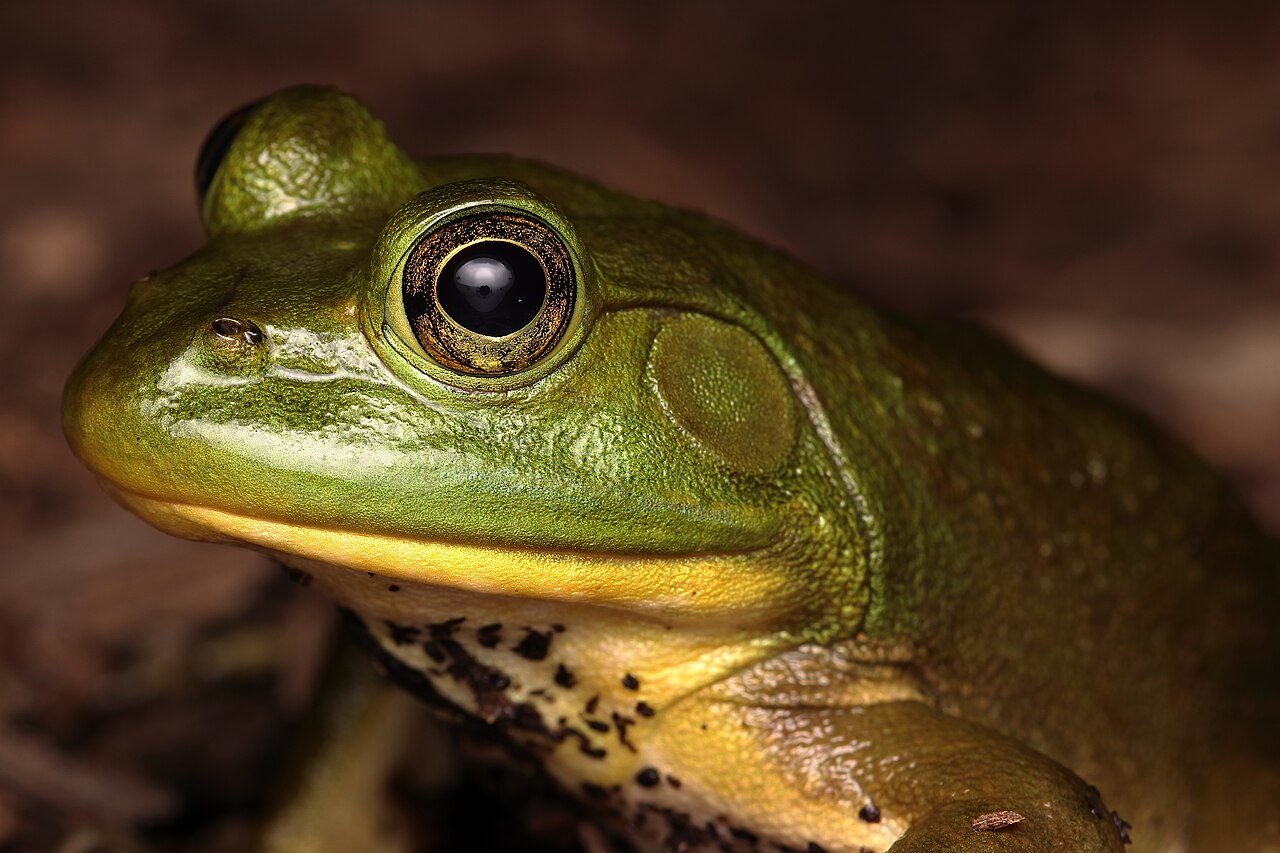
True frogs are the archetype: long muscular hind legs, fully webbed rear feet, smooth moist skin and a visible ridge running down each side of the back. In North America this family includes the American bullfrog (Lithobates catesbeianus), green frog, leopard frogs and the wood frog, which ranges further north than any other American amphibian.
Most are strong jumpers and strong swimmers, and almost all breed in standing water with floating egg masses. The wood frog (Lithobates sylvaticus) is the famous exception to normal amphibian physiology, freezing solid each winter with ice filling its body cavity and thawing intact in spring.
True frogs are also the group most people hear. The banjo like note of a green frog and the deep jug o rum of a bullfrog carry across water at night and are the easiest way to census a pond without seeing a single animal.
Tree Frogs (Hylidae)
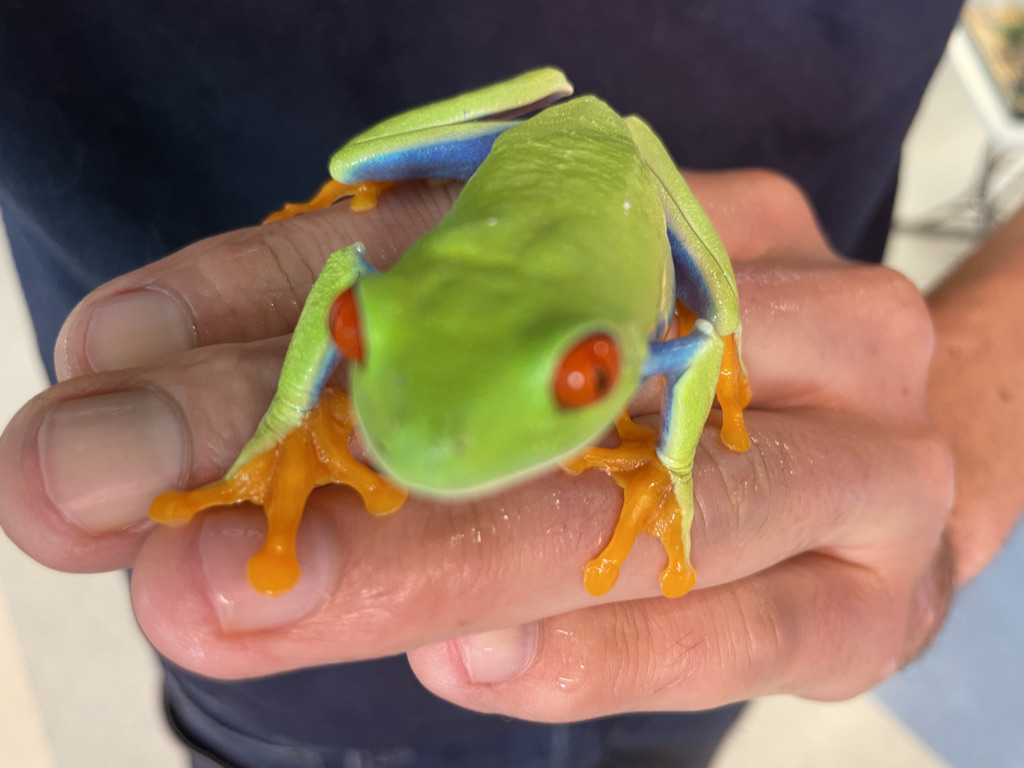
Tree frogs are identified by one feature above all others: round adhesive discs on every toe tip. Those pads work by wet adhesion rather than suction, which lets a frog weighing a few grams hang from a smooth leaf in rain. Most hylids are small, between 1 and 2.5 inches (2.5 to 6.5 cm), with slim waists and long delicate limbs.
The family is huge and covers the spring peeper, the chorus frogs, the gray tree frog and the American green tree frog that decorates porch lights across the southeastern US. It also contains the invasive Cuban tree frog, now established in Florida, which eats native hylids and is a genuine conservation problem rather than a curiosity.
Tree frogs are the loudest group relative to body size. A single spring peeper at 1 inch long produces a call measured at over 90 decibels at close range, and a full chorus is audible more than half a mile away.
Toads (Bufonidae): Frogs With Dry Warty Skin
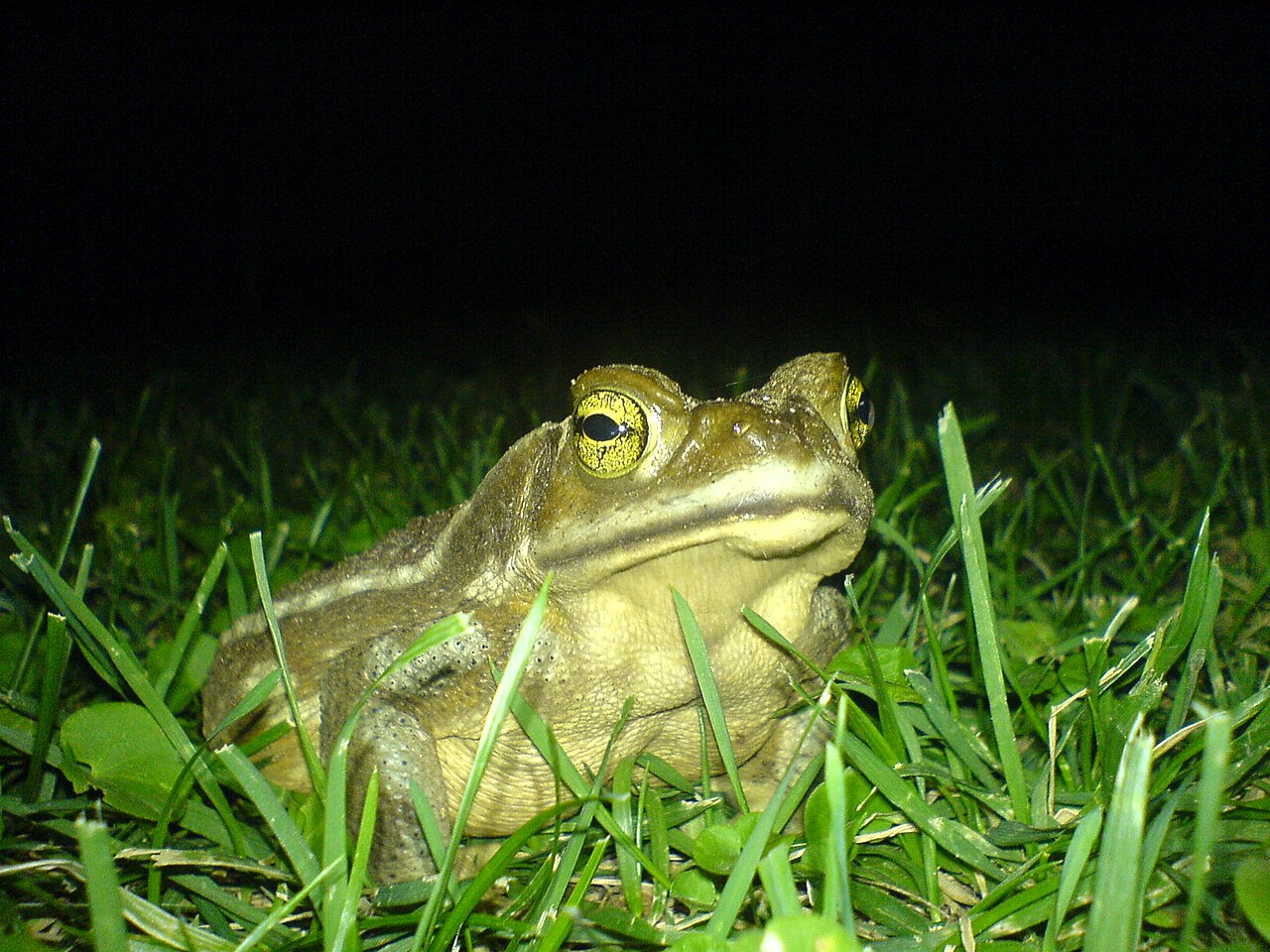
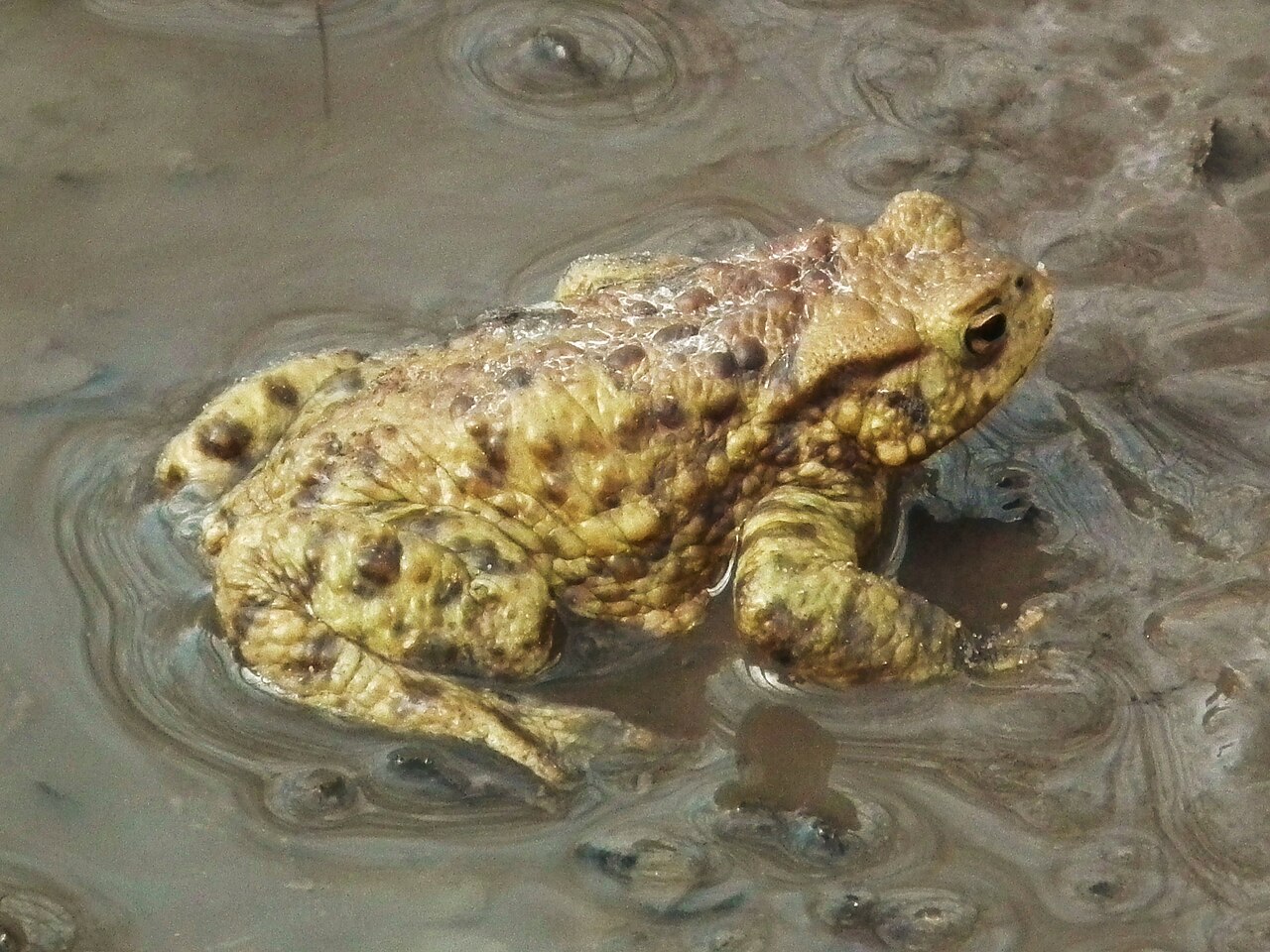
Every toad is a frog. Bufonidae is simply the family that traded moist permeable skin for a dry, keratinised, bumpy surface that holds water in, which is what lets toads live in gardens and deserts far from any pond. The giveaway is the pair of bulging parotoid glands behind the eyes.
Those glands secrete bufotoxins, a defence that matters for pet owners. A dog that mouths an American toad (Anaxyrus americanus) will usually foam and recover, but the invasive cane toad (Rhinella marina) in Florida, Texas and Hawaii kills dogs regularly and needs an immediate rinse of the mouth and a vet call.
Toads walk more than they hop, lay eggs in long paired strings instead of clumps, and tolerate dry conditions no true frog would survive. They are also the most likely frog to overwinter in a suburban yard rather than a wetland. For a closely related question, see our guide to pacman frog lifespan.
Poison Dart Frogs (Dendrobatidae)
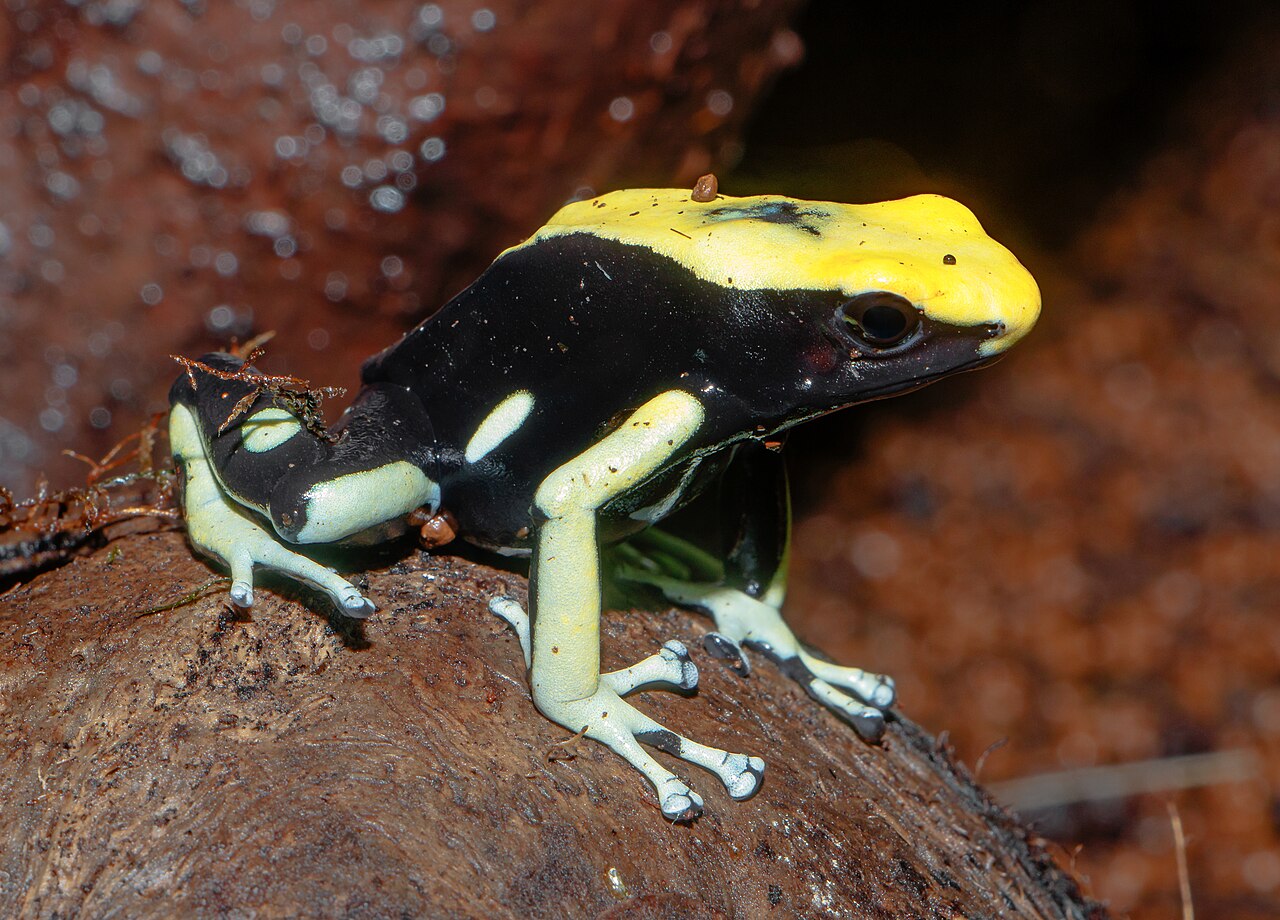
Poison dart frogs are tiny, diurnal, and coloured in combinations that exist specifically to be seen. Most species sit between 0.6 and 2.4 inches (1.5 to 6 cm). Their toxicity is dietary: they sequester alkaloids from wild mites and ants, so captive bred animals raised on fruit flies are effectively non toxic and are widely kept.
Only three species were ever used to poison blowgun darts, all in the genus Phyllobates. The rest earned the name by association. Popular species in the hobby include the dyeing dart frog (Dendrobates tinctorius) and the blue poison dart frog, a colour form of the same species from a savanna in Suriname.
Parental care sets this family apart. Males guard the clutch on land and then carry hatched tadpoles on their back to individual pools of water in bromeliads, returning to feed some species unfertilised eggs.
Horned Frogs (Ceratophryidae)
Horned frogs are built around a mouth that spans nearly the full width of the body. South American in origin, they sit buried in leaf litter with only the eyes exposed and ambush anything that passes, including rodents, snakes and other frogs. The fleshy eyelid projections give the family its name.
The ornate horned frog (Ceratophrys ornata) is the species sold everywhere as the Pacman frog, and it is the reason this small family is familiar at all. Adult females are round, heavy and surprisingly large; the details are in our breakdown of Pacman frog size.
They are also the group with real bite force for their size and with tooth like odontoid projections on the lower jaw. Anyone keeping a Pacman frog learns quickly that feeding tongs are not optional equipment.
Glass Frogs (Centrolenidae)
Glass frogs are small Central and South American treefrog relatives with translucent ventral skin. On some species the heart, liver and gut are visible through the belly, which is a camouflage adaptation: light passing through the edges of the body blurs the outline against a leaf rather than casting a hard shadow.
Most are under 1.2 inches (3 cm) and live along fast streams in cloud forest, where males guard egg clutches deposited on leaves overhanging the water. Hatching tadpoles drop straight into the current below.
They are rare in captivity and fragile in transport, so almost all encounters are photographic. Our species profile on the glass frog covers how the transparency actually works and which species show it most clearly.
Narrow Mouthed and Burrowing Frogs (Microhylidae)
Microhylids have a small pointed head, a plump round body and a fold of skin across the back of the skull. The narrow mouth is functional: most species specialise in ants and termites, eaten in large numbers, and a wide gape would be useless to them.
North America has two, the eastern narrow mouthed toad (Gastrophryne carolinensis) and the great plains narrow mouthed toad. Both spend nearly all their time under logs and debris and appear only after heavy rain, which is why they are commonly present and almost never seen.
The family also includes the rain frogs of the genus Breviceps, the round African species that inflates when threatened and cannot hop at all. Those animals walk, burrow and breed entirely out of water, skipping the tadpole stage.
What Is the Most Common Type of Frog?
By species count, tree frogs in the family Hylidae are the largest group of true frogs with roughly 1,050 species, followed by Microhylidae. By number of individual animals you are likely to meet in the US, the most common frogs are the American bullfrog, the green frog, the spring peeper and the American toad.
The bullfrog deserves a caveat: it is native east of the Rockies but invasive in California, Oregon, Washington and much of the world, where it eats native amphibians and spreads chytrid fungus. Abundance and health are not the same thing.
In the pet trade the most common species are White’s tree frog, the Pacman frog, the African dwarf frog and captive bred dart frogs, in roughly that order.
What Are the Top 10 Biggest Frogs in the World?
The goliath frog (Conraua goliath) of Cameroon and Equatorial Guinea leads by a wide margin at up to 12.6 inches (32 cm) snout to vent and 7.2 pounds (3.3 kg). Behind it come the African bullfrog, the cane toad, the Chilean helmeted water toad, the American bullfrog, the Blyth’s river frog, the smoky jungle frog, the Surinam horned frog, the Colorado river toad and the mountain chicken frog.
Every one of those exceeds 6 inches, and most exceed 1 pound. Size at that scale carries a cost: large frogs need permanent water or deep shelter, grow slowly, and are heavily hunted for food across their ranges.
The goliath frog and the mountain chicken frog are both critically endangered, primarily from harvesting and habitat loss rather than disease.
What Is the Deadliest Frog Ever?
The golden poison frog (Phyllobates terribilis) of the Colombian Pacific coast is the most toxic frog and one of the most toxic animals known. A single wild adult carries roughly 1 milligram of batrachotoxin, enough to kill 10 to 20 adult humans, concentrated in skin glands on a body barely 2 inches long.
The toxin blocks sodium channels in nerve and muscle and has no antidote. Emberá hunters wiped darts across the frog’s back without killing it, and those darts stayed lethal for up to two years.
Captive specimens lose the toxin entirely within a generation because the alkaloid precursors are absent from a fruit fly diet. Wild caught animals, and only wild caught animals, are dangerous.
What Is the Biggest Frog You Can Keep as a Pet?
The African bullfrog (Pyxicephalus adspersus) is the largest frog routinely kept in US homes, with males reaching 9 inches (23 cm) and over 2 pounds. It needs a 40 gallon footprint, deep substrate, and tongs, because it bites hard and does not distinguish fingers from food.
The Surinam horned frog and the cane toad are larger in theory but poorly suited to home care, and the cane toad is restricted or illegal in several states. Among the realistic options, African bullfrogs and large female Pacman frogs are the practical ceiling.
Bigger is not easier. A large frog produces waste in volume, needs a heated room rather than a heat mat alone, and lives 15 to 20 years.
How to Tell Frog Types Apart in the Field
Work through four features in order. First check the toe tips: round discs mean a tree frog. Second check the skin: dry and warty with glands behind the eyes means a toad. Third check the hind feet: full webbing and long legs mean a true frog.
Fourth, check the head against the body. A head as wide as the shoulders with a huge gape points to a horned frog, while a tiny pointed head on a round body points to a microhylid. Colour is the last thing to use, not the first, because most species vary by individual and by temperature.
Behaviour fills the gaps that anatomy leaves. Where a frog sits, when it calls, and whether it disappears in winter all narrow the answer; our guide on whether frogs hibernate covers the seasonal half of that.
For range maps, calls and current conservation status on North American species, the Smithsonian National Zoo and Conservation Biology Institute publishes species accounts alongside its amphibian recovery work.
Related reading: Types of Lizards.
Frequently Asked Questions
What are some names of frogs?
Common US frog names include the American bullfrog, green frog, wood frog, spring peeper, gray tree frog, green tree frog, leopard frog, pickerel frog, American toad and narrow mouthed toad. Well known foreign species include the goliath frog, golden poison frog, red eyed tree frog and African bullfrog.
What are some common breeds of frogs?
Frogs do not have breeds. Breed is a term for domesticated animals bred by humans for specific traits, and no frog has been domesticated. What people call breeds are species, or in the pet trade colour morphs such as albino or strawberry, which are pigment variants within a single species.
What are the most popular frogs?
In captivity the most popular are White’s tree frog, the Pacman frog, poison dart frogs and the African dwarf frog, all chosen for hardiness or colour. In the wild, the most watched species in the US are spring peepers and bullfrogs, largely because their calls mark the start of spring.
What is the biggest breed of frog?
The largest frog species is the goliath frog at up to 12.6 inches (32 cm) and 7.2 pounds (3.3 kg), found only in Cameroon and Equatorial Guinea. The largest in the United States is the American bullfrog, which reaches about 8 inches (20 cm) and 1.5 pounds in the biggest females.
How many species of frogs are there?
Roughly 7,600 frog species are currently described, and the number rises every year as molecular work splits existing species. Frogs make up about 88 percent of all amphibians. Around 90 species occur in the United States, with the highest diversity in the southeastern states.
Are all frogs poisonous?
No. Almost all frogs produce some skin secretion, but only a small number carry toxins dangerous to humans, mainly in the families Dendrobatidae and Bufonidae. Frogs are poisonous rather than venomous, meaning the toxin works on contact or ingestion, not through a bite.