Red Eared Slider Turtle: 7 Things to Know Before You Buy
A red eared slider turtle is the most common pet turtle in the United States, and also the one most owners underestimate: it reaches dinner plate size, lives 20 to 30 years, needs a 75 gallon tank or larger, and is banned or restricted in several states because escaped pets have become an invasive species. Knowing that before the purchase is the difference between a thriving animal and a turtle surrendered to a pond.
Trachemys scripta elegans is native to the Mississippi River basin, from Illinois south to the Gulf of Mexico, and it is now established on every continent except Antarctica. This guide covers identification, adult size, legal status, tank requirements, diet, feeding frequency, and the behavioral signs that tell you whether your turtle is actually doing well.
The red eared slider turtle (Trachemys scripta elegans) is a semi aquatic freshwater turtle identified by the red stripe behind each eye. Females reach 8 to 12 in (20 to 30 cm) of shell, males 5 to 9 in (13 to 23 cm), and captive turtles commonly live 20 to 30 years with a basking spot, UVB light, and heated water.
| Quick fact | Detail |
|---|---|
| Scientific name | Trachemys scripta elegans |
| Adult shell length | Females 8 to 12 in (20 to 30 cm), males 5 to 9 in (13 to 23 cm) |
| Lifespan | 20 to 30 years in captivity, 40 plus on record |
| Minimum adult tank | 75 to 125 gallons, roughly 10 gallons per inch of shell |
| Water temperature | 75 to 80 F (24 to 27 C), basking surface 88 to 95 F (31 to 35 C) |
| Diet | Omnivore, protein heavy as a juvenile, plant heavy as an adult |
| Native range | Mississippi and Missouri river drainages, US Gulf states |
Why Can’t You Own a Red-Eared Slider in Some Places?
You cannot legally buy or own a red eared slider in some jurisdictions because released pets outcompete native turtles. The species basks longer, breeds faster, and tolerates poor water better than most native freshwater turtles, so a handful of escapees can dominate a pond within a few seasons. Wildlife agencies treat it as an invasive species rather than a harmless pet.
Two different rules often get confused. The first is federal: since 1975 the US Food and Drug Administration has banned the sale of any turtle with a shell under 4 in (10 cm) because of Salmonella transmission to children. The second is state level. Florida restricts commercial sales of wild type sliders, Oregon lists the species as prohibited, and the European Union banned imports outright in 1997.
Check your own state wildlife agency before buying, not the pet store. Enforcement is uneven, and an animal that was legal where it was bred can be contraband where you live. Never solve a legal problem by releasing the turtle: that is how this species reached four continents.
Is a Red-Eared Slider Turtle a Good Pet?
A red eared slider is a good pet for someone who wants a long lived, visually active animal and a bad pet for someone who wants a low effort one. These turtles beg at the glass, learn feeding routines, and stay interesting for decades. They are also messy, need filtration rated well above their water volume, and do not enjoy handling.
The honest cost picture is the part pet stores skip. A hatchling sold for 20 dollars needs a 75 gallon setup, a canister filter, a basking dock, a UVB fixture with annual bulb replacement, and a heater, which lands between 400 and 700 dollars for a proper adult habitat. Compare that with a terrestrial species like the eastern box turtle, where the main expense is outdoor space rather than water engineering.
Salmonella deserves a plain statement. Healthy turtles shed the bacteria without symptoms, so hand washing after any contact with the animal or its water is not optional, and households with children under five or immunocompromised adults should choose a different pet.
How to Identify a Red-Eared Slider
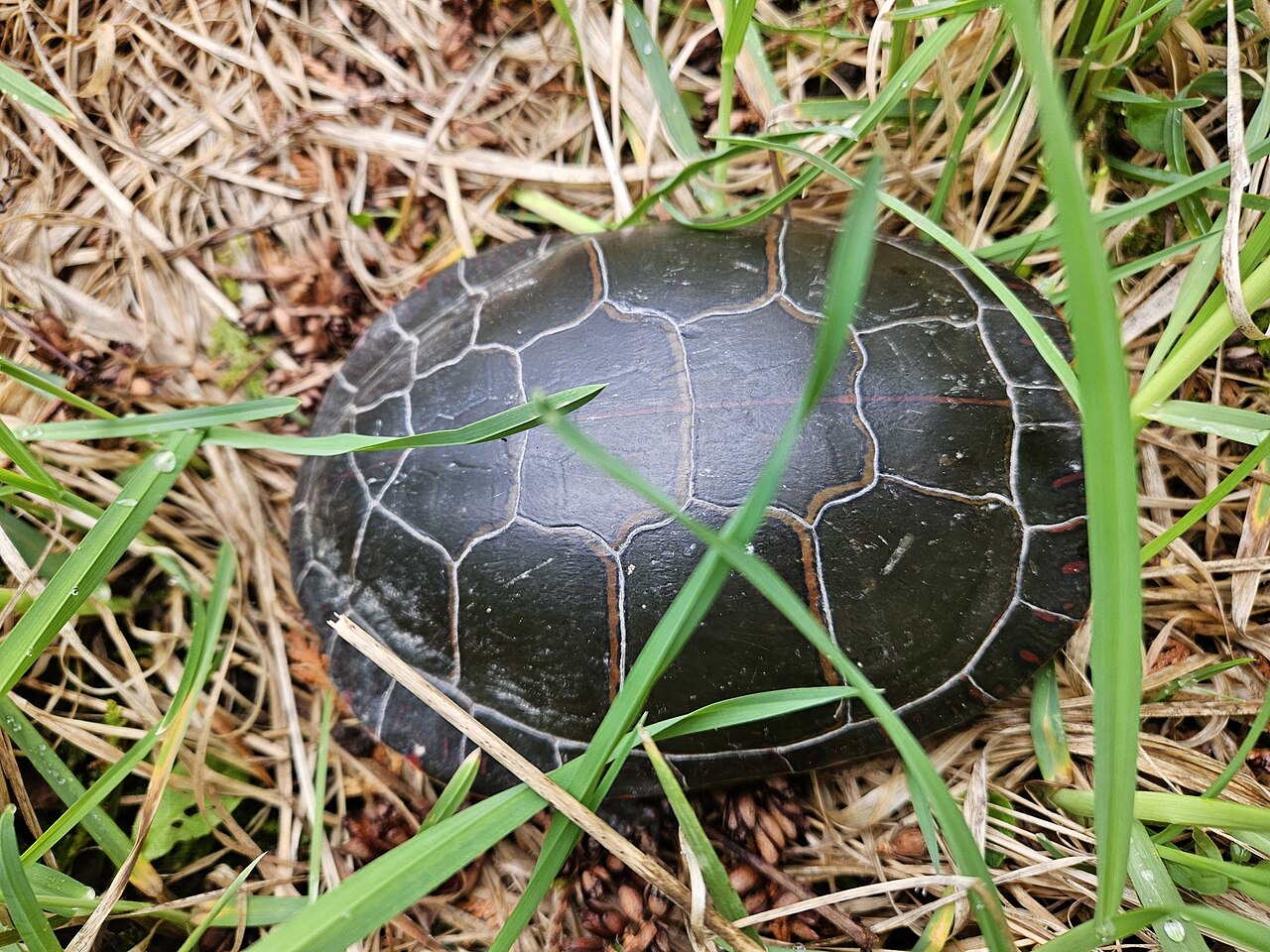
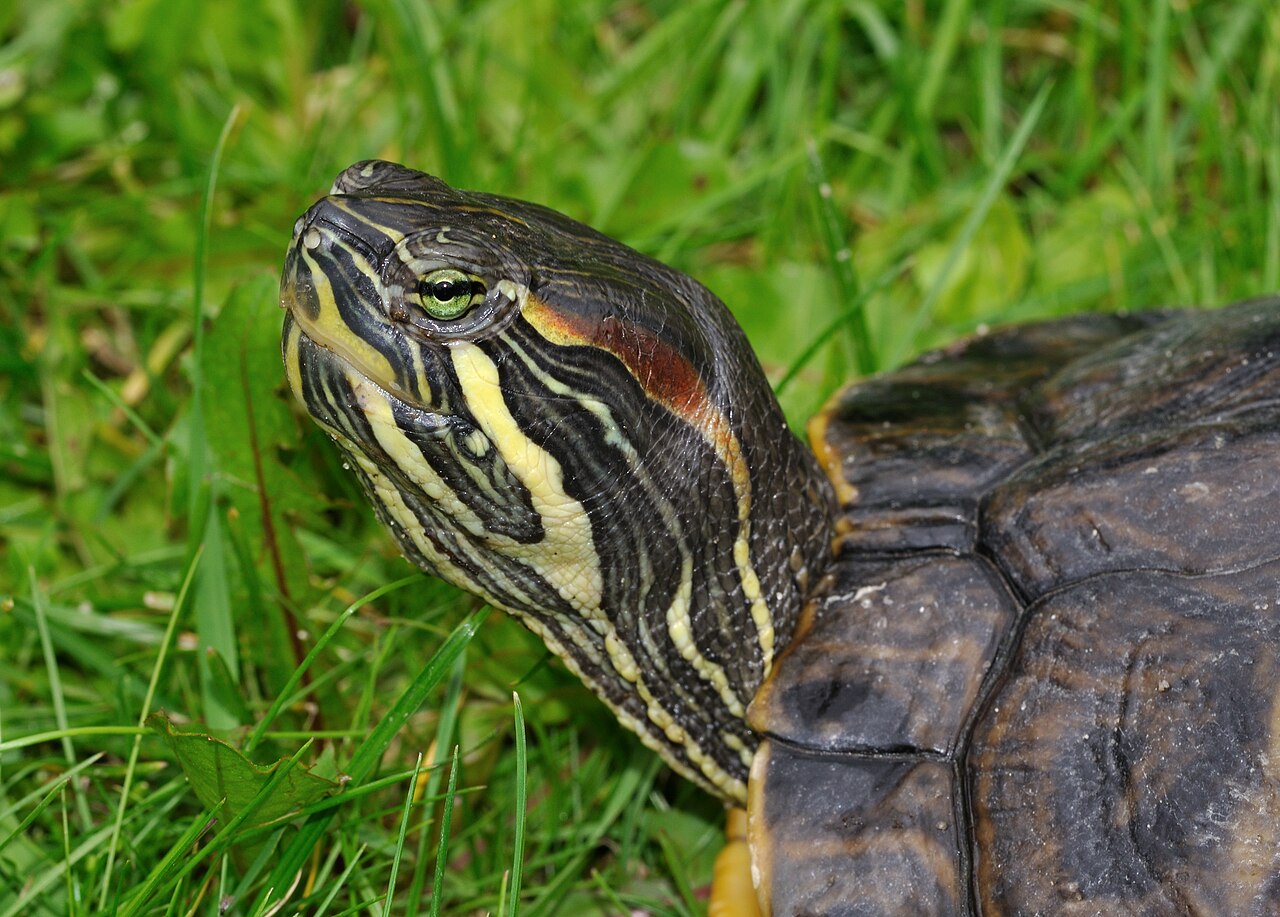
The diagnostic mark is a broad red or orange stripe running back from each eye, set against a head and neck covered in thin yellow lines. The carapace is olive to brown with yellow streaks, flattened rather than domed, and the marginal scutes carry faint dark blotches. Older males often darken so much that the shell pattern nearly disappears.
Two lookalikes cause most misidentifications in the field. The eastern painted turtle has a smooth unmarked carapace and yellow spots behind the eye rather than a red stripe. Yellow bellied sliders, the eastern subspecies Trachemys scripta scripta, show a wide yellow blotch on the side of the head instead of red.
Sexing is straightforward once the turtle matures. Males stay smaller, develop long curved front claws used in courtship display, and have a thicker tail with the vent set farther from the body. Females grow larger with short claws and a flatter plastron.
Do Red-Eared Sliders Need to Be in Water All the Time?

No. Red eared sliders spend most of the day in water but must be able to leave it completely and dry off, which is why a basking platform is mandatory rather than decorative. A turtle that cannot dry its shell develops shell rot and eye infections, and one that cannot warm up cannot digest properly.
Plan for roughly 10 gallons of water per inch of shell length, so an adult female needs 100 gallons or more, with depth at least twice her shell length so she can right herself if she flips. Above the water, the basking surface should sit under a heat lamp at 88 to 95 F (31 to 35 C) and a UVB source for vitamin D3 synthesis and calcium uptake.
Wild sliders make the same trade off on a log or mud bank, and they hibernate underwater when temperatures drop. If you keep a turtle outdoors in a pond, read up on how turtle hibernation works before the first frost, because an indoor turtle should not be allowed to slide into brumation by accident.
What Does a Red-Eared Slider Turtle Eat?
A red eared slider eats insects, fish, crustaceans, tadpoles, and carrion as a juvenile, then shifts steadily toward aquatic plants as it matures. In captivity that translates to a base of a quality pellet, plus leafy greens, plus occasional live or frozen protein. Hatchlings may take 70 percent animal matter, large adults closer to 70 percent plants.
Good staples are red leaf lettuce, dandelion greens, water lettuce, duckweed, and squash. Useful protein items are earthworms, crickets, blackworms, and small feeder fish. Skip iceberg lettuce, which has almost no nutrition, and skip dog food, raw meat, and bread outright. A cuttlebone left floating in the tank supplies calcium at will.
Feeding in a separate tub of tank water keeps the main filter from processing shredded greens, and it makes leftovers easy to see. The US Fish and Wildlife Service publishes guidance on native and non native aquatic species that is worth reading if you keep turtles anywhere near open water; see fws.gov.
How Many Times Should I Feed a Red-Eared Slider Turtle?
Feed hatchlings and juveniles under 4 in (10 cm) once a day, and adults every second or third day. Portion by volume rather than by rule: roughly the amount of food that would fill the turtle’s head if it were hollow, offered in one sitting. Greens can stay available continuously, since overfeeding on lettuce is not the problem.
Overfeeding is the single most common husbandry error, and its signature is visible. A turtle carrying too much weight cannot pull its legs fully into the shell, and fast growth from a protein heavy diet produces pyramiding, where scutes rise into peaks instead of staying flat. Neither reverses, so the fix has to happen before it shows.
How to Tell If a Red-Eared Slider Is Happy
A content red eared slider basks daily with legs stretched out, swims the full length of its tank, eats with obvious interest, and retreats when startled rather than sitting passive. Clear eyes, a firm smooth shell, and a steady appetite are the practical markers. Turtles do not show affection, so behavior and body condition are the only honest readout.
The warning signs are just as concrete: swollen or crusted eyes, refusing food for more than a week at normal temperatures, floating tilted to one side, soft or pitted shell areas, wheezing, or constant frantic scratching at the glass. Tilted floating and open mouth breathing suggest respiratory infection and need a reptile veterinarian, not a water change.
Most behavior problems trace back to three numbers. Water too cold, basking spot too cool, or UVB bulb past its service life will produce a listless turtle no matter how good the diet is. Verify all three with a thermometer and a bulb replacement date before assuming illness.
How Many Days Can Red-Eared Sliders Go Without Eating?
A healthy adult red eared slider can go one to two weeks without food at normal temperatures and considerably longer in cool conditions, when its metabolism drops. Hatchlings have far less reserve and should not miss more than two or three days. This is biology worth knowing, not a vacation plan.
A turtle that stops eating on its own is reporting a problem. The usual causes are water below 70 F (21 C), a failed basking lamp, seasonal light change triggering brumation behavior, or illness. Correct temperature and lighting first, and if the fast continues beyond two weeks with everything correct, get a veterinary exam.
Red-Eared Sliders in the Wild and Why Releases Matter
Feral slider populations now exist in most US states outside the native range, plus Europe, Asia, Australia, and South Africa, almost all of them founded by released pets. They take the best basking sites, which are a limited resource, and native species lose body condition when they cannot thermoregulate on schedule.
Some native turtles handle the competition better than others. Bottom dwelling species such as the eastern mud turtle and the Florida softshell turtle bask less and overlap less, while pond turtles that share the same logs feel it directly. Marine species such as the green sea turtle face an entirely different set of threats.
If you can no longer keep a slider, the options are a reptile rescue, a herpetological society adoption list, or a licensed nature center. Releasing it into local water is illegal in many states and harmful in all of them.
Frequently Asked Questions
Why can’t you own a red-eared slider?
Federal rules ban US sales of any turtle under 4 in (10 cm) of shell because of Salmonella risk to children, and several states restrict the species outright as an invasive animal. Florida limits commercial sales of wild type sliders and Oregon prohibits them, so check your state wildlife agency first.
Is a red-eared slider turtle a good pet?
Yes for a keeper prepared for a 20 to 30 year commitment, a 75 to 125 gallon tank, strong filtration, and UVB lighting. No for anyone wanting a small starter pet or a turtle to handle regularly. Households with children under five should avoid them because of Salmonella shedding.
Do red-eared sliders need to be in water all the time?
No. They are semi aquatic and need a dry basking platform heated to 88 to 95 F (31 to 35 C) plus UVB. Without a chance to dry out completely they develop shell rot and eye infections, and without heat they cannot digest their food properly.
How many times should I feed a red-eared slider turtle?
Juveniles once daily, adults every two to three days. Offer a head sized portion of pellets and protein per feeding, and leave leafy greens available continuously. Overfeeding shows up as a turtle that can no longer retract its legs fully and as pyramided scutes on the shell.
How to tell when a turtle is hungry?
A hungry slider patrols the front glass, follows movement outside the tank, and begs at the surface at its usual feeding time. That behavior is learned and unreliable as a gauge, since a well fed turtle begs just as hard. Feed on schedule and judge by body condition instead.
What makes a red-eared slider happy?
Correct water temperature, an easily reached basking spot, functioning UVB, swimming room, and some cover to hide under. Behavioral enrichment is simple: floating plants, a varied diet, and a tank layout that allows exploring. Handling does not make sliders happy, it stresses them.