Carpenter Ant Frass: What It Looks Like and What to Do Next
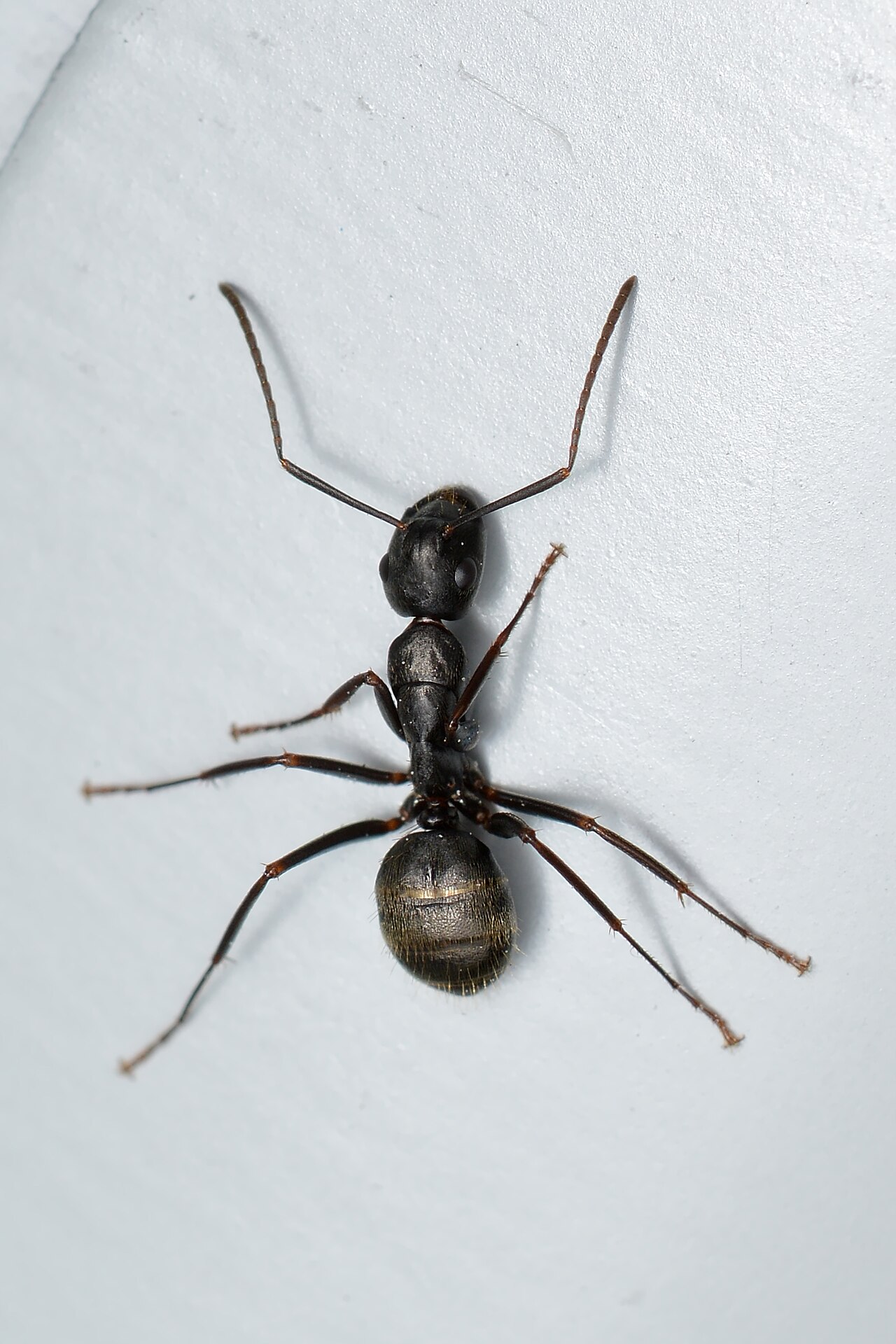
Carpenter ant frass is the pile of coarse wood shavings, insect body parts, and dead ants that a colony pushes out of its galleries, and it looks almost exactly like the contents of a pencil sharpener. If you are finding it indoors, you are standing near an active nest or directly under one. Carpenter ants do not eat wood, so everything they chew out has to go somewhere, and that somewhere is a slit or crack they keep clear as a trash chute.
The good news is that frass is the most useful sign this insect gives you. It tells you the nest is close, it tells you the colony is active right now, and its texture tells you whether you are dealing with carpenter ants or termites. Here is how to read it and what to do the same week you find it.
Carpenter ant frass is sawdust like debris made of shredded wood fibers mixed with ant body parts, insect legs, and bits of insulation. It appears in small cone shaped piles below wall voids, window frames, or door casings. Fresh frass means an active nest within a few feet, because ants push it out of galleries they are still excavating.
| Feature | Carpenter ant frass | Drywood termite frass |
|---|---|---|
| Texture | Fibrous, stringy, like pencil shavings | Granular, like coarse sand or coffee grounds |
| Shape under a lens | Irregular shreds of wood | Uniform six sided pellets |
| Contents | Wood plus ant legs, heads, wings, dead insects | Wood only, no body parts |
| Color | Pale blond to gray, matches the wood | Tan to dark brown, matches the wood |
| Where it lands | Cone piles under cracks, sills, and voids | Loose piles below tiny round kick out holes |
| Gallery walls | Smooth, sanded, clean | Rough, often packed with pellets |
What does carpenter ant frass look like?
Carpenter ant frass looks like a small cone or fan of pale sawdust, usually 1 to 4 in (2.5 to 10 cm) across, sitting on a windowsill, baseboard, basement floor, or the top of a stored box. The individual particles are stringy rather than round, because the ants shear wood fibers with their mandibles instead of digesting them.
Look closer and you will find the part that settles the identification: legs, antennae, wing fragments, and whole dead ants mixed into the wood. A colony housekeeps constantly, and its own dead go out the same opening as the shavings. Bits of fiberglass insulation or foam board turn up too when the galleries run through an exterior wall.
Fresh frass is loose, dry, and pale. Old frass clumps, gathers dust, and takes on the gray of the surface it sits on. That difference is the whole reason to sweep a pile up rather than photograph it and leave it: if it returns in two or three days, the colony is working, and you have just located a live gallery.
Does frass mean an infestation?
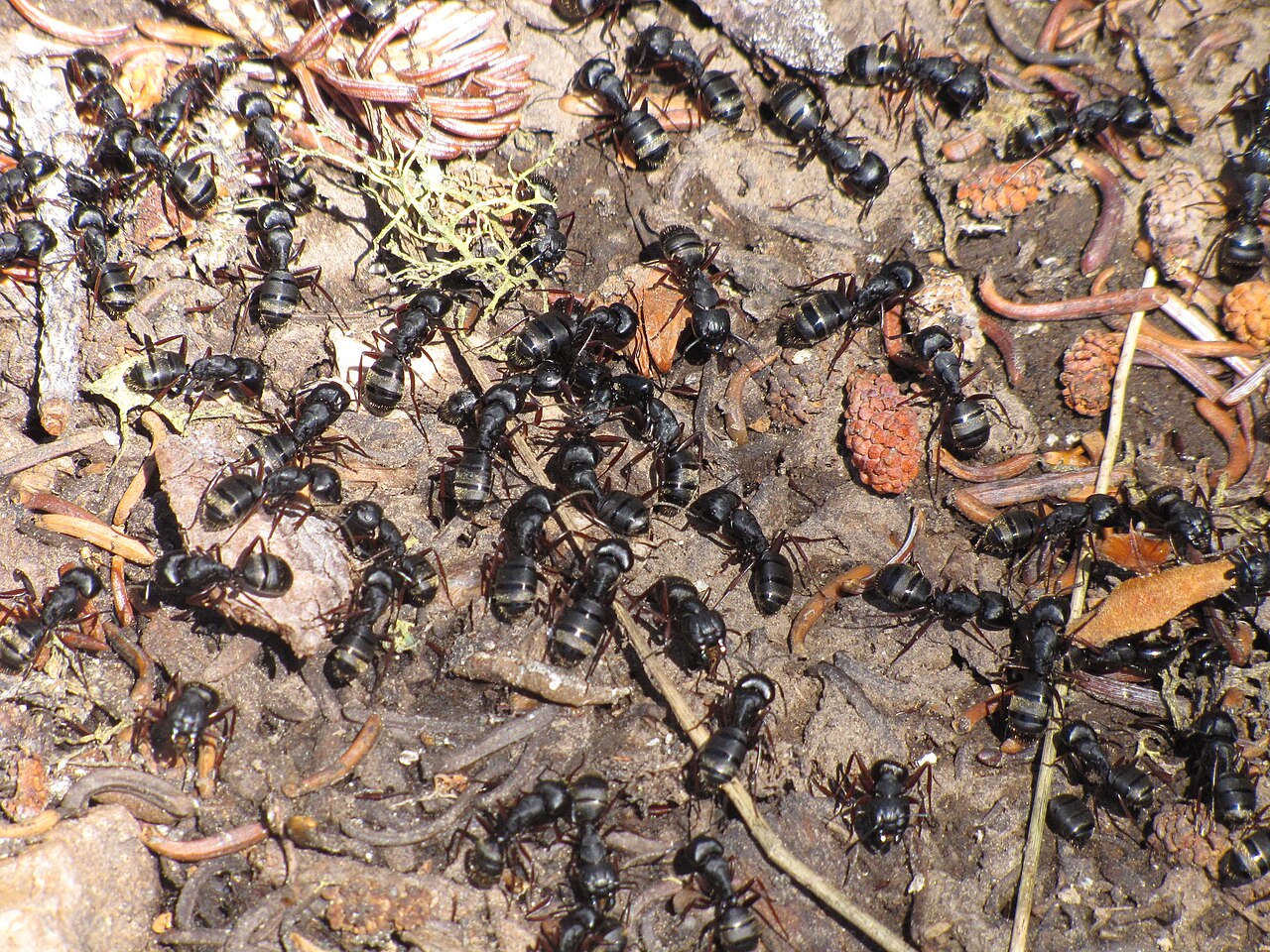
Frass inside the house means an active nest, not a stray forager. A single ant walking across a counter can come in under a door from a stump in the yard. A frass pile cannot: it is excavation debris, and excavation only happens where a colony has taken up residence in the structure.
What frass does not tell you is how big the problem is. Carpenter ants build a parent colony with the queen plus satellite colonies of workers and older larvae, and satellites are often the ones inside the walls. A satellite can hold a few hundred workers and still produce a visible pile every week, while the parent colony sits in a rotting stump 30 ft (9 m) away.
The other thing frass reliably indicates is moisture. Carpenter ants strongly prefer wood that is damp or already softened by decay, so a persistent pile usually sits downstream of a leak: a failed window seal, a slow roof drip, an overflowing gutter, or a shower surround that has been weeping into the framing.
Carpenter ant frass vs termite frass
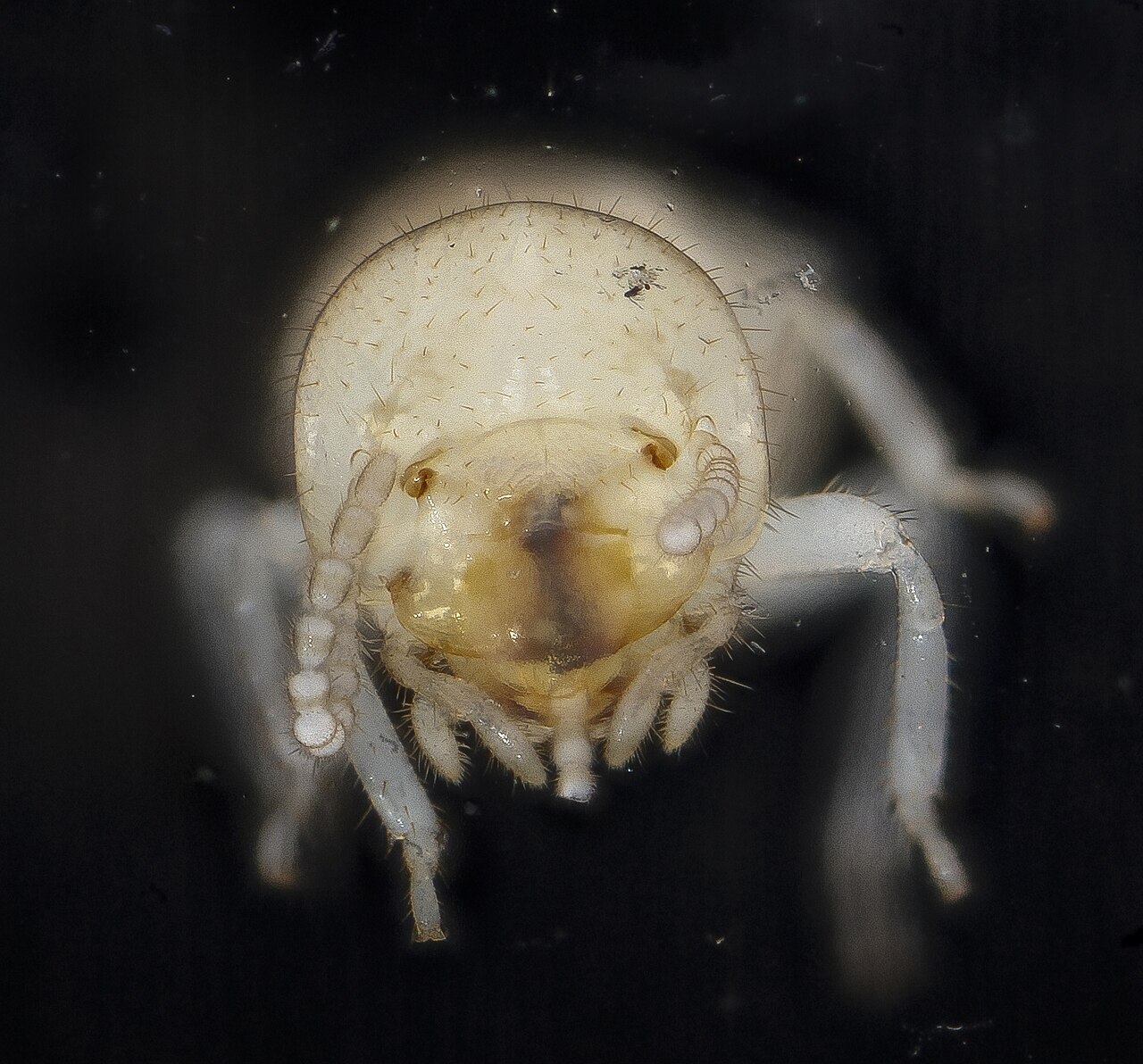
The fastest test is texture. Rub a pinch between your fingers. Carpenter ant frass feels fibrous and shreds further, like insulation or fine excelsior. Drywood termite pellets feel gritty and roll, like sand, and under a hand lens they are unmistakably uniform six sided capsules.
The second test is contents. Insect body parts appear only in carpenter ant frass, because termites do not eject their dead through kick out holes. If you can find a leg or a wing in the pile, you have ants. If it is pure wood granules with no body parts at all, look harder at termites.
Subterranean termites, which cause most US structural damage, complicate this by producing no visible frass at all. They pack their galleries with soil and build mud tubes up foundation walls instead. So the real branch is three ways: fibrous debris with body parts means carpenter ants, uniform pellets mean drywood termites, and mud tubes with no debris mean subterranean termites and a call to a professional.
Where to look for carpenter ant frass in a house
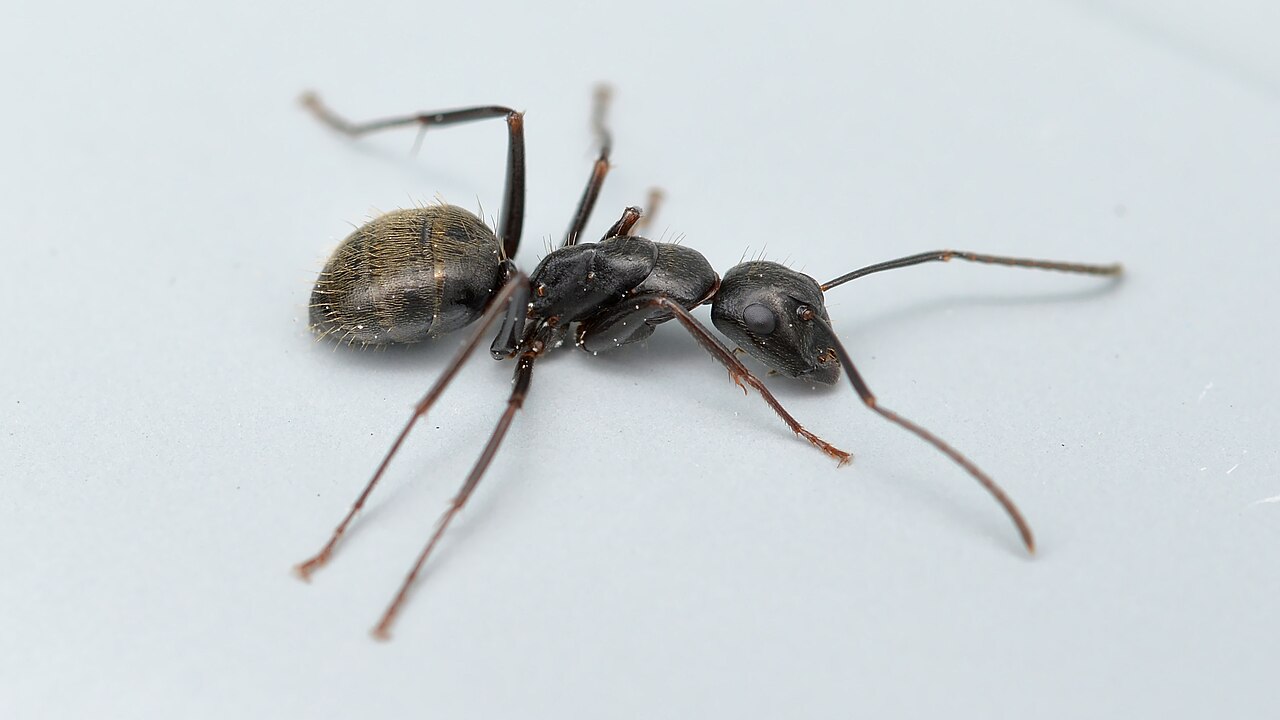
Start where water has been. The highest yield spots are under bathroom and kitchen windows, around exterior door casings, below skylights, at the base of chimneys, inside the sill plate area of a basement, and in crawlspaces where a joist end meets damp masonry. Attics near roof valleys are next.
Then look for the openings themselves. Carpenter ants use gaps rather than drilling neat holes, so frass tends to fall from the seam between two pieces of trim, the top of a baseboard, an electrical outlet, a light fixture, or a hairline crack in a window frame. A flashlight held nearly flat against a wall throws shadows that make small piles obvious.
Hollow sounding wood is the confirmation. Tap suspect trim and framing with the handle of a screwdriver: galleries produce a dull, papery note, and a firm push sometimes breaks through paint into a smooth walled tunnel. Rustling inside a wall on a warm evening is the other strong sign, since large colonies are audible when they work.
What to do when you find carpenter ant frass
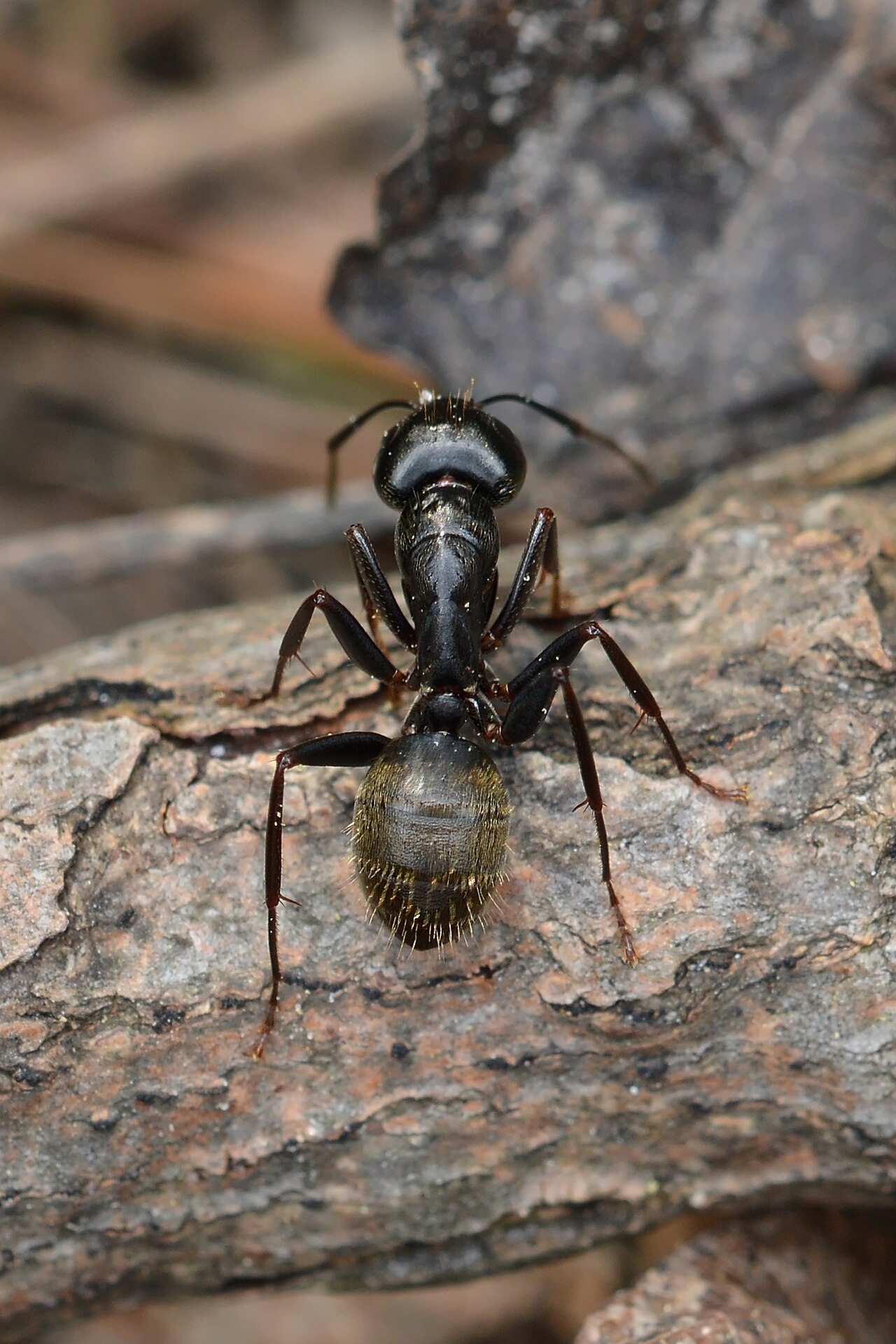
Sweep the pile, mark the date, and check the same spot in 48 hours. That single step separates a live nest from an old one and tells you whether the situation needs action this week or only monitoring. Do not caulk the crack yet, because you will need it to find the nest.
Next, follow the ants rather than the frass. Trails are easiest to see between dusk and midnight, when workers are most active. Put a dab of something sweet on a scrap of foil near the pile, wait 20 minutes, and watch which direction loaded ants carry it. They lead back toward the nest opening.
Then fix the water. Any carpenter ant problem that keeps coming back is a moisture problem with ants in it, and treatment alone buys a season at most. Reseal the window, clear the gutter, vent the crawlspace, replace the soft trim. Basic control steps for smaller indoor species are covered in how to get rid of ants, and the carpenter ant queen page explains why removing workers alone never ends a colony.
How to find a carpenter ant nest
Work the pile backward. Frass falls almost straight down, so the gallery entrance is usually within 12 in (30 cm) above the pile, on a vertical surface that the pile sits against. Trace the trim line and the wall seam directly overhead before opening anything.
Use sound and bait together. Tap along the suspect run for a change in tone, and lay a bait station on the trail so workers show you the route. Indoors the nest is most often in a wall void behind a wet window, in the framing over a shower, in a hollow door, or inside foam insulation, which carpenter ants excavate as readily as wood.
Check outdoors too. The parent colony is frequently in a stump, a woodpile, a dead tree limb, or landscape timbers within 100 ft (30 m) of the house, connected to the indoor satellite by a trail along a fence, a utility line, or a tree branch touching the roof. Cutting that branch is sometimes the whole fix. For the wider picture on what draws them in, see what do ants eat.
What kills carpenter ants immediately?
Nothing that works on the colony works immediately, and that is the central trap of this pest. Contact sprays kill the ants you can see within seconds and leave the nest intact, so the pile of frass returns in a week and the colony has learned to route around the treated surface.
Slow acting bait is the approach that actually ends colonies. Sugar based or protein based baits containing borate or abamectin let workers carry the dose back and feed it to the queen and brood over several days. Take that seriously enough to remove competing food and to leave the trail undisturbed while it works.
If you must treat the nest directly, a dust such as a borate or silica product blown into the wall void reaches ants that never take bait. For structural nests behind finished walls, or any case that keeps returning after two bait cycles, hire a licensed applicator. The university extension guidance at UC Statewide IPM Program is a reliable starting point on product classes and application.
What month are carpenter ants most active?
Peak activity in most of the US runs from April through September, with the loudest phase in May and June. Colonies overwinter in a dormant state and resume excavating as soon as interior temperatures rise, which is why homeowners so often find the first frass pile in early spring.
Winged reproductives, the swarmers, appear in late spring in the North and as early as February in the Southeast. Finding swarmers indoors is worse news than finding frass: it means a mature colony has been inside long enough to produce reproductives, which usually takes two years or more. Our page on how to get rid of flying ants covers that stage.
Frass can appear in the middle of winter as well. A colony living in a heated wall void never really goes dormant, so a January pile simply tells you the nest is inside the building envelope rather than outside it. That is a stronger reason to act, not a weaker one.
Do carpenter ants ever go away on their own?
Rarely. A satellite colony can abandon a void if it dries out completely, which is why fixing a leak sometimes ends the problem without any treatment. But a colony with a queen in reachable, damp wood and a food supply outside has no reason to leave, and mature colonies persist for years.
The reason they are hard to eliminate is the structure of the colony itself. Kill the visible workers and the queen simply produces more. Treat one satellite and the network keeps others. Repel them with a contact spray and they relocate deeper into the wall, where the frass no longer shows and the damage continues unseen.
Damage accumulates slowly compared with termites, so there is no need to panic over one pile. A single season of carpenter ant work in a wall stud is cosmetic. Five years of it in a sill plate is structural. Treat frass as an early warning that you got for free, and note that the ants will also bite if handled, as described in carpenter ant bite.
Frequently Asked Questions
Is it bad if your house has carpenter ants?
It is a problem worth solving but not an emergency. Carpenter ants excavate far more slowly than termites and usually target wood that is already damp or decaying. The real concern is what the ants are telling you: their presence indoors almost always means water is getting into the structure somewhere.
What smell do carpenter ants hate?
Strong volatile oils such as peppermint, clove, cinnamon, and citrus disrupt trails briefly, and vinegar erases the chemical trail markers workers follow. None of it reaches the nest. Repellents also push colonies deeper into wall voids, which makes them harder to bait, so they work against you in the long run.
Is carpenter ant frass dangerous to breathe?
Frass is not toxic, but it is fine wood dust mixed with insect fragments, and both are common respiratory irritants. Vacuum it with a HEPA filter rather than sweeping it dry in a small room, and wear a dust mask if you are opening a wall void where several years of debris has collected.
Does frass always mean the nest is in that wall?
Almost always, and usually within 12 in (30 cm) above the pile. Frass falls by gravity through the nearest crack, so it does not travel far. The exception is debris on a floor below an attic or a ceiling gap, where it can drift a foot or two sideways before landing.
How can you tell if carpenter ant frass is fresh?
Fresh frass is dry, loose, and pale, with sharp edged wood shreds and no dust film. Old frass is matted, gray, and often stuck together by humidity. The reliable test is mechanical: clear the pile completely and check again after two days. Any new material means the colony is active.
What does ant poop look like compared with frass?
Actual carpenter ant waste is microscopic and never forms visible piles, so what people call ant droppings is frass: chewed wood plus colony trash. Smaller household ants such as pavement and sugar ants leave nothing visible at all, which is why any sawdust pile points to carpenter ants or wood boring beetles instead. For species that hunt them, see birds that eat ants.