Eastern Hognose Snake: Harmless Bluffer That Plays Dead
The eastern hognose snake (Heterodon platirhinos) is harmless to people, and almost everything alarming about it is an act. This thick-bodied snake flattens its neck like a cobra, hisses, strikes with a closed mouth, and then flops over and plays dead with its tongue hanging out. It is one of the best bluffers in North America, and it almost never bites.
Found across the eastern United States from Florida to New Hampshire and west to Texas, the eastern hognose is a toad specialist with an upturned snout built for digging. Color is no help for identification because the same species comes in black, gray, orange, red, brown, and blotched patterns. What identifies it is the shovel-shaped nose and the theater.
Eastern hognose snakes are not venomous to humans and rarely bite. Their mild rear-fang saliva subdues toads but causes only local swelling in the few people bitten. When threatened, they hiss, spread their neck, mock-strike with a closed mouth, then roll belly-up and play dead. Adults reach 20 to 33 in (51 to 84 cm).
| Quick Facts | Eastern Hognose Snake |
|---|---|
| Scientific name | Heterodon platirhinos |
| Adult length | 20 to 33 in (51 to 84 cm), rarely to 46 in (117 cm) |
| Danger to humans | None. Mildly toxic saliva, rear fangs, bites almost unheard of |
| Main prey | Toads, some frogs and salamanders |
| Range | Eastern and central US, Florida to southern New England, west to Texas |
| Signature behavior | Neck flattening, hissing bluff, then playing dead |
| Lifespan | About 10 years wild, up to 20 in captivity |
Is an Eastern Hognose Snake Poisonous?
No. The eastern hognose snake is not poisonous and not dangerously venomous to humans. The confusion is understandable, because the species is not completely fang-free: it has enlarged rear teeth and a Duvernoy’s gland that produces a mild toxic saliva. That saliva is a tool for one job, which is shutting down a toad that has puffed itself up to avoid being swallowed.
Bites on people are rare enough to be published as case reports rather than statistics. Where they happen, usually to someone deliberately handling the snake for a long time, the result is local swelling, redness, and sometimes blistering that resolves without treatment. No death and no systemic envenomation has been attributed to this species.
The word poisonous belongs to things you eat, not things that bite, so the technically correct answer is that hognose snakes are neither poisonous nor medically venomous. Compare that with a genuinely dangerous native species like the timber rattlesnake, where a bite is a hospital visit, and the difference is obvious.
How to Identify an Eastern Hognose Snake
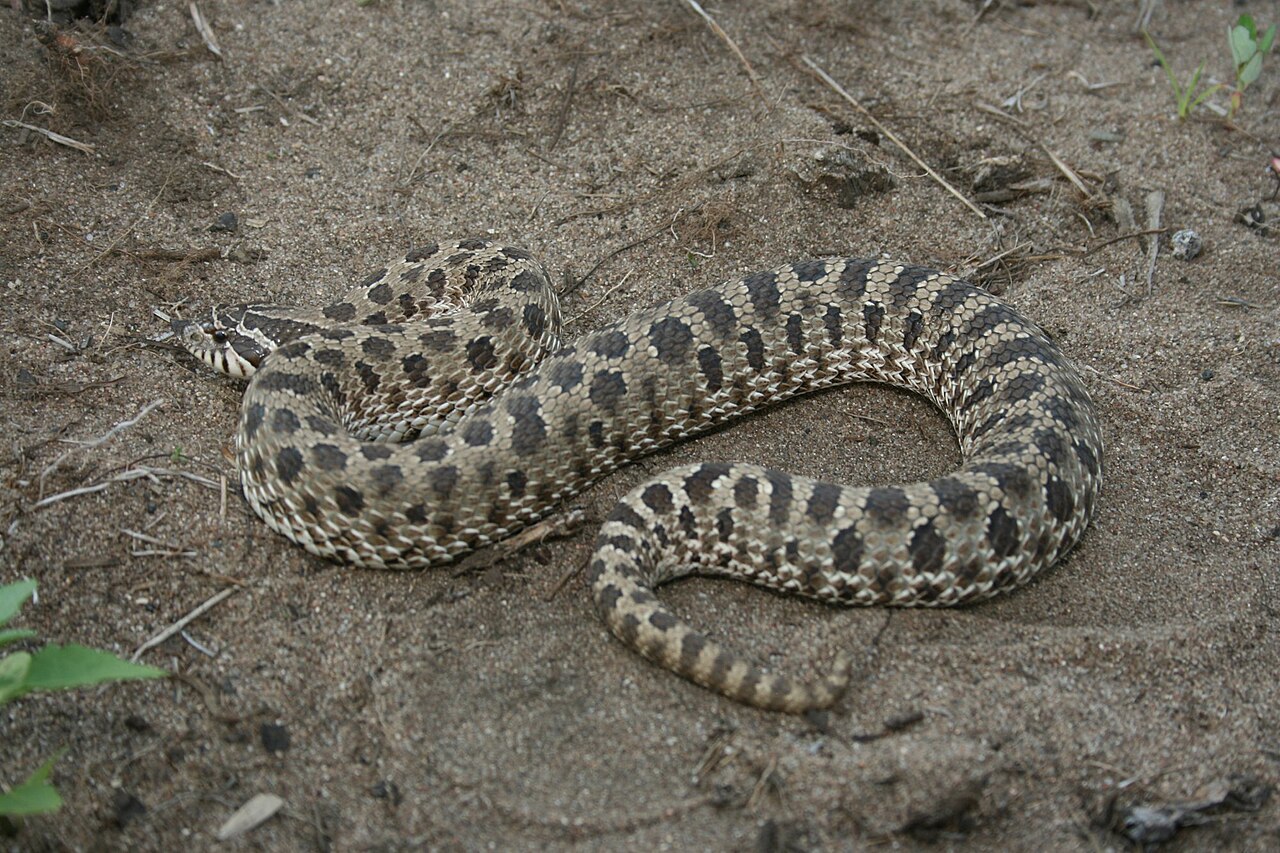
Start at the nose. The upturned, shovel-like rostral scale is the single reliable field mark and no other snake in the eastern US has it to this degree. The body is stout for its length, the head is wide and short, and the scales are keeled, giving the snake a rough, dull look rather than a glossy one.
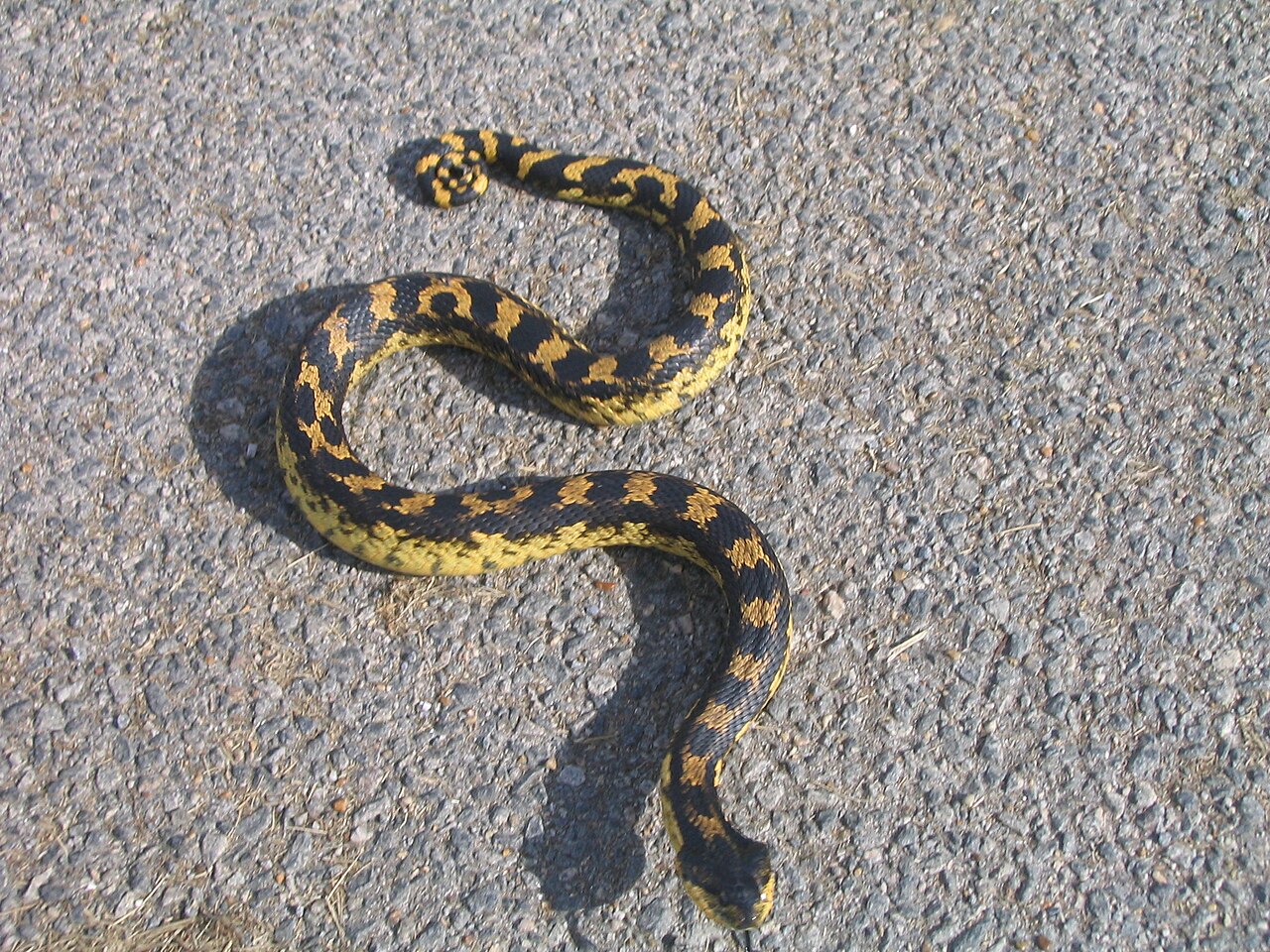
Ignore color. Eastern hognose snakes come in yellow with dark blotches, solid black, solid gray, olive, orange, and brick red, sometimes within the same litter. A pattern key will fail you on this species. Two dark blotches behind the head are common in blotched individuals but absent in melanistic ones.
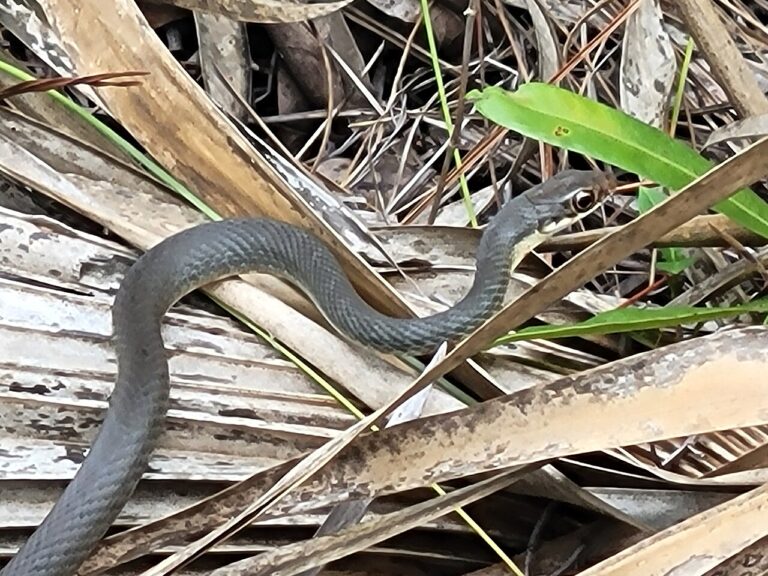
The other giveaway is the underside of the tail, which is noticeably lighter than the belly. If the snake is fast, slim, glossy black, and flees rather than performs, check a black racer instead.
Why the Eastern Hognose Snake Plays Dead
Playing dead works because most predators that hunt by movement lose interest in a limp snake, and many refuse carrion. The performance runs in a fixed order. First the snake spreads its neck, hisses loudly, and lunges with its mouth shut. If that fails, it writhes, defecates, smears musk, rolls onto its back, gapes, lets the tongue loll, and sometimes releases a trickle of blood from the mouth.
The tell is that the snake insists on being upside down. Flip a death-feigning hognose right side up and it will immediately roll onto its back again, which is why the act reads as scripted rather than genuine unconsciousness. Play is usually over within a few minutes once the threat leaves.
The bluff is also why this snake gets killed so often: a flattened neck and loud hiss look like a cobra to someone who does not know the species. We break the full sequence down in our guide to hognose snakes playing dead.
Where Eastern Hognose Snakes Live
Eastern hognose snakes need loose, sandy, or well-drained soil they can burrow into, so they turn up in pine barrens, oak scrub, old fields, coastal dunes, and the sandy edges of woodlands. Damp bottomland and heavy clay are poor habitat, which is why the species can be common in one county and absent in the next.
The range covers most of the eastern and central United States: Florida and the Gulf Coast north to southern New Hampshire and Minnesota, west into eastern Texas and Kansas. State wildlife agencies and university herpetology programs such as the Savannah River Ecology Lab herpetology program track local populations, several of which are listed as threatened or of special concern in the Northeast.
They are diurnal and spend much of the day moving through leaf litter or resting just under the surface. Winter is spent in a self-dug burrow or under a stump below the frost line.
What Eastern Hognose Snakes Eat
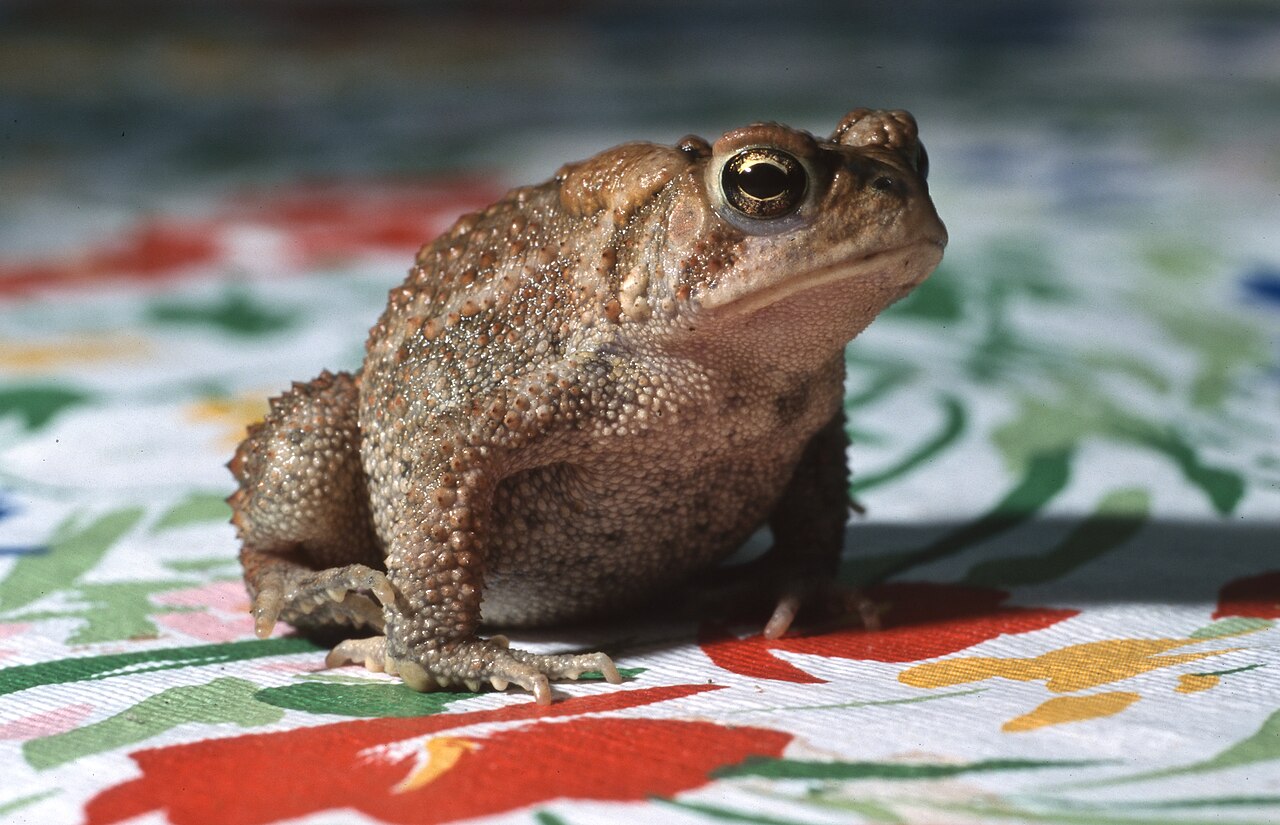
Toads are the core of the diet, often more than three quarters of it. American toads (Anaxyrus americanus), Fowler’s toads, and spadefoots are all taken, along with occasional frogs, salamanders, and the odd reptile egg. That specialization explains the snake’s whole toolkit.
A threatened toad inflates with air and secretes bufotoxin from its parotoid glands, which defeats most snakes. The hognose punctures the inflated toad with its rear fangs, and the mild venom plus enlarged adrenal glands that neutralize the toxin let it swallow a meal that would sicken other species. The upturned snout digs buried toads out of sand.
In captivity this diet is the main hurdle for the eastern species, which frequently refuses rodents. That is one practical reason keepers choose the western species instead, a difference we cover in our overview of the hognose snake group.
How Aggressive Are Hognose Snakes?
Hognose snakes are not aggressive, they are loud. The entire threat display is designed to avoid contact, and a snake committed to bluffing is a snake that has already decided not to fight. Even the mock strike is usually delivered with the mouth closed, and many individuals never open it at all.
Handled snakes tend to go through the bluff once, then settle. Are hognose snakes friendly to humans? Friendly is the wrong frame for a reptile, but they tolerate handling better than most wild-caught colubrids and they do not have the defensive bite reflex of a water snake. Wild ones should still be left alone.
The animals most at risk are the snakes themselves. Hawks, larger snakes, and cars kill far more hognoses than hognoses inconvenience anyone. Habits change with age, and hatchlings bluff just as hard as adults, as our piece on the baby hognose snake shows.
Is the Eastern Hognose Snake a Good Pet?
The eastern hognose is a poor beginner pet, and in much of its range keeping a wild-caught one is illegal. The problem is food: captive eastern hognoses often hold out for amphibians, which means sourcing toads or scenting rodents, and fasting individuals are common. The western hognose (Heterodon nasicus) takes frozen mice readily and is the species sold in the pet trade.
Legality varies by state rather than by country. Several northeastern states protect H. platirhinos outright, so collecting one from the wild is an offense even if captive-bred western hognoses are freely sold in the same shop. Check your state wildlife code before buying, not after.
If you want a beginner snake with a similar footprint and none of the feeding drama, a corn snake is the honest recommendation.
Related reading: Eastern Milk Snake.
Frequently Asked Questions
Are eastern hognose snakes rare?
Not rare overall, but patchy and declining at the edges of the range. The species is locally common on sandy soils in the Southeast, while New Hampshire, Massachusetts, Connecticut, and New York list it as threatened or of special concern. Habitat loss and road mortality drive the local declines.
Will a hognose snake bite a human?
Rarely, and usually only after prolonged handling. Most defensive strikes are delivered with the mouth closed. Documented bites cause local swelling, redness, and occasional blistering from the mild rear-fang saliva, with no systemic effects and no antivenom needed. Wash the site and watch it for a day.
How much does a hognose snake usually cost?
Captive-bred western hognose snakes run about 100 to 250 USD for normal coloration, with sought-after morphs reaching several hundred to over a thousand. Eastern hognose snakes are seldom offered legally and are protected in parts of their range, so a cheap wild-caught one is a legal risk.
In what states is it illegal to own a hognose snake?
Rules target the native eastern species, not the pet-trade western one. New York, Connecticut, Massachusetts, and New Hampshire all protect Heterodon platirhinos, and collecting or possessing wild individuals is prohibited. Several other states require a permit. Verify with your state wildlife agency, because listings change.
Can you pet a hognose snake?
You can handle a captive-bred hognose, and many tolerate it calmly after the initial bluff. Support the body rather than gripping it, keep sessions to a few minutes, and skip handling for 48 hours after a meal. Wild eastern hognoses should be watched, not touched, since their lifespan shortens with human contact.