Deer Tracks: 5 Marks That Identify Them in Snow, Mud and Sand
Deer tracks are two narrow, teardrop shaped halves that sit side by side and taper to a point in the direction the animal was traveling. In most of the United States that print belongs to a white-tailed deer (Odocoileus virginianus), and a clean adult track runs about 2 to 3.25 in (5 to 8 cm) long and 1.5 to 2.25 in (4 to 6 cm) wide. The two halves are the hooves of a cloven foot, and nothing else in the eastern woods leaves that shape at that size.
The surface does most of the work for you. Snow holds the full outline including the dewclaws, mud holds depth and direction, and dry sand collapses the edges until only a vague pair of pits remains. Read the ground first, then the track.
A deer track is a split, heart shaped hoof print 2 to 3.25 in (5 to 8 cm) long, with the two halves closest together at the pointed tip. That tip points forward. Deeper, splayed tips and two small dewclaw dots behind the hoof mean the deer was running or sinking into soft ground.
What a Deer Track Looks Like
Each deer foot carries two weight bearing toes, the third and fourth digits, capped in hard keratin. Together they print as a split heart or an upside down valentine. The halves are widest at the rear, where the heel pads sit, and they converge at the front into the point that gives you direction at a glance.
Behind and above the hooves sit two dewclaws, the vestigial second and fifth toes. They do not touch firm ground. In snow, mud or at speed they stamp two round dots about 1 in (2.5 cm) behind the main print, which is the single best confirmation that you are looking at a deer and not a goat or a calf.
Deer Track Size by Age and Sex
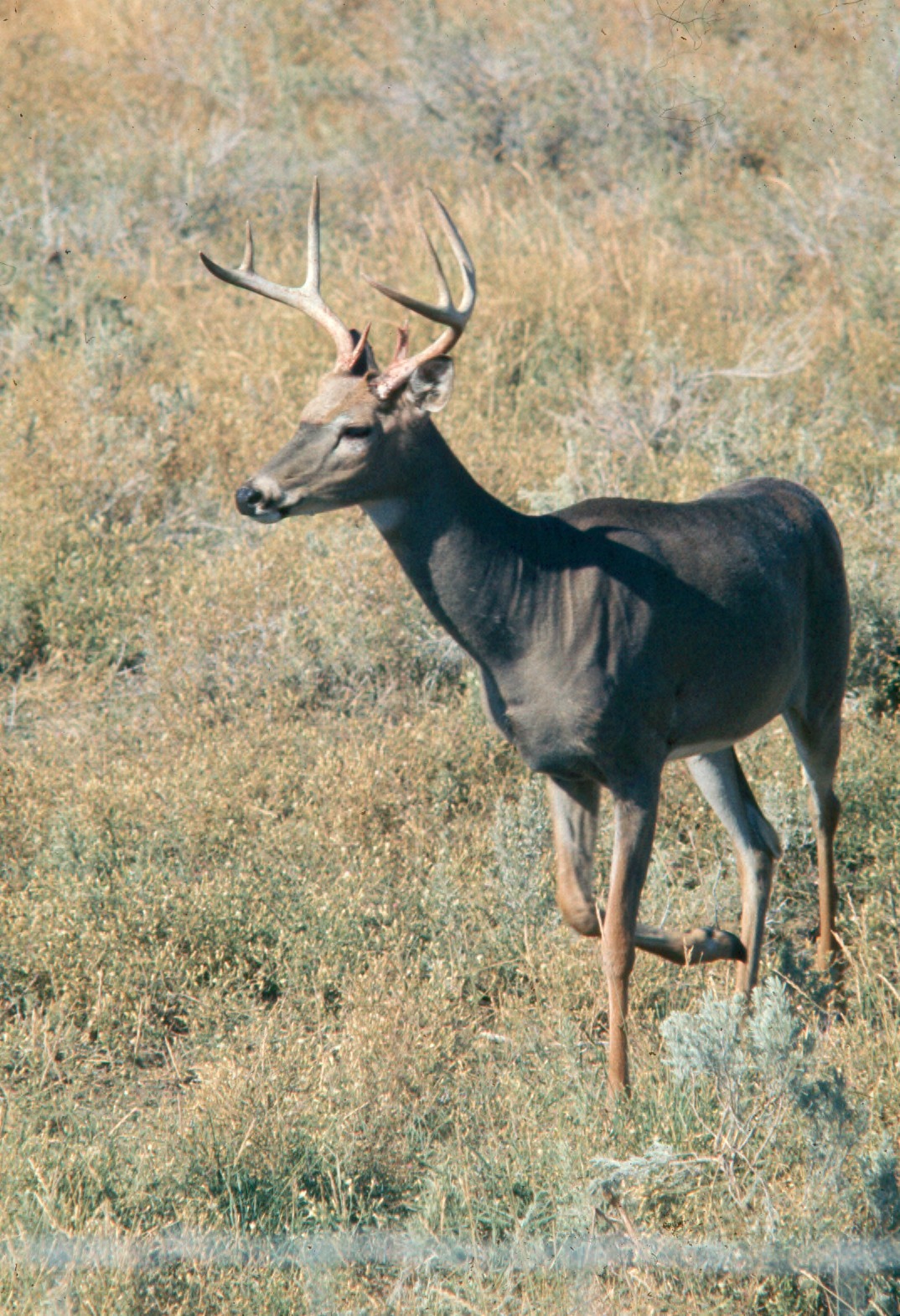
Size tells you roughly what kind of deer passed, though it will not give you a trophy buck on its own. Fawns leave prints barely longer than a quarter, does fall in the middle, and heavy mature bucks leave the longest and widest tracks with the most splay. Mule deer (Odocoileus hemionus) print slightly rounder and blockier than whitetails of the same weight.
Stride matters as much as length. Measure from the tip of one hind track to the tip of the next on the same side, on level ground, and compare it with the table below. A short stride with a long hoof usually means a large animal moving slowly, not a small one hurrying.
| Deer | Track length | Track width | Walking stride | Typical give away |
|---|---|---|---|---|
| Fawn, first summer | 1 to 1.75 in (2.5 to 4.5 cm) | 0.75 to 1.25 in (2 to 3 cm) | 9 to 14 in (23 to 36 cm) | Tracks paired with a doe |
| Adult doe, whitetail | 2 to 2.75 in (5 to 7 cm) | 1.5 to 1.75 in (4 to 4.5 cm) | 15 to 19 in (38 to 48 cm) | Neat, tight halves |
| Mature buck, whitetail | 2.75 to 3.5 in (7 to 9 cm) | 2 to 2.5 in (5 to 6 cm) | 19 to 24 in (48 to 61 cm) | Splayed tips, dewclaws show |
| Mule deer | 2.5 to 3.5 in (6 to 9 cm) | 1.75 to 2.5 in (4.5 to 6 cm) | 18 to 24 in (46 to 61 cm) | Blockier, less pointed |
| Elk, for scale | 3.75 to 4.5 in (9.5 to 11.5 cm) | 3 to 3.75 in (7.5 to 9.5 cm) | 28 to 36 in (71 to 91 cm) | Rounded tip, huge |
How to Tell Which Direction a Deer Track Is Going
The pointed, narrow end of the hoof faces the direction of travel. Beginners often read the track backward because the rounded rear end looks more like the front of a foot. Trust the point, and trust the dewclaws: they always fall behind the hoof, never ahead of it.
In soft ground a second clue appears. The deer pushes off as it leaves, so soil, snow or sand is thrown out of the back of the print and piles in a small ridge behind it. The leading edge stays crisp, the trailing edge is smeared. Follow the smear and you are following the deer.
Dewclaws: When the Back Two Toes Register
Dewclaws are the fastest way to separate a deer from livestock and large dogs. They print as two short dashes or dots set wider apart than the hoof halves, and they appear when the animal sinks, when it jumps, and when it runs. On hard summer trail they usually vanish.
Deep dewclaw marks with widely splayed hoof tips mean speed or soft mud, not necessarily a big buck. Hunters who read dewclaws as a size signal on marshy ground regularly overcall doe tracks as bucks. Judge size from a print on firm, level soil instead.
Deer Gaits: Walk, Trot, Bound and Gallop
A walking deer places its hind foot almost exactly in the print of the front foot on the same side, a pattern called direct registration. You see one clean track where two feet landed, spaced 15 to 24 in (38 to 61 cm) apart in a near straight line.
A trot staggers the prints slightly and lengthens the stride. A bound throws all four feet into a tight cluster with gaps of 6 to 12 ft (1.8 to 3.7 m) of untouched ground between groups, and the hind prints land ahead of the front ones. Clustered groups with long gaps mean the deer was pushed by something.
Deer Tracks in Snow
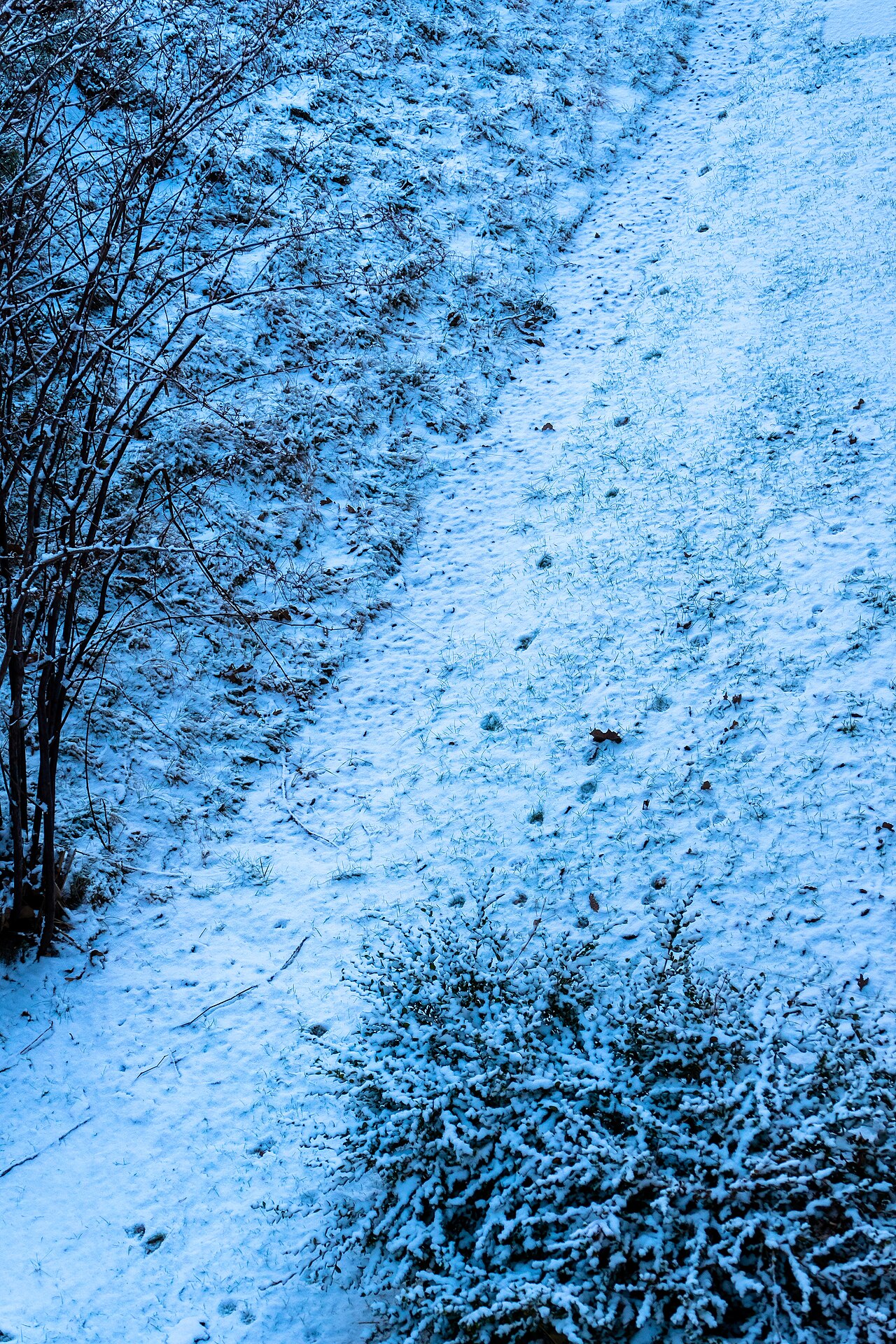
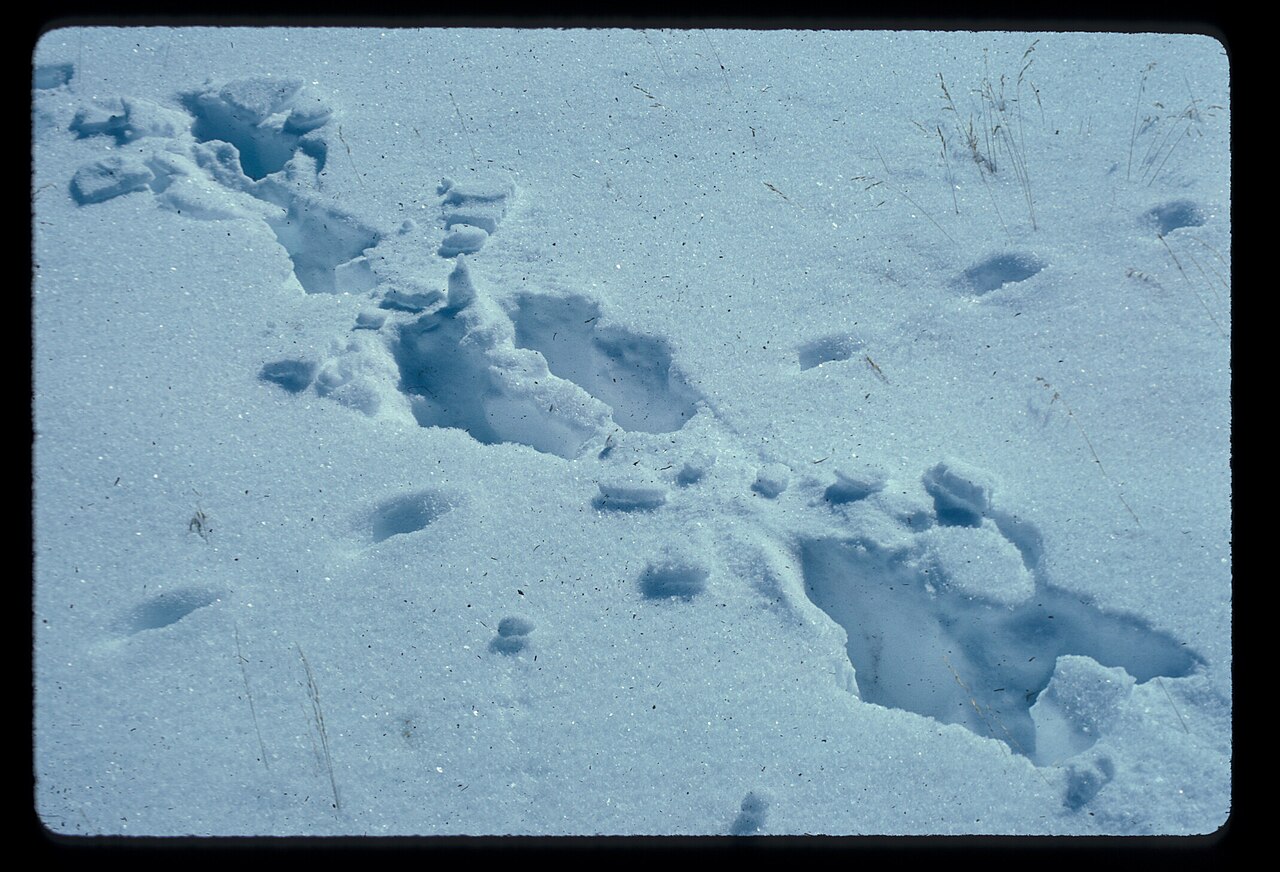
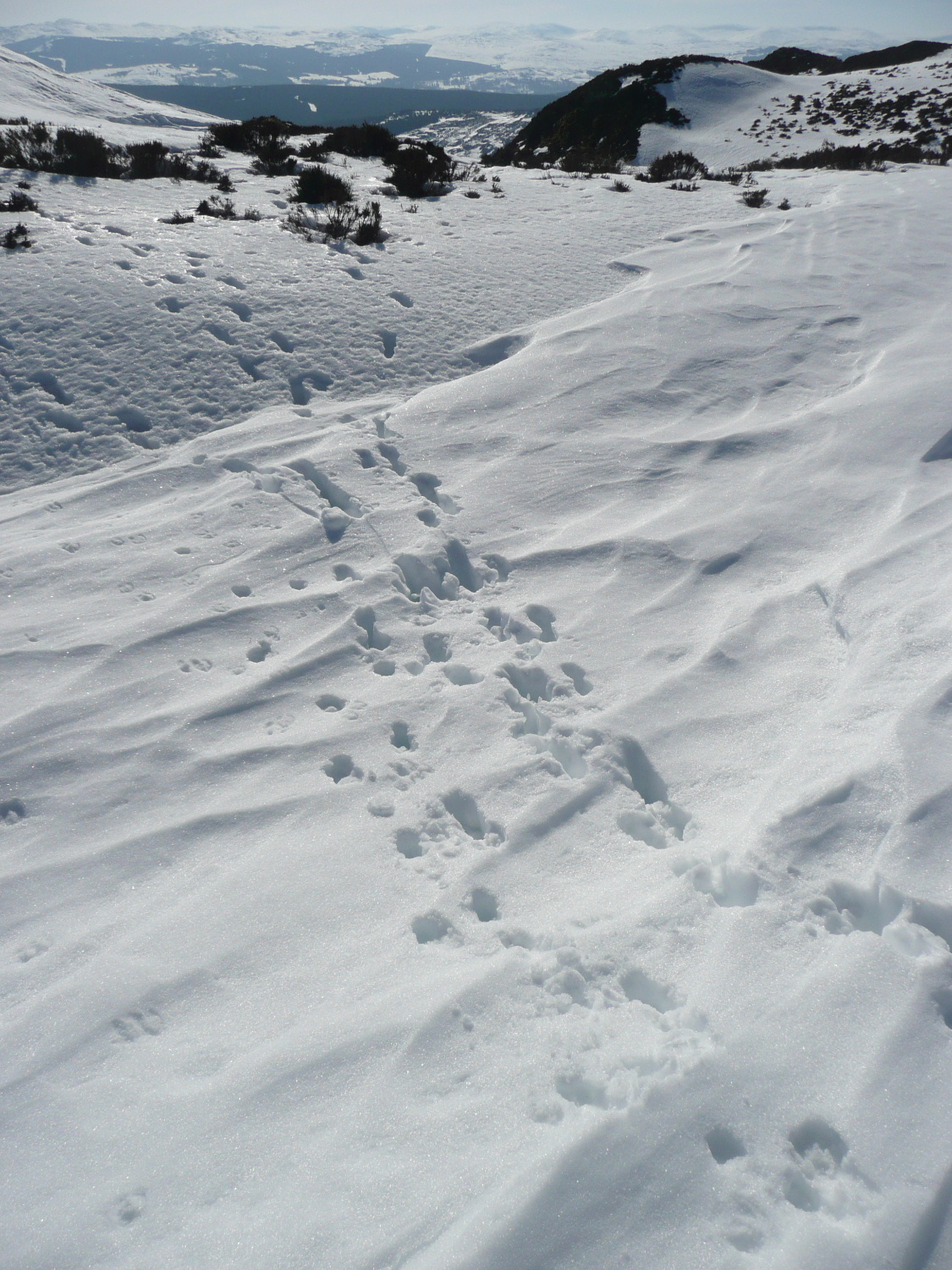
Winter is tracking season, and snow is the most forgiving surface there is. Fresh powder holds hoof outline, dewclaws, drag marks and often the hair fine texture of the hoof wall. Deer drag their feet through snow deeper than about 4 in (10 cm), leaving a connecting line between prints that no dog or coyote makes in the same way.
Age the track by its edges. A print made within the hour has sharp rims and loose crystals inside; sun and wind round the rim within a day, and a melt and refreeze cycle glazes the whole print. Tracks in a snowy field also tell you when deer move, which is mostly at dusk and dawn. See whether deer are truly nocturnal for the activity pattern behind the trail.
Deer Tracks in Mud
Mud records the most detail of any surface but distorts size. A hoof pressed into wet clay spreads as the animal pushes off, so prints along a pond edge or a tilled field can look 25 percent larger than the same deer leaves on firm dirt. Measure the firmest print in the trail, not the deepest.
Mud also preserves evidence of what the deer did next. Look for a browse line on nearby shrubs and for droppings in the same corridor; deer droppings on a muddy crossing confirm the trail is in regular use rather than a single passage.
Deer Tracks in Sand and Dust
Dry sand is the hardest surface to read because the walls of the print slump inward within minutes. You lose the sharp heart shape and keep only two oval depressions. Work with the light instead of the outline: kneel so the sun is low and across the track, and the shallow rim throws a shadow you can actually see.
Damp sand just above the waterline on a river bar or lakeshore behaves like mud and holds excellent detail. Dust on a logging road does the same at first light, before the day’s wind erases it. Both surfaces age fast, which makes any track you find there almost certainly recent.
Deer Tracks vs Dog and Coyote Tracks
This is the most common mix up, and it should not be. Dog and coyote prints are rounded ovals with four toe pads and usually four claw marks around a single triangular heel pad. A deer print has no pads and no claws, only two solid crescents separated by a clean split down the middle.
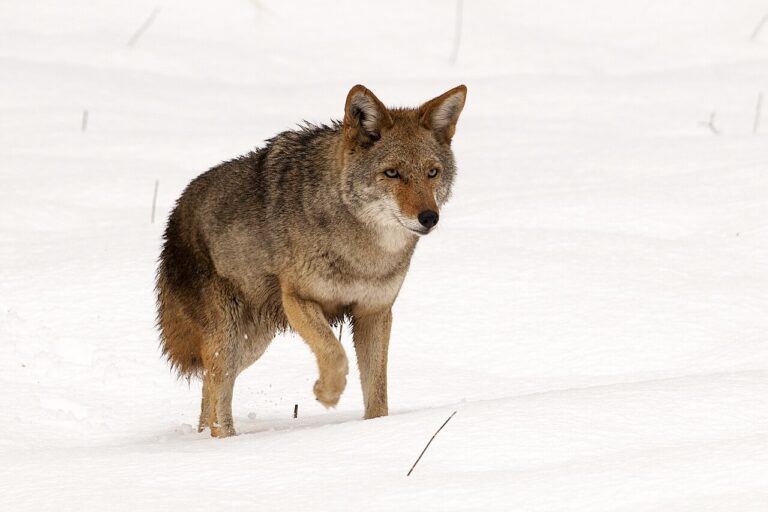
Shape aside, the trail line differs. A coyote walks a tight, nearly straight line of single prints; a loose dog wanders and doubles back. Compare the details in our guide to coyote tracks and to bobcat tracks, which show no claws at all and will not be confused with a deer once you see the four toes.
Deer Tracks vs Hog, Goat and Elk Tracks
Feral hogs (Sus scrofa) are the real problem in the South. A hog print is also cloven, but the two halves are blunt and rounded at the tip rather than pointed, the overall shape is wider than it is long, and the dewclaws print wide and outside the hoof line, not tucked behind it.
Goats and sheep leave prints close to a doe in size with blunter tips and straighter inner edges, and they rarely appear far from fences or pasture. Elk (Cervus canadensis) tracks are simply much larger, with a rounded front edge. Pronghorn have no dewclaws at all, so a clean western track with nothing behind it is worth a second look.
Where to Find Deer Tracks and What They Tell You
Deer funnel through predictable places: creek crossings, gaps in fence lines, the inside corner where two field edges meet, and saddles between ridges. Soft ground at any of those points collects prints from every animal that used the route in the last few days, which makes them the best survey spots on a property.
Read the whole corridor rather than one print. Tracks plus droppings plus browsed twigs plus a rub on a sapling means a travel route in daily use. Tracks alone on a sand bar mean one deer crossed once. Other sign in the same place, including rabbit tracks and the snorts and grunts described in our guide to deer sounds, fills in who else shares the trail. The National Park Service publishes track plates for North American mammals that are worth carrying as a cross check.
Frequently Asked Questions
What do hog footprints look like?
Hog footprints are cloven like a deer’s but blunt and rounded at the front instead of pointed, and they are usually as wide as they are long. The dewclaws print outside the line of the main hooves rather than directly behind them. Tracks of adult feral hogs run 2 to 3 in (5 to 7.5 cm) long.
Are deer tracks the same as goat tracks?
No. Goat and sheep tracks are cloven and similar in size to a doe, but the tips are blunter and the inner edges run straighter, giving a more rectangular print. Goats also leave dewclaw marks less often. Location decides most cases: goat tracks turn up near pasture, fencing and barns.
How can you tell how old a deer track is?
Judge the edges against the weather. Crisp rims, loose crystals or soil crumbs inside the print, and clear hoof wall texture mean hours, not days. Rounded rims, a crusted surface, raindrop pits or windblown debris in the track mean it predates the last weather event. Always compare with a fresh print you make yourself.
What are 5 interesting facts about deer?
Deer walk on two toes per foot with two more held clear as dewclaws. They register hind feet into front prints to move quietly. Fawns are nearly odorless for their first weeks. Whitetails can run 30 mph (48 km/h). Their eyes sit on the side of the head, giving close to 300 degrees of vision.
How far away can a deer smell human urine?
A deer can detect human scent, urine included, from several hundred yards downwind under good conditions, and research on whitetail olfaction credits them with far more scent receptors than a dog. In practice deer react to fresh human urine near a trail less reliably than hunters assume, but wind direction still matters more than any cover scent.
Do deer use the same tracks every day?
Deer reuse established corridors rather than exact prints, which is why heavily used crossings turn into visible runs through grass and brush. Routes shift with food, hunting pressure and the rut, so a trail that is busy in September can go quiet in November. Check the same crossing weekly before judging it.