Turkey Tracks: How to Identify Them and Tell Tom from Hen
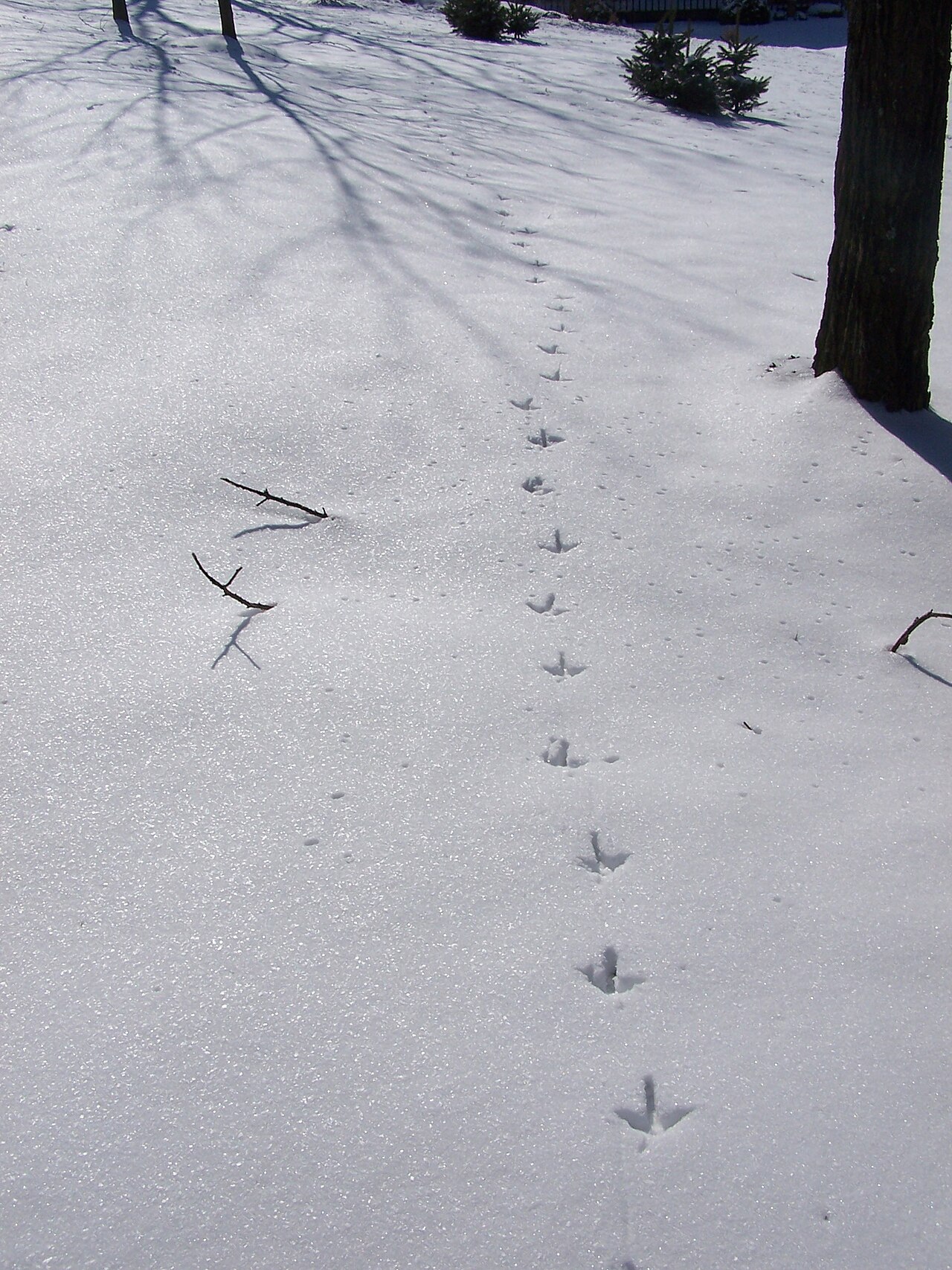
A wild turkey track is a large three-toed print, 3 to 5 in (7.5 to 13 cm) long, with a long middle toe, thin toes that end in small claw points, and no heel pad. That last detail is the one that settles most identifications in the field, because every mammal track of a similar size carries a pad behind the toes and a turkey track does not. Turkey tracks in snow are the easiest version to learn on, which is why winter is the season to start.
The marks change with the ground. Snow records the outline and the direction of travel, mud records the claws and the small rear toe, and dry sand exaggerates the size of everything. Below is what the print looks like in each, how to separate a tom from a hen by measurement, and which tracks get mistaken for turkey most often.
Wild turkey tracks are three forward toes spreading in a wide V, 3 to 5 in (7.5 to 13 cm) long and nearly as wide, with the middle toe clearly longest and sharp claw tips. A faint fourth toe may register behind. There is no pad, and the stride runs 9 to 13 in (23 to 33 cm).
| Measurement | Hen | Tom (gobbler) |
|---|---|---|
| Total track length | 3 to 4 in (7.5 to 10 cm) | 4 to 5 in (10 to 13 cm) |
| Middle toe, base to claw | under 2.5 in (6.4 cm) | over 2.5 in (6.4 cm) |
| Track width across toes | 3 to 4 in (7.5 to 10 cm) | 4 to 5.5 in (10 to 14 cm) |
| Walking stride | 9 to 11 in (23 to 28 cm) | 11 to 13 in (28 to 33 cm) |
| Straddle, width of trail | narrow, toes near the line | wide, toes angled out |
| Rear toe mark | short, often absent | longer, visible in soft ground |
What Turkey Tracks Look Like
Three toes point forward and spread wide, forming a shape closer to a broad arrowhead than to a bird foot drawn from memory. The middle toe is noticeably longer than the two outer ones and usually aligns with the direction of travel, so a single clear print tells you which way the bird went. Each toe tapers to a thin claw point, and the toes themselves are slender with visible joint bulges rather than smooth. Behind the three toes sits the hallux, a small rear toe that registers as a dot or a short stub only when the ground is soft. Nothing in the print looks round or cushioned, which is the fastest way to rule out a mammal.
How Big Is a Wild Turkey Track?
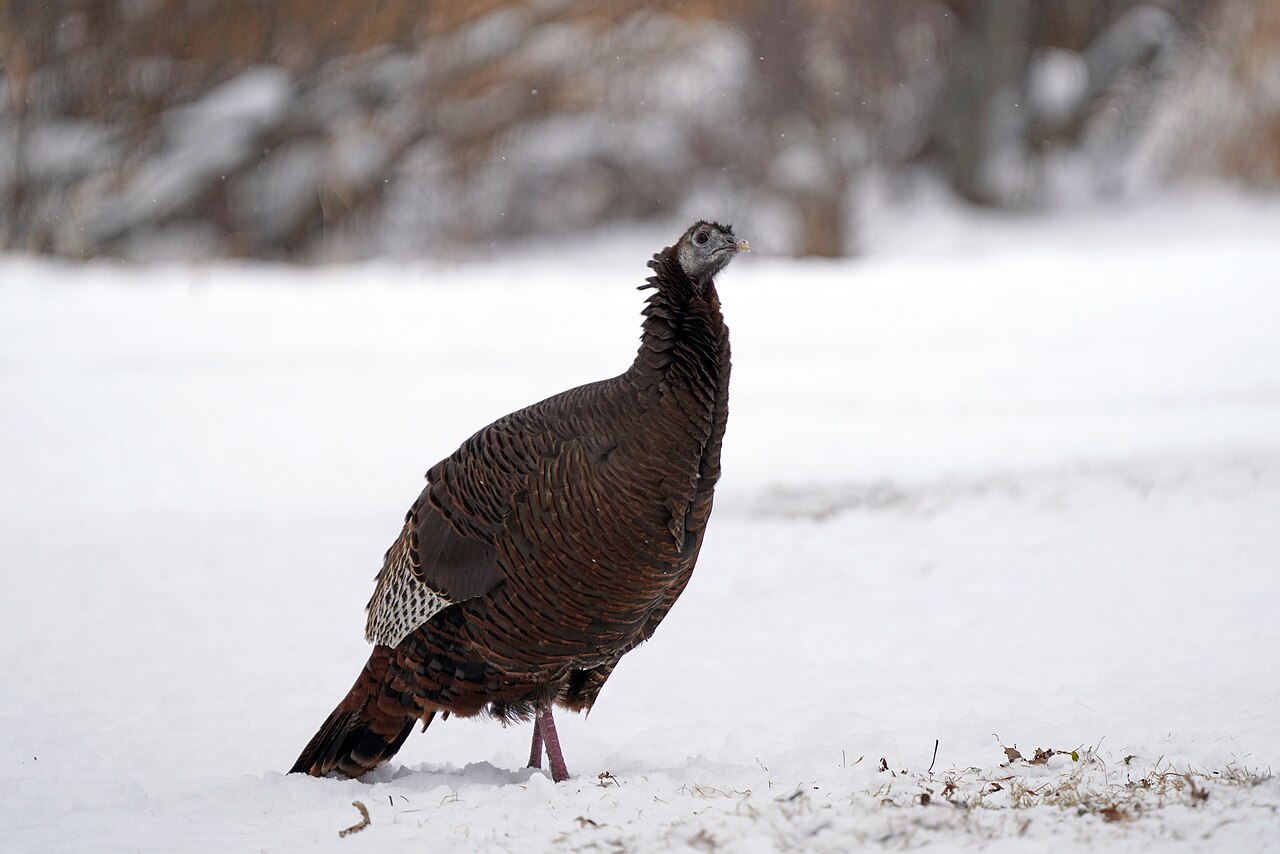
Wild turkey (Meleagris gallopavo) tracks run 3 to 5 in (7.5 to 13 cm) from the tip of the middle claw to the back of the print, and the width across the spread toes is close to the same figure. Measure the middle toe alone from the base to the claw tip, because that single number separates the sexes more reliably than overall length does. Domestic turkeys overlap in size but are nearly always found near buildings or feed. The size alone rules out grouse, quail and pheasant, all of which leave prints under 2.5 in (6.4 cm).
Turkey Tracks in Snow
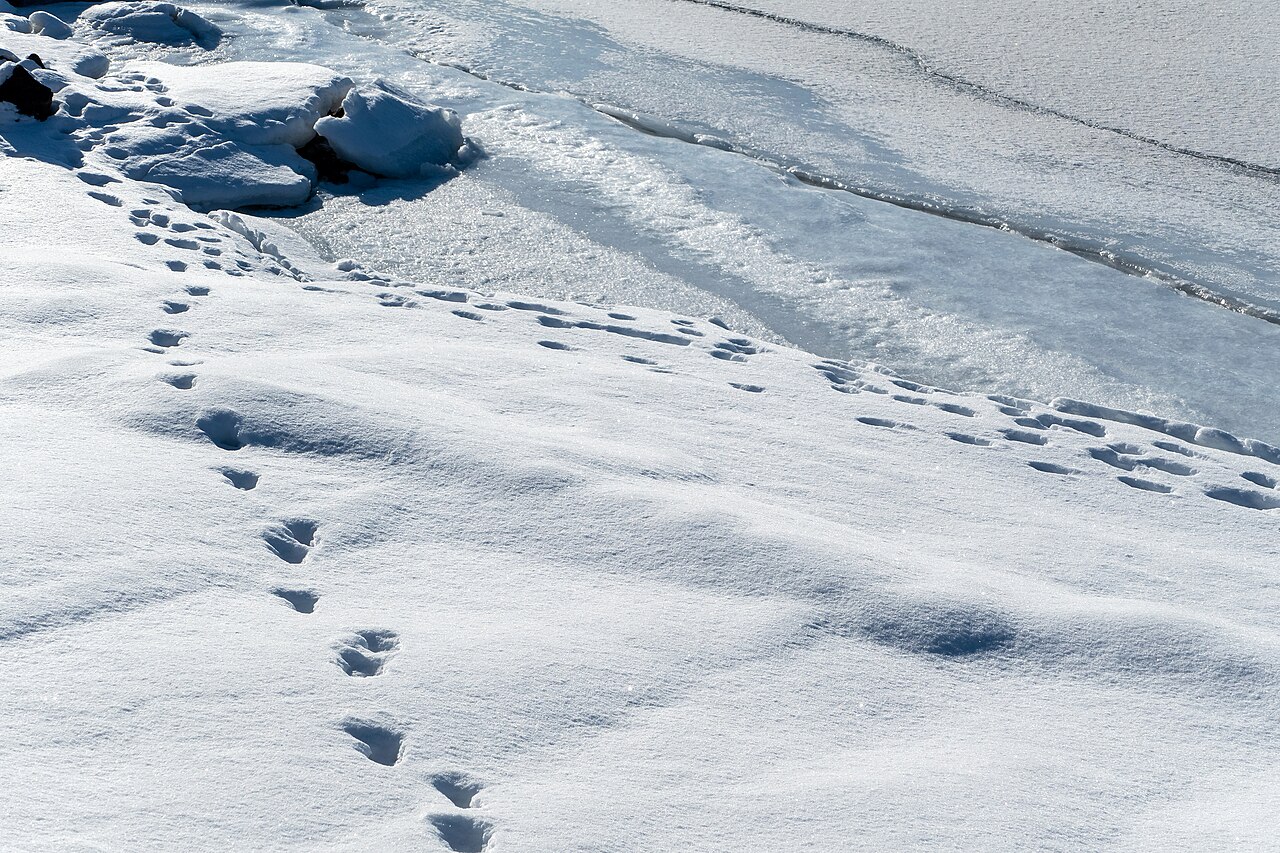
Snow gives the cleanest outline and the longest record, and a flock crossing a field leaves a trail you can follow for hundreds of yards. Fresh prints in cold powder have sharp rims and crisp claw points, often with a fine spray of snow thrown forward from each step. As the sun works on them the rims round off and the whole print widens, so measurements taken from day-old snow tracks read a half inch too large. In deep snow the toes drag between steps and leave connecting lines, which looks confusing until you notice they run in the same direction as the middle toes. Turkeys avoid snow much over 10 in (25 cm) deep and concentrate under conifers and on plowed edges, so that is where to look.
Turkey Tracks in Mud
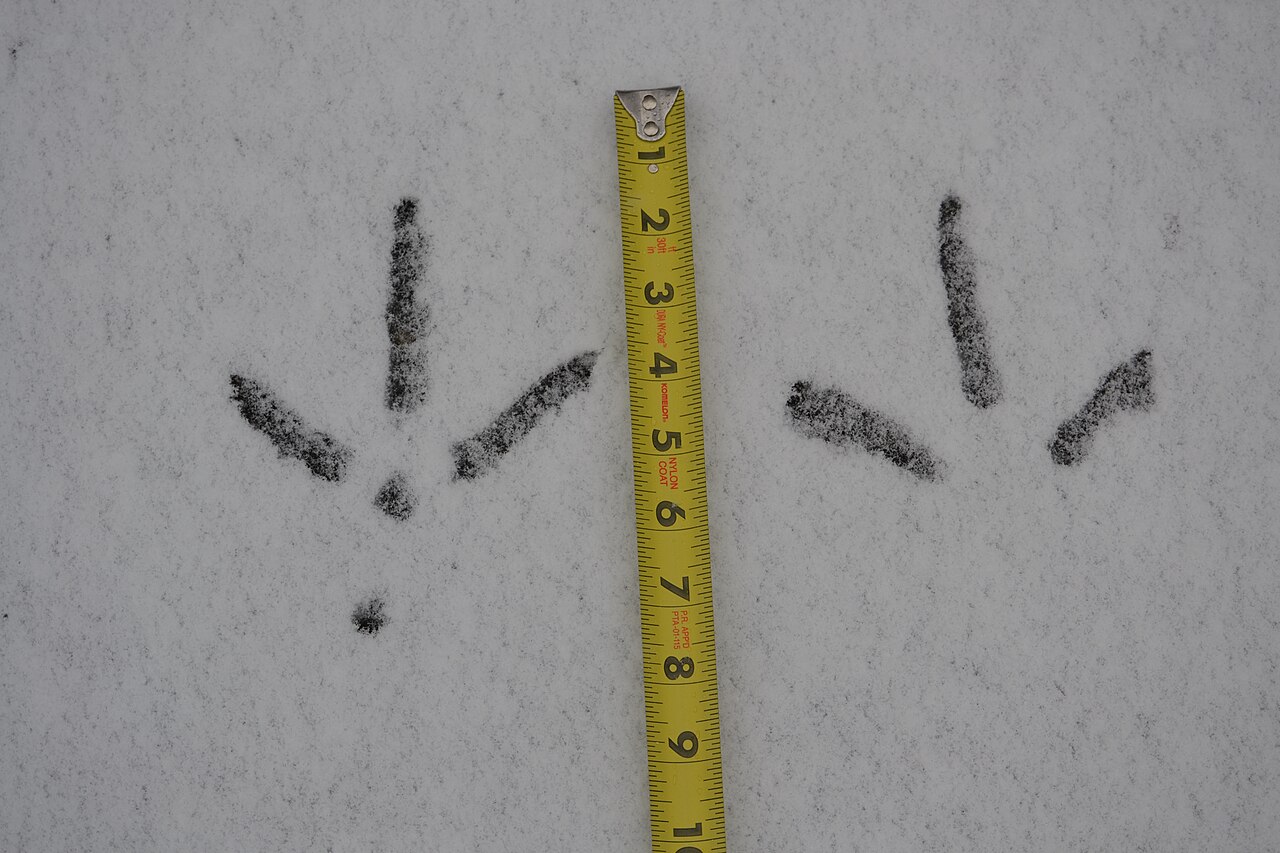
Mud is the surface for detail. Wet, fine-grained mud along a creek, a field road or a pond margin holds the claw tips, the joint bulges and the rear toe mark, and it is the only substrate where the hallux shows consistently. The best prints sit in mud that is firm enough to hold an edge but still damp, since soupy mud collapses inward and dried mud takes only a shallow impression. A set of prints in mud is also where you can see whether the bird was walking or running, because a running turkey pushes a small ridge of mud backward behind each toe. Look for mud tracks next to deer tracks at the same crossings, as both species use the same gaps in cover.
Turkey Tracks in Sand and Dust
Dry sand and dust make every track look bigger and blurrier than it is. The walls of the print slump as soon as the foot lifts, which erases the claw points and can add a half inch to an inch to the measured length. Damp sand at a river bar or a lake edge behaves like mud and is worth seeking out instead. In dust, turkeys leave more than footprints: they bathe in it, and the resulting dust bowls are shallow depressions 1 to 2 ft (30 to 60 cm) across with loose feathers in them, often with tracks leading in and out.
Turkey Tracks Male vs Female
The working rule is the middle toe. A middle toe longer than 2.5 in (6.4 cm) from base to claw almost always belongs to an adult tom, and anything shorter is a hen or a jake, which is a juvenile male. Toms also walk with a wider straddle, so their trail is a broad zigzag while a hen’s prints fall closer to a single line. During spring strutting, a tom drags his primary wing feathers and leaves thin parallel scratch lines beside the tracks, which is the most definitive sex sign there is. For the rest of the behavior that goes with those smaller prints, see the hen’s habits.
Stride, Straddle and Gait
A walking turkey places one foot roughly 9 to 13 in (23 to 33 cm) ahead of the other in an alternating line, and that steady rhythm is itself diagnostic: ground-feeding birds of this size walk, they do not hop. When a turkey runs, the stride stretches to 2 ft (60 cm) or more and the prints turn inward. Groups of prints that mill in every direction over a small area mean a feeding flock rather than a bird moving through, and those patches often show scratchings. A line of tracks that simply stops in open ground means the bird flew, and you can sometimes find wingtip marks in snow where it lifted off.
Turkey Tracks vs Dog and Coyote Tracks
This is the most common mix-up, and the pad settles it. Dog and coyote tracks show four toes arranged around a single large central pad, with all four toe pads oval and cushioned. A turkey print has no pad at all, and its toes radiate from one point at the back of the foot. Size can overlap, especially with a large dog in snow where the outline softens. If you can see only a partial print, count the toes: four with claws in front of a pad is canine, three slender toes spreading wide is turkey.
Turkey Tracks vs Cat and Fox Tracks
Cat tracks, including bobcat tracks, are round, four-toed and show no claw marks at all, since cats retract their claws when walking. Red fox tracks are small ovals, 2 to 2.5 in (5 to 6.4 cm) long, with faint claws and a distinctive bar across the front pad. Both are far rounder and more compact than anything a turkey leaves, and neither reaches turkey width. The shared trait that causes confusion is the thin claw points of a fox in hard snow, which can read as bird claws until you look for the pad behind them.
Turkey Tracks vs Heron, Crane and Grouse Tracks
Among birds, the real lookalikes are the big waders. Great blue heron tracks are longer, up to 7 in (18 cm), with much thinner toes and a long rear toe that almost always registers, and they are tied to water. Sandhill crane prints are close to turkey in length but have a shorter, blunter middle toe and a rear toe that rarely marks. Ruffed grouse and ring-necked pheasant both leave the same basic three-toed shape at roughly half the size. Domestic chicken tracks are smaller again, with a stride under 6 in (15 cm).
Other Turkey Sign Near the Tracks
Tracks rarely come alone. Scratchings are the clearest companion sign, fan-shaped patches of overturned leaf litter 1 to 3 ft (30 to 90 cm) wide, usually raked downhill, with bare soil showing at the upper edge. Droppings tell you the sex as reliably as the toe measurement does, since a tom leaves a straight J-shaped dropping and a hen leaves a looped or popcorn-shaped one; the full breakdown is in our guide to turkey droppings. Under roost trees you will find dropping piles and body feathers at first light. The U.S. Fish and Wildlife Service notes that wild turkeys use the same roosts and travel corridors for weeks, so a good track line is worth revisiting.
Frequently Asked Questions
Are a gobbler and a tom the same thing?
Yes. Both terms mean an adult male wild turkey, with gobbler emphasizing the call and tom being the general name. A juvenile male is a jake, identifiable in tracks by a middle toe under 2.5 in (6.4 cm) despite the bird being nearly adult in body size. Females are hens.
What predator kills the most turkeys?
Counted across all life stages, raccoons destroy more turkeys than anything else because they take eggs from ground nests, with skunks and opossums close behind. Among adult birds, coyotes, bobcats and great horned owls account for most losses. Hens on the nest are the most vulnerable adults.
How many toes does a turkey footprint have?
A turkey has four toes, but only three usually print. The three forward toes always register, while the small rear toe, the hallux, marks only in mud, wet sand or deep snow. A clear four-toed print with a long rear toe is more likely a heron than a turkey.
How long do turkey tracks stay readable in snow?
In cold, dry snow with no wind, turkey tracks stay measurable for two to three days and visible for a week or more. Direct sun widens and rounds them within hours, and a freeze after a thaw can glaze a print into a shape that reads a size too large. Measure the sharpest print in a trail, not the first one you find.
Do turkey tracks show claw marks?
Often, yes. Each forward toe ends in a claw that leaves a small separate point just ahead of the toe tip in mud, wet sand or firm snow. The claw marks disappear in dry sand and in hard-frozen ground. Their presence helps rule out cat tracks, which show no claws at all.
What time of day do turkeys leave the clearest tracks?
Early morning, within an hour or two of the birds leaving the roost, because the ground is still damp or frozen hard and the prints have not yet been weathered. Field edges, logging roads and creek crossings checked at dawn give the best impressions. Afternoon sun in snow is the main destroyer of detail.