Are Praying Mantis Good Luck? What a Sighting Really Means
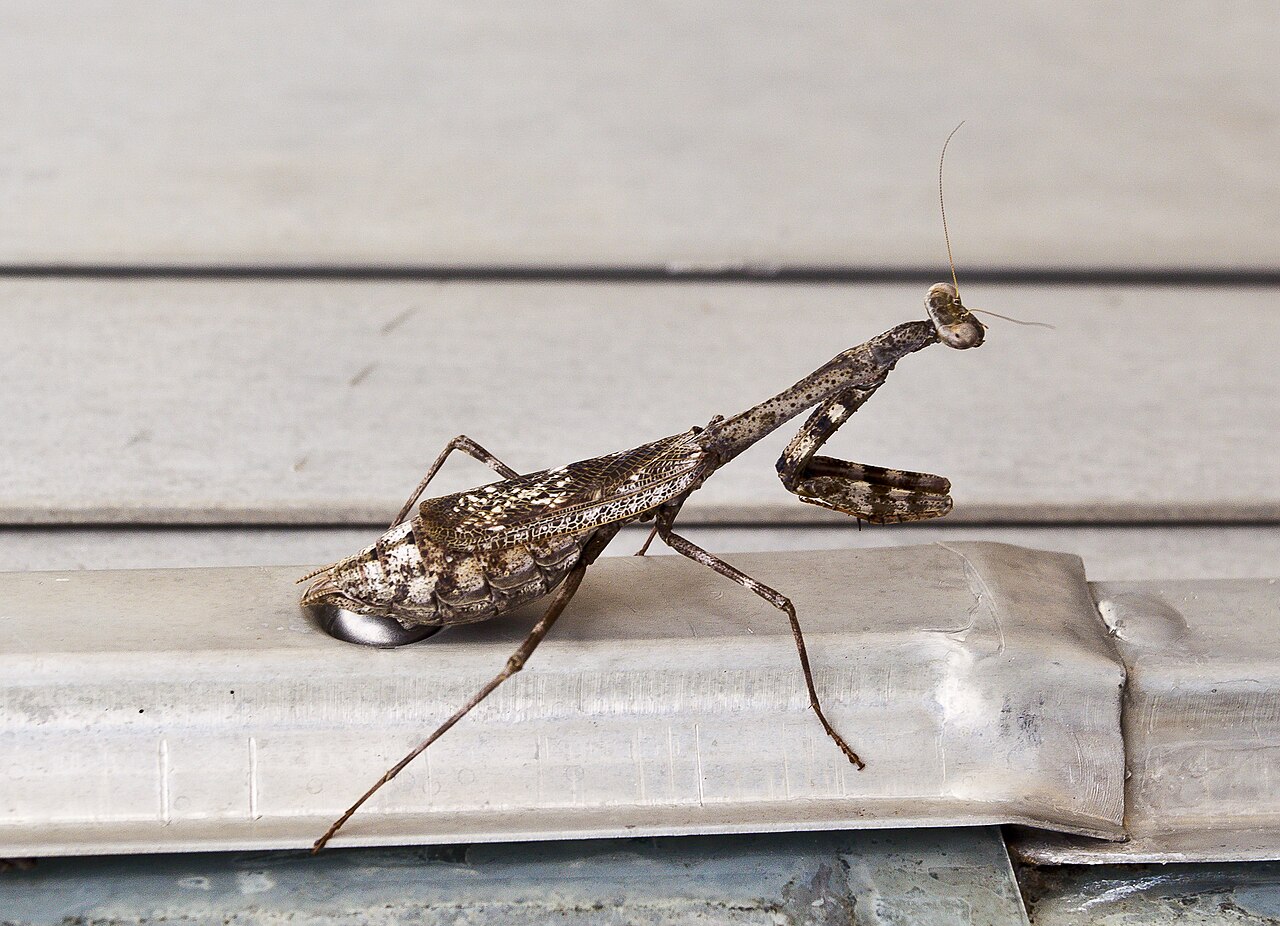
A praying mantis is considered good luck in most traditions that mention it, and the belief is unusually consistent across China, Japan, parts of Africa and modern Western folk practice. The insect’s upright posture and folded forelegs look like hands in prayer, and that single resemblance did most of the symbolic work: an animal that appears to pray became an animal associated with protection, patience and answered requests.
The species you are most likely to meet in a United States yard is the Carolina mantis (Stagmomantis carolina) or the larger introduced Chinese mantis (Tenodera sinensis). Neither is dangerous, neither is protected by law despite a widespread rumor, and both are welcome in a garden. What follows separates the traditions from each other, answers the safety questions first, and gives a reading for each place a mantis tends to show up.
Yes, a praying mantis is widely considered good luck. The folded forelegs suggested prayer, which linked the insect to protection, stillness and divine attention. Chinese tradition ties it to courage and focus, and modern readings treat a mantis sighting as a sign to slow down and wait for the right moment. A mantis in your yard or house is a welcome visitor in nearly every tradition.
| Where you see it | Traditional meaning |
|---|---|
| In your yard or garden | Protection of the home and a healthy, balanced garden |
| Inside the house | A guardian presence; stillness is being asked of you |
| Landing on you | A personal message; patience will be rewarded |
| Staring at you | Attention and reflection; a decision is being examined |
| At night, near a porch light | Something hidden is surfacing; also simply light attraction |
| On your car or door | A pause before a journey or a change of direction |
| Found dead | A period of waiting has ended; act now |
Are Praying Mantis Good Luck?
Praying mantises are good luck in the traditions that record a meaning for them, and the association is with protection rather than with windfall money. Where a grasshopper sighting is read as sudden fortune, a mantis sighting is read as a steady, watchful kind of luck that depends on your own patience.
The reason the belief is so widespread is the posture. A mantis holds its raptorial forelegs folded and raised, waits motionless for long stretches, and turns its head to follow movement, which is an unusual ability among insects. Observers across unrelated cultures read that stance as devotion or meditation and attached favorable meanings to it.
Where the mantis differs from most luck symbols is the demand it makes. Nearly every version of the belief treats the insect as a reminder to stop forcing an outcome. Luck is framed as available but conditional on waiting for the right moment, which is close to the opposite of the leap symbolism in grasshopper symbolism.
Will a Praying Mantis Bite You If You Pick It Up?
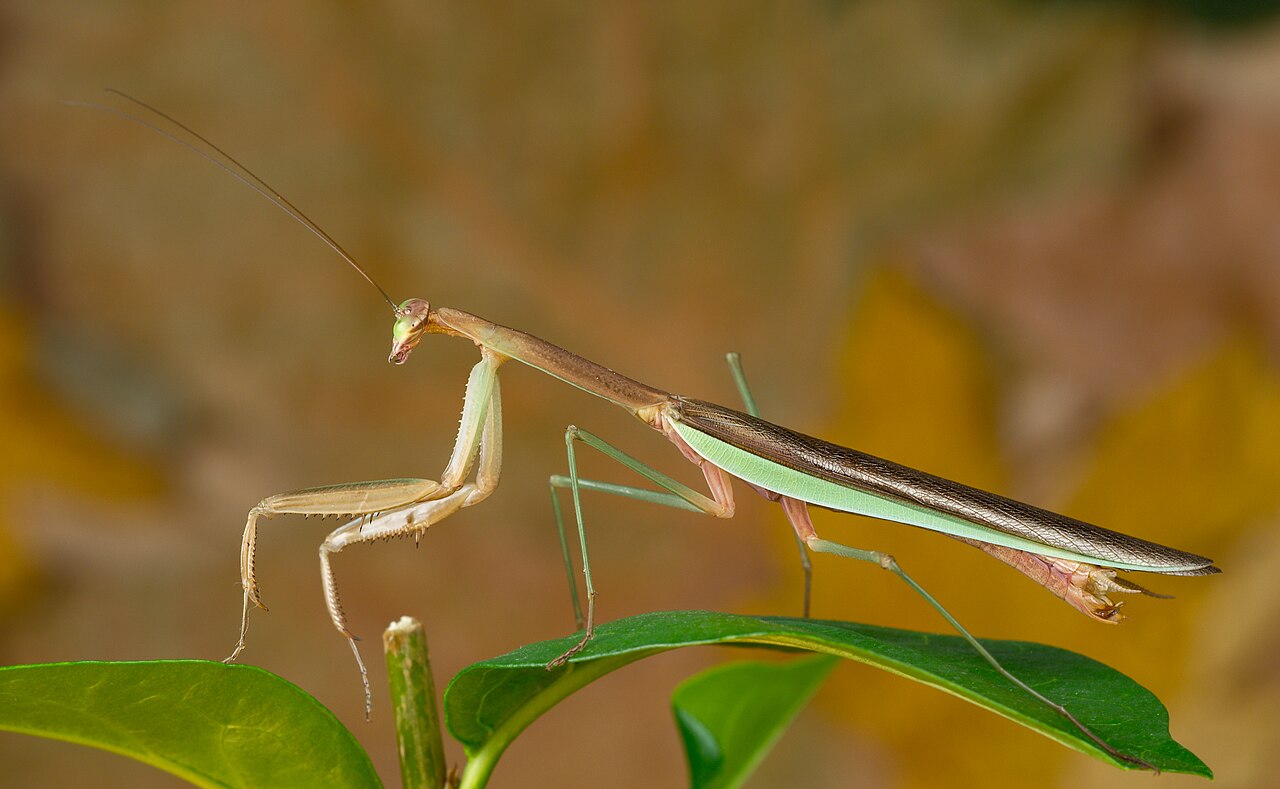
A praying mantis will not bite you in any meaningful sense, and no mantis species in the United States is venomous or dangerous to people. A large Chinese mantis can grip a finger with the spines on its forelegs, which feels like a sharp pinch and can occasionally break the skin, but it is a defensive grab rather than a bite.
Mantises have chewing mouthparts built for insect prey and they do not seek out human skin. A mantis that is handled will usually try to walk away, rear up with its forelegs spread in a threat display, or fly off if it is a male. The display looks alarming and is entirely bluff.
Pick one up by letting it walk onto your open hand rather than by grasping it, since squeezing the abdomen is what injures the insect. People sometimes ask whether praying mantises are mean, and the fair answer is that they are ambush predators without any interest in people.
Where the Praying Mantis Luck Belief Comes From

The luck belief comes from the name before it comes from anything else. European observers named the insect from the Greek word for prophet or seer, and the common name praying mantis fixed the prayer image in everyday language. A creature named for prophecy tends to collect prophetic meanings.
The second source is agricultural usefulness. Mantises eat the insects that damage crops and garden plants, so a mantis in a field was a practical benefit long before it was a spiritual one. Beliefs that reward leaving an animal alone often begin with the animal being quietly valuable.
The third source is rarity of contact. Mantises are well camouflaged and slow moving, so people encounter them less often than they encounter grasshoppers or beetles. Infrequent, memorable sightings are the raw material of omens, which is also why owl encounters carry so much weight in owl luck beliefs.
Is Praying Mantis Good Luck in the Bible?
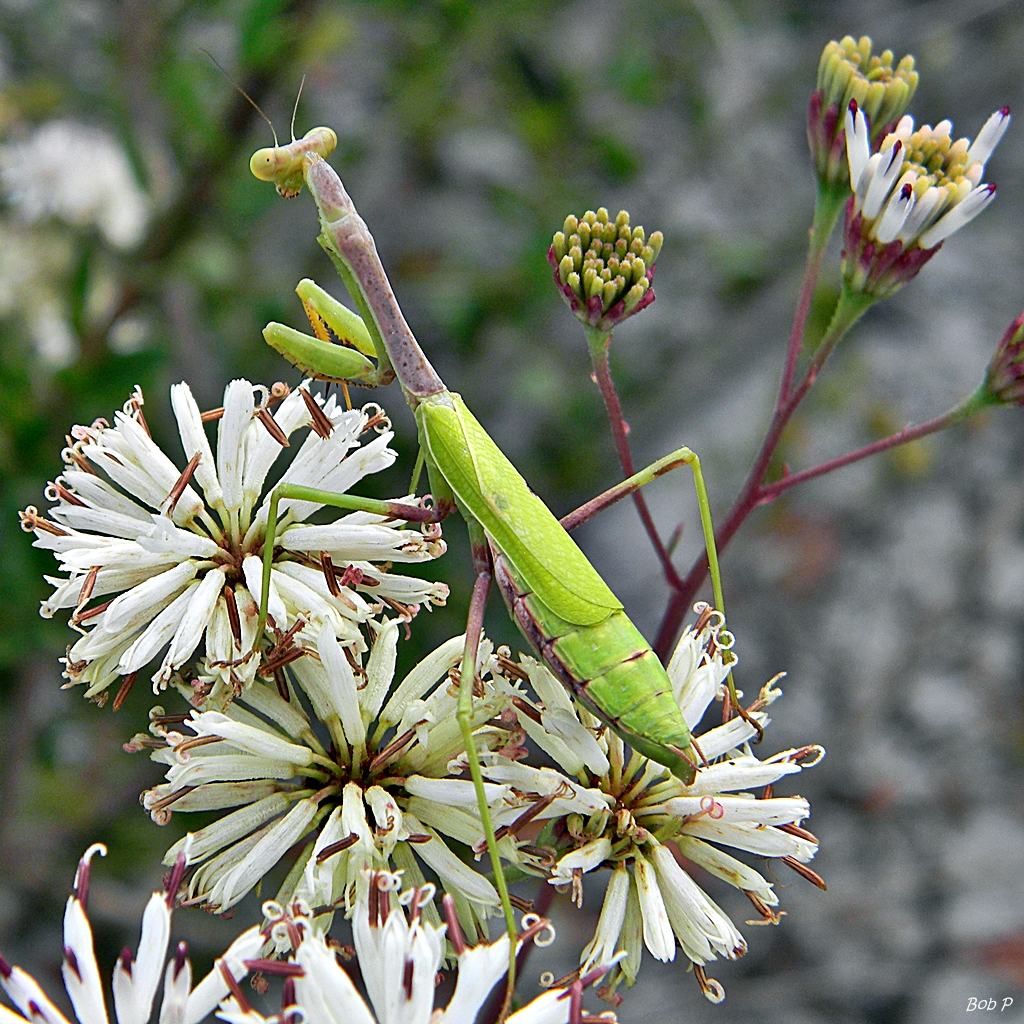
The Bible does not mention the praying mantis, so there is no biblical teaching that the insect is good or bad luck. Scripture names locusts, grasshoppers, beetles, flies, gnats, ants and bees, but the mantis is absent from both the Hebrew and Greek texts in standard translations.
What circulates online as biblical praying mantis meaning is a modern inference from the prayer posture. In Christian folk readings the insect is treated as an encouragement to pray, or as a sign that a prayer has been heard, because the position of its forelegs resembles hands pressed together.
Some popular sources frame the mantis as a symbol of the watchfulness urged in the Gospels. That is a devotional reading rather than a scriptural one, and it is worth saying plainly: the meaning is assigned by the reader, not recorded in the text.
Praying Mantis Meaning in Chinese and Japanese Tradition
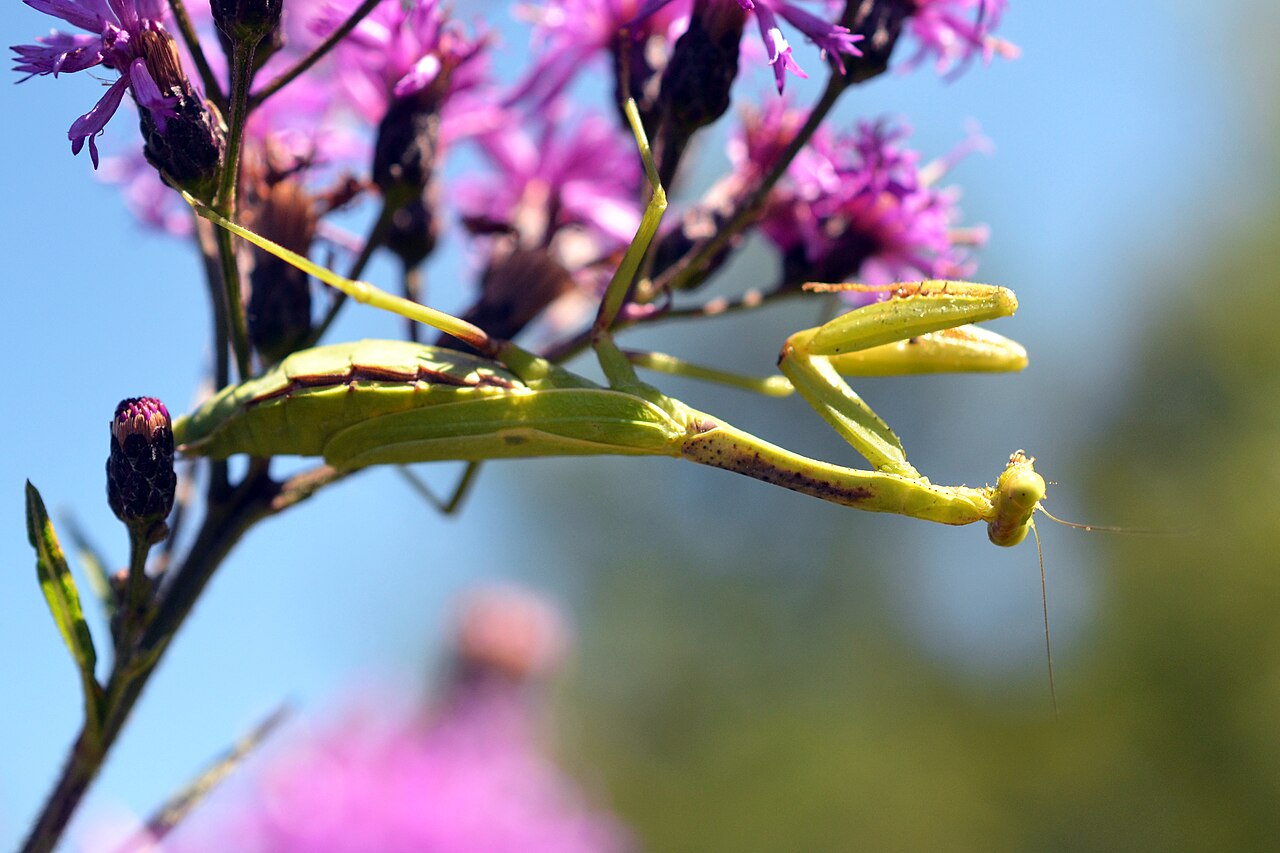
Chinese tradition gives the mantis the strongest positive meaning of any culture, built on courage and single minded focus rather than on prayer. A classical idiom describes a mantis blocking a chariot, which is used both for reckless overreach and, more admiringly, for refusing to yield to a stronger force.
That same image produced a martial arts style. Northern Praying Mantis boxing, traditionally credited to a 17th century observer of a mantis fighting a cicada, copies the insect’s hooking forelegs and sudden strikes, and it kept the animal’s reputation for precision alive in Chinese culture.
Japanese tradition uses the mantis as a late summer and autumn seasonal word in poetry, tied to stillness and to the fading year. Mantis imagery also appears on samurai crests as a claim of fearlessness, since the insect famously refuses to retreat from a larger opponent.
Praying Mantis in Native American Traditions
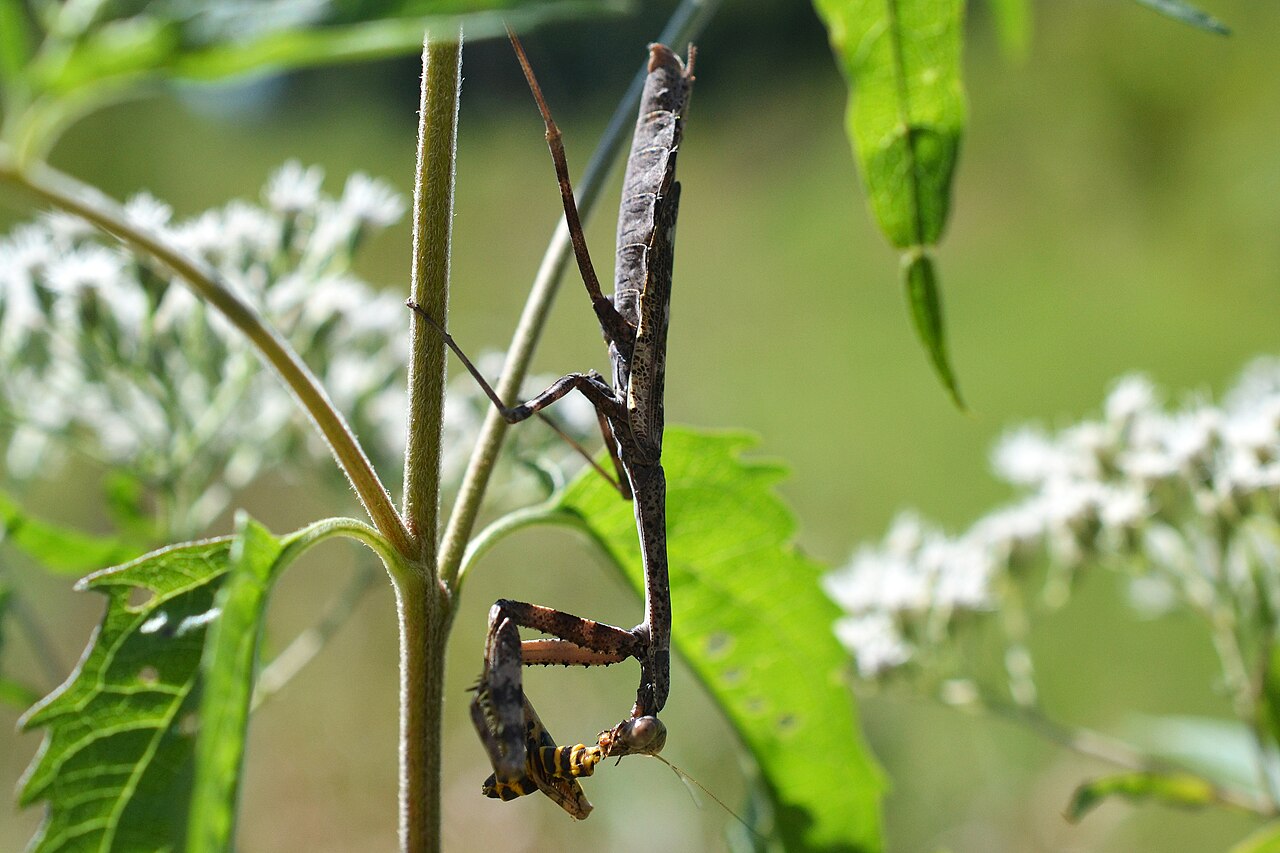
Native American traditions are many separate belief systems, and most do not record a specific mantis meaning. Where the insect does appear, the readings usually concern patience, careful observation and knowing when to strike, drawing on the same ambush behavior that produced the Chinese reading.
Modern sources often assert that the mantis is a universal Native American symbol of stillness or of the spirit world. Those tidy claims do not match the diversity of the record and should be treated as contemporary invention. Interpretation inside any tradition belongs to people within it.
The honest summary is that mantis symbolism in North America is mostly a recent layer, imported from East Asian and European readings and from twentieth century New Age writing. That is still a real tradition, just a young one.
Praying Mantis in African and European Folklore
The deepest mantis mythology belongs to southern Africa. In San, or Khoisan, tradition the trickster creator figure often called Kaggen appears in mantis form, and the insect is treated with respect as a manifestation of a powerful being rather than as a simple luck charm.
Because of that tradition, the mantis in parts of southern Africa is read as a visitor from the ancestors, and a mantis landing on a person can be taken as a blessing. This is the oldest recorded body of mantis belief and it is considerably more serious than the greeting card version.
European folklore is lighter. Medieval and early modern sources describe the mantis as pointing the way for lost travelers or lost children with its extended foreleg, a belief recorded in several regions, and that pointing motif is the root of the modern idea that a mantis sighting gives direction.
Is It Good Luck to Have a Praying Mantis in Your Yard?
It is good luck to have a praying mantis in your yard in every tradition that mentions the insect, and it is also a genuine benefit. A mantis eats crickets, grasshoppers, moths, flies, caterpillars and beetles, and its presence indicates enough prey insects to support a large predator, which is a sign of a functioning garden.
The folk reading is protection of the household, extended from protection of the crop. Gardeners who find an egg case on a shrub in winter are traditionally told to leave it, and the practical advice agrees: a single Chinese mantis egg case, or ootheca, can release 100 to 200 nymphs in spring. Mantis egg cases are easy to recognize once you know the shape.
One caution belongs here. Mantises are indiscriminate and will take pollinators and hummingbirds at feeders, so releasing purchased egg cases in bulk is not the unmixed good it is sold as. A resident mantis is a benefit; a mass release is a disruption.
A Praying Mantis in Your House, at Night, or on Your Car
The spiritual meaning of a praying mantis in your house is a guardian presence combined with a request for stillness. Of all the situational readings this is the most positive, and the traditional instruction is to carry the insect outside rather than kill it, because harming a protective visitor is held to cancel the benefit.
Seeing a green praying mantis at night is usually read as something concealed coming into view, since mantises are mainly day active. The practical explanation is that adult males fly at night and are drawn to porch lights, which is also what attracts praying mantises to houses in the first place, along with the moths gathering there.
A mantis on your car or front door is read as a pause before a journey. Repeat sightings in the same spot get read as insistence, though a mantis holds a good hunting position for days, so the same insect is often simply still there.
What Does It Mean If a Praying Mantis Stares at You?
If a praying mantis stares at you, the traditional reading is that you are being asked to look at something honestly, usually a decision you have been avoiding. No other insect produces this reaction, and the reason is anatomical: a mantis can rotate its head roughly 180 degrees and will track a face with both eyes.
That tracking is real binocular vision. Mantises judge distance by comparing the images from two large compound eyes, which is why they turn to face a moving object, and the dark pseudopupil that seems to follow you is an optical effect of looking into the eye’s light absorbing core.
Interpretive practice treats a staring mantis as the strongest form of contact short of landing on you. The useful version of the reading is reflective: note what you were thinking when the insect turned, since the tradition holds that the mantis marks the thought rather than delivering its own.
Green or Brown, and the Death Symbolism Question
A green praying mantis is read as growth, renewal and a living garden, and green is the color most people associate with the insect. A brown mantis carries grounding and endurance readings, and the color difference is usually a response to the vegetation an individual matured in rather than a separate species.
Praying mantis symbolism around death comes mostly from the mating behavior, in which a female mantis sometimes eats the male. Sexual cannibalism happens in a minority of wild matings, not in all of them, and it drove the insect’s reputation as a figure of dangerous feminine power.
Finding a dead mantis is not traditionally an omen of death. Adults die naturally in late fall after the females deposit egg cases, and the common reading is that a season of waiting has closed. Striking color forms such as the orchid mantis collect their own symbolism built on camouflage and disguise.
What Should I Do When I See a Praying Mantis?
When you see a praying mantis, the recommended response in both folk tradition and practical gardening is the same: leave it alone. If it is indoors, coax it onto a sheet of paper or your open palm and release it on a shrub rather than on open lawn, where it has no cover.
Do not relocate a mantis far from where you found it in autumn, because a gravid female needs the site she has chosen for her egg case. Moving her a few feet to safety is fine; moving her across town costs the next generation.
The widespread claim that killing a praying mantis carries a fine is false in the United States. No federal law protects the insect and none of the common species is endangered, so the rule is courtesy and self interest rather than law. Mantis nymphs hatching on a porch in spring need the same hands off treatment.
Is It Rare to See a Praying Mantis?
It is not rare for mantises to be present, but it is uncommon to notice them. Mantises rely on camouflage and motionless ambush, so they are among the easiest large insects to walk past, and most sightings happen in late summer and fall when adults are at full size and males fly in search of females.
How long praying mantises live is part of the answer. The common North American species complete one generation per year, hatching in spring and dying after the first hard frosts, so an adult lives roughly 4 to 6 months and the visible adult window is only a few weeks long.
Regional identification guides and seasonal notes on mantis species are published by university extension services, including Penn State Extension. If you want more sightings, plant dense flowering shrubs and skip broad spectrum insecticides. Birds that react strongly to garden insects, including the ones behind crow beliefs, tend to follow the same habitat.
Related reading: Praying Mantis Symbolism.
Frequently Asked Questions
Are praying mantis good luck spiritually?
Yes. Spiritual readings link the mantis to protection, patience and correct timing rather than to windfall money. The core instruction in nearly every version is to stop forcing an outcome and wait for the right moment, which follows from the insect’s motionless ambush hunting.
Is praying mantis good luck in the Bible?
The Bible never mentions the praying mantis, so there is no biblical ruling either way. Christian folk readings treat the prayer posture as encouragement to pray or as a sign a prayer was heard, but that meaning is assigned by readers and not recorded in scripture.
What is a praying mantis trying to tell me?
Tradition holds that the mantis marks the thought you were holding at the moment of the sighting rather than carrying its own message. The recurring theme is patience: a decision is close, and the reading favors waiting for the right opening over acting immediately.
Will a praying mantis bite you if you pick it up?
Not in any harmful way. A large mantis can grip a finger with its spined forelegs, which pinches and rarely breaks skin, and no United States species is venomous. Let it walk onto an open hand instead of grasping it, since pressure on the abdomen injures the insect.
What attracts praying mantises to your house?
Porch and window lights, which draw the moths and flies mantises hunt, plus flying adult males that are attracted to light directly in late summer. Dense shrubs, tall flowering plants and an absence of broad spectrum insecticides keep them near the building all season.
How long do praying mantis live?
Common North American species live one season, roughly 4 to 6 months from a spring hatch to death after the first hard frost. Females deposit one or more egg cases in fall, and those overwinter to hatch the following spring, so the adults you see do not return next year.
Is it illegal to kill a praying mantis?
No. The claim that killing a mantis carries a fine is a long running myth with no basis in United States law, and no common mantis species is protected or endangered. There is still good reason to leave one alone: it eats the insects damaging your garden.
Explore more: Insect Spiritual Meanings: 15 Bugs and What They Signal