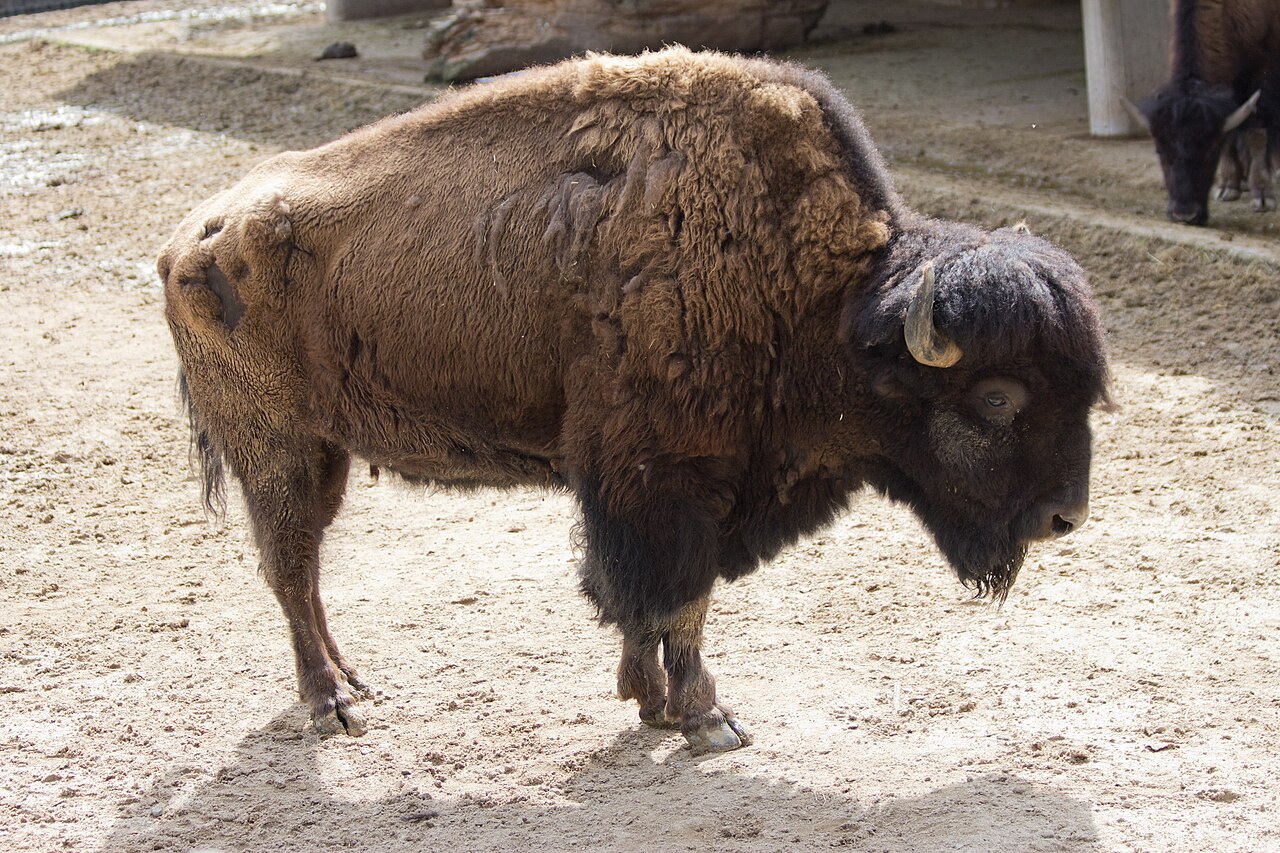
Bison Sounds: 6 Calls Explained and What Each One Means
Bison sound nothing like cattle. The everyday noise of a herd is a low pig like grunt passed back and forth between animals, and in the rut a bull produces a guttural bellow that carries up to 3 miles (5 km) across open grassland. Between those two extremes sit snorts, huffs, calf bleats and a set of non vocal sounds that tell you more about a bison’s mood than any call does.
Knowing which sound you are hearing matters in a way it does not with most wildlife. A grunting herd is a calm herd. A short explosive snort from an animal facing you is the last warning you get before a charge, and bison injure more visitors in Yellowstone than any other animal. This guide covers each call, when in the day and year you hear it, and what it means for the distance you should keep.
Bison make a deep pig like grunt as their normal contact call, a rumbling bellow during the August rut that carries for miles, and a sharp snort or huff as a threat warning. Calves bleat and squeal. The grunt is the sound you hear most often; the snort combined with a raised tail means the animal is about to charge.
| Sound | How it sounds | Who makes it | When | Meaning |
|---|---|---|---|---|
| Grunt | Low “unh unh”, pig like | All adults | Year round, all day | Contact, herd is calm |
| Bellow | Guttural roar, lion like | Bulls only | July to September | Rut challenge |
| Snort | Sharp explosive blast | Any adult | Any time, near people | Threat, back away |
| Huff or grunt cough | Short repeated puffs | Bulls, cows with calves | Any time | Agitation building |
| Calf bleat | High nasal “maa” | Calves under 6 months | April to October | Lost, hungry, distressed |
| Horning and wallowing | Scraping, thudding, dust | Mostly bulls | Summer | Display, insect relief |
What Noise Does a Buffalo Make?
The honest answer is that a buffalo, meaning an American bison, grunts. Written out it is closer to “unh unh unh” than to a moo, pitched low in the chest, repeated every few seconds, and audible from about 200 yd (180 m) in still air. On a quiet morning in a prairie park the collective grunting of a few hundred animals sounds like distant machinery.
Visitors expecting a cow are always surprised. Bison have no true moo and no bugle. Their vocal range is narrow and low, built for passing short messages through tall grass and dust where sight lines are poor, which is the opposite of a bald eagle call designed to carry across open sky.
The Grunt: The Everyday Bison Sound
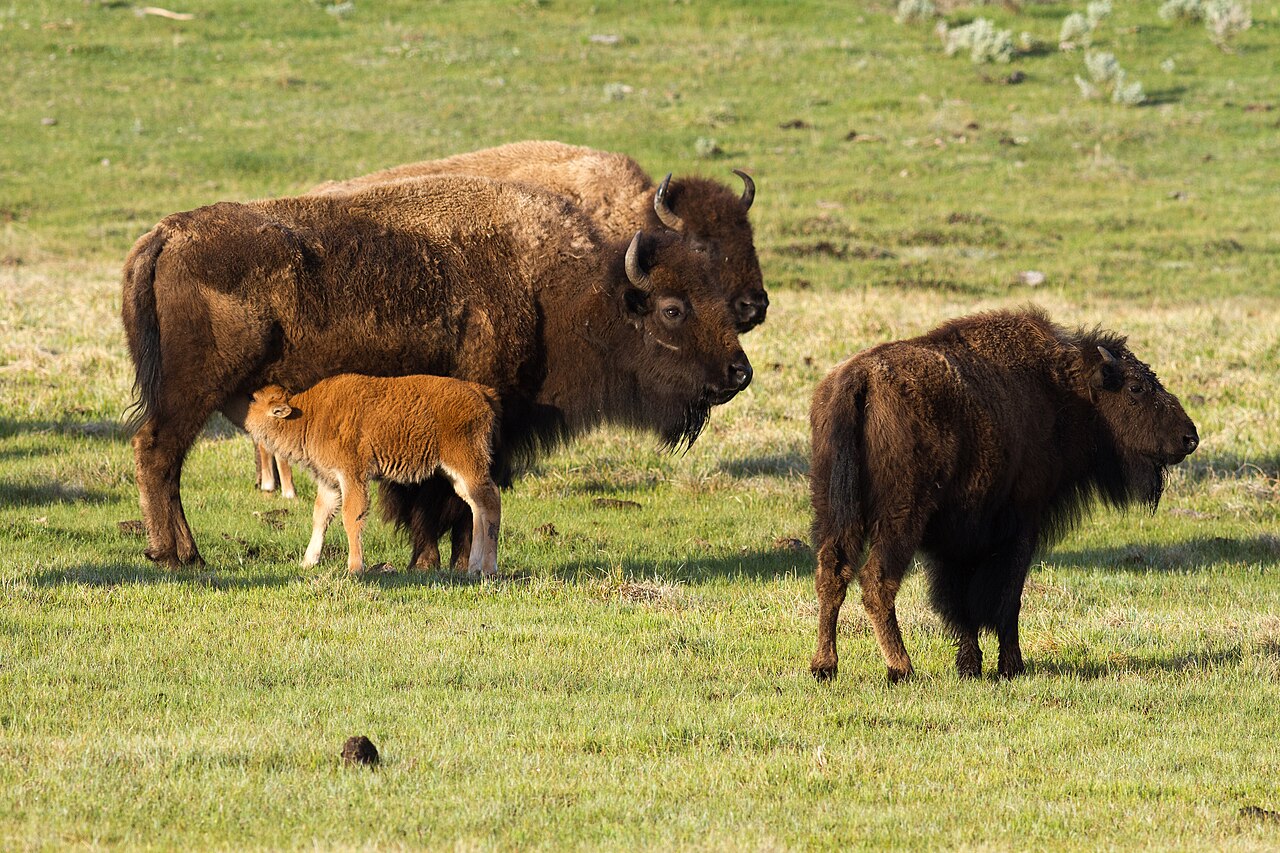
Grunting is the baseline. Cows grunt to keep track of calves, calves grunt back, and animals grunt as they move through a feeding line to hold spacing without turning their heads. It is a constant, unhurried sound, and a herd that is grunting steadily is a herd doing nothing in particular.
The pitch is genuinely surprising for an animal that can weigh 2,000 lb (900 kg). Expect something between a domestic pig and a large dog clearing its throat, not a roar. Grunts rise in frequency when the herd starts walking and drop off when the animals bed down to chew.
If you record one on a phone, the grunt sits mostly below 200 Hz and comes through as a thump rather than a voice. That low frequency is why bison grunts travel well through grass and poorly through wind.
The Bull Bellow: The Rutting Roar You Hear for Miles
The bellow is the sound bison are famous for and it only runs for about six weeks. From mid July through early September, mature bulls produce a guttural, drawn out roar with an audible rasp at the end, closer to a lion than to anything on a farm. Each bellow lasts 2 to 4 seconds and bulls repeat it dozens of times an hour.
The sound carries extraordinarily far. On still mornings in Yellowstone’s Hayden Valley you can hear bellowing bulls from 2 to 3 miles (3 to 5 km), and multiple bulls answer each other across the valley in a chain that continues for hours. Researchers call it a rut chorus, and it peaks shortly after dawn and again at dusk.
The bellow is an honest signal: body size determines how low and loud a bull can go, so rivals can assess each other without fighting. Most contests end at the sound stage. The National Park Service in Yellowstone publishes rut timing each summer, which is the single best window for hearing it.
Snorting and Huffing: The Warning You Should Not Ignore
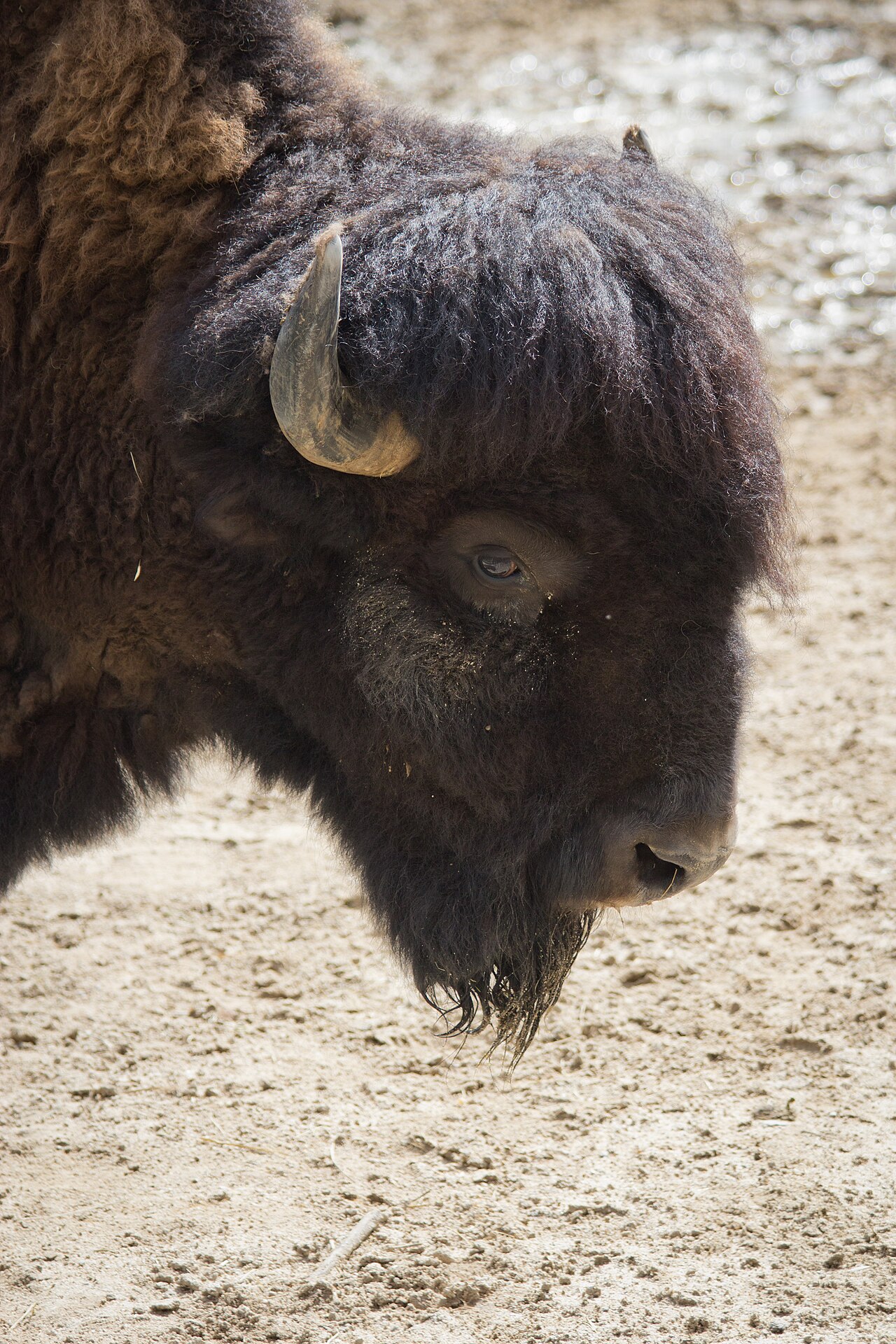
A snort is a single sharp blast of air through the nostrils, loud, abrupt and unmistakable. It is a threat display, directed at whatever the animal is facing, and in a park that is usually a person who has walked too close. The huff or grunt cough is the step before it: short repeated puffs while the animal watches you.
Read the snort together with the body. A bison that snorts while raising its tail into an upright S, pawing at the ground or swinging its head sideways has already decided. Bison run up to 35 mph (56 km/h) and can cover 25 yd (23 m) in under two seconds, so there is no reacting after the fact.
The required response is simple: stop, do not turn your back, and increase distance immediately until the animal relaxes and resumes grunting. Park rules call for 25 yd (23 m) minimum, and during the rut more.
Cow and Calf Contact Calls
A cow and her calf keep an audible thread between them all day. The cow grunts in a slightly higher register than a bull, the calf answers, and separation of more than a hundred feet triggers a rapid back and forth exchange until they rejoin. In a dense herd this produces the layered murmur that recordings capture as background noise.
Cows with young calves are the second most dangerous bison in a park after rutting bulls, and their warning sequence is shorter. A cow may skip the huff entirely and go from grunting to a hard snort in one step if something moves between her and the calf.
Baby Bison Sounds
Calves, called red dogs for their cinnamon coats, make a high nasal bleat that sounds like a cross between a lamb and a calf. It rises in pitch when they are hungry, lost or pinned by another animal, and it is the only bison sound most people would describe as cute. Bleating runs from birth in April through the first autumn, after which the voice drops into the adult grunt.
A persistent, escalating bleat usually means a separated calf. Herds respond fast, and a cow pushing back through the herd toward a bleating calf will go through anything in the way, including a parked car.
Non Vocal Sounds: Horning, Wallowing and Hoof Strikes
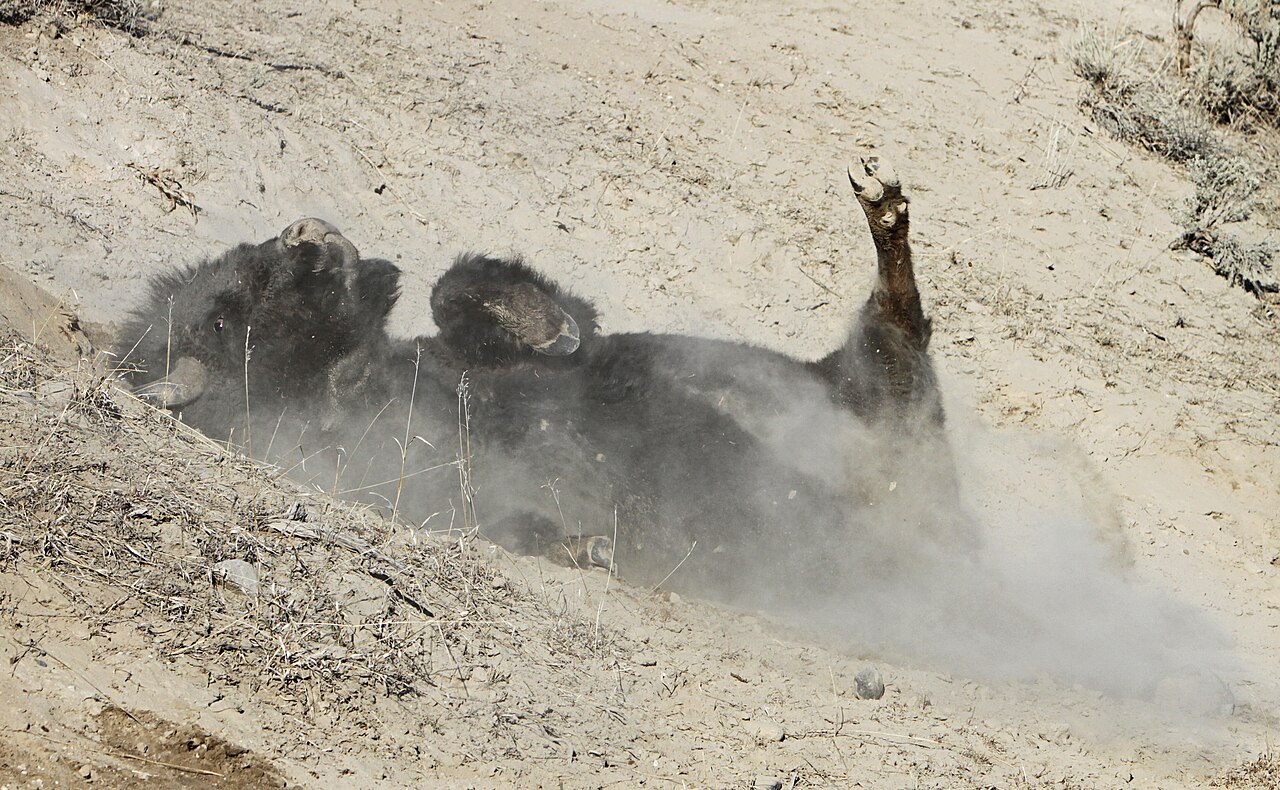
Much of what you hear from a bison herd is not a voice at all. Bulls rub and gouge their horns into trees and fence posts, producing a rhythmic scraping and cracking that carries several hundred yards. Wallowing adds a dull thudding as a 1 ton animal drops and rolls in a dust bowl, often with a grunt on the way down.
Hoof strikes on frozen ground, hard rock or a wooden bridge ring sharply, and the clicking of leg tendons in walking bison is audible at close range. None of these are threats on their own, but horning that starts the moment you appear is a display aimed at you, not at the tree. The pattern mirrors drumming and slapping signals elsewhere in North American wildlife, from a beaver tail slap to woodpecker drumming.
Herd Sounds: Hoofbeats and the Running Herd
A moving herd produces a sound no single animal can. Several hundred bison at a trot generate a low continuous rumble through the ground that you feel before you hear, and nineteenth century accounts of the great plains herds described it as thunder with no cloud. Modern park herds of 300 to 900 animals still manage a convincing version on a river crossing.
Running herds also grunt heavily, and dust reduces visibility to almost nothing, which is why the sound is the only reliable way to track where they are headed. If a herd starts running toward a road, the correct move is to be in a vehicle.
When You Hear Bison: Time of Day and Season
Grunting runs year round and all day, strongest when the herd is feeding at dawn and in the two hours before dusk. Bellowing is tightly seasonal, confined to roughly 20 July through 10 September, with the loudest mornings in the first half of August. Calf bleats start in mid April and fade by October.
Winter is the quiet season. Snow bound herds conserve energy, grunt less and spend hours pushing snow aside with their heads, so the dominant sound is scraping rather than voices. Cold still air does carry what little there is much farther than summer heat.
Sounds People Confuse With Bison
Domestic cattle are the most common mix up, and the test is easy: cattle moo with an open drawn out vowel, bison grunt with a closed one. Elk are the second, but a bull elk bugles in a high whistling scream that no bison can produce, even though the two species rut in the same places at the same time of year.
A distant bellowing bull is also mistaken for a bear, a cow in distress or heavy machinery. The rasping quality is the giveaway. Visitors sometimes report a mountain lion instead, though cat calls are far closer to a bobcat scream than to a bison. Low frequency rumbles like an alligator bellow or the ultrasonic clicks behind bat sounds sit at the opposite ends of the wildlife sound range, and high sharp alarm notes like a blue jay call share nothing with a bison but the function.
What Bison Sounds Tell You About Your Safety
Treat bison sound as a distance meter. Steady grunting at a constant volume means nothing has changed. Grunting that stops when you move means the herd is now watching you. A huff, a snort, or any bellow aimed in your direction means you are already closer than the animal accepts.
Bison gore and trample more Yellowstone visitors than bears and wolves combined, and nearly every incident follows an ignored warning sound. The rule that prevents it: 25 yd (23 m) from bison, double it in the rut, never between a cow and a calf, and back away at the first snort rather than at the second.
Frequently Asked Questions
What noise does a buffalo make?
An American bison grunts. The sound is a low pig like “unh unh” repeated every few seconds, used as a contact call within the herd. Bulls add a guttural bellow during the summer rut, and any adult will snort sharply as a warning. Bison do not moo.
Is it called bison or buffalo?
Both are in common use, but bison is correct. True buffalo are the African cape buffalo and the Asian water buffalo, neither closely related to the American bison (Bison bison). The buffalo name arrived with early European traders and stuck in place names and everyday speech.
How do you call a baby bison?
A baby bison is a calf, and ranchers and park staff nickname them red dogs for their reddish cinnamon coats. Calves are born from April through May weighing 30 to 70 lb (14 to 32 kg) and darken to adult brown at about three months old.
What do you call a girl bison?
A female bison is a cow and a male is a bull, the same terms used for cattle. Cows weigh roughly 800 to 1,200 lb (360 to 545 kg) against 1,400 to 2,000 lb (635 to 900 kg) for bulls, and cows lead herd movement while bulls stay apart outside the rut.
What is the average speed of a bison?
Bison cruise at about 10 mph (16 km/h) and sprint up to 35 mph (56 km/h), faster than any human and quick enough to outrun a horse over short distances. They also pivot sharply and jump obstacles up to 6 ft (1.8 m), which is why distance, not speed, keeps people safe.
What is the main predator of bison?
Wolves are the primary natural predator, taking mostly calves, old animals and the sick, with grizzly bears and mountain lions taking a smaller share. A healthy adult bison in a herd is close to untouchable, and in most of the current US range humans are the only significant mortality source.