Red Ladybug: 6 US Species, Bite Risk and Lookalikes
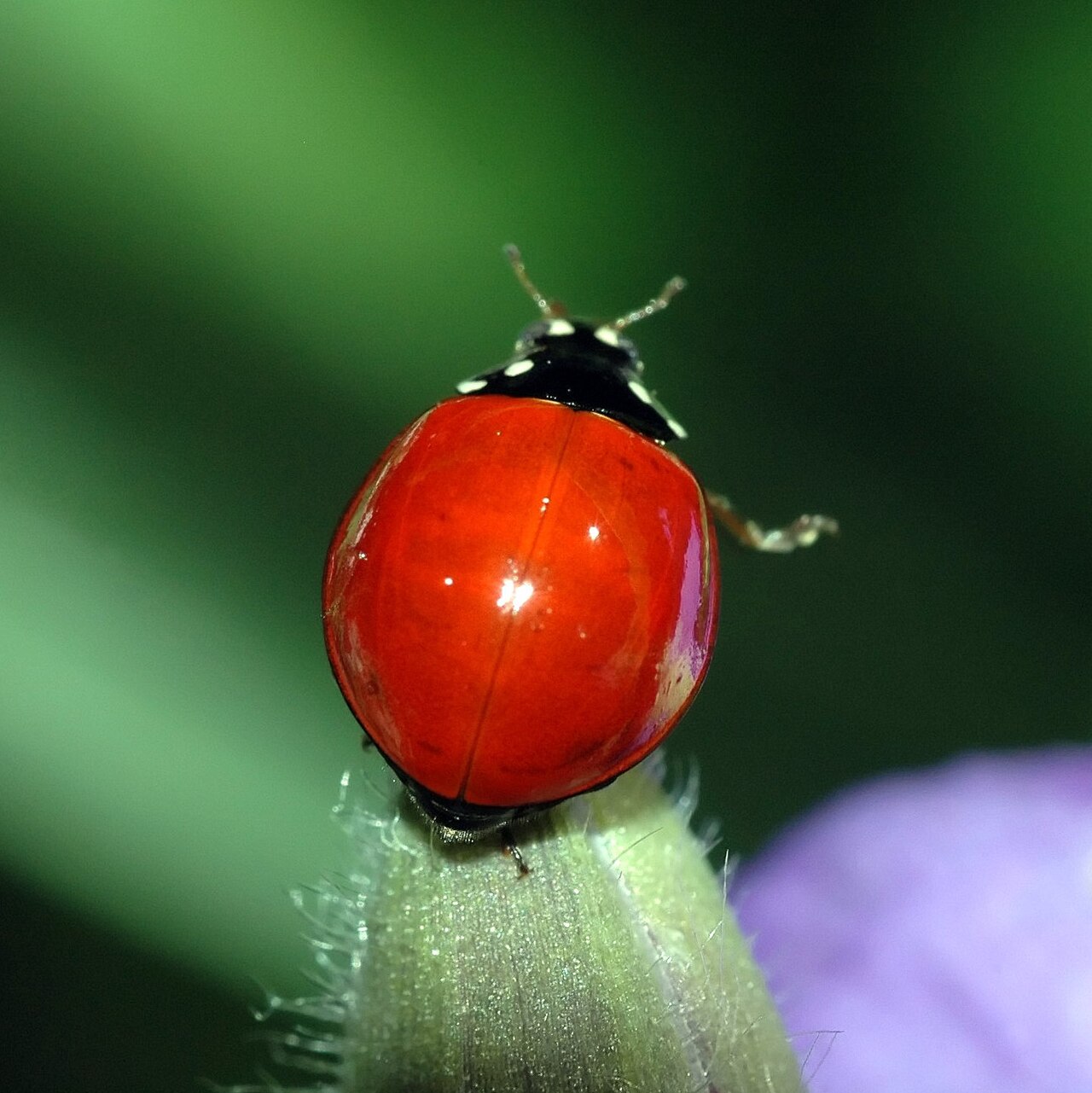
A red ladybug in the United States is almost always one of six species, and none of them is dangerous to people. The red shell with black spots is a warning signal aimed at birds, not a threat to you. The only one worth identifying carefully is the Asian lady beetle, because it bites, stains, and overwinters indoors by the hundreds.
Color alone will not give you a species. Spot count, the mark behind the head, and size do, and all three are visible with a phone camera held close. Dangerous first, then identification, then the lookalikes that are not ladybugs at all.
Red ladybugs are harmless. They do not sting, carry no venom, and the worst a large one can manage is a faint pinch that breaks no skin. Only the Asian lady beetle (Harmonia axyridis) bites noticeably and leaves a yellow, foul smelling stain when squashed indoors.
Are red ladybugs harmless?
Yes. Red ladybugs have no sting, no venom, and no interest in humans. The red color is aposematic, meaning it advertises a bad taste to predators, and the beetle backs it up with a bitter yellow fluid it releases from its leg joints when handled. That fluid is the stain on a windowsill, and it is also why a dog that eats a mouthful spits it out.
Bites happen but are trivial. Asian lady beetles will test exposed skin when they land on a warm arm in autumn, and the result feels like a pinprick with no welt and no lasting mark. People with sensitive skin may get a small red patch. Nothing in this group transmits disease.
The most common red ladybugs in the US
Six species cover nearly every red ladybug sighting in North America. The seven-spotted lady beetle (Coccinella septempunctata) is deep red with seven black spots and two white patches behind the head, about 0.3 in (8 mm), introduced from Europe and now the one most people picture. The convergent lady beetle (Hippodamia convergens) is a narrower red orange with up to 12 spots and two converging white dashes, common in the West.
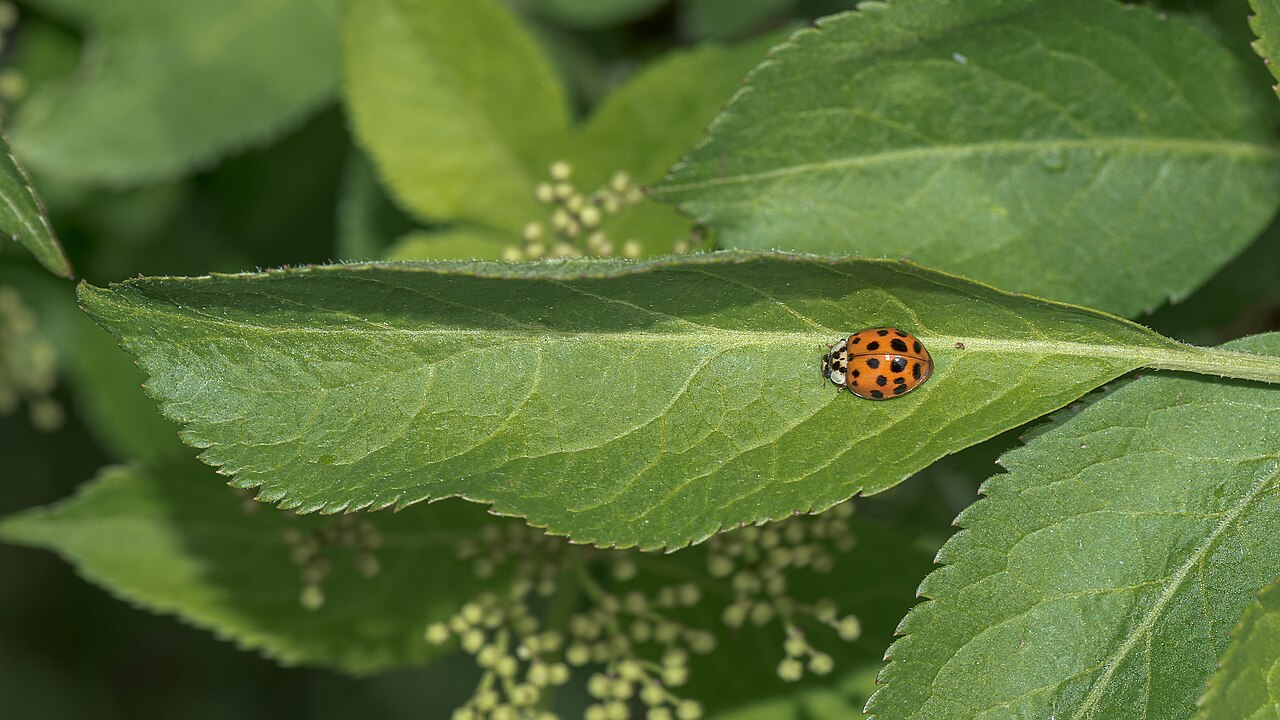
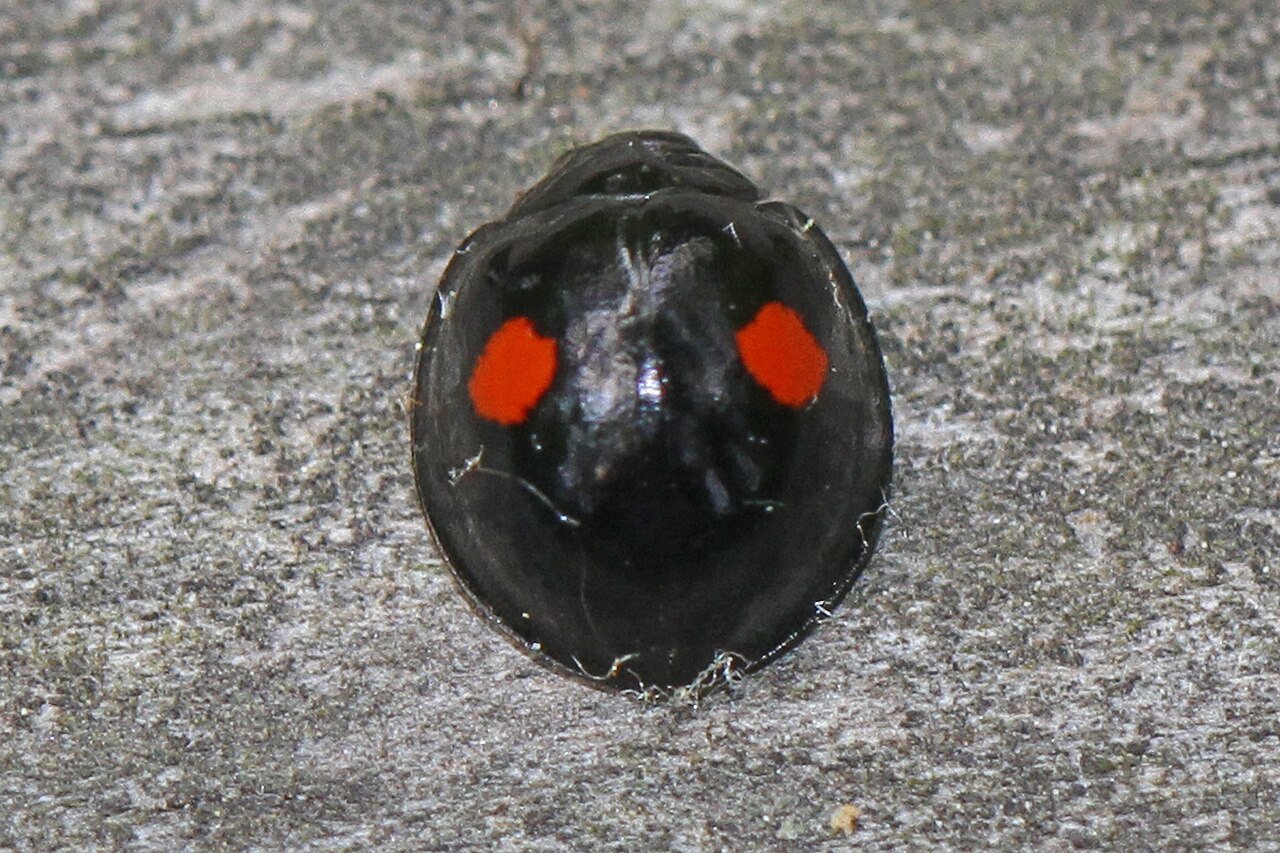
The spotless lady beetle (Cycloneda sanguinea) is plain glossy red with no spots at all, mostly southern. The Asian lady beetle ranges from pale orange to deep red with 0 to 19 spots. The twice-stabbed lady beetle (Chilocorus stigma) reverses the pattern with two red dots on black, and the native nine-spotted lady beetle (Coccinella novemnotata) has become genuinely scarce. Other colors run separately, from orange ladybugs to pink ladybugs and gray ladybugs.
Red ladybug vs Asian lady beetle
The mark behind the head settles it. Asian lady beetles carry a black M or W shape on a white pronotum, native red species carry white blocks or dashes instead. Size and shape help too: the Asian beetle is larger, rounder, and more domed, and it is the only one that gathers on sunny south walls in October looking for a way in.
| Feature | Asian lady beetle | Native red ladybugs |
|---|---|---|
| Mark behind head | Black M or W on white | White blocks or dashes, no M |
| Size | 0.25 to 0.33 in (6 to 8 mm) | 0.15 to 0.3 in (4 to 8 mm) |
| Spot count | 0 to 19, highly variable | Fixed per species, usually 2 to 13 |
| Bites skin | Yes, a faint pinch | Rarely noticeable |
| Enters homes in fall | Yes, in large groups | No, overwinters outdoors |
| Yellow staining fluid | Heavy and foul smelling | Light |
Red beetles that are not ladybugs
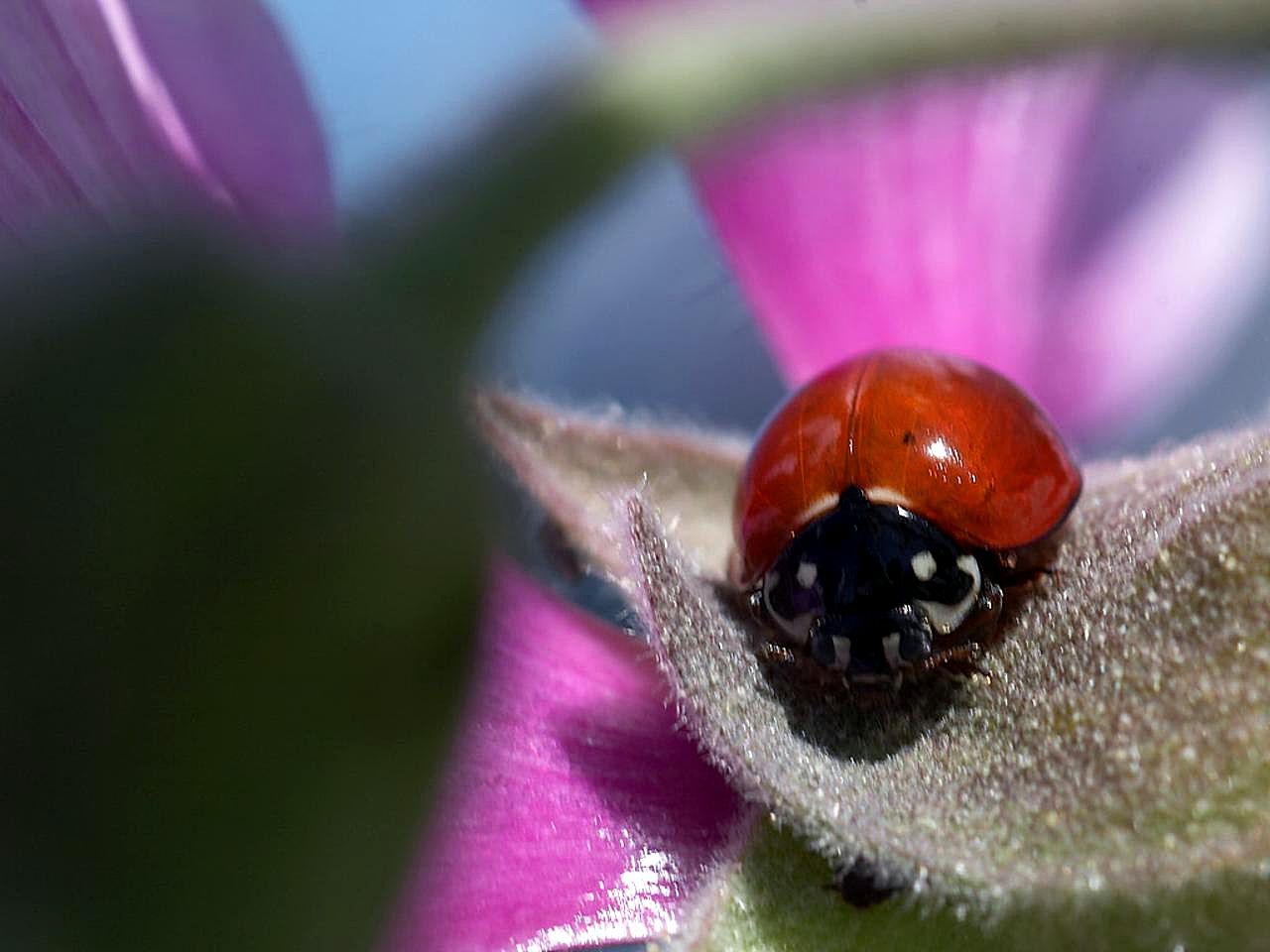
Three impostors account for most misidentifications. The boxelder bug is red and black but long and flat rather than domed, and it is a true bug with a straw like mouth. Red milkweed beetles are elongated with long antennae. Various click beetles and leaf beetles are red without spots, and the broader group is sorted in our red and black beetle guide.
Shape is the fastest filter. A ladybug is a half dome, as wide as it is long, with the head tucked under a shield. Anything noticeably longer than wide, or with antennae longer than its head, belongs somewhere else. Dark forms get confused in the other direction, which is what black ladybugs and brown ladybugs cover.
What does it mean if I see a red ladybug?
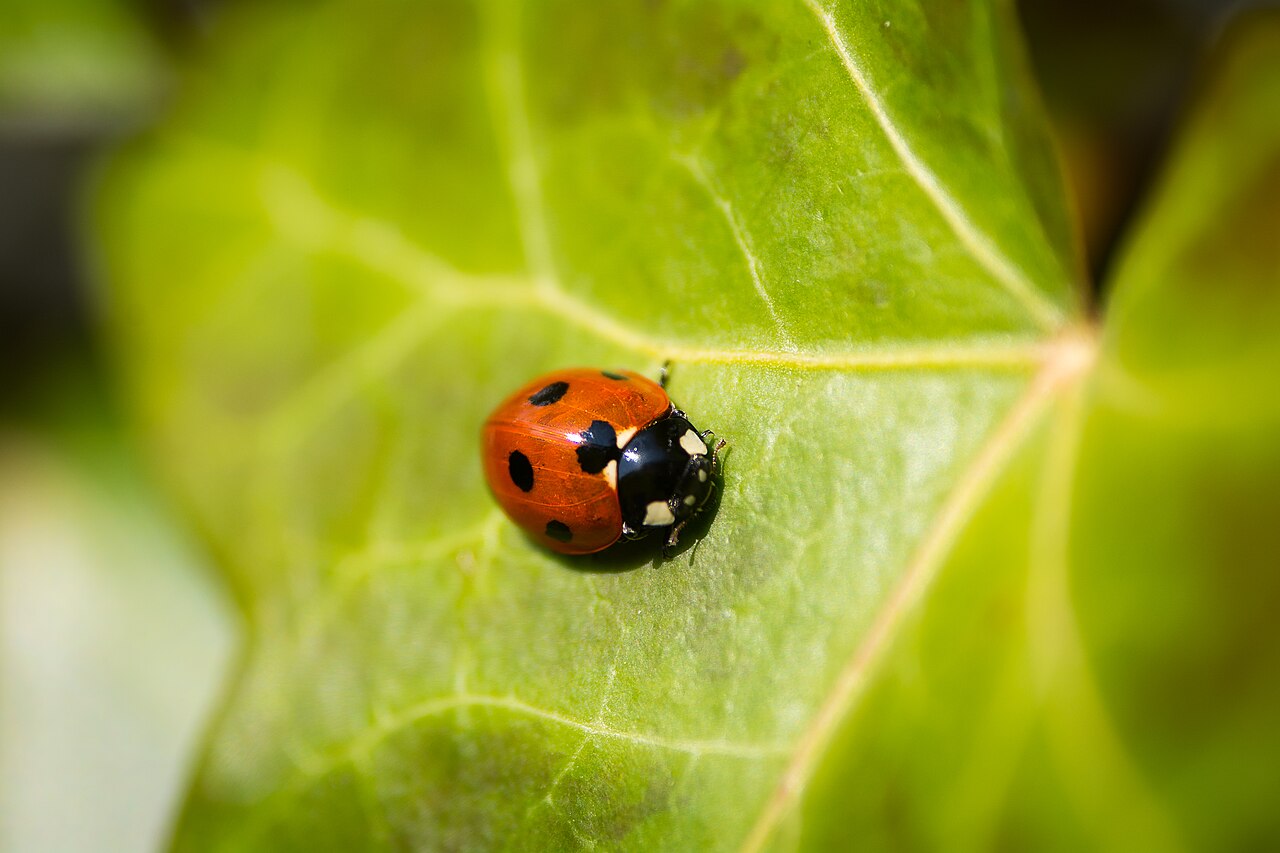
Ecologically it means aphids. Both adults and larvae are predators, and a single lady beetle eats 50 or more aphids a day, which is why gardeners count a red ladybug on a rose stem as good news. A sudden swarm on your siding in October means nothing is wrong either; it is the Asian species looking for a winter crevice.
In folklore the red ladybug is a luck and love symbol across Europe and North America, with the old belief that the spots count the months until a wish arrives. Indoors in midwinter, a live beetle on a warm window simply means it woke up early in a wall void, not that an infestation is underway.
Frequently Asked Questions
Are black ladybugs with red spots rare?
Not rare, just overlooked. The twice-stabbed lady beetle (Chilocorus stigma) is black with two red spots and is common across the eastern United States on scale infested trees. It is small, about 0.2 in (5 mm), and genuinely a ladybug. Dark forms of the Asian lady beetle also carry red spots on a black shell.
What does a red ladybug in the house mean?
In fall and winter it means Asian lady beetles found a gap around a window frame, a soffit, or a vent and are overwintering in your walls. Warm days wake them and they drift toward light. Seal the gaps in late summer, before they arrive. They do not breed indoors and will not damage anything.
What is the rarest ladybug color?
Blue is the rarest, and no blue species occurs in the United States. Among US ladybugs, true pink and plain gray forms are the hardest to find, while the scarcity that matters most is the native nine-spotted lady beetle, once widespread and now so reduced that citizen science projects actively hunt for records of it.
Why shouldn’t you squish a boxelder bug?
Crushed boxelder bugs release a sharp smelling defensive compound and leave a reddish stain that sets into fabric, grout, and painted trim. They also attract more of their own kind to the spot. Sweep or vacuum them into a sealed bag instead, and treat the sunny wall where they gather rather than the individual insects.
Sources: Colorado State University Extension publishes identification keys for native and introduced lady beetles.