Pheasant Poop: How to Identify It and Clean It Safely
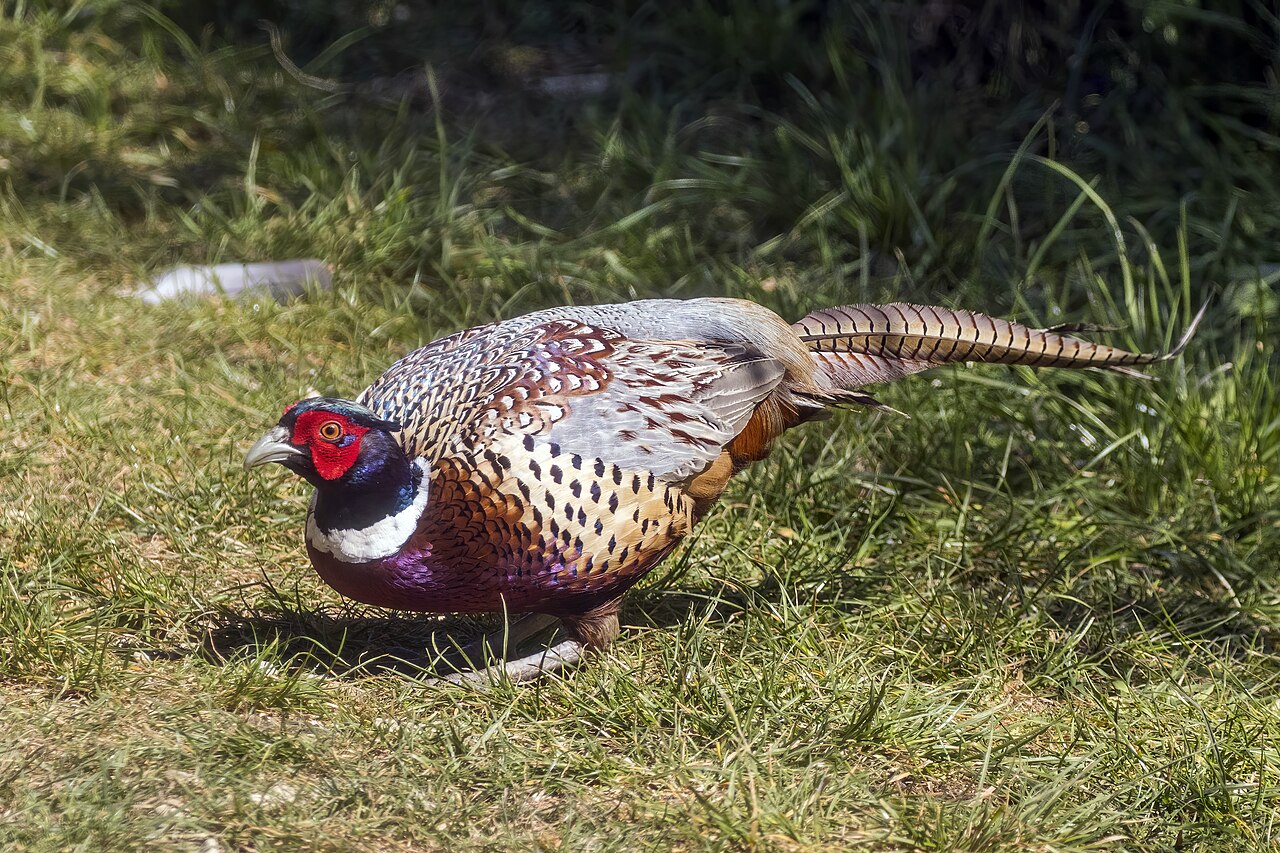
Pheasant poop comes from the ring-necked pheasant (Phasianus colchicus), a gamebird native to Asia that was first released successfully in Oregon in 1881 and now lives across American farm country. Finding a dropping in a garden, a stubble field or a release pen raises two questions. Which animal left it, and is cleanup risky?
Other pheasant species kept in aviaries, such as golden pheasants, leave similar droppings, though size varies with the bird.
Pheasant poop is a curled, cylindrical dropping, brown to olive green, with a white urate cap at one end. It turns up along field edges, under hedgerows and below feeders. To clean it safely, mist it with water, lift it with gloves and a paper towel, and never sweep it dry.
What Does Pheasant Poop Look Like?
Pheasant poop is typically a cylindrical, curled or bent dropping, a few inches long, with a white cap on one end. The white part is urate. Birds pass nitrogen as uric acid instead of liquid urine, and it leaves the body together with the feces.
The body is brown to olive green and shows seed husks or plant fiber. Older ones dry out and crumble, and the cap fades to a chalky grey.
Bird poop identification starts with the white urate cap, because mammals pass urine separately and their scat carries no such cap.
Why Pheasant Droppings Change Color and Texture
Diet affects color and texture. Droppings from a diet of grain and seed are firmer and browner, and those from green plants and insects are greener and looser.
Caecal droppings are soft, pasty and mustard to dark brown, and they smell strongly. They come from the caeca, two blind pouches of the gut, and they are normal for gamebirds. Chicken poop shows the same caecal type, roughly once in every 8 to 10 droppings.
In reared birds, droppings that stay watery or show blood are a reason to call a vet.
How to Tell Pheasant Poop From Other Droppings
Pheasant and chicken droppings look nearly identical, so location decides. A coop or run means chicken, and a field edge or hedgerow far from any flock means pheasant. Duck droppings are watery and green and lie near water. Crow poop lands as a flat white splash with a dark center below perches.
Deer poop comes as clusters of oval pellets made of plant fiber. Rabbits leave round, pea-sized pellets, wild boar leave lumps, horses leave fist-sized balls in piles, and bison leave flat pats like cattle.
Predators leave twisted scat. Fox, dog and coyote droppings are rope-like with tapered ends and contain hair or bone fragments. Opossum scat looks like small dog scat with smooth sides. Rodent and bat droppings are smaller still and grain-sized. Bat droppings crumble to dust when pressed, while mouse droppings stay hard. Beaver droppings almost never turn up on land, because beavers defecate in water.
Where You Find Pheasant Droppings
You find pheasant droppings wherever the birds feed, roost or are kept.
Why do droppings form a trail along field edges and hedgerows? Droppings lie scattered along feeding lines in stubble fields and grass margins. Pheasants walk as they feed, so the droppings form a loose trail rather than a pile.
What do pheasant droppings look like at night roosts? Clusters build up under dense cover or in low trees where the birds spend the night.
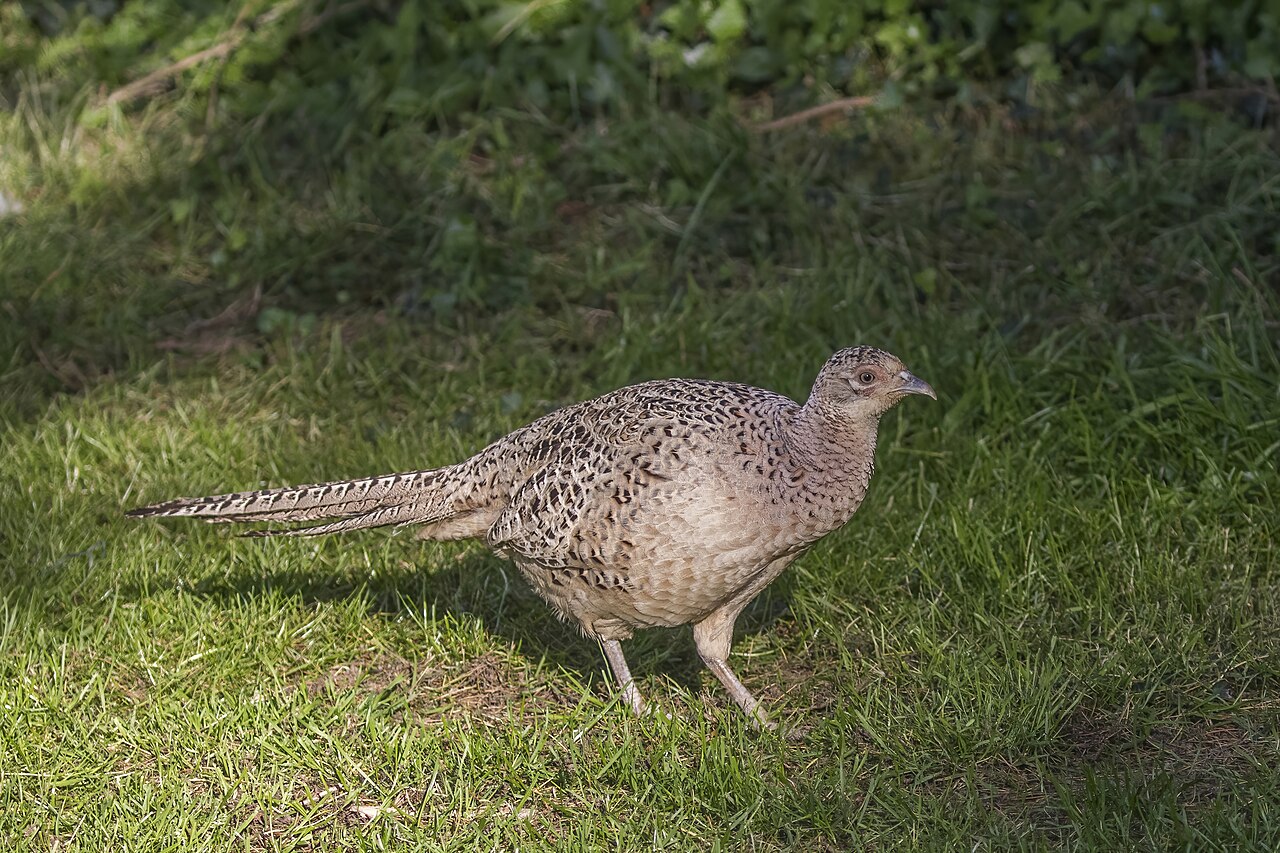
Why do pheasant droppings turn up under garden feeders? Pheasants pick spilled seed off the ground below bird feeders. Female pheasants are brown and well camouflaged, so their droppings often appear before you spot the bird.
How much builds up in release pens and game farms? Pens hold heavy buildup mixed with shed feathers. Never scrape or sweep that buildup dry, and avoid stirring up dust.
Is Pheasant Poop Dangerous? How to Clean It Safely
Pheasant poop carries a real but manageable risk, and dust is the main route. Bird droppings can contain Histoplasma, a fungus that causes lung infections when people inhale its spores, according to the CDC page on histoplasmosis. The most common route for psittacosis is breathing dust that contains dried bird droppings. Birds that look healthy shed the bacteria too, as the CDC notes on psittacosis.
So never dry-sweep a dropping or blast it with a leaf blower. Mist it with water first so no dust rises. Wear disposable gloves, lift the dropping with a paper towel and seal it in a bag. Wipe the spot only while it is damp, since a dry dropping smears and scratches paint, then wash your hands with soap and water.
Finish by treating the spot with a cleaner matched to the surface.
| Method | Best surface | How to use | Caution |
|---|---|---|---|
| Soapy water | Patios, decking, garden furniture | Soak the spot for a few minutes, scrub with a brush, rinse | Safe on most surfaces and the right first step |
| White vinegar | Glass, plastic, painted wood | Spray equal parts vinegar and water, wait, wipe | The acid can etch marble and limestone |
| Hydrogen peroxide | Light fabrics, hard plastic | Spray drugstore peroxide, let it fizz, blot | Bleaches dark fabric, test a hidden spot first |
| WD-40 | Metal trim, glass | Soften the spot with water first, spray, wipe with a soft cloth | Not for fresh or soft paint, wash the area afterwards |
| Pressure washer | Concrete, stone paving | Remove the bulk with a wet paper towel first, then wash off the stain from a distance | Outdoors only, never on heavy buildup in pens or roosts |
Frequently Asked Questions
Can you catch bird flu from pheasant droppings?
Yes. Feces from infected birds can carry bird flu viruses, so contact with droppings is a possible route. The CDC rates the risk to the general public as low. Report sick or dead wild birds to your state wildlife agency.
What kills bacteria in bird poop?
One part household bleach in nine parts water, left on for 10 minutes, disinfects hard, non-porous surfaces once the dropping is gone. Vinegar lifts stains but is not an EPA-registered disinfectant. Never mix bleach with vinegar or ammonia, because the mix releases toxic gas.
Can touching a pheasant pen or coop make you sick?
Yes. Campylobacter bacteria spread when people touch animals, their poop or their habitats, including cages and coops. Keep dedicated boots for the pen and never eat or drink inside it.
Is pheasant poop good fertilizer?
Yes, but only after hot composting and curing. Fresh bird droppings can carry germs such as Cryptosporidium, and mixing with straw alone does not make them safe. Keep raw droppings off vegetable beds.
Sources
- CDC, About Histoplasmosis
- CDC, About Psittacosis
- CDC, About Campylobacter Infection
- CDC, About Cryptosporidium
- CDC, How Bird Flu Spreads
Explore more: Animal Poop Identification: A Field Guide by Species