Rhino Spiritual Meaning: Symbolism and Signs
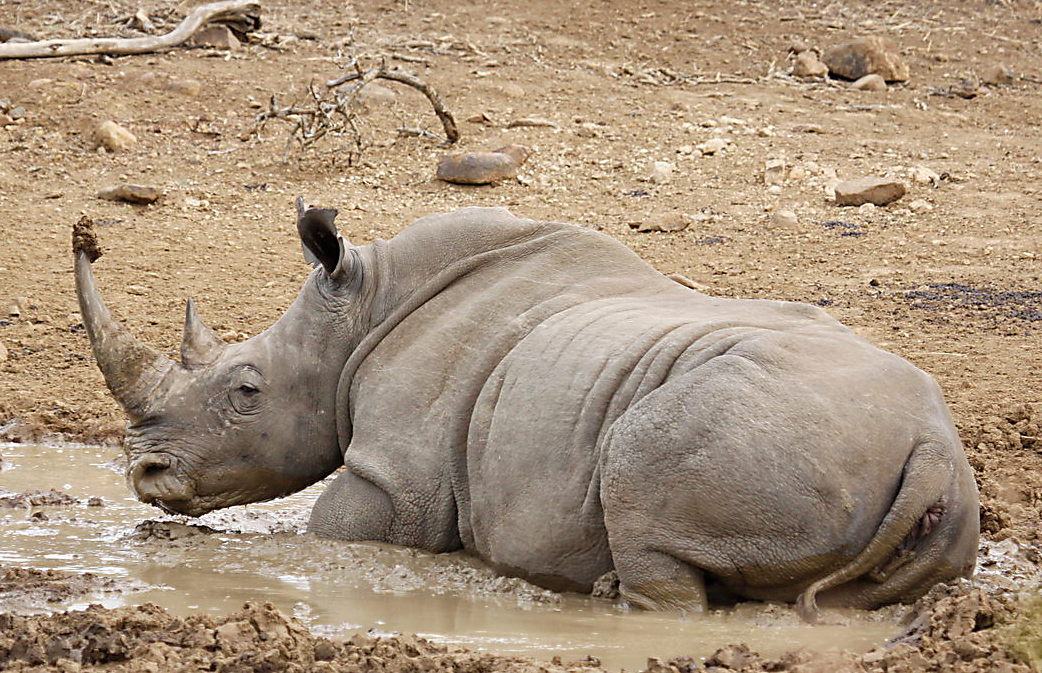
Rhino spiritual meaning centers on strength that protects rather than attacks. Symbolically, the rhinoceros stands for firm boundaries, thick skin against criticism and the patience to hold ground when pushed. It is a heavy animal that moves on its own terms, and that steadiness is the core of its message.
The rhino earns this meaning through its body. Its armor-like skin, its forward horn and its long hours of grazing describe a life built on self-reliance, not on the hunt.
Spiritually, the rhino stands for grounded strength, protection and clear boundaries. It does not hunt and rarely starts a fight, but it holds its ground. Next to the lion, its rival on the savanna, the rhino is the power to stand firm, while the lion is the power to lead and pursue.
What Does a Rhino Symbolize?
A rhino symbolizes strength used for protection, firm personal boundaries and the armor to withstand pressure. Its skin is thick, its horn faces forward, and it typically spends much of its day feeding. The picture is a creature with nothing to prove and a lot to defend.
Animal symbolism sorts creatures by the qualities their bodies and habits show, and the rhino’s quality is defense. It does not stalk prey. Rhinos mark their home ranges with dung piles and scent, a quiet way of saying where the line runs. A rhino in your thoughts points to a line you need to hold.
Is the rhino a good guy or a bad guy? Neither. It is a defensive animal, calm when left alone and dangerous when cornered. The symbol carries both sides, steady patience and the force to end a threat fast.
Rhino Spirit Animal: Traits, Totem and Oracle Meaning
The rhino spirit animal stands for persistence, self-reliance and calm power. Adult black rhinos (Diceros bicornis) live mostly alone, and that trait carries over to the totem. The rhino totem fits someone who works steadily, keeps a small circle and refuses to be rushed.
What is the most powerful spirit animal? No ranking exists, since each animal carries a different kind of power. The rhino stands for strength that endures. Bears stand for strength that rests and returns, a power tied to the den and the seasons.
Spirit animals also turn up in modern oracle decks, which are recent creations and not part of an old tradition. A rhino card drawn in a reading points to resolve and to holding a position you already chose.
Set the rhino beside the lion (Panthera leo) and the two kinds of power split cleanly. The lion hunts, leads a pride and roars to claim ground. The rhino grazes, guards and charges to end a threat. Lions can kill rhino calves, but a grown rhino is a poor target, and that real edge stands behind the contrast.
| Trait | Rhino | Lion |
|---|---|---|
| Kind of power | Holding ground | Pursuit and leadership |
| Social life | Alone or in small groups | Lives in a pride |
| Main weapon | Horn and body mass | Teeth, claws and the group hunt |
| Response to threat | Charges to end it | Stalks and attacks |
| Lesson as a totem | Set and keep boundaries | Take the lead |
| Message in a dream | Stand firm | Step forward |
How to Work With Rhino Energy in Daily Life
Work with rhino energy in three steps. Name one boundary, let one criticism pass, then hold your position for a day. Start by writing down a limit you keep giving up, such as late calls or unpaid favors.
Next comes the thick skin. When a remark stings, ask whether it changes a fact. If it does not, let it slide off. Armadillos carry the same armor theme in a smaller, more hidden form.
Finish with a short exercise. Stand with your feet planted, breathe slowly for one minute and picture the weight of a rhino settling into the ground. Then act on the boundary you wrote down.
Rhino Dream Meanings
A rhino in a dream points to a force in your life that is hard to move, either your own resolve or someone else’s. A charging rhino points to a conflict you see coming and have not faced. Running from it can show avoidance, and a recurring dream often returns until the choice is faced. A calm, grazing rhino points to stability and to strength you have but do not use.
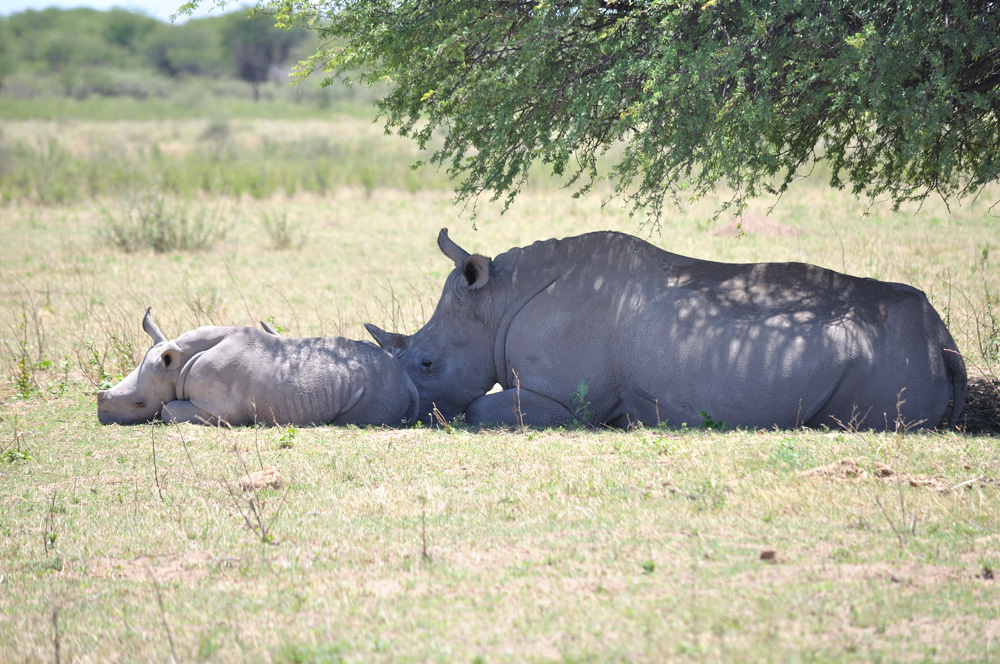
A biblical reading of the dream starts with Job 39:9. The King James Version renders the Hebrew re’em there as unicorn, the ESV as wild ox, and the Catholic Douay-Rheims as rhinoceros. The verse asks whether the animal will serve a human. In a dream, the rhino carries that same question of strength that will not be harnessed.
Rhino Charge and Crossing Paths: Danger and Choices
A rhino often charges when it cannot identify a threat clearly. A 1980 U.S. Fish and Wildlife Service release describes the black rhino’s eyesight as notoriously poor, while its sense of smell and hearing are keen. An unknown scent or shape close by can set off a charge. If a rhino crosses your path on safari, stay in the vehicle and follow your guide’s instructions.
A rhino crossing your path points to a decision. Something blocks the way, and you choose to clear it or step around it. Clearing it suits a problem that will not move on its own. Stepping aside suits a fight that costs more than it wins.
Bison show the herd version of the same strength, power that moves together rather than alone. The rhino keeps the choice to one animal and one path.
Rhino Species and Facts Behind the Symbolism
Five rhino species survive today, two in Africa and three in Asia. The white rhino (Ceratotherium simum) and the black rhino (Diceros bicornis) live in Africa. The greater one-horned rhino (Rhinoceros unicornis), the Javan rhino (Rhinoceros sondaicus) and the Sumatran rhino (Dicerorhinus sumatrensis) live in Asia.
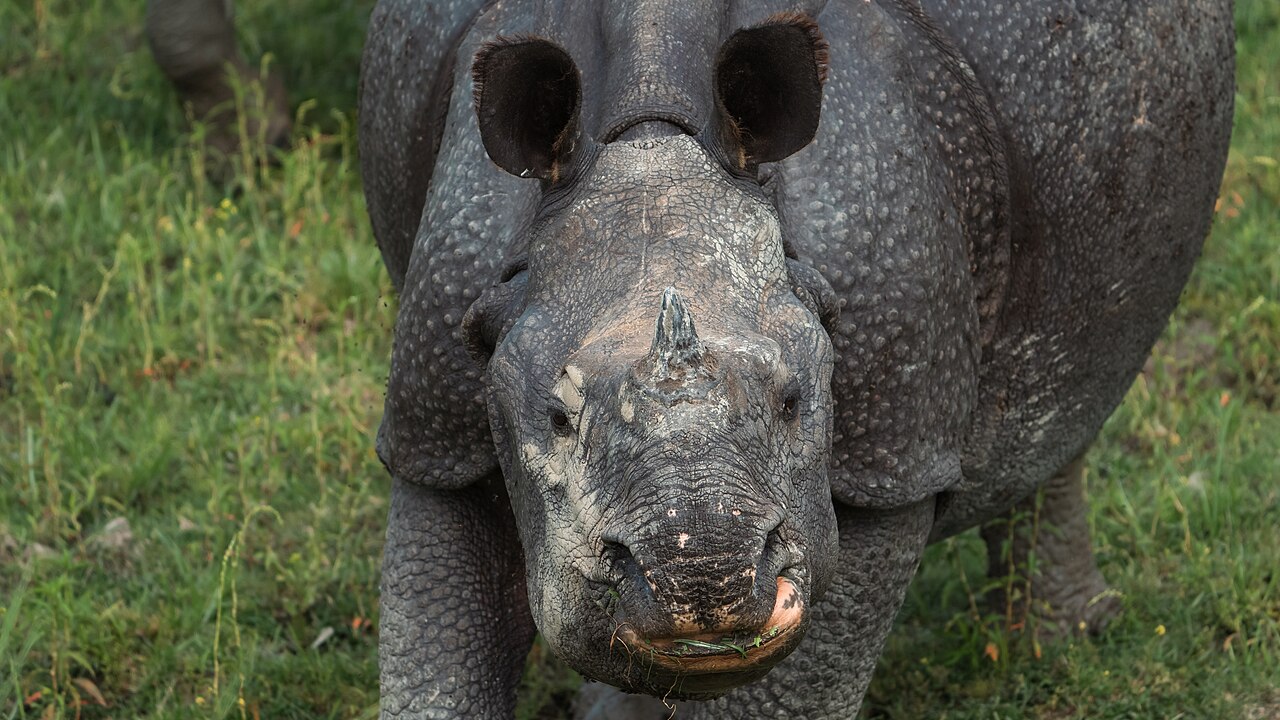
A rhino horn is made of keratin, the same protein as human hair and fingernails. It is not bone, and it has no proven medical effect. Demand for horn still drives poaching. The IUCN lists the black, Javan and Sumatran rhinos as critically endangered, and commercial international trade in horn is banned under CITES.
Frequently Asked Questions
How long do rhinos live?
Black rhinos typically live 35 to 50 years in the wild, and white rhinos reach a similar span. Lifespan in the wild runs shorter where poaching and drought hit a population. Black rhinos in managed care can reach about 45 years, with steady food and veterinary care.
What is a rhino’s enemy and what animal can defeat a rhino?
Humans are the main threat to an adult rhino. Poaching for horn kills far more rhinos than any predator. Lions and spotted hyenas can kill calves, and a mother rhino stays close to defend her young. A healthy adult rarely faces an attack from another animal.
What scares a rhino?
Unfamiliar scents and sudden shapes scare a rhino most. It sees poorly and relies on smell and hearing, so human scent on the wind or a moving vehicle can trigger flight or a charge. Oxpeckers riding on its back give alarm calls when danger approaches.
Which is meaner, hippo or rhino?
The hippo (Hippopotamus amphibius) is the more aggressive of the two. Hippos defend their stretch of water fiercely and attack boats that come too close. Rhinos charge mainly when startled or cornered. Both animals are dangerous at close range, and neither should be approached on foot.
Does the Bible mention rhinos?
No name for a rhino appears in the Hebrew text; only some translations use rhinoceros. The Douay-Rheims Bible uses rhinoceros in Job 39:9 and Numbers 23:22. The King James Version renders the same Hebrew word, re’em, as unicorn, and the ESV gives wild ox. Numbers 23:22 in the KJV compares God’s strength to a unicorn’s.
Sources
- Bible Gateway, Job 39:9 to 10 (King James Version)
- Bible Gateway, Job 39:9 to 10 (English Standard Version)
- Bible Gateway, Job 39:9 to 10 (Douay-Rheims 1899 American Edition)
- Bible Gateway, Numbers 23:22 (King James Version)